
From Precision Medicine to Precision Education: A Vision for AI-Powered Student Digital Twins, Preventive Student Success, and Career-Aligned Academic Pathways
Source: arXiv:2608.06322 · Published 2026-08-06 · By Kaushik Dutta
TL;DR
This paper addresses the persistent problem that higher education institutions tend to identify and respond to student academic struggles only after failure, leading to suboptimal completion rates and increased student debt. Drawing an analogy to healthcare's shift from reactive treatment to preventive, personalized medicine, the author proposes a new paradigm called Precision Education. This framework envisions continuous AI-driven analysis of multifaceted student data—including academic, behavioral, financial, and career information—to proactively identify risks, recommend personalized interventions, and optimize degree paths aligned with career outcomes. At its core is the concept of a Student Digital Twin: an evolving virtual model of an individual learner capable of simulating alternative educational futures and the impact of potential interventions. The paper grounds this vision in practical evidence from early systems like Purdue's Course Signals and Georgia State University's GPS Advising, highlighting both successes and methodological caveats regarding causal inference versus correlation.
Key findings
- Existing prediction models can identify students at risk of attrition or poor course performance with useful accuracy (e.g., studies by Berens et al. 2019; Beaulac and Rosenthal 2019).
- Course Signals at Purdue reported reductions in D and F rates and improved retention but suffered from selection bias and lack of causal validation (Arnold and Pistilli 2012; Caulfield 2013).
- Georgia State’s GPS Advising system monitors 40,000+ students against 800 risk factors, prompting 250,000+ advisor meetings and pairing predictive alerts with increased advising capacity and small completion grants, leading to raised six-year graduation rates and narrowed racial and income gaps (Rossman et al. 2022; Georgia State University 2024).
- Predictive accuracy alone is insufficient; causal inference techniques such as uplift modeling, randomized encouragement designs, and regression discontinuity are necessary to identify effective interventions.
- Student Digital Twins enable simulation of multiple counterfactual scenarios (e.g., repeating courses, changing majors) to better inform personalized advising decisions.
- Calibration and validation of Student Digital Twins against experimental or quasi-experimental outcomes are critical to building trust and ensuring meaningful causal claims.
- Career-centric academic planning using labor market taxonomies (e.g., O*NET, ESCO, Lightcast) enables reverse mapping from desired occupations to courses, internships, and skills, supporting stackable credentials and better alignment with workforce needs.
- Algorithmic bias, fairness auditing, transparency, student agency, and data privacy require ongoing governance frameworks to mitigate risks such as self-fulfilling prophecies and algorithmic tracking.
Threat model
N/A in the traditional adversarial sense; the main challenges arise from risks of biased or opaque models producing harmful predictions, algorithmic tracking, self-fulfilling prophecies lowering support for flagged students, and Goodhart’s law where prediction metrics become targets rather than genuine supports. The adversary is effectively flawed AI systems and insufficient institutional governance rather than a malicious external attacker.
Methodology — deep read
- Threat model & assumptions: The paper assumes an adversary is not the focus—rather, challenges lie in avoiding systemic biases, ensuring fairness, and preventing self-fulfilling prophecies or Goodhart’s law effects. The adversary might be poorly designed algorithms or organizational misuse of AI predictions. 2. Data: The approach relies on diverse institutional datasets including admissions, academic records, LMS activity, advising notes, financial aid, and career outcome data. Examples from Purdue and Georgia State inform data characteristics: tens of thousands of students, hundreds of risk features, multiple outcome labels such as course grades, retention, and graduation. Preprocessing details are limited but include feature engineering from behavioral and demographic data. 3. Architecture/algorithm: The Student Digital Twin is conceptualized as a continuously updated, multi-fidelity virtual model of each student. It integrates predictive modeling (machine learning risk scores), causal inference methods (uplift modeling, randomized encouragement designs, regression discontinuity), and simulation engines that answer counterfactual queries about intervention effects across possible educational futures. The system architecture layers predictive analytics (Stage 3), causal inference and prescriptive analytics (Stage 4), culminating in autonomous adaptive systems with agentic AI (Stage 5). 4. Training regime: Specific machine learning training details (epochs, batch size, optimizer) are not provided, as the paper is a conceptual framework rather than an empirical model development report. 5. Evaluation protocol: Empirical evidence comes from reported institutional outcomes (e.g., graduation rates, equity gap narrowing) linked to advising systems, though causal effect estimation remains limited. The paper advocates for rigorous causal evaluation strategies including randomized encouragement designs and quasi-experimental methods to validate interventions, along with continuous fairness auditing to detect bias. 6. Reproducibility: Code or datasets are not released; real-world institutional data is proprietary. The paper calls for open infrastructure and consortium approaches to democratize access. An end-to-end example is the GPS Advising system where risk prediction triggers human advisor alerts within 48 hours, coupled with financial grants, yielding improved graduation rates confirming that organizational design is essential beyond the models themselves.
Technical innovations
- Framing student success prediction as a causal intervention problem rather than mere risk prediction, emphasizing uplift modeling and quasi-experimental designs to estimate actionable effects.
- Introducing the Student Digital Twin as a continuously updated simulation engine enabling counterfactual scenario analysis for personalized educational planning.
- Integrating labor market skill taxonomies with educational data to enable career-centric reverse academic planning from desired occupation to course pathways.
- Defining a five-stage analytics maturity model extending learning analytics towards autonomous, adaptive student success systems with human-in-the-loop agentic AI.
Datasets
- Purdue University Course Signals data — tens of thousands of students — institutional LMS and academic records (not publicly released)
- Georgia State University GPS Advising data — 40,000+ undergraduates tracked daily with ~800 risk factors — proprietary institutional data
Baselines vs proposed
- Purdue’s Course Signals retention improvement: reported reduction in D/F rates and increased student help-seeking vs prior paper-based faculty warnings which were too late to help.
- Georgia State’s GPS Advising six-year graduation rate increased significantly while narrowing racial and income graduation gaps vs pre-GPS baseline, aided by advisor alerts and financial grants.
Figures from the paper
Figures are reproduced from the source paper for academic discussion. Original copyright: the paper authors. See arXiv:2608.06322.
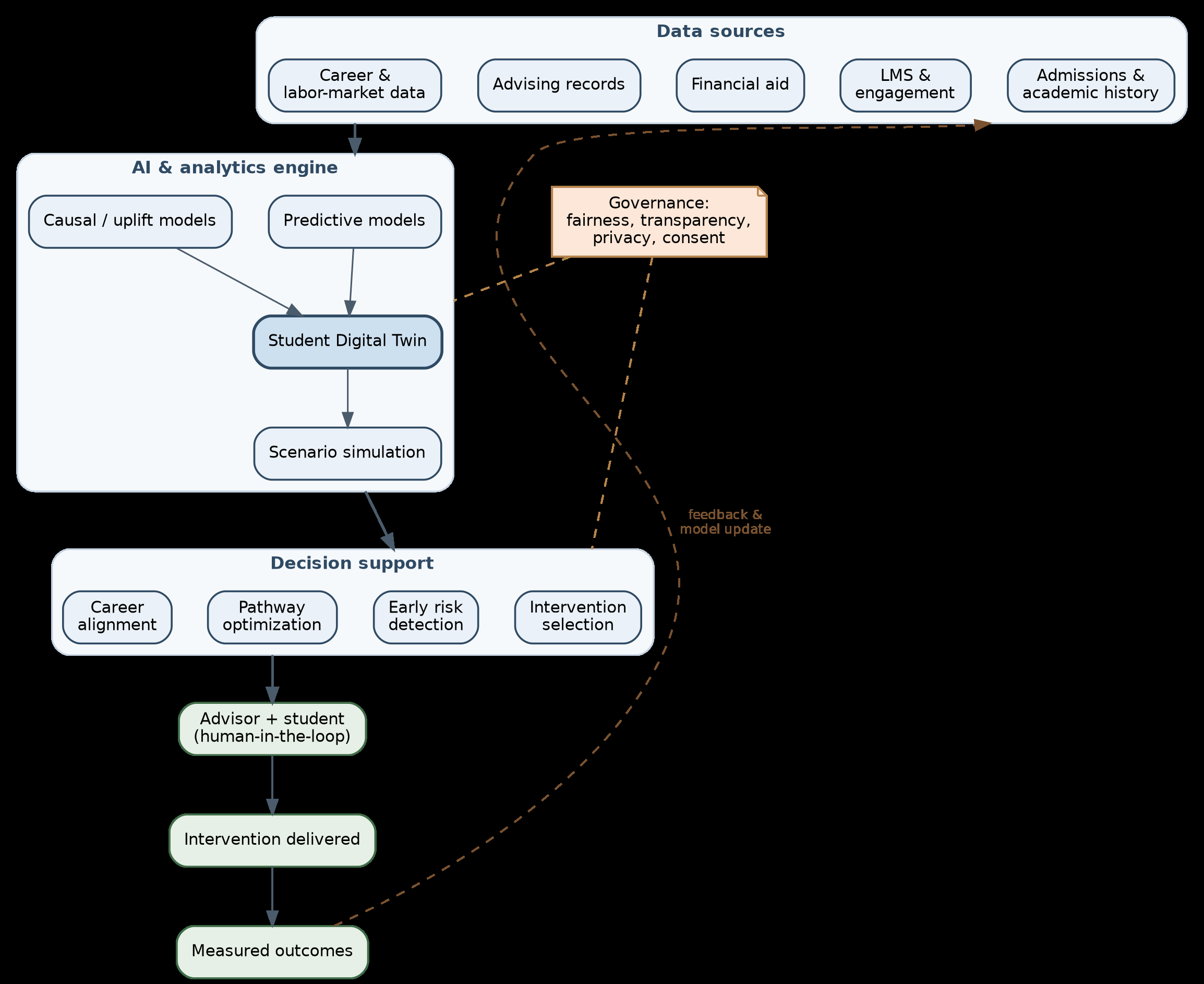
Fig 1: The Precision Education framework
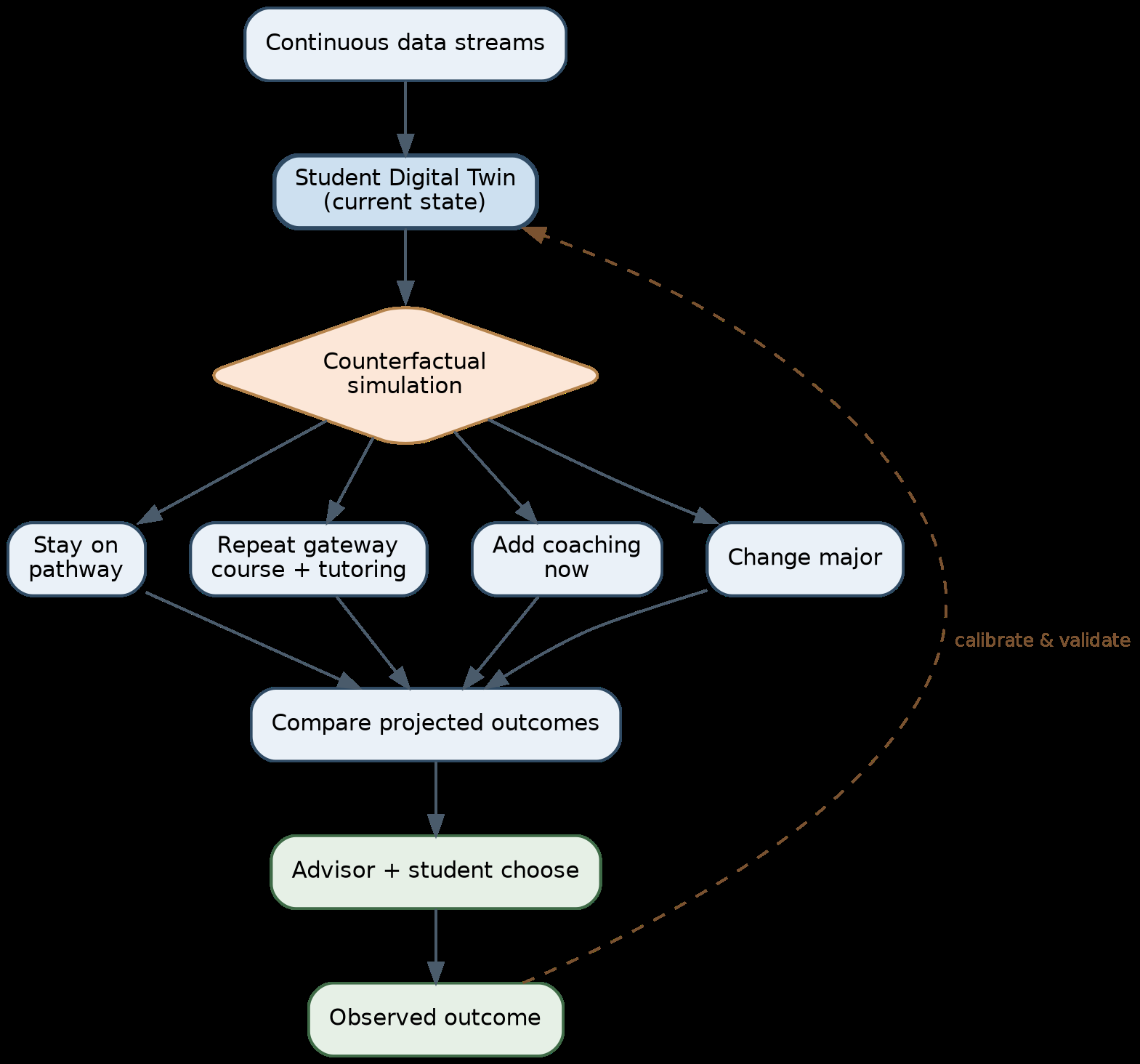
Fig 3: shows the twin as a simulation engine rather than a dashboard.
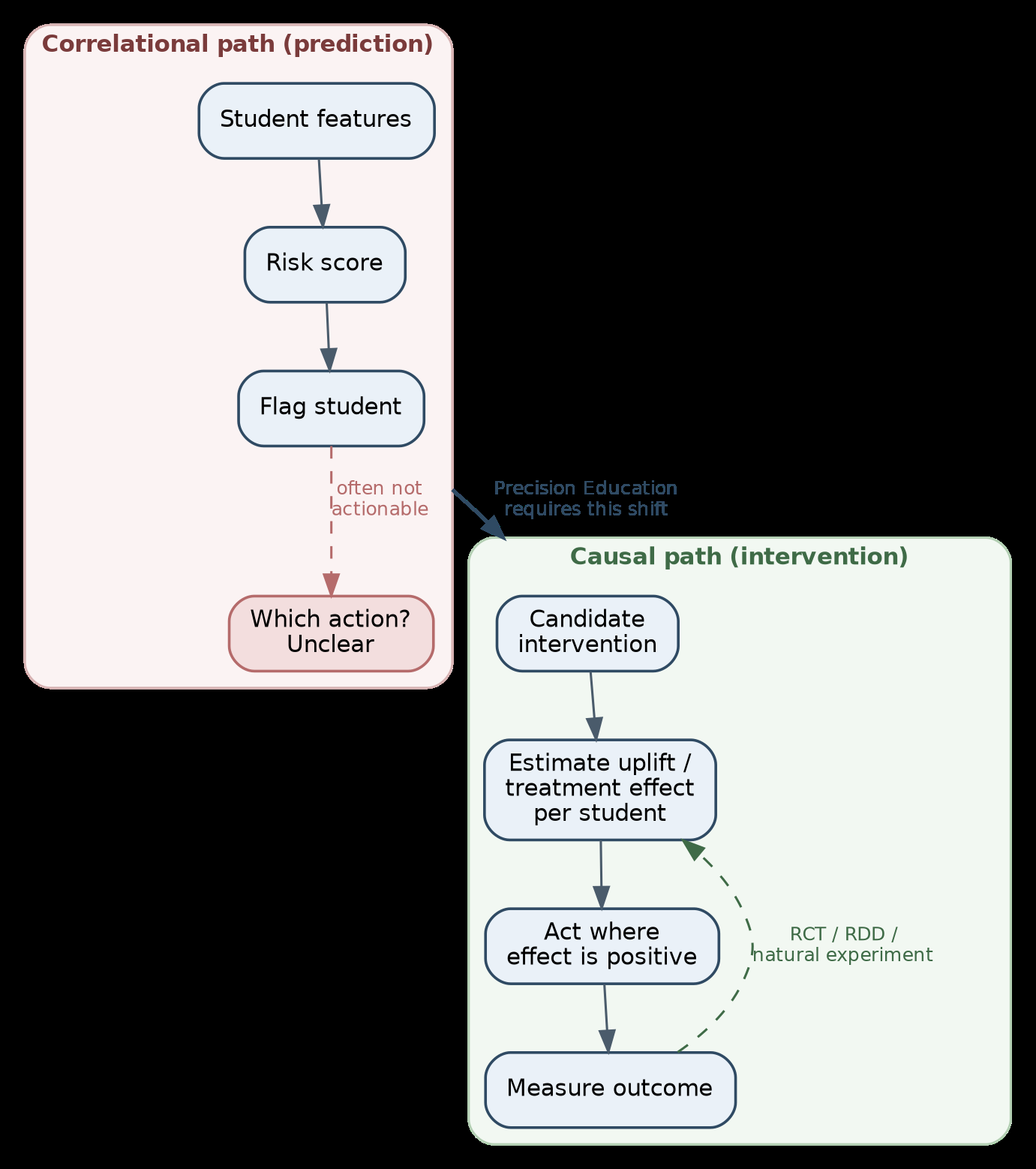
Fig 4: Prediction versus causal intervention

Fig 5: Career-centric, or reverse, academic planning
Limitations
- Most evidence is correlational and institution-reported; independent causal validation of interventions is limited.
- Prediction models often rely on static features that predict risk but provide limited guidance on actionable interventions.
- Digital twin concept remains largely aspirational with few deployed systems offering fully validated counterfactual simulations.
- Potential for algorithmic bias and fairness failures remains a critical concern, especially in demographic underrepresentation and outcome disparities.
- Organizational readiness and advising capacity are essential but costly and not addressed by models alone.
- Data privacy, consent, and governance frameworks require more development to prevent misuse or surveillance.
Open questions / follow-ons
- How to architect and validate Student Digital Twins such that simulated counterfactual educational futures reliably predict actual intervention outcomes?
- Which personalized interventions causally improve student success, for whom, and at what cost, using methods like uplift modeling and quasi-experiments?
- How to integrate labor market and skills taxonomies into educational planning without reducing education to earnings maximization, preserving broader values?
- What continuous fairness auditing, transparency, and contestability mechanisms can bridge the gap between predictive advising and equitable student outcomes?
Why it matters for bot defense
While not focused on bot defense or CAPTCHA specifically, this paper’s emphasis on continuous data-driven risk detection, dynamic decision making, and human-AI collaboration offers insights for designing intelligent systems that adaptively monitor user states or behaviors. Bot-defense systems, like predictive advising platforms, require causal understanding beyond correlation to choose effective intervention strategies that prevent undesirable outcomes without overblocking or biasing. The proposed progression from predictive to prescriptive, and finally autonomous adaptive systems, aligns with the trend toward more proactive, context-aware, and explainable security controls. Additionally, concerns around fairness, transparency, continuous monitoring, and human-in-the-loop governance in AI-powered education systems resonate with challenges in ethical bot detection. Engineers can borrow these lessons when developing more nuanced CAPTCHA and anti-bot frameworks that continuously update models and interventions based on evolving attacker behavior while preserving user agency and minimizing false positives.
Cite
@article{arxiv2608_06322,
  title={ From Precision Medicine to Precision Education: A Vision for AI-Powered Student Digital Twins, Preventive Student Success, and Career-Aligned Academic Pathways },
  author={ Kaushik Dutta },
  journal={arXiv preprint arXiv:2608.06322},
  year={ 2026 },
  url={https://arxiv.org/abs/2608.06322}
}