
Diatomic molecular anions of alkali-metal and alkaline-earth-metal atoms
Source: arXiv:2608.05067 · Published 2026-08-05 · By Sana Akkari, Hela Ladjimi, Wissem Zrafi, Hamid Berriche, Marcin Gronowski, Michał Tomza
TL;DR
This paper addresses the challenging problem of characterizing diatomic molecular anions formed by alkali-metal and alkaline-earth-metal atoms, systems that are inherently difficult to study due to the diffuse, weakly bound anionic electron. The authors present a comprehensive ab initio theoretical investigation of 57 molecular anions: 21 homonuclear alkali-metal anions in the X2Σ+ state and 36 heteronuclear alkali-metal–alkaline-earth-metal anions in the X1Σ+ state. Using a hierarchy of coupled cluster quantum chemistry methods combined with large Gaussian basis sets and relativistic pseudopotentials, they compute potential energy curves, permanent electric dipole moments, and static polarizabilities. Additionally, multireference configuration interaction and equation-of-motion electron-attachment coupled cluster methods explore excited valence-bound and dipole-bound electronic states. The study reveals complex crossings between excited anionic states and neutral ground states that may facilitate resonant electron attachment and impact ultracold molecular experiments involving Rydberg atoms. The results represent the first systematic, high-accuracy dataset for these molecular anions and provide critical insight into their electronic structure and spectroscopy.
Key findings
- Calculated well depths (De) of alkali-metal diatomic anions average 4389 cm⁻¹, about 500 cm⁻¹ deeper than corresponding neutral molecules.
- The equilibrium bond lengths for alkali-metal anions span 5.713 to 9.691 bohr, increasing with heavier atoms and shallower binding.
- Iterative triple excitations in CCSDT calculations increase well depths by an average of 107 cm⁻¹ for alkali-metal anions, improving accuracy.
- Six polar alkali-metal molecules (NaK, LiK, NaRb, LiRb, NaCs, LiCs) support dipole-bound states with electron binding energies correlated nearly linearly with neutral molecule dipole moments ranging 2.7–5.3 D.
- Dipole-bound states require extensive diffuse basis functions; the largest augmented basis sets produce converged electron binding energies.
- Crossings between ground neutral states and excited anionic states (both valence- and dipole-bound) are predicted, potentially enabling resonant electron attachment processes.
- Permanent electric dipole moments and static polarizabilities of the anions are computed at CCSD(T) level, assessing basis set and method convergence.
- Predicted spectroscopic constants (vibrational frequency ωe, anharmonicity ωexe, rotational constant Be) provide benchmarks for future experiments.
Methodology — deep read
The threat model is not explicitly stated as a security issue, rather the study focuses on fundamental electronic structure characterization of molecular anions, assuming a non-adversarial computational setting.
Data consists of 57 diatomic molecular anions formed from combinations of alkali-metal atoms (Li, Na, K, Rb, Cs, Fr) and alkaline-earth-metal atoms (Be, Mg, Ca, Sr, Ba, Ra). The anions considered include 21 homonuclear alkali-metal anions in the doublet X2Σ+ electronic ground state and 36 heteronuclear alkali-metal–alkaline-earth-metal anions in singlet X1Σ+ electronic ground state.
Quantum chemistry calculations employ a composite coupled cluster approach within the Born-Oppenheimer approximation. The leading interaction energy term is computed with spin-restricted CCSD(T) using large augmented correlation consistent polarized weighted core-valence quintuple-zeta (aug-cc-pwCV5Z) Gaussian basis sets augmented by bond functions to improve convergence. Corrections from iterative triple excitations (CCSDT) are added using smaller aug-cc-pwCVTZ basis sets. Basis-set superposition error is corrected by the Boys-Bernardi counterpoise method.
Scalar relativistic effects for heavier atoms are included via small-core relativistic energy-consistent pseudopotentials (ECPs) from Stuttgart's library, with corresponding pseudopotential basis sets. The electrons correlated explicitly include all valence and outer-core shells appropriate for each element.
For excited states, the authors use multireference configuration interaction with single and double excitations including Davidson corrections (MRCISD+Q) and equation-of-motion electron-attachment CCSD (EOM-EA-CCSD) methods to capture valence-bound and dipole-bound excited states. Diffuse basis sets for dipole-bound states are enhanced via custom even-tempered diffuse functions placed on a ghost center at the molecular midpoint, progressively extended up to very large sets (up to (8s8p7d6f5g4h3i)).
Calculations of spectroscopic constants (bond length Re, vibrational frequency ωe, anharmonicity ωexe, rotational constant Be) are derived by interpolating potential energy curves with cubic splines and fitting Dunham expansions to the vibrational levels. Permanent electric dipole moments and static polarizabilities are computed through finite-field CCSD(T) calculations with field strengths of ±0.0001 e/a0².
Methodological validation is performed by benchmark calculations on isolated alkali-metal and alkaline-earth-metal atoms, comparing ionization potentials, electron affinities, excitation energies, and polarizabilities to experimental data and prior theory. Basis set convergence and correlation treatment effects are studied in exemplar molecules (KRb−, RbSr−).
Calculations are performed using CFOUR, MRCC (interfaced with MOLPRO), and MOLPRO quantum chemistry packages. Some calculations rely on prior literature results for neutral molecules. The study describes the methodological steps in sufficient detail to enable reproducibility, though no open-source code or frozen weights are provided. Numeric potential energy curves and basis sets for diffuse augmentations are available as supplemental material.
A concrete example is shown with Li2−, including ground X2Σ+ and excited A2Σ+ states computed by MRCISD, revealing their potential energy curves and crossings with neutral states, illustrating the interplay of valence-bound and dipole-bound characters in excited states.
Evaluation metrics include spectral properties (De, Re, ωe), electron binding energies for dipole-bound states, and comparison to accurate experimental and theoretical reference values. Convergence tests verify that the chosen basis sets and correlation methods capture relativistic and electronic correlation effects to a high degree of accuracy.
Technical innovations
- Development of a composite coupled-cluster protocol combining CCSD(T) with iterative triples CCSDT corrections for high-accuracy potential energy curves of molecular anions.
- Design and systematic augmentation of even-tempered diffuse Gaussian basis sets centered on ghost atoms to capture highly diffuse dipole-bound electron states.
- Application of equation-of-motion electron-attachment CCSD to compute electron binding energies of dipole-bound anionic excited states with unprecedented accuracy.
- Prediction and analysis of avoided crossings between neutral ground states and excited anionic valence- and dipole-bound states, suggesting new resonant electron attachment pathways.
Datasets
- Alkali-metal diatomic anions — 21 species — theoretical data generated in this study
- Alkali-metal–alkaline-earth-metal diatomic anions — 36 species — theoretical data generated in this study
Baselines vs proposed
- CCSD(T) well depths average 4389 cm⁻¹ vs CCSD(T)+ΔT corrected well depths increase by ~107 cm⁻¹
- Dipole-bound electron binding energies for NaCs− converge from ~25 cm⁻¹ with smaller diffuse basis to ~30+ cm⁻¹ with largest basis set augmentation
- Calculated atomic ionization potentials deviate from experiment by 6–421 cm⁻¹ (0.01–1.3%)
- Electron affinities of alkali-metal atoms agree within 3–84 cm⁻¹ (0.07–2.1%) with experimental data
Figures from the paper
Figures are reproduced from the source paper for academic discussion. Original copyright: the paper authors. See arXiv:2608.05067.
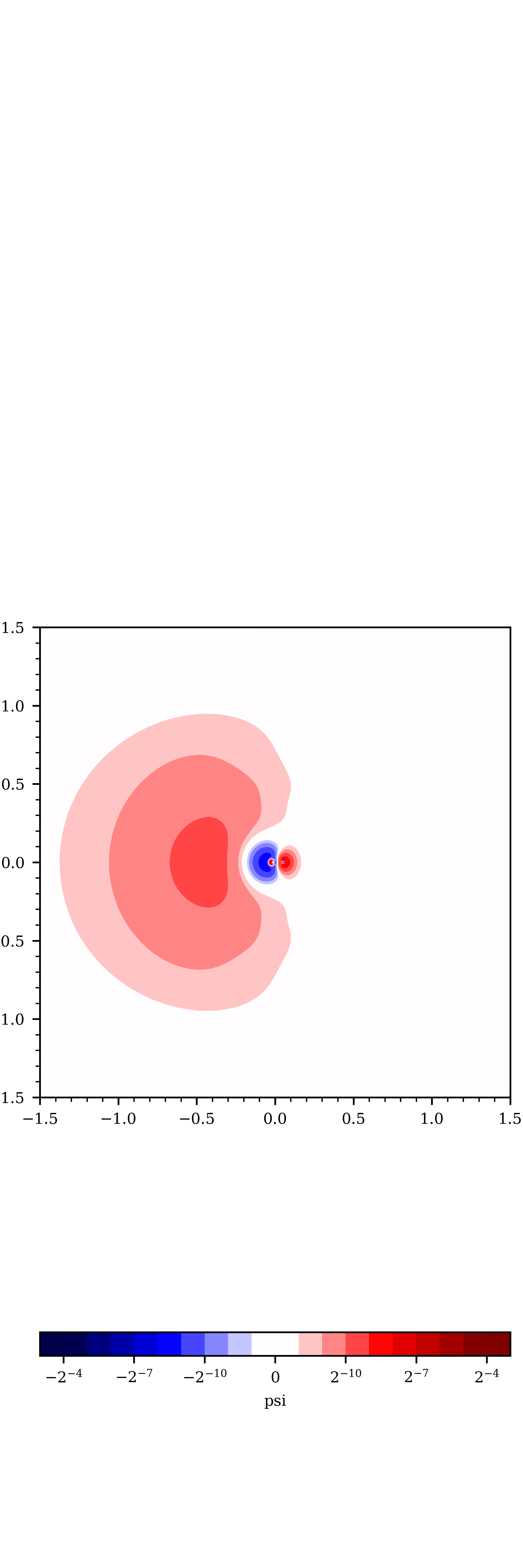
Fig 2: Cross sections of selected Hartree–Fock molecular orbitals ϕi(x, y, z) of LiK (upper row) and LiCs (lower row) in the yz plane of the
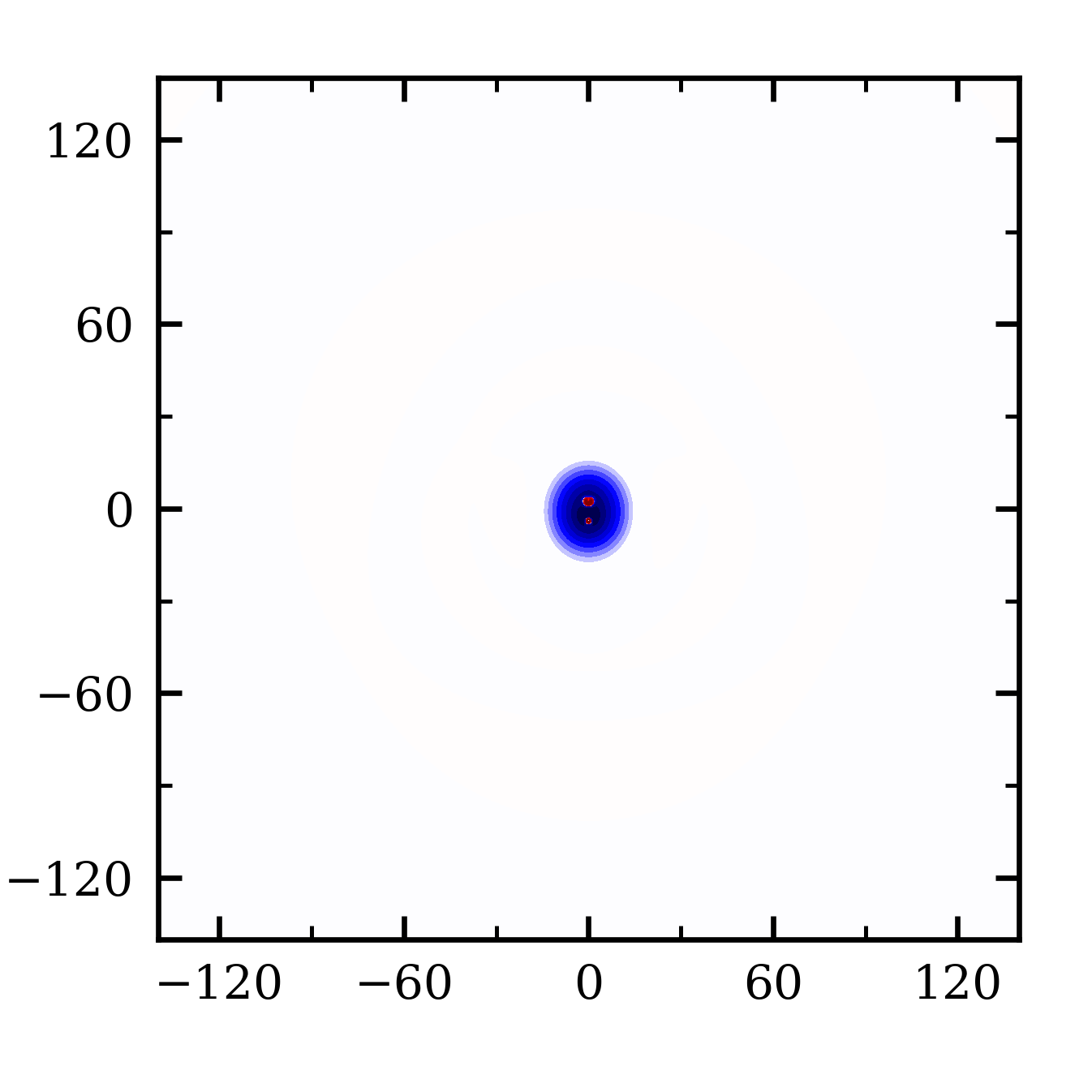
Fig 3: Electron binding energies of the dipole-bound states of the
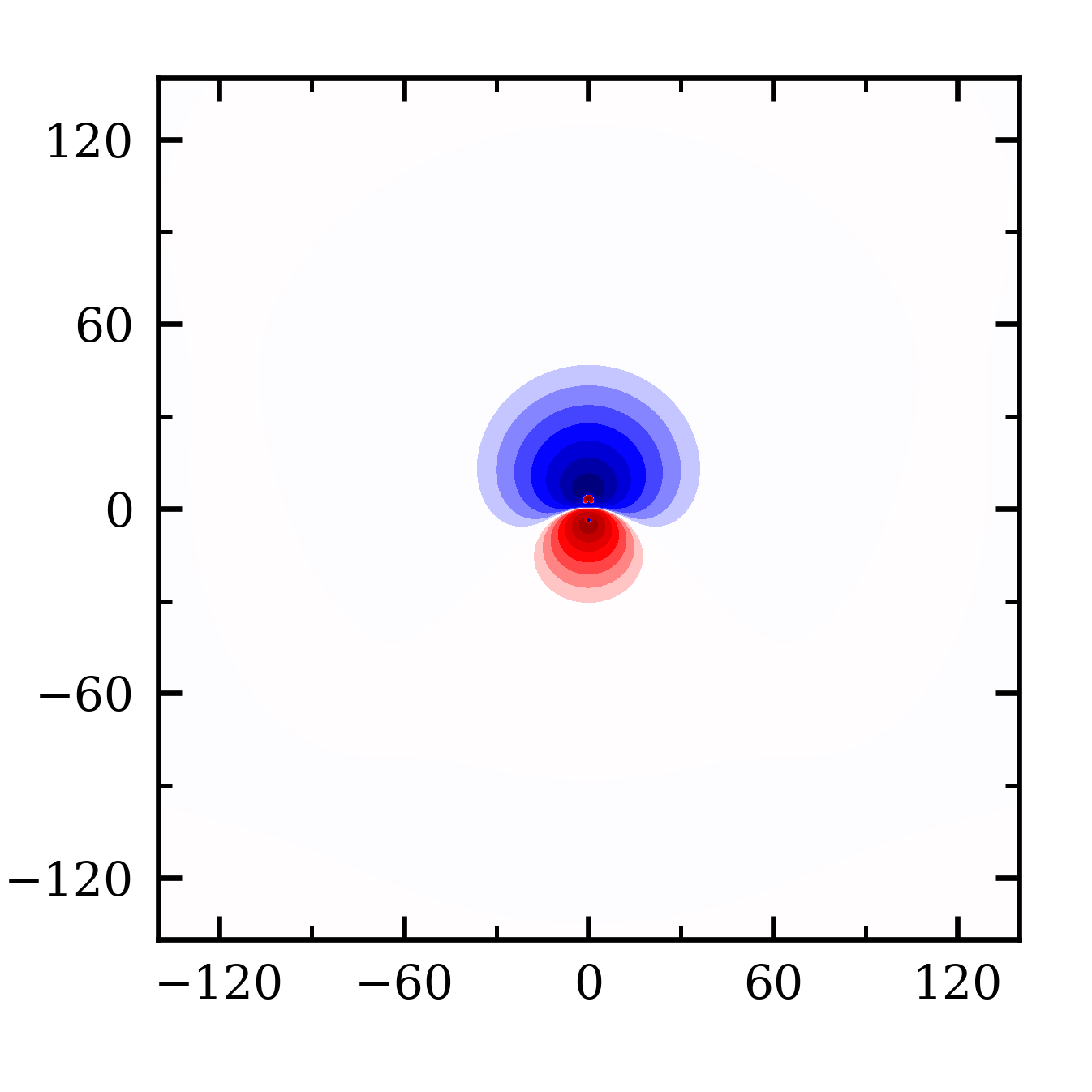
Fig 1: Potential energy curves for the lowest X2Σ+ and A2Σ+
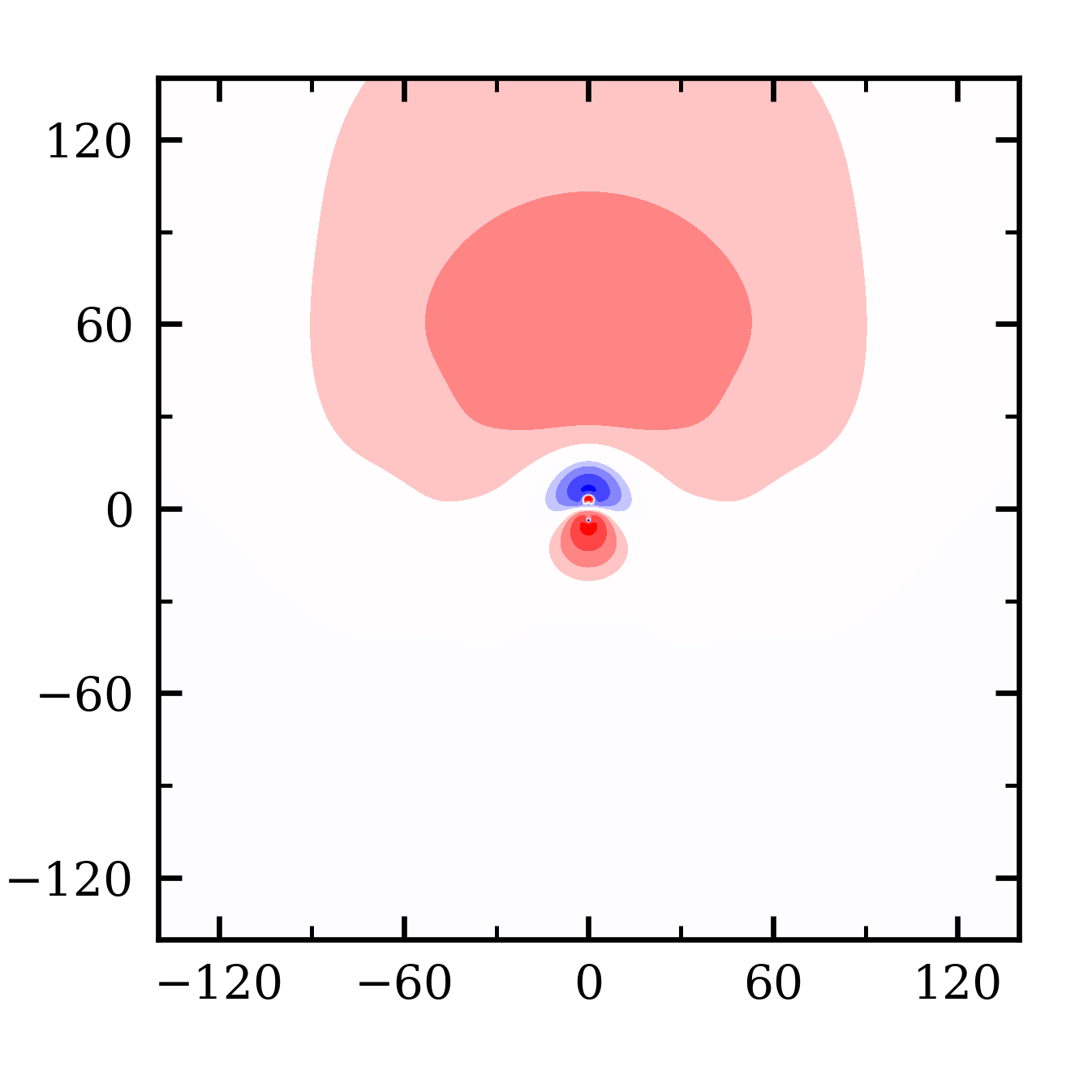
Fig 4: Potential energy curves of alkali-metal diatomic molecular anions in the ground X2Σ+ electronic state.
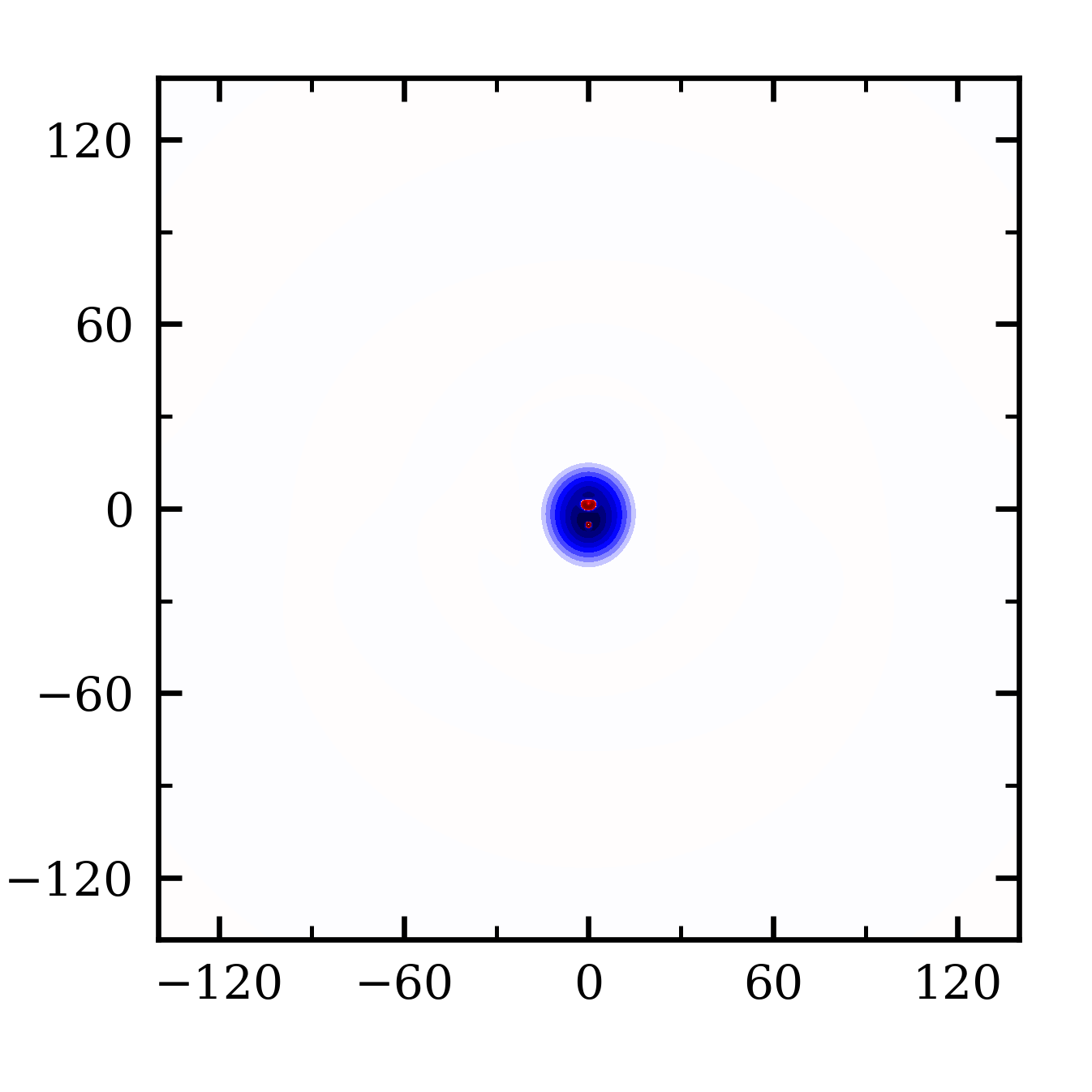
Fig 5 (page 6).
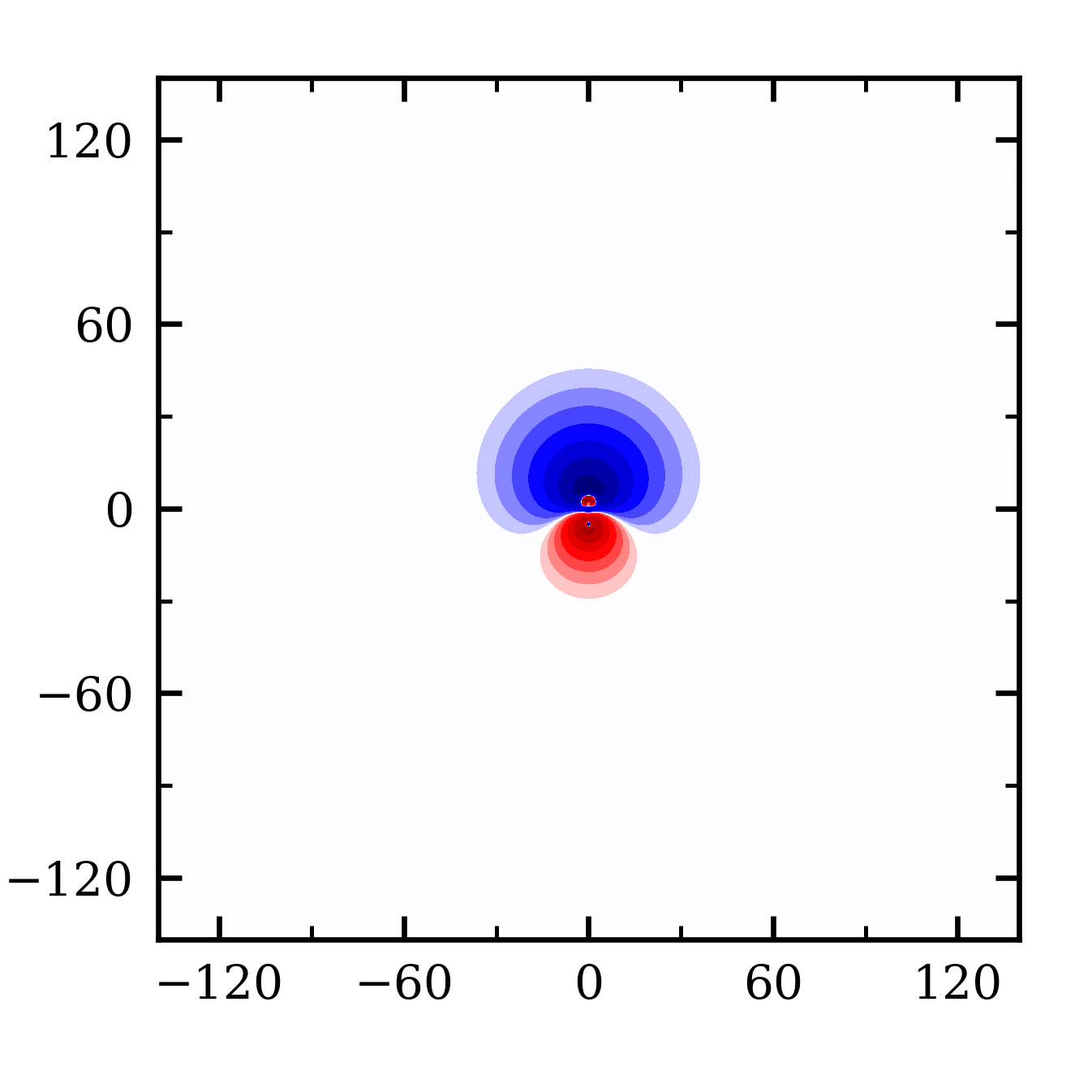
Fig 6 (page 6).
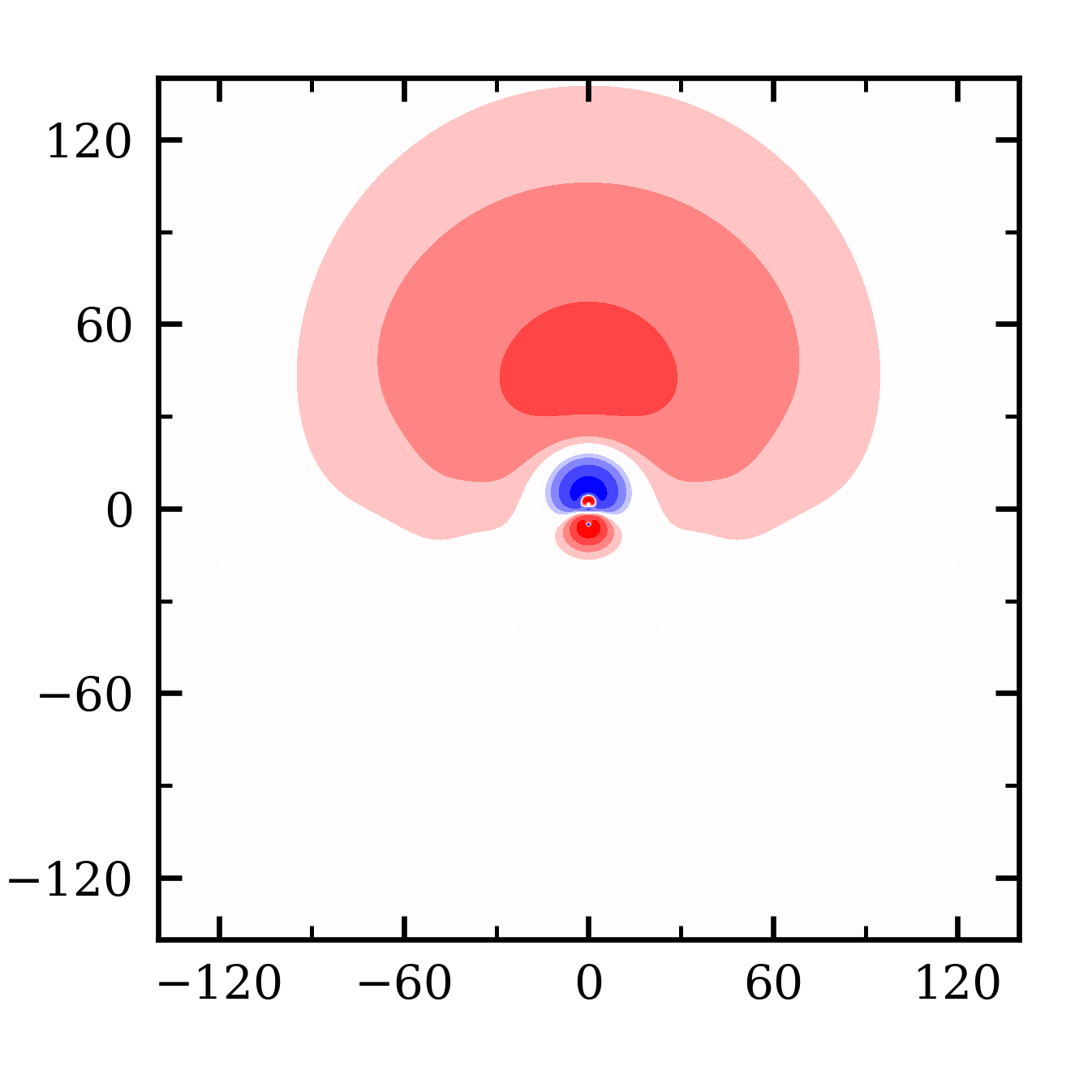
Fig 7 (page 6).
Limitations
- Electron affinities of alkaline-earth-metal atoms calculated are less accurate due to weakly bound or metastable anionic states, potentially introducing minor errors in molecular dissociation limits.
- The study focuses on equilibrium and near-equilibrium properties; dynamic processes like electron detachment lifetimes and resonant scattering cross sections remain unexplored.
- The treatment of excited temporary anionic states embedded in the continuum is approximate, using bound-state methods without explicit resonance theory.
- No direct experimental validation for many predicted anionic states and spectroscopic constants due to scarcity of experimental data for these species.
- Molecular rotational and vibrational excitation effects on dipole-bound states are theoretically predicted but not experimentally confirmed.
- Strong spin-orbit coupling effects, especially in heavy atoms like Fr and Ra, are included only via scalar relativistic pseudopotentials and may require more sophisticated treatment.
Open questions / follow-ons
- How do non-adiabatic and spin-orbit coupling effects influence the electronic structure and stability of the excited anionic states, particularly near crossings with neutral states?
- What are the lifetimes and decay mechanisms of the predicted temporary anionic states embedded in the electron-detachment continuum?
- Can the resonant electron attachment pathways predicted from state crossings be experimentally observed and harnessed in ultracold molecular collisions?
- How do molecular rotations and vibrational excitations influence the formation, stability, and spectroscopy of dipole-bound states?
Why it matters for bot defense
Though not directly related to CAPTCHA or bot-defense, this paper provides deep quantum chemical insights into anionic states of molecular systems that could inspire advanced techniques in physical-based verification methods involving Rydberg atom interactions or ultracold molecules. Understanding resonant electron attachment and transient negative ion formation could potentially inform novel physical challenge designs that exploit quantum state lifetimes or dipole-bound electronic characters. However, practical application would require significant engineering to translate molecular physical chemistry results to verifiable bot-detection signals. In general, the rigorous methodological approach and comprehensive dataset can serve as a benchmark reference for any research intersecting quantum-controlled molecular systems and applied quantum sensing mechanisms in authentication frameworks.
Cite
@article{arxiv2608_05067,
  title={ Diatomic molecular anions of alkali-metal and alkaline-earth-metal atoms },
  author={ Sana Akkari and Hela Ladjimi and Wissem Zrafi and Hamid Berriche and Marcin Gronowski and Michał Tomza },
  journal={arXiv preprint arXiv:2608.05067},
  year={ 2026 },
  url={https://arxiv.org/abs/2608.05067}
}