
CoPlan: A Trustworthy Co-Intelligence Interface for Care Planning through Role-Based Contestable Argument Graphs
Source: arXiv:2608.05107 · Published 2026-08-05 · By Hung Truong Thanh Nguyen, Hélène Fournier, Piper Jackson, Makoto Itoh, Shannon Freeman, Rene Richard et al.
TL;DR
This paper addresses the challenges of AI-supported care planning, where multiple stakeholders such as clinicians, patients, and caregivers must coordinate complex decisions that integrate clinical evidence, patient values, and contextual feasibility. Traditional AI care planning systems often present recommendations as fixed outputs, limiting users' ability to inspect, challenge, and revise plans, which undermines trust and clinical accountability. To overcome this, the authors introduce CoPlan, an interactive, multi-agent interface that emphasizes co-intelligence and contestability. Specialized AI agents generate candidate care interventions along with supporting and challenging arguments structured in a bipolar argument graph. Human care planners engage in structured contestation, accepting, rejecting, modifying, or adding arguments before a final care plan is synthesized with validated evidence and expert input.
CoPlan is demonstrated in an aging-in-place scenario involving older adults needing coordinated care across multiple domains. The system recruits role-based AI agents according to patient complexity, iteratively generates and scores arguments via a quantitative bipolar argumentation framework, and supports a human-in-the-loop review interface that makes reasoning transparent and editable. This design contrasts with opaque AI planners by keeping the decision dynamic, auditable, and adaptive to human judgment. The final plan integrates argument validity, evidence references, and scheduled interventions, preserving human agency and clinical responsibility. The paper contributes both a contestable care planning interface and a novel design framing for trustworthy, multi-agent human-AI collaboration in sensitive healthcare contexts.
Key findings
- CoPlan's quantitative bipolar argumentation framework iteratively updates argument confidence scores combining intrinsic validity with support and challenge relations until convergence.
- The patient analysis agent assigns case complexity levels (low, moderate, high, very high) from interRAI home care assessment data to adaptively recruit a multidisciplinary care team of up to 10 specialized AI provider agents.
- Each AI provider agent generates 2-3 supporting and challenging arguments per candidate care option, reflecting their professional role and expertise.
- Role-based argument contestation lets human care planners accept, reject, modify, or add arguments, producing a revised argument set revalidated with updated confidence scores.
- Final care plans prioritize interventions with highest aggregated argument validity scores, integrating evidence citations, risk mitigation strategies, and implementation steps.
- The interface supports inspectable and editable argument graphs by role, fostering transparency and enabling users to override or augment AI reasoning.
- Integration with Model Context Protocol (MCP) agents enables automated scheduling and follow-up implementation of agreed care plan interventions.
- Demonstrative scenario showed prioritization of home safety assessment, social engagement, and health monitoring as top validated care recommendations.
Threat model
N/A (The paper does not posit a traditional adversarial security threat model but addresses a trust and human agency challenge where AI recommendations can be incomplete, biased, or misaligned with clinical judgment. The 'adversary' is the opaque or static AI output that cannot be meaningfully contested or revised by human users, risking unsafe or infeasible care plans. The system assumes honest participants aiming to collaboratively negotiate care rather than actively malicious actors.)
Methodology — deep read
The paper proposes a formal multi-agent, human-in-the-loop care planning system with a structured workflow across four stages.
Threat Model & Assumptions: The adversary scenario is not explicitly a security threat model but focuses on trust challenges where AI-generated care recommendations can be incomplete, unsafe, biased, or misaligned with patient values or clinical judgment. The adversary can be considered as the opaque or overconfident AI resulting in inappropriate or uncontestable recommendations. Humans must retain authority to inspect and revise plans. The model assumes availability of structured patient data and expert clinical input.
Data: The system uses detailed patient profiles derived from the interRAI Home Care assessment dataset, a widely used multidimensional clinical instrument capturing diagnoses, functional status, psychosocial risks, and environmental factors. From this, a structured patient description P with multiple features is constructed. A medical knowledge vector database is queried via retrieval augmentation to supply evidence D relevant to patient conditions and interventions. The demonstration scenario uses this setup but evaluation on larger datasets or in real clinical deployments is not reported.
Architecture / Algorithm: CoPlan employs multiple specialized AI provider agents A, each representing a clinical role (e.g., nurse, pharmacist, social worker) with domain-specific prompts to generate candidate care options O and argument sets Γ. The core algorithmic novelty is applying a quantitative bipolar argumentation framework (QBAF) over role-labeled arguments. QBAF defines support R+ and challenge R− relations among arguments, each weighted. Each argument x has an intrinsic validity score τ(x) estimated by LLM-based scoring prompts evaluating factual accuracy, clinical relevance, and reasoning transparency. An iterative update computes final argument confidence scores f(x) combining τ(x) with weighted influences from supporting and attacking arguments until convergence. Option-level confidence scores F(oi) aggregate supporting and challenging argument scores.
The human-in-the-loop contestation phase enables reviewing, editing, rejecting, or adding arguments via an interactive graph review interface grouped by provider role. After human edits, the revised argument set ΓH undergoes revalidation of intrinsic and final scores maintaining semantic coherence.
The final care plan operator Π synthesizes prioritized recommendations, risk mitigation strategies, implementation details, and citations based on the validated argument graph and evidence set D. The system includes a chatbot assistant for ongoing clarifications. The Model Context Protocol (MCP) agent translates care plan items into scheduleable actions for practical follow-up.
Training regime: The system is prompt-driven with lightweight LLM calls for classification, argument generation, and scoring. No traditional model training, fine-tuning, or specific hyperparameter settings are reported. The approach relies on prompt engineering and multi-agent coordination rather than supervised learning.
Evaluation protocol: The reported evaluation is demonstrative and qualitative, focusing on interpretability, argument graph clarity, human oversight, and the logical flow from patient data to validated care plans in aging-in-place scenarios. No quantitative metrics, benchmark comparisons, cross-validation, or adversarial tests are presented.
Reproducibility: The implementation is publicly available at https://github.com/Analytics-Everywhere-Lab/CAIAiPCP/, supporting direct interface interaction and demonstration. Data privacy and detailed datasets (such as patient records) are not openly released due to sensitivity.
Concrete Example End-to-end: For an aging-in-place patient described by interRAI data, the system extracts clinical and functional features, assigns complexity to recruit provider roles (e.g., nurse, occupational therapist). Candidate interventions such as home safety modifications or walking programs are generated. Each role-based agent provides supporting and challenging arguments (e.g., "install grab bars reduces fall risk" vs "patient refuses walker indoors"). These arguments form a weighted graph iteratively scored by QBAF. A human planner reviews the argument nodes, edits or adds points, triggering rescoring. The final care plan prioritizes feasible, validated interventions with evidence citations and schedules follow-up steps, maintaining continuous inspectability and human control throughout.
Technical innovations
- Integration of role-based specialized AI agents generating both supporting and challenging arguments per care option to enhance multi-perspective deliberation.
- Use of Quantitative Bipolar Argumentation Framework (QBAF) to iteratively compute argument and option confidence scores based on weighted support and challenge relations.
- Human-in-the-loop contestation interface enabling review, modification, addition, and removal of arguments within an editable argument graph structured by clinical roles.
- Adaptive recruitment of care team AI agents based on patient complexity derived from structured interRAI assessment data.
- Coupling argument validity scoring with evidence retrieval augmentation to ground arguments in relevant historical medical knowledge.
Datasets
- interRAI Home Care assessment — thousands of standardized clinical records from community and long-term care settings — proprietary clinical dataset
- Historical medical vector database — size unspecified — internal vectorized medical knowledge base supporting retrieval-augmented generation
Baselines vs proposed
- No quantitative baseline models or metrics reported; evaluation limited to demonstrative aging-in-place care planning scenario highlighting feasibility and transparency.
Figures from the paper
Figures are reproduced from the source paper for academic discussion. Original copyright: the paper authors. See arXiv:2608.05107.
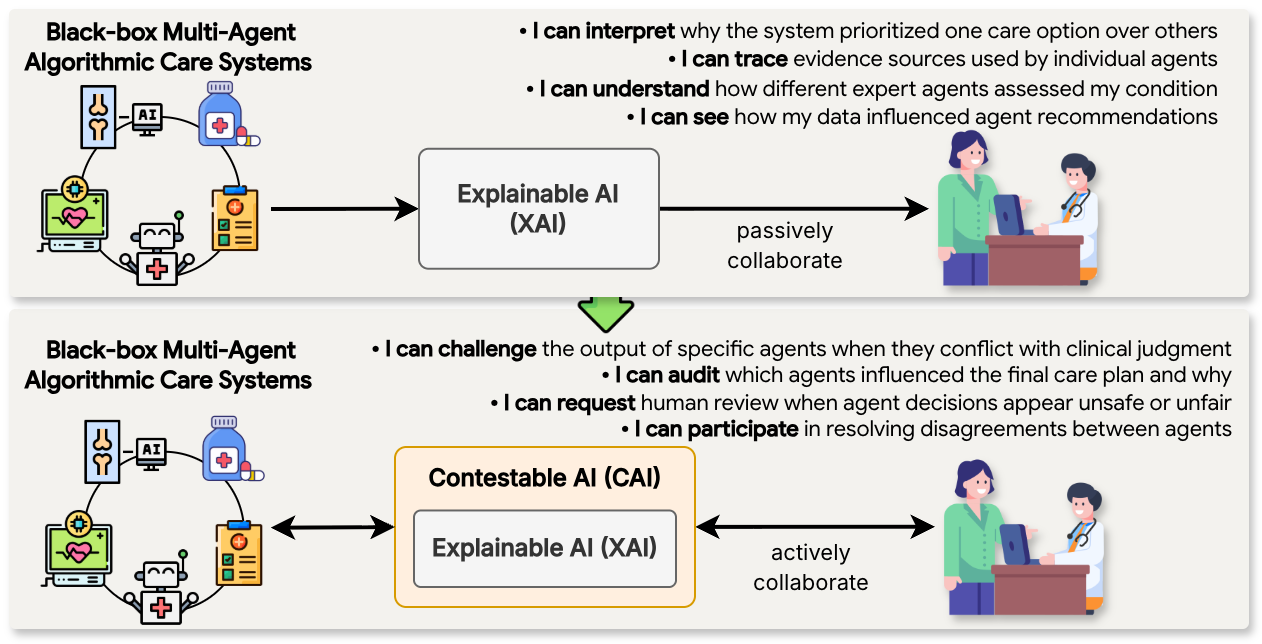
Fig 1: Human-AI Co-Intelligence Mechanism through Contestability for Agentic AI
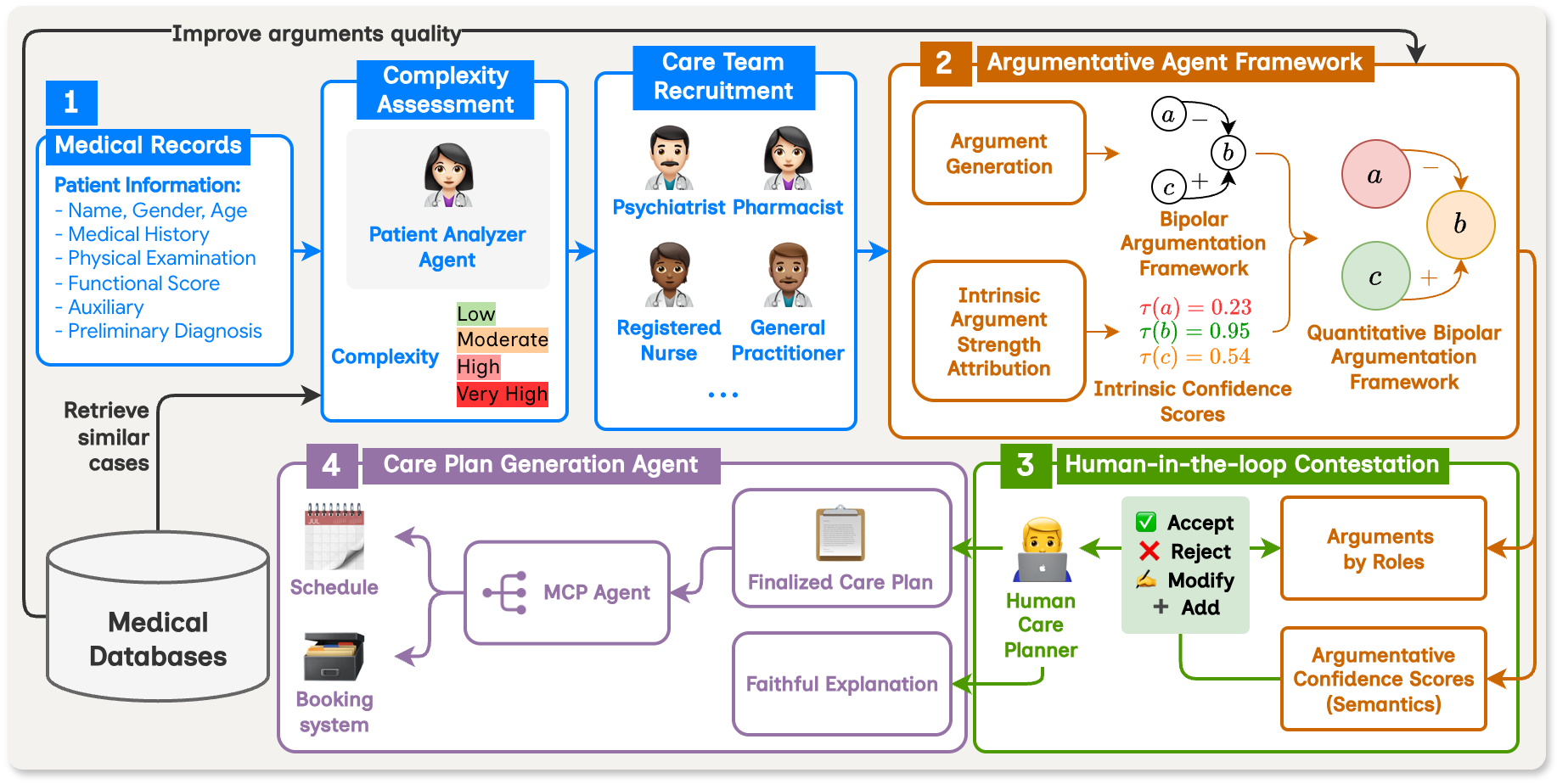
Fig 2: Our proposed Role-based Contestable Argument Graph Computation Workflow
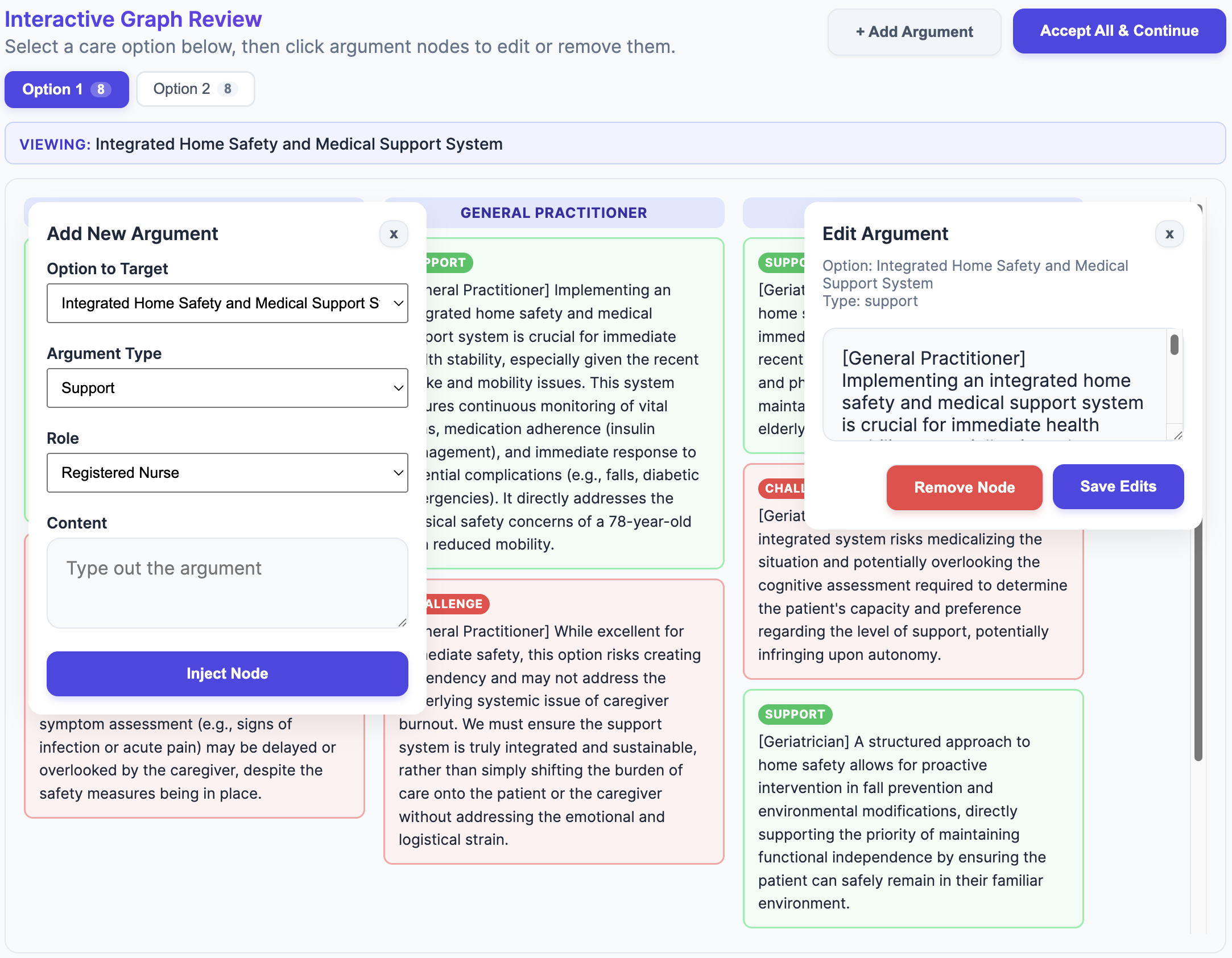
Fig 3: Interactive Graph Review Panel for role-based human-in-the-loop contestation.
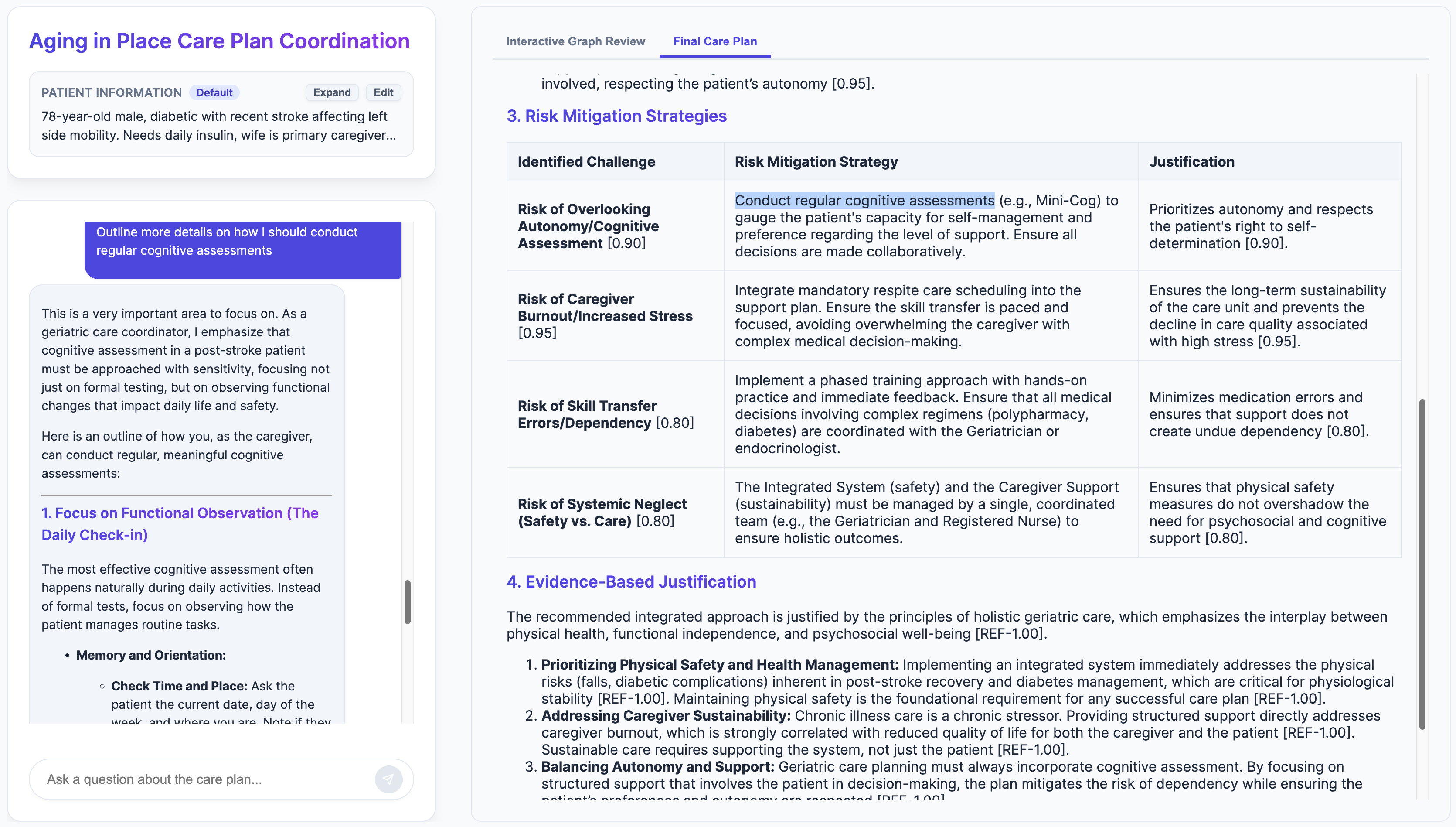
Fig 4: Final Care Plan Viewer (right panel) and Chatbot Assistant (left panel) for
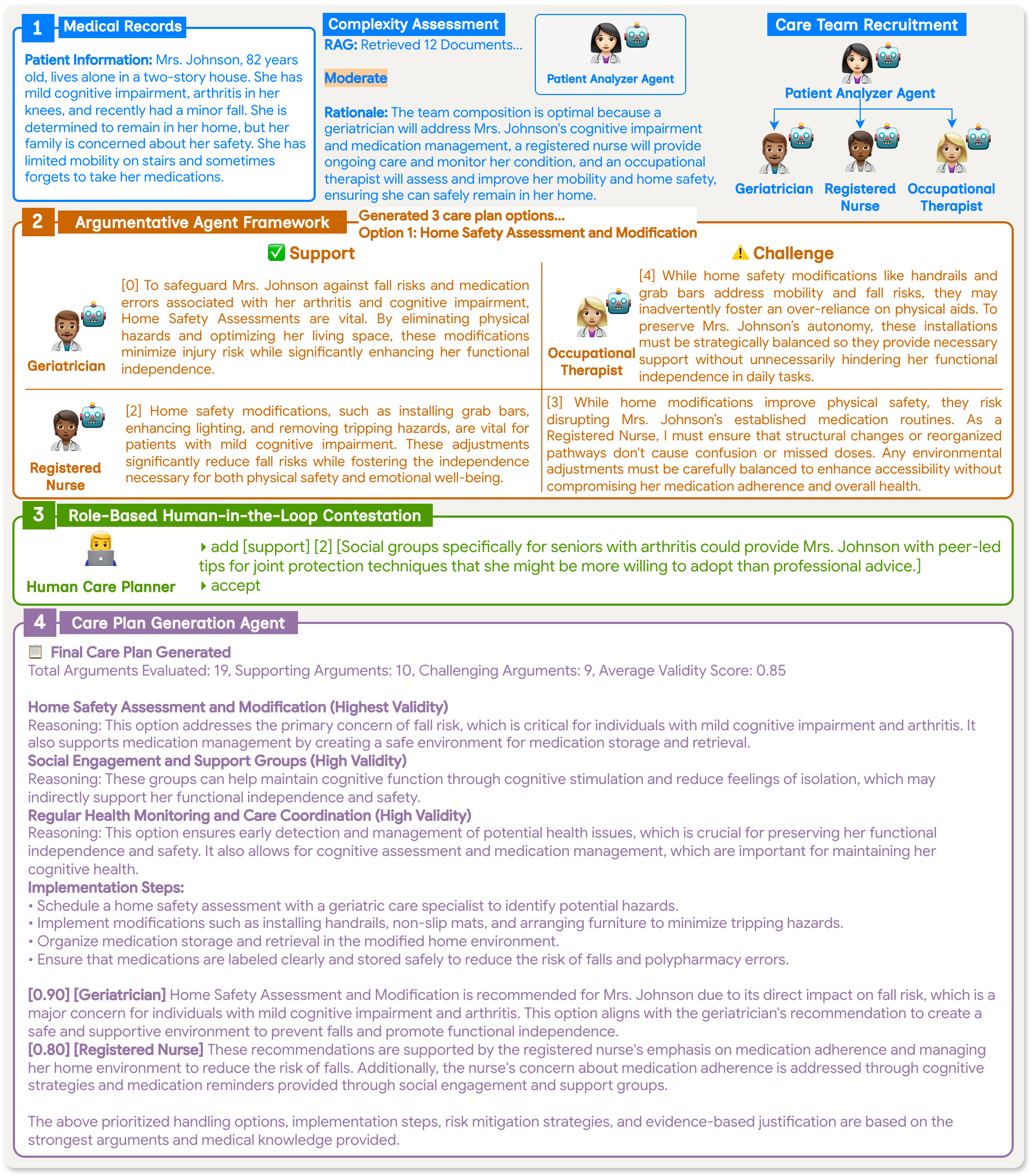
Fig 5: Demonstrative result of CoPlan in an aging-in-place care planning scenario.
Limitations
- No quantitative or comparative evaluation against existing AI care planning or multi-agent systems is performed.
- Validity and confidence scores support human review rather than fully autonomous decision-making, limiting automation potential.
- The system demonstration focuses on a single aging-in-place scenario; generalizability to other care settings or patient populations is untested.
- No formal user studies reported to assess effectiveness, usability, or acceptance of contestable interfaces by clinicians or patients.
- Potential reliance on quality and completeness of interRAI data and medical knowledge base retrieval affects robustness.
- No assessment of real-world performance under distribution shifts, adversarial inputs, or resource-constrained environments.
Open questions / follow-ons
- How do alternative argument aggregation and weighting methods affect transparency, fairness, and decision legitimacy in care planning?
- Can human stakeholders effectively use contestability features to express value-based or contextual concerns in complex care scenarios?
- What is the impact of CoPlan interfaces on clinical workflow efficiency, user satisfaction, and patient outcomes in large-scale deployments?
- How can the system be extended to incorporate continuous feedback loops from care plan implementation and evolving patient states?
Why it matters for bot defense
While CoPlan focuses on AI-supported healthcare planning rather than security or bot defense, the work offers important lessons for CAPTCHA and bot-defense engineers interested in trustworthy AI interfaces that preserve human agency. The contestability mechanism — enabling users to inspect, challenge, and modify AI-generated outputs in a structured and role-based manner — could inspire interfaces that expose decision logic behind bot detection or challenge generation. Similarly, the multi-agent argumentative framework illustrates managing conflicting evidence and viewpoints to achieve robust recommendations, which may be analogous to aggregating signals from diverse detection components. Lastly, the emphasis on co-intelligence and human-in-the-loop oversight aligns with CAPTCHA systems that require nuanced human evaluation beyond binary accept/reject outputs. However, the specific domain constraints and evaluation methodologies differ significantly from security-focused AI tasks.
Cite
@article{arxiv2608_05107,
  title={ CoPlan: A Trustworthy Co-Intelligence Interface for Care Planning through Role-Based Contestable Argument Graphs },
  author={ Hung Truong Thanh Nguyen and Hélène Fournier and Piper Jackson and Makoto Itoh and Shannon Freeman and Rene Richard and Hung Cao },
  journal={arXiv preprint arXiv:2608.05107},
  year={ 2026 },
  url={https://arxiv.org/abs/2608.05107}
}