
DyFrDet: Towards Accurate Small Object Detection via Dynamic Frequency Suppression with Label Disambiguation
Source: arXiv:2608.02495 · Published 2026-08-03 · By Zihan Yang, Yang Guo, Hongxing Zhang, Dan Lu, Siyuan Yao
TL;DR
This paper addresses the challenging problem of small object detection (SOD), where limited visual cues and label ambiguity impede accurate localization. Previous SOD methods mainly focus on constructing discriminative spatial features, largely ignoring the impact of noise in frequency domains and ambiguous bounding box labels. DyFrDet introduces a novel approach that dynamically suppresses irrelevant frequency components—both low-frequency redundancies and high-frequency noise—to enhance feature discriminability for small objects. It also employs a label disambiguation module that models bounding box regression probabilistically to mitigate annotation uncertainties. Extensive evaluation on large-scale benchmarks like AI-TOD and SODA shows DyFrDet consistently outperforms prior state-of-the-art detectors across diverse small object categories, in both sparse and dense settings. Ablations demonstrate the effectiveness of dynamic frequency suppression and label disambiguation individually and jointly.
Key findings
- DyFrDet improves average precision (AP) by 3.6% absolute over HS-FPN on AI-TOD dataset (AP: 28.7% vs 25.1%).
- Dynamic frequency suppression surpasses static fixed-threshold suppression, gaining +0.7% AP on AI-TOD (26.0% vs 25.3%).
- Combining frequency features and spatial features as input to Dynamic Band Predictor boosts AP by 1.2% over using only frequency or spatial features alone.
- Label Disambiguation Module yields +0.8% AP over baseline without it, helping resolve localization uncertainty.
- Moderate suppression rate (β=0.5) balances noise removal and feature retention, leading to best AP (26.0%) on AI-TOD.
- On SODA-A benchmark, DyFrDet improves AP by 4.6% over previous best GauCho method (37.8% vs 33.2%).
- On SODA-D, DyFrDet outperforms HS-FPN by 1.7% AP (31.3% vs 29.6%) demonstrating robustness in cluttered urban scenes.
- Ablation confirms DyFrFPN and LDM independently improve AP by ~1.3% and 0.8% respectively, with combined gain of 2.4%.
Threat model
Not a traditional security threat model; the paper addresses challenges posed by natural data noise, background distractors, and annotation ambiguity inherent in small object detection tasks rather than adversarial attackers. The implicit adversary is complex scene clutter and uncertain labels.
Methodology — deep read
This work targets adversaries inherent in natural scene complexity and label noise rather than explicit malicious attacks, focusing on improving model robustness and precision.
DyFrDet's input images are passed through a ResNet-50 backbone to extract hierarchical feature maps at four scales, reduced spatially by factors of 4 to 32. These are processed by a traditional Feature Pyramid Network (FPN) to generate multi-scale aggregated features.
Each pyramid feature is transformed into frequency domain representations via Fast Fourier Transform (FFT), separating the feature maps into amplitude and phase components. The amplitude and phase are passed through convolutional blocks to learn refined frequency features before inverse transforming back to spatial domain.
A Dynamic Band Predictor (DBP) uses both the frequency-domain and spatial-domain features to predict two channel-wise suppression thresholds (α1 and α2) that define a frequency band to keep. Frequencies outside this band (low-frequency redundant and high-frequency noisy components) are suppressed multiplicatively by a coefficient β (set empirically). This dynamic suppression is performed per channel and evolves during training.
To combat label ambiguity from low-resolution small objects with unclear boundaries, DyFrDet models bounding box regression outputs as Gaussian distributions with learned means and variances representing localization uncertainty. The ground truth is treated as a Dirac delta distribution. The model minimizes the Kullback–Leibler divergence between predicted and ground-truth distributions rather than just L1 loss, reweighted via a function that penalizes ambiguous samples less.
Training is performed on AI-TOD and SODA datasets with 36 and 12 epochs respectively, using an RTX 3090 GPU. The dynamic frequency suppression activates after warm-up epochs for stable learning. Performance is evaluated using COCO-style AP metrics at various IoU thresholds and object scales. Ablation studies verify each component's contributions. Qualitative visualizations demonstrate reduced noise and more precise localization.
Overall, DyFrDet tightly integrates dynamic frequency-domain feature modulation with probabilistic label disambiguation to robustly enhance small object detection accuracy under challenging conditions. The approach is implemented as an extension to existing detectors by replacing FPN with DyFrFPN and adding LDM for bounding box refinement.
The full model leverages learned attention-based thresholds for frequency suppression adapting channel-wise to image context, providing a flexible and effective denoising capability that prior static filtering methods lack. The probabilistic modeling of bounding boxes explicitly addresses annotation uncertainty quantitatively, improving training stability and final performance.
Technical innovations
- Introduction of Dynamic Frequency-aware Feature Pyramid Network (DyFrFPN) that decomposes and dynamically suppresses frequency components to reduce both low-frequency redundancies and high-frequency noise per channel.
- Dynamic Band Predictor (DBP) leveraging combined frequency and spatial features to predict channel-wise adaptive suppression thresholds, enabling flexible frequency filtering tailored for small object detection.
- Label Disambiguation Module (LDM) that models bounding box regression outputs as Gaussian distributions with learned covariance to represent localization uncertainty, handling annotation ambiguity via a probabilistic loss.
- Weighted loss rebalancing that penalizes ambiguous samples less during training based on predicted localization uncertainty scores, improving robustness to noisy labels.
Datasets
- AI-TOD — 28,036 aerial images with 700,621 instances in 8 categories — public aerial object detection benchmark
- SODA-A — 2,513 aerial images with 872,069 oriented bounding boxes — public dataset focusing on dense, oriented small objects
- SODA-D — 24,828 high-resolution images with 278,433 annotated instances in 9 categories — public dataset with diverse real-world driving scenarios
Baselines vs proposed
- HS-FPN: AP = 25.1% vs DyFrDet: AP = 28.7% on AI-TOD test set
- GauCho: AP = 33.2% vs DyFrDet: AP = 37.8% on SODA-A test set
- HS-FPN: AP = 29.6% vs DyFrDet: AP = 31.3% on SODA-D test set
- Static frequency suppression (α1=0.05, α2=0.95): AP = 25.3% vs Dynamic suppression: AP = 26.0% on AI-TOD
- DyFrFPN + LDM: AP = 26.0% vs Baseline (FPN + L1 loss): AP = 23.6% on AI-TOD
Figures from the paper
Figures are reproduced from the source paper for academic discussion. Original copyright: the paper authors. See arXiv:2608.02495.
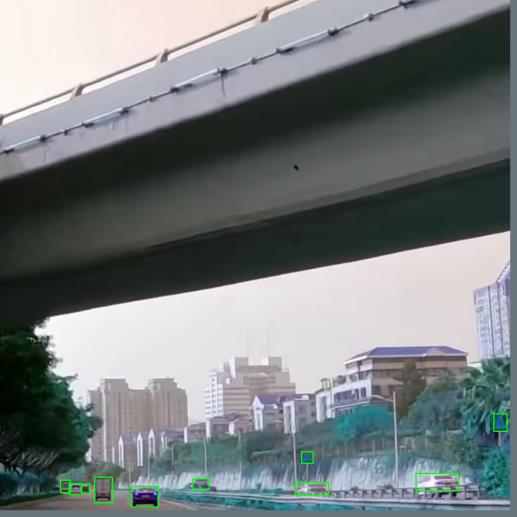
Fig 1: (a) Visualization of the heatmap using different
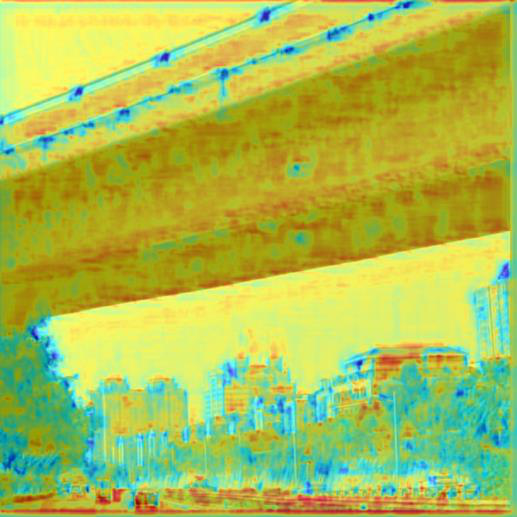
Fig 2: The overall architecture of DyFrDet consists of two main components: Dynamic Frequency-aware Feature Pyramid
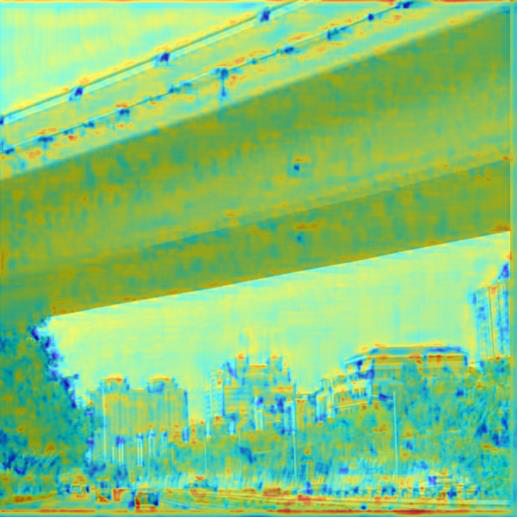
Fig 3 (page 2).
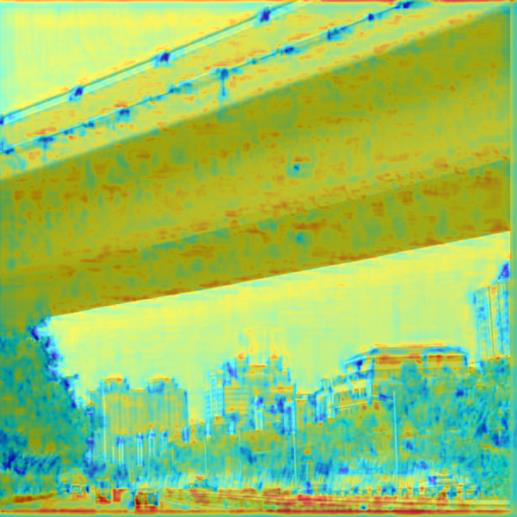
Fig 4 (page 2).
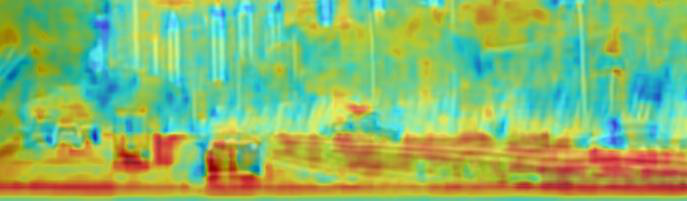
Fig 5 (page 2).

Fig 6 (page 2).
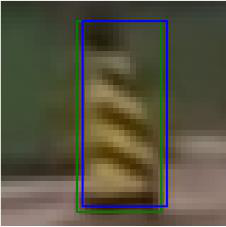
Fig 3: Visualization of different small objects under vary-
Fig 8 (page 5).
Limitations
- Experiments focus mainly on aerial and driving datasets; applicability to other domains with small objects remains untested.
- No adversarial robustness evaluation or tests against intentionally corrupted inputs to verify defense against attacks on frequency features.
- Dynamic suppression hyperparameters and training schedules require manual tuning; no exploration of automated or adaptive strategies.
- Label Disambiguation Module assumes Gaussian distribution for localization uncertainty; other uncertainty models were not explored.
- The code is open-source but datasets are large and computationally expensive setups (e.g., RTX 3090) may limit reproducibility.
Open questions / follow-ons
- How would DyFrDet perform on other small object detection domains such as medical imaging or microscopy?
- Can the dynamic frequency suppression thresholds be learned in a fully unsupervised manner without warm-up or predefined ranges?
- How robust is the frequency suppression and label disambiguation under adversarial perturbations or synthesized noise?
- Would alternative uncertainty models beyond Gaussian distributions further improve label disambiguation and localization?
Why it matters for bot defense
This paper offers a novel approach to enhancing small object detection by jointly modulating frequency domain features and modeling label uncertainty. For bot-defense and CAPTCHA practitioners, the dynamic frequency-aware filtering could inspire techniques to more robustly filter out noisy background or subtle artifacts that bots might exploit, especially in visual challenge tasks involving small or low-resolution elements. The label disambiguation approach also suggests probabilistic models could better handle inherent ambiguity during annotation or user interaction, potentially improving confidence estimation in failure-prone cases.
While not directly about bot detection or CAPTCHA, the adaptive frequency suppression presents an interesting avenue for denoising features in security-relevant visual classifiers and detectors. Likewise, treating bounding box predictions probabilistically might offer better calibration and uncertainty quantification, valuable for threat sensitivity. Overall, this work underscores the benefit of combining spatial and spectral representations and explicit modeling of uncertainty when fine-grained detection under noise is critical, insights applicable across bot-defense vision systems.
Cite
@article{arxiv2608_02495,
  title={ DyFrDet: Towards Accurate Small Object Detection via Dynamic Frequency Suppression with Label Disambiguation },
  author={ Zihan Yang and Yang Guo and Hongxing Zhang and Dan Lu and Siyuan Yao },
  journal={arXiv preprint arXiv:2608.02495},
  year={ 2026 },
  url={https://arxiv.org/abs/2608.02495}
}