
Temperature-driven transition between momentum-resolved and disordered averaged Coulomb drag in 1D systems
Source: arXiv:2607.29630 · Published 2026-07-31 · By Mingyang Zheng, Rebika Makaju, Rasul Gazizulin, Alex Levchenko, Sadhvikas J. Addamane, Dominique Laroche
TL;DR
This paper addresses the longstanding challenge of quantitatively probing electron-electron interactions in one-dimensional (1D) systems, specifically Coulomb drag in coupled Tomonaga-Luttinger liquids (TLLs). Previous experiments on 1D Coulomb drag faced difficulties due to disorder, extracting wire parameters, and interpreting drag signals, especially under magnetic fields. Here, the authors use vertically coupled GaAs/AlGaAs quantum wires with ultra-small interwire spacing (15 nm barrier, 33 nm separation) combined with magnetic depopulation and gate tuning to directly extract one-dimensional parameters like density and wire width. They report a clear temperature-dependent crossover in the drag resistance marking a transition between momentum-resolved and disorder-averaged Coulomb drag regimes. The experimental drag behavior (including oscillations with magnetic field, subband dependence, power-law and Arrhenius temperature scalings, and nonlinear I-V characteristics) quantitatively matches theoretical predictions for density-mismatched TLLs. This work thus establishes a unified, tunable experimental platform enabling quantitative comparison with 1D Coulomb drag theory and illuminating the role of disorder and density mismatch in momentum relaxation mechanisms.
Key findings
- Vertically coupled GaAs quantum wires with 33 nm vertical separation were fabricated enabling strong Coulomb drag signals despite disorder.
- Magnetic depopulation measurements extracted 1D carrier densities decreasing from 5×10^8 m^-1 to ~1×10^8 m^-1 and wire widths shrinking from ~220 nm to 120 nm upon gating.
- Coulomb drag resistance peaks align with 1D subband crossings and exhibit oscillations vs magnetic field matching magnetoconductance minima and maxima.
- Temperature dependence shows two regimes separated by crossover temperature T1 ~3 K at zero field, decreasing roughly linearly with magnetic field.
- In the mid-temperature regime (T < T1), drag resistance follows a power law ρ_D ∝ T^{4K-3} with Luttinger liquid parameter K ≈ 0.5 in the spin-polarized regime.
- At high temperatures (T > T1), drag resistance follows an Arrhenius form ρ_D ∝ T^{-1} e^{-Q/T} determined by the Fermi momentum mismatch Q between wires.
- Nonlinear current-voltage drag measurements validate the predicted nonlinearities and momentum-mismatch dependence from TLL theory.
- Disorder effects relax momentum conservation below T1, leading to suppression of Q-dependent drag and explaining previously unphysical interaction parameter fits.
Methodology — deep read
Threat model and assumptions: The study assumes an experimental setting where electron-electron interactions dominate transport properties in quasi-one-dimensional quantum wires. Disorder potentials from impurities and edge roughness are acknowledged but treated as reducible by gating and magnetic fields. Theoretical modeling assumes Tomonaga-Luttinger liquid behavior with repulsive interactions and includes momentum-relaxation effects. The drag measurements isolate reciprocal momentum-transfer contributions by choosing gate voltages producing nearly symmetric potentials.
Data provenance, size, labels, splits, preprocessing: Experimental data were collected from molecular beam epitaxy-grown bilayer GaAs/AlGaAs heterostructures with two 18-nm quantum wells separated by a 15-nm AlGaAs barrier. Transport and Coulomb drag measurements were taken on vertically coupled quantum wires defined by electrostatic gates and independently contacted. Gate sweeps to vary confinement and density were performed over wide voltage ranges and magnetic fields from 0 to 9 T, at temperatures from sub-10 mK to several Kelvin. Temperature, magnetic field, and gate voltage were the main control parameters. Data include two-dimensional maps of drag voltage vs plunger gates, conductance measurements, and nonlinear I-V curves. Raw and processed data and code are or will be publicly available.
Architecture / algorithm: The system consists of interacting one-dimensional quantum wires modeled as Tomonaga-Luttinger liquids (TLLs) with relative charge interaction parameter K. Coulomb drag arises from interwire momentum-transfer between TLLs with unequal densities, described by theoretical expressions for linear drag resistivity ρ_D = ρ_0 (T/E_0)^{4K-3} f(Q/T,K), where Q parametrizes the Fermi momentum mismatch. A crossover temperature T1 separates a low-temperature disorder-dominated regime with relaxed momentum conservation from a high-temperature momentum-resolved regime described by the TLL theory. Electron subbands are depopulated in magnetic fields, changing densities and effective masses; this is modeled by a parabolic electro-magnetic confinement potential yielding hybrid subbands.
Training regime: Not applicable (experimental condensed matter physics). Measurements were conducted with lock-in amplification and low-frequency AC excitation currents of 2 nA. Gate voltages were swept to capture conductance and drag behavior at different carrier densities, magnetic fields, and temperatures, ensuring reproducibility of features such as oscillations and temperature scaling.
Evaluation protocol: Coulomb drag resistance was calculated from drag voltage and drive current. The dependence on temperature, magnetic field, and gate voltage was analyzed to extract scaling exponents and crossover temperatures. Fits were made in log-log and Arrhenius representations with coefficient of determination R^2 used to judge fit quality. Comparisons were made with theoretical predictions for both spin-polarized and spinful TLL regimes. Nonlinear drag I-V characteristics were examined by decomposing symmetric (reciprocal) and antisymmetric drag components. Magnetic depopulation data of conductance provided independent measurements of densities and subband occupancies.
Reproducibility: Experimental device fabrication details and measurement configurations are described fully. Data and analysis codes are to be made publicly available via Zenodo. Some raw data underlying figures will be released post-publication, enabling reproduction of key results. Theoretical models applied are standard in literature, and fitting procedures are well described.
A concrete example: At 3.3 T in the spin-polarized regime, the drag resistance peak at aligned subbands exhibits power-law temperature dependence with an exponent consistent with K ≈ 0.5, confirming TLL interaction strength. Away from peak, suppression follows Arrhenius law due to momentum mismatch. Nonlinear I-V drag measurements show nonmonotonic voltages consistent with predicted momentum-mismatch thresholds.
Technical innovations
- Demonstration of systematic extraction of 1D wire parameters via magnetic depopulation enabling quantitative comparison with Coulomb drag theory.
- Identification of a temperature-driven crossover T1 separating disorder-dominated and momentum-resolved Coulomb drag regimes in 1D wires.
- Observation and analysis of doping-, field-, and temperature-dependent oscillations in Coulomb drag linked to spin-resolved magnetic subband depopulation.
- Extension of nonlinear Coulomb drag measurements validating theoretical predictions for momentum-mismatched Tomonaga-Luttinger liquids.
Datasets
- Device measurements: Two vertically coupled GaAs/AlGaAs quantum wires — experimental device in this study
- Supplementary datasets: Multidimensional drag and conductance maps across gate voltage, magnetic field, and temperature ranges — derived from device fabrication
Baselines vs proposed
- No explicit baseline models reported; comparison made to prior theoretical expressions for 1D Coulomb drag in TLLs [21], showing quantitative agreement for extracted Luttinger parameter K ≈ 0.5 versus previous less precise estimates.
- Previous work without magnetic field observed crossover temperature T1 ≈1.5 K; current device shows T1 ≈3 K at 0 T, decreasing with magnetic field, indicating improved disorder suppression.
Figures from the paper
Figures are reproduced from the source paper for academic discussion. Original copyright: the paper authors. See arXiv:2607.29630.
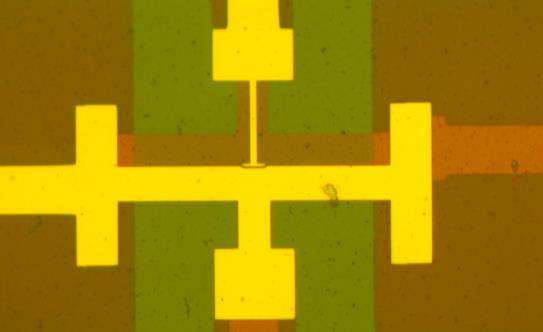
Fig 1: Onsager relation and Drag signal subband dependence. a, Microscope image of the
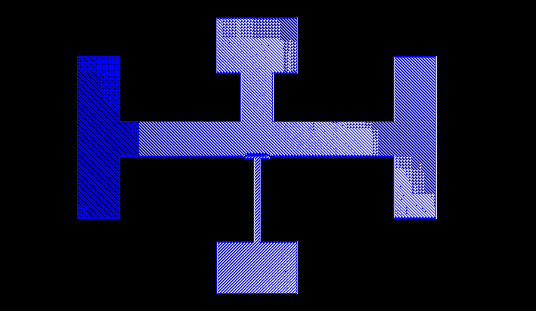
Fig 2: Coulomb drag between magnetic depopulated wires. a, 2D map of the top (drag)
Limitations
- Residual disorder remains and influences drag at low temperatures, complicating interpretation in spinful regime with unphysical Luttinger K values extracted.
- The theoretical model does not fully capture the non-monotonic dependence of drag oscillation magnitude on magnetic field; more precise modeling including explicit interactions is needed.
- Device geometry (vertically coupled wires) and fabrication complexity limit generalizability to other 1D systems or lateral coupling.
- Nonreciprocal drag contributions are only briefly discussed; this work focuses on reciprocal drag regime limiting broader applicability.
- Temperature range maxes at ~3.2 K restricting observation of higher temperature behavior beyond crossover.
- Data limited to GaAs/AlGaAs heterostructure system; materials dependence is unclear.
Open questions / follow-ons
- How can disorder be further reduced or controlled to extend the momentum-resolved drag regime to lower temperatures and other materials?
- What is the quantitative theoretical description of drag signals including both reciprocal and nonreciprocal components in presence of realistic disorder?
- Can similar temperature-driven crossovers be observed in laterally coupled wires or other 1D systems such as carbon nanotubes or nanowires?
- How to engineer interaction parameters to optimize drag-related functionalities, such as heat harvesting or entanglement generation?
Why it matters for bot defense
While not directly related to CAPTCHA or bot defense, this work illustrates fundamental electron correlation effects in one-dimensional systems, relevant for understanding noise and signal fidelity at the nanoscale under interaction and disorder. The precise tuning and quantitative modeling capabilities demonstrated here could inspire approaches to detect or mitigate anomalous transport behaviors caused by adversarial electronic environments. For CAPTCHA engineers, the demonstration of disorder-bound crossover regimes and nonlinear current responses within tightly coupled nanowires could parallel scenarios where bot-like agents attempt to exploit subtle electronic or physical side channels, reinforcing the value of multi-parameter characterization (e.g. temperature, field) and rigorous modeling. Furthermore, the quantitative framework and measurement techniques developed here may inform future research in low-dimensional device security and robustness testing.
Cite
@article{arxiv2607_29630,
  title={ Temperature-driven transition between momentum-resolved and disordered averaged Coulomb drag in 1D systems },
  author={ Mingyang Zheng and Rebika Makaju and Rasul Gazizulin and Alex Levchenko and Sadhvikas J. Addamane and Dominique Laroche },
  journal={arXiv preprint arXiv:2607.29630},
  year={ 2026 },
  url={https://arxiv.org/abs/2607.29630}
}