
Release-free phononic crystal with strong microwave coupling
Source: arXiv:2607.29666 · Published 2026-07-31 · By Joey Frey, Paul Burger, Trond Hjerpekjøn Haug, Johan Kolvik, Raphaël Van Laer
TL;DR
This paper addresses a key challenge in phononic crystal cavities used for quantum information transfer: how to strongly couple them to microwave resonators while avoiding the thermal noise limitations inherent in suspended devices. Traditional phononic crystal cavities are suspended to minimize phononic radiation loss, but suspension degrades thermal anchoring and leads to excess noise under optical pumping. Release-free phononic crystals—where the device layer remains fully in contact with the substrate—solve the thermal problem but had not previously demonstrated strong electromechanical coupling.
The authors design, fabricate, and characterize a release-free electromechanical crystal cavity (EMC) in thin-film lithium niobate on both silicon and sapphire substrates. Their device maintains mechanical mode confinement below the substrate sound cone using total internal reflection and geometric softening, without suspension. They integrate this with a high-impedance NbTiN microwave resonator and demonstrate strong coupling with electromechanical coupling rates of approximately 30 MHz that exceed loss rates. Millikelvin measurements show mechanical quality factors above 10,000, with cooperativity reaching about 180, indicating coherent, low-noise interaction between phonons and microwave photons.
This work establishes release-free phononic crystals as scalable, compact interfaces bridging microwaves and gigahertz phonons suitable for emerging quantum transduction and hybrid quantum systems. They open a practical path toward low-noise, thermally anchored microwave-to-optical quantum transducers that avoid the noise and fabrication complexity of suspended cavities.
Key findings
- Electromechanical coupling rate gem/(2π) ≈ 30 MHz exceeds both mechanical and microwave loss rates on resonance.
- Cooperativity Cem ≈ 180 achieved at 10 mK, placing the system firmly in the strong-coupling regime.
- Mechanical quality factors Qi above 10^4 measured at millikelvin temperatures on both silicon and sapphire substrates.
- Room temperature mechanical quality factors of Qi ≈ 810 (silicon) and Qi ≈ 690 (sapphire), consistent with material loss limitations.
- Microwave resonator internal quality factor drops from ~75,000 to ~1,200 upon integration with EMC due to added loss channels.
- Measured external coupling rates γc/(2π) = 39.0 ± 13.9 kHz (silicon) and 96.3 ± 30.5 kHz (sapphire) with maximums 72.6 kHz and 198 kHz respectively.
- Mechanical resonance frequencies blue-shift by 50–100 MHz upon cooling from room temperature to 10 mK due to temperature-dependent stiffness.
- Removal of suspension enables direct thermal anchoring, mitigating excess heating that limits duty cycle in suspended devices.
Threat model
The primary threat is phononic radiation loss from the phononic crystal cavity into substrate acoustic modes, degrading quality factor and coherence. The device also battles thermal noise arising from optical pumping induced heating. The adversary is environmental phonon leakage and decoherence through substrate coupling. The device cannot avoid intrinsic material losses and fabrication disorder but aims to minimize radiation loss without suspension while maintaining thermal anchoring.
Methodology — deep read
The authors begin with the threat model of phononic radiation loss from phononic crystals into the substrate when devices are not suspended, balanced against thermal noise limitations of suspension. The adversary in this physical context is phonon leakage causing loss and noise that impair coherent quantum transduction.
Data and samples are fabricated lithium niobate thin films (150 nm thick) patterned into one-dimensional phononic crystals on two substrates: high-resistivity silicon and sapphire. Devices consist of defect cells surrounded by mirror cells forming cavities with a piezoelectric interdigital transducer (IDT) on top. Hundreds of devices with varying defect hole sizes were fabricated and measured both at room temperature and cryogenic temperatures down to 10 mK.
The core algorithmic/design contribution is engineering a mechanical mode confined below the substrate sound cone via total internal reflection and geometric softening, enabling cavities without suspension. Finite-element method simulations guided optimization of geometry to maximize the product Qi·gem, and a Nelder–Mead algorithm was applied over a range of initial parameter guesses.
Two implementations exist: standalone EMC coupled to microwave feedline, and EMC integrated with a high-impedance NbTiN superconducting microwave resonator. NbTiN microwave resonators, patterned with periodic holes, achieve high characteristic impedances (~2200 Ω) with low capacitance, enhancing piezoelectric coupling.
Measurements leveraged vector network analyzers to probe microwave reflection (S11) and transmission (S21) spectra via cryogenically cooled dilution refrigerators. Complex reflection spectra were fitted to extract internal/external loss rates, coupling rates, and quality factors. Cooling to millikelvin temperatures allowed isolation of radiation loss from material losses. Magnetic fields tuned the microwave resonator frequency, revealing avoided crossing signatures indicating strong coherent coupling.
Representative example: A lithium niobate on silicon device with a 1D phononic crystal cavity coupled to a NbTiN resonator. At 10 mK and under resonance tuning with a 16 mT field, transmission measurements showed a splitting of 2·gem/(2π) = 60 MHz, from which gem/(2π) = 30 MHz was extracted. Mechanical and microwave quality factors of ~1200 yield cooperativity ~180, well within the strong-coupling regime.
While the authors provide extensive experimental details, the exact hyperparameters for fabrication variability, exact seed values for optimization, and full parameter sets for all devices are not fully disclosed. The dataset is private but available upon reasonable request. Simulation code specifics are not released. The study blends classical microwave network characterization with quantum-relevant low-temperature device physics.
Technical innovations
- Demonstration of strong electromechanical coupling (gem/(2π) ≈30 MHz) in a release-free phononic crystal architecture, previously unachieved.
- Use of guided mechanical modes below the substrate sound cone via geometric softening and total internal reflection to achieve mode confinement without suspension.
- Integration of the electromechanical crystal with a high-impedance NbTiN microwave resonator to boost coupling while maintaining superconductivity under optical pumping.
- Design optimization employing finite-element piezoelectric overlap integrals combined with Nelder–Mead algorithm for maximizing the coupling-quality factor product in a release-free device.
Datasets
- Lithium niobate phononic crystal devices — ~100+ fabricated devices with varying geometries — Chalmers University experimental devices (non-public)
Baselines vs proposed
- Room temperature Qi (silicon LNOS): expected material loss ~400–800 vs measured 810 max
- Room temperature Qi (sapphire LiSa): expected material loss ~400–800 vs measured 690 max
- Bare microwave resonator Qi,i: 75,000 vs integrated with EMC: 1,200
- Electromechanical coupling γc/(2π) feedline coupling: 39.0 ± 13.9 kHz (LNOS) and 96.3 ± 30.5 kHz (LiSa) vs projected gem/(2π) > 100 MHz with higher impedance resonator
Figures from the paper
Figures are reproduced from the source paper for academic discussion. Original copyright: the paper authors. See arXiv:2607.29666.
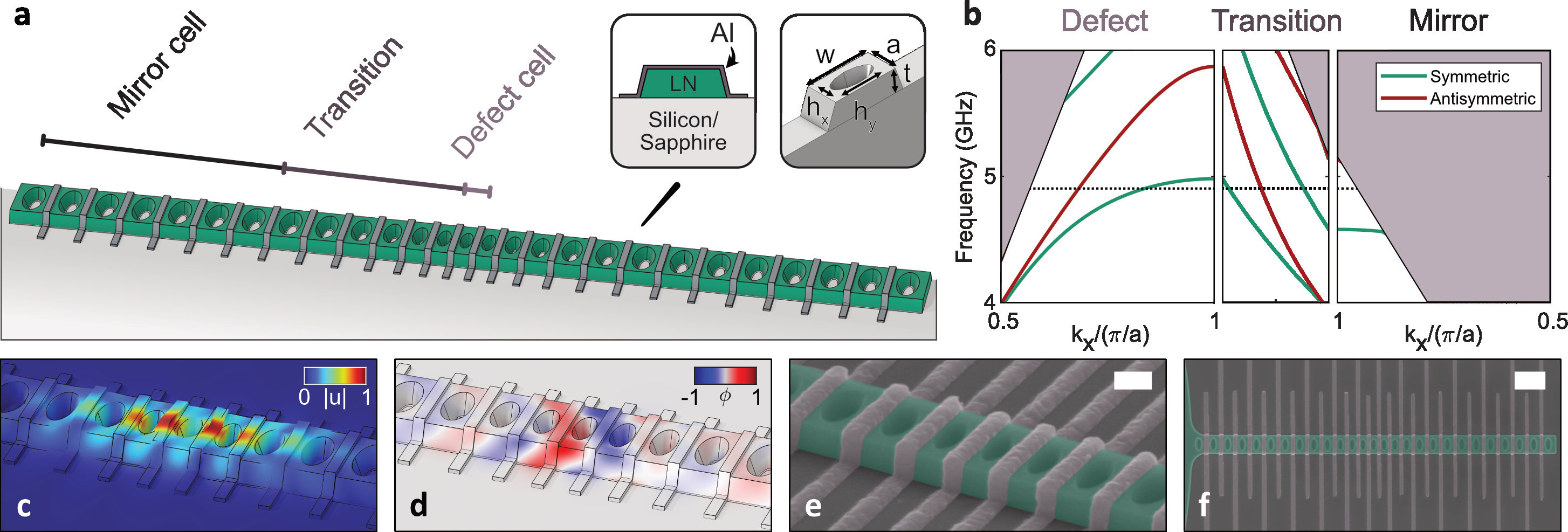
Fig 1: Release-free phononic crystal cavity with microwave readout. a, Schematic of the device design, showing

Fig 2: Fabricated release-free EMCs connected to microwave feedline (top) and high-kinetic-inductance

Fig 3: Room-temperature microwave measurement of release-free phononic crystal cavities on silicon and

Fig 4: Millikelvin microwave measurement of release-free phononic crystal cavities on silicon and sapphire
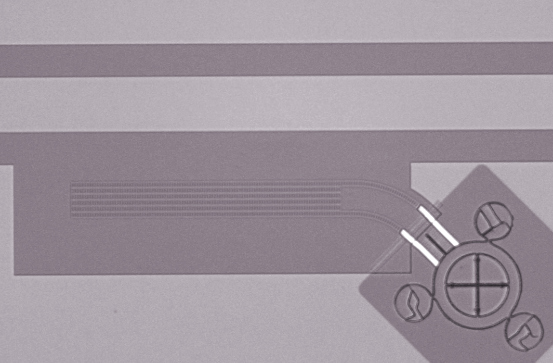
Fig 5 (page 3).
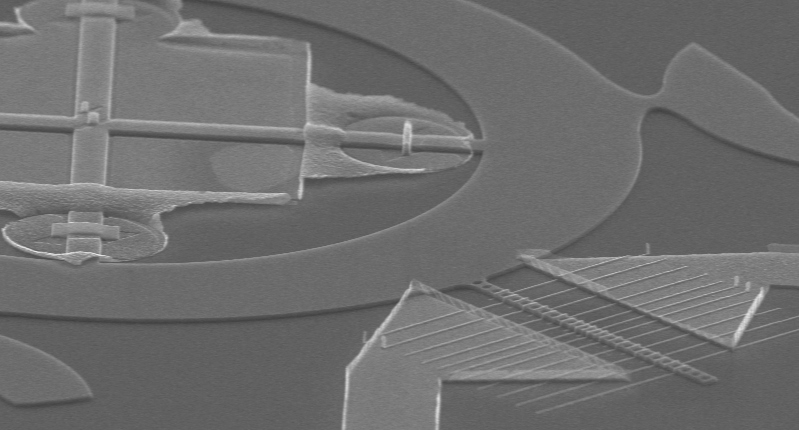
Fig 6 (page 3).

Fig 7 (page 3).
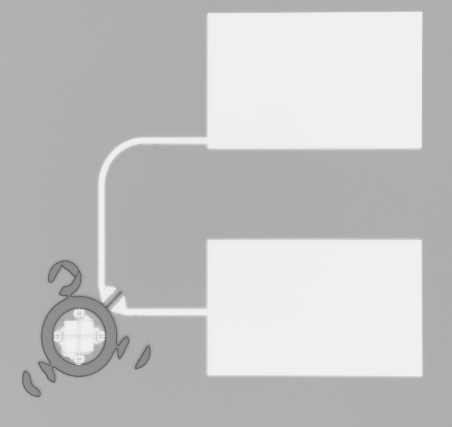
Fig 8 (page 3).
Limitations
- Microwave resonator internal quality factor substantially degraded after EMC integration, limiting overall coherence.
- Mechanical quality factors at millikelvin still limited to ~10^4, below intrinsic material loss limit (~5 × 10^4), suggesting fabrication-induced disorder dominates.
- Power-dependent two-level system interactions cause low-phonon number quality factor degradation and fluctuation limiting low signal measurement precision.
- Coupling optimization trades off with fabrication yield due to electrode coverage and cavity size constraints, limiting peak gem in practice.
- No direct demonstration of full microwave-to-optical transduction included, only electromechanical half characterized.
- Limited system-level assessment of long-term stability, device-to-device variability, and robustness to fabrication imperfections.
Open questions / follow-ons
- How to further improve microwave resonator quality factor post-integration to better balance coupling strength and coherence?
- What are the ultimate limits of radiation loss mitigation achievable with refined fabrication and disorder control?
- Can this release-free architecture achieve full microwave-to-optical transduction with comparable efficiency and noise performance?
- How does the design scale to lower or higher frequencies and larger circuits for heterogeneous integration in quantum networks?
Why it matters for bot defense
While not directly related to CAPTCHA or bot detection, this work is highly relevant to bot-defense practitioners interested in quantum-enabled secure communication interfaces. The demonstrated release-free phononic crystal design enables robust, thermally stable microwave-to-phonon coupling crucial for hybrid quantum networks. The strong coupling achieved without suspension implies devices with lower noise and greater scalability suitable for practical quantum transducers, which could protect hardware security modules interacting with photonic and microwave systems. Understanding how to harness substrate-coupled phononic devices with minimized radiation loss informs secure hardware design. Further, insights into loss mechanisms and coupling optimization at cryogenic conditions can guide secure device engineering for potential quantum-resilient authentication components.
Cite
@article{arxiv2607_29666,
  title={ Release-free phononic crystal with strong microwave coupling },
  author={ Joey Frey and Paul Burger and Trond Hjerpekjøn Haug and Johan Kolvik and Raphaël Van Laer },
  journal={arXiv preprint arXiv:2607.29666},
  year={ 2026 },
  url={https://arxiv.org/abs/2607.29666}
}