
The eROSITA X-ray luminosity function of active galactic nuclei
Source: arXiv:2607.27887 · Published 2026-07-30 · By W. Roster, J. Buchner, M. Salvato, R. Shirley, A. Merloni, T. Dwelly et al.
TL;DR
This paper presents a new measurement of the X-ray luminosity function (XLF) of active galactic nuclei (AGN) using the large, deep eROSITA DR2 and eFEDS samples. The XLF quantifies the evolving number density of supermassive black hole (SMBH) accretion across cosmic time. By leveraging eROSITA's wide area coverage and sensitivity, the authors constrain the AGN space density over approximately eight orders of magnitude in luminosity out to redshift z ~ 6. They introduce a smoothly broken power-law parameterization allowing continuous redshift evolution of all XLF parameters, improving flexibility and modeling fidelity compared to prior piecewise or polynomial approaches. The results find generally lower space densities of moderately and very luminous AGN at low redshift than previous studies but higher space densities at high redshift. Comparison to UV/optical quasar luminosity functions shows that the fraction of AGN missed by optical/UV surveys decreases with X-ray luminosity but increases with redshift in the most luminous bins. Integrating the XLF yields a black hole accretion rate density peaking at z ~ 1.5 and a cumulative SMBH growth that is ~80% obscured and not captured by soft X-ray selection. The authors publicly release the eROSITA DR2 AGN catalog including redshifts, providing a valuable resource for follow-up studies. Overall, this work provides the most statistically powerful XLF measurement to date across a wide dynamic range, refining our understanding of SMBH growth history and obscuration with direct implications for multiwavelength AGN survey strategies.
Key findings
- eROSITA DR2 and eFEDS XLF sample includes ~350k and ~25k AGN respectively, orders of magnitude larger than previous XLF samples.
- New smoothly broken power-law XLF parameters evolve continuously with redshift, avoiding unstable polynomial extrapolations.
- Lower space densities found for moderate and very luminous AGN at low z compared to prior studies; higher AGN abundance at z > 4.
- Comparison to optical/UV quasar luminosity functions shows the UV-missed AGN fraction decreases with luminosity but increases with redshift in the most luminous bin.
- Black hole accretion rate density peaks at z ≈ 1.5 (Fig. 13 in paper)
- ~80^{+11}_{-23}% of SMBH growth is obscured and missed by soft-band X-ray selection.
- Redshift completeness is high (~70% for spec-z in eFEDS, supplemented by photo-z for others) ensuring reliable XLF constraints across 0 < z < 6.
- Forward-folded Poisson point-process likelihood framework accounts for survey sensitivity variations and redshift uncertainties with full photo-z PDFs.
Methodology — deep read
Threat model & assumptions: The study assumes an astrophysical population of AGN as X-ray point sources, with no direct adversarial threat model since this is an observational cosmology work. The main scientific 'adversary' is observational incompleteness, statistical uncertainties, and biases due to obscuration or redshift errors.
Data: The authors use the eROSITA DR2 extragalactic catalog (~2 million detections in 0.2-2.3 keV band) applying quality flags to select point-like, reliable X-ray sources (~350k AGN over ~1400 tiles). They complement with the deeper eFEDS field (~25k sources) sampled ~4 times deeper than DR2. Multiwavelength counterparts are identified using the NWAY Bayesian cross-matching algorithm with LS10 optical/IR data. Redshifts are assigned from a homogenized compilation of ~20 million spectroscopic measurements supplemented by photo-z PDFs from the CIRCLEZ machine-learning algorithm for sources lacking spectroscopy.
Architecture/Algorithm: They model the XLF as a smoothly broken power law with redshift-dependent parameters: normalization C(z), break luminosity L*(z), faint and bright-end slopes α(z), β(z), and knee smoothness δ(z). Each parameter evolves continuously with redshift using a separately parameterized SBPL functional form allowing saturation at high-z rather than polynomial extrapolations. This model is forward folded through the eROSITA survey selection functions incorporating sensitivity variations across tiles (effective area A(LX,z)) and Galactic absorption to predict expected counts.
Training regime: Parameter optimization is performed by maximum likelihood (Poisson point-process likelihood) using Nelder-Mead minimization applied to the combined DR2+eFEDS sample. Uncertainty estimation is through 500 bootstrap realizations of survey tiles. Priors are uniform and weakly informative to stabilize inference given parameter covariances.
Evaluation protocol: Model fit quality was assessed by comparing forward-folded model predictions with binned non-parametric Vmax estimates. Luminosities are converted from 0.2–2.3 keV to standard 2–10 keV band assuming power-law spectrum with photon index Γ=2 for comparison with literature. Sensitivity limits and redshift distributions are visualized (e.g., Fig. 2 & 3). The likelihood accounts for full redshift PDFs for photo-z sources.
Reproducibility: The authors release the eROSITA DR2 AGN catalog including multiwavelength counterparts and redshifts. However, no immediate code release was indicated. The spectroscopic compilation merges many public sources but some photo-z algorithms rely on internal ML methods.
For one example, consider an AGN with measured counts Ni, background bi, and exposure ti in DR2 tile k. The expected counts µ(LX,z) given model XLF parameters θ is calculated using spectral simulations to map LX,z to count rate. The likelihood for this source p(Ni|LX,z) is computed as a Poisson. Integrating over LX,z weighted by the XLF and selection function A(LX,z) across redshift PDF pi(z) yields the full likelihood contribution. Summing over all sources in all tiles yields the total log-likelihood maximized over θ. Bootstrap resampling of tiles assesses parameter uncertainties, accounting for spatial variations in sensitivity and coverage.
Technical innovations
- Introduction of a new redshift-dependent smoothly broken power-law (SBPL) parameterisation for the AGN XLF with all parameters evolving continuously with redshift, improving over prior polynomial or piecewise models.
- Combination of large-area, moderate-depth eROSITA DR2 with deeper eFEDS field in a unified likelihood framework treating each as independent survey layers to sample wide luminosity-redshift space effectively.
- Use of full photometric redshift probability density functions (PDFs) from machine-learning algorithm CIRCLEZ in the forward-folding Poisson likelihood to properly propagate redshift uncertainties.
- Explicit incorporation of detailed tile- and position-dependent eROSITA survey sensitivity functions, including Galactic absorption, to accurately model the selection function A(LX,z).
Datasets
- eROSITA DR2 AGN catalog — ~350,000 sources — public release with this work
- eROSITA Final Equatorial Depth Survey (eFEDS) — ~25,000 sources — public release with this work
- Spectroscopic redshift compilation — ~20 million spec-z entries — merged from SDSS DR19/20, Quaia, 2dF, 6dF, DESI, others
- Photometric redshifts from CIRCLEZ algorithm — ~1.2 million sources — internal ML method trained on multiwavelength data
Baselines vs proposed
- Aird et al. (2015) flexible double power-law model: lower space densities at low redshift for luminous AGN in eROSITA data; eROSITA finds higher abundance at z > 4.
- Comparison to optical/UV quasar LFs converted to 2–10 keV: UV-missed fraction decreases with luminosity, increases with redshift in brightest luminosity bins.
- Black hole accretion rate density peak redshift: Literature ~1.4 vs eROSITA ~1.5 (consistent within uncertainties)
- Cumulative obscured SMBH growth fraction: Soft X-ray detected sample misses ~80^{+11}_{-23}% compared to locally inferred BH mass function.
Figures from the paper
Figures are reproduced from the source paper for academic discussion. Original copyright: the paper authors. See arXiv:2607.27887.
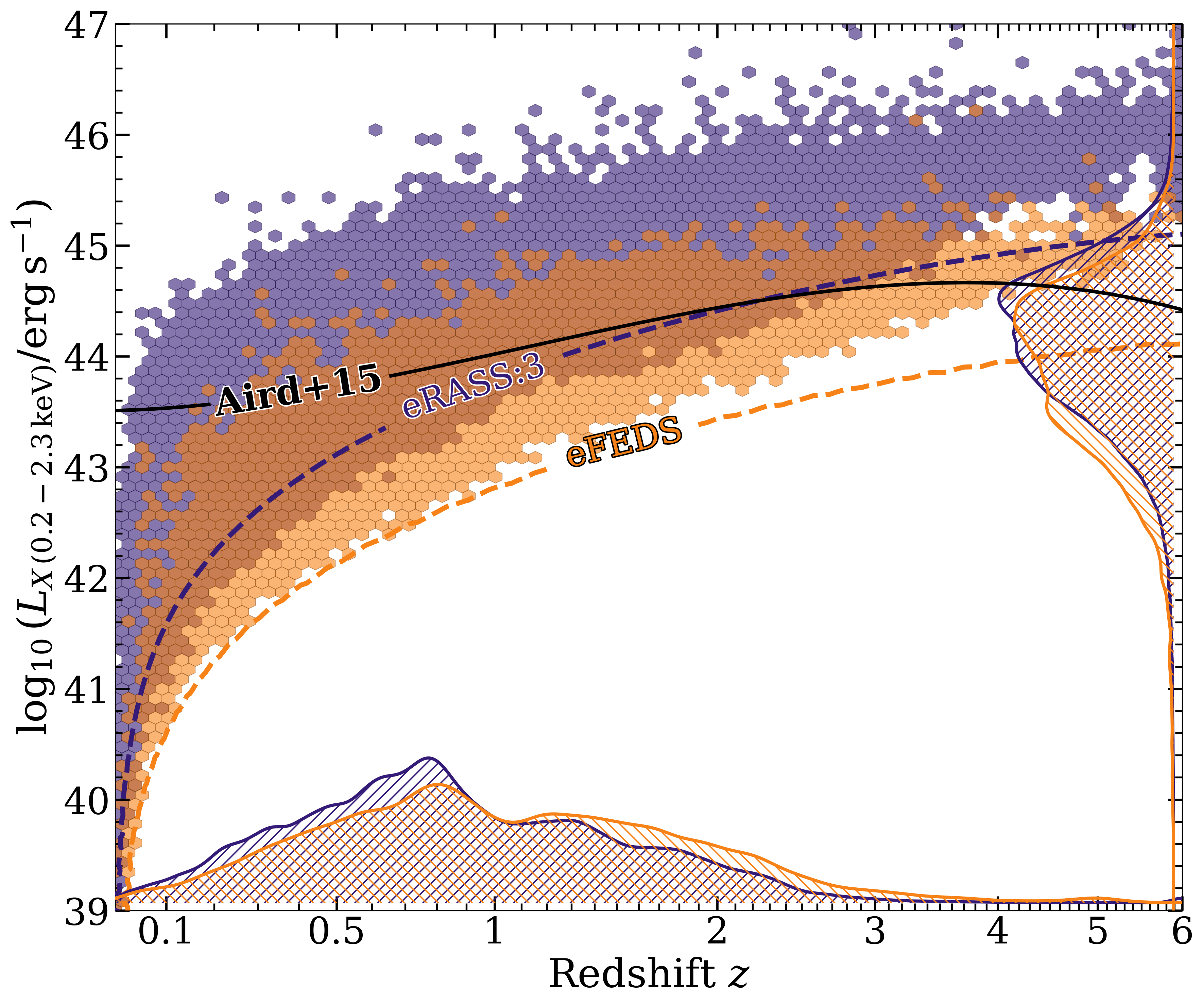
Fig 2: Rest-frame 0.2 −2.3 keV luminosity–redshift dis-
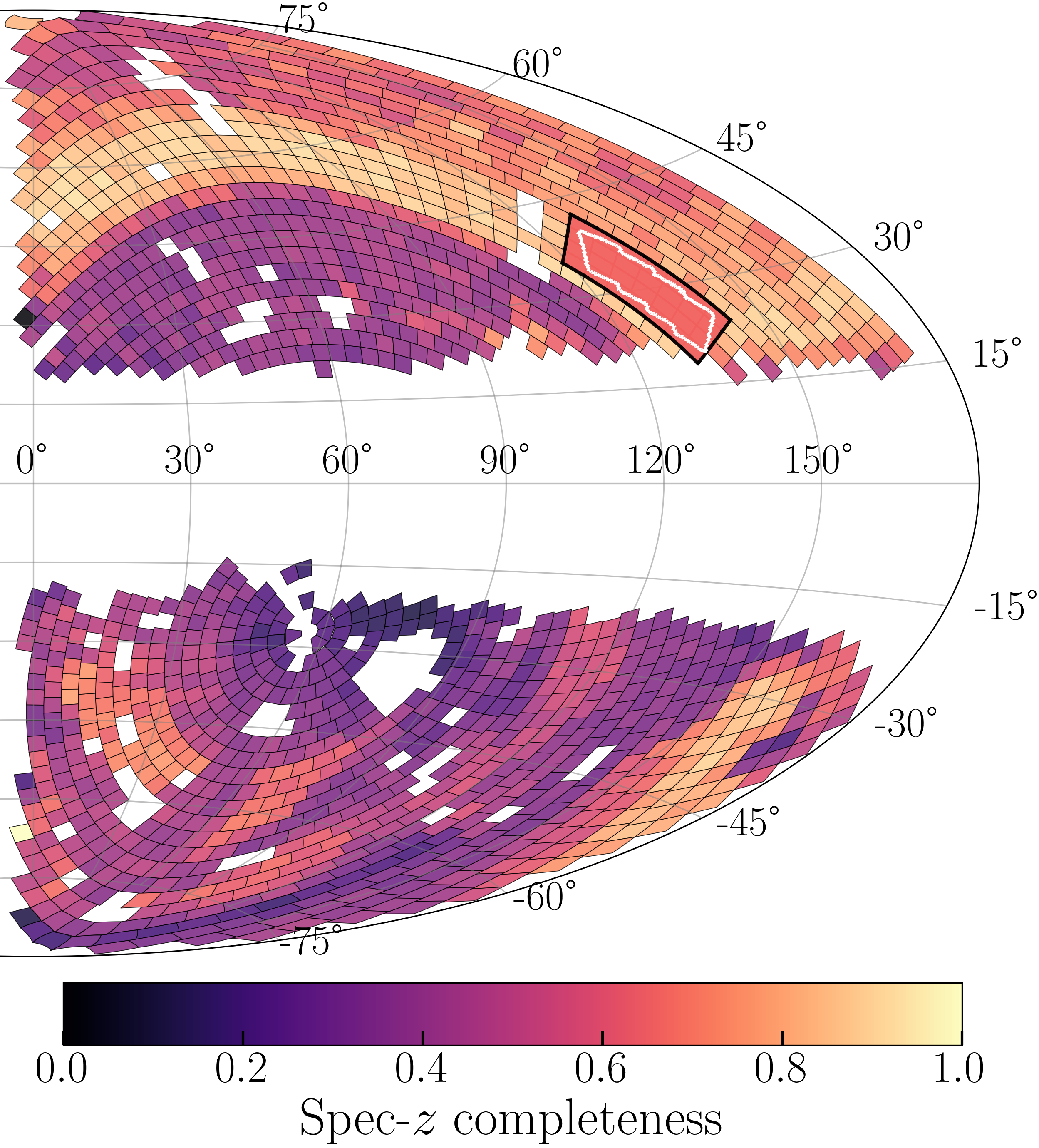
Fig 3: eROSITA-DE western Galactic hemisphere foot-
Fig 11: Forecasted NewAthena AGN yield in the luminosity–redshift plane. Left: Expected number of AGN per grid cell
Fig 5: is no longer data supported, we splice in the soft-
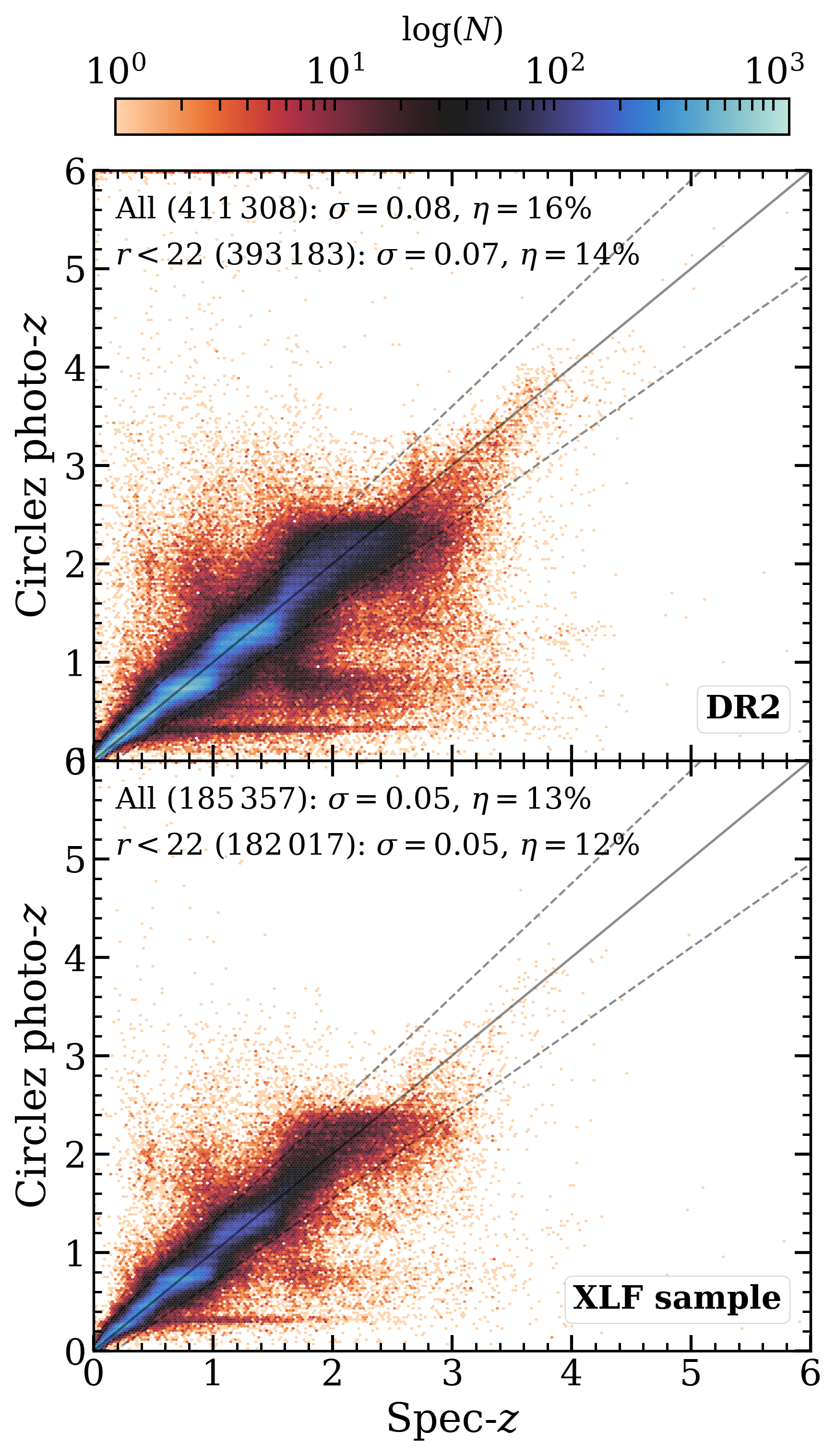
Fig 5 (page 22).
Limitations
- Soft X-ray selection (0.2–2.3 keV) biases against heavily obscured (Compton-thick) AGN, likely missing a substantial fraction of SMBH growth.
- Relies on photometric redshifts for majority of sources (~70%), which, despite ML improvements, introduce uncertainties and potential biases.
- Parameter covariance and degeneracies in the smoothly broken power-law model complicate interpretation of individual parameter evolutions.
- No fully non-parametric hierarchical modeling due to computational limits; parametric SBPL may still impose shape restrictions.
- Limited spectroscopic redshift completeness (~70% in eFEDS, lower in DR2 tiles) could affect detailed high-z constraints, albeit mitigated by photo-z PDFs.
- Potential systematic uncertainties in survey sensitivity modeling, Galactic absorption assumptions, and cross-calibration between X-ray and multiwavelength data.
Open questions / follow-ons
- What is the true space density and evolution of the heavily obscured Compton-thick AGN population missed by soft X-ray surveys?
- Can improved spectroscopic completeness and deeper multiwavelength coverage refine photometric redshift estimates and reduce uncertainties in the high-z XLF?
- How will future hard X-ray observatories or wide-area infrared surveys complement eROSITA in overcoming obscuration biases?
- How does the AGN XLF evolve beyond z ~ 6 and what constraints can be placed on early SMBH seeding mechanisms?
Why it matters for bot defense
Though not directly related to bot-defense or CAPTCHA, this work illustrates key principles relevant to security applications leveraging large-scale astronomical survey data: managing complex selection biases, handling uncertainty propagation (e.g., via redshift PDFs), and operating within computational feasibility constraints for high-dimensional likelihood models. Bot-defense practitioners can note the methodology of combining heterogeneous datasets with differing sensitivities in a statistically rigorous manner, highlighting the importance of forward-modelled likelihoods over simpler binned estimates. The use of machine learning for reliable photometric redshift estimation parallels ML's role in robust classification or anomaly detection in security domains. Lastly, the modeling of obscured AGN populations touches conceptually on hidden or adversarial populations in detection systems, emphasizing the need to account for incompleteness or blind spots in observation—an analog to coverage gaps in bot detection. Overall, while astrophysical, the rigorous uncertainty modeling and survey selection correction strategies exemplify best practices that can inspire captcha system design and bot detection approach refinements.
Cite
@article{arxiv2607_27887,
  title={ The eROSITA X-ray luminosity function of active galactic nuclei },
  author={ W. Roster and J. Buchner and M. Salvato and R. Shirley and A. Merloni and T. Dwelly and J. Aird and A. Georgakakis and P. Boorman and M. Brusa and W. N. Brandt and B. Trakhtenbrot and B. Laloux and P. Baldini and C. Andonie and C. Aydar and C. Ricci and S. F. Anderson and P. Chakraborty and R. J. Assef and D. P. Schneider and E. Kyritsis and M. Kluge and E. Bulbul and K. Nandra and J. Weller },
  journal={arXiv preprint arXiv:2607.27887},
  year={ 2026 },
  url={https://arxiv.org/abs/2607.27887}
}