
Studying Circular Motion with an AI-Generated Smartphone Physics Lab
Source: arXiv:2607.28352 · Published 2026-07-30 · By Josep Ll. Suñer, Francisco M. Muñoz-Pérez, Juan C. Castro-Palacio, Juan A. Monsoriu, Martín Monteiro, Cecilia Stari et al.
TL;DR
This work addresses the challenge of creating customizable physics lab experiments using smartphones, focusing on circular motion studies. Traditionally, smartphone sensor experiments rely on fixed, precompiled apps limiting adaptability, and custom apps require programming skills beyond many physics instructors. The authors present a fully AI-generated, browser-based rotational motion laboratory created entirely via natural-language prompting of the Claude AI assistant, eliminating manual coding efforts. The setup combines a simple low-friction rotating platform with the smartphone’s built-in gyroscope and orientation sensors, allowing characterization of both uniform circular motion (UCM) and uniformly accelerated circular motion (UACM).
The key novelty lies in coupling custom AI-generated experimental software with a straightforward hardware setup, enabling real-time data acquisition, visualization, and export in a lightweight web app accessible via any mobile browser. Sensor fusion data from the DeviceOrientation API and raw gyroscope data show close internal agreement (<0.5%), while independent validation with Tracker video analysis confirms measurements within 1% accuracy for angular velocity and acceleration. This approach democratizes physics labs by empowering educators to quickly generate tailored smartphone-based experiments without programming knowledge, validating classical rotational kinematics with accessible tools.
Key findings
- Angular velocity for uniform circular motion from orientation API is 6.110(5) rad/s with R2=0.9999 (Fig.3a).
- Mean angular velocity from raw gyroscope data during UCM is 6.10(8) rad/s (Fig.3b), differing only 0.1% from orientation API.
- Video analysis with Tracker independently yields angular velocity ω = 6.13(2) rad/s (R2=0.9986), agreeing within 0.5% of smartphone data (Table I).
- For uniformly accelerated circular motion, angular acceleration α from orientation API is 7.58(2) rad/s² with R2≈1 (Fig.4a).
- Gyroscope linear fit gives α=7.614(8) rad/s² with R2=0.9999, differing 0.5% from orientation API (Fig.4b).
- Tracker video analysis measures acceleration α=7.56(2) rad/s² (R2=0.9998), within 1% of smartphone methods (Table I).
- Internal consistency between fused orientation sensor data and raw gyroscope data is below 0.5%.
- The AI-generated browser-based lab allows customized data capture, plotting, zooming, and export with no installation or programming.
Threat model
The adversary is not malicious but represents non-expert physics educators lacking programming skill; the system assumes a standard smartphone with typical inertial sensors and physical lab apparatus. It does not consider hostile adversaries attempting to spoof or manipulate sensor data.
Methodology — deep read
The authors set a threat model focused on educational usability rather than adversarial conditions: the primary assumption is the availability of a standard smartphone with typical inertial sensors and a low-friction rotational platform, without requiring programming expertise.
Data were collected using the smartphone sensors embedded in a device placed on a vertical shaft rotating platform. Two experimental conditions were tested: uniform circular motion (UCM) achieved by manually imparting an initial angular velocity with no external torque, and uniformly accelerated circular motion (UACM) generated by attaching a hanging mass via string and pulley to produce an approximately constant torque. The smartphone recorded orientation angles via the DeviceOrientation API and raw gyroscope angular velocities. Data sampling rates and buffer length were adjustable, with time series exported as CSV.
The core software is a single HTML file web application generated entirely through a natural-language prompt posed to the Claude AI assistant. This AI-generated app interfaces with standard Web APIs to extract device orientation and raw angular velocity data simultaneously, enabling cross-validation within the device using sensor fusion outputs and raw sensor readings.
For UCM, linear fits of angular position from fused data and mean angular velocity from gyroscope data were compared, while for UACM, quadratic fits to angular position time series and linear fits to angular velocity were used to extract angular acceleration. The fitting was performed using standard spreadsheet functions (LINEST, AVERAGE, STDEV).
Validation against an independent method was done through video analysis with the open-source Tracker tool analyzing motion from recorded videos under identical conditions.
Experimental results showed high internal consistency and alignment with the independent video analysis, confirming the experimental setup’s validity. The entire workflow relies on no manual app coding, uses standard web technologies with extensible configuration, and requires only a modern mobile browser and the simple physical platform. Supplementary files provide the complete natural-language prompt and video data.
As a concrete example, the UCM experiment consisted of placing the smartphone on the rotating platform, imparting a small initial angular velocity by hand, letting the system evolve with low friction while the app records orientation and velocity at a chosen sampling rate. The onboard app plots angles and angular velocity components live, exports time series for detailed fitting, and the resulting slope and mean velocity compare favorably with Tracker-derived angular velocities.
Technical innovations
- Use of natural-language AI prompting (Claude AI) to generate a fully customized browser-based physics lab application with no manual coding.
- Dual measurement approach combining DeviceOrientation API’s sensor fusion output with raw gyroscope data for internal consistency checks.
- Implementation of an easily adaptable web app running in any modern smartphone browser without installation, leveraging Web APIs for sensor access.
- Integration of multi-modal validation by cross-checking smartphone inertial sensor measurements against independent video analysis with Tracker software.
Datasets
- Experimental rotational motion datasets (UCM and UACM) collected from smartphone inertial sensors and synchronized video recordings — dataset not publicly separated but video data provided as supplementary material.
Baselines vs proposed
- Orientation API angular velocity (UCM): 6.110(5) rad/s vs Gyroscope: 6.10(8) rad/s
- Orientation API angular velocity (UCM): 6.110(5) rad/s vs Video analysis (Tracker): 6.13(2) rad/s
- Orientation API angular acceleration (UACM): 7.58(2) rad/s² vs Gyroscope: 7.614(8) rad/s²
- Orientation API angular acceleration (UACM): 7.58(2) rad/s² vs Video analysis (Tracker): 7.56(2) rad/s²
Figures from the paper
Figures are reproduced from the source paper for academic discussion. Original copyright: the paper authors. See arXiv:2607.28352.
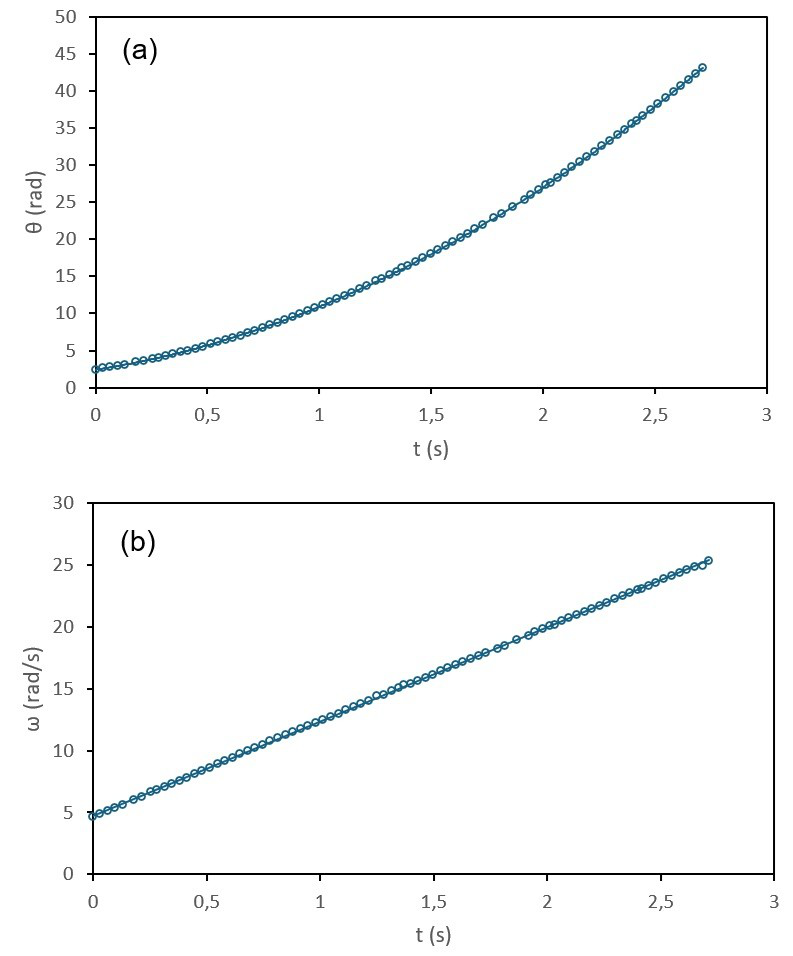
Fig 1: Experimental setup: a smartphone on a rotating platform mounted on a low-friction vertical
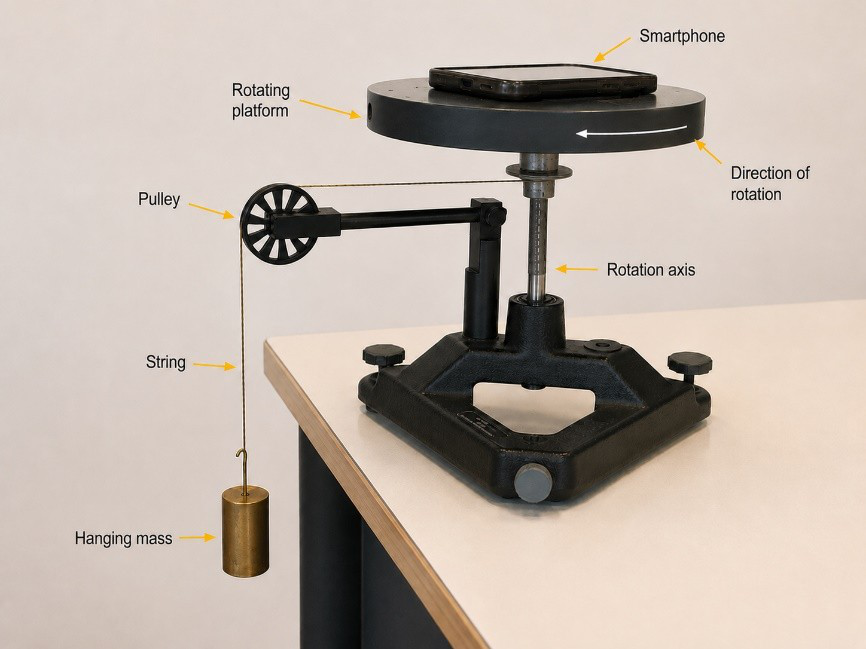
Fig 2: shows two representative screenshots of the laboratory during the experiments. In
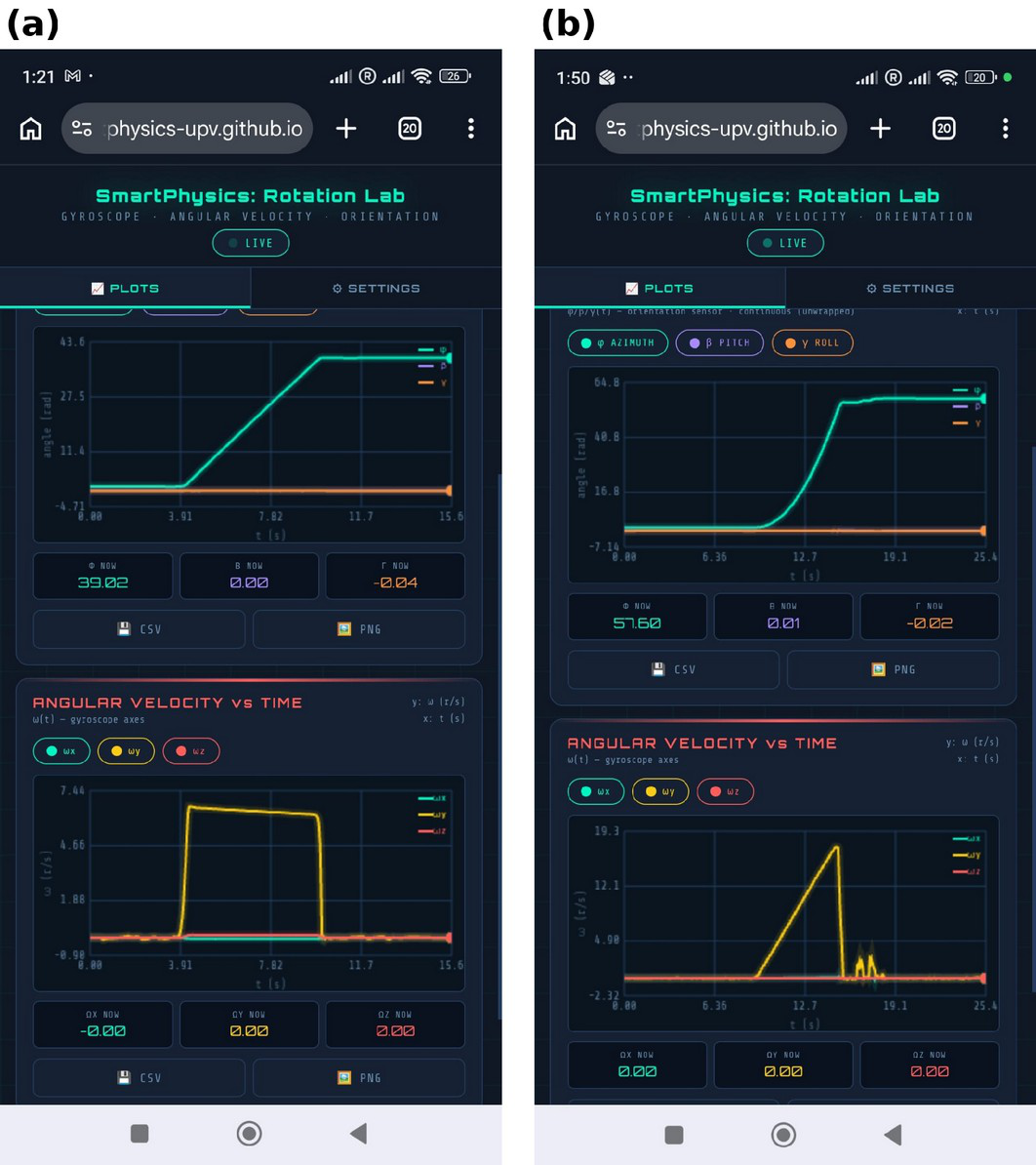
Fig 3 (page 1).
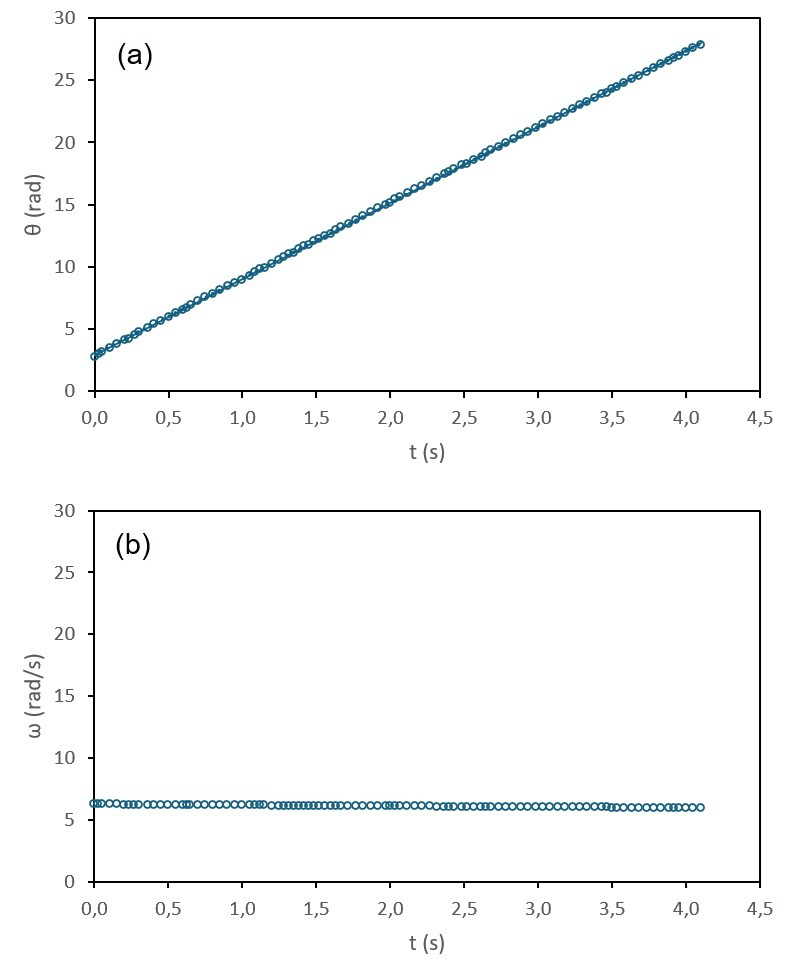
Fig 4 (page 1).
Limitations
- Validation limited to a single smartphone model and hardware setup; sensor characteristics may vary across devices.
- No adversarial testing or robustness evaluation against intentional sensor spoofing or environmental interference.
- The low-friction rotating platform is a simple lab apparatus; results might differ with higher friction or unsteady torque.
- No formal statistical significance testing or extended cross-validation beyond fit R² and direct comparison.
- Evaluation constrained to controlled laboratory conditions, not tested in noisy or real-world classroom contexts.
Open questions / follow-ons
- How well does the AI-generated lab software generalize to other physics experiments or sensor modalities beyond rotational motion?
- Can the approach support real-time feedback or adaptive experiment controls driven by AI interpretation of sensor data?
- What is the impact of different smartphone hardware variability on measurement accuracy and sensor fusion consistency?
- How might AI-generated apps be integrated into classroom management platforms for seamless student data collection and analysis?
Why it matters for bot defense
This paper illustrates an innovative use of AI to generate customizable real-time sensor data collection and visualization software without manual coding. While not a security or bot-detection paper, it demonstrates how natural-language-driven AI can produce tailored lightweight web applications interfacing with device sensors. Bot-defense engineers might extrapolate that similar AI-generated interfaces could be used to generate tailored challenge-response interactions or sensor-based behavioral puzzles for enhanced bot detection.
Moreover, the careful validation of multiple sensor data streams and their fusion can inspire more robust multi-channel analysis approaches in bot-defense, where internal consistency checks and independent validation play a role. The pedagogical use case emphasizes accessibility and ease of customization that could translate to flexible CAPTCHA design pipelines with rapid iteration using AI assistance.
Cite
@article{arxiv2607_28352,
  title={ Studying Circular Motion with an AI-Generated Smartphone Physics Lab },
  author={ Josep Ll. Suñer and Francisco M. Muñoz-Pérez and Juan C. Castro-Palacio and Juan A. Monsoriu and Martín Monteiro and Cecilia Stari and Arturo C. Martí },
  journal={arXiv preprint arXiv:2607.28352},
  year={ 2026 },
  url={https://arxiv.org/abs/2607.28352}
}