
Beyond a Single Judge: Simulating Social Persona Panels for Generative UI Evaluation
Source: arXiv:2607.28439 · Published 2026-07-30 · By Zheng Wu, Yibo Luo, Pu Zhang, Cheng Yang, Zhuosheng Zhang
TL;DR
This paper addresses the challenge of evaluating generative UI (GenUI) systems, where large language models (LLMs) synthesize complete user interfaces from natural language instructions. Existing evaluation methods rely either on costly and variable human raters or on single-pass LLM judges with limited perspective diversity. The authors propose a new evaluation paradigm called the Evidence-Grounded, Social-Weighted Persona Panel (ESPP). This method simulates a panel of psychologically diverse synthetic raters (personas) each grounded in their own evidence base, who independently rate generated UI artifacts, engage in a structured opinion exchange governed by personality-based bounded-confidence dynamics, and produce a socially-weighted aggregated score. They validate ESPP on UIPersonaBench, a newly constructed benchmark of 500 instructions rendered by 14 state-of-the-art GenUI models with accompanying human ratings.
Experimental results show ESPP tracks human judgment substantially better than naive single-pass LLM evaluation, improving Pearson correlation with human scores from 0.716 to 0.922. An ablation study reveals that evidence grounding of individual personas’ ratings contributes the largest gain, with opinion exchange and social weighting adding additional reliability. Moreover, ESPP preserves individual persona ratings, uncovering meaningful disagreement across user subgroups on specific quality dimensions like Control which a single monolithic score would obscure. Robustness tests confirm ESPP is not easily fooled by superficial manipulations. Overall, ESPP offers a scalable, multi-perspective evaluation framework that better simulates the diversity and deliberative dynamics of human judgment for generative UI quality.
Key findings
- ESPP raises Pearson correlation (r) with human judgment from 0.716 (naive judge) to 0.922 on 7,000 GenUI screenshots (Table 1).
- A prompt-ensemble control averaging 5 independent LLM passes improves only to r=0.789, recovering about one-third of ESPP’s gap.
- Removing persona panel and evidence grounding causes largest accuracy drop (r from 0.922 to 0.716); removing opinion dynamics causes smaller drop (r=0.891) (Table 3).
- Trait-derived receptivity, based on Big-Five agreeableness and neuroticism, predicts magnitude and likelihood of rating revision during opinion exchange (Fig 3).
- Post-discussion disagreement among panelists reduces by 52.9% but does not collapse to consensus — disagreement persists on ~57% of panels (Fig 4).
- User subgroups (e.g. tech literacy split) agree closely on overall model rankings (Spearman ρ ≥ 0.846) but diverge substantially on specific dimensions like Control with rank swings up to 6 positions (Fig 5, Table 4).
- Cosmetic dark-pattern manipulations designed to inflate ratings fail to systematically bias ESPP scoring; any inflation concentrates among personas with low tech-literacy and high agreeableness (Fig 6).
- UIPersonaBench leaderboard over 14 GenUI models shows understanding as uniformly high and transparency as weakest dimension industry-wide.
Threat model
The work assumes an adversary attempting to reduce evaluation fidelity by collapsing diverse human opinions into a single, unrepresentative LLM judge score. The adversary cannot manipulate the persona evidence base or the opinion dynamics mechanism directly but could exploit superficial UI manipulations to mislead naive judges. The approach constrains this by grounding personas in evidence and employing social weighting and semantic gating to mitigate undue influence.
Methodology — deep read
Threat Model & Assumptions: The adversary is an evaluation bias or over-simplification risk arising from relying on a single LLM judge, which cannot represent diverse user perspectives or disagreement patterns. The goal is to develop an automatic judge that better simulates a heterogeneous population of real users with distinct psychological traits and domain expertise.
Data: The authors construct UIPersonaBench, a benchmark of 500 natural-language UI-generation instructions across 6 scenarios (e.g., dashboards, e-commerce, social apps). Each instruction is rendered by 14 state-of-the-art GenUI models, producing 7,000 screenshots. Five independent humans rate each screenshot on 5 dimensions (Understanding, Trust & Reliance, Usability, Control, Transparency) on a 1-5 scale. The dataset thus contains human ground-truth ratings for direct comparison.
Architecture/Algorithm:
- Persona Panel Construction: 1,000 synthetic personas are generated, each parameterized by Big-Five personality traits (openness, conscientiousness, extraversion, agreeableness, neuroticism), cognitive style (analytical vs intuitive), demographics, domain expertise, and tech literacy. Each persona is grounded in a bank of question-answer behavioral evidence to anchor its ratings.
- Panel Sampling: For each instruction, a panel of 5 diverse personas is selected via stratified sampling over trait and demographic space, ensuring a mix of close and distant trait neighbors.
- Stage 1 (Independent Rating): Each persona independently rates a GenUI screenshot on the 5 evaluation dimensions, conditioned on its persona-specific evidence, producing initial scores and natural language justifications.
- Stage 2 (Semantic Bounded-Confidence Opinion Dynamics): Personas engage in one round of opinion exchange governed by trait-derived receptivity (a function of agreeableness and neuroticism) and a semantic gate that only admits on-topic arguments referencing concerns in each persona’s topical hook set. This bounded confidence protocol lets personas revise their ratings influenced only by sufficiently close and relevant views.
- Stage 3 (Social-Weighted Aggregation): The revised individual persona scores are aggregated via a soft weighting inspired by the Delphi method. Each persona’s weight depends on expertise and representativeness scores, producing a final scalar score per dimension and overall.
Training: The system leverages Claude-Opus-4.6 for all persona rating and deliberation calls, using prompt engineering to implement grounding, dynamics, and weighting steps. No iterative learning/training is described; the approach is prompt-driven.
Evaluation Protocol:
- Metrics: Agreement with human ground truth measured at per-screenshot granularity using Pearson’s r, Spearman’s ρ, mean absolute error (MAE), and root mean squared error (RMSE).
- Baselines: Compared against naive single-pass LLM judge and a prompt-ensemble control (5 independent LLM ratings averaged).
- Ablations removing panel dynamics, persona grounding, and panel sampling isolate component contributions.
- Behavioral Analyses: Confirm receptivity-trait correlations, opinion convergence characteristics, subgroup agreement and disagreement patterns, and robustness to cosmetic UI manipulations.
- Reproducibility: Code is publicly available at https://github.com/Wuzheng02/ESPP. UIPersonaBench dataset details are described but release status is not fully specified; underlying LLM weights are proprietary.
Concrete Example End-to-End: For an instruction x, 5 diverse personas pi (each with evidence q_i) independently produce ratings s_i^(1) on screenshot y conditioned on their evidence. Then, via semantic bounded-confidence protocol, each pi revises to s_i^(2) influenced by peer opinions close both numerically and topically, modulated by receptivity ρ(pi). Finally, the s_i^(2) are aggregated with weights w_i proportional to persona expertise and representativeness, yielding final score. This process improves alignment to human mean rating from r=0.716 (single judge) to r=0.922 (full ESPP).
Technical innovations
- Introduction of an evidence-grounded persona panel where each synthetic rater’s judgement is anchored in persona-specific question-answer behavioral evidence, reducing ungrounded justification drift.
- Adaptation of classical bounded-confidence opinion dynamics with trait-derived receptivity functions and semantic gating enforcing topical relevance, enabling psychologically valid simulated deliberation among personas.
- Delphi-inspired social-weighted aggregation scheme that combines expertise and representativeness to softly weight persona ratings, preserving dissenting views without collapsing to a single viewpoint.
- Construction of UIPersonaBench, a large-scale 7,000-screenshot benchmark of GenUI renderings from 14 models paired with multi-rater human ground truth for rigorous automatic judge evaluation.
Datasets
- UIPersonaBench — 7,000 screenshots (500 instructions × 14 models) with human 5-dimension ratings — constructed by authors, human labeled
Baselines vs proposed
- Naive single-pass judge: Pearson r = 0.716 vs ESPP: r = 0.922
- Prompt-ensemble (5 independent passes averaged): Pearson r = 0.789 vs ESPP: r = 0.922
- Ablation w/o opinion dynamics and aggregation: r = 0.891 vs full ESPP: r = 0.922
- Ablation w/o evidence grounding: r = 0.811 vs full ESPP: r = 0.922
- Ablation w/o persona panel (naive judge): r = 0.716 vs full ESPP: r = 0.922
Figures from the paper
Figures are reproduced from the source paper for academic discussion. Original copyright: the paper authors. See arXiv:2607.28439.
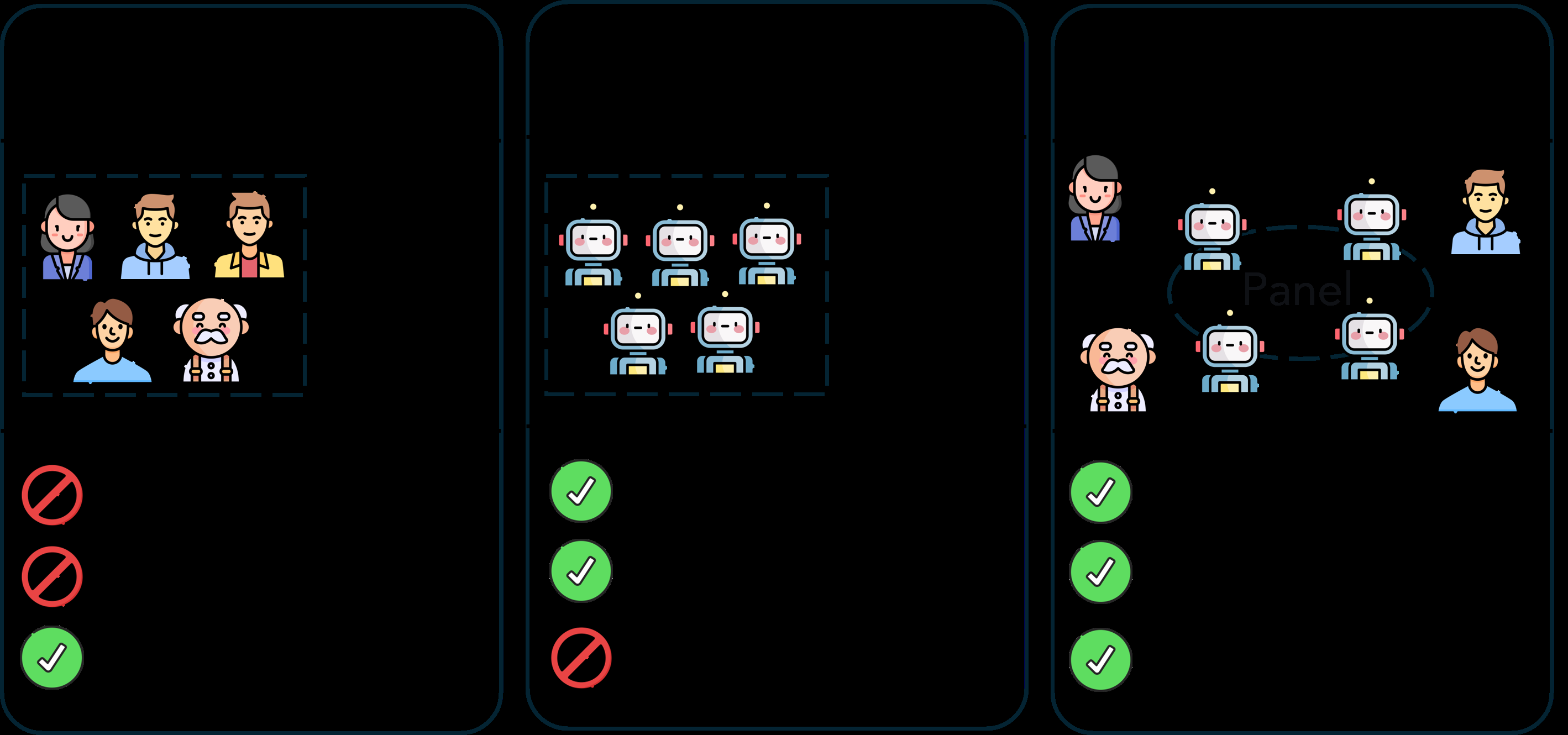
Fig 1: Three paradigms for evaluating Generative UI. Hu-
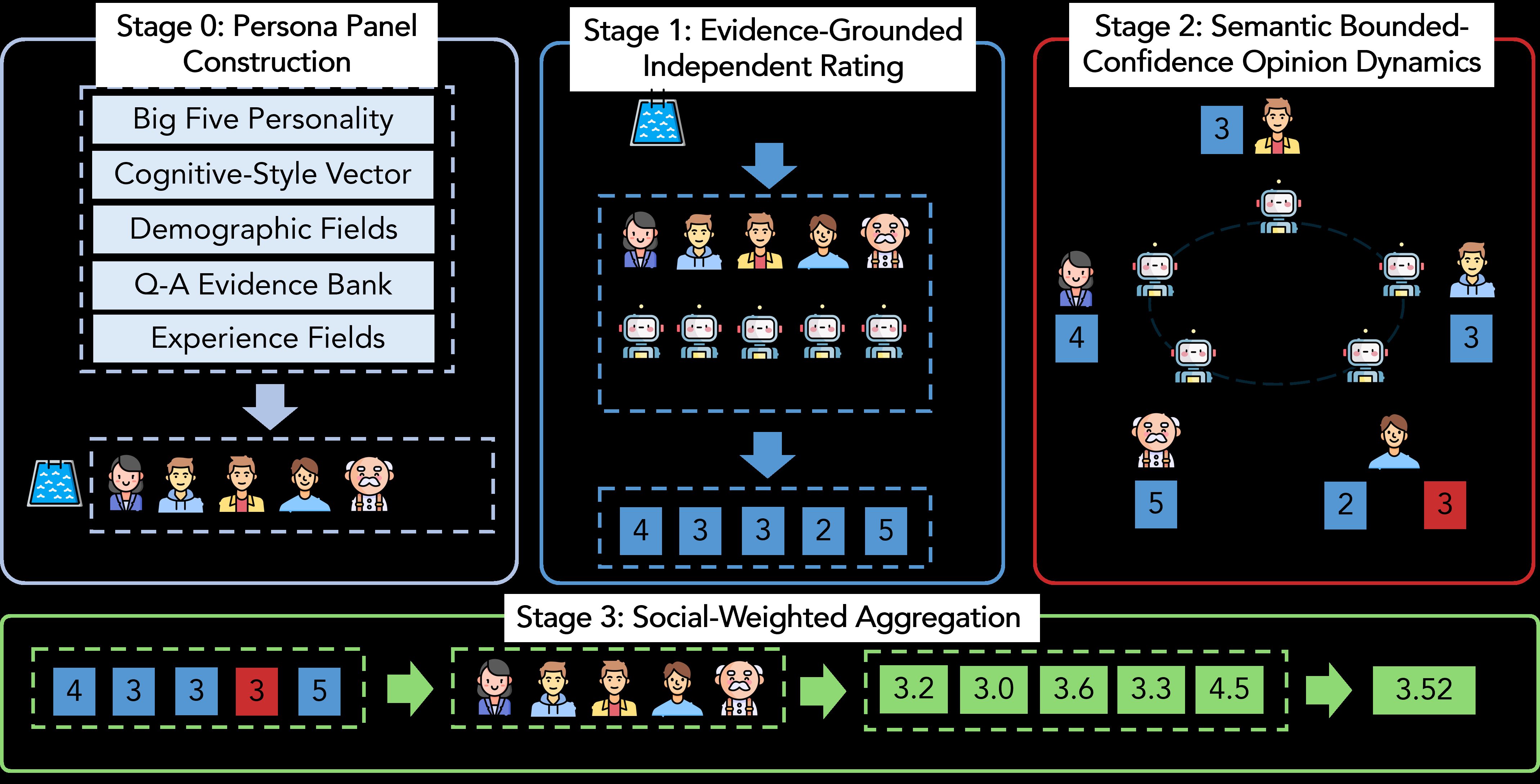
Fig 2: Overview of the Evidence-Grounded, Social-Weighted Persona Panel. A diversity-constrained panel Πx is sampled
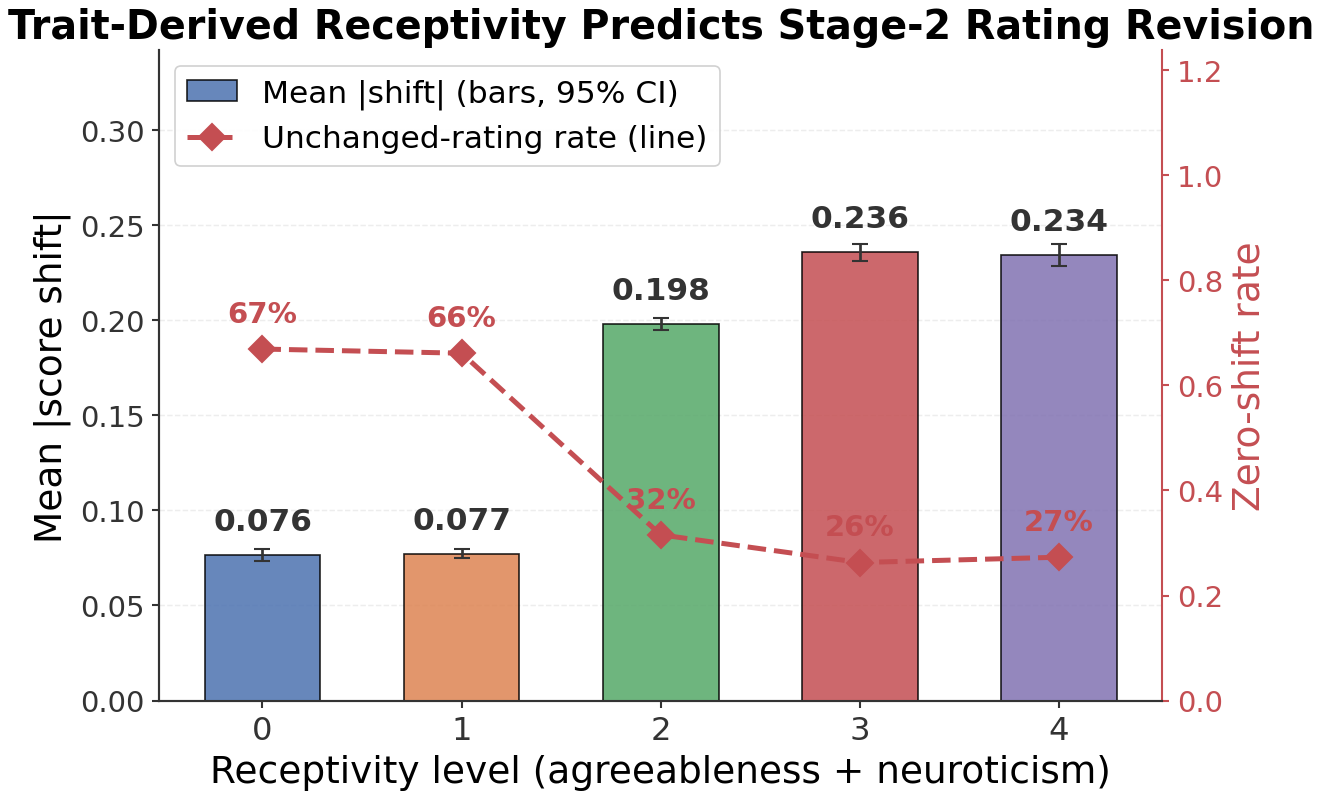
Fig 3: Stage-2 rating revision as a function of a persona’s
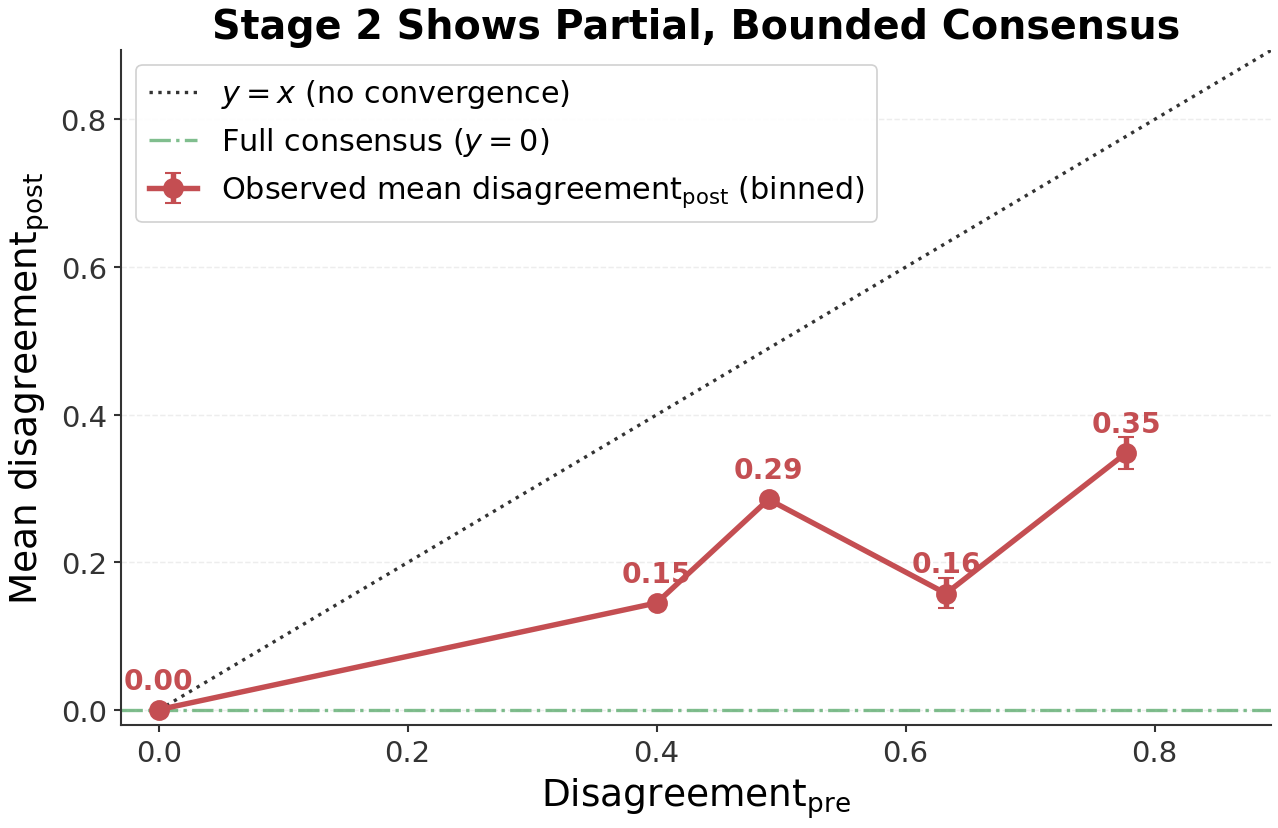
Fig 4: Post-discussion vs. pre-discussion panel disagree-
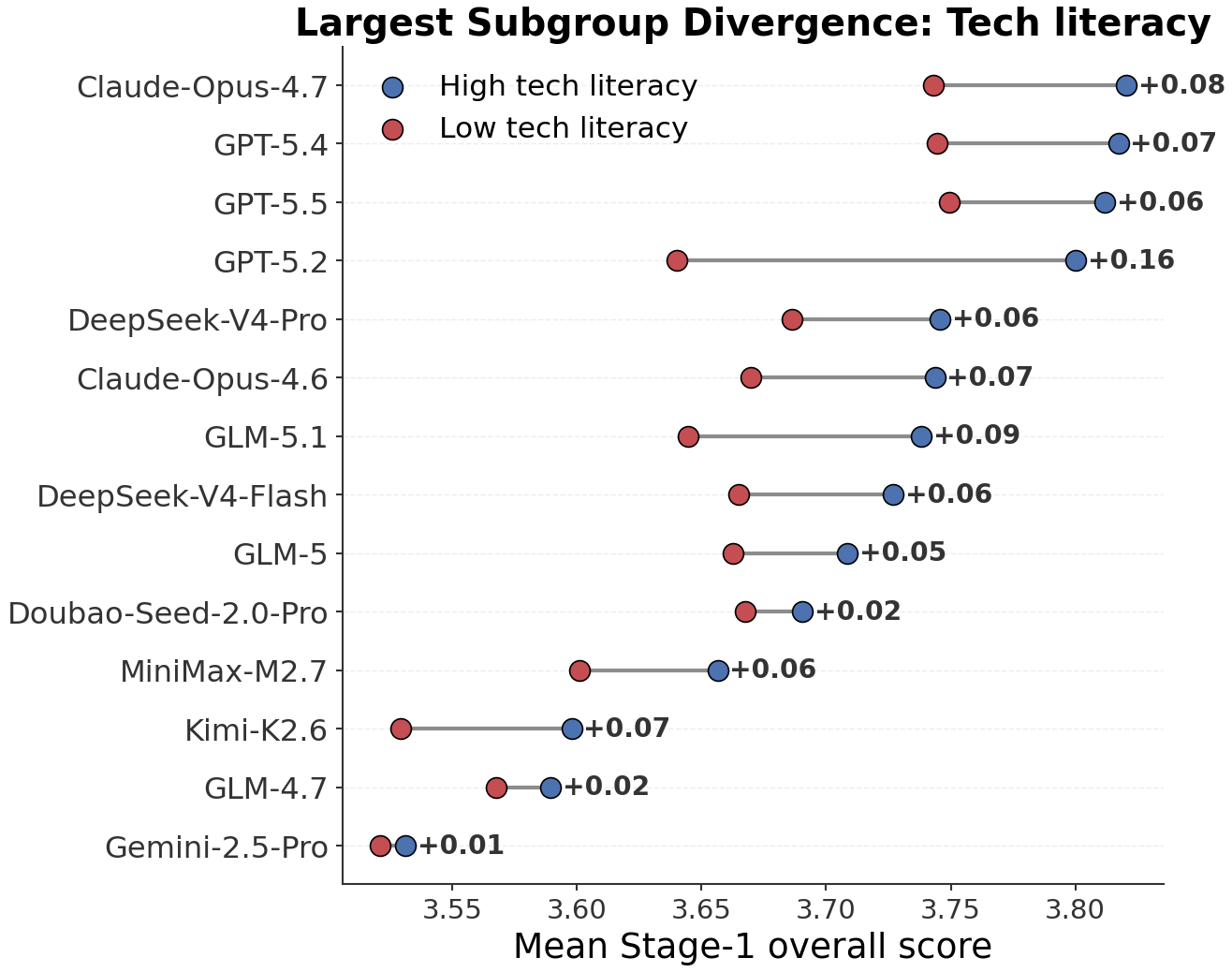
Fig 5: Per-model Stage-1 score gap between subgroups,
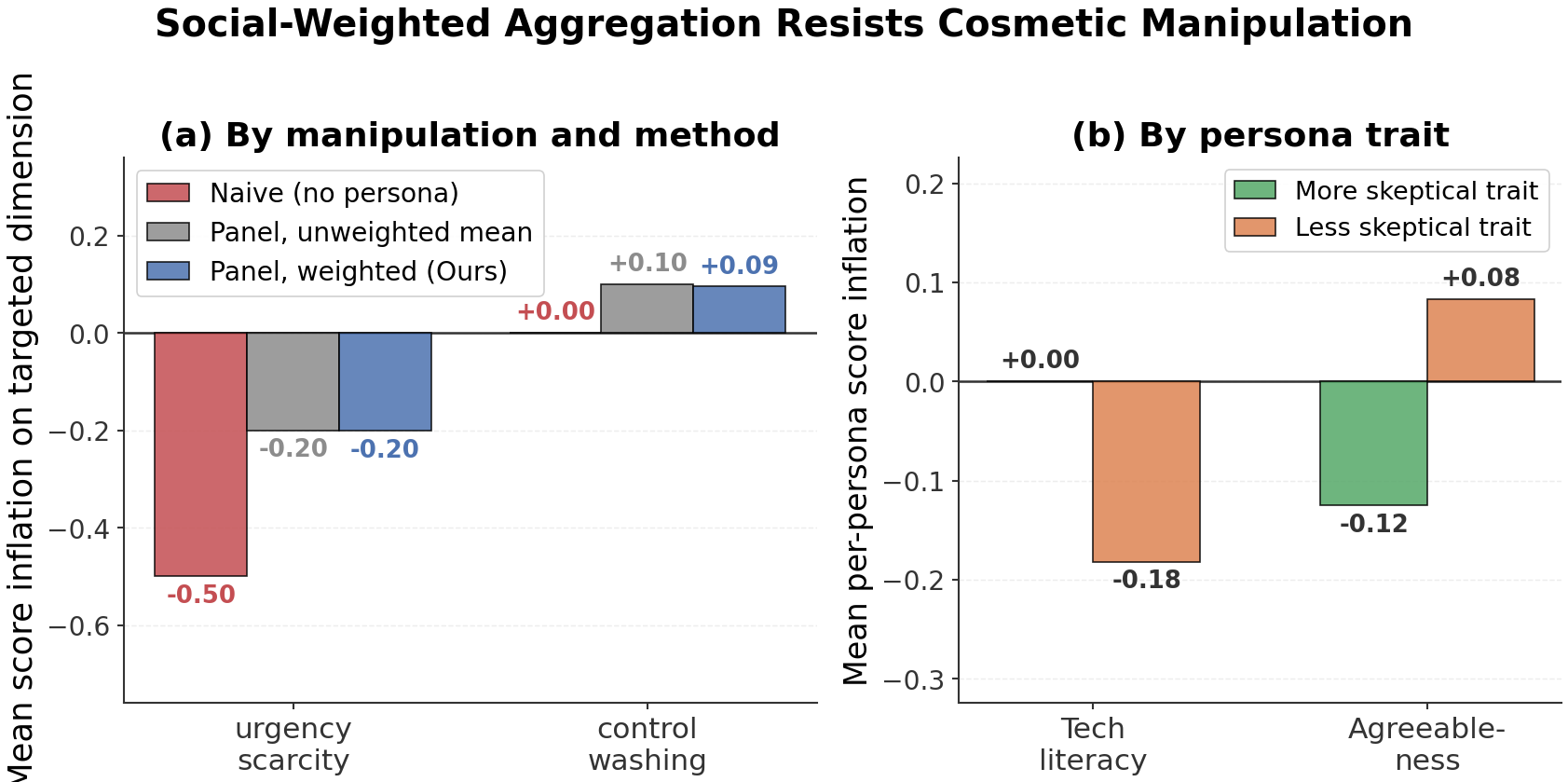
Fig 6: Score change under cosmetic dark-pattern overlays.
Limitations
- UIPersonaBench public access and documentation for replication unclear; underlying foundation LLM weights proprietary.
- Methodology tested only on GenUI screenshots; generalizability to other generative multimodal outputs untested.
- Stage 2 opinion dynamics limited to one round and relies on prompt-engineered bounded confidence without end-to-end training.
- Evaluation uses Pearson r and ranking metrics but does not statistically test confidence intervals or significance for some comparisons.
- User persona construction relies on hand-crafted demographic and trait stratification; real user distributions may differ and be more complex.
- Robustness tests were limited to a small set of cosmetic dark-pattern manipulations, not adversarial attacks.
Open questions / follow-ons
- How does ESPP perform on broader categories of generative content beyond UIs, such as text generation or multimodal media?
- Can the bounded-confidence opinion dynamics be enhanced via multi-round, learned deliberation for improved convergence and fidelity?
- How to better model and validate persona populations to reflect true user heterogeneity and demographic distributions in real applications?
- What is the minimal panel size and configuration to balance evaluation cost and fidelity in industrial use?
Why it matters for bot defense
For bot-defense and CAPTCHA engineering, the paper’s approach to simulating a diverse panel of psychologically-grounded personas that deliberate before producing an aggregate judgment offers an advanced evaluation framework for generative UI quality. Such evaluation methods could inform the design of challenge-response interfaces that adapt to user diversity or detect subtle demographic disagreements potentially exploited by bots. The persona-based evaluation framework highlights the importance of multi-dimensional, user-group-specific quality metrics rather than relying on single aggregate scores, which could improve bot-detection heuristics that use UI generation or interaction quality as signals. Moreover, the social-weighted aggregation methodology may inspire ensemble approaches for adjudicating suspicious or borderline bot behavior by combining multiple diverse heuristics weighted by expertise or reliability metrics. In sum, this paper provides a rich paradigm to think beyond monolithic evaluation scores, aligning well with the need to model heterogeneous, realistic populations in bot defense and CAPTCHA user experience assessment.
Cite
@article{arxiv2607_28439,
  title={ Beyond a Single Judge: Simulating Social Persona Panels for Generative UI Evaluation },
  author={ Zheng Wu and Yibo Luo and Pu Zhang and Cheng Yang and Zhuosheng Zhang },
  journal={arXiv preprint arXiv:2607.28439},
  year={ 2026 },
  url={https://arxiv.org/abs/2607.28439}
}