
AIx4Soccer: A Unified Platform Architecture for Football Club Management and Structured Athlete Development
Source: arXiv:2607.28531 · Published 2026-07-30 · By Frederico Falconi Costa, Salvador Cesar Costa, Fabricio F. Costa
TL;DR
This paper addresses the problem of fragmented digital tooling in football clubs, academies, and federations, especially in developing markets like Brazil where a digital divide limits effective athlete development and club management. The authors propose AIx4Soccer One Platform, a multi-tenant cloud SaaS system integrating administrative, squad, training, development, video analysis, and marketplace workflows into a single unified record. The platform embeds a structured athlete development methodology (the PDI Framework) that operationalizes an Individual Development Plan lifecycle and links assessment and progress goals concretely to video evidence. It also includes Tak Tik, a certified two-sided marketplace connecting clubs with qualified video analysts to overcome analysis capacity gaps at smaller clubs.
A key architectural innovation is an event-centric semantic data model that records every fact as a typed, immutable event in an append-only log, generating a growing knowledge graph underpinning the integrated platform modules and longitudinal athlete records. The architecture provides role-based access, multi-tenancy supporting club and federation-level oversight, and compliance with youth data protection laws. The paper is a design and early deployment description without empirical evaluation but presents a comprehensive, implementation-independent specification and rationale referencing sports-science and platform economics literature.
Key findings
- The football digital tooling landscape is highly fragmented: video analysis, GPS tracking, medical records, scouting, and administration operate in siloed systems, producing integration burdens and access inequalities (Section 2.1).
- Brazil leads the world in football player exports with over 3,000 expatriate players, yet only 45 of 7,020 clubs hold official development certification, illustrating a vast talent pipeline with limited digital infrastructure (Section 1).
- The AIx4Soccer One Platform implements a single integrated record per club and athlete spanning administration through development and video (R1), replacing point-tool fragmentation.
- The PDI Framework embeds a cyclical, structured athlete development methodology linked to video evidence, grounded in established multi-dimensional concepts like the English FA Four-Corner Model and LTAD maturation staging (Sections 5 and Table 3).
- Tak Tik is a certified video-analysis marketplace with a 75%/25% revenue split favoring analysts to attract qualified labor, mitigating quality uncertainty via platform certification instead of crowdsourced reviews (Section 6).
- The platform models tenancy with logical data isolation and permissioned roles spanning club staff, athletes, guardians, and federation officers, enabling hierarchical federation oversight (Sections 4.3 and 4.4).
- The proposed event-centric semantic data model specifies every fact as an immutable, typed event in an append-only log, producing an auditable knowledge graph supporting longitudinal queries and retrospective state reconstructions (Section 3.3 and Eq. 1–8).
- This design makes the platform directly compatible as a data source for action valuation and language-model-based soccer event prediction frameworks, unifying current fragmented data practices under one substrate (Section 7).
Threat model
The paper does not articulate a classical adversary threat model but assumes a trustworthy system context emphasizing data protection compliance with Brazil’s LGPD, Digital ECA, and the EU GDPR. The adversary is implicitly anyone who might attempt unauthorized data access or manipulation. The platform enforces tenant-isolated, least-privilege role-based access controls and an immutable append-only event log to provide data integrity, provenance, and audit trails. It also acknowledges biases and fairness risks in algorithmic talent evaluation, aiming to maintain human judgment accountability. Physical or active adversaries able to compromise cloud infrastructure or subvert certification processes are beyond scope.
Methodology — deep read
The core of this work is a design-science approach driven by a thorough requirements analysis from literature and practitioner input at Empower FC, a Brazilian test club. No athlete data were collected or analyzed; the paper frames conceptual architecture and methodology artifacts that will be subject to staged empirical evaluation later (Section 3.4).
Threat model & assumptions: The adversary threat model is not explicit as this is a system architecture and sports-management platform; however, it addresses data protection and fairness assumptions by adherence to Brazilian LGPD, Digital ECA, and EU GDPR, focusing on tenant data isolation, least-privilege role permissions, auditability via immutable event logs, and mitigation of evaluation bias in talent assessment (R8, N1, N3).
Data: The platform integrates heterogeneous football data types—administration, roster, training, medical, development events, video, and marketplace transactions. The formal substrate treats all data as typed immutable events logged in an append-only log, each event containing actor, time, location, outcome, and evidence media. Events are linked to entities (athletes, clubs, sessions, etc.), generating a labeled, timestamped multi-graph. No datasets were collected; the paper references industry-standard event vocabularies (SPADL, Common Data Format) and publicly documented development frameworks.
Architecture / algorithm: The platform adopts a layered multi-tenant SaaS architecture: presentation (web/mobile role-adaptive UI), application (functional modules: administration, roster, training, athlete development (PDI), video analysis integration), integration (connectors to external systems and Tak Tik marketplace), data (tenant-isolated integrated data store following event log model), and platform/infrastructure (cloud-hosted, multi-tenant isolation and scaling). Role-based access enforces least privilege. The PDI methodology implements a cyclical plan-assess-goal-plan-evidence-review development cycle coherently linked to video evidence. Tak Tik marketplace implements a certified labor platform with a 75%/25% revenue split favoring analysts, incorporating certification to address quality uncertainty beyond typical reputation systems.
Training regime: Not applicable as no ML training or model development is reported. Discussion recommends small domain-specific models rather than frontier LLMs as appropriate intelligence layers.
Evaluation protocol: The paper details a staged evaluation plan: initial usability and workflow fit with Empower FC users, measured adoption and engagement, followed by outcome studies with ethical review. No empirical evaluation or comparison is yet done.
Reproducibility: This is a design and early-deployment paper; no code or datasets are released. The platform and its key IP are subject to patent filing.
Example flow: An athlete's development evidence lifecycle might begin with an assessment event, logged immutably with actor and timestamp; coaches set SMART goals co-authored with the athlete; targeted training sessions linked as events; video clips tagged and linked to goals via the PDI module; periodic reviews logged as review events involving athlete and guardian. Analysts from Tak Tik produce certified video analysis linked into the same log, completed with a marketplace settlement event. The entire record is queryable through the event knowledge graph, preserving provenance and enabling longitudinal evaluation.
Overall, the approach emphasizes a coherent, auditable event log as the integrating semantic substrate underpinning multi-tenant SaaS modules and structured athlete development workflows, applied through a role-based permission model and a certified labor marketplace to deliver analytics capacity equitably at scale.
Technical innovations
- A semantic event-centric data model representing every domain fact as a typed, immutable event in an append-only log forming a growing knowledge graph, enabling precise longitudinal queries and auditability.
- Integration of a structured athlete-development methodology (PDI Framework) operationalizing a cyclical individual development plan linked explicitly to multi-dimensional assessment, SMART goals, and video evidence.
- Design of a certified two-sided marketplace (Tak Tik) connecting clubs with qualified video analysts using a skewed 75%/25% revenue split and certification as a costly signal to mitigate quality uncertainty.
- A multi-tenant SaaS architecture providing logical data isolation, hierarchical tenant aggregation (clubs and federations), and least-privilege role-based access control accommodating diverse stakeholders (athletes, guardians, analysts, coaches, directors).
- The proposal that small, domain-specific AI models rather than large general LLMs are the appropriate intelligence layer for talent evaluation and athlete development analytics within the platform.
Figures from the paper
Figures are reproduced from the source paper for academic discussion. Original copyright: the paper authors. See arXiv:2607.28531.
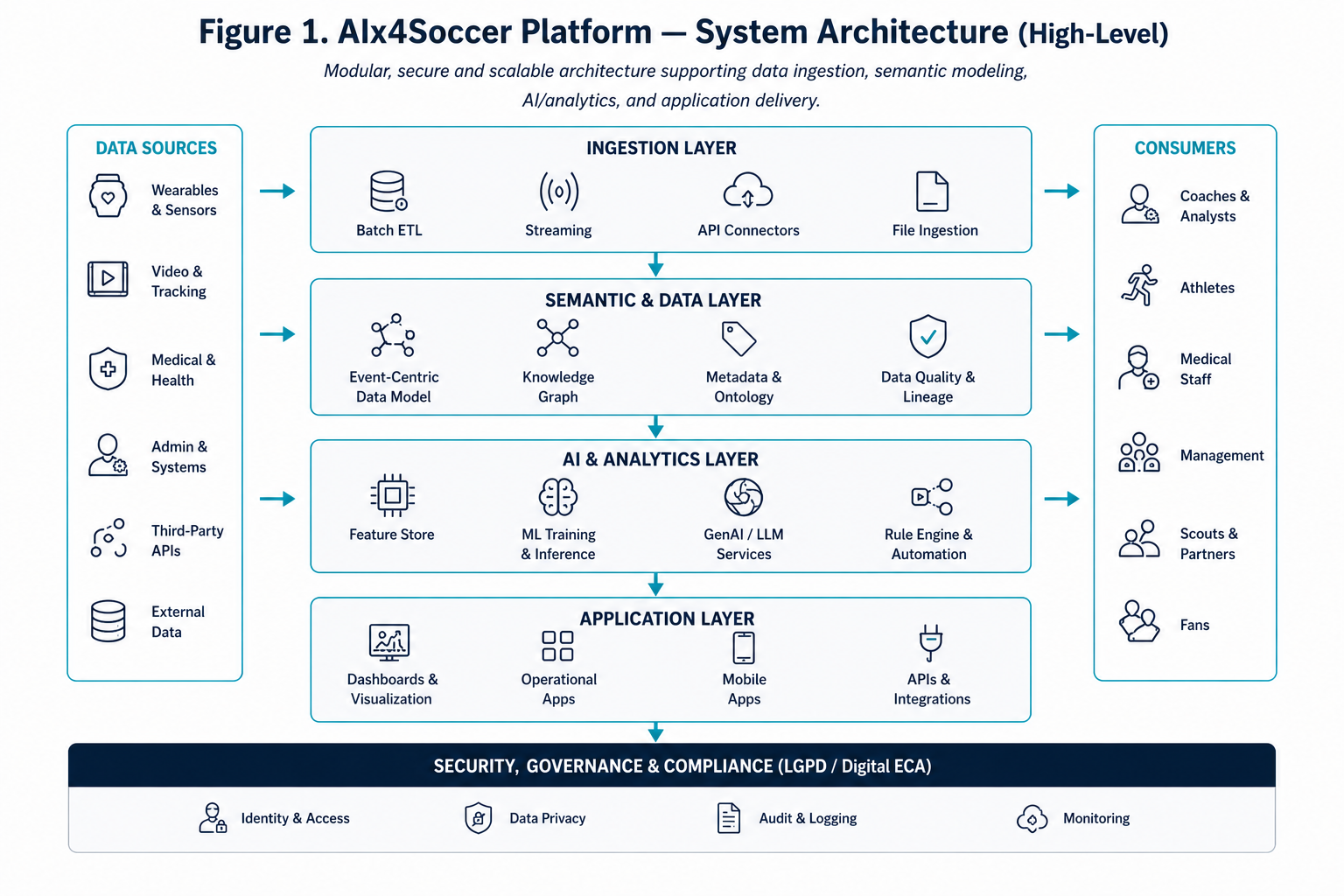
Fig 1: Layered architecture of AIx4Soccer One Platform (conceptual). All module reads/writes pass
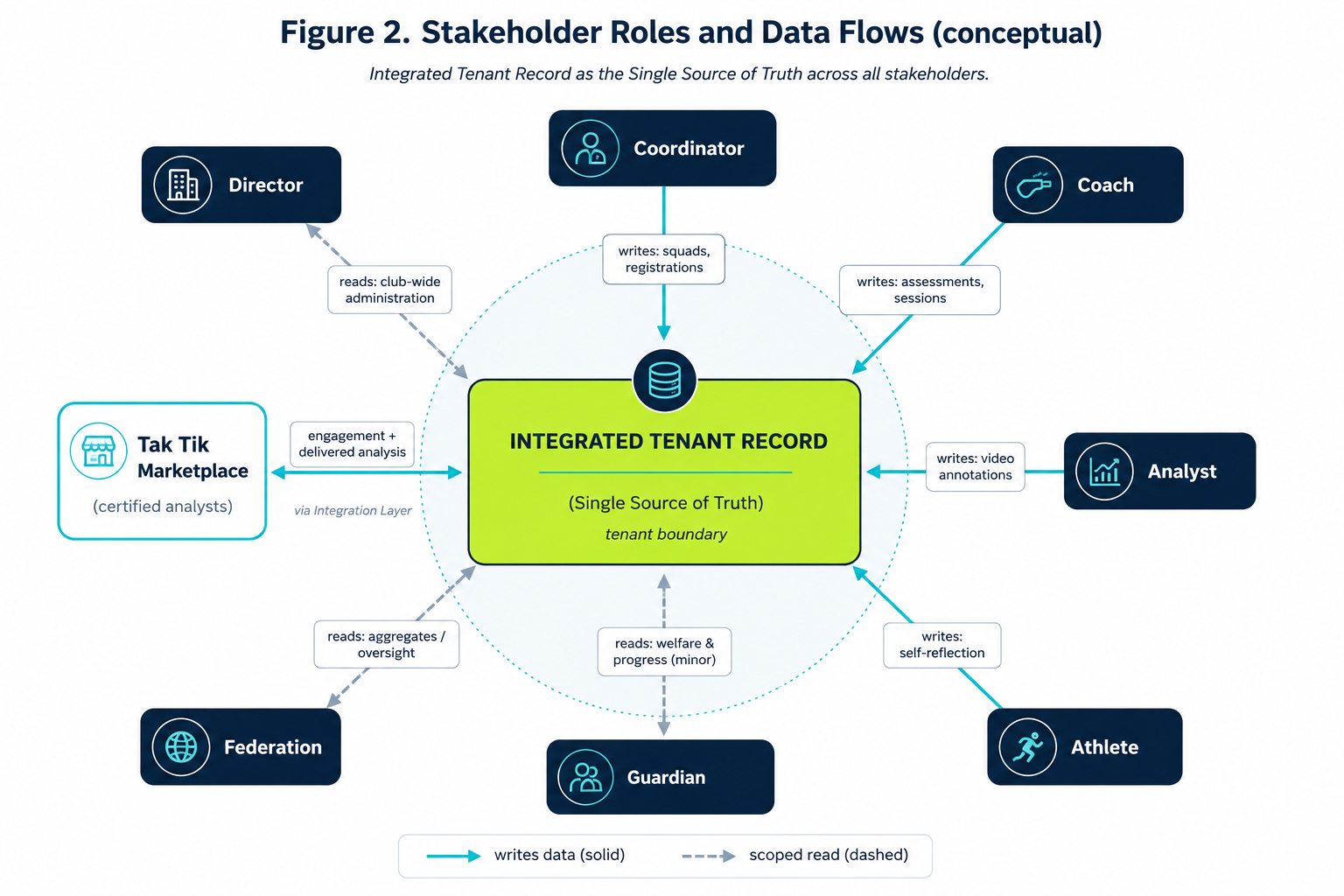
Fig 2: Stakeholder roles and data flows (conceptual). Solid arrows denote writes; dashed arrows denote
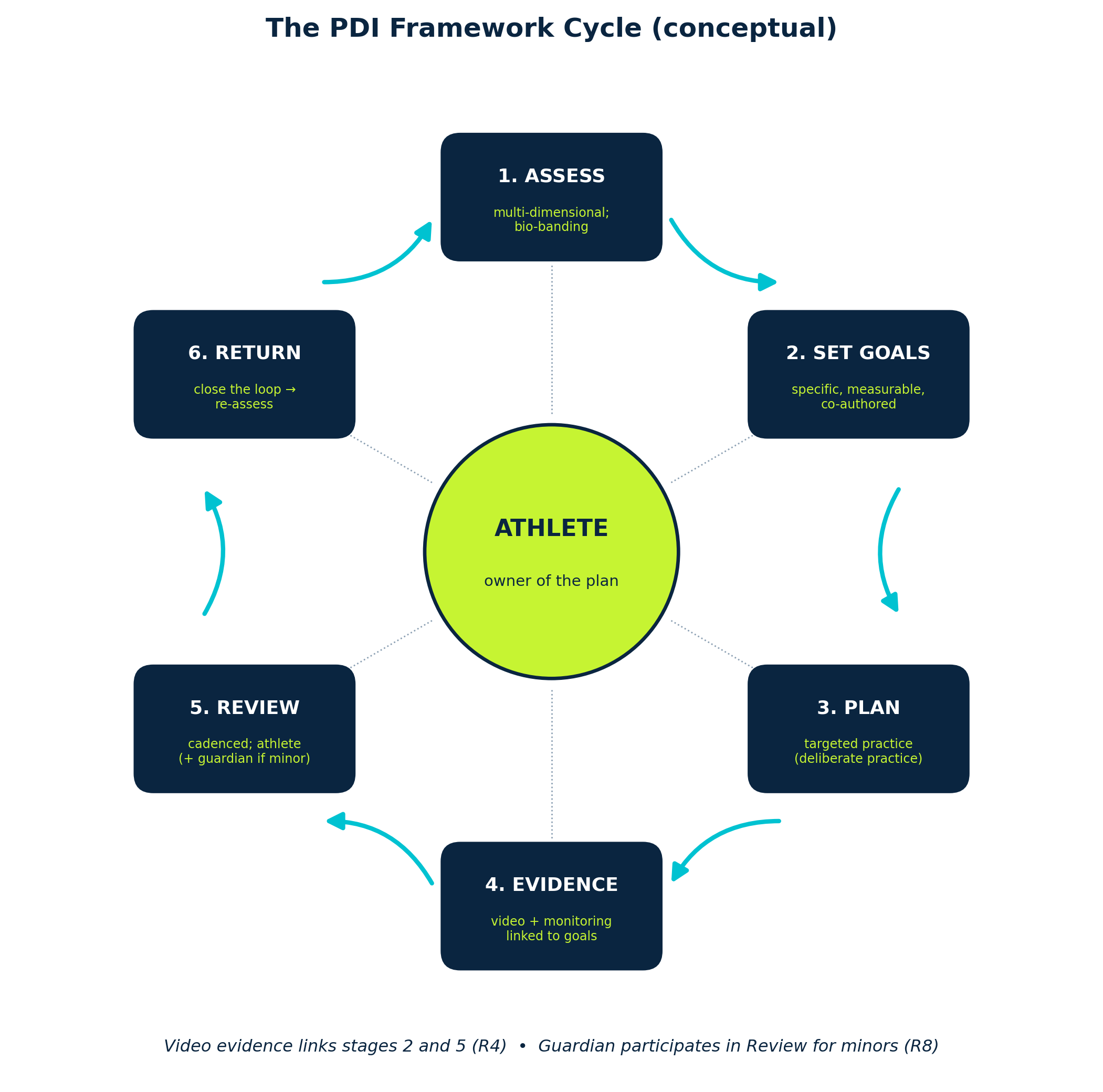
Fig 3: The PDI cycle (conceptual). The athlete sits at the hub as owner of the plan; video evidence
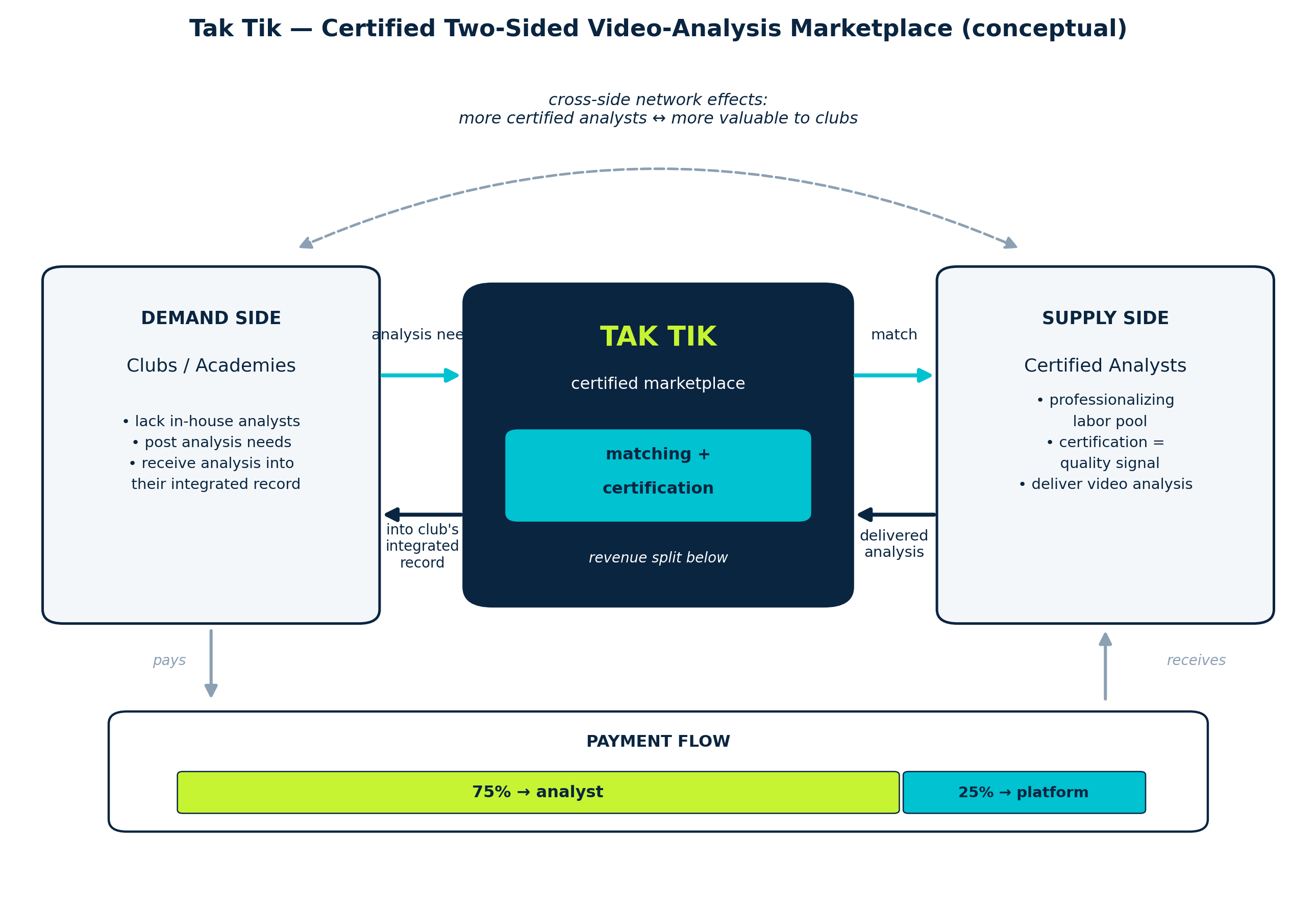
Fig 4: Tak Tik two-sided market (conceptual): matching and certification at the center, cross-side
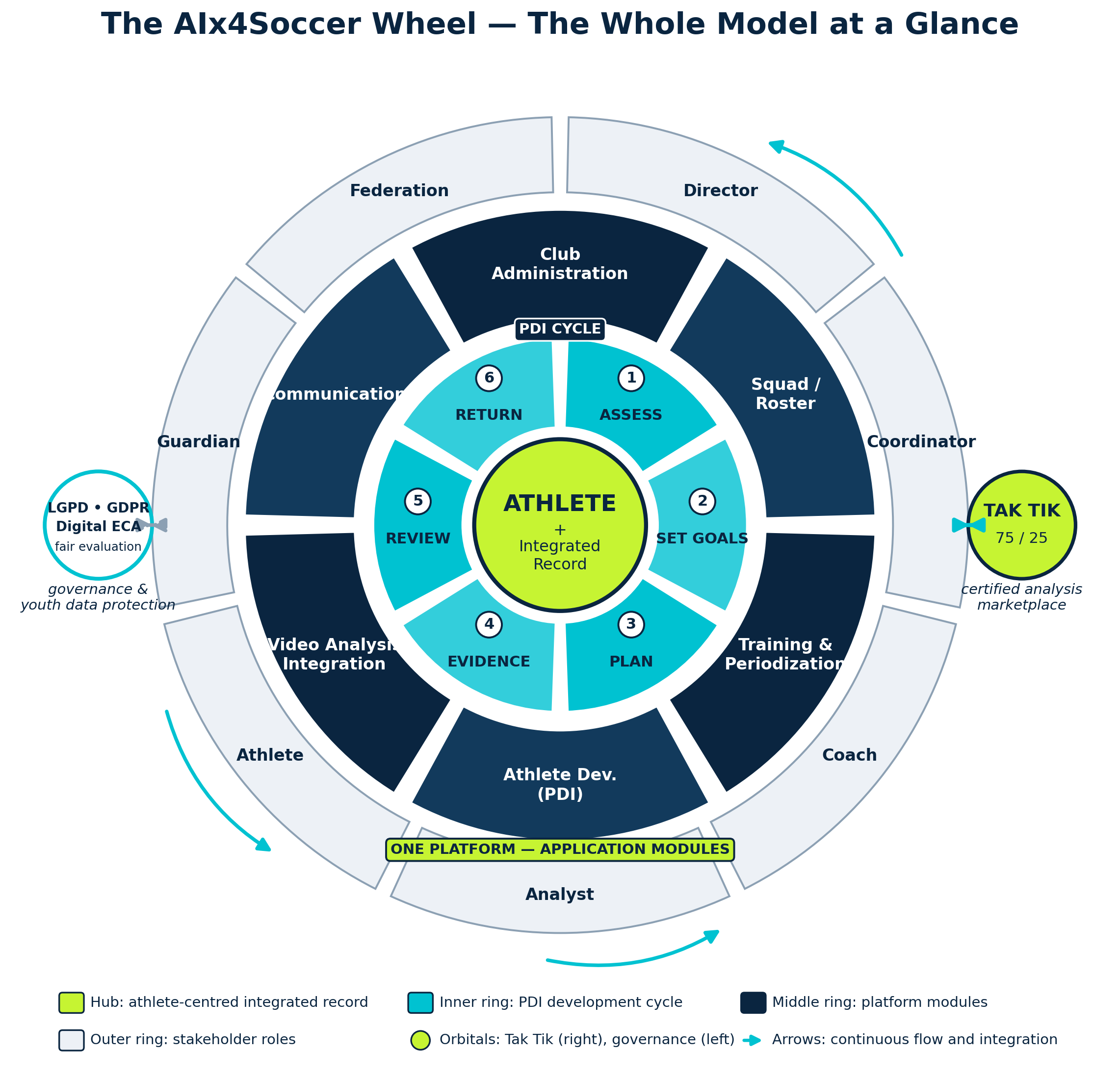
Fig 5: summarizes the complete model as a wheel. At the hub sits the athlete and their integrated
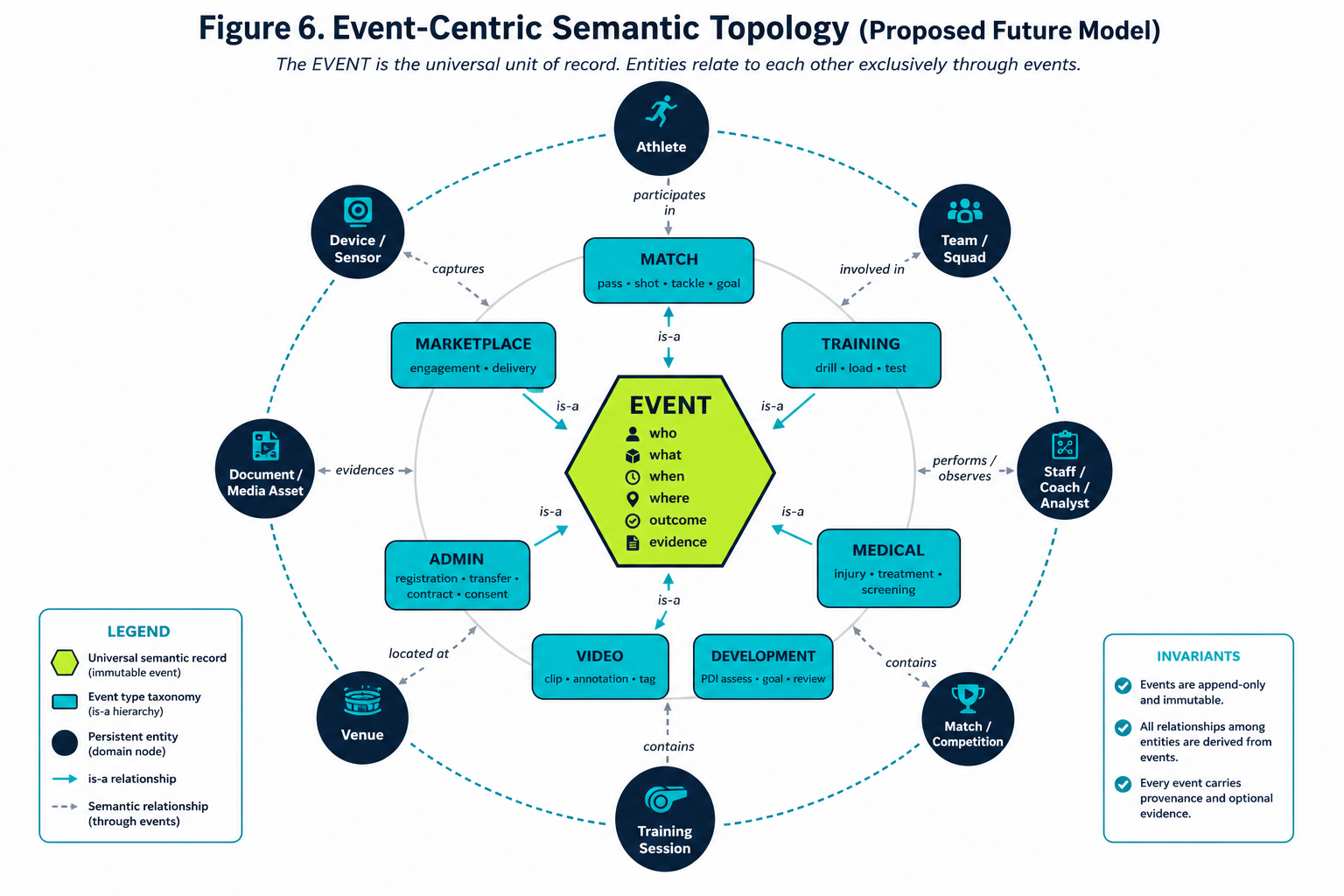
Fig 6: Proposed event-centric semantic data model: the EVENT (hexagon) as the universal unit of
Limitations
- No empirical evaluation or outcome data; paper presents conceptual design and early deployment only, deferring assessment to future work (Section 8).
- No publicly released code, dataset, or implementation details due to ongoing patent application and IP restrictions.
- Unclear how the event-centric model will scale under extremely high volumes and heterogeneous external data integrations in live deployments.
- Platform efficacy in improving athlete development or club operational outcomes remains untested and unreported.
- Potential challenges remain in user adoption, engagement, and sustained use especially in resource-constrained, grassroots club settings.
- Algorithmic fairness risks in talent evaluation are acknowledged but mitigation strategies beyond developer intent are not empirically validated.
Open questions / follow-ons
- How effective is the AIx4Soccer platform in improving athlete development outcomes and club operational efficiency in real deployments?
- What user adoption, retention, and engagement barriers emerge in grassroots and resource-constrained clubs, and how can they be mitigated?
- How can the event-centric semantic data model handle data heterogeneity and scale in multi-club, multi-federation environments with diverse external integrations?
- What concrete methods can enforce algorithmic fairness and mitigate bias in talent evaluation models layered on this platform?
Why it matters for bot defense
Although this paper is not about CAPTCHA or classical bot defense, it provides a useful case study of architecting a secure, multi-tenant SaaS platform handling sensitive structured personal data under strict regional youth data-protection regulations (LGPD, GDPR). Its role-based least-privilege design and append-only immutable logging approach illustrate best practices in data lineage, auditability, and tenant isolation relevant to bot-defense platforms managing user identity and event audit data. Additionally, the two-sided labor marketplace leveraging certification rather than reputation modeling parallels challenges in trust and quality assurance in decentralized security and threat intelligence marketplaces. The conceptual event-centric data model showcasing provenance-aware, time-series knowledge graph construction can inspire bot-defense telemetry design. Practitioners should be aware that structured, auditable event logs with strict permissioning improve transparency and accountability, which could be adapted for suspicious activity triage or anomaly tracking in adversarial environments.
Cite
@article{arxiv2607_28531,
  title={ AIx4Soccer: A Unified Platform Architecture for Football Club Management and Structured Athlete Development },
  author={ Frederico Falconi Costa and Salvador Cesar Costa and Fabricio F. Costa },
  journal={arXiv preprint arXiv:2607.28531},
  year={ 2026 },
  url={https://arxiv.org/abs/2607.28531}
}