
SeasonStereo: Robust Dense Stereo Matching for Multi-Date Satellite Imagery via Generative AI
Source: arXiv:2607.27139 · Published 2026-07-29 · By Álvaro Díaz-Laureano, Roger Marí, Elías Masquil, Pablo Arias, Gabriele Facciolo
TL;DR
SeasonStereo addresses the challenge of dense stereo matching for multi-date (diachronic) satellite imagery, where seasonal and illumination differences cause significant appearance variations that degrade existing 3D reconstruction methods. Traditional approaches rely on near-simultaneous stereo pairs with photometric consistency or costly LiDAR supervision, limiting scalability. SeasonStereo introduces a novel framework that trains dense stereo matching models on synthetic image pairs generated from real synchronic satellite images with controlled seasonal appearance variations. It leverages zero-shot geometric priors from foundation stereo models as pseudo-ground truth, eliminating the need for aligned multi-date training data or LiDAR labels. This approach matches the accuracy of state-of-the-art LiDAR-supervised methods while producing sharper geometric details and improved robustness to seasonal changes.
Key findings
- SeasonStereo matches the lowest average altitude mean absolute error (MAE) of 1.05m on combined test sets without LiDAR supervision, tying with LiDAR-supervised variants (Table 1).
- Adding photometric and smoothness losses sharpens building contours compared to disparity-only supervision, as shown qualitatively in Fig. 7 and Fig. 9.
- Training with synthetic diachronic image pairs reduces average MAE from 1.18m to 1.07m and substantially improves performance on the challenging Omaha diachronic test set (from 1.04m to 0.81m, Table 2).
- Using a curated subset of 871 highly photometrically consistent synchronic stereo pairs improves initial disparity accuracy by filtering unreliable real pairs (Sec. 3.1).
- Synthetic seasonal variants were generated via a text-conditioned generative model (Nano Banana Pro) on 1024x1024 crops to preserve geometric fidelity (Fig. 3, Fig. 4).
- Combining zero-shot disparity supervision from MonSter++ with photometric reconstruction loss on real synchronic pairs prevents ill-posed losses when applied to synthetic diachronic pairs (Eq. 6).
- Occluded, water, and tree regions were masked out during training to avoid supervision noise from inconsistent areas (Fig. 5).
- SeasonStereo improves disparity detail preservation compared to the prior Diachronic Stereo model, which over-smooths building edges (Fig. 7).
Methodology — deep read
The authors assume an adversary irrelevant scenario; the paper is focused on stereo matching robustness rather than security.
Data curation begins with the DFC2019 Track 3 dataset containing multi-date WorldView-3 satellite images and LiDAR ground truth over Jacksonville, Omaha, and Buenos Aires. From the 1565 synchtornic stereo pairs identified by Masquil et al. [41], the authors re-rank pairs based on photometric and learned feature similarity between left images and right-image warped reconstructions using MonSter++ zero-shot disparity maps. The subset with the 1000 highest scores by both RGB-SSIM and DINOv3 cosine similarity criteria is intersected, yielding 871 highly consistent synchronic stereo pairs (Sec. 3.1).
Synthetic seasonal variants are generated from these 871 pairs using the text-conditioned generative model Nano Banana Pro. The authors carefully crop 1024x1024 patches for input to preserve building contours and stable geometry. Four synthetic seasonal styles (spring, summer, autumn, winter) are produced for each image, creating 5 appearance variants per view. Combining left-right variants yields 21,775 total training pairs, including 20 diachronic (cross-season) pairs per synchronic pair (Sec. 3.2).
They fine-tune MonSter++, a recurrent stereo matching foundation model, on this augmented dataset. The monocular depth prior branch is frozen while the stereo matching backbone and iterative modules are trained. The key training objective is a multi-term loss combining:
- L_disp: L1 disparity loss matching predicted disparities to zero-shot teacher disparities from frozen MonSter++ on real synchronic pairs. This pseudo-ground truth supervision transfers to synthetic pairs due to preserved geometry.
- L_photo: photometric reconstruction loss computed by warping the real right synchronic image into the left view using predicted disparity and comparing to the real left image. This avoids photo inconsistencies on synthetic diachronic pairs by computing reconstruction loss only on consistent real images.
- L_smooth: edge-aware smoothness regularization weighted by inverse image gradients to preserve depth discontinuities at edges.
Valid pixel masks exclude occluded pixels (z-buffer test), water bodies, trees, and image border areas where generation may be inconsistent. Building masks extracted by a SegFormer model restrict photometric loss application to permanent structures, mitigating noise from dynamic objects (Sec. 3.3).
Training used 50K iterations with AdamW, learning rate 5e-4, batch size 4, on NVIDIA L40S GPU. Data augmentations include cropping, color jittering, and flipping as in RAFT-Stereo.
Evaluation followed the altitude mean absolute error (MAE) of DSMs reconstructed from predicted disparities on four held-out satellite test splits (Jacksonville, Buenos Aires, Omaha synchronic, Omaha diachronic). Comparisons included zero-shot MonSter++ and prior Diachronic Stereo [41] supervised by LiDAR. Several ablations tested the effects of loss terms and synthetic training data subsets.
Qualitative results show better preservation of building edges and sharp geometric details under seasonal appearance variations compared to baselines. Quantitative results confirm the proposed approach matches or improves accuracy while avoiding expensive LiDAR supervision. The paper includes example workflows and qualitative visualizations illustrating each stage.
Technical innovations
- Using generative text-conditioned models to produce geometry-preserving synthetic seasonal variants for multi-date satellite stereo training, preserving camera pose and structure explicitly.
- Leveraging zero-shot disparity predictions from foundation stereo models as pseudo-ground truth for dense supervision, eliminating the need for costly LiDAR labels.
- Introducing a multi-term training loss combining zero-shot geometric supervision, photometric reconstruction loss on real synchronic pairs, and edge-aware disparity smoothness for sharper disparity boundaries.
- A novel realistic valid-pixel masking strategy excluding occluded, water, tree, and border pixels to reduce noise from inconsistent synthetic generations and dynamic scene elements.
Datasets
- DFC2019 Track 3 dataset — over 1,500 real synchronic and diachronic WorldView-3 image pairs with LiDAR ground truth — public
- SeasonStereo synthetic augmented dataset — 21,775 stereo pairs with multiple seasonal appearances generated from curated 871 synchronic pairs — released by authors
Baselines vs proposed
- Zero-shot MonSter++: Average altitude MAE = 1.93m vs SeasonStereo full model: 1.05m
- Diachronic Stereo [41] (LiDAR supervised): Avg. MAE = 1.06m vs SeasonStereo (no LiDAR use): 1.05m
- SeasonStereo trained on real-only pairs (S1): Avg. MAE = 1.18m vs S3 (real + mixed synthetic): 1.07m
- SeasonStereo trained with disparity loss only (Ldisp): Avg. MAE = 1.06m vs full loss (Ldisp + Lphoto + Lsmooth): 1.05m
Figures from the paper
Figures are reproduced from the source paper for academic discussion. Original copyright: the paper authors. See arXiv:2607.27139.
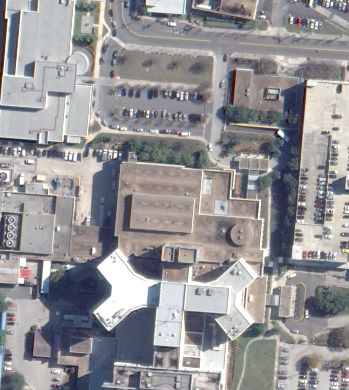
Fig 1: SeasonStereo learns to estimate disparity from multi-date satellite images by
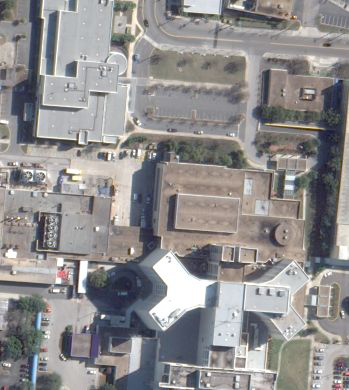
Fig 2 (page 2).
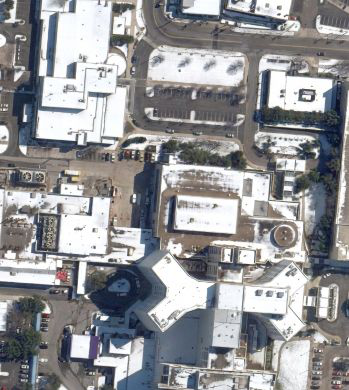
Fig 3 (page 2).
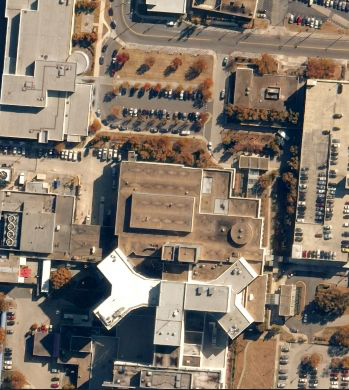
Fig 4 (page 2).
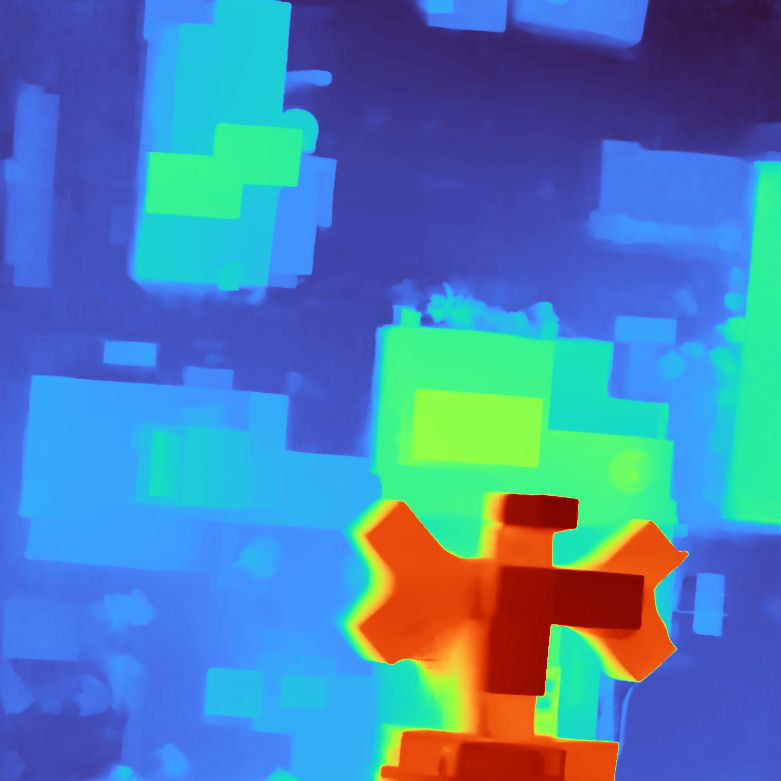
Fig 5 (page 2).
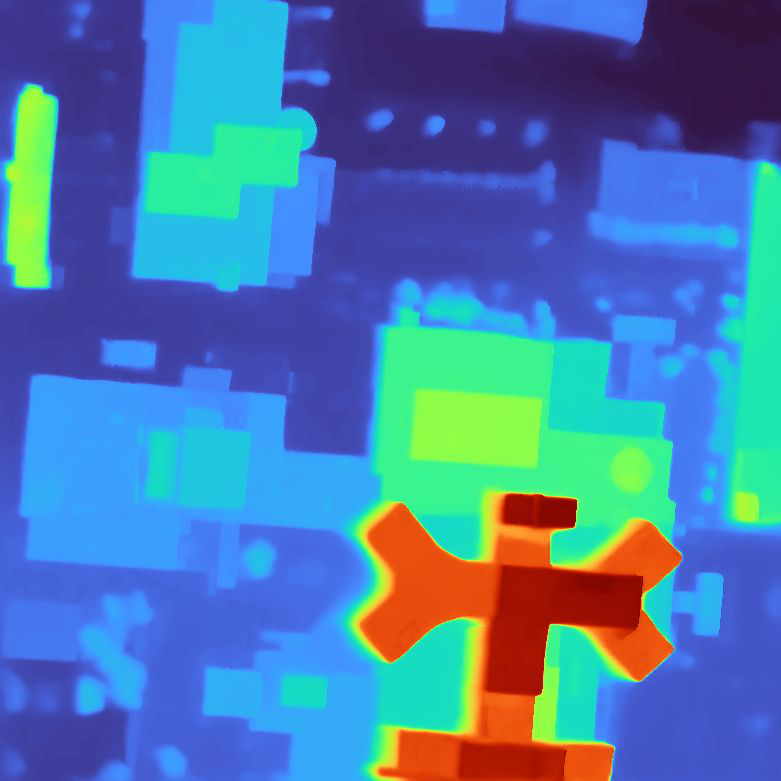
Fig 6 (page 2).
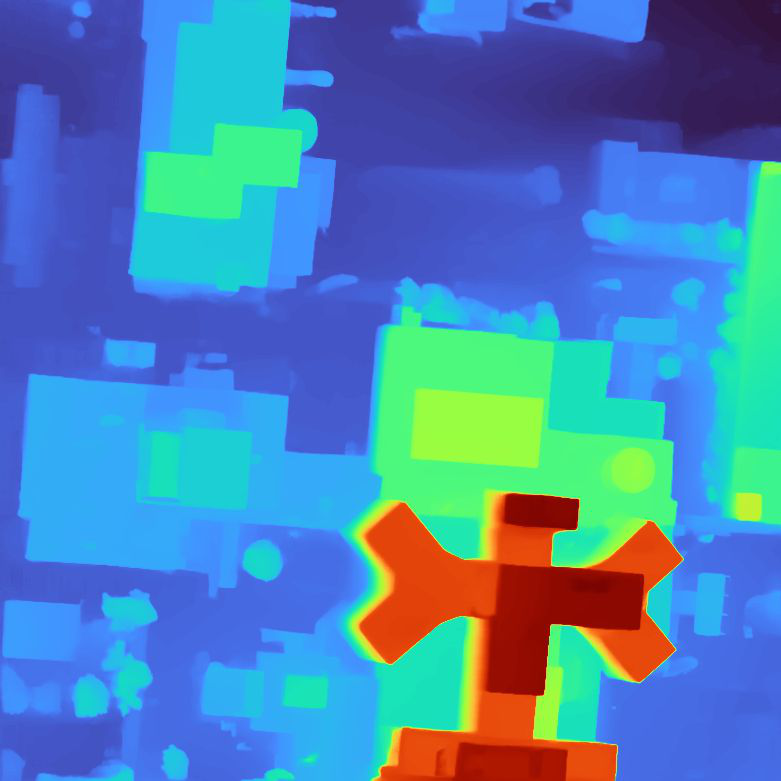
Fig 7 (page 2).
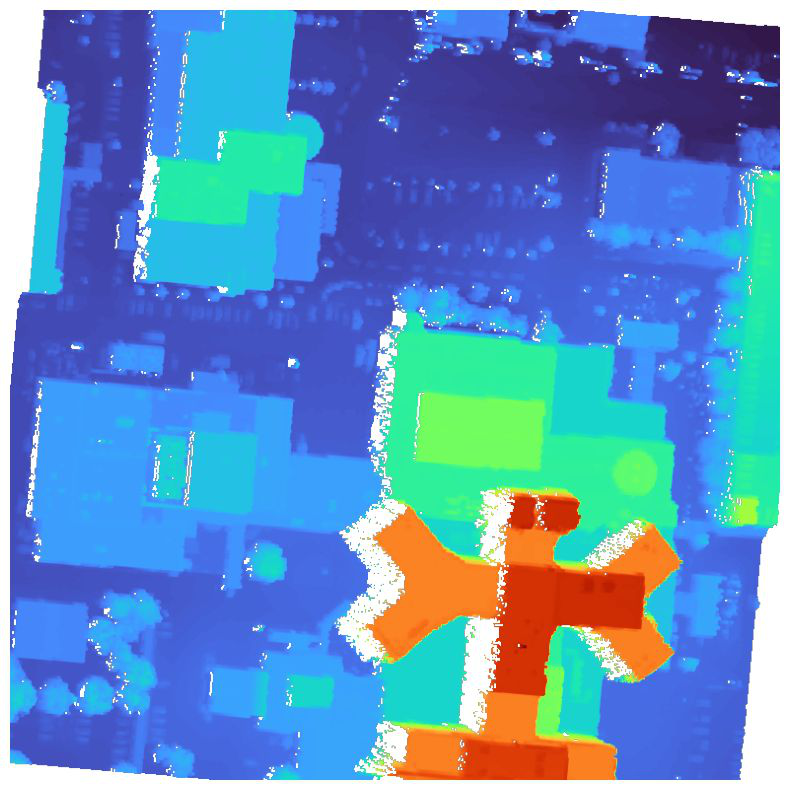
Fig 8 (page 2).
Limitations
- Reliance on zero-shot monocular-stereo foundation models as pseudo-ground truth may inherit their biases and errors.
- Synthetic seasonal variants, while geometry-preserving, can still hallucinate or distort fine-scale details especially in water and vegetation, necessitating masking.
- Evaluation is limited to datasets derived from WorldView-3 and specific geographies; generalization to other sensors/regions is not demonstrated.
- Dynamic objects and scene changes between acquisition dates introduce noise despite masking buildings and occluded pixels.
- No adversarial evaluation is performed to test robustness against targeted attacks or adversarial perturbations.
- The approach depends on accurate rectification homographies and poses, which may be less reliable in some scenarios.
Open questions / follow-ons
- How well would SeasonStereo generalize to other satellite sensors or lower-resolution imagery with different spectral characteristics?
- Can the generative synthetic data approach be extended beyond seasonal appearance to simulate other challenging factors like atmospheric conditions or sensor effects?
- What are the limits of zero-shot supervision from foundation models in capturing complex geographic structures or rare architectural styles?
- Could adversarial training further improve robustness against extreme appearance variations or corrupted inputs?
Why it matters for bot defense
SeasonStereo demonstrates a compelling scalable approach for robust dense stereo matching under drastic appearance changes without relying on expensive ground truth labels. Bot-defense and CAPTCHA systems that rely on spatial or geometric correlation analysis could benefit from techniques that maintain accurate correspondence across diverse, temporally spaced imagery. The framework’s use of synthetic augmentation guided by generative models and zero-shot supervision suggests a path for improving robustness in visual challenge-response systems when facing changing environmental or illumination conditions. However, the computational cost and domain specificity to satellite imagery indicate adaptations would be necessary for real-time CAPTCHA applications. Insights on multi-term loss design, valid-pixel masking, and leveraging foundation models may inform improvements in adversarial example detection or robustness for image-based bot-detection mechanisms that depend on stereo or multi-view consistency.
Cite
@article{arxiv2607_27139,
  title={ SeasonStereo: Robust Dense Stereo Matching for Multi-Date Satellite Imagery via Generative AI },
  author={ Álvaro Díaz-Laureano and Roger Marí and Elías Masquil and Pablo Arias and Gabriele Facciolo },
  journal={arXiv preprint arXiv:2607.27139},
  year={ 2026 },
  url={https://arxiv.org/abs/2607.27139}
}