
Practical Quantum Topological Data Analysis with Applications to High-Dimensional Feature Extraction and Time Series Analysis
Source: arXiv:2607.27206 · Published 2026-07-29 · By Jason Iaconis, Sayonee Ray, Samwel Sekwao, Claudio Girotto, Martin Roetteler
TL;DR
This paper addresses the classical computational bottleneck in Topological Data Analysis (TDA) for extracting high-dimensional topological features from large complex datasets—especially beyond low-order Betti numbers. Existing quantum TDA approaches mainly focus on exact or high-precision Betti number estimation, which narrows the practical regimes where a quantum advantage is achievable. The authors propose framing quantum TDA instead as a feature extraction tool leveraging low-order spectral moments of the combinatorial Laplacian as proxies for high-dimensional topology. This perspective broadens applicability by focusing on useful topological features correlated with Betti information rather than exact counts.
They empirically demonstrate the utility of higher-order TDA features on two significant application domains involving time series data: fMRI brain imaging for classifying neurodegenerative disease and financial time series for detecting market instability. The results show improved predictive performance by including TDA features up to dimension 4. Algorithmically, they develop a moment-based quantum procedure extracting low-order spectral moments (e.g., relative trace) from the Laplacian operator, which correlate strongly with high-dimensional Betti numbers—even when Betti numbers are small. Resource estimates, crossover projections, and experimental data on a trapped-ion quantum device validate the feasibility of this approach on up to 16-node graphs. Together, these contributions establish quantum TDA as a practical, near-term quantum-classical hybrid for extracting meaningful topological features from challenging high-dimensional data.
Key findings
- Time-to-solution (TTS) for classical Betti number computation scales linearly with the number of (d)-cliques, approximately as TTS = 7.6 × 10⁻⁹ × (N choose d)/d − 0.037 on Erdős-Rényi graphs (Sec. 2.2.2, Fig. 3), causing explosion in cost for d > 8 on graphs around 80 nodes.
- Higher-order TDA features (up to H4) improve classification accuracy of neurodegenerative disease on fMRI data from baseline 69% (H0 only) up to 74% accuracy for H0:H4 combined features (Sec. 3.1, Table 1).
- Moment-based quantum algorithm extracts low-order Laplacian spectral moments—e.g., relative trace—that show strong correlation (>0.9 Spearman) with Betti numbers across tested complex regimes, even when relative Betti numbers are small (Sec. 4.2, Fig. 29-31).
- Resource estimates indicate that extracting Laplacian moments on graphs with up to ~16 nodes is experimentally feasible on trapped-ion quantum hardware (Sec. 4.1, 4.5).
- Quantum hardware experiments on a Barium ion trap demonstrate Laplacian-based observables from graph instances quantitatively matching exact classical Betti measurements within experimental error (Sec. 4.5).
- Memory scaling for classical TDA computation is linear with (N choose d), potentially becoming a bottleneck before time scaling at high homology dimensions (Sec. 2.2.2, Fig. 4).
- Low-order spectral moments provide an effective proxy for topology even without large relative Betti numbers, expanding quantum TDA applicability beyond previously assumed parameter regimes (Sec. 4.2).
- In financial time series analysis, higher-order TDA features reveal early signals of instability (details truncated), demonstrating commercial relevance (Sec. 3.2).
Threat model
n/a — This work does not evaluate security threats or adversarial models but addresses computational bottlenecks in classical TDA. The implicit adversary is the combinatorial explosion in classical Betti number computation that limits applicability.
Methodology — deep read
Threat Model and Assumptions: The adversary or threat model is not explicitly security-oriented. Instead, the authors consider a classical computational bottleneck adversarial to efficient TDA in high homology dimensions due to combinatorial explosion. The quantum algorithm targets scenarios where classical exact Betti number estimation is infeasible or slow. The quantum device is assumed to be a noisy intermediate-scale trapped-ion system (Barium ions), capable of preparing and measuring states encoding simplicial complexes.
Data: Two main real-world datasets are explored: (a) fMRI time series from the publicly available OASIS dataset (32 Alzheimer's disease and 79 healthy individuals) and (b) financial time series data (details partially truncated). The fMRI data undergo pre-processing using Nilearn and the Harvard-Oxford atlas to extract 48 cortical ROIs. Point clouds are generated from ROI time series via Takens embedding into ~10-dimensional spaces with ~150 points each. Simplicial complexes are constructed using Vietoris-Rips filtration. Labels correspond to disease/control for classification tasks.
Architecture/Algorithm: The key operator is the combinatorial Laplacian ∆_k derived as the square of the Dirac operator B, composed of boundary operators ∂_k and their adjoints, acting on Hilbert spaces corresponding to k-cliques. Betti numbers correspond to the dimension of the kernel of ∆_k. Exact kernel dimension computation is classically expensive.
The quantum algorithm reframes Betti number estimation as extracting low-order spectral moments (e.g., the relative trace) of ∆_k. Circuit constructions efficiently encode sparse Laplacians using fermionic creation and annihilation operators that implement boundary operators. Measurements of these moments require preparing quantum states associated with the simplex spaces and sampling observables corresponding to Laplacian moments.
Training Regime: Not applicable as the algorithm is unsupervised feature extraction rather than trainable. However, quantum circuits were designed for up to 16 nodes and executed on Barium ion-trap hardware prototypes. Classical simulations validated circuits and resource estimates prior to experiments.
Evaluation Protocol: For fMRI, TDA features from persistence diagrams were computed across homology dimensions 0 to 4. Distances between persistence diagrams generate feature matrices, which are fed into classical classifiers to measure improvements in accuracy for Alzheimer's classification over baselines using only low-dimensional homology.
Quantum algorithm evaluation compared Laplacian-derived spectral moment estimates to exact classical Betti numbers on graph instances, measuring correlations quantitatively (e.g., Spearman correlations). Resource estimates quantified depth, width, and shot count requirements. Hardware experiments demonstrated feasibility and agreement between quantum observables and classical exact values.
Cross-validation in classification tasks used standard supervised learning protocols but details like folds/seeds are not fully specified. Statistical tests on correlations between moments and Betti numbers were reported.
- Reproducibility: Some classical software tools like giotto-ph, giotto-tda are publicly available. Quantum circuit details and resource estimates are documented, but source code and exact quantum hardware pulse sequences are not explicitly mentioned as public. Data provenance is public (OASIS dataset). The quantum experiments represent near-term hardware prototypes mimicking IonQ Tempo.
Concrete Example End-to-End: For the fMRI dataset, ROI time series from each patient were embedded into point clouds using Takens embedding. Vietoris-Rips complexes were built and persistence diagrams generated per homology dimension. Distances between diagrams formed feature distance matrices per patient. A classical classifier trained on these features shows improved accuracy when higher-order Betti numbers up to dimension 4 are included, demonstrating additional disease-relevant information captured by topology.
Separately, for quantum algorithm validation, small graphs up to 16 nodes were encoded into quantum states representing simplicial complexes. Circuits implemented boundary operators, and measurements estimated moments of the Laplacian spectrum. Correlations between these moments and classical Betti numbers were measured, showing strong agreement.
Overall, this methodology ties classical TDA feature utility to quantum extraction practicalities, combining theory, application, simulation, and experiment.
Technical innovations
- Reframing quantum TDA from exact high-precision Betti number estimation to extracting low-order spectral moments of the combinatorial Laplacian as topological feature proxies.
- Development of a moment-based quantum algorithm using fermionic creation/annihilation operators to efficiently implement boundary operators encoding simplicial complexes.
- Demonstration that low-order Laplacian moments correlate strongly with high-dimensional Betti information even when relative Betti numbers are small, expanding quantum TDA applicability.
- Quantum-classical crossover resource estimates and circuit designs adapted for trapped-ion hardware, validated experimentally on up to 16-node graphs.
Datasets
- OASIS fMRI dataset — 111 subjects (32 Alzheimer's, 79 healthy) — public
- ADNI fMRI dataset (referenced for comparison) — hundreds of subjects — public
- Erdős-Rényi random graphs (synthetic) — variable size up to ~150 nodes — synthetic
Baselines vs proposed
- Classical TDA Betti number calculation (giotto-ph) CPU parallel: TTS scales as 7.6×10⁻⁹ * (N choose d)/d - 0.037; TTS becomes prohibitive above d=8 for ~80-node graphs
- Baseline fMRI classification with H0 features only: 69% accuracy; with H0 to H4 features: up to 74% accuracy on OASIS dataset
- Correlation between low-order Laplacian spectral moments and Betti numbers: Spearman correlation > 0.9 (specific values depend on test graphs)
- Quantum hardware measurement of Laplacian observables matches exact classical Betti values within experimental error margins on graphs of up to 16 nodes
Figures from the paper
Figures are reproduced from the source paper for academic discussion. Original copyright: the paper authors. See arXiv:2607.27206.
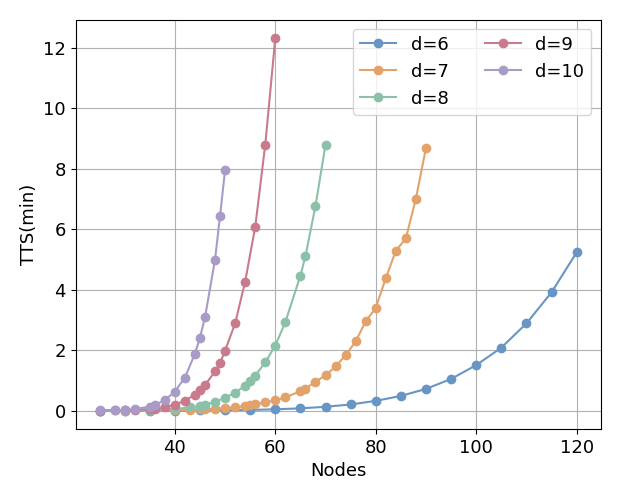
Fig 3: (left) TTS scaling with graph size for different βd. (right) TTS scaling over all graphs
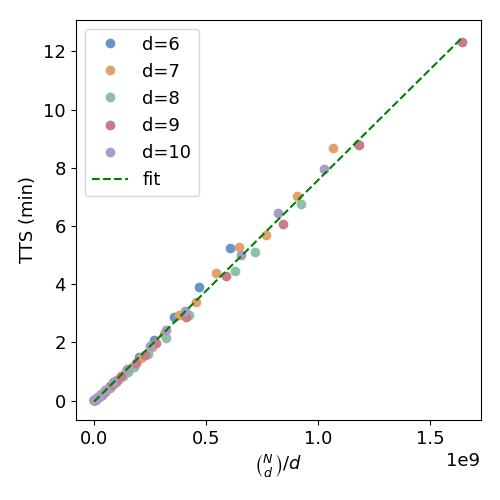
Fig 4: (left) TTS scaling with number of parallel CPU threads. (right) Memory scaling over all
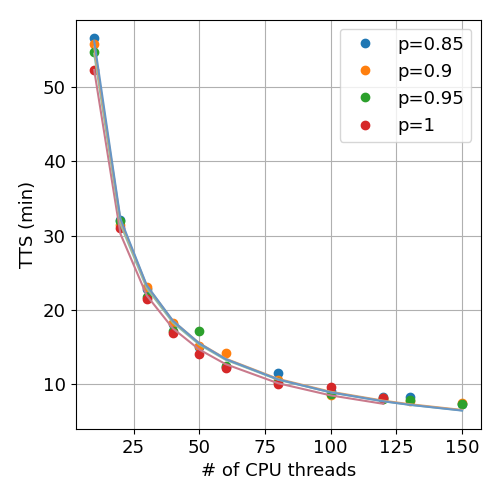
Fig 3 (page 10).
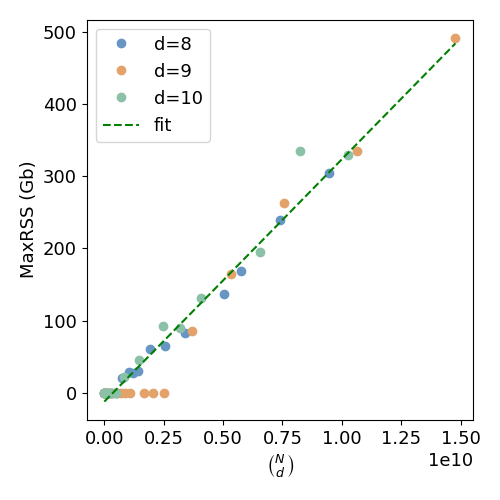
Fig 4 (page 10).
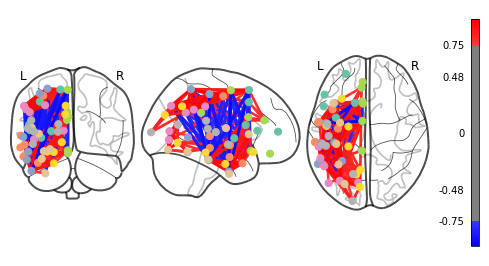
Fig 5: Connectome evolution over different thresholds on the correlation matrix from a patient’s
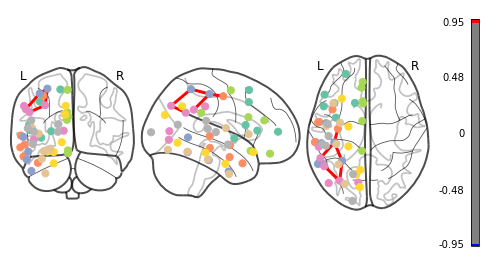
Fig 6: ROI time series, point clouds and persistent homology on a sample patient data. (top)
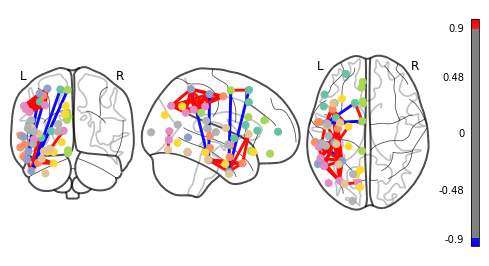
Fig 7: Features from blood oxygen level (BOLD) signals: Distance matrices between persistence
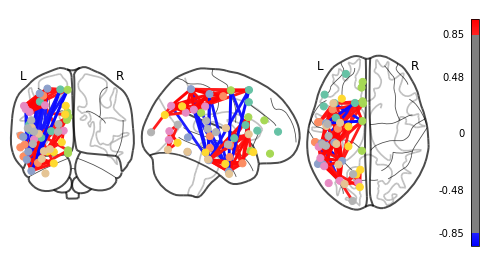
Fig 8 (page 13).
Limitations
- fMRI classification experiments use a relatively small subset (111) of OASIS subjects compared to other studies, limiting statistical power and generalization.
- Direct quantitative comparison with prior work is complicated by differences in datasets, preprocessing, atlases, and model classes used.
- Quantum algorithm demonstrations are limited to small graphs (up to 16 nodes) due to current hardware constraints; scalability to larger graphs remains untested experimentally.
- No extensive adversarial robustness or noise analysis of the quantum algorithm was performed; impact of quantum hardware errors on feature accuracy is unclear.
- Financial time-series analysis results are outlined but full quantitative details (datasets, classification metrics) are truncated and thus not fully evaluated.
- Resource estimates assume idealized trapped-ion hardware; real-world overheads or fault-tolerance needs may alter feasibility.
Open questions / follow-ons
- How does the moment-based quantum TDA scale in practice for larger graphs (beyond 16 nodes) on near-term quantum hardware?
- What is the robustness of the spectral moment measurements under realistic quantum noise levels and hardware imperfections?
- Can the connection between spectral moments and Betti numbers be further generalized to other types of simplicial complexes or filtration methods beyond Vietoris-Rips?
- How would integrating quantum TDA features with advanced classical machine learning models affect performance on large-scale, real-world datasets?
Why it matters for bot defense
For bot-defense and CAPTCHA practitioners, this work demonstrates a pathway to efficiently extract rich topological features from complex high-dimensional data using quantum algorithms, potentially enabling new kinds of feature sets for anomaly or pattern detection beyond classical capabilities. While the paper's direct applications are in brain imaging and finance, the underlying approach of using low-order Laplacian spectral moments as proxies for complex topological structure could inspire novel features for behavioral or interaction data analysis in bot detection. The demonstrated improvements over classical exact Betti calculation highlight how quantum-assisted TDA may extend feature extraction into high-dimensional settings currently computationally prohibitive.
However, current quantum implementations are limited to relatively small graph sizes, so integration into real-world bot-defense pipelines remains a future prospect. Practitioners should watch emerging quantum hardware capabilities and consider how topological features obtained via quantum TDA could complement existing heuristic and ML-based bot signals, particularly for complex interaction patterns or network structures resistant to classical analysis.
Cite
@article{arxiv2607_27206,
  title={ Practical Quantum Topological Data Analysis with Applications to High-Dimensional Feature Extraction and Time Series Analysis },
  author={ Jason Iaconis and Sayonee Ray and Samwel Sekwao and Claudio Girotto and Martin Roetteler },
  journal={arXiv preprint arXiv:2607.27206},
  year={ 2026 },
  url={https://arxiv.org/abs/2607.27206}
}