
AuthentiCity: A Multi-Source Provenance-Aware Knowledge Graph and Benchmark for 3D City Models
Source: arXiv:2607.25243 · Published 2026-07-28 · By Huynh Duc An Son Nguyen, Lukas Arzoumanidis, Youness Dehbi
TL;DR
AuthentiCity addresses the challenge of integrating heterogeneous urban data sources—authoritative CityGML, crowd-sourced OpenStreetMap (OSM), machine-learned predictions, and reconstructed 3D geometry—into a unified, provenance-aware 3D city knowledge graph spanning five global cities with 180 million nodes and 220 million edges. This graph retains source provenance, confidence scores, and coverage information across multi-source correspondences, enabling traceable integration without overwriting authoritative information. The authors complement the dataset release with two novel benchmark families: natural-language-to-query translation on provenance- and coverage-aware Cypher queries including spatial predicates and infeasibility detection, and a graph representation learning suite for multi-source attribute prediction, node classification, and link prediction that directly compares provenance-agnostic versus provenance-aware embeddings.
Key findings
- AuthentiCity integrates 180 GiB of urban data covering 3.6 million buildings with 1.2 billion property entries across Hamburg, Helsinki, Zurich, New York, and Tokyo.
- 87.2% of CityGML-to-OSM building correspondences in Hamburg are 1:1 matches, but n:m matches and fragmentation vary by city (up to 9.8% in Tokyo), motivating confidence-weighted fusion edges.
- ML roof-material predictions cover 50.2% of Hamburg’s buildings and agree with OSM roof-material labels at 75.2%, with variation by material type (e.g., 92.6% for roof tiles).
- A commercial LLM achieves 54–69% execution accuracy on the text-to-Cypher tasks, while an open 7B LLM achieves 6–19%, often failing to refuse unanswerable queries (0% recall on infeasibility).
- Provenance-aware graph neural networks improve attribute imputation and link prediction performance compared to provenance-agnostic models by explicitly weighting edges by source confidence.
- The natural-language-to-query benchmark comprises 1394 gold questions across 84 templates covering spatial, provenance, coverage-aware aggregation, cross-source agreement, and infeasibility detection.
- Infeasibility detection (declining to answer) is achieved with 72–95% F1 by the commercial LLM but fails completely (0 recall) for the open-weight model, highlighting the challenge of confidence and provenance reasoning.
- The dataset preserves incomplete coverage explicitly, allowing evaluation of models' abilities to distinguish true missing data from negative evidence in aggregation tasks.
Threat model
The assumed adversary is an end-user or automated system querying the multi-source urban KG who may encounter conflicting, incomplete, or uncertain data originating from diverse sources with varying reliability. The system is designed to prevent authoritative data from being overwritten and to expose provenance and confidence to allow users and algorithms to judge trustworthiness and detect infeasible queries. The adversary cannot modify the underlying source data or inject forged data into the KG; the threat model focuses on reasoning over complex provenance and coverage rather than adversarial manipulation.
Methodology — deep read
The core threat model assumes end-users or automated agents querying a multi-source 3D urban knowledge graph that integrates authoritative and diverse derived data with differing reliability and coverage. The dataset construction is source-transparent and provenance-preserving, enabling querying and learning methods to reason about the trustworthiness and coverage of integrated facts.
Data provenance is preserved by representing each data source’s facts as separate nodes and edges, never overwriting authoritative data. Fusion edges encode confidence scores derived from area overlaps between geometries for entity resolution, enabling many-to-many correspondences without forced merging.
The dataset integrates authoritative CityGML 2.0 LoD2 (or LoD3 reconstructions for Hamburg), OSM crowd-sourced features reprojected into local metric coordinate reference systems, ML-predicted roof-material classifications for about half of Hamburg’s buildings, and high-detail LoD3 building facade reconstructions from imagery for a small subset (Hamburg only).
Graph construction uses the open-source pykci pipeline to transform CityGML datasets to compact labeled property graphs in Neo4j, preserving geometry verbatim and indexing spatially with R-trees.
Data cleaning handles source id conflicts using content and geometry hashes. OSM to CityGML fusion uses an overlap threshold of 0.3 for candidate matching edges with aligns to Jaccard similarity as confidence weights.
Two-tiered datasets: Tier 1 provides CityGML-plus-OSM integration across all five cities to support cross-city comparison, while Tier 2 (Hamburg) adds ML-predicted and reconstructed layers for deeper fusion and provenance reasoning.
The NL-to-query benchmark involves generating executable Cypher queries from natural-language questions covering spatial predicates, multi-hop traversal, provenance-filtered retrieval, coverage-aware aggregation, cross-source agreement, and infeasibility detection with guarded queries proven to lack answers. Question templates instantiate over city-specific schemas and languages (German and Japanese).
Evaluation measures execution accuracy decomposed into correct execution, semantic but incorrect execution, execution errors, and refusal to answer. Infeasibility detection scores use precision, recall, and F1.
Two LLM baselines tested: a commercial Claude Code (Sonnet 5) and an open 7B Qwen2.5-coder. Claude achieves 54–69% accuracy and good infeasibility precision/recall, while Qwen struggles with syntax errors in spatial queries and never declines infeasible questions.
For representation learning, multiple graph neural architectures (GraphSAGE, GAT, R-GCN, HAN, HGT) are trained end-to-end on tasks of attribute imputation, node classification, and link prediction under provenance-aware (typed edges, confidence weights) and provenance-agnostic (flattened graph) protocols. Training uses spatial and cross-city splits with K-fold cross-validation for spatial.
Provenance-aware models incorporate confidence-weighted message passing and source-specific projection matrices, providing a mechanism to evaluate the benefit of explicit source and confidence information.
Evaluation metrics include execution accuracy and infeasibility F1 for NL-to-query, and macro-F1, ROC-AUC, and R-squared for graph learning tasks.
The release includes extensively validated, deterministic gold queries with materialized results, verified infeasible questions with guard queries, dataset loaders, and evaluation harness. The dataset and code are openly licensed and archived with persistent DOIs.
Technical innovations
- A provenance-aware, multi-source 3D city knowledge graph integrating authoritative CityGML, OSM crowd-sourced data, machine-learned roof-material predictions, and high-detail LoD3 reconstructions preserving source identities and confidence-weighted fusion edges.
- Retention of complete many-to-many polygon correspondences as weighted edges rather than enforcing hard merges, supporting provenance-aware queries and learning.
- A novel natural-language-to-provenance-aware-Cypher benchmark combining 3D spatial predicates, coverage-aware aggregation, provenance filtering, and infeasibility detection over urban data graphs.
- Provenance-aware graph neural network encoder utilizing confidence-weighted message passing and source-typed relation-specific projections to enhance attribute imputation and link prediction over multi-source city graphs.
Datasets
- AuthentiCity — 180 GiB — Public release integrating CityGML, OpenStreetMap, ML predictions, LoD3 reconstructions for 5 cities worldwide
Baselines vs proposed
- Commercial LLM (Claude Sonnet 5): Execution accuracy = 54–69% across 5 cities vs open 7B model (qwen2.5-coder) = 6–19%
- Infeasibility detection F1 (Claude) = 72–95% vs qwen2.5-coder = 0%
- Provenance-aware GNNs outperform provenance-agnostic variants on attribute imputation and link prediction tasks (exact deltas unclear, see Section 5)
Figures from the paper
Figures are reproduced from the source paper for academic discussion. Original copyright: the paper authors. See arXiv:2607.25243.
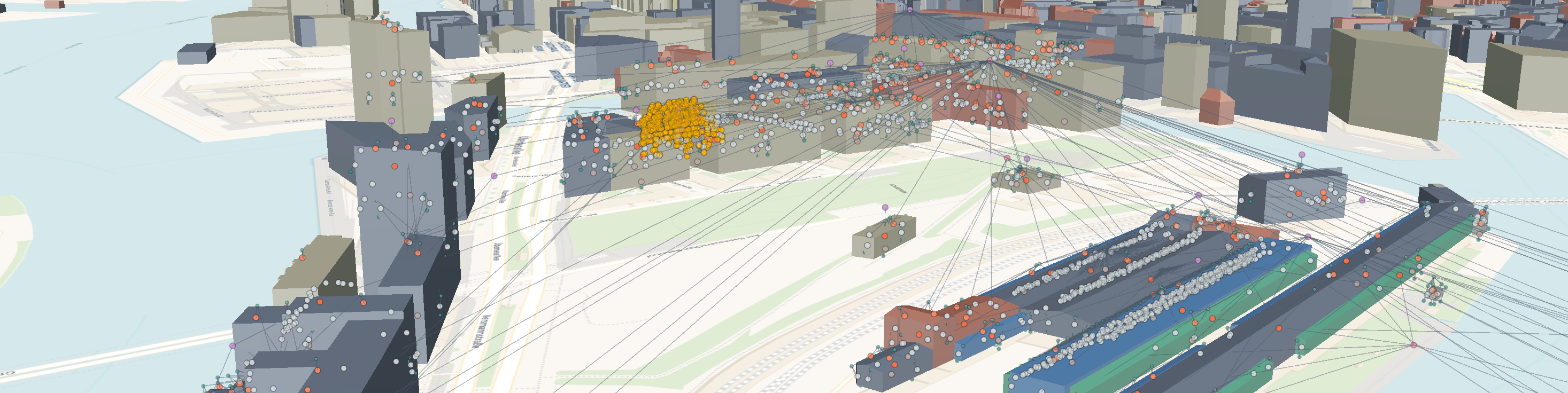
Fig 1: Hamburg, one of five AuthentiCity datasets: a provenance-aware 3D knowledge graph integrating CityGML, Open-
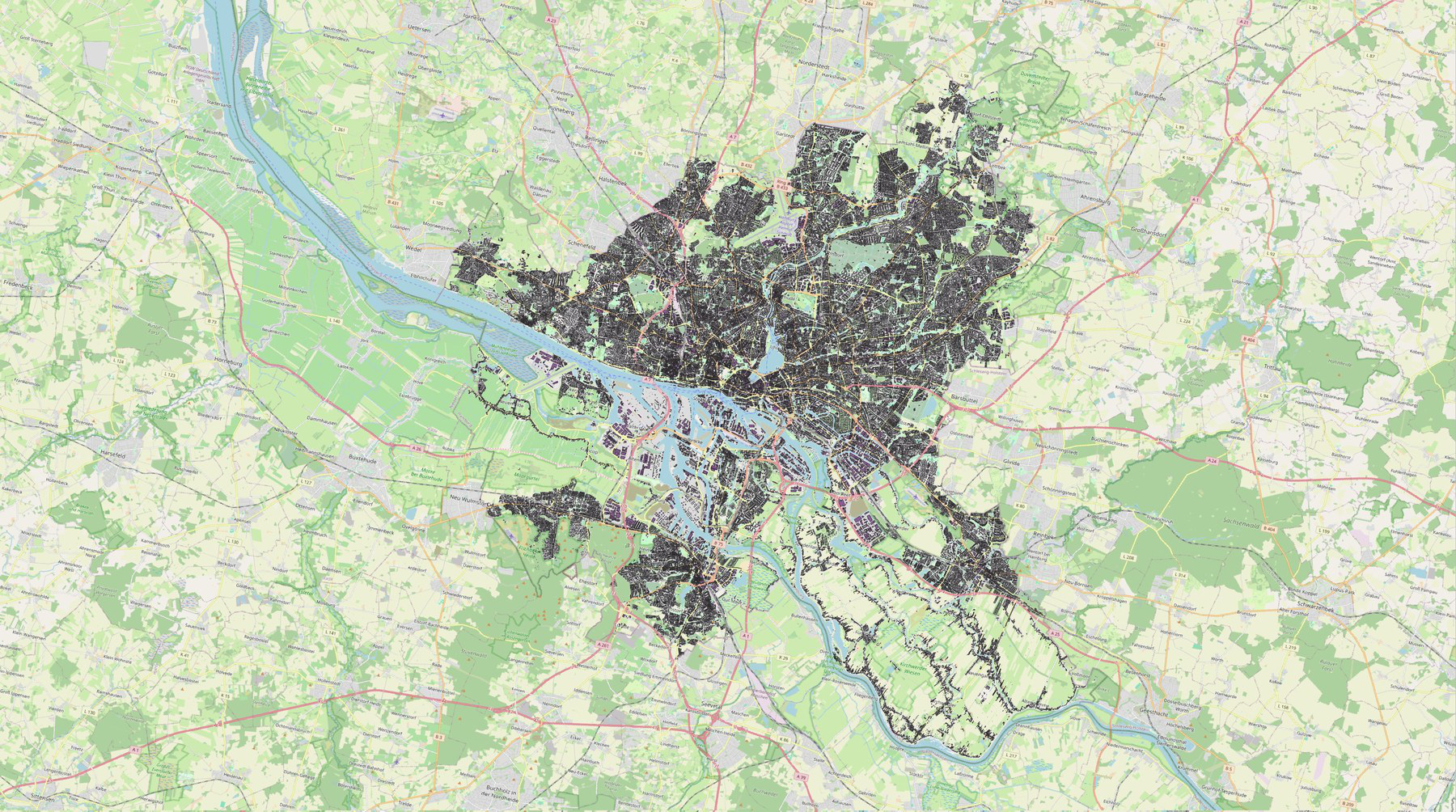
Fig 3: Spatial extent of the five AuthentiCity cities.
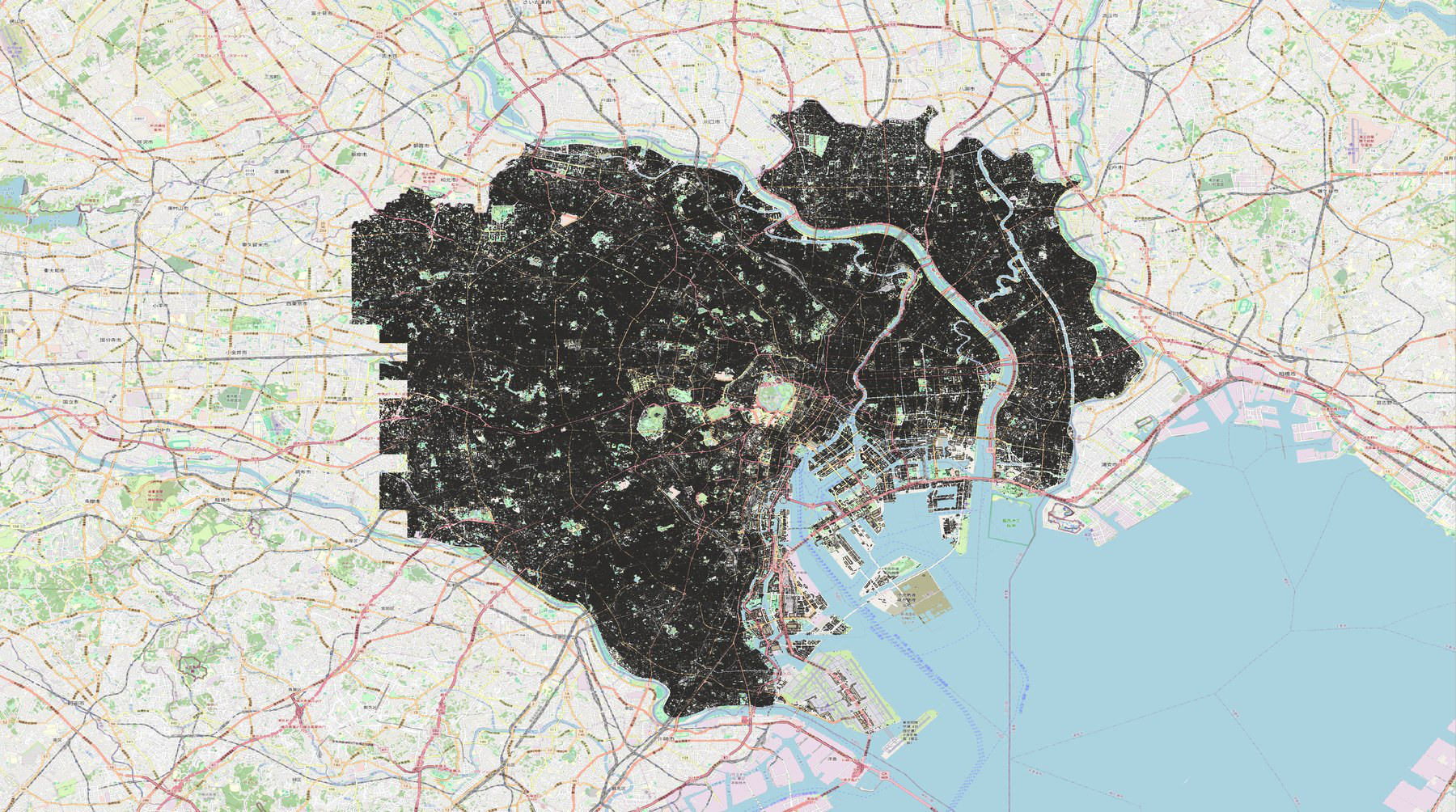
Fig 4: illustrates the structure and content of AuthentiCity’s LPGs,
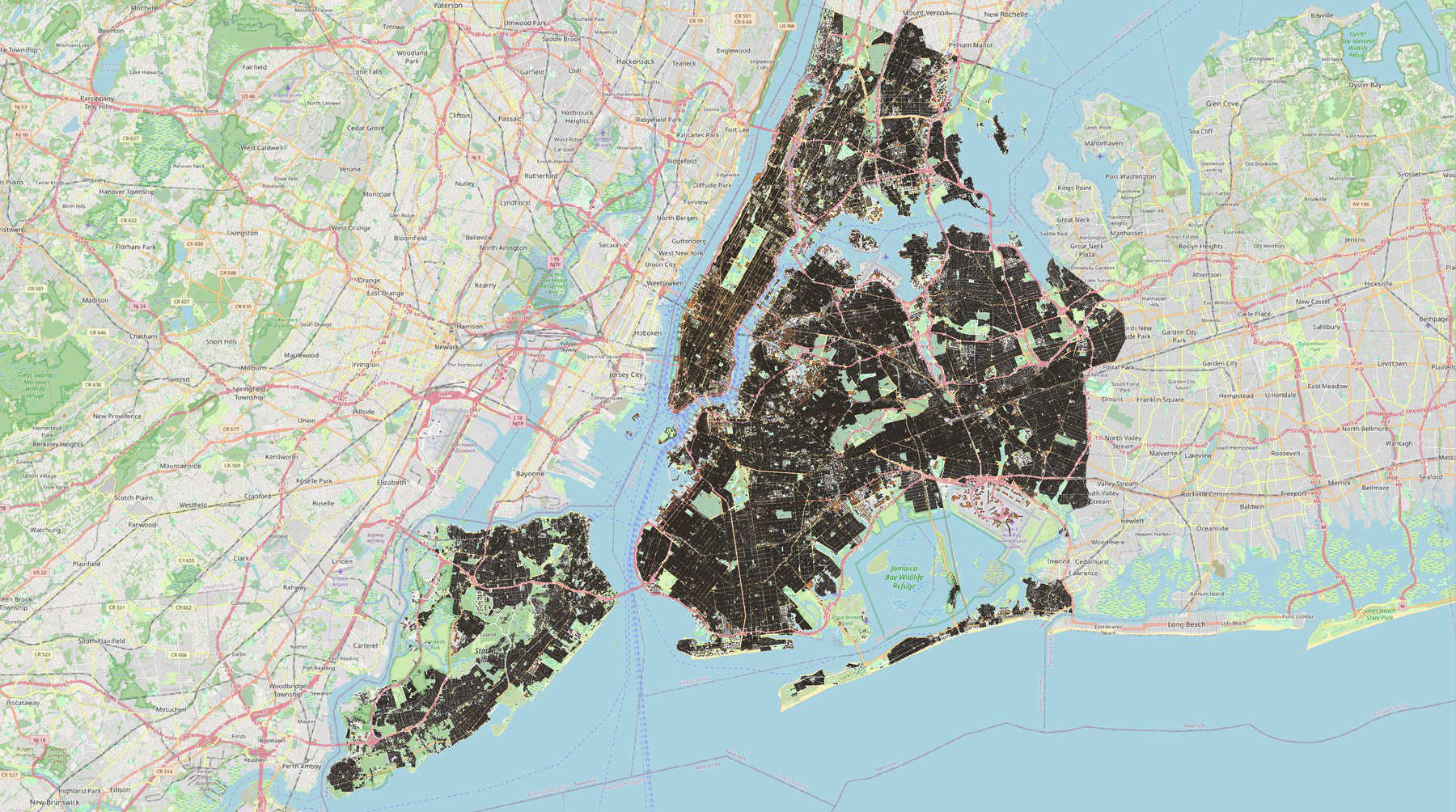
Fig 4 (page 10).
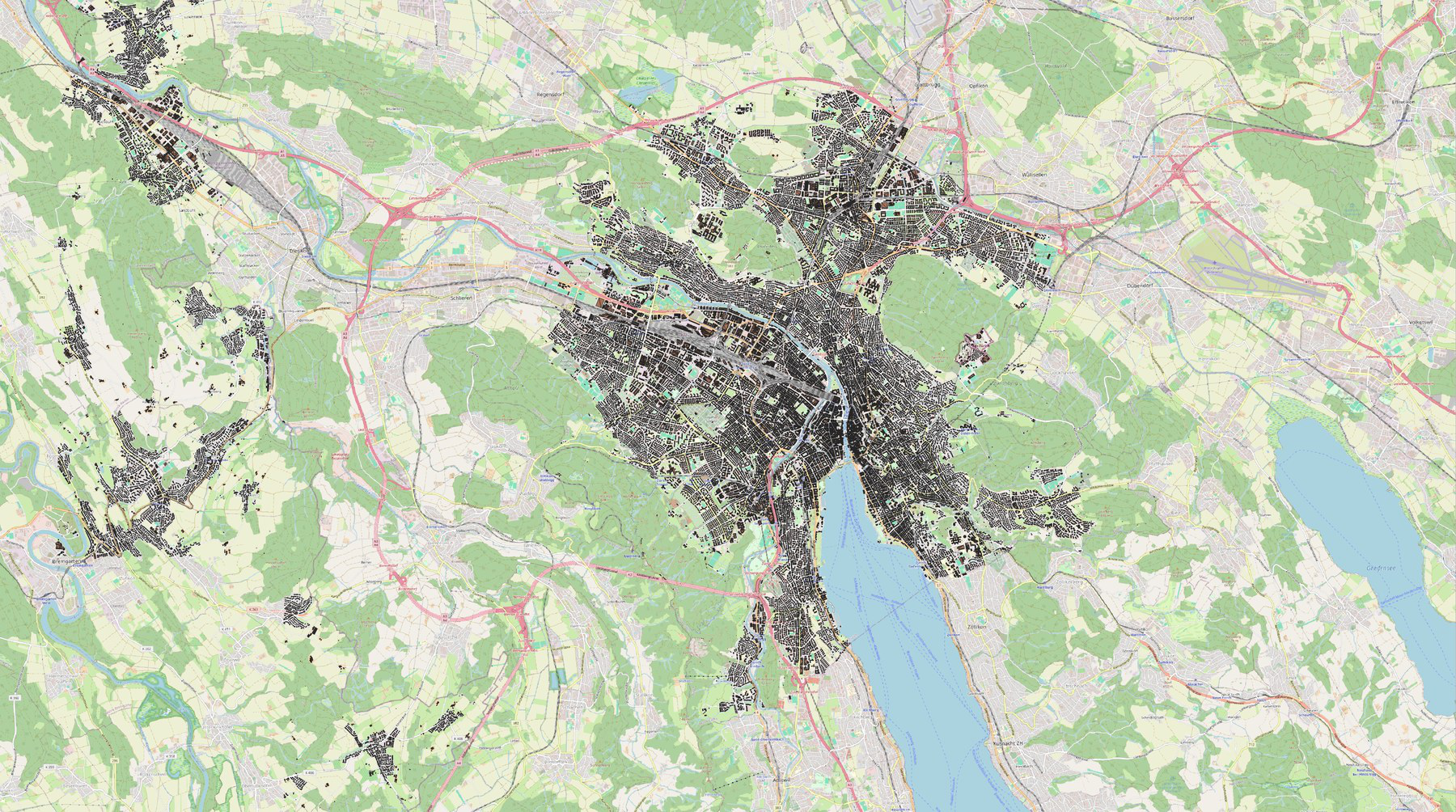
Fig 5 (page 10).
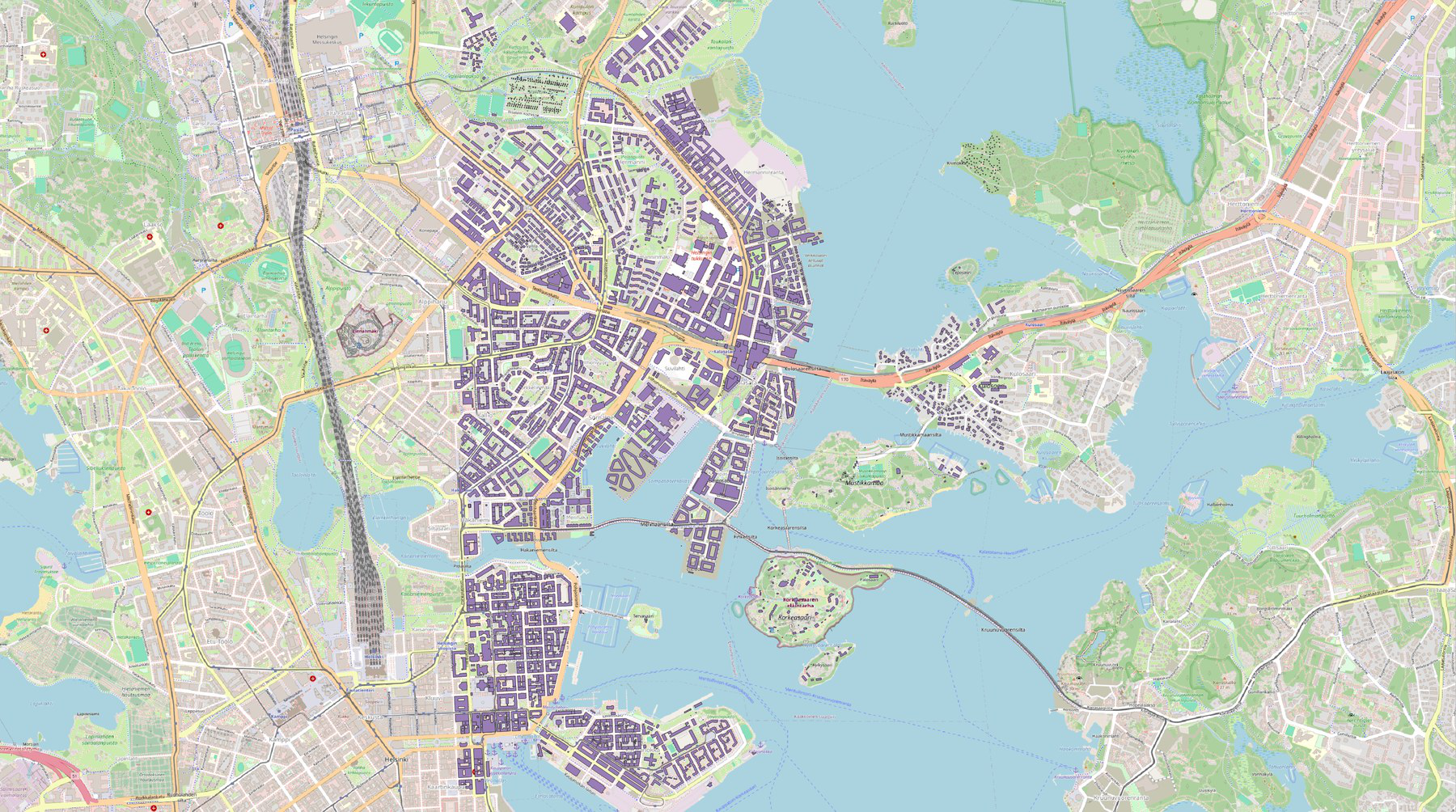
Fig 6 (page 10).
Limitations
- ML-predicted roof-material labels cover only ~50% of Hamburg buildings, limiting generalizability of provenance-aware imputation externally.
- The reconstruction layer with LoD3 geometry exists only for a small subset of buildings (17 in Hamburg), limiting 3D geometric reasoning evaluation.
- LLM evaluation uses only two models without fine-tuning or external tool access; future work could explore specialized architectures with few-shot or retrieval augmentation.
- Query execution errors on largest graphs primarily due to spatial query timeouts, indicating scalability challenges for real-time NL-to-query systems.
- The dataset does not include adversarial or maliciously altered source data to simulate active misinformation or attack scenarios.
- Cross-city differences in coordinate reference systems and source data conventions add complexity not fully abstracted away by the current LPG representation.
Open questions / follow-ons
- How can NL-to-query models be improved to better integrate spatial, provenance, and coverage reasoning to raise execution accuracy beyond ~70%?
- What are effective methods to represent and utilize provenance and confidence information for large-scale, real-time urban data fusion and analytics?
- How can the provenance-aware graph learning paradigm generalize to less well-structured or sparser urban data sources and evolving city models?
- What are the best strategies for handling incomplete coverage and disagreement detection systematically in urban digital twins and downstream applications?
Why it matters for bot defense
For bot-defense or CAPTCHA practitioners, AuthentiCity primarily provides a data and benchmarking framework illustrating the complexity of provenance-aware reasoning over spatial and multi-source knowledge graphs. Techniques demonstrated here—such as provenance-preserving data fusion, confidence-weighted entity resolution, and natural-language-to-provenance-aware query generation—highlight challenges in robust multi-source fact verification that could inform backend anti-fraud or data-quality assurance systems. While the immediate use case is urban modeling, the principles of exposing confidence, provenance, and infeasibility detection align with defensive strategies that discern trustworthy from suspicious or fabricated inputs in complex knowledge bases. Representation learning insights suggest provenance-aware embedding strategies can improve entity disambiguation and anomaly detection, valuable for bot detection systems relying on multi-source intelligence fusion.
Cite
@article{arxiv2607_25243,
  title={ AuthentiCity: A Multi-Source Provenance-Aware Knowledge Graph and Benchmark for 3D City Models },
  author={ Huynh Duc An Son Nguyen and Lukas Arzoumanidis and Youness Dehbi },
  journal={arXiv preprint arXiv:2607.25243},
  year={ 2026 },
  url={https://arxiv.org/abs/2607.25243}
}