
The AI Wave and the Reinvention of Game Discovery: Oversupply, Structural Correction, and Agentic Player-Game Matching
Source: arXiv:2607.25010 · Published 2026-07-27 · By Brian Dean Madanamootoo
TL;DR
This paper investigates the rapid increase in video game supply on open marketplaces driven by AI-assisted production, which drastically reduces development cost and team size, resulting in a flood of new game releases. Using empirical data from over 93,000 Steam titles, 200,000 user-game interactions, and itch.io catalog data, it quantifies an extreme concentration of player attention wherein the top 1% of titles capture over 73% of playtime, highlighting a stark oversupply and discoverability crisis. The author compares the current contraction to the historic 1983 North American video game crash, concluding that structural differences — such as digital distribution, diversified revenue sources, and consolidation capital — direct the current market towards concentration rather than systemic collapse. The paper proposes a scalable solution by combining subscription-style access with agentic player-persona matching to improve cold-start title discoverability, demonstrating a computational pilot that boosts hit rates 2.7x over random. It further explores incentive structures affecting developer revenue under access models, offering detailed calibrated simulations. Overall, the work provides a nuanced framework for understanding and addressing discovery challenges in an era of AI-driven game oversupply.
Key findings
- Steam annual releases grew from 268 titles in 2010 to ~20,000 estimated for 2025, roughly doubling between 2020 and 2025.
- Player attention concentration is extremely high: Gini coefficient = 0.96 for playtime, with the top 1% of titles absorbing 73.5% of total play hours (based on 200,000-interaction Steam dataset).
- Between 43.5% and 49.8% of new Steam releases from 2023-2025 received fewer than 10 user reviews, while only 6-7% crossed the 500-review visibility threshold.
- Despite oversupply, aggregate global games market revenue grew gently from $15.0 billion in 2024 to $16.2 billion in 2025, contrasting prior market collapse events.
- Generative asset-model releases on Hugging Face grew from under 10 in 2023 to over 130 by mid-2026, suggesting a candidate leading indicator for production-cost decline.
- Comparative historical mapping shows 2023-26 market differs from the 1983 crash by digital distribution removing physical shelf constraints, diversified revenue streams mitigating risk, and consolidation capital enabling recapitalization rather than liquidation.
- Agentic player-persona matching yields a 31.2% hit rate at rank 10 on cold-start game recommendation (95% CI [28.6%, 34.0%]), a 2.7x improvement over the random baseline, robust to genre-tag ablation and multiple random splits.
- Simulated payout structures indicate median per-title developer revenue could rise from ~$250 under status quo to $1,400-$2,900 at current matching quality, further increasing as matching improves.
Threat model
The paper does not engage a formal adversarial threat model typical to security papers; instead, it frames the problem as market oversupply and discoverability failure caused by structural economic and technical factors, where the 'adversary' is the flood of low-effort AI-assisted titles competing for finite player attention. Platform operators do not gate supply and labeling rather than gating limits enforced, so the system must address discoverability and curation without trusted supplier constraints.
Methodology — deep read
Threat model and assumptions: The paper addresses the market-wide oversupply phenomenon primarily from the perspective of platform economics and discovery mechanisms rather than adversarial attacks. The ‘adversary’ is implicit — games flooding the marketplace that outpace player attention; no assumed ability for censorship or platform gating, reflecting real-world open storefront policies.
Data and provenance: Four main data sources underpin the analysis. (a) A 93,073-title Steam metadata snapshot (appid, title, genre, release date, etc.) was assembled via the open GameStatsHub pipeline, covering data through October 2024. (b) The Tamber Steam interaction dataset, consisting of 200,000 user-game purchase and play events from 12,393 users across 5,155 games, mostly from mid-2010s but serving as a baseline for attention concentration. (c) SteamDB release tracker and Indie Launch Lab reports provided validation and extended volume statistics through 2025. (d) The Hugging Face Hub API was queried in July 2026 for game-asset generation models to estimate generative asset-model release velocity. Additional data on Netflix Games, Xbox Game Pass, and Poki platforms was collected from industry and press reports.
Architecture/algorithm: The key novel algorithmic contribution is repurposing LLM-driven player-persona agents as a matching mechanism to improve cold-start recommendations. Personas combine psychological profiles drawn from player-typology literature with behavioral and social signals. A computational pilot builds a persona-proxy matcher to link player profiles to unseen titles without prior user feedback, outperforming standard genre-based and collaborative-filtering baselines that cannot score unseen games. This addresses cold-start problems inherent in conventional recommenders.
Training regime: The pilot employed multi-seed (20 independent random splits) and bootstrap resampling to ensure robustness, with a 95% bootstrap confidence interval computed for hit rates. Exact hyperparameters or LLM fine-tuning details are not fully specified in the truncated text, but statistical rigor is emphasized.
Evaluation protocol: Metrics include hit rate at rank 10 for cold-start recommendation on titles held out entirely from training. Baselines include random recommendation and genre-only content matching. The pilot specifically tested improvement over genre-only matching where collaborative filtering is inapplicable. Further qualitative evaluation compares discovered threshold values for sustainability such as fee recoup and revenue benchmarks. The payout simulation used calibrated parameters reflecting real market data.
Reproducibility: The paper provides analysis code and intermediate tables in an appendix for reproducibility of supply and concentration computations. The player-persona matching pilot is described as a computational cold-start test but no explicit code or model checkpoints are mentioned. Hugging Face model release velocity relies on public API scraping. Data sources like Steam interaction dataset (Tamber) are cited but may not be fully public. Overall, the study balances openness with some proprietary datasets.
Concrete example: Empirically, the paper measured attention concentration on 5,155 Steam titles from 200,000 user interactions, computing a Gini of 0.96 for playtime. Then, using a separate corpus of player data, they built persona profiles and launched a cold-start recommendation test holding out titles never seen in training. The persona-matcher achieved 31.2% hit rate at rank 10 for these cold-start titles vs 11.5% random baseline, demonstrating 2.7-fold lift. Simulations then connect the improved matching quality to realistic developer payout estimates, showing that better matching can materially impact sustainable revenue.
Technical innovations
- Introduction of generative asset-model release velocity on Hugging Face as a candidate leading indicator for declining game production costs.
- Directional inversion of LLM persona-agent literature by using player-persona agents not for recommender evaluation simulation, but as the recommender matching mechanism itself.
- Computational cold-start pilot demonstrating persona-style profiles can improve cold-start game discovery beyond genre-only content matching where collaborative filtering fails to score unseen items.
- Calibrated payout simulation connecting access-based distribution incentive design and matching quality to sustainable median per-title developer revenue, quantifying trade-offs in different models.
Datasets
- Steam metadata snapshot — 93,073 titles — assembled via GameStatsHub from public Steam endpoints
- Tamber Steam interaction dataset — 200,000 user-game events — partial proprietary dataset, 12,393 users, 5,155 games
- SteamDB release tracker — annual release volume estimates — publicly reported industry data
- itch.io catalog data — over 1 million published products — public platform data
- Hugging Face Hub asset generation models — 130+ models (July 2026 snapshot) — scraped from public API
Baselines vs proposed
- Random baseline (cold-start hit rate @10) = ~11.5%; Persona-proxy matcher: 31.2% (95% bootstrap CI [28.6, 34.0]), a 2.7x improvement
- SteamDB annual releases (2018): 7,111 vs paper’s Steam snapshot: 7,486 (within 5% validation)
- Median per-title developer revenue under status quo incentive: ~$250 vs redesigned payout structures: $1,400–$2,900 (simulated, calibrated)
- Share of Steam titles with <10 reviews in 2023: 49.8% vs 2024: 43.56% vs 2025: 48.9%
Figures from the paper
Figures are reproduced from the source paper for academic discussion. Original copyright: the paper authors. See arXiv:2607.25010.
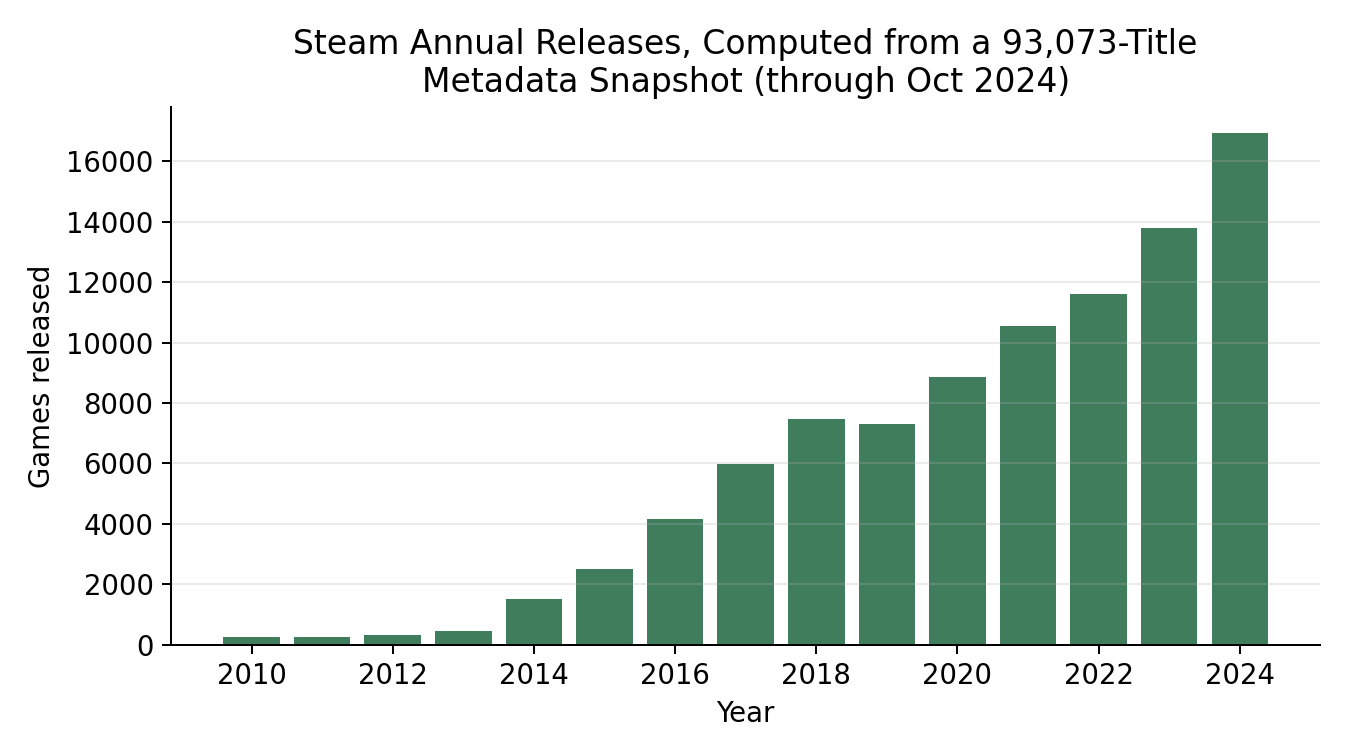
Fig 1: Steam annual releases computed from the 93,073-title metadata snapshot (through October 2024), this paper's
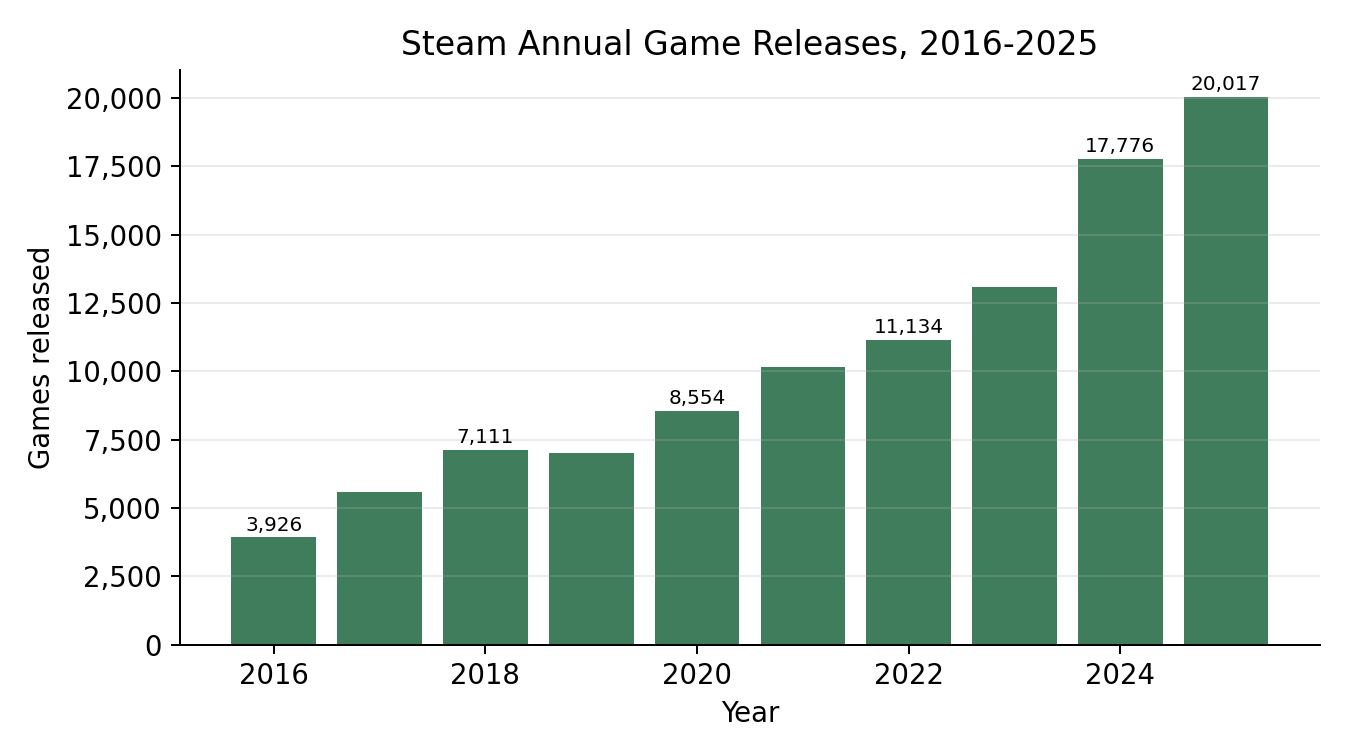
Fig 2: Steam annual game releases, 2016-2025, from the SteamDB release tracker and Indie Launch Lab reports [2],
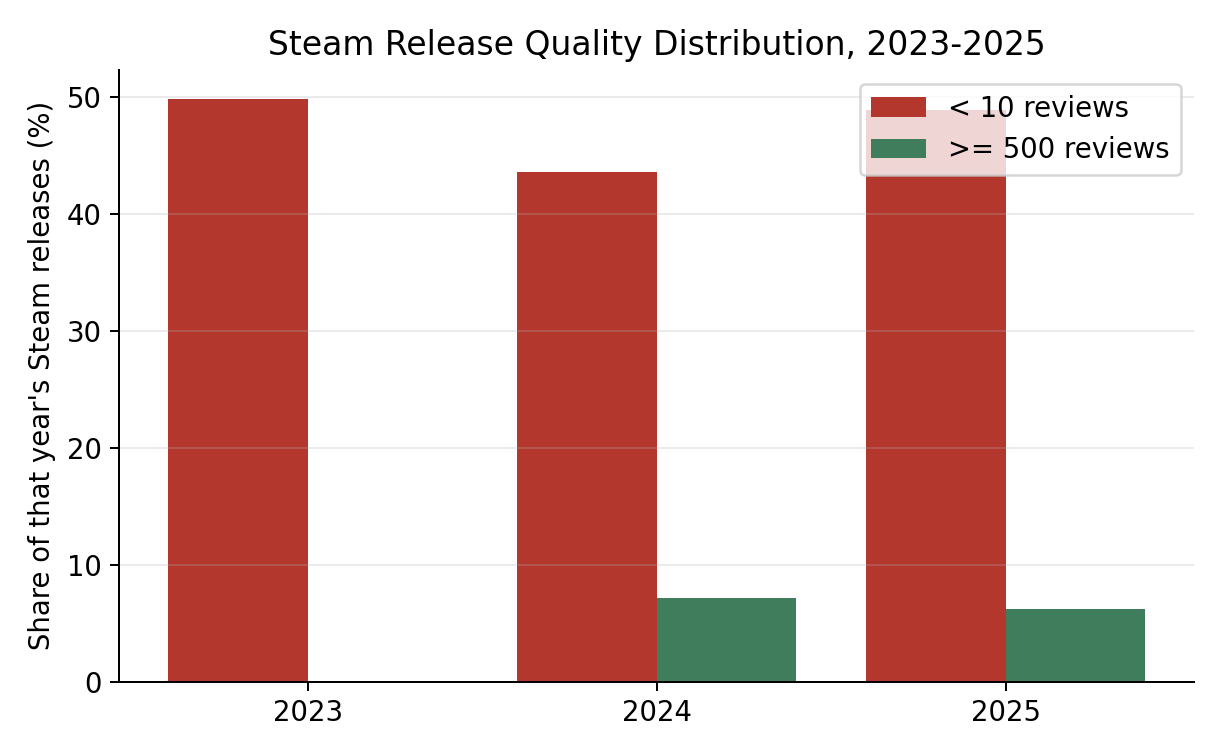
Fig 3: Lorenz curves of player attention across 5,155 Steam titles in the 200,000-interaction sample [4], this paper's own
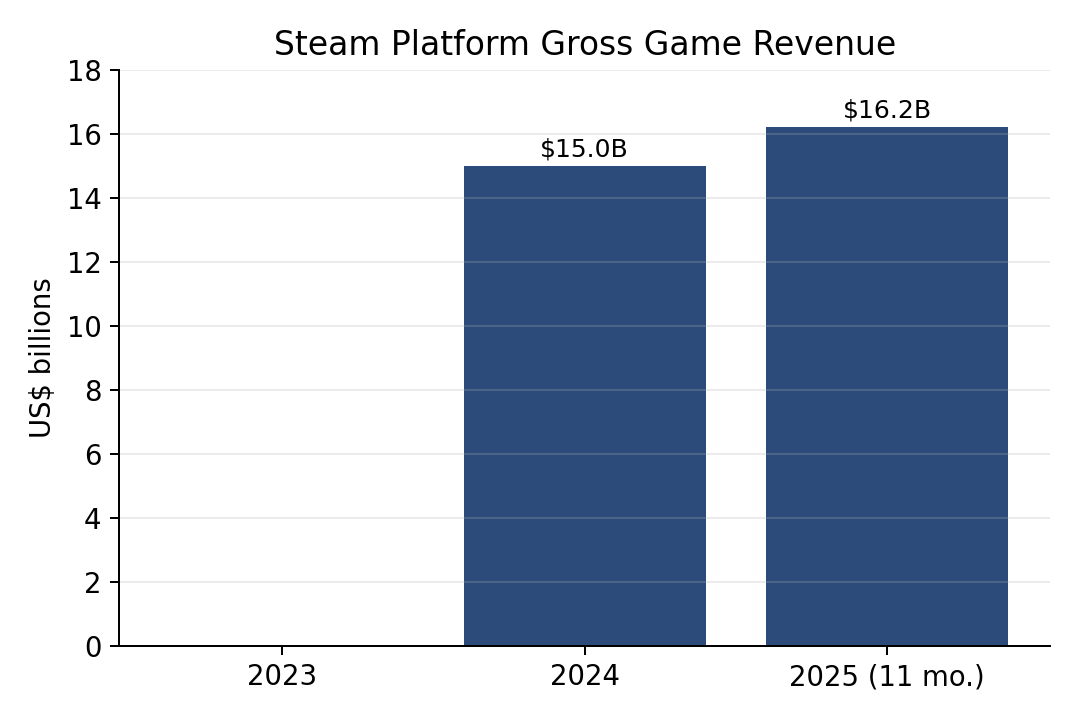
Fig 4: Game-asset generation model releases sampled from the Hugging Face Hub API, by year (this paper's own data
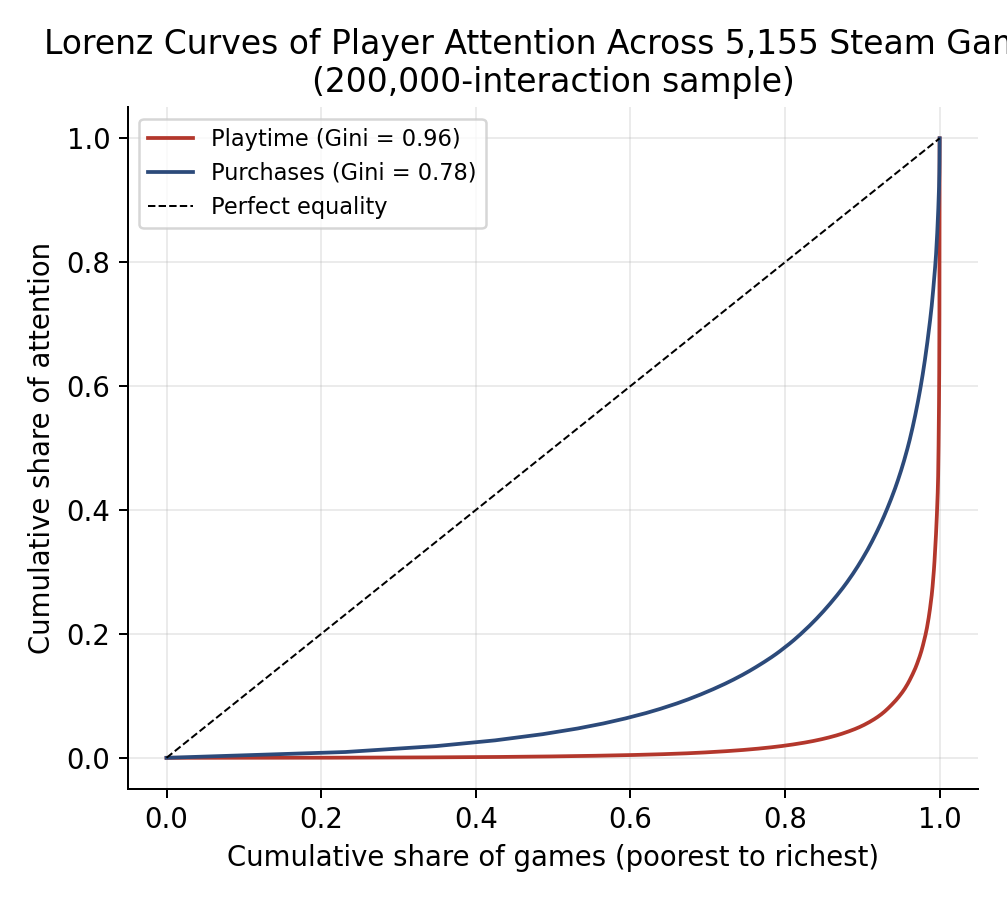
Fig 5 (page 6).
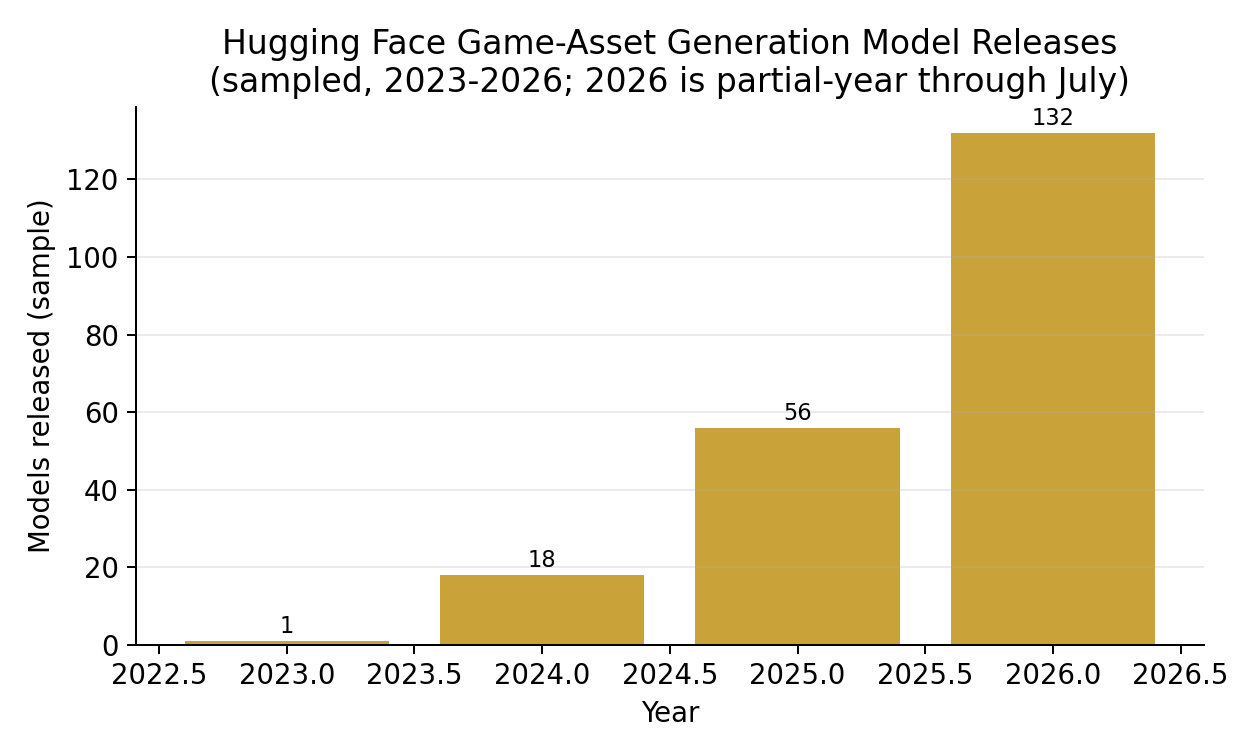
Fig 5: Competing home console systems available in North America, 1977 versus 1983. Compiled from historical
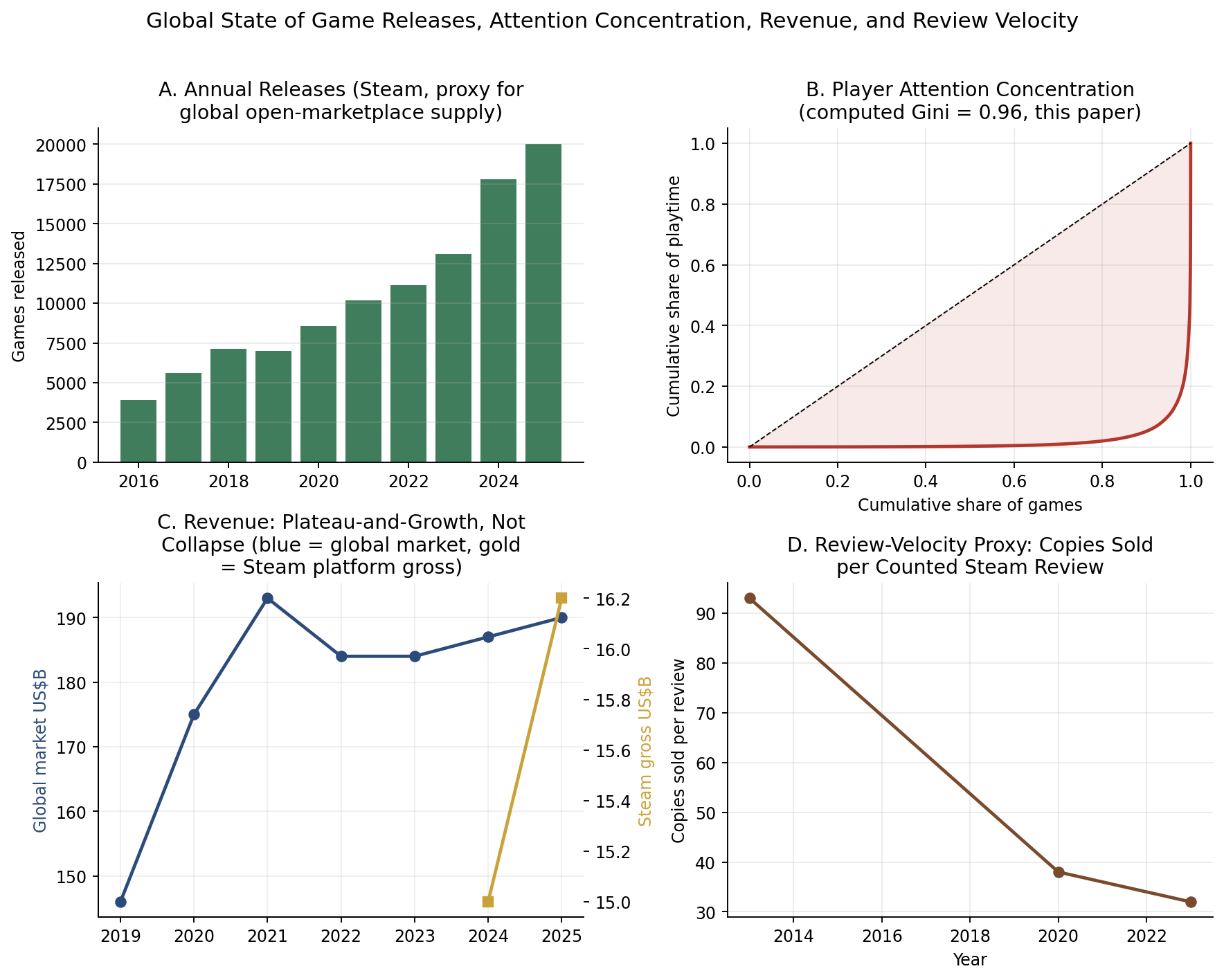
Fig 6: North American home video game revenue, 1977-1989. Intermediate years between the documented 1982 peak and
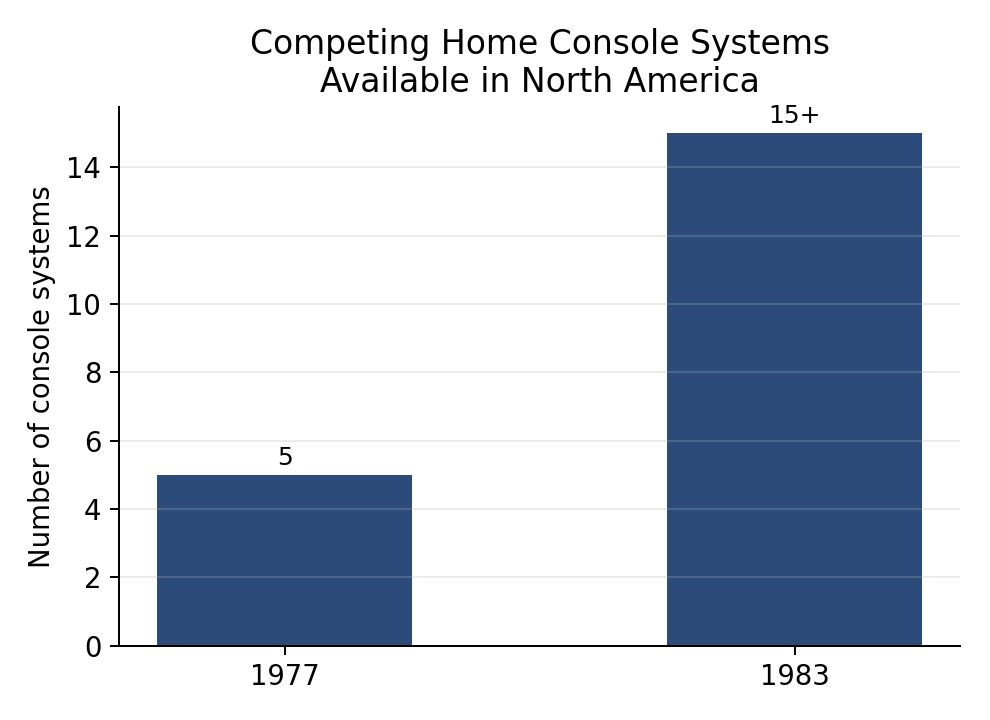
Fig 7: Atari Inc. reported workforce, 1982-1984. Compiled from contemporaneous reporting [10].
Limitations
- Steam interaction dataset used for attention concentration is from mid-2010s, before AI-era supply shock, so concentration estimates are likely a lower bound.
- Revenue concentration statistics rely on secondary sources and estimated proxies rather than full platform-scale revenue data.
- Hugging Face leading-indicator metric is limited by sparse and API-filtered sampling, lacking quarterly resolution or lag analysis.
- Cold-start recommendation pilot uses narrower claim focused on improvement over genre-only matching, not full cold-start recommenders; details on persona-agent model training are incomplete.
- No adversarial evaluation of recommendation robustness or impact on malicious behavior considered.
- Calibrated payout simulation is based on assumed parameters and models, awaiting validation from the planned preregistered human-subjects study.
Open questions / follow-ons
- How to validate generative asset-model release velocity as a reliable leading indicator with higher temporal resolution and full dataset coverage?
- Can player-persona matching scale to real-time deployment with diverse, multimodal persona elicitation (e.g., integrating psychology and social signals) in platform recommender systems?
- What is the impact of curated incentive structures on developer behavior and long-term sustainability in diverse economic environments beyond the simulated payout model?
- How might adversarial actors exploit persona-based matching or access-based distribution to undermine game quality signaling, and how to defend?
Why it matters for bot defense
For bot-defense and CAPTCHA practitioners, this paper offers an insightful case of how AI-driven oversupply challenges traditional discovery mechanisms in large-scale digital platforms. The extreme attention concentration it quantifies parallels challenges in managing signal-to-noise ratio on marketplaces exposed to floods of automated or low-effort content—a phenomenon also relevant to spam and bot detection. The exploration of agentic persona-based matching highlights the frontier of personalized, behavioral signal integration to improve filtering and recommendation in cold-start scenarios, analogous to emerging challenges in distinguishing legitimate from automated interactions online. Furthermore, the calibrated payout simulation underscores the interplay between incentive structures and quality control, a principle with direct analogs in systems defending against abuse via economic disincentives. Bot-defense engineers can draw inspiration from the agentic matching approach as a candidate mechanism to elevate meaningful, trustworthy traffic and interactions amid large-scale automated content generation. The paper’s structural and historical approach also illustrates how platform-level policies (labeling vs gating) may impact ecosystem health under AI-enabled supply shocks.
Cite
@article{arxiv2607_25010,
  title={ The AI Wave and the Reinvention of Game Discovery: Oversupply, Structural Correction, and Agentic Player-Game Matching },
  author={ Brian Dean Madanamootoo },
  journal={arXiv preprint arXiv:2607.25010},
  year={ 2026 },
  url={https://arxiv.org/abs/2607.25010}
}