
Quantum simulacra
Source: arXiv:2607.24739 · Published 2026-07-27 · By L. F. Alves da Silva, M. H. Y. Moussa
TL;DR
This paper introduces the concept of quantum simulacra—quantum phenomena emerging when a system, whether governed by Hermitian or non-Hermitian Hamiltonians, is analyzed under an alternative metric different from the standard L2 inner product. By redefining the metric, the set of observables and their measurement outcomes become metric-dependent, reshaping quantum contextuality and microscopic reality. This challenges the traditional collapse-and-measurement paradigm, enabling the emulation of novel microscopic realities and quantum operations inaccessible under the standard metric framework. The authors show that such simulacra can explain puzzling phenomena like the reported Bell inequality violation using unentangled photons, which becomes a metric-dependent effect rather than a true entanglement violation.
Key findings
- Introducing a positive-definite metric operator Θ = η†η can render a non-Hermitian Hamiltonian pseudo-Hermitian, preserving a real spectrum and norm conservation under the Θ-inner product (Eq. 1-3).
- Hermitian Hamiltonians can be treated analogously by commuting the metric with H, allowing different metrics to define distinct pseudo-Hermitian observables and realities (Sec. II).
- A measurement scheme combining POVMs with postselection on subensembles realizes effective measurements in the Θ metric, recovering Born-rule probabilities in that metric space (Sec. III).
- Squeezing can be induced purely from the choice of metric on a free radiation mode Hamiltonian (no explicit squeezing terms), with squeezing parameter r diverging as metric parameter ζ approaches ±1 (Fig. 1c, Sec. IV).
- Entanglement simulacra emerge between two uncoupled two-level systems under an appropriate metric, with concurrence reaching maximum (C=1) at ζ = ±1 despite no interaction in H (Eq. 16, Sec. V).
- The recent experimental observation of Bell inequality violation with unentangled photons [Wang et al.] is explained as a simulacrum arising from a Ψ-nonstandard metric and postselection, not a violation in the standard L2 framework (Sec. VI).
- A teleportation simulacrum is constructed where an effective Bell measurement and teleportation protocol act through metric redefinition and a POVM + postselection strategy, without modifying the original Hamiltonian interactions (Sec. VII).
- A metric-induced simulacrum of the Tavis-Cummings superradiant phase transition is proposed, enabling transitions inaccessible under the standard metric and rotating-wave approximation due to effective coupling emerging solely via metric choice (Sec. VIII).
Methodology — deep read
Threat Model & Assumptions: The adversary is not explicitly defined as this is a theoretical foundational work on quantum measurement and reinterpretation, rather than a security protocol. The main assumption is the availability of experimentally adjustable measurement frameworks allowing POVMs and postselection. The goal is to reinterpret quantum reality and contextuality dependent on metric choice.
Data: No experimental dataset is used; instead, the work builds on mathematical models and known quantum optical experimental settings (such as the unentangled Bell violation photonic experiment) to demonstrate conceptual validity. Calculations involve eigenbases, states, and observables redefined under different metric operators.
Architecture/Algorithm: The key construct is defining a positive-definite metric operator Θ = η†η where η is a suitably chosen Dyson map. This redefines the inner product and observables by similarity transformation O = η^-1 o η, where o is standard Hermitian. The system dynamics obey a pseudo-Hermiticity condition ΘH = H†Θ ensuring pseudo-unitarity with respect to Θ. To implement measurements, the authors propose generalized measurement operators (POVMs) combined with postselection on accepted subensembles representing the Θ metric space.
Training Regime: Not applicable since this is not an empirical ML paper. Instead, theoretical derivations are analytically calculated. Parameters such as ζ, α, β, and z parametrically define the Dyson map and metric family. Simulations/plots illustrate squeezing parameter r and uncertainty behavior.
Evaluation Protocol: The paper validates the framework by (i) analytically deriving modified expectation values and uncertainty relations under Θ, (ii) constructing simulacra of quantum phenomena including squeezing from a free Hamiltonian, entanglement between uncoupled spins, teleportation protocols, and (iii) reproducing the Bell correlation function from the unentangled-photons experiment as a metric-dependent effect. The evaluation compares traditional L2 framework outcomes against generalized Θ-metric results illustrating novel effects.
Reproducibility: Code or experimental data is not released. The mathematical framework is fully specified through equations describing Dyson maps, metric operators, measurement schemes, and state transformations. The measurement protocol involving POVM + postselection is described conceptually with references to known quantum optics setups e.g., eight-port homodyne detection (Fig. 1). Exact experimental implementation details remain future work.
Concrete Example End-to-End: For the entanglement simulacrum in Section V, the authors start with a separable product state of two two-level systems, define a metric via a Dyson map embedding an effective interaction, evolve the state with the pseudo-Hermitian Hamiltonian, compute the concurrence which depends on metric parameter ζ, showing entanglement emerges as ζ approaches ±1 despite no coupling in original H. Measurement in the Θ metric uses POVMs constructed from the biorthogonal eigenbasis associated with the metric, implemented through postselection onto accepted subsets of outcomes, recovering pseudo-Hermitian expectation values that reveal the simulacrum of interaction and entanglement.
Technical innovations
- Extension of Mostafazadeh’s pseudo-Hermiticity framework from non-Hermitian to Hermitian Hamiltonians by treating Θ as a continuous symmetry commuting with H, enabling metric-induced simulacra in standard quantum systems.
- Measurement protocol combining generalized POVMs with postselection to experimentally realize observables defined with respect to alternative positive-definite metrics Θ beyond the standard L2 metric.
- Construction of explicit metric-dependent quantum simulacra examples including squeezing, entanglement, teleportation, and superradiant phase transitions that emerge purely from metric choice and are absent under the standard framework.
- Interpretation of recent Bell inequality violations with unentangled photons as metric-dependent simulacra, reconciling puzzling experimental observations with standard quantum theory under a new metric formalism.
Baselines vs proposed
- Standard L2 metric analysis: Bell inequality not violated by separable photons vs Metric Θ analysis: Bell inequality violated by same photons postselection-normalized (Sec. VI, Eq. 18 vs 21).
- Uncoupled two-qubit Hamiltonian: concurrence C = 0 (no entanglement) under standard L2 vs Pseudo-Hermitian metric Θ with parameter ζ → ±1 yields concurrence C = 1 indicating maximal entanglement (Eq. 16).
- Free radiation field mode (no squeezing terms in H): uncertainty product ∆X1 ∆X2 ≥ 1/2 under L2 vs Metric choice ζ near ±1 generates arbitrarily strong squeezing with ∆X1 → 0 or ∆X2 → 0 (Fig. 1c).
Figures from the paper
Figures are reproduced from the source paper for academic discussion. Original copyright: the paper authors. See arXiv:2607.24739.
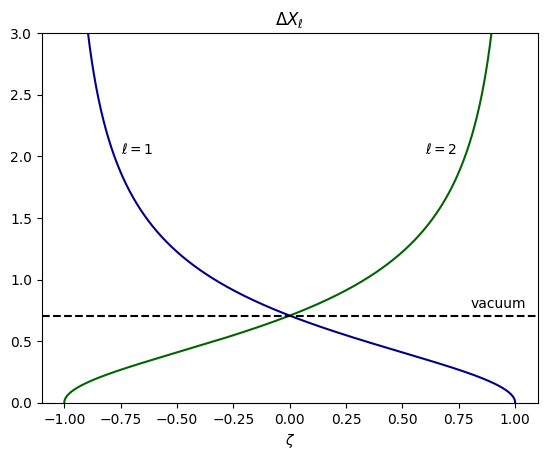
Fig 1: (a) Success-failure mechanism implementing the postselection required by the con-
Limitations
- Experimental implementation of the proposed metric-dependent measurements relies on global operations and postselection, which may be challenging or resource-intensive, especially for multi-qubit POVMs requiring entangling gates.
- The framework focuses on known metrics constructed via Dyson maps but does not address systematic methods for metric identification or optimization for arbitrary systems.
- No adversarial or security analysis is presented detailing how a malicious actor might exploit metric-dependent measurements or calibrations.
- Reproducibility depends on realizing POVM + postselection experimentally, with no publicly available code or hardware blueprints.
- Non-unit probability of POVM + postselection schemes implies experimental efficiency and signal-to-noise tradeoffs are not quantitatively addressed.
- Some claims, e.g., metric-induced superradiant phase transition, are theoretical without numerical simulations or experimental proof.
Open questions / follow-ons
- How can one practically implement reliable and scalable measurement setups to realize the POVM + postselection schemes for complex pseudo-Hermitian observables beyond few-qubit systems?
- Can the theory of quantum simulacra be extended to incorporate noise, decoherence, and finite sampling effects typical in realistic quantum experiments?
- What classes of Hamiltonians and physical systems admit useful metric redefinitions to simulate desired quantum operations inaccessible under the standard L2 metric?
- Are there fundamental limits or trade-offs constraining the degree of metric-induced quantum resource amplification achievable via these simulacra?
Why it matters for bot defense
For bot-defense and CAPTCHA engineers, this paper highlights an unconventional perspective on quantum measurements: the observed quantum behavior can depend fundamentally on the measurement metric and postselection context. This reinforces that adversarial or anomalous quantum correlations (such as seemingly entangled states from separable inputs) can arise not from system states alone but from the interplay of measurement definitions and experimental postprocessing. From a security standpoint, it underlines the importance of carefully defining measurement contexts and understanding how metric or postselection-dependent effects might mimic cryptographic primitives or security assumptions, especially in quantum-resistant protocols. Moreover, the proposed POVM + postselection measurement methodology illustrates potential avenues for implementing cryptographic operations or randomness generation beyond standard quantum protocols by leveraging metric redefinitions, albeit at practical implementation cost. While technical in physics, these concepts suggest new dimensions for quantum state verification and authentication schemes in adversarial settings.
Cite
@article{arxiv2607_24739,
  title={ Quantum simulacra },
  author={ L. F. Alves da Silva and M. H. Y. Moussa },
  journal={arXiv preprint arXiv:2607.24739},
  year={ 2026 },
  url={https://arxiv.org/abs/2607.24739}
}