
MicroZoom: Structure-Preserving Detail Synthesis at Extreme Scale
Source: arXiv:2607.24729 · Published 2026-07-27 · By Huy Huynh, Jingwei Ma, Brian Curless, Ira Kemelmacher-Shlizerman, Steven M. Seitz
TL;DR
MicroZoom addresses the problem of synthesizing highly detailed gigapixel-resolution microscopic images from a single standard photograph and a sparse set of consumer-grade microscope close-ups, at extreme magnification levels between 65× and 350×. The key novelty lies in producing globally coherent and materially grounded textures at this unprecedented scale, rather than exact pixel reconstruction. It does so through a two-stage cascaded generative framework that first recovers large-scale global pattern structure and then refines local texture detail, with a segmentation-based conditioning mechanism to handle ambiguous material boundaries. The authors demonstrate the approach on a newly collected dataset of everyday object captures, showing a clear improvement over prior state-of-the-art extreme-scale and reference-based super-resolution methods in both quantitative perceptual metrics and a user preference study. MicroZoom enables exploratory visualization bridging ordinary photography and microscopy across large spatial extents.
Key findings
- MicroZoom achieves best perceptual similarity score (DISTS) of 0.213 on synthetic test set versus 0.232 by next-best UltraZoom, and shows strong competitive log-spectral distance (LSD) at 1.014 vs 0.951 by UltraZoom (Table 1).
- User study with 79 participants across 21 diverse household objects finds MicroZoom preferred for quality in 76.2% and for material similarity in 71.4% of cases, outperforming UltraZoom and other baselines (Table 1).
- Per-instance fine-tuning improves DISTS from 0.330 (pretrained baseline) to 0.232; cascaded design further improves to 0.220; segmentation conditioning achieves 0.224 on multi-material subset; full pipeline reaches 0.213 DISTS (Table 2).
- Cascaded 2-stage strategy divides total magnification s= s1 * s2 to first recover global large-scale patterns (less extreme upscaling), then refine local textures on structurally sound canvas. This reduces globally incoherent hallucinations common in single-stage extreme SR.
- Segmentation masks generated by SAM guide texture synthesis at boundaries, preventing texture bleeding and preserving material-specific detail under extreme magnification.
- Inference on 300×300 pixel input at 132.86× scale produces 40000×40000 output and takes ~20 hours on a single NVIDIA A100 GPU. Gigapixel inference involves MultiDiffusion sliding-window strategy with variable stride to avoid grid artifacts.
- Failure cases include train/test domain gap resulting in inaccurate color shifts despite calibration, and occasional semantic texture bleeding due to dominance of ControlNet conditioning over segmentation guidance.
Threat model
The threat model involves an adversary or system attempting to generate extremely high-magnification microscopic textures from limited inputs: a single low-resolution full-object photo and a sparse set of microscope close-ups. The attacker assumes knowledge of the rough material type boundaries via segmentation masks, but cannot access perfect high-resolution ground truth for the entire object. The approach assumes consumer-grade microscope captures which may suffer noise and shallow depth of field. The adversary cannot perform exact pixel-perfect reconstruction across the entire gigapixel image, only plausible synthesis consistent with real texture references.
Methodology — deep read
The authors tackle extreme-scale super-resolution (SR) where an adversary or system tries to generate gigapixel microscopic textures at 65–350× magnification using only a single smartphone photo plus sparse microscope images. The adversary is limited to consumer-grade microscope close-ups and a low-res global image, with no perfect pixel-level reference available.
They first curate a high-quality training dataset by capturing full-view images on an iPhone and digital microscope focus stacks for close-ups. To overcome shallow depth of field and noise in microscopy, they average multiple rapid-burst raw frames per focal plane, align stacks using SIFT keypoints, and fuse them with Laplacian pyramid fusion to form all-in-focus sharp ground truth images (X_GT). They calibrate scale factors s by measuring pixel density (pixels/mm) to determine relative scale between X_GT and full photograph.
Corresponding low-resolution inputs Y are synthesized by bicubic downsampling and color histogram matching of X_GT to the full image region, simulating realistic degradation. They generate segmentation masks M_LR for ambiguous multi-material boundaries via the Segment Anything Model (SAM), downsampled to Y resolution, to condition synthesis.
The core architecture is a two-stage cascaded model: first an upscaling model φ1 (e.g., 20×) synthesizes global pattern coherence from Y, then a refinement model φ2 (e.g., 5×) refines local textures on φ1's output canvas. This decomposition addresses the limited structural context at extreme scales, preventing globally inconsistent hallucinations.
Both models are adapted from a pretrained flow-matching diffusion backbone (Flux.1-dev) via parameter-efficient fine-tuning with frozen weights and injected LoRA layers. They bind a unique textual token identifying the instance for per-object adaptation. Training samples (x,y,m) pairs are randomly cropped 1024×1024 patches, with x the high-res ground truth, y the low-res input, and m the segmentation mask.
Conditioning is provided by combining ControlNet features on y for structural guidance and concatenating one-hot encoded segmentation masks m to the noisy latent x_t channel dimension. A conditioning warm-up proceeds by first training for 1000 steps with only segmentation conditioning, then enabling ControlNet for 1000 further steps, optimizing a flow matching loss that aligns network denoising vector fields with target clean images.
At inference, the full smartphone image is bicubic upscaled to gigapixel size and processed via MultiDiffusion with a variable-stride sliding-window denoising update to avoid artifacts. The cascade is applied sequentially for each stage, composing extreme total magnification.
For example, at 132.86× scale, an input crop of 300×300 pixels produces output of 40000×40000 pixels, taking ~20 hours on a single A100 GPU. This high cost stems from repeated denoising on tens of thousands of windows.
The methodology trades exact reconstruction for plausible, materially grounded synthesis of fine texture detail consistent with real microscopy, addressing two major challenges: ambiguity from highly lossy inputs and preservation of large-scale pattern regularity across millions of local predictions.
Technical innovations
- Two-stage cascaded diffusion framework decomposing extreme-scale magnification into global pattern synthesis and local texture refinement to improve structural coherence at gigapixel scales compared to single-stage methods.
- Segmentation-conditioning mechanism using SAM-generated multi-class masks concatenated to latent channels to enforce material boundary preservation under ambiguous low-res inputs.
- Per-instance fine-tuning via LoRA adapters combined with ControlNet structural conditioning and a conditioning warm-up training strategy separating texture synthesis from structural alignment.
- Focus-stacking capture and Laplacian pyramid fusion pipeline producing sharp, all-in-focus high-magnification reference images for training and evaluation at extreme zoom levels.
Datasets
- MicroZoom Household Objects Dataset — 21 everyday items captured with iPhone 15 Pro Max and 48MP digital microscope — self-captured, non-public
Baselines vs proposed
- ContinuousSR: DISTS = 0.296 vs MicroZoom: 0.213; LSD = 1.774 vs 1.014
- Chain-of-Zoom: DISTS = 0.297 vs MicroZoom: 0.213; LSD = 1.386 vs 1.014
- IPAdapter + ControlNet: DISTS = 0.324 vs MicroZoom: 0.213; LSD = 1.813 vs 1.014
- UltraZoom: DISTS = 0.232 vs MicroZoom: 0.213; LSD = 0.951 vs 1.014
Figures from the paper
Figures are reproduced from the source paper for academic discussion. Original copyright: the paper authors. See arXiv:2607.24729.

Fig 1: Given a single standard resolution image from a smartphone and a few microscope images, MicroZoom performs extreme-scale super-resolution to

Fig 2: Method Overview. (a) Dataset Construction: We curate synthetic training data by capturing a full-view smartphone image and multiple high-
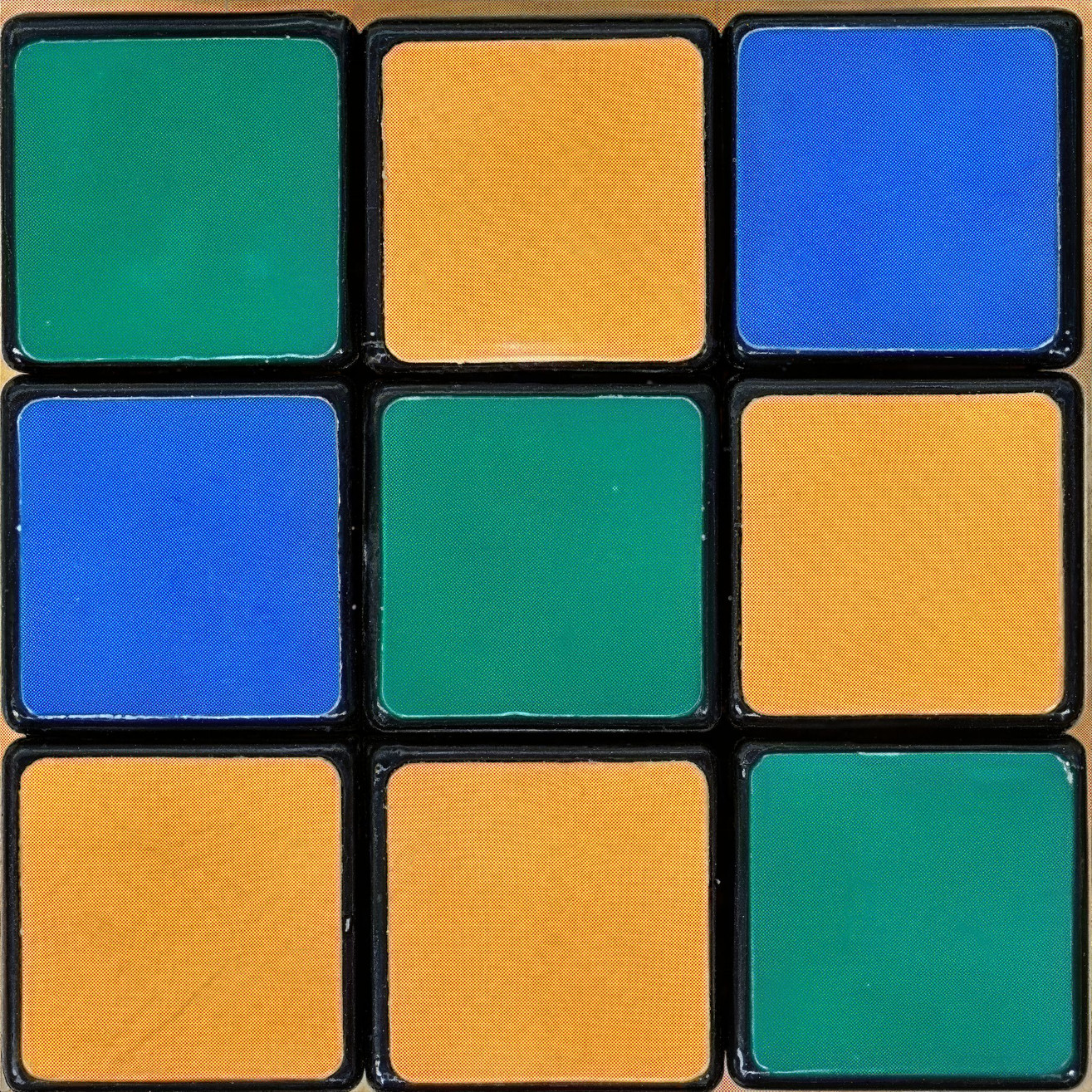
Fig 3 (page 1).
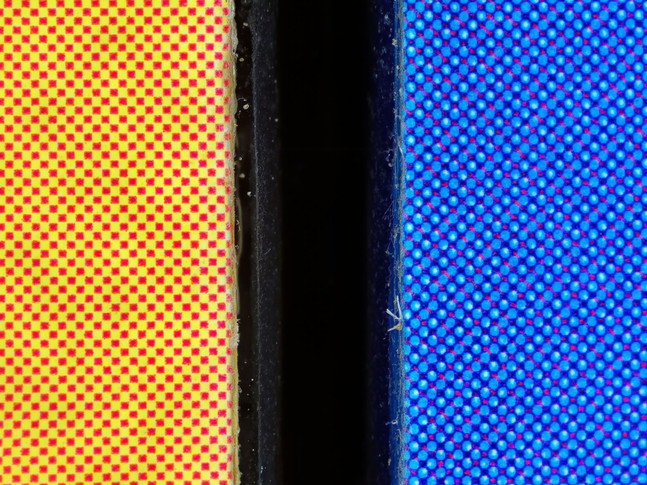
Fig 4 (page 1).

Fig 5 (page 1).
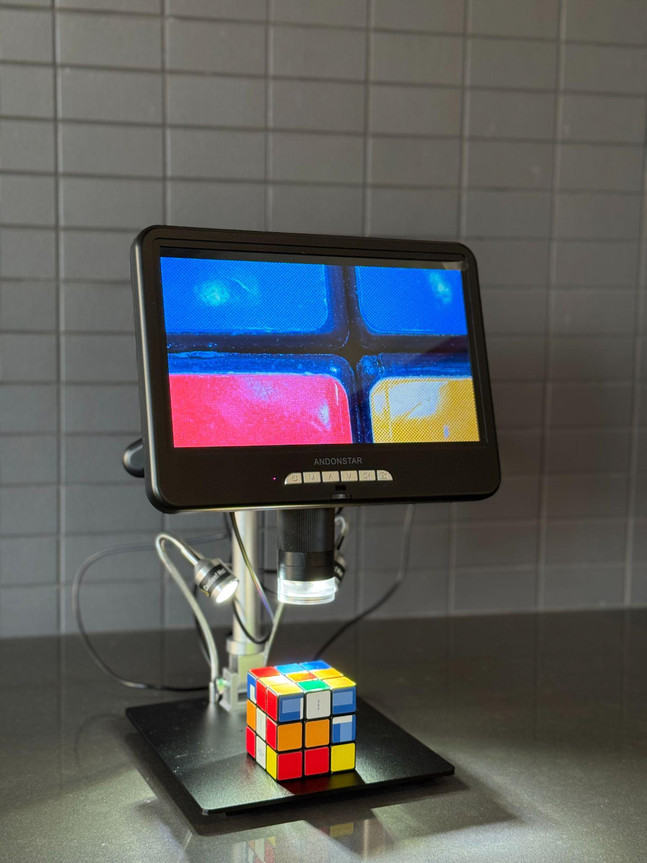
Fig 6 (page 1).
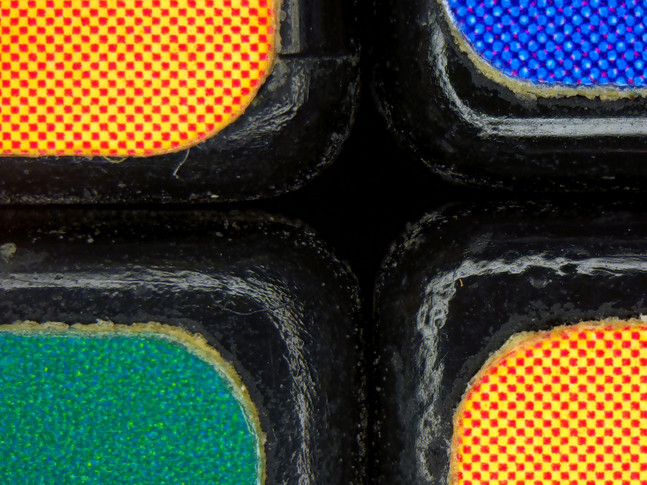
Fig 7 (page 1).

Fig 8 (page 1).
Limitations
- High inference latency: tens of hours on a single A100 GPU for gigapixel images limits practical deployment.
- Significant train/test domain gap due to differences between microscope captures used for training and smartphone photos used at inference, causing color shifts.
- Generative drift and semantic texture bleeding can still occur despite segmentation conditioning, especially near ambiguous boundaries.
- Per-instance fine-tuning precludes zero-shot generalization, requiring retraining for unseen materials or objects.
- Cascaded architecture introduces dependency chain where errors propagate from coarse to refinement stage, potentially compounding structural mistakes.
- Segmentation conditioning requires multiple material regions; single-material cases do not benefit from this component.
Open questions / follow-ons
- How to reduce inference latency and computational cost for practical real-time or near-real-time extreme-scale gigapixel super-resolution?
- Can a general pretrained model be learned for microscopic textures to enable zero-shot generalization without per-instance fine-tuning?
- How to better mitigate error accumulation and hallucinations in cascaded pipelines, possibly via end-to-end architectures?
- Can advanced domain adaptation or color calibration methods fully close the train/test gap between microscope captures and consumer photos?
Why it matters for bot defense
For bot-defense and CAPTCHA practitioners, MicroZoom represents a significant advancement in generating high-fidelity, gigapixel-scale texture detail from limited real-world references under extreme magnifications. The proposed cascaded diffusion framework with segmentation conditioning offers a principled way to preserve global structure and material consistency in highly challenging super-resolution contexts. Such techniques could inform new defense mechanisms that detect or withstand sophisticated synthetic imagery attempts at micro or nano-scale detail.
However, the substantial computational cost and per-instance fine-tuning requirement currently limit scalability in large-scale or real-time CAPTCHA scenarios. Moreover, generative drift and semantic bleeding delineate remaining vulnerabilities that attackers or defenders should consider. Practitioners should weigh how segmentation-guided structural conditioning and cascaded refinement could inspire bot-detection features sensitive to incoherent textures or boundary inconsistencies, while being mindful of the domain gap challenges inherent in cross-modality synthesis.
Cite
@article{arxiv2607_24729,
  title={ MicroZoom: Structure-Preserving Detail Synthesis at Extreme Scale },
  author={ Huy Huynh and Jingwei Ma and Brian Curless and Ira Kemelmacher-Shlizerman and Steven M. Seitz },
  journal={arXiv preprint arXiv:2607.24729},
  year={ 2026 },
  url={https://arxiv.org/abs/2607.24729}
}