
Experimental Protocol Fingerprinting in Quantum Networks via Physical Layer Side Channel Analysis
Source: arXiv:2607.24624 · Published 2026-07-27 · By Lance Young, Contessa Wilburn, Carrie Houston, Blaine Keyton, Marwan Elawady, Mohamed Shaban et al.
TL;DR
This paper addresses the unexplored problem of protocol fingerprinting in practical quantum communication networks via physical-layer side channel analysis. While quantum protocols are theoretically secure in terms of quantum data confidentiality and integrity, the authors investigate whether passive observers with limited access to optical signals can infer which quantum communication protocol is running without directly measuring quantum states. The study experiments with four representative protocols—entanglement distribution, quantum gate sequences, heralded quantum key distribution, and quantum identity authentication—using a polarization-entangled photon testbed with controlled optical tapping. Observations of photon detection statistics and optical power data are used to develop machine learning classifiers that achieve up to 96% accuracy in identifying the active protocol under a 30:70 sampling ratio, and 70-89% accuracy under a more constrained 10:90 ratio. Importantly, entanglement is preserved across tapping conditions, indicating the side channel observations are non-destructive. This work reveals that quantum communication protocols exhibit distinctive physical-layer signatures accessible to an adversary with passive optical tapping, introducing new security risks beyond quantum state protection, and opens new avenues for non-intrusive network monitoring.
Key findings
- Protocol identification accuracy reaches up to 96.18% with F1-score 0.96 using a Bi-Stacked LSTM with combined time tagger and power meter features at 30:70 sampling ratio.
- Accuracy remains robust (70-89%) under limited observability with a 10:90 sampling ratio, demonstrating fingerprinting feasibility with low optical tapping.
- Passive tapping at 30:70 splits reduces photon count rate by ~29.05% and coincidence rate by ~29.23%, while 10:90 induces only 5.97% and 2.23% reductions respectively (Fig. 2).
- CHSH Bell parameter measurements confirm entanglement preserved under tapping: S-values remain above the classical bound (S>2) with values ~2.324±0.016 (30:70) and 2.359±0.014 (10:90).
- Time tagger features (photon count rate, interarrival time mean/std/CV) contribute more to classification than power meter features alone, though combined features yield best performance.
- Bidirectional stacked LSTM architecture outperforms simpler RNNs and single-layer LSTMs, capturing temporal dependencies critical for protocol distinction.
- Confusion matrix analysis (Fig. 3) shows structured classification errors reduced by higher sampling ratios and combined feature usage, indicating similarity-driven misclassifications.
- SHAP interpretability analysis reveals timing features dominate fingerprinting decisions, with power-based intensity features providing useful complementary information.
Threat model
An external passive adversary capable of optically tapping a fraction (e.g., 10% or 30%) of the quantum communication channel signal without directly measuring quantum states or disrupting entanglement. The adversary only accesses classical physical layer information (photon detection events, optical power) and does not possess a priori knowledge of the protocols or quantum encodings. The adversary aims to infer the protocol being executed solely through statistical and temporal side channel analysis under constrained observability conditions.
Methodology — deep read
Threat Model and Assumptions: The adversary is a passive external observer equipped only to sniff a fraction of the optical quantum communication link via a beam splitter tap. The adversary does not perform direct quantum measurement to avoid disturbing states or revealing attack presence. No prior knowledge of protocol family, encoding, or quantum states is assumed. The adversary only obtains classical physical layer observations—specifically, photon detection timestamps and optical power measurements—without accessing quantum state information.
Data: Data was collected on an experimental polarization-entangled photon testbed with a continuous-wave 405 nm pump laser generating entangled photon pairs via spontaneous parametric downconversion in beta-barium borate crystals. Four quantum communication protocols were realized: entanglement distribution, quantum gate sequences (two variants of half-wave plate rotations), heralded QKD, and quantum identity authentication (QIA). A passive beam splitter placed after state preparation tapped 10% or 30% of the optical signal to emulate adversarial observation. Photon detections were timestamped with picosecond resolution, and power meter readings continuously recorded optical intensity. Across multiple runs under stable conditions, a balanced dataset of 7,200 samples was created. Data were segmented into sequences of five consecutive samples for temporal modeling, resulting in 1,440 sequences split 80/20 for training/testing.
Feature Engineering: Features were derived solely from the passive observation channel. From high-resolution photon arrival timestamps, statistical features included photon count rate, mean and standard deviation of interarrival times, and coefficient of variation (CV) of interarrival times, representing timing dynamics. From optical power measurements, features included mean, standard deviation, and CV of irradiance levels in milliwatts and decibel units. Features were normalized via local min-max scaling after percentile-based clipping to mitigate noise and experimental variability.
Architecture/Algorithm: The classification problem was posed as mapping observed physical-layer features to protocol identity labels across four classes. A suite of recurrent neural networks was evaluated: SimpleRNN, LSTM, Gated Recurrent Units (GRU), and bidirectional variants; stacked LSTM layers were used for the best performing model. The final recommended model was a Bidirectional Stacked LSTM with two recurrent layers (64 and 32 units), 0.3 dropout between layers, feeding a dense 32-unit layer with tanh activation before softmax output. Adam optimizer (learning rate 1e-4) with categorical cross-entropy loss was used.
Training Regime: Models were trained on the 80% training split over a number of epochs not explicitly stated, using mini-batches and random initialization but no detail on hardware or seed strategy. Early stopping and hyperparameter tuning were performed empirically to optimize convergence.
Evaluation Protocol: Models were evaluated on the 20% held-out test split with accuracy and F1-score as metrics. Multiple configurations of sampling ratio (10:90 and 30:70), feature sets (time tagger only, power meter only, combined), and model architectures were compared (Table I). Confusion matrices and SHAP explainability were also analyzed for qualitative insights. The entanglement preservation under sampling was validated via Bell inequality (CHSH) measurement. No cross-validation or distribution shift tests were reported.
Example End-to-End: For the 30:70 sampling case, timing and power features from photon detection timestamps and power meter data were normalized and segmented into sequences. The Bi-Stacked LSTM was trained to map these sequences to one of four protocol classes. Testing on unseen sequences yielded 96.18% accuracy, showing that physical-layer signal characteristics under passive tapping suffice to fingerprint which quantum communication protocol was active, despite no direct quantum measurements.
Technical innovations
- Introduction of passive protocol fingerprinting in quantum communication networks via indirect physical-layer observations without direct quantum state measurement.
- Experimental validation that optical tapping preserves quantum entanglement (verified by Bell inequality tests) while enabling protocol inference.
- Development of a data-driven framework combining high-resolution photon time-tagging and optical power measurements with sequence-based deep learning models for protocol classification.
- Application of SHAP interpretability analysis to identify timing features as dominant physical-layer fingerprints distinguishing quantum protocols.
Datasets
- Custom Quantum Protocol Fingerprinting Dataset — 7,200 samples (1,440 sequences of five samples each) — generated from experimental polarization-entangled photon testbed (not publicly released).
Baselines vs proposed
- SimpleRNN (time tagger, 30:70): accuracy = 79.17%, F1-score = 0.78 vs Bi-Stacked LSTM combined features 30:70 accuracy = 96.18%, F1-score = 0.96
- LSTM (power meter, 10:90): accuracy = 61.46%, F1-score = 0.60 vs Bi-Stacked LSTM combined 10:90 accuracy = 89.24%, F1-score = 0.89
- Bi-GRU (combined features, 30:70): accuracy = 93.06%, F1-score = 0.93 vs Bi-Stacked LSTM combined 30:70 accuracy = 96.18%, F1-score = 0.96
- Time tagger features alone consistently outperform power meter features alone across models and sampling ratios.
Figures from the paper
Figures are reproduced from the source paper for academic discussion. Original copyright: the paper authors. See arXiv:2607.24624.
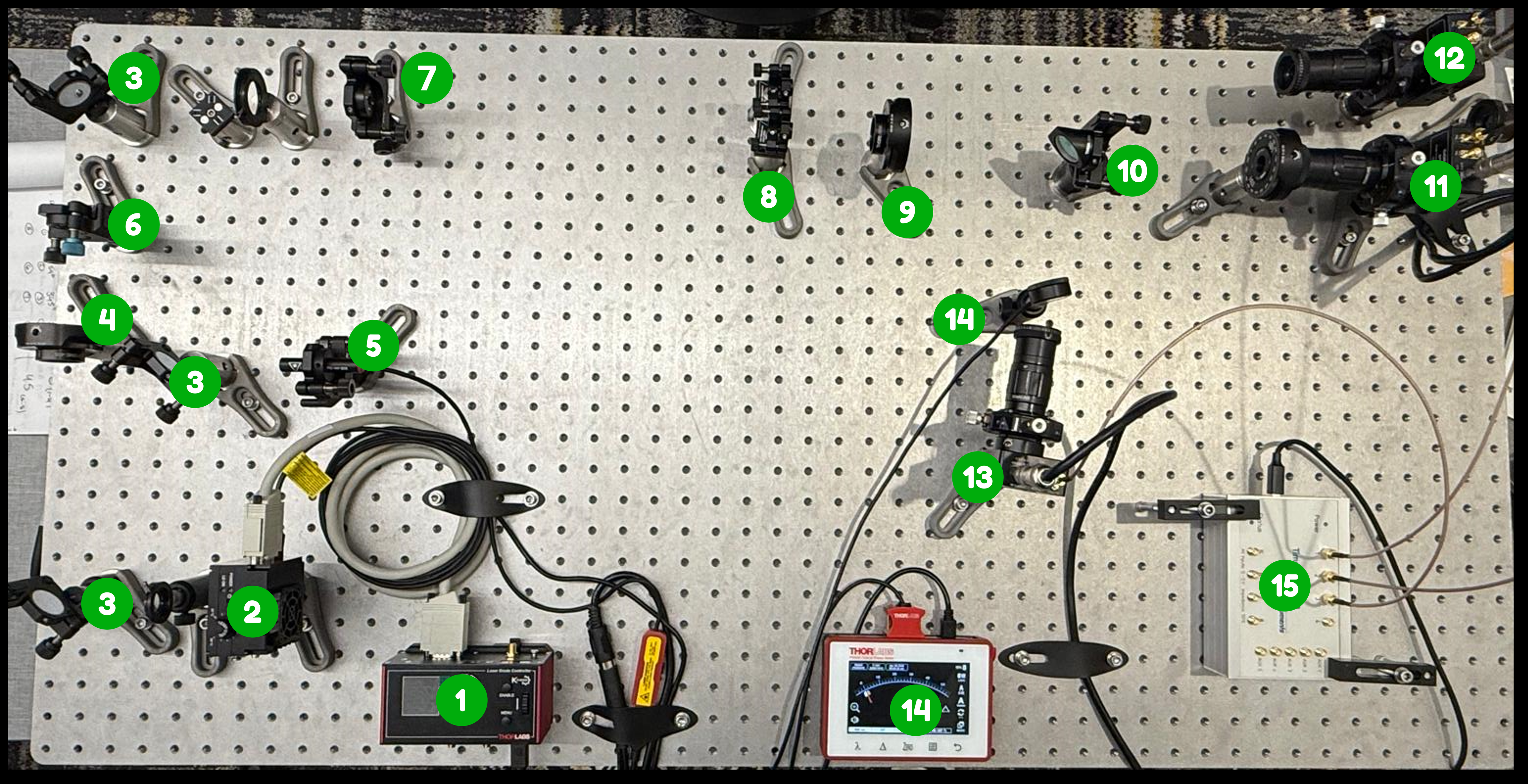
Fig 1: Quantum communication testbed used for protocol fingerprinting via physical layer observations. The setup includes (1)
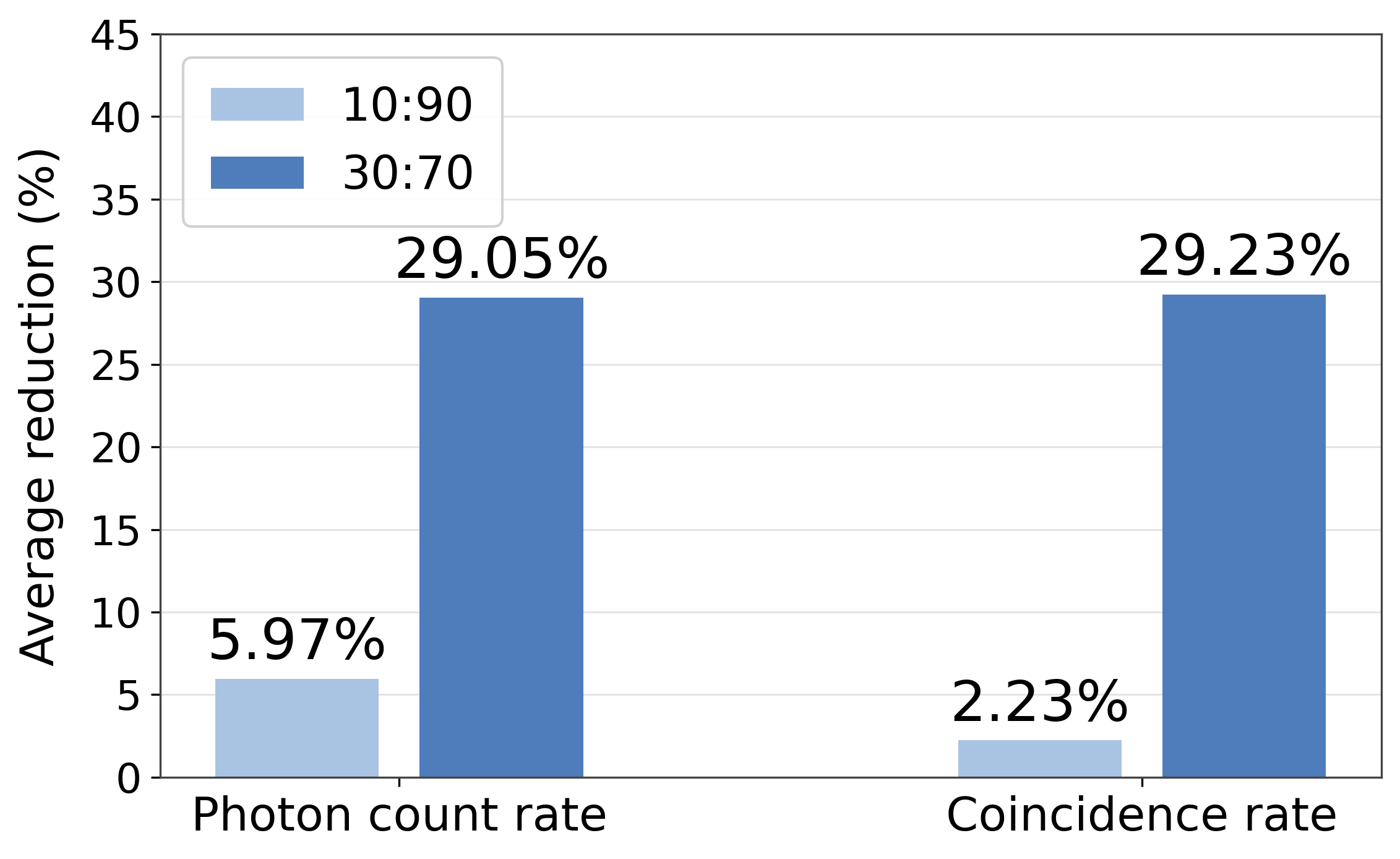
Fig 2: Effect of passive sampling on photon count and coinci-
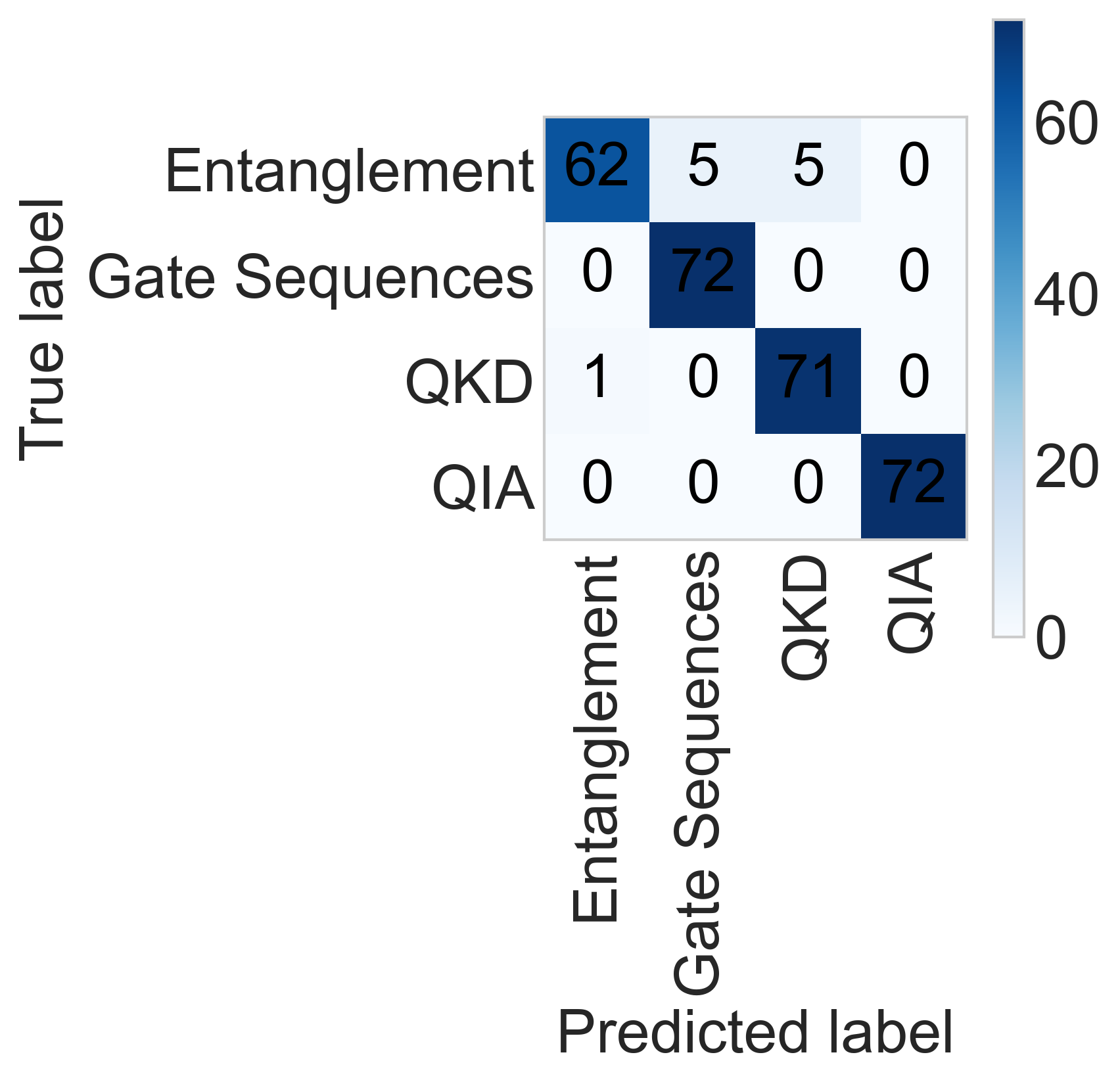
Fig 3: Confusion matrices illustrating the impact of sampling ratio and feature type on protocol classification. (a) Time tagger
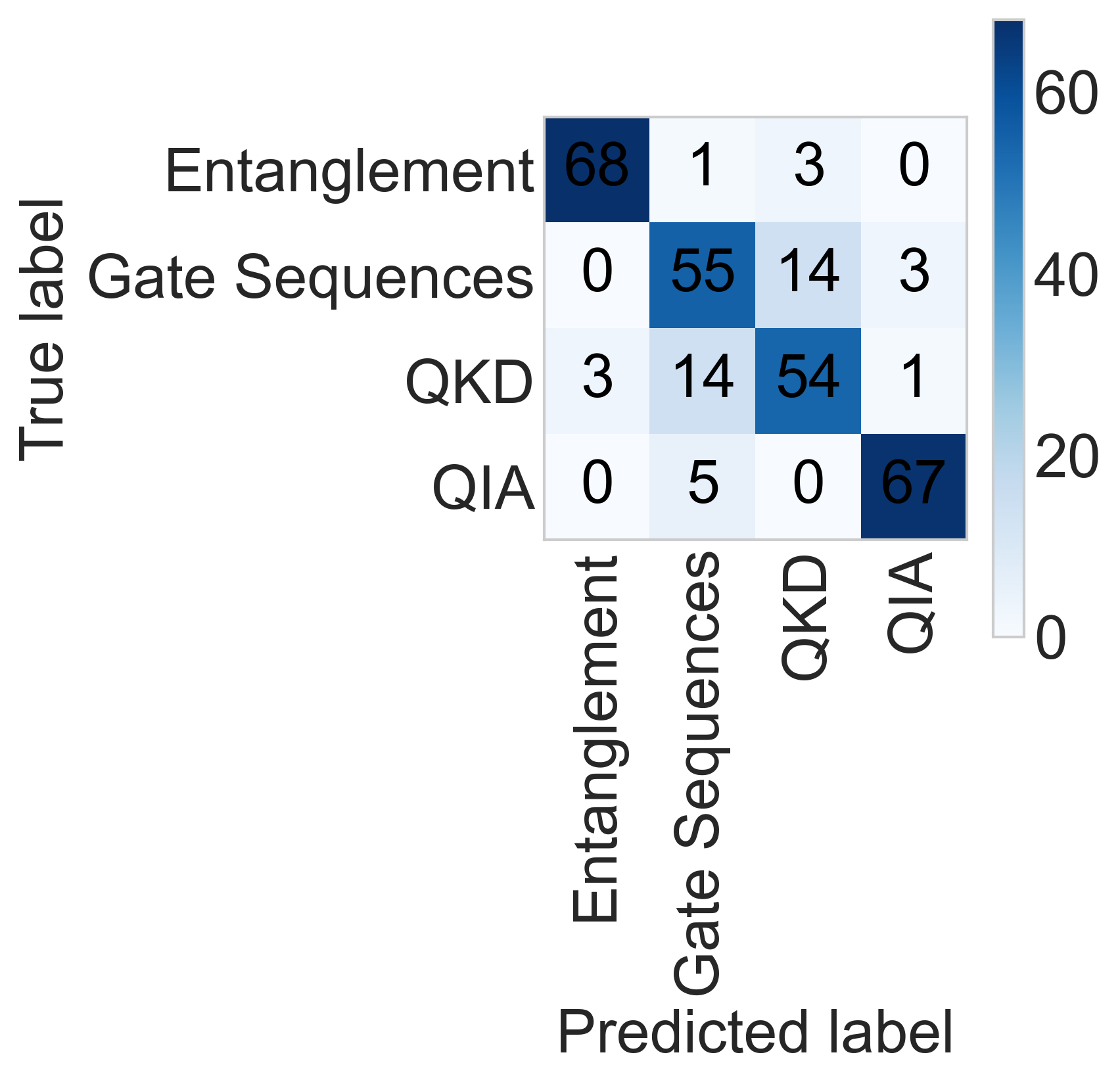
Fig 4: SHAP feature importance analysis for different sampling configurations and feature sets: (a) 10:90 time tagger, (b)
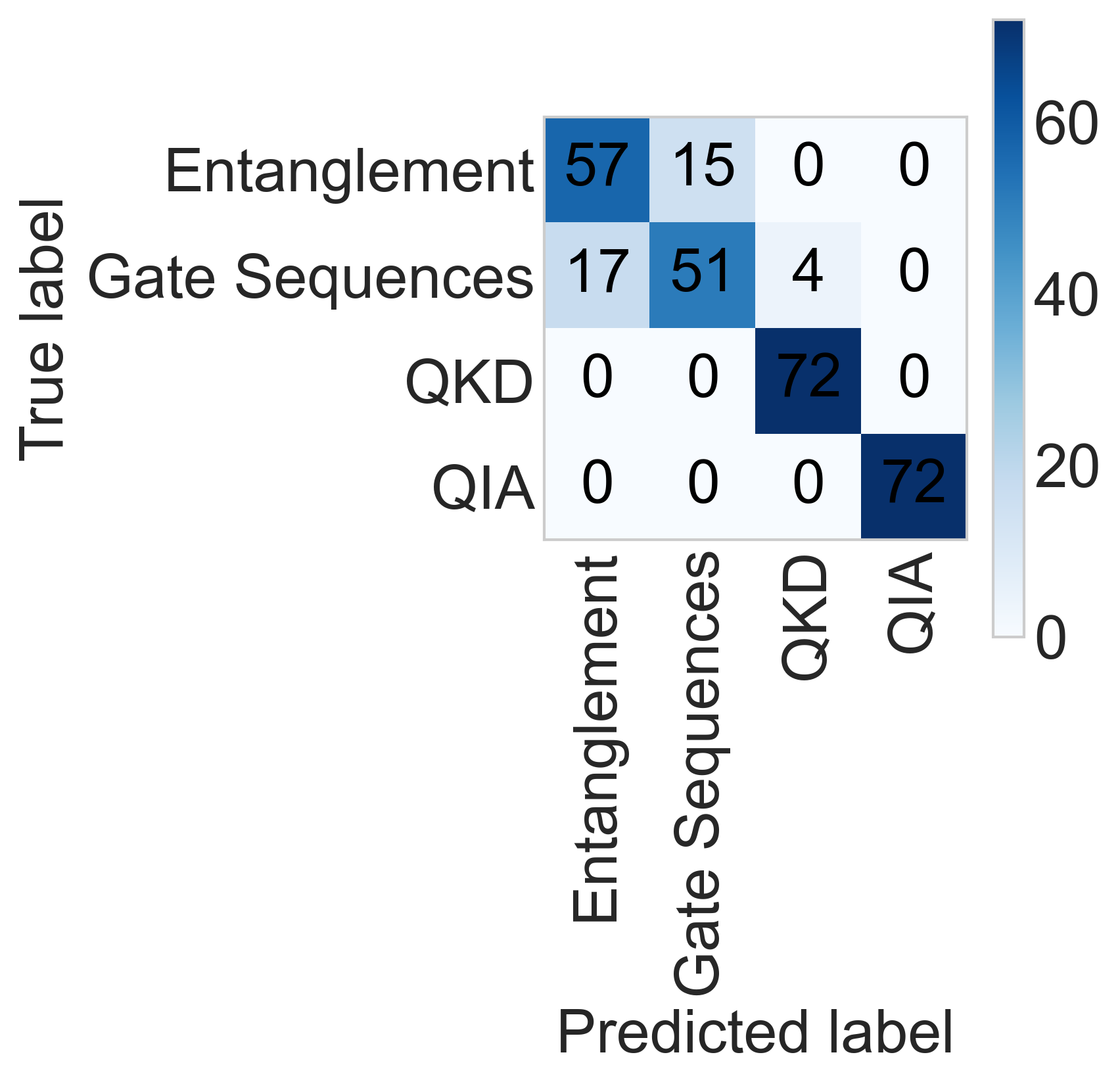
Fig 5 (page 8).
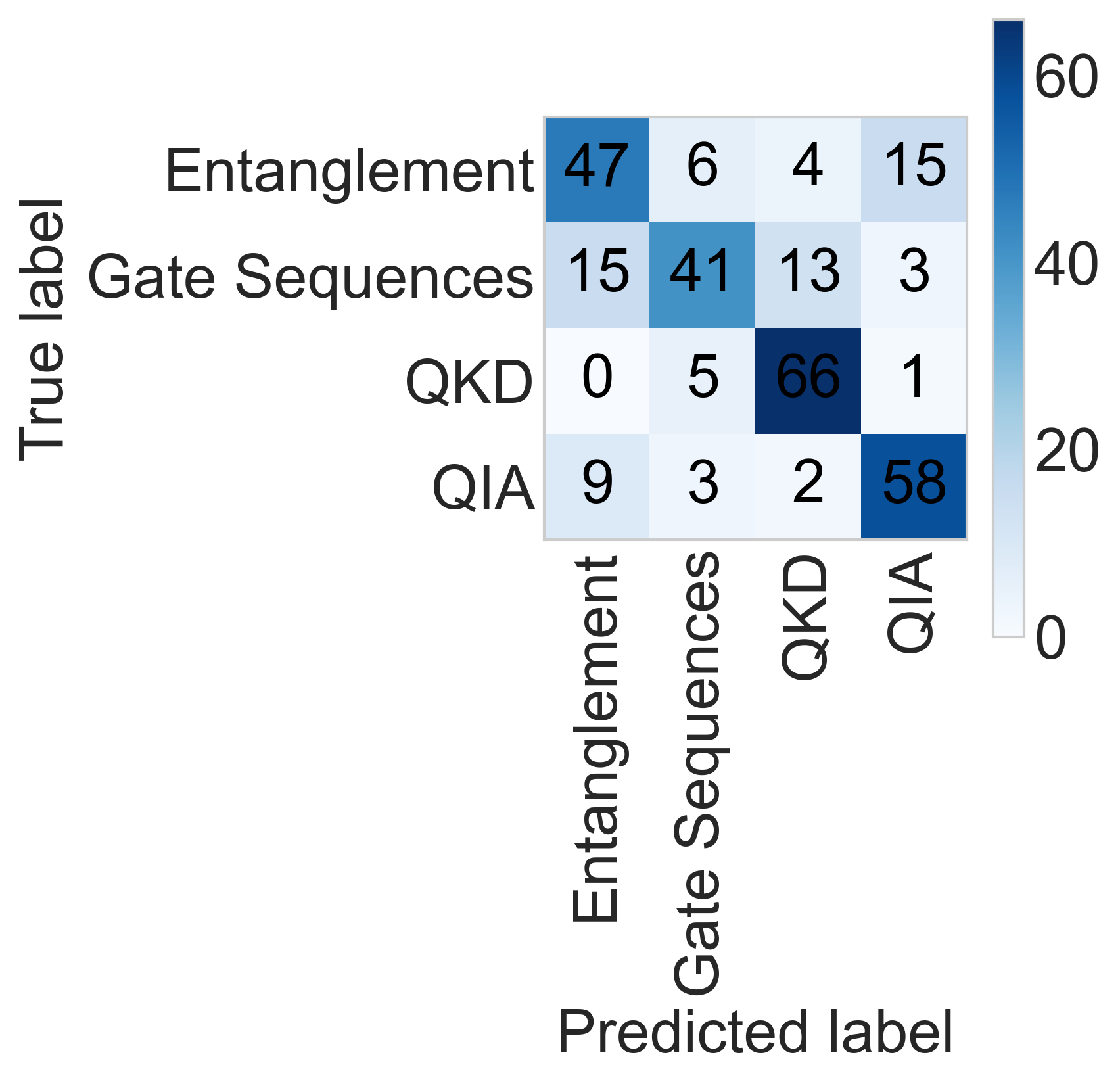
Fig 6 (page 8).
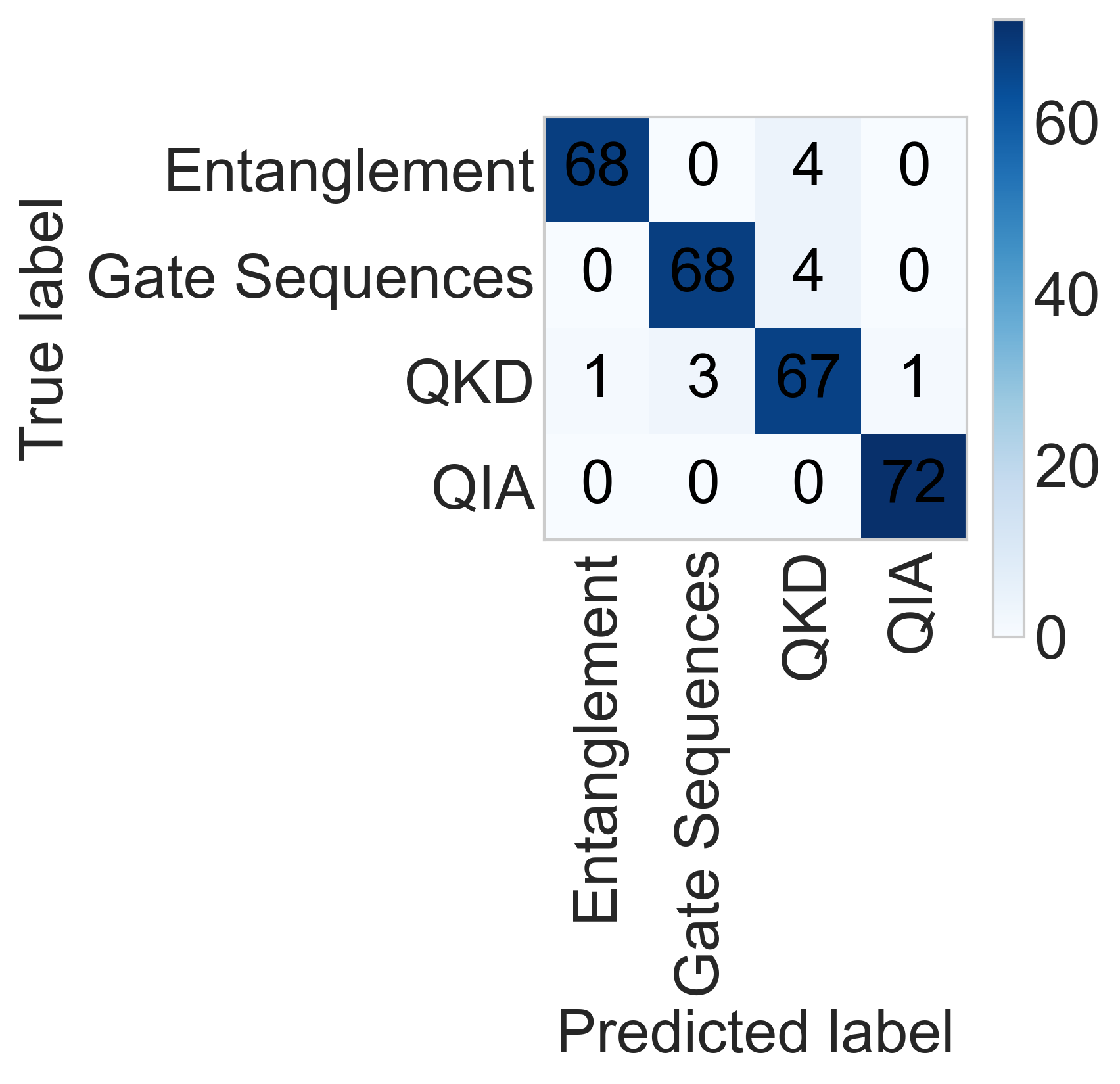
Fig 7 (page 8).
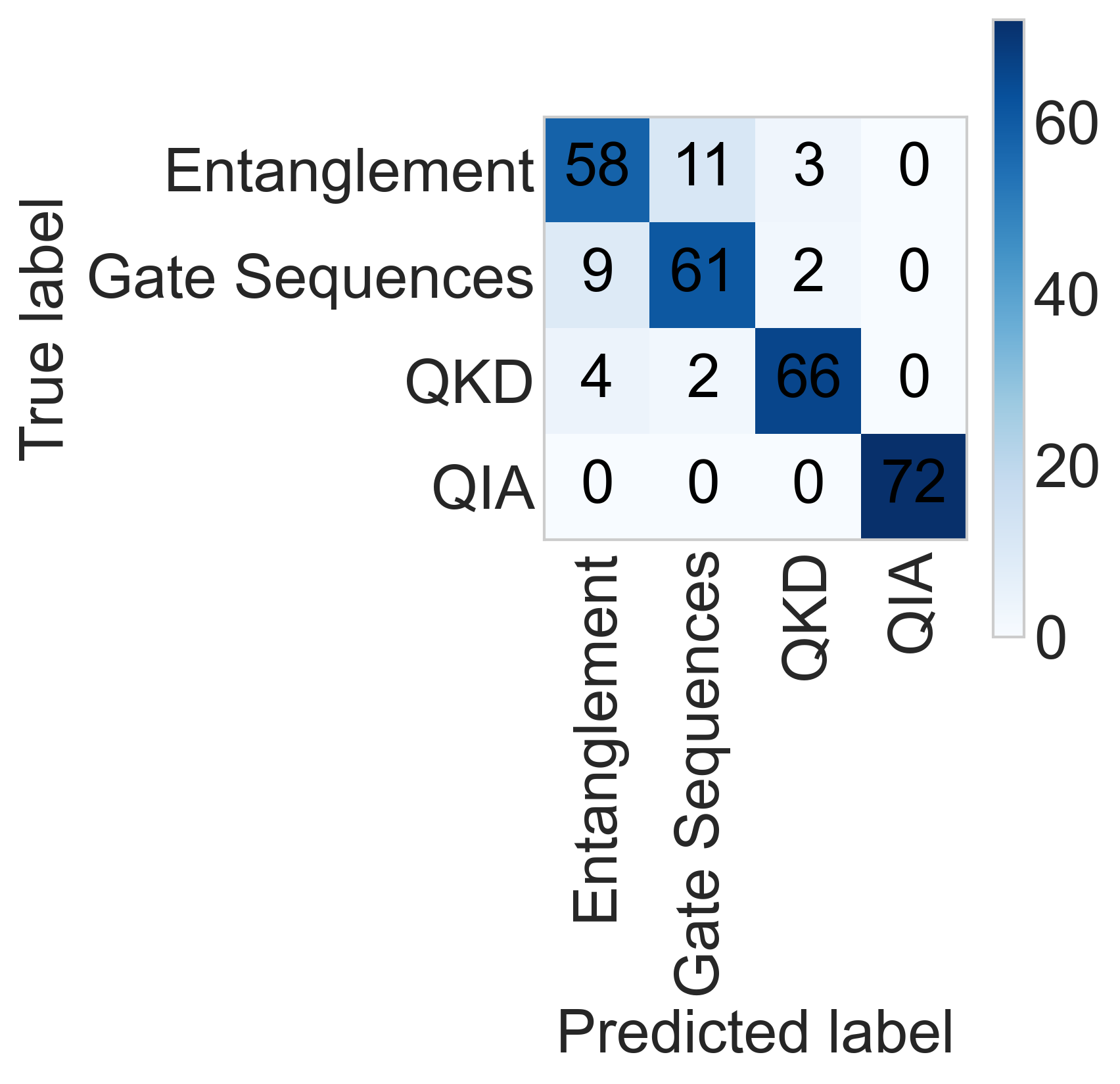
Fig 8 (page 8).
Limitations
- Study limited to four specific quantum communication protocols realized on a single polarization-entangled photon testbed; generalizability to other protocols or hardware remains unverified.
- The adversary model assumes passive observation with limited sampling ratios but no active attack capabilities or adaptive strategies.
- Analysis restricted to two fixed optical tapping configurations (10:90 and 30:70); impact of other sampling ratios or dynamic tapping was not explored.
- No evaluation of robustness under distribution shifts such as environmental changes, network load variations, or hardware aging.
- Machine learning evaluation uses a single random train/test split; no mention of cross-validation or statistical significance testing.
- The dataset and code are not publicly released, limiting reproducibility and external validation.
Open questions / follow-ons
- How effective is protocol fingerprinting against a wider range of quantum communication protocols, including multi-node or networked quantum systems?
- What is the impact of adaptive or active adversaries who can modify sampling strategies or induce controlled perturbations on fingerprinting accuracy and entanglement preservation?
- Can countermeasures, such as randomized protocol timing or physical-layer obfuscation techniques, mitigate fingerprinting risks without degrading quantum communication performance?
- How do environmental factors, system drift, or hardware variations affect the stability and robustness of physical-layer protocol fingerprints over time?
Why it matters for bot defense
This paper reveals that quantum communication protocols exhibit measurable physical-layer side-channel signatures accessible via passive optical tapping without direct quantum measurement. For bot-defense and CAPTCHA practitioners focused on physical channel security and side-channel attack mitigation, this work highlights a previously underappreciated attack surface in quantum networks, analogous to classical side-channel vulnerabilities in hardware. Key takeaways include the need to consider physical signal leakage beyond cryptographic protocol security and the benefits of combining statistical timing and power features for detecting subtle protocol-level information leaks. While quantum-specific, the demonstrated framework and methodological approach—leveraging high-resolution physical layer signals and sequence modeling—may inspire novel signal fingerprinting and anomaly detection techniques applicable to emerging high-assurance communication systems. Practitioners should weigh the tradeoff between observability and system impact when designing monitoring or detection mechanisms aimed at side-channel fingerprinting.
Cite
@article{arxiv2607_24624,
  title={ Experimental Protocol Fingerprinting in Quantum Networks via Physical Layer Side Channel Analysis },
  author={ Lance Young and Contessa Wilburn and Carrie Houston and Blaine Keyton and Marwan Elawady and Mohamed Shaban and Muhammad Ismail },
  journal={arXiv preprint arXiv:2607.24624},
  year={ 2026 },
  url={https://arxiv.org/abs/2607.24624}
}