
GaitFace: A Multimodal Dataset for Long-Range Person Identification
Source: arXiv:2607.23542 · Published 2026-07-26 · By Alain Komaty, Luis S. Luevano, Vidit Vidit, Anjith George, Zeina Al Amine, Sébastien Marcel
TL;DR
This paper addresses the practical challenges of biometric person identification at long distances, as encountered in border control scenarios involving severe image degradation from low resolution, viewpoint changes, and environmental variability. Existing biometric datasets do not adequately cover these realistic long-range conditions or multimodal settings combining face and gait data, especially in publicly available form. To fill this gap, the authors introduce GaitFace, a novel public dataset with 70 participants recorded over two sessions, combining high-quality mobile pre-enrollment (face captures) with long-range optical-zoom and native low-resolution face and gait recordings from multiple elevated and ground-level views. The dataset simulates real border crossing conditions with temporal variability in clothing, accessories, and environment. Extensive benchmarking of state-of-the-art face and gait recognition models reveals severe performance degradation under low-resolution and elevated camera angle scenarios despite high accuracy when high-quality optical zoom is available. Particularly, face recognition models collapse to near-random accuracy at 100m from elevated cameras, and gait recognition models trained on standard datasets generalize poorly to these long-range and multi-view conditions. GaitFace thus exposes critical vulnerabilities in current biometric recognition approaches and establishes a rigorous real-world benchmark to stimulate improved long-range, unconstrained, multimodal biometric research.
Key findings
- At maximum 100m standoff without optical zoom, average face crop resolution is 18x22 pixels with inter-pupillary distance (IPD) around 4 ± 1.2 pixels, representing severe spatial degradation.
- Face recognition FNMR at FMR=1% on high-quality optical zoom images (210x250 pixels, IPD ~55) is below 1%, e.g. 0.9% for IR50 and 0.4% for LV-Face with 10 enrollment samples.
- Under low-quality conditions from ground floor cameras at 100m (no zoom), fusion of 40 frames improves face recognition True Match Rate (TMR) to around 0.8 using IR101 and EdgeFace models, but peak accuracy still only reaches ~80%.
- From the elevated 3rd floor view at 100m without zoom, all face recognition models fail to separate genuine from impostor scores, yielding Equal Error Rates (EER) above 36%, close to random guessing.
- Face verification scores monotonically improve as subjects approach the camera from 100m to 3m, with near-perfect TMR achieved at close range, highlighting the strong effect of distance on performance.
- Long-distance gait recognition is challenging: silhouette-based models trained on GREW dataset achieve Rank-1 accuracy below 30% overall, dropping further under clothing, phone, or bag carrying conditions.
- Gait recognition accuracy further deteriorates with viewpoint shifts between sessions, especially for extreme camera position changes, with Rank-1 accuracy falling below 20% in some probe conditions.
- RGB-based gait models pretrained on CCPG underperform due to domain gap compared to silhouette-based methods.
- Lightweight face model EdgeFace outperforms heavier LVFace under severe resolution degradation, indicating that simpler models may be more robust to extreme image quality loss.
Threat model
The threat model focuses on benign, operational long-range biometric identification in surveillance-like contexts such as border control. Adversaries are not explicitly modeled; the study assumes no deliberate attacks but emphasizes system capability to recognize individuals under degraded image quality due to distance, viewpoint, and environmental factors. The adversary cannot manipulate sensor hardware or enrollment data and is not considered able to execute spoof attacks.
Methodology — deep read
The authors designed a multimodal dataset, GaitFace, to realistically simulate long-range border-crossing biometric identification scenarios with controlled and unconstrained variability. The threat model assumes an operational surveillance context requiring identification from long standoff distances up to 100 meters using visible-light sensors, with no adversarial attacks considered.
The dataset was collected from 70 voluntary participants across two sessions separated by weeks to capture temporal variations such as clothing, accessories, hairstyle, and environment. The data modalities include:
- Pre-enrollment: Controlled indoor face videos from mobile front cameras (iPhone 12, Samsung Galaxy S9) capturing static and controlled head movements to simulate remote registration.
- Outdoor face captures: Long-range optical-zoom (high-quality) and wide-angle native low-resolution (low-quality) face videos recorded simultaneously from an elevated camera (~9-10m third floor) and a ground camera across multiple viewpoints and weather conditions.
- Outdoor gait captures: Simultaneous multi-view full-body recordings from elevated and ground cameras, with four walking directions and four walking conditions (normal, phone call, bag, clothing variation).
The acquisition protocol involved participants walking predefined trajectories with repeated scenarios to introduce behavior and appearance variability. Data were recorded in RAW format for face images and included metadata for demographics (age, gender, skin tone).
For benchmarking, they evaluated four state-of-the-art face recognition models (EdgeFace, AdaFace IR50/IR101, LVFace ViT) with distinct architectures and parameter counts, calibrated thresholds on IJB-C dataset, and tested under multiple enrollment and probe protocols varying frame counts, viewing angles, and quality. Long-distance face recognition was assessed by FNMR/FMR and ROC curves.
For gait recognition, they benchmarked silhouette-based models (GaitBase, DeepGaitV2, GaitGL) pretrained on GREW or CASIA-B, and RGB-based BiggerGait (pretrained on CCPG). Evaluation used Rank-1 accuracy averaged over four walking directions and conditions, with the gallery restricted to a single session normal walk per person, and probes from a different session with covariate supplements. Cross-view and cross-session generalization was studied.
The evaluation highlighted failure modes and performance degradation at long distance and low resolution, with multi-frame fusion helping improve recognition. The methodology is well documented with multiple defined protocols and detailed analysis across modalities and scenarios. Code and dataset were promised upon acceptance but currently not public for reproducibility.
Example end-to-end: For face recognition from the ground floor at 100m (GF-10 protocol), enrollment was done with 10 mixed pose mobile captures, probes were 10-frame fused low-quality face sequences from surveillance cameras. Models such as IR101 achieved up to 80% True Match Rate at FMR=1%, illustrating the practical limitation of relying on low-resolution long-distance probes.
Technical innovations
- Introduction of GaitFace, the first publicly available multimodal long-range (up to 100m) dataset combining controlled mobile pre-enrollment with unconstrained outdoor high- and low-resolution face and multi-view gait captures.
- Design of a realistic multi-session acquisition protocol incorporating temporal variations in appearance, accessories, environmental conditions, and camera viewpoints including elevated surveillance perspectives.
- Benchmarking and analysis revealing systemic failures of state-of-the-art large-scale face and gait recognition architectures on long-range, low-resolution, and extreme viewpoint data, highlighting domain gaps and robustness issues.
- Empirical demonstration that lightweight face recognition models can outperform heavier architectures in extreme degradation settings, challenging assumptions about model size and accuracy in unconstrained surveillance.
Datasets
- GaitFace — 70 subjects, 2 sessions, ~2.7TB multi-modal RGB and silhouette face and gait data — newly collected public dataset
Baselines vs proposed
- Face Recognition IR50: FNMR <1.3% on HQ (optical zoom) probes at FMR=1%, drops to chance performance (EER >36%) at 100m 3rd floor camera without zoom
- Face Recognition IR101: Best TMR ~80% with 40 fused frames on 100m ground floor low-quality probes; fails at 3rd floor elevated viewpoint
- EdgeFace (lightweight): Outperforms LVFace (large ViT) under extreme low-resolution conditions (e.g., GF protocol)
- GaitBase (silhouette, GREW-trained): Mean Rank-1 accuracy ~27% on G1 protocol normal walking, drops significantly with clothes/phone/bag changes
- DeepGaitV2 (silhouette, GREW-trained): Slightly better than GaitBase on G2 protocol with viewpoint shift, mean Rank-1 <30%
- GaitGL (CASIA-B-trained): Poor generalization with Rank-1 accuracy <15% on GaitFace dataset
- BiggerGait (RGB, CCPG-trained): Underperforms on GaitFace likely due to domain gap, mean Rank-1 <10%
Figures from the paper
Figures are reproduced from the source paper for academic discussion. Original copyright: the paper authors. See arXiv:2607.23542.
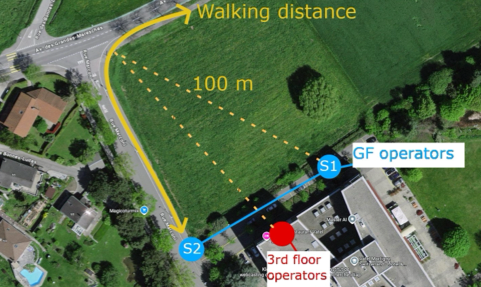
Fig 1: Experimental overview: (a) station layout and path; (b)
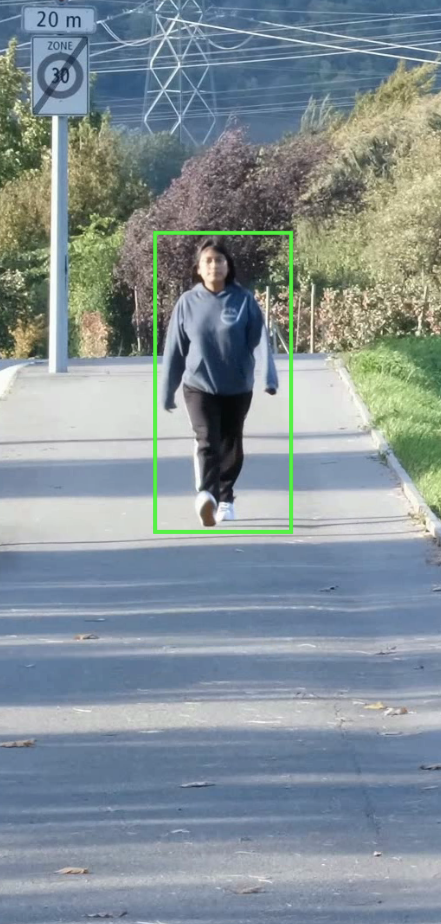
Fig 2: Data samples: (a) Enroll, (b) Probe HQ, (c) 100m 3rd
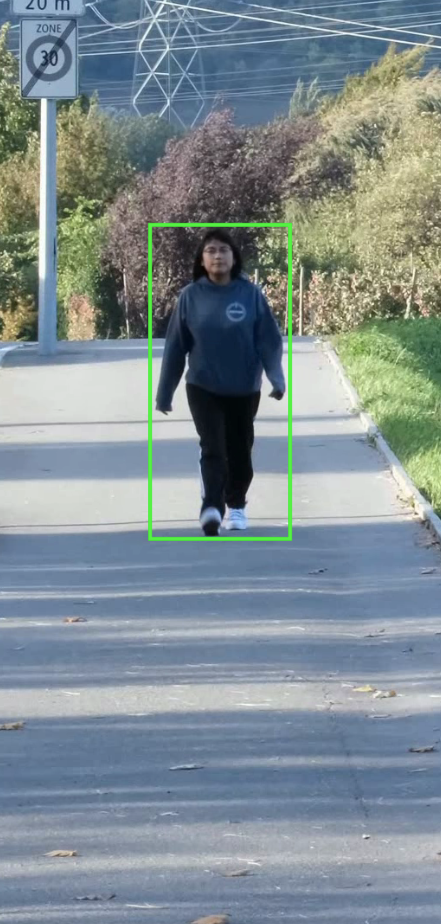
Fig 3: Face captures acquired using the GF camera, showing the
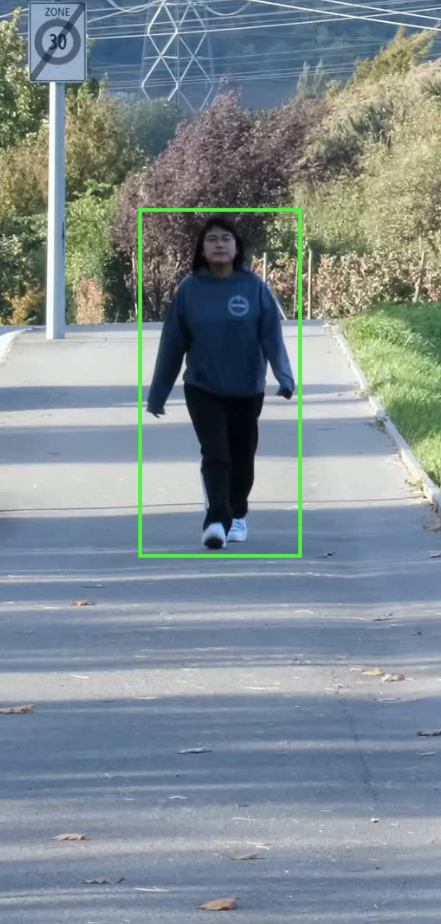
Fig 4 (page 1).
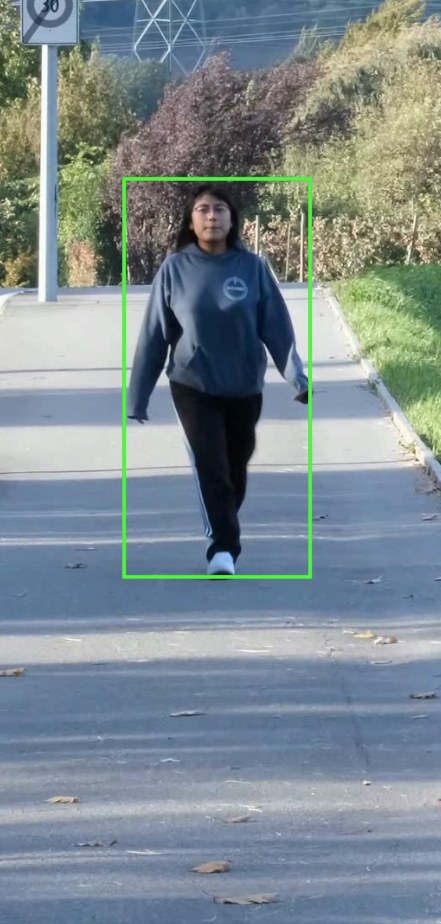
Fig 5 (page 1).
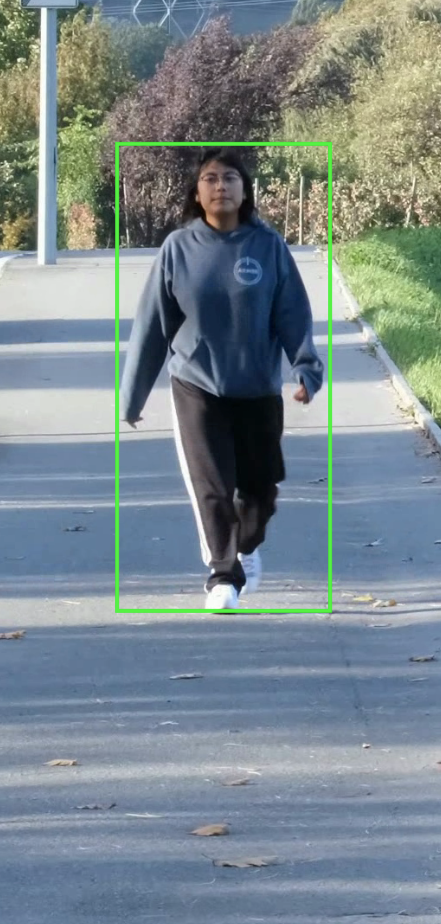
Fig 6 (page 1).
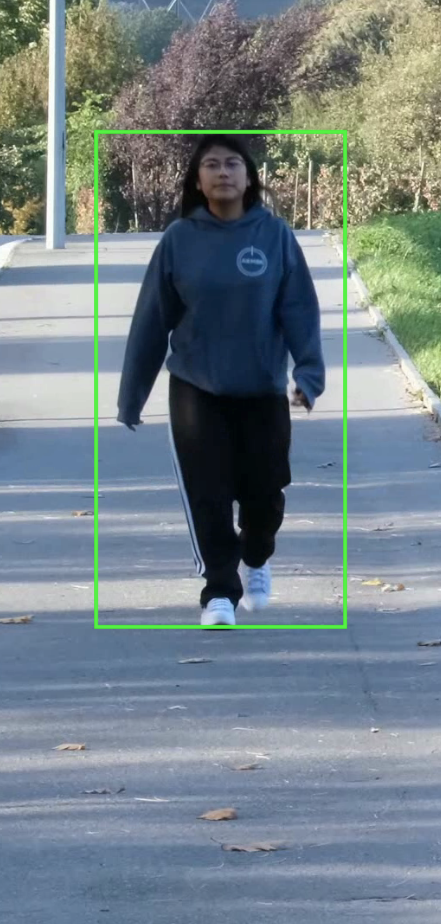
Fig 7 (page 1).
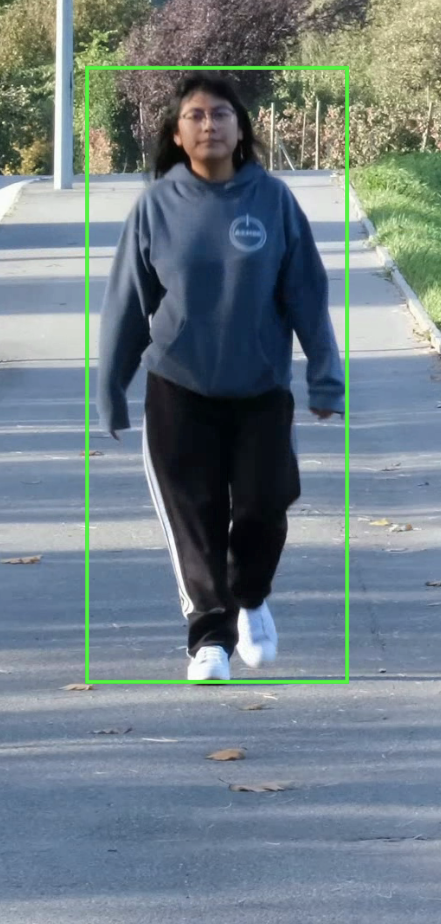
Fig 8 (page 1).
Limitations
- Dataset skewed towards lighter skin tones reflecting local population, limiting generalizability to more diverse demographics.
- Dataset size relatively modest (70 participants), limiting statistical power for some analyses and deep model training.
- No adversarial robustness or spoofing threat evaluation discussed; only benign degradation considered.
- Lack of cross-validation or multiple independent test splits reported; evaluation primarily fixed protocols.
- Current benchmarks use pre-trained models without retraining or fine-tuning on GaitFace, limiting insights on adaptation.
- Fusion of face and gait modalities is left as future work, limiting understanding of combined biometric robustness.
Open questions / follow-ons
- How to effectively fuse face and gait modalities to leverage complementary strengths for long-range identification, especially under severe degradation?
- Can domain adaptation or fine-tuning of existing large-scale biometrics models on GaitFace improve robustness to multi-view and long-distance probes?
- What novel architectures or preprocessing strategies can improve resolution-invariant or viewpoint-invariant biometric recognition on long-range data?
- How to extend demographic diversity and increase dataset size to better generalize across populations and environmental conditions?
Why it matters for bot defense
For bot-defense and CAPTCHA practitioners, this work highlights key challenges in biometric person identification from long-range video surveillance, especially in unconstrained and low-quality scenarios. The demonstrated failure modes of current state-of-the-art face and gait recognition models under realistic degradation conditions emphasize the importance of robust multi-modal fusion and model adaptation for reliable identity verification. Although CAPTCHAs generally rely on interactive human-machine challenges, the insights from GaitFace on resolution and viewpoint sensitivity may inform the design of biometric-based liveness or user verification systems where image quality or environmental conditions vary. Moreover, the publicly available GaitFace benchmark dataset provides a valuable resource to study biometric algorithm robustness and adversarial resilience in operational, unconstrained settings relevant to security applications. Bot-defense engineers can use this dataset to test spoofing resistance or multi-modal biometric solutions in simulated surveillance conditions.
Cite
@article{arxiv2607_23542,
  title={ GaitFace: A Multimodal Dataset for Long-Range Person Identification },
  author={ Alain Komaty and Luis S. Luevano and Vidit Vidit and Anjith George and Zeina Al Amine and Sébastien Marcel },
  journal={arXiv preprint arXiv:2607.23542},
  year={ 2026 },
  url={https://arxiv.org/abs/2607.23542}
}