
Megaparsec-Scale Neutral Hydrogen Flows in the Neighborhood of Hickson Compact Group 100
Source: arXiv:2607.21717 · Published 2026-07-23 · By Qingzheng Yu, Taotao Fang, Enrico M. Di Teodoro, Cheng Cheng, Cong Kevin Xu
TL;DR
This study investigates the distribution and kinematics of neutral atomic hydrogen (H I) on megaparsec scales around the Hickson Compact Group 100 (HCG 100), a dense galaxy group at a distance of about 77 Mpc. Using ultra-deep 21-cm line observations from the Five-hundred-meter Aperture Spherical radio Telescope (FAST), the authors detect an extremely diffuse and extended H I structure extending over approximately 1 Mpc, with column densities as low as 8.6×10^17 cm^-2, among the lowest-density neutral gas systems ever observed in emission. This H I forms a coherent envelope linking HCG 100 with neighboring galaxies and shows a large-scale velocity gradient spanning 0.6 Mpc. The diffuse gas mass is estimated at ~1.4×10^10 solar masses, implying 40-50% of the total hydrogen in the system resides outside galaxies in this intragroup medium.
The authors interpret this gigantic neutral gas reservoir as either arising from tidal debris produced by past galaxy interactions or from cold gas accretion along the cosmic web feeding the group environment. The deep sensitivity and large spatial coverage of FAST enable the detection of both high-density gas previously observed by interferometers and this new extended low-density component missed before due to sensitivity and spatial filtering. These observations provide novel direct evidence that massive neutral gas flows exist on megaparsec scales around compact groups, potentially playing a major role in baryon cycling and galaxy evolution in dense environments.
They further analyze the velocity structure and identify distinct velocity components associated with different subregions and galaxies, suggesting complex gas dynamics possibly linked to both ongoing interactions and accretion. The discovery of six new unresolved H I sources nearby also expands the census of gas-rich dwarf systems in the environment. The study highlights the need for detailed modeling of multi-scale gas flows and phase transitions to fully understand the life cycle of baryons in galaxy group contexts.
Key findings
- Detection of a diffuse neutral hydrogen structure spanning ~1 Mpc around HCG 100 with integrated column densities down to ~8.6×10^17 cm^-2.
- This extended H I envelope contains ~1.4×10^10 solar masses of neutral gas, implying up to 40-50% of the H I gas in the system resides outside galaxy disks.
- The total H I mass measured is (3.10 ± 0.31) × 10^10 M⊙ by FAST, more than twice the mass detected by previous VLA observations ((1.45 ± 0.17) × 10^10 M⊙) due to improved sensitivity to diffuse emission.
- Large-scale coherent velocity gradients are observed in the H I gas spanning ~0.6 Mpc, with distinct velocity components at ~5300 km/s and ~5500 km/s associated with different galaxy groups.
- Six new unresolved H I sources with masses log(M_HI) = 8.44–8.77 M⊙ are detected near HCG 100, all linked to optical counterparts, expanding knowledge of gas-rich dwarf neighbors.
- The diffuse gas morphology and kinematics are consistent with either tidal debris from galaxy interactions or accretion from cold gas streams feeding the group along cosmic web filaments.
- Neighboring galaxies show H I fractions consistent with normal scaling relations, suggesting they are not strongly H I-deficient despite interactions, implying gas replenishment or initially high gas content.
- The low column density neutral gas is able to survive on timescales >1 Gyr despite expected ionization from the ultraviolet background, indicating complex environmental processes maintaining neutrality.
Methodology — deep read
Threat Model & Assumptions: While not explicitly framed as a security paper, the astronomical "adversary" context corresponds to the difficulty in detecting extremely faint, diffuse neutral hydrogen gas against noise and instrumental systematics. The assumption is that diffuse H I structures are spatially extended and low density, challenging to measure with conventional interferometers due to spatial filtering. The observations aim to reveal previously unseen neutral gas reservoirs that trace baryon cycling in dense galaxy groups.
Data: The data come from ultra-deep 21-cm H I observations conducted with the Five-hundred-meter Aperture Spherical Telescope (FAST) 19-beam receiver. Observations were taken from September 2023 to October 2024 in two cycles covering approximately 30'×57' centered on HCG 100 and neighboring galaxies. The total on-target integration time per sky pixel is up to 1800 s. A total of 608 individual spectra were composed into a data cube covering velocities 3960–6740 km/s at 20 km/s channel resolution, with an angular resolution ~2.9 arcminutes (~90 kpc at 77 Mpc distance). The deep sensitivity reaches 4.8×10^16 cm^-2 (1σ) per 20 km/s channel in column density after smoothing.
Architecture/Algorithm: The data reduction pipeline involves separate calibration of polarizations, gain correction (frequency-dependent), manual radio frequency interference flagging, baseline fitting with polynomial + sinusoidal models to remove standing waves, and conversion to flux density units. Sidelobe correction applied informed by beam pattern models removes contamination from bright sources. The spectral data are re-binned to 20 km/s channels and assembled into a 3D data cube spatially sampled with 560 sky pixels overlapping with Nyquist criterion. The resultant cube allows integrated intensity maps, moment maps (velocity, velocity width), channel maps, and position-velocity diagrams to be constructed, revealing both dense and diffuse H I gas components.
Training Regime: Not applicable as this is an observational study; no machine learning model training involved.
Evaluation Protocol: The integrated H I emission is compared quantitatively to archival Very Large Array (VLA) interferometer observations at ~50'' resolution, highlighting larger-scale diffuse emission recovered only by FAST. Velocity and line width maps are derived from moment analysis of the data cube. Position-velocity diagrams along specific slits through the data are used to elucidate velocity gradients and gas flows. The presence of six new unresolved H I sources is confirmed by extracted spectra and cross-matched to optical spectroscopic redshifts from DESI DR1 where available. Gas mass estimates are derived using standard formulae assuming optically thin emission and a distance of 77 Mpc.
Reproducibility: The paper does not mention public code or data releases. The observations are based on FAST, a facility instrument, with data reduction procedures following previous publications by this group (e.g., Xu et al. 2022). No frozen weights or ML models are involved. Some ancillary datasets include archival VLA H I maps and DESI optical redshifts.
Concrete Example: In one analysis, the authors trace a position-velocity slice through a line connecting two new H I sources (HS1 and HS6) and HCG 100, revealing an S-shaped velocity gradient extending over about 0.6 Mpc with velocity variations of tens of km/s. This kinematic structure could either represent tidal debris stretched by galaxy interactions or a large rotating gas structure possibly linked to cold accretion inflows along the cosmic web. The spectral profiles of these sources show asymmetric wings that include diffuse intragroup H I emission, highlighting the complexity of the environment.
Overall, the methodology combines ultra-deep spectral line radio observations with careful calibration and data reduction techniques to reveal extremely faint, diffuse neutral hydrogen gas distributed broadly around a dense group of galaxies, allowing investigation of large-scale baryonic gas flows and possible accretion signatures in the local universe.
Technical innovations
- Application of ultra-deep, multi-beam FAST observations to achieve unprecedented low column density sensitivity (~4.8×10^16 cm^-2 per 20 km/s) across a large (∼1 Mpc) field around a compact group, surpassing previous interferometric surveys.
- Integration of sidelobe correction models with manual RFI flagging and composite baseline fitting (sinusoidal + polynomial) to reliably recover extremely faint diffuse H I emission otherwise dominated by systematics.
- Use of combined single-dish mapping synthesized from overlapping adjacent beams to produce a high-fidelity data cube revealing both high-density galaxy disk gas and previously unseen extended low-density neutral hydrogen envelopes.
- Identification and kinematical separation of multiple velocity components within the megaparsec-scale H I environment, interpreted as tidal debris or accretion flows, enabled by high spectral resolution and sensitive moment/position-velocity analyses.
- Discovery of new unresolved low-mass H I sources associated with optical counterparts in the vicinity of HCG 100, expanding the census of gas-rich dwarf galaxies embedded in intragroup diffuse gas.
Datasets
- FAST H I 21-cm observations around HCG 100 — ~31.8 hours total observing time, 608 spectra combined into a data cube — proprietary observations with FAST
- VLA H I interferometer archival data for HCG 100 region — prior data from Jones et al. 2023 and de Mello et al. 2008 — public
- DESI DR1 optical spectra and redshifts — used to confirm optical counterparts for new H I sources — public
Baselines vs proposed
- VLA interferometer observations: total H I mass = (1.45 ± 0.17) × 10^10 M⊙ vs FAST single-dish: (3.10 ± 0.31) × 10^10 M⊙ (more than double, due to diffuse gas detection)
- H I column density sensitivity: VLA ~9.3×10^19 cm^-2 (3σ) vs FAST ~8.6×10^17 cm^-2 (3σ) (two orders of magnitude deeper)
- H I mass fraction outside galaxies: previously unquantified vs up to 40-50% of total H I mass revealed outside disks by FAST
- Detection of six new unresolved H I sources with masses log(M_HI/M⊙) = 8.44–8.77, previously undetected in the area
Figures from the paper
Figures are reproduced from the source paper for academic discussion. Original copyright: the paper authors. See arXiv:2607.21717.

Fig 1: The H I gas in the velocity range of 5000−5700 km s−1. The contour map of the integrated H I emission in the velocity range
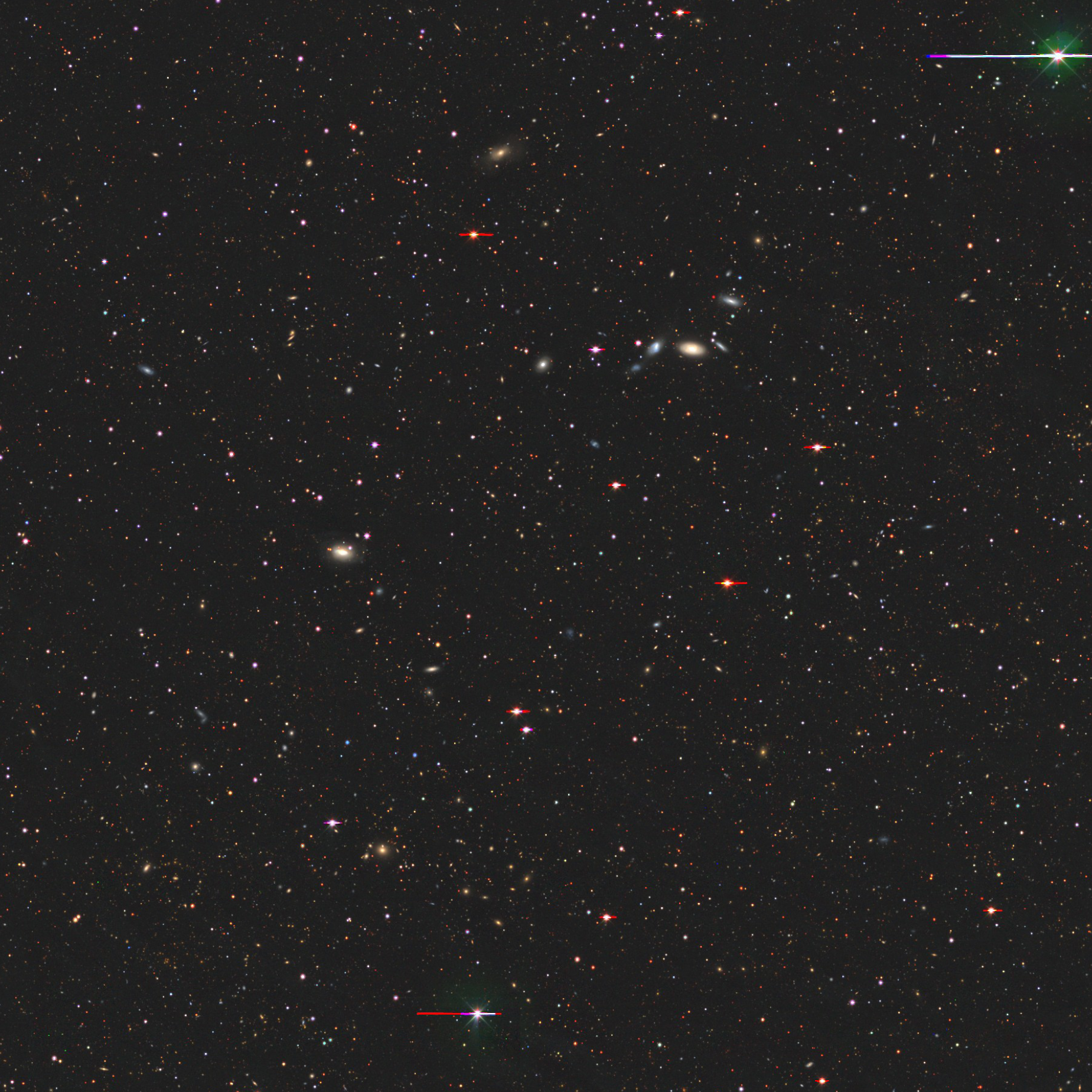
Fig 2: H I gas distribution and kinematics. Panels (a), (d), and (g): contours of the integrated H I emission in the velocity ranges of
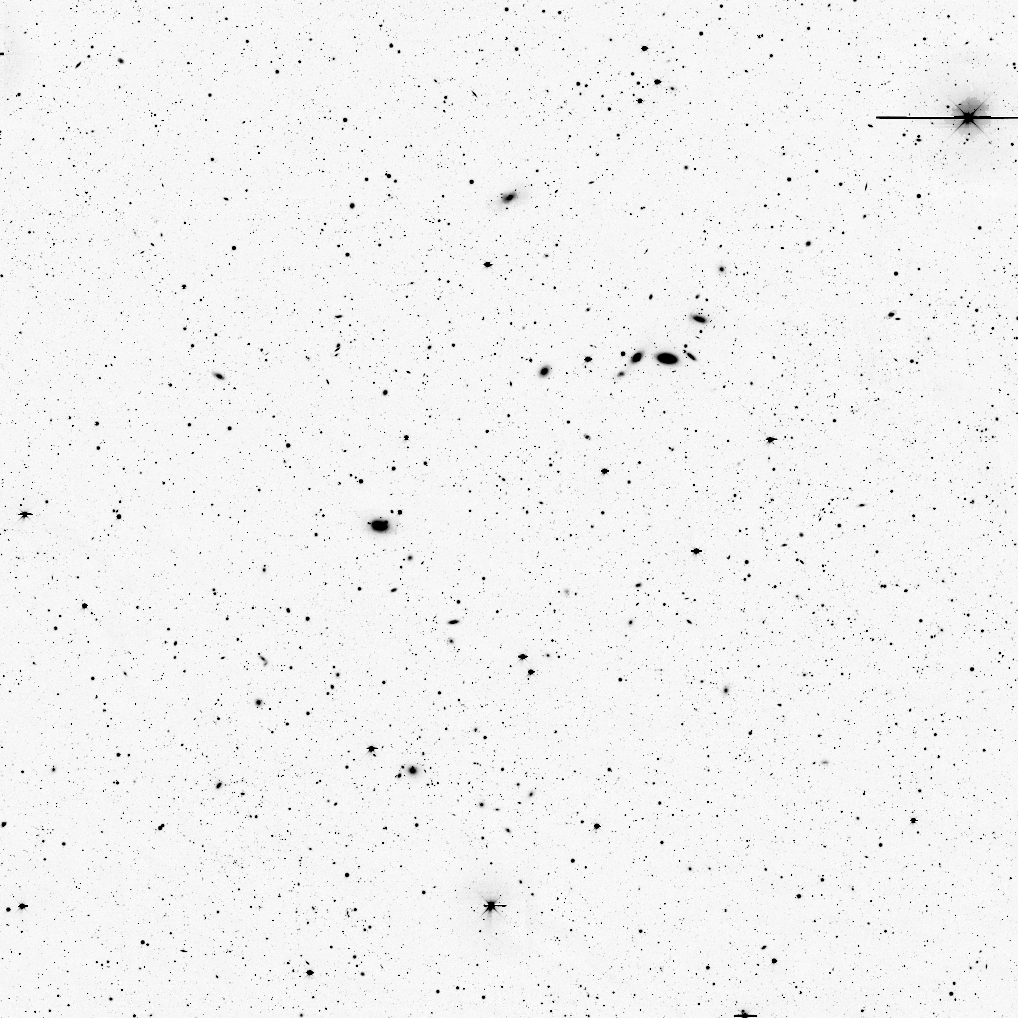
Fig 3: FAST H I channel maps (contours) overlaid on a DECaLS r-band image. The channel maps cover the velocity range of 5020−5720
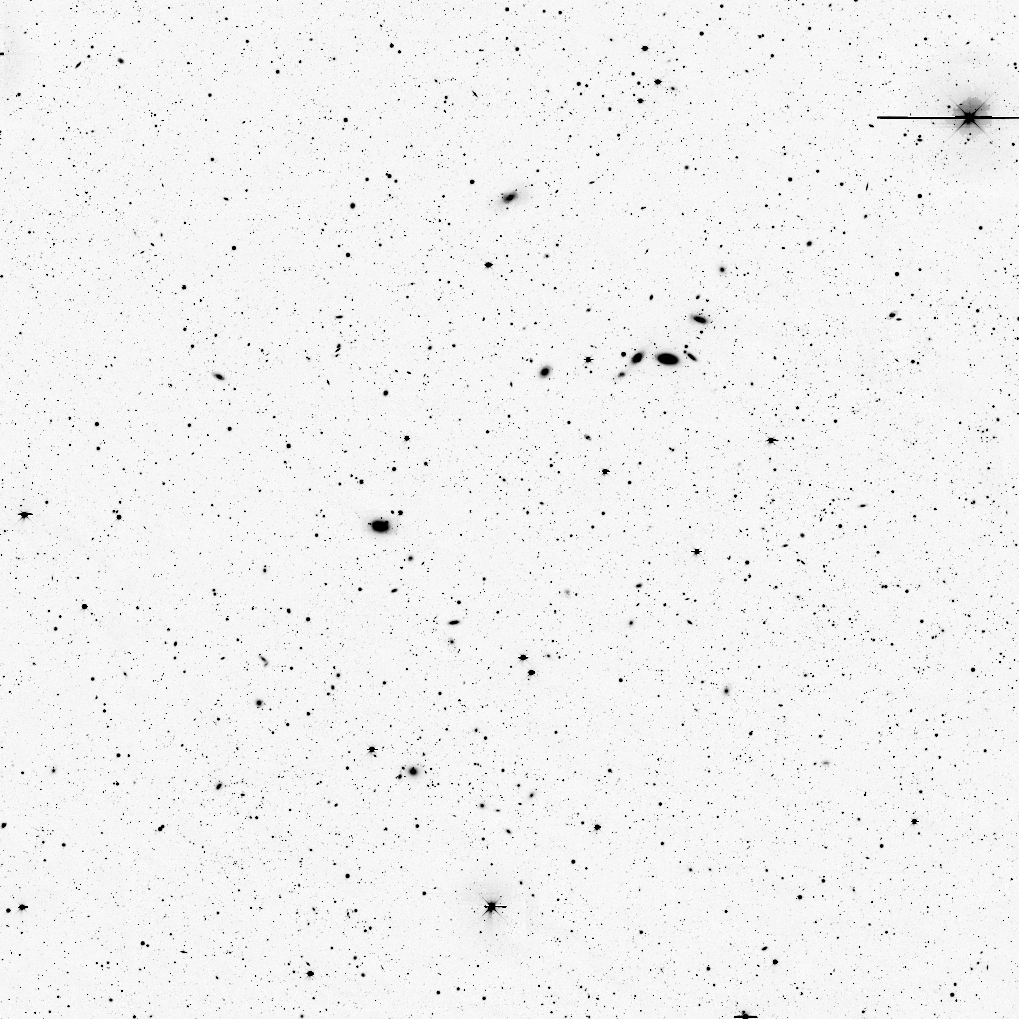
Fig 4 (page 5).
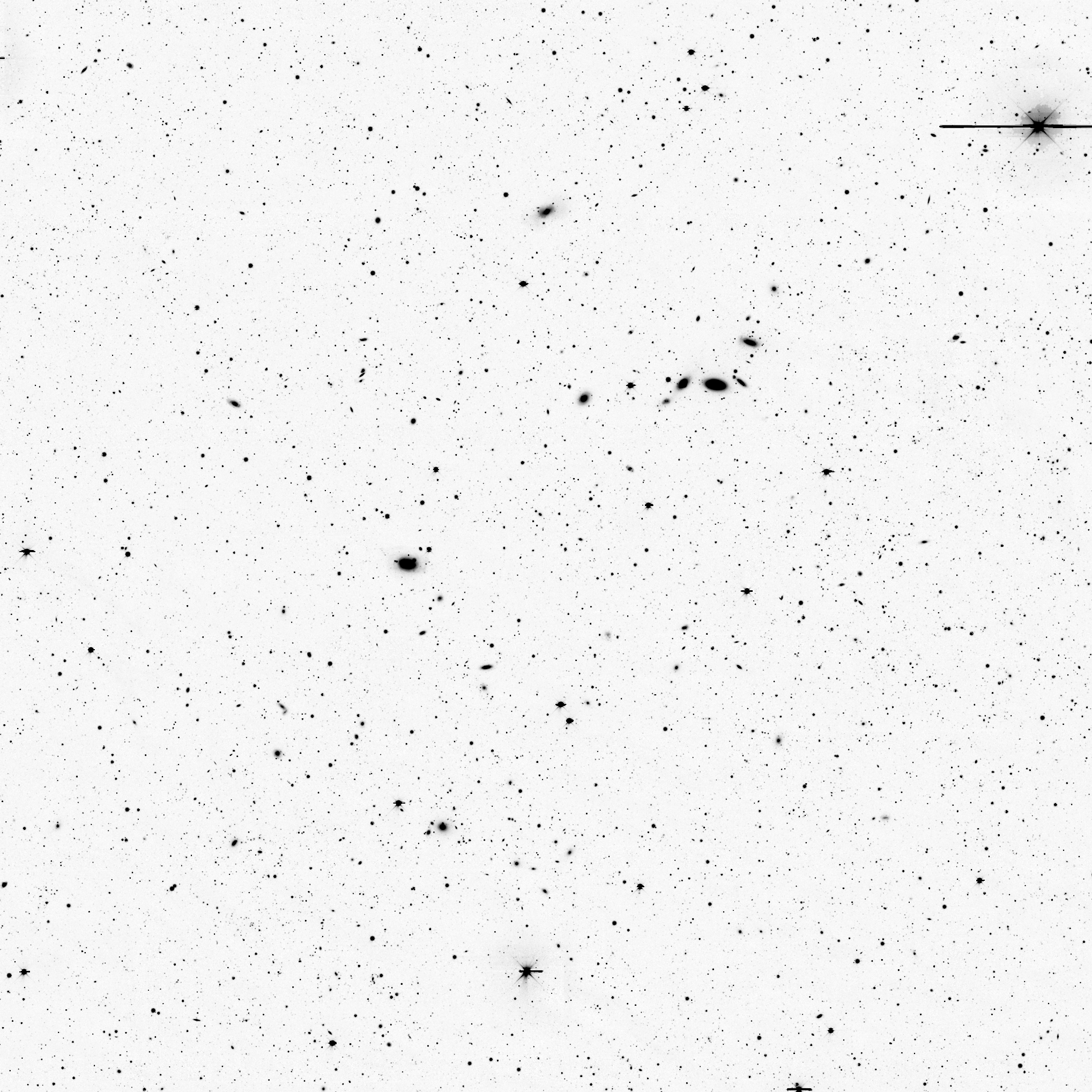
Fig 5 (page 5).
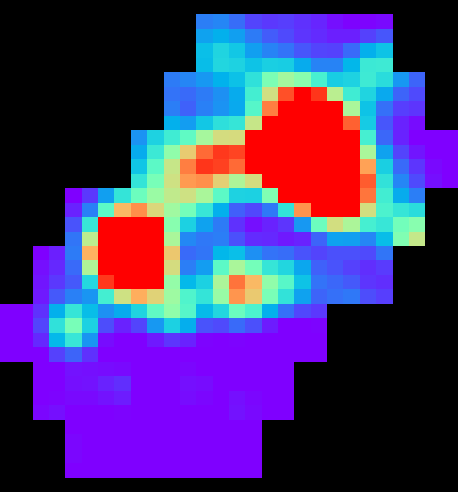
Fig 4: False color maps and position-velocity diagrams of the H I gas. (a) Contours and false color map of the H I emission integrated
Fig 7 (page 14).
Fig 8 (page 14).
Limitations
- The study cannot conclusively distinguish whether the diffuse H I arises from tidal stripping or cold accretion streams; both scenarios remain plausible.
- The spatial resolution (~90 kpc) limits detailed morphological and kinematical substructure analyses of the diffuse gas and newly detected HI sources.
- No direct measurements of the ionization state or temperature of the diffuse gas; survival of neutral gas at low column densities over >1 Gyr is inferred but not directly tested.
- The contiguous FAST mapping covers only ~1 Mpc around HCG 100; gas extensions beyond the observed field remain unprobed.
- Absence of targeted hydrodynamical or cosmological modeling specifically tailored to this system to interpret observed gas flows in detail.
- No deep optical or multiwavelength follow-up yet to constrain star formation or detailed physical conditions in faint intragroup regions.
Open questions / follow-ons
- What physical mechanisms enable the survival of such diffuse, low column density neutral hydrogen against ionization and heating in dense group environments over Gyr timescales?
- Can advanced hydrodynamical simulations reproduce similar megaparsec-scale neutral gas envelopes around compact groups, distinguishing tidal debris from cold accretion signatures?
- What role do these extended neutral gas reservoirs play in fueling star formation and galaxy evolution within the group compared to gas already inside galaxy disks?
- Do similar large-scale diffuse H I structures exist around other compact groups or galaxy clusters, and what governs their prevalence and properties?
Why it matters for bot defense
While this study focuses fundamentally on astrophysical observations and galaxy evolution, bot-defense and CAPTCHA practitioners might draw indirect inspiration from the multi-scale data integration and noise suppression methodologies employed to extract ultra-faint signals from noisy data—paralleling challenges in anomaly detection or bot fingerprinting amid noisy network traffic. The careful sidelobe calibration, RFI removal, and overlapping multi-beam data fusion techniques illustrate how to enhance sensitivity and detect subtle patterns invisible to less sensitive instruments. This conceptual approach resonates with advanced bot-defense systems which strive to identify low-signal-rate attackers camouflaged within normal traffic patterns. Additionally, the study highlights the utility of combining orthogonal datasets (e.g., optical redshifts confirming radio H I sources) to improve confidence and reduce false positives, analogous to multi-factor verification in bot detection frameworks. However, there are no direct bot-defense implementations here—this is a domain-specific study on neutral hydrogen mapping in galaxy groups.
Cite
@article{arxiv2607_21717,
  title={ Megaparsec-Scale Neutral Hydrogen Flows in the Neighborhood of Hickson Compact Group 100 },
  author={ Qingzheng Yu and Taotao Fang and Enrico M. Di Teodoro and Cheng Cheng and Cong Kevin Xu },
  journal={arXiv preprint arXiv:2607.21717},
  year={ 2026 },
  url={https://arxiv.org/abs/2607.21717}
}