
Extended Single-Atom Tweezer Arrays in High-Cooperativity Cavity-QED
Source: arXiv:2607.21515 · Published 2026-07-23 · By Thomas Picot, Clément Raphin, Marcel Kern, Pierre-Antoine Bourdel, Théo Ahamdach, Jakob Reichel et al.
TL;DR
This work addresses a key challenge in cavity quantum electrodynamics (cavity-QED) technologies: achieving high-cooperativity optical interfaces compatible with extended, site-resolved arrays of individual atoms. The authors demonstrate optical tweezer arrays of single 87Rb atoms within a fiber Fabry-Perot microcavity, achieving a record single-atom cooperativity around 90. This enables strong coupling of many individually controlled atoms to a common cavity mode while maintaining site-resolved detection and control. They combine background-free fluorescence imaging with cavity-based state detection methods to characterize arrays containing up to approximately 36 atoms, maintaining high readout fidelity above 98.8% even at the array edges.
The results establish a scalable platform for many-body cavity-QED experiments at high cooperativity with microscopic control, relevant to quantum networks, metrology, and simulation. The authors further demonstrate collective vacuum Rabi splitting that scales with atom number and spatially homogeneous or controlled inhomogeneous coupling in multi-row arrays. The work paves the way for larger-scale neutral atom quantum processors coupled via optical cavities with programmable configurations and robust fluorescence readout.
Key findings
- Single-atom cooperativity of C = 88(4) measured via vacuum Rabi splitting with g/2π = 62.1(5) MHz, κ/2π = 14.2 MHz, γ/2π = 3 MHz.
- Cavity-based hyperfine-state detection fidelity of 99.4(3)% for atoms prepared in |F=2⟩ with 100 µs probe time.
- Detection fidelities above 98.8% at extremal sites of a 20×5 tweezer array, demonstrating spatially uniform high-fidelity readout across array extent.
- Background-free fluorescence imaging achieves detection fidelity of 99.9(1)% and atom survival probability of 96.3(3)% for 50 ms exposure per site, suppressing background photon counts from ~20000 to 13.
- Mean loading probability of 56(2)% over 60 tweezer sites, with readout fidelity averaging 99(1)% and survival probability 96(1)%.
- Collective vacuum Rabi splitting measured for arrays up to 20×4 sites (∼36 atoms), with mean single-atom cooperativity decreasing from ∼92 to ∼39 due to Gaussian cavity mode profile.
- Estimated scalability up to ∼60 atoms with near-homogeneous coupling and C > 60, and about 150 atoms in controlled inhomogeneous configurations.
- Fluorescence imaging and cavity readout combined enables strong-coupling cavity-QED with scalable, extended single-atom arrays.
Methodology — deep read
Threat model & assumptions: The research targets the experimental physics challenge of simultaneously achieving high single-atom cooperativity and site-resolved detection in large arrays inside a high-finesse optical microcavity. Adversarial modeling is not applicable; the focus is on technical limitations from optical scattering, atom losses, and inhomogeneous coupling.
Data: The experiments use ultracold 87Rb atoms loaded initially into a magneto-optical trap, transported via optical dipole beams, and transferred into optical tweezer arrays formed by acousto-optic deflectors. The arrays extend up to 20×5 sites with spacing ~3.2-4.68 µm. Imaging data comes from site-resolved fluorescence captured on a qCMOS camera with a 3×3 pixel ROI per site. Over 1000 experimental repetitions per measurement ensure statistics for detection fidelities and survival.
Architecture / algorithm: The core hardware platform is a fiber Fabry-Perot microcavity resonant at 780 nm with a finesse enabling single-atom cooperativity C theoretically up to 132. A two-wavelength microcavity with negligible birefringence ensures stable polarization and mode structure. Atoms are trapped and pinned at cavity antinodes via intracavity optical lattices at 1559 nm for confinement and suppression of position jitter.
For fluorescence imaging, a novel background-free scheme excites atoms via a two-photon diamond transition (780 nm + 1529 nm) to the 4D3/2 level, which decays emitting at 795 nm. This permits spectral filtering to suppress cavity surface background scattered light, enabling high signal-to-noise imaging inside the cavity volume.
Training regime: Not applicable for this experimental physics work. Experiments involve repeated loading, preparation, and probing cycles with varying array geometries and tuning of excitation parameters to optimize fluorescence rate versus cooling and atom survival.
Evaluation protocol: Single-atom cooperativity is extracted from vacuum Rabi splitting spectra using double Lorentzian fits from cavity transmission measurements. State detection fidelity is quantified via Poisson-distributed photon count histograms with optimal threshold analysis for hyperfine state discrimination. Fluorescence detection fidelity and atom survival are characterized via histograms and scatter plots comparing sequential images. Multiple array positions are tested to assess spatial homogeneity. Collective coupling is analyzed by varying array size and shape, measuring Rabi splitting and comparing average cooperativity to predicted cavity mode profiles.
Reproducibility: The paper does not mention publicly released code or datasets, but the methods and parameters are described with sufficient detail for replication in well-equipped cavity-QED labs. The fiber microcavity parameters, tweezer array generation, and background-free fluorescence scheme are all specified.
Concrete example: For a 20×1 tweezer array at the cavity center with mean atom number 9.41(6), vacuum Rabi splitting yields collective coupling Ω, from which an average single-atom coupling g=Ω/√N and cooperativity C=92(3) are extracted, closely matching single-atom performance. Fluorescence imaging using the background-free scheme yields 99.9% detection fidelity and 96% survival probability per site.
Overall, the methodology combines advanced experimental quantum optics techniques, optical tweezer manipulation, spectral engineering for imaging within challenging environments, and quantitative analysis of cavity transmission and fluorescence signals to push the state of the art in scalable high-cooperativity cavity-QED with real-time microscopic control.
Technical innovations
- Implementation of a background-free two-photon fluorescence imaging scheme inside a high-finesse fiber Fabry-Perot microcavity to suppress scattered background photons and enable site-resolved single-atom detection.
- Combination of extended optical tweezer arrays (up to 20×5 sites) with high single-atom cooperativity (C ∼90) inside an optical microcavity maintaining both strong coupling and site-resolved readout.
- Use of an intracavity optical lattice at 1559 nm commensurate with the probing light to pin atoms at anti-nodes, reducing coupling variability and thermal motion effects.
- Demonstration of collective vacuum Rabi splitting scaling with up to ∼36 atoms, showing controlled spatially homogeneous and inhomogeneous coupling across multi-row arrays.
Datasets
- 87Rb single-atom arrays — up to 20×5 sites (100 sites) — experimental datasets from fluorescence and cavity measurements collected over >1000 experimental cycles per site.
Baselines vs proposed
- Single-atom vacuum Rabi splitting: theoretical maximum C=132 vs measured C=88(4) due to thermal motion and lattice ramp-up.
- Cavity-based hyperfine-state detection fidelity at array edges: >98.8% vs central sites 99.4(3)%, demonstrating spatial uniformity.
- Standard single-photon fluorescence imaging background counts ~20000 photons vs background-free scheme 13 photons per 3×3 ROI.
- Mean detection fidelity across 60 tweezer sites: standard methods <99% vs background-free imaging 99.9(1)%
- Mean survival probability per site: approximately 96% with background-free fluorescence imaging.
Figures from the paper
Figures are reproduced from the source paper for academic discussion. Original copyright: the paper authors. See arXiv:2607.21515.
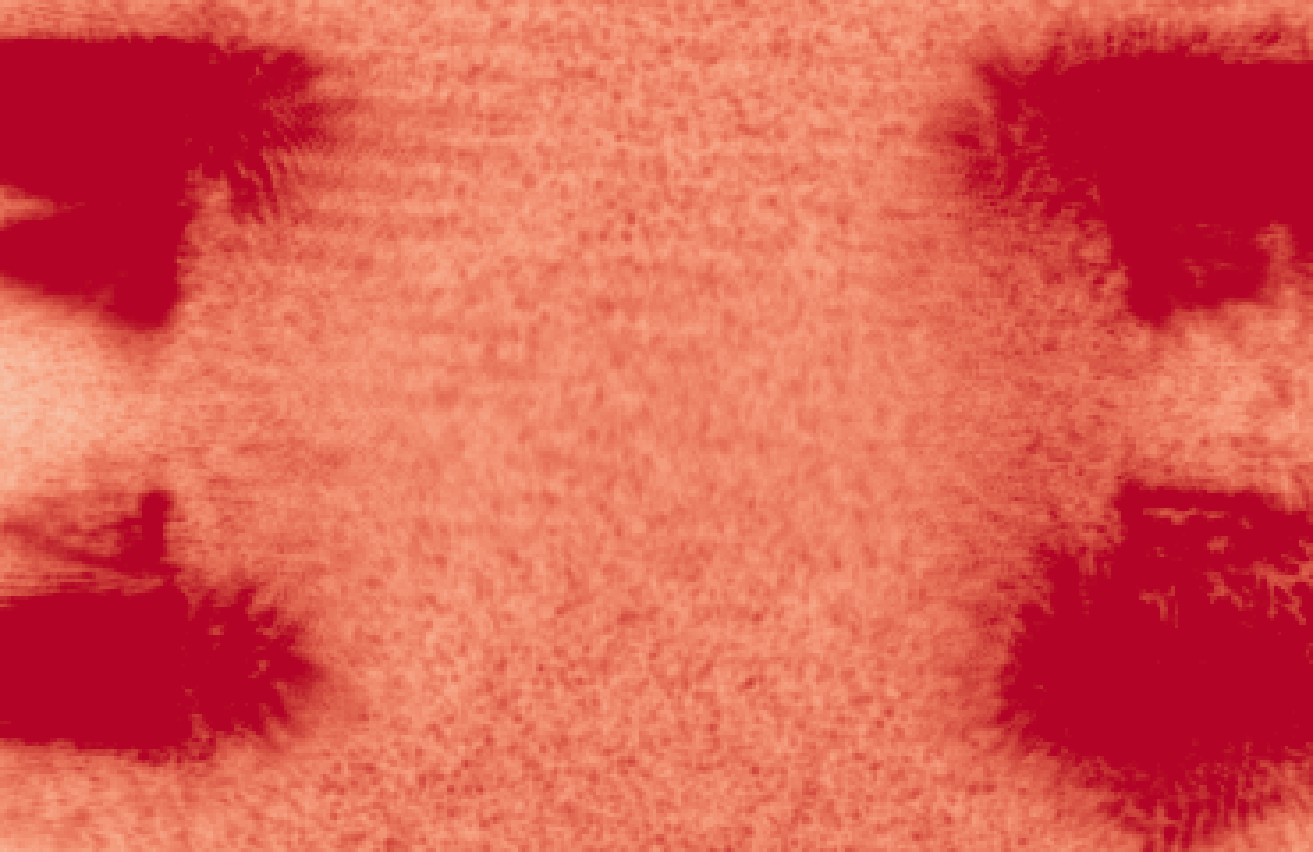
Fig 2: Background-free fluorescence scheme. a. Relevant level scheme. The atoms are excited via the D2 transition at
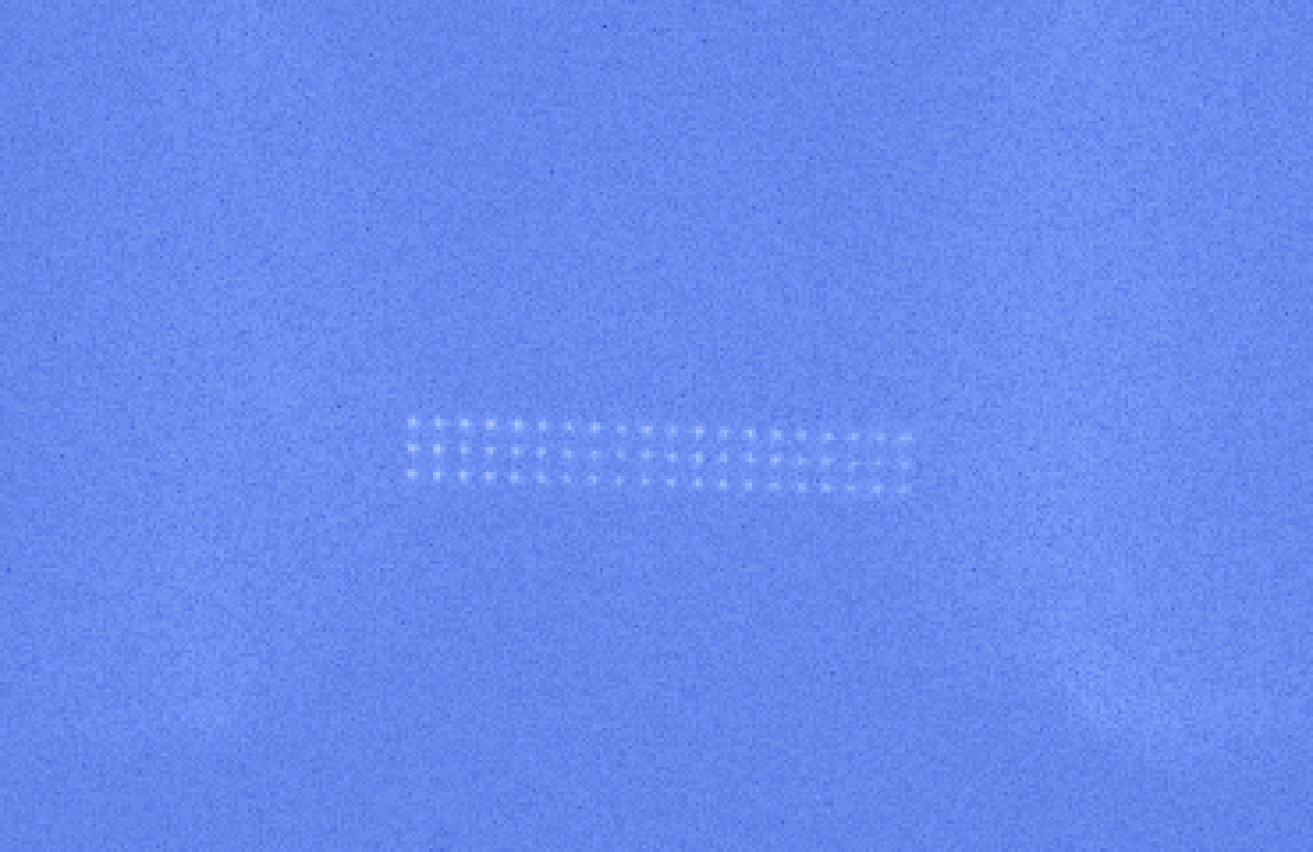
Fig 3: Fluorescence characterization. a. Two successive single-shot fluorescence images of a 20 × 3 tweezer array taken
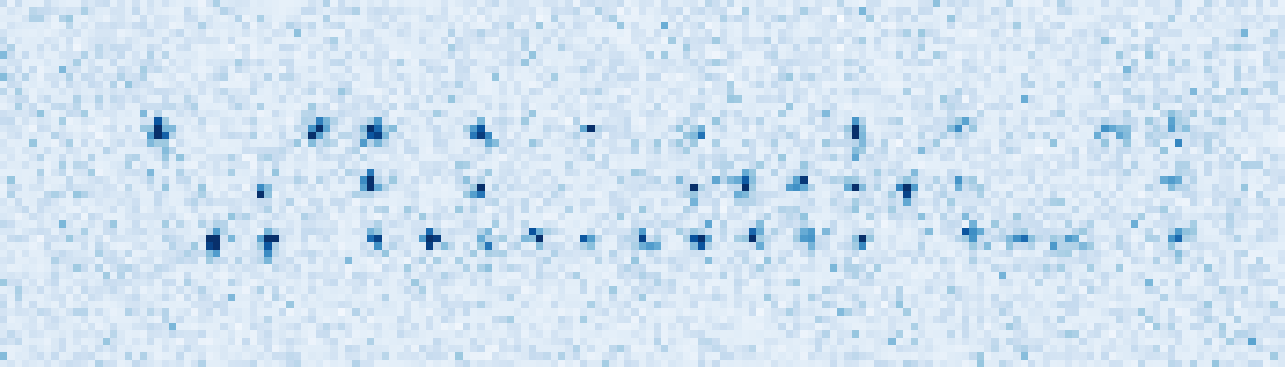
Fig 4: Vacuum Rabi-splitting measurement for different configurations of single-atom array. a. Averaged
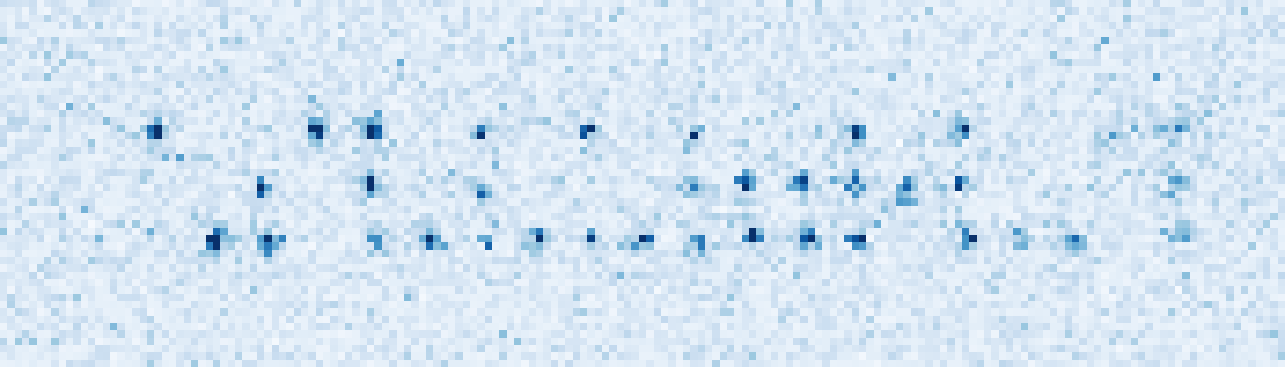
Fig 4 (page 4).

Fig 5 (page 5).

Fig 6 (page 5).

Fig 7 (page 5).
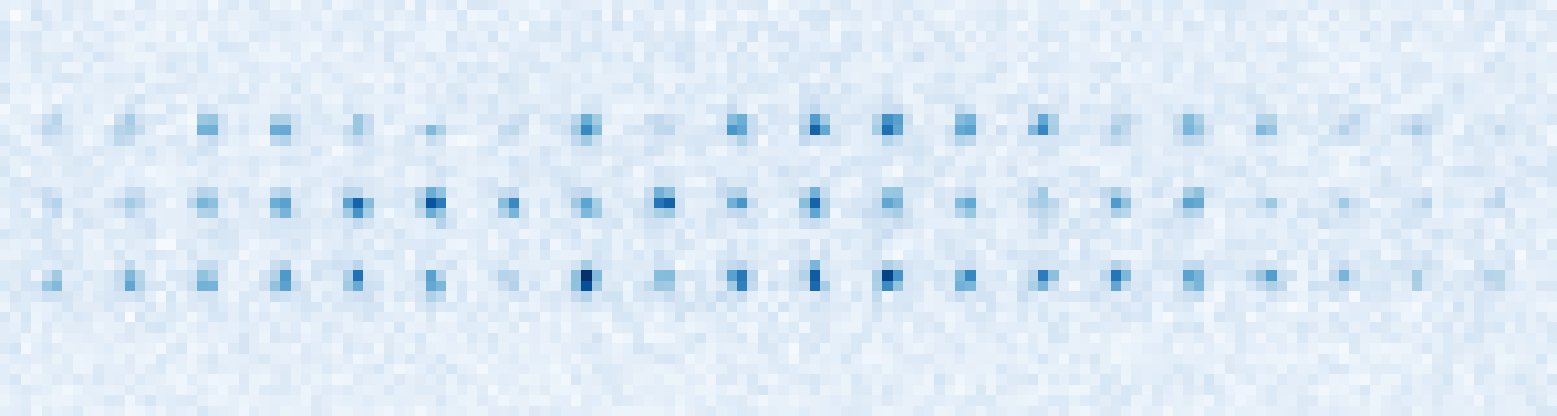
Fig 8 (page 5).
Limitations
- Single-atom cooperativity below theoretical maximum mainly due to residual thermal motion and heating during lattice ramp-up.
- Loading probabilities limited to ∼56%, implying less than deterministic array filling and requiring additional rearrangement techniques.
- Fluorescence photon rates limited (~1-2 kHz) balancing excitation efficiency and atom survival.
- Cavity-based state detection is inherently sequential, becoming time-consuming for large arrays (though fluorescence imaging addresses this).
- No reported adversarial or noise robustness evaluations, focusing on experimental characterization under idealized conditions.
- Scalability beyond ~36 atoms demonstrated experimentally only by extrapolation and not yet realized.
Open questions / follow-ons
- How to optimize rearrangement procedures and tweezer spacing to scale arrays beyond 60 atoms while preserving high cooperativity and uniform coupling?
- Can background-free fluorescence imaging be further optimized to increase photon rates without sacrificing atom survival?
- How robust is the system against technical noise, thermal drifts, or imperfections in probe polarization affecting Rabi splitting asymmetry?
- What are the limits of multiplexed cavity-based non-destructive readout scaling to large arrays beyond sequential detection?
Why it matters for bot defense
Though not directly related to computational bot defense or CAPTCHA technologies, this work is highly relevant to the broader field of single-atom control and quantum interfaces. Bot-defense engineers focusing on physical hardware security or quantum-resistant authentication mechanisms can glean insights from the demonstrated high-fidelity, site-resolved atomic detection in complex photonic environments. The background-free fluorescence technique for suppressing challenging optical backgrounds could inspire analogous noise-reduction methods in optical sensing or physical random number generation devices. Additionally, the advances in collective strong coupling and scalable atomic arrays point toward future quantum network nodes and interfaces that might underpin secure quantum communication architectures, which have potential downstream impacts on security infrastructure foundational to trustworthy bot defense.
Cite
@article{arxiv2607_21515,
  title={ Extended Single-Atom Tweezer Arrays in High-Cooperativity Cavity-QED },
  author={ Thomas Picot and Clément Raphin and Marcel Kern and Pierre-Antoine Bourdel and Théo Ahamdach and Jakob Reichel and Romain Long },
  journal={arXiv preprint arXiv:2607.21515},
  year={ 2026 },
  url={https://arxiv.org/abs/2607.21515}
}