
Reconstructing local environments from concise atomistic representations
Source: arXiv:2607.20338 · Published 2026-07-22 · By Jigyasa Nigam, Tuong Phung, Ameya Daigavane, Aria Mansouri Tehrani, Tess Smidt
TL;DR
This work addresses the inverse problem of reconstructing local atomic environments from compact, symmetry-invariant atomistic descriptors such as the power spectrum and bispectrum, which are widely used in atomistic machine learning. While these descriptors effectively encode geometric correlations, understanding whether they uniquely and stably map back to atomic coordinates is unclear. The authors propose an inverse reconstruction framework formulated as a gradient-based optimization that recovers atomic point clouds matching a target invariant descriptor. They demonstrate accurate environment reconstruction using remarkably compact descriptor vectors (only a few tens of features) across diverse molecular and materials datasets, including QM9 and Materials Project, even when the descriptors are formally incomplete or ill-conditioned. The approach can find multiple distinct structures corresponding to degenerate descriptors and reveals how descriptor perturbations translate into geometric distortions. Overall, this study deeply characterizes the invertibility, degeneracies, and stability of atom-centered invariant descriptors and provides practical algorithms for inversion.
Key findings
- Successful reconstruction rates of 67% for power spectrum (ν=2, 9 features) and 90% for bispectrum (ν=3, 35 features) descriptors on 1000 local environments from QM9 and Materials Project datasets.
- Accurate reconstruction achieved even when descriptor dimensionality d < 3Ni - 3 (degrees of freedom), suggesting structural constraints help reduce DOF.
- Known degenerate environment pairs with identical bispectrum descriptors (ν=3) are correctly recovered by the inversion, verified via trispectrum (ν=4) features to distinguish them, with RMSD errors ~3.2×10^(-4) Å.
- Reconstruction loss threshold set at mean absolute error < 10^-4 yields meaningful matches; lower error reconstructions correspond to smaller RMSD from reference geometries.
- Using 30 scalar plus 5 pseudoscalar features for ν=3 captures subtle geometric differences such as inversion symmetry, which ν=2 descriptors miss.
- Higher correlation order ν=4 descriptors with limited angular resolution (lmax=3) have poorer reconstruction rates compared to ν=3 (lmax=6), indicating angular resolution crucial for inversion quality.
- Interpolation in descriptor space corresponds to smooth continuous distortions in recovered atomic geometry, showing descriptor-space distances reflect structural similarity locally.
- Degenerate descriptors yield multiple structural solutions with distinct geometries but identical descriptor values, highlighting intrinsic non-injectivity and local ill-conditioning.
Methodology — deep read
Threat model & assumptions: The adversary is not explicitly defined, as this is a mathematical inversion problem rather than a security task. The problem assumes access to invariant atom-centered descriptors (e.g., power spectrum, bispectrum) calculated from local atomic configurations within a cutoff radius. The inversion aims to recover atomic coordinates up to rigid rotations, translations, atom permutations, and symmetry operations inherent to descriptor construction. There is an assumption that descriptors may be incomplete or locally ill-conditioned, allowing degenerate mappings from coordinates to features.
Data: The experiments use 1000 local atomic environments sampled from the QM9 molecular dataset and 1000 from the Materials Project database of crystal structures, plus 730 transition metal complex environments and synthetic high symmetry clusters (tetrahedron, cube, octahedron, etc.). Local environments are extracted using the CrystalNN cutoff function from PyMatgen, which uses Voronoi decomposition to robustly define neighbors.
Architecture / algorithm: Descriptors are atom-centered invariant features constructed by projecting the neighbor density (delta functions at relative atomic positions within cutoff) onto a finite radial and angular basis composed of spherical harmonics and radial functions, truncated at nmax and lmax. Correlations of order ν correspond to ν-neighbor body terms: ν=2 is the power spectrum, ν=3 the bispectrum, ν=4 the trispectrum. The forward map from atomic positions {r_ji} to descriptors ξ_i is smooth and differentiable.
The inversion method treats reconstruction as an optimization to minimize descriptor distance L(ξ_i, ξ̃_i(r̃_ji)) over trial atomic coordinates r̃_ji. The loss is mean absolute error or mean squared error between target and current descriptors. Gradient descent with a constant learning rate updates r̃_ji at each iteration, using autodiff-computed gradients from the descriptor formulas (implemented in PyTorch). Multiple random initializations with a surplus number of trial points N’_i ≥ N_i avoid local minima.
During optimization, points closer than angular threshold θ_thresh are merged to refine the neighbor number toward the target. The reconstructed environment after T steps is optionally aligned to the reference using rotation alignment minimizing RMSD.
Training regime: Not applicable as no neural network training is performed. Optimization for each example runs for a fixed number of gradient descent steps or until convergence below a defined loss threshold (e.g., L < 10^-4). Tests use multiple independent runs per environment to explore optimization landscape.
Evaluation protocol: Reconstruction quality is quantified with (a) root mean squared error (RMSE) between reconstructed and target descriptors (∆ξ), and (b) RMS deviation (RMSD, ∆A) between optimized and true atomic coordinates, aligned by optimal rotation. Additional metric d_ref quantifies geometric deviation based on pairwise distance matrices, permutation-invariant and rotation-invariant. Reconstructions are deemed successful if descriptor error <10^-4 or 10^-5 in degenerate cases.
Ablations include varying descriptor correlation order ν, angular truncation lmax, number of neighbors Ni, and dataset variability. Statistical variability is reported as standard deviations.
- Reproducibility: Forward and inverse mappings implemented in PyTorch. Code availability or frozen weights not stated explicitly. Datasets QM9 and Materials Project public; transition metal complexes from prior literature. Exact hyperparameters such as learning rate, number of optimization steps, θ_thresh are specified in supplementary material but unclear in main text.
Example end-to-end: Starting from a random initial environment with more points than reference, the descriptor is computed at each step and compared to the target descriptor. Gradient of descriptor loss is backpropagated to coordinates, which are updated in the direction reducing loss. Points merging occurs when close angularly. After tens to hundreds of steps, optimized coordinates produce descriptors nearly identical to the target, reconstructing the original atomic geometry up to symmetry.
In challenging degenerate cases, multiple solutions are recovered depending on initial random seeds, confirming non-uniqueness of inversion for some descriptors.
Technical innovations
- Formulating the inversion of compact, invariant atomistic descriptors as a gradient-based optimization problem over atomic coordinates, exploiting differentiability of descriptor mapping.
- Demonstrating accurate reconstruction from very concise descriptors with only a few tens of features (e.g., 9 for ν=2, 35 for ν=3), far smaller than typically used in atomistic ML.
- Identifying and distinguishing multiple degenerate atomic environments corresponding to identical invariant descriptors using higher-order features (trispectrum) and PCA clustering.
- Systematically characterizing the relationship between descriptor perturbations and geometric distortions, establishing a stability landscape of the inverse map.
- Improving inversion robustness by adapting neighbor point counts during gradient descent via angular merging thresholds.
Datasets
- QM9 — 1000 local atomic environments — public molecular quantum chemistry dataset
- Materials Project (MP20 subset) — 1000 local atomic environments — public materials science database
- 730 transition metal complex environments — from Ref. [56,57], curated dataset
- Synthetic high-symmetry clusters — up to 12 atoms each — constructed for testing degeneracies
Baselines vs proposed
- Power spectrum (ν=2, 9 features): 67% successful reconstructions vs Bispectrum (ν=3, 35 features): 90% successful reconstructions on combined QM9 and MP20 datasets
- Correlation order ν=4 descriptors with 56 features but limited angular resolution (lmax=3) yield much lower reconstruction success than ν=3 descriptor with lmax=6 (precise numbers in SI Section VI A)
- Degenerate bispectrum pairs reconstructed with average descriptor error ∆ξ ~ 4.7 × 10^-6 and RMSD ~ 3.2×10^-4 Å
Figures from the paper
Figures are reproduced from the source paper for academic discussion. Original copyright: the paper authors. See arXiv:2607.20338.
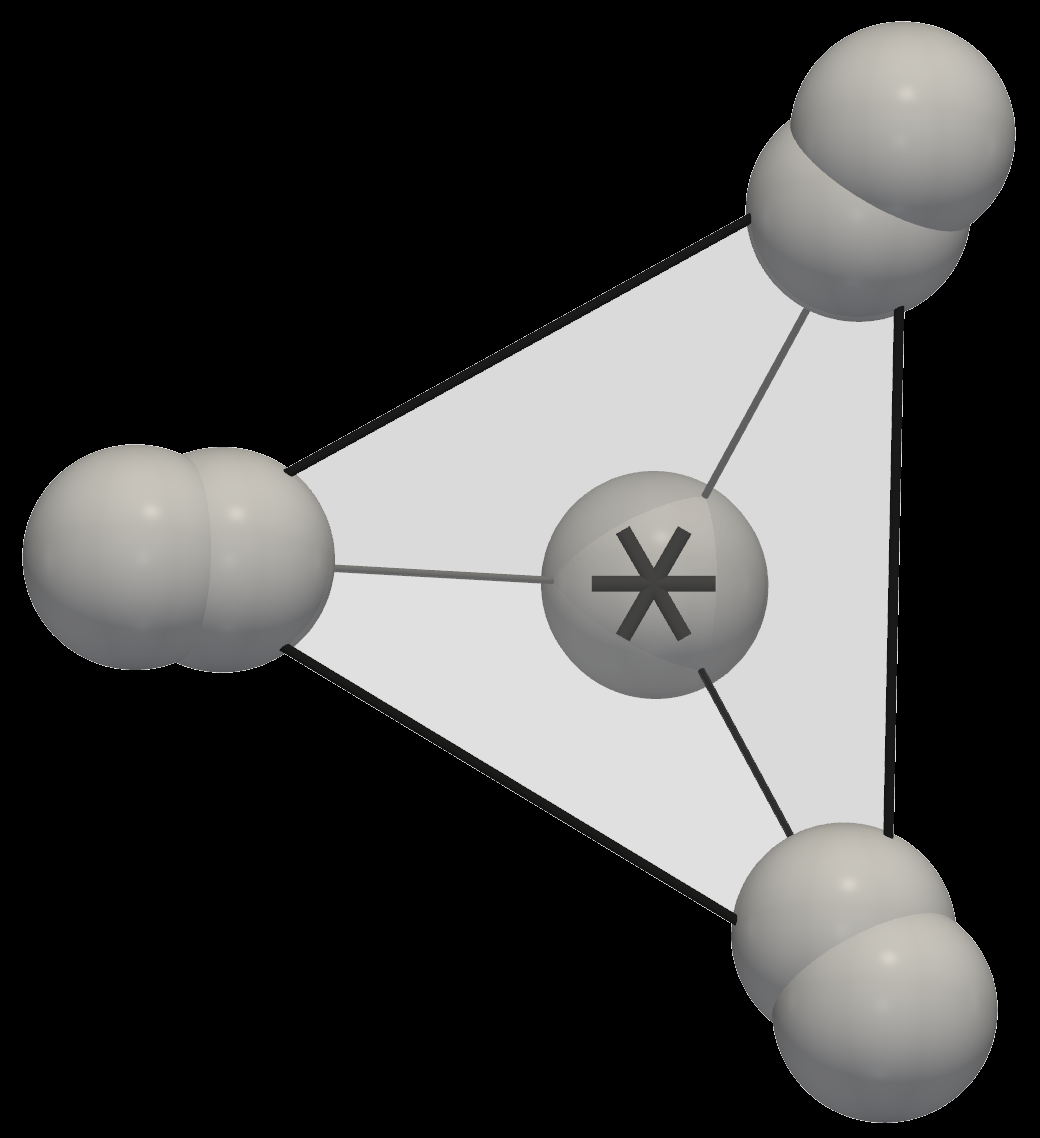
Fig 1: Mapping a reference local environment Ai, centered on atom i (indicated with an asterisk) with Ni
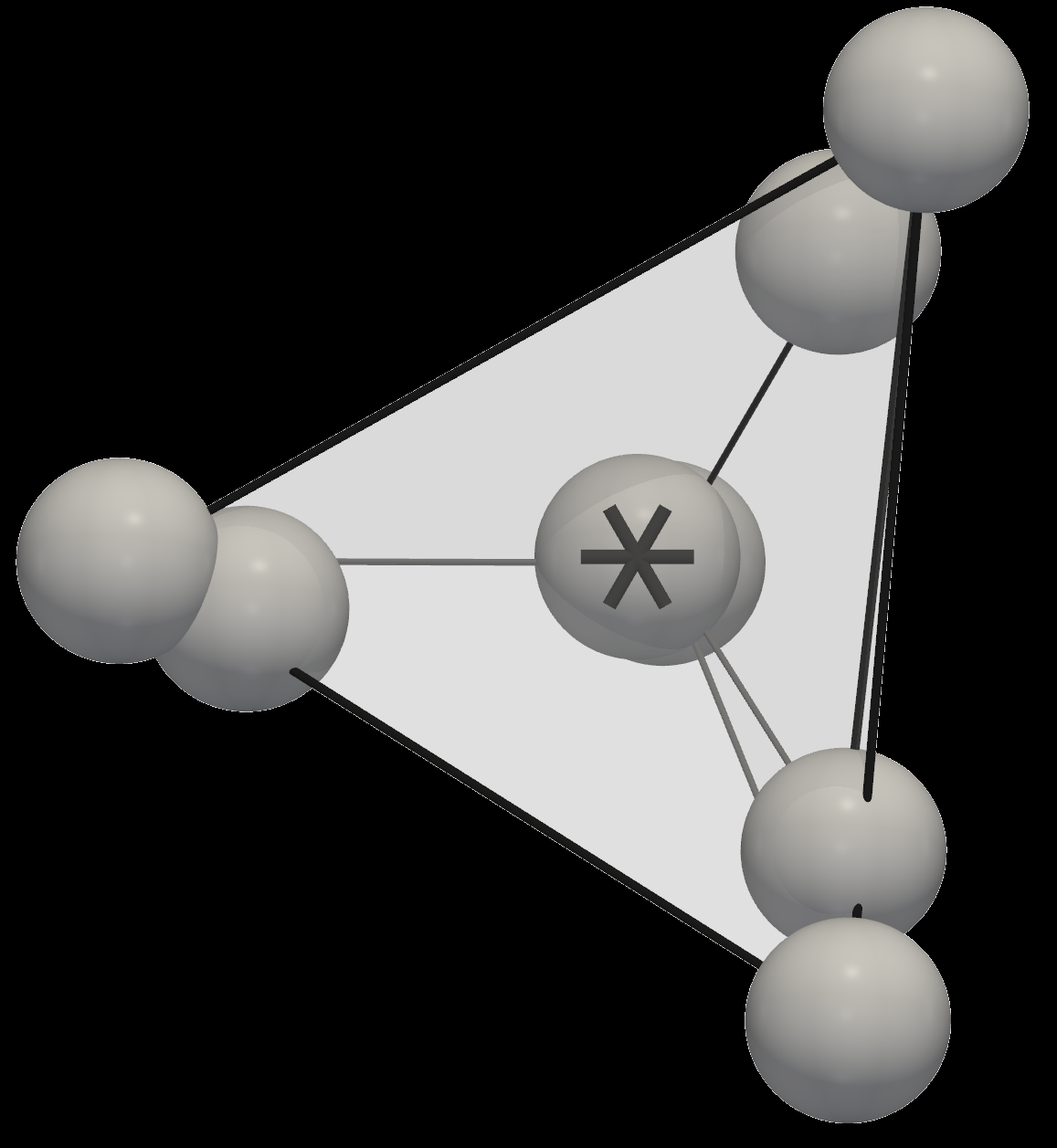
Fig 2 (page 3).

Fig 3 (page 3).
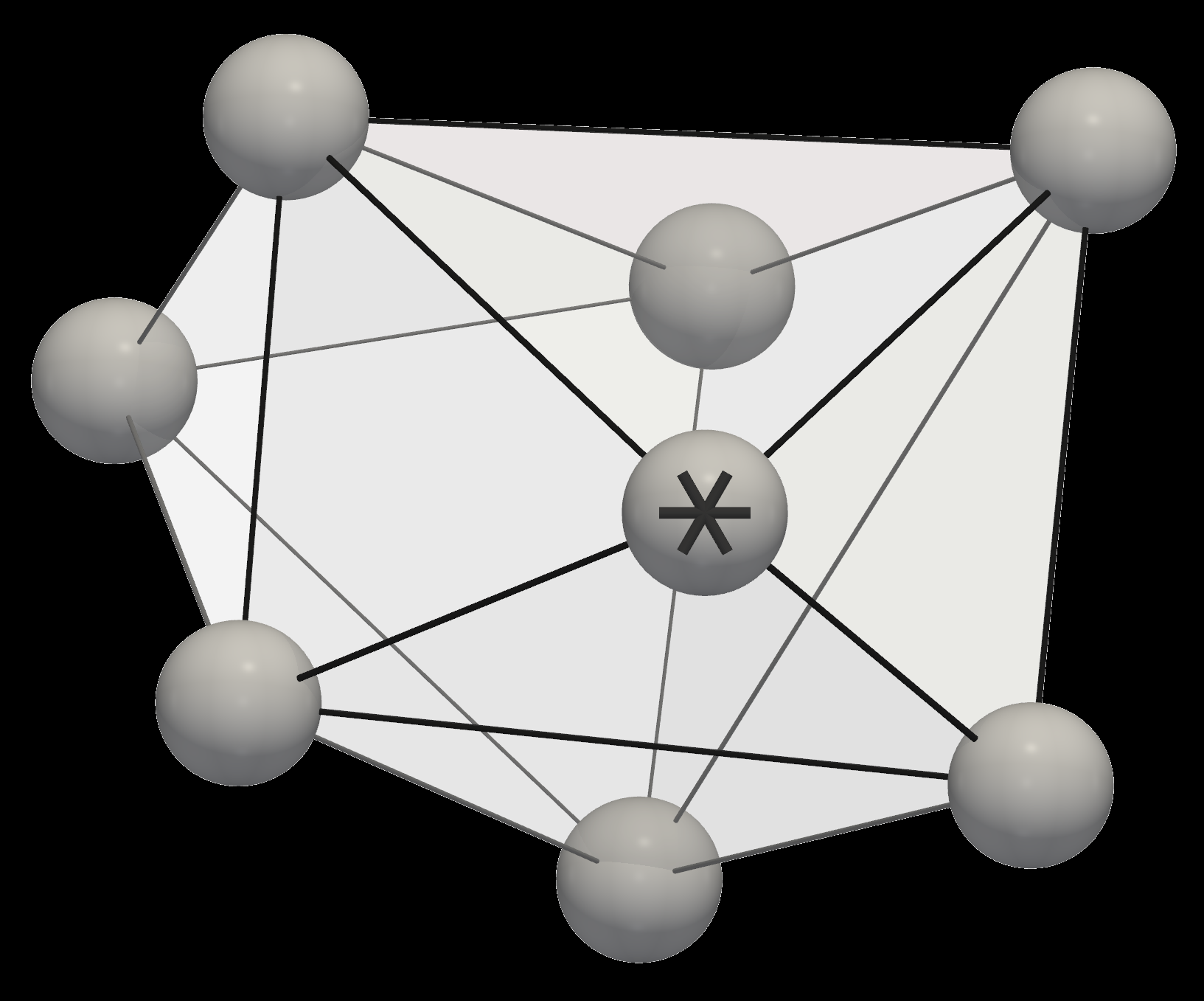
Fig 4 (page 3).
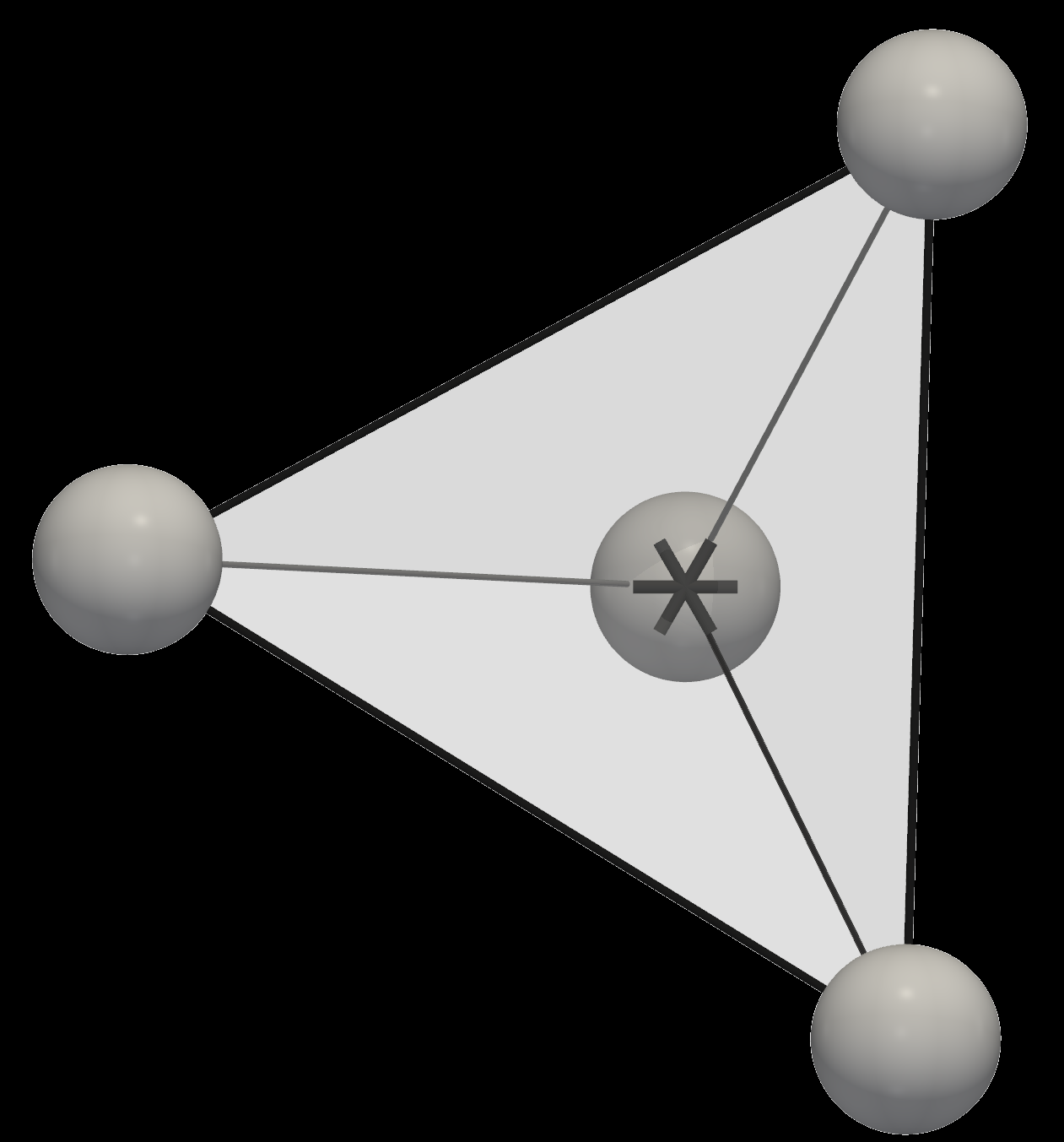
Fig 5 (page 3).
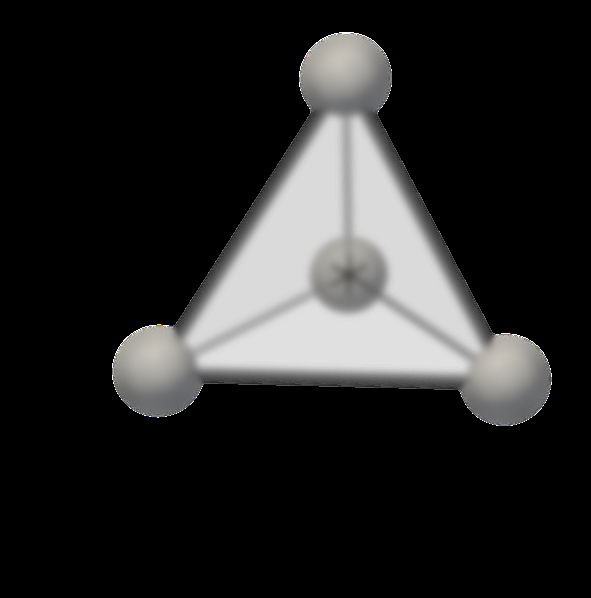
Fig 6 (page 3).
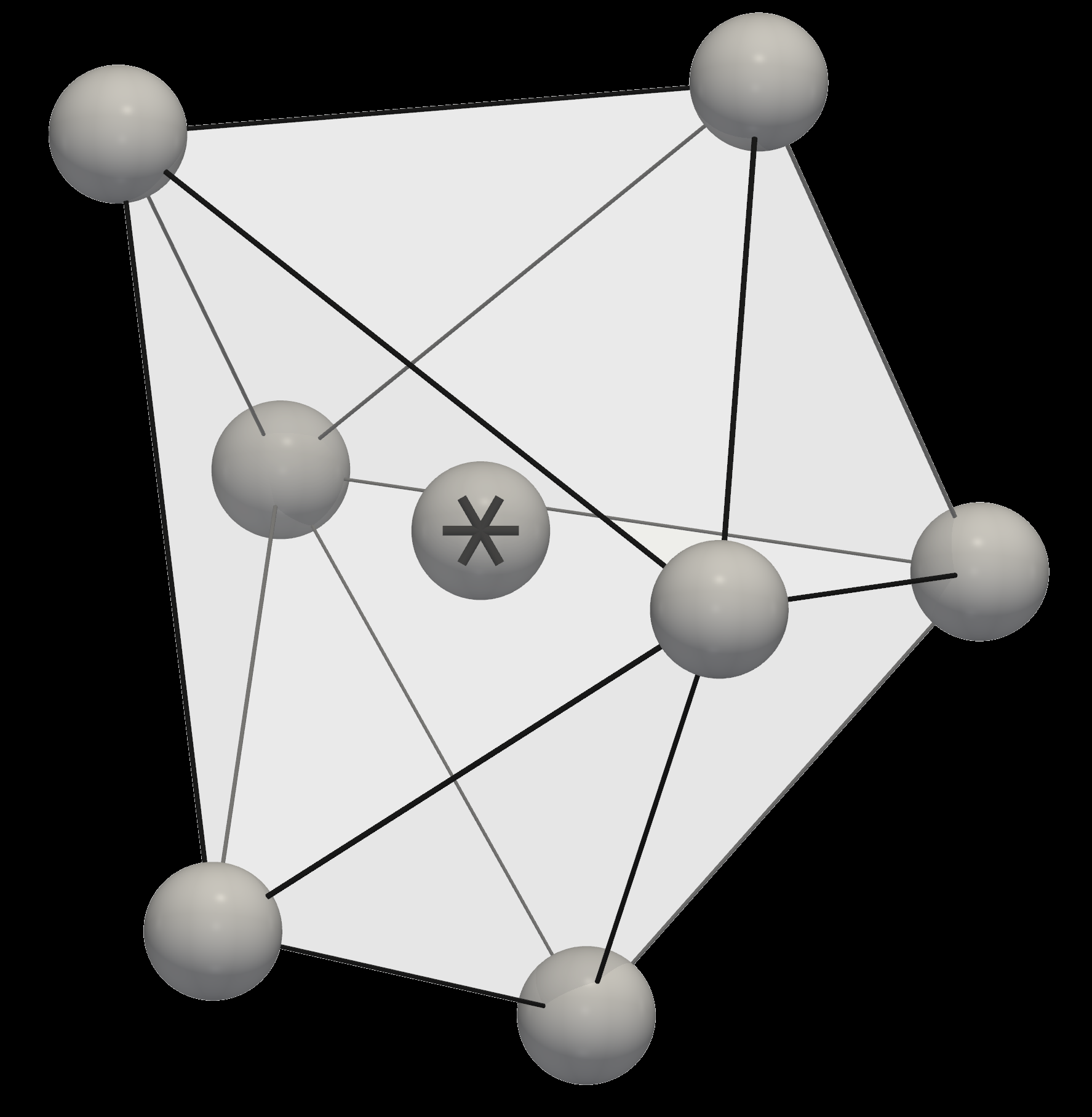
Fig 7 (page 3).
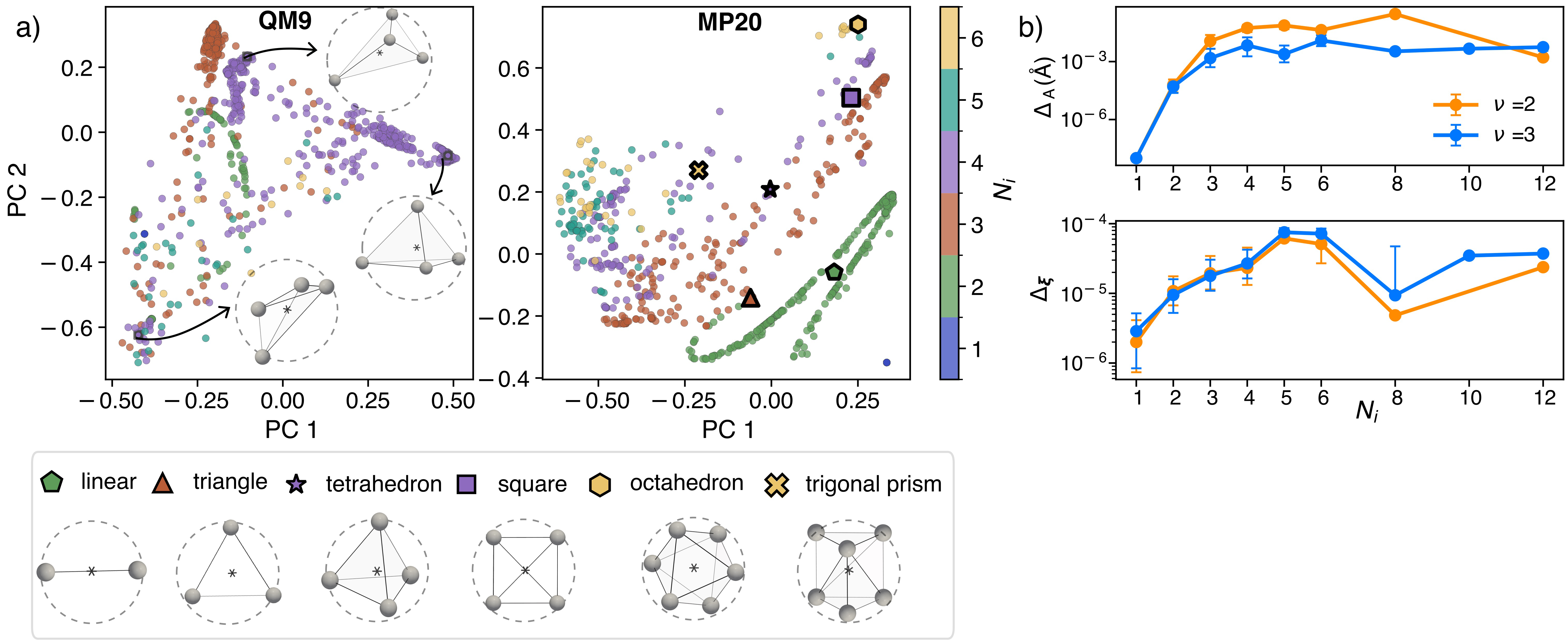
Fig 2: a) PCA projection of the bispectrum (ν = 3) descriptors computed for local environments extracted from
Limitations
- The inversion procedure is sensitive to initialization and prone to local minima due to highly non-convex optimization landscape.
- Success rates are not 100%, indicating some environments are challenging to reconstruct given descriptor truncation or complexity.
- No evaluation under distributional shifts or noise in descriptors was reported, so robustness to realistic perturbations is unclear.
- Method assumes knowledge of the number of neighbors or constrains points during merging, which may limit generality.
- Focus is on local environments within fixed cutoff radii; inversion of global periodic systems or larger scale structures is not addressed.
- Code and hyperparameters for the inversion algorithm are not fully detailed, impacting direct reproducibility.
Open questions / follow-ons
- How does descriptor truncation in radial and angular basis impact uniqueness and stability of inversion across more chemically diverse datasets?
- Can inversion be extended to noisy, imperfect, or learned descriptors as encountered in end-to-end deep learning atomistic models?
- What is the computational cost and convergence behavior of the inversion approach in large-scale or periodic systems?
- How can additional physical or chemical constraints be incorporated to disambiguate degenerate solutions during inversion?
Why it matters for bot defense
For bot-defense and CAPTCHA practitioners interested in image or structure reconstruction from compact invariant representations, this paper provides a rigorous framework for understanding the invertibility and ambiguities inherent in mapping high-dimensional invariant descriptors back to spatial configurations. The work highlights how seemingly compressed or lossy features may still allow near-exact geometric recovery, but also notes intrinsic non-uniqueness due to symmetry and descriptor degeneracies. Techniques based on gradient-based optimization can recover multiple plausible solutions corresponding to a single descriptor vector, which is relevant when designing defenses against automated inverse attacks using learned embeddings or structural invariants. Additionally, the explicit relationship this study establishes between perturbations in descriptor space and resulting distortions may inform robustness evaluations of learned representations used in CAPTCHA or bot-detection systems. Overall, the methodology and results underscore the importance of carefully characterizing the injectivity and stability of invariant feature mappings when developing or analyzing systems resistant to inverse synthesis or reconstruction attacks.
Cite
@article{arxiv2607_20338,
  title={ Reconstructing local environments from concise atomistic representations },
  author={ Jigyasa Nigam and Tuong Phung and Ameya Daigavane and Aria Mansouri Tehrani and Tess Smidt },
  journal={arXiv preprint arXiv:2607.20338},
  year={ 2026 },
  url={https://arxiv.org/abs/2607.20338}
}