
On the Systematic Challenges of Culturally Loaded Machine Translation: Dream of the Red Chamber as the Cultural Lens
Source: arXiv:2607.20241 · Published 2026-07-22 · By Yiming Wang, Jiayuan Di
TL;DR
This paper systematically examines the challenges posed by culturally loaded machine translation (MT) using large language models (LLMs), focusing on Chinese-to-Japanese translation of culturally rich content from the classical Chinese novel Dream of the Red Chamber. The authors construct a bilingual dataset of 500 carefully annotated translation segments spanning five cultural categories: ecology, religion, material culture, linguistics, and society. Through extensive human evaluation across diverse evaluator backgrounds and comprehensive automatic metric analysis, the study reveals three major challenges. First, current frontier LLMs show significant gaps compared to human references in translating culturally loaded texts, with performance varying by cultural category and text characteristics. Second, human evaluation exhibits substantial disagreement influenced by evaluator cultural background and expertise, highlighting subjectivity and complexity in assessing cultural fidelity and readability. Third, widely used automatic metrics, including BLEU and state-of-the-art semantic and LLM-based evaluators, fail to reliably capture translation quality or align well with human judgments on this task. These results underscore the persistent difficulty in capturing deep cultural meaning and context with current MT approaches and call for more nuanced evaluation protocols and model improvements targeting culture-aware translation. The paper provides a rich dataset and a holistic evaluation framework to catalyze future research in culture-oriented machine translation.
Key findings
- The best-performing model, OpenAI-o4-mini, achieves an overall human evaluation score of 3.89 compared to the human reference score of 4.27 on a 5-point scale, showing a substantial quality gap.
- Performance varies across cultural categories, with highest average scores on Material (3.87) and Ecology (3.82), moderate on Religion (3.64), and notably lower on Linguistics (3.47) and Society (3.40).
- Culturally focused evaluation dimensions (Cultural Appropriateness and Native Readability) consistently receive lower model scores than general dimensions (Content Accuracy and Language Fluency), indicating deeper challenges in cultural fidelity.
- Human evaluation disagreement is influenced by evaluator background: students score translations more leniently than professors, especially on Native Readability dimension, sometimes differing by nearly 1 point.
- Chinese and Japanese evaluators differ in emphasis: Chinese evaluators focus more on source faithfulness while Japanese evaluators prioritize target-language cultural appropriateness, causing variability in cultural dimension scores.
- Standard automatic metrics like BLEU correlate poorly with human rankings (Kendall tau = -0.07, Spearman rho = -0.29), while semantic metric xCOMET and LLM-based judges correlate moderately better but still insufficiently (maximum Kendall tau ~0.36).
- Reasoning (chain-of-thought) vs non-reasoning LLM architectures show no consistent performance advantage across models on culturally loaded translation.
- Model outputs often fail to balance foreignization and domestication well, leading to stylistic and pragmatic mismatches highlighted by human evaluators.
Threat model
The adversary in this context corresponds to the machine translation system which attempts to accurately and faithfully translate culturally loaded source language expressions into the target language without misrepresenting or losing embedded cultural meanings. The system must handle lexical gaps, pragmatic nuances, and cultural connotations unknown or ambiguous outside native cultural contexts. The adversary (MT model) has only the source segment and general training but lacks deep socio-cultural expertise or external knowledge. It cannot rely on human expert intervention or extensive cultural explanations. The threat is the system's inability to reconcile source-target cultural divergences, leading to distortion, loss of cultural meaning, or inappropriate domestication or foreignization strategies.
Methodology — deep read
The study begins with defining the threat and scope: evaluating the capabilities of recent LLM-based MT systems to translate culturally loaded expressions from Chinese to Japanese. The adversary is the current MT system attempting to convey deep cultural meaning embedded in source texts that are richly dense and contextually bound.
Data was sourced from the classical Chinese novel Dream of the Red Chamber, regarded as an encyclopedic representation of Chinese culture encompassing five cultural categories: ecology, religion, material culture, linguistics, and society. The authors extracted 480 culturally loaded segments representing these categories, then refined to a balanced set of 500 segments (100 per category) through annotation and revision by bilingual graduate students and professors. The target Japanese translations were drawn from Ito Sohei’s authoritative Japanese version, chosen for its balance between source fidelity and target-language cultural competence.
The MT models tested include eight recent LLMs from different organizations and architectures, split between reasoning (chain-of-thought) and non-reasoning variants, spanning families like Deepseek, Qwen3, GPT-4.1, Gemini, OpenAI-o4-mini, and Claude-4. Model outputs for all 500 samples were collected.
For human evaluation, authors adapted the Multidimensional Quality Metrics (MQM) framework to define four dimensions: Content Accuracy, Language Fluency, Cultural Appropriateness, and Native Readability. Sixteen bilingual evaluators—eight native Chinese and eight native Japanese—balanced across graduate students and professors, rated samples. Each evaluator scored a subset of 125 randomly assigned samples to cover the dataset while managing workload. Translation sources were anonymized and randomly shuffled to reduce bias. Evaluators’ judgments and inter-group agreements were analyzed, supplemented by post-evaluation interviews to understand divergence.
Automatic evaluation utilized three common metric types: lexical (BLEU), semantic (xCOMET), and LLM-based judging (both reasoning and non-reasoning LLM scorers with prompt engineering). Metrics were compared against human rankings through correlation tests (Kendall’s tau, Spearman’s rho).
Analysis proceeded with full dataset scoring, per-model and per-category breakdowns, evaluation dimension comparisons, evaluator background effects, and error study of translation strategies. Correlations and inconsistencies between automatic and human evaluation were examined to assess metric reliability.
The authors do not report releasing the dataset or model weights publicly. Evaluation was conducted on human judgments considered gold standard. The detailed and rigorous protocol attempts to capture the multi-faceted difficulty of cultural meaning transfer in MT systems.
A concrete example end-to-end: a culturally rich Chinese segment was selected from the Religion category, input into each LLM to generate Japanese translations. Human evaluators from different backgrounds scored these outputs on accuracy, fluency, cultural appropriateness, and readability, revealing notable disagreement particularly on cultural dimensions. Automatic metrics scored the outputs inconsistently with humans. This detailed process was repeated across 500 segments and eight models to generate comprehensive results.
Technical innovations
- Construction of a culturally annotated Chinese-Japanese bilingual dataset of 500 segments from Dream of the Red Chamber across five theoretically grounded cultural categories for MT research.
- Adaptation and extension of the MQM evaluation framework with additional cultural dimensions (Cultural Appropriateness and Native Readability) to better capture culturally loaded translation quality.
- A human evaluation methodology employing evaluator diversity across native languages (Chinese/Japanese) and expertise levels (students/professors) to reveal systematic biases and subjectivity in judging culturally sensitive translations.
- Comprehensive empirical benchmarking of reasoning vs non-reasoning LLM-based MT models on a challenging culture-specific translation task, showing no clear advantage for chain-of-thought reasoning in this context.
- Critical empirical assessment of automatic MT evaluation metrics, demonstrating poor correlation and reliability on culturally loaded translation tasks—highlighting the need for culture-aware evaluation metrics.
Datasets
- Dream of the Red Chamber bilingual segments — 500 segments — constructed from authoritative Chinese text and Ito Sohei’s Japanese translation, OCR processed and carefully annotated internally.
Baselines vs proposed
- Human Reference: Overall quality = 4.27 vs best model OpenAI-o4-mini = 3.89
- BLEU metric correlation with human ranking: Kendall tau = -0.07, Spearman rho = -0.29
- xCOMET metric correlation: Kendall tau = 0.29, Spearman rho = 0.43 (moderate but insufficient)
- LLM-as-Judge metric (reasoning Gemini-3-Pro): Kendall tau = 0.36, Spearman rho = 0.48
- Reasoning model average score = 3.66 vs non-reasoning model average score = 3.62 (no decisive advantage)
- Cultural Appropriateness score lower on average (~3.62) than Content Accuracy (~3.80)
- Native Readability scores vary greatly between evaluator background groups, demonstrating subjective evaluation variability
Figures from the paper
Figures are reproduced from the source paper for academic discussion. Original copyright: the paper authors. See arXiv:2607.20241.

Fig 1: Dataset examples from our Dream of the Red Chamber corpus across the five cultural categories. Detailed
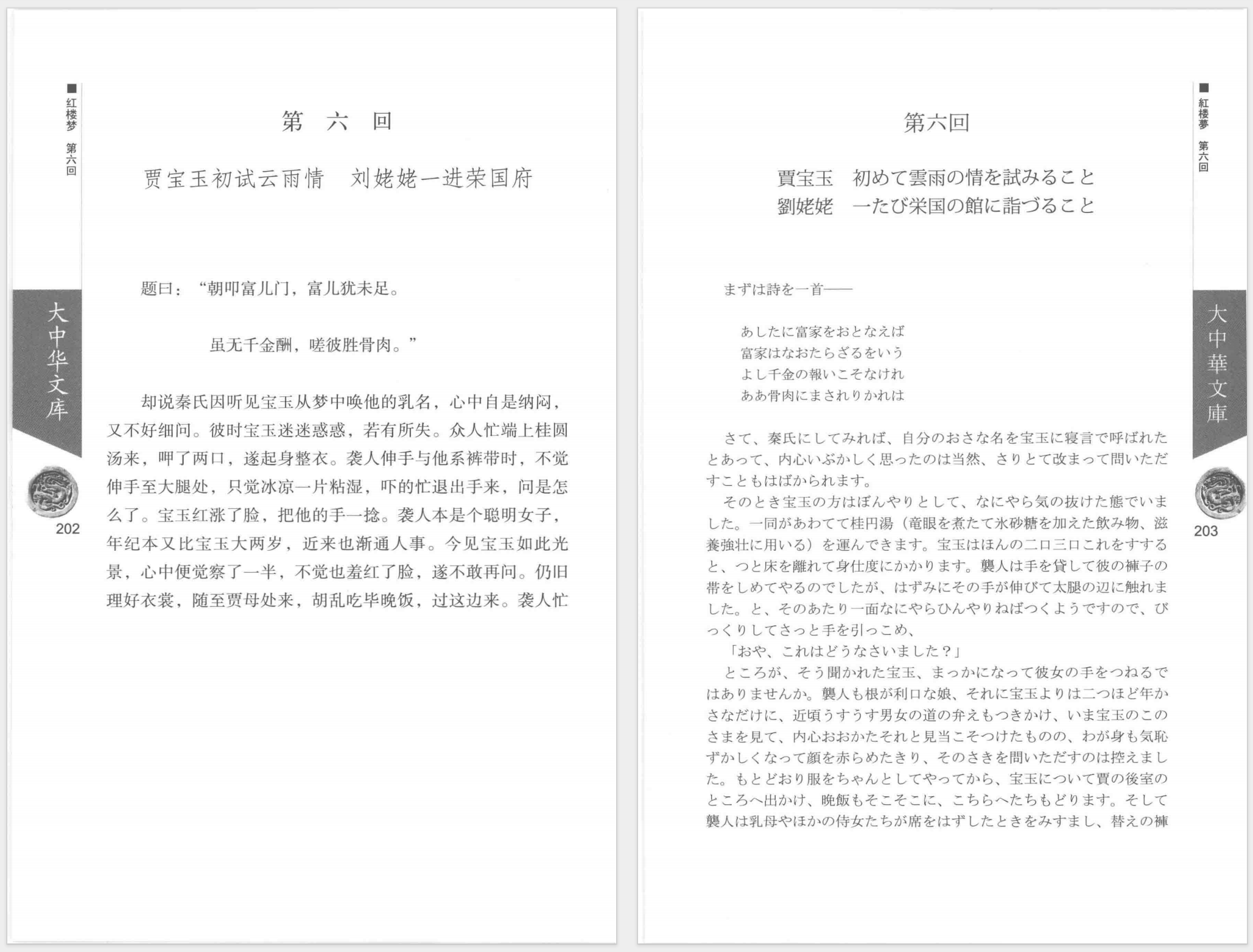
Fig 5: Original PDF format of our corpus with direct bilingual comparisons (Case 1).
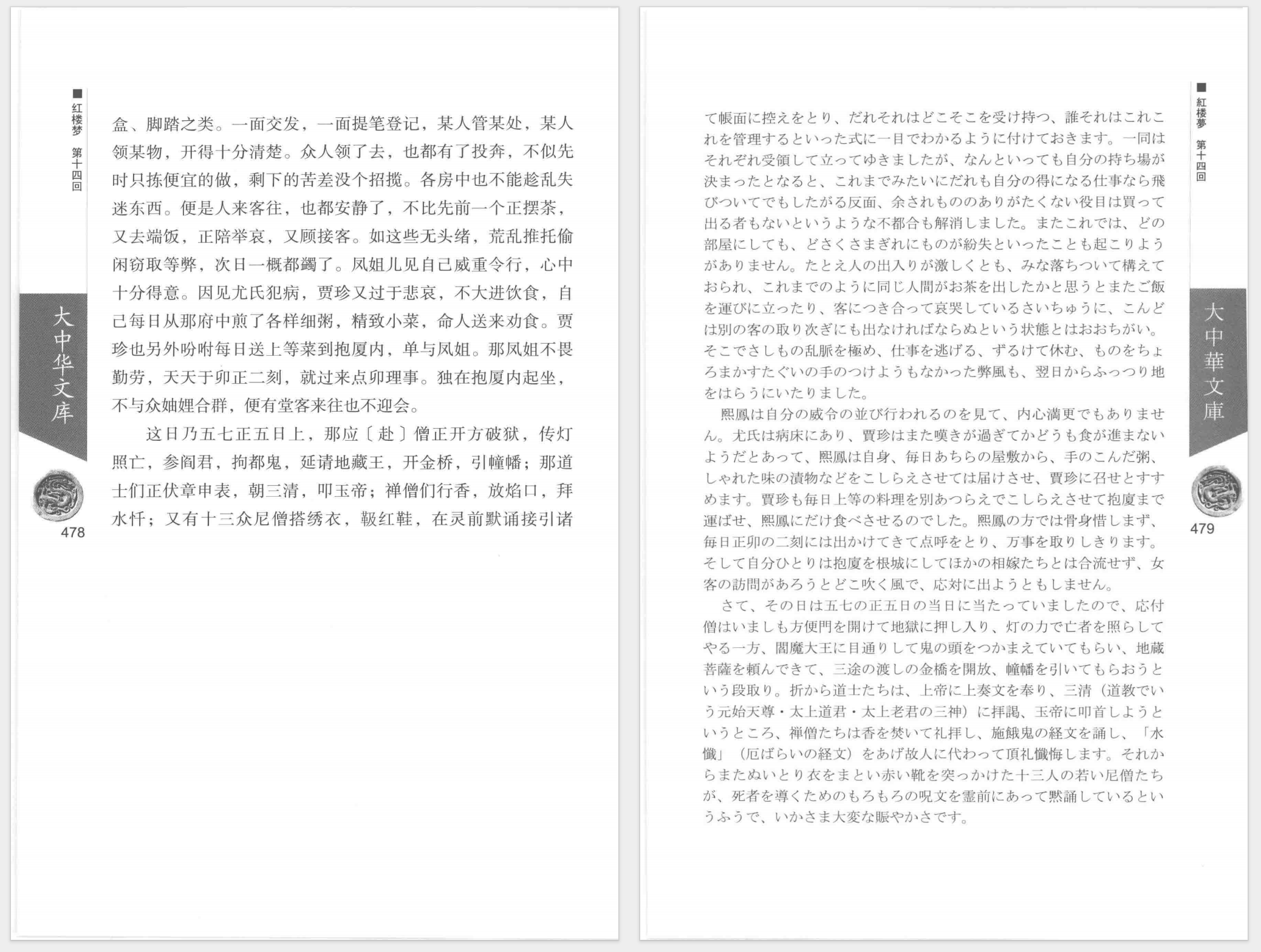
Fig 6: Original PDF format of our corpus with direct bilingual comparisons (Case 2).
Limitations
- The dataset covers only one source text (Dream of the Red Chamber) and one language pair (Chinese-Japanese), limiting generalizability to other cultural domains or languages.
- The 500-segment size is moderate but still limited for large-scale MT training or end-to-end evaluation across diverse culture-loaded scenarios.
- Human evaluation, despite its rigor, exhibits significant subjectivity and relies on a relatively small pool of evaluators; inter-annotator agreement is imperfect.
- Automatic evaluation metrics tested do not include emerging culture-aware or learned metrics beyond those reported, possibly missing more advanced techniques.
- The study does not explore adversarial attacks or robustness in cultural translation contexts.
- No release of dataset or models restricts external reproducibility and independent validation.
- Focus on Chinese-Japanese pair may understate difficulties present in more culturally distant language pairs like Chinese-English.
Open questions / follow-ons
- How can machine translation systems incorporate deeper cultural knowledge or background context beyond linguistic signals to improve culturally loaded translation?
- What new automatic evaluation metrics can reliably quantify cultural fidelity and accommodate diverse human judgments in cross-cultural MT scenarios?
- Can data augmentation or multitask training involving cultural knowledge improve LLM translation performance on niche cultural categories particularly challenging such as linguistics and society?
- What role might human-in-the-loop or crowdsourced culturally expert feedback play in guiding model outputs to balance foreignization and domestication?
Why it matters for bot defense
For bot-defense and CAPTCHA practitioners, this work illustrates the complexity of capturing and evaluating nuanced, culturally embedded language tasks using LLMs. While not focused on direct adversarial settings, the findings highlight inherent limitations in large models’ comprehension of contextually deep, culturally sensitive content and the variability introduced by human judgment bias. Practitioners designing CAPTCHAs or bot defenses relying on multilingual or culturally nuanced inputs should be cautious about assuming reliable model understanding or trustworthiness in translation or interpretation tasks. The variability in human evaluation underscores a need for diverse and culturally aware evaluation approaches when building tools that interact with international or culturally diverse user bases. Furthermore, failures of automatic metrics to assess quality reliably remind us that linguistic surface-level success is distinct from deep semantic and cultural competence, which can affect system robustness and vulnerability assessments in NLP-driven defenses.
Cite
@article{arxiv2607_20241,
  title={ On the Systematic Challenges of Culturally Loaded Machine Translation: Dream of the Red Chamber as the Cultural Lens },
  author={ Yiming Wang and Jiayuan Di },
  journal={arXiv preprint arXiv:2607.20241},
  year={ 2026 },
  url={https://arxiv.org/abs/2607.20241}
}