
Ocular Verification for Virtual Reality
Source: arXiv:2607.20790 · Published 2026-07-22 · By Husanpreet Singh, Robert Tran, Ayushree Kharel, Sudipta Banerjee
TL;DR
This paper addresses the critical challenge of ocular biometric authentication in virtual reality (VR) headsets, where traditional iris recognition methods struggle due to unconstrained acquisition from inward-facing near-infrared cameras. The authors analyze the suitability of standard ISO/IEC 29794-6 iris quality metrics on VR-acquired iris images from the VRBiom dataset and demonstrate marked limitations of several metrics, particularly margin adequacy and concentricity, which fail due to off-axis gaze and unique VR hardware effects. To improve image quality, they apply three enhancement modules: geometric off-axis correction using homography regression (H8Net+DINOv3), specular reflection removal leveraging the UnReflect generative model, and non-uniform illumination restoration via UNIR-Net. They perform unimodal iris and periocular recognition experiments plus a multimodal fusion of both modalities. The periocular modality alone outperforms iris recognition on VR-acquired images, due to greater resilience to hardware-induced distortions. Strategic weighted score fusion (favoring periocular cues) reduces the Equal Error Rate (EER) by about 11% relative to iris-only recognition, yielding an effective method for robust VR user verification. The authors highlight the mismatch between current ISO quality metrics and VR data and call for VR-tailored evaluation standards.
Key findings
- Margin adequacy ISO/IEC 29794-6 metric fails dramatically on VR iris images, yielding mean scores as low as 4.38 ± 16.37 (MITRE) due to off-axis gaze causing iris proximity to frame edges, violating the >80 recommended threshold.
- Usable iris area shows significant discrepancy between implementations—MITRE framework reports ~97.59 ± 7.63% whereas University of Notre Dame reports 54.29 ± 22.75%, reflecting segmentation differences on VR data.
- Off-axis geometric correction via H8Net+DINOv3 homography does not improve iris recognition accuracy; Area Under Curve (AUC) remains stagnant at ~0.62 compared to uncorrected images.
- Specular reflection removal with UnReflect consistently improves periocular recognition models, lowering Equal Error Rate (EER) from ~34.7% to ~31.9% and increasing AUC from 0.74 to 0.76.
- Non-uniform illumination restoration with UNIR-Net degrades iris verification performance (combined AUC drops from 0.62 to 0.59), likely due to over-smoothing of fine iris textures needed for discrimination.
- Periocular biometric modality outperforms unimodal iris recognition on VRBiom dataset: periocular EER = 0.34 vs iris EER = 0.44, AUC of 0.76 vs 0.59, and d’ decidability 1.08 vs 0.34.
- Multimodal score-level fusion weighted towards periocular (25% iris / 75% periocular) reduces EER to 0.33, improves AUC to 0.75, and d’ to 0.99—an ~11% EER improvement over iris-only recognition.
- Equal weighting fusion (50/50) matches periocular alone but fails to boost performance, while iris-heavy fusion (75% iris) harms accuracy, emphasizing importance of modality weighting.
Threat model
The adversary is an impostor attempting to gain authentication by mimicking biometric features captured by VR headset inward-facing NIR sensors under unconstrained acquisition conditions including off-axis gaze, reflections, and illumination variation. The system assumes no direct physical tampering or active presentation attacks are considered in this work; rather, the focus is on robust verification despite challenging data captured by commodity VR hardware.
Methodology — deep read
The authors define a threat model focused on unconstrained VR device acquisition without elaborating on active adversaries but implicitly addressing robustness against capture conditions affecting biometric quality.
Data provenance is the VRBiom dataset consisting of ~23,000 near-infrared frames per subject from 25 subjects, collected from Meta Quest Pro HMD inward-facing IR cameras. It includes diverse gaze angles, eyewear conditions, and dynamic eye states. Presentation attack data is excluded.
The main experimental pipeline involves three modules:
Ocular Image Adjustments: Off-axis correction using H8Net regression head with DINOv3-derived dense spatial features estimates an 8 degree-of-freedom homography matrix to warp elliptical off-axis iris images into canonical frontal geometry. Specular reflection removal uses the UnReflectAnything pipeline with a frozen DINOv3 vision transformer backbone for RGB highlight removal adapted to NIR iris data. Illumination restoration employs UNIR-Net which enhances and corrects uneven NIR lighting.
ISO/IEC 29794-6 quality evaluation using two independent software packages (MITRE BIQTIris and University of Notre Dame implementation) to compute 12 standard iris image metrics on original and adjusted images. Metrics include usable iris area, margin adequacy, pupil circularity, grayscale utilization, etc.
Ocular Verification and Fusion: Unimodal iris recognition uses the deep-learning ArcIris model based on openiris-cvrl. Periocular recognition is performed with MobileFaceNet and ResNet architectures. Scores from iris and periocular models are combined in weighted fusion (linear combination) with varying modality importance.
Training details are sparse as they use pretrained or open-source models; inference and evaluation use NVIDIA L40S and H100 GPUs. Frames from the dataset are grouped into genuine and impostor pairs for matching experiments. Verification metrics include Equal Error Rate (EER), False Non-Match Rate (FNMR) at FMR=0.01, AUC, and d-prime.
One concrete example is the off-axis correction: an input frame's dense features are extracted by DINOv3, then H8Net outputs the homography matrix that geometrically warps the iris region back to frontal shape. However, this correction does not improve iris recognition scores, highlighting limitations.
Evaluation involves comparing quality metrics across frameworks and pre-processing pipelines, performing unimodal recognition on iris and periocular individually, then conducting fusion, analyzing ROC curves and error statistics. Statistical distributions (means and SDs) of quality metrics are reported. Ablation studies isolate the impact of each image adjustment technique on verification.
Code and evaluation scripts are promised for release after acceptance. The VRBiom dataset is publicly available, though certain internal implementations like UND's ISO metrics were provided upon request.
Technical innovations
- Systematic evaluation of ISO/IEC 29794-6 iris quality metrics on unconstrained VR ocular images using two independent software frameworks, exposing metric failures specific to VR data.
- Application of geometric off-axis correction via 8-DoF homography regression using dense feature extraction with DINOv3 and H8Net to restore canonical iris geometry from elliptical off-axis images.
- Use of generative image editing pipelines—UnReflect for specular reflection removal and UNIR-Net for illumination correction—adapted to near-infrared VR images for improved image quality.
- Strategic multimodal score-level fusion that leverages complementary periocular and iris biometric traits, with modality weights optimized for VR imaging conditions to reduce verification error.
Datasets
- VRBiom — approx. 23,000 frames per subject from 25 subjects — acquired using Meta Quest Pro VR device NIR cameras, publicly available
Baselines vs proposed
- Unimodal Iris Recognition (ArcIris): AUC = 0.59, EER = 0.44 vs Multimodal Fusion (25% iris, 75% periocular): AUC = 0.75, EER = 0.33
- Periocular Recognition (MobileFaceNet): AUC = 0.76, EER = 0.34 vs Iris-only: AUC = 0.59, EER = 0.44
- Off-axis Correction (H8Net+DINOv3) Iris Recognition: AUC ~0.62 no improvement vs Original
- Specular Reflection Removal (UnReflect) Periocular Recognition EER improves from ~34.7% to ~31.9%
- Non-uniform Illumination Correction (UNIR-Net) Iris Recognition degrades AUC from 0.62 to 0.59 and increases EER
Figures from the paper
Figures are reproduced from the source paper for academic discussion. Original copyright: the paper authors. See arXiv:2607.20790.
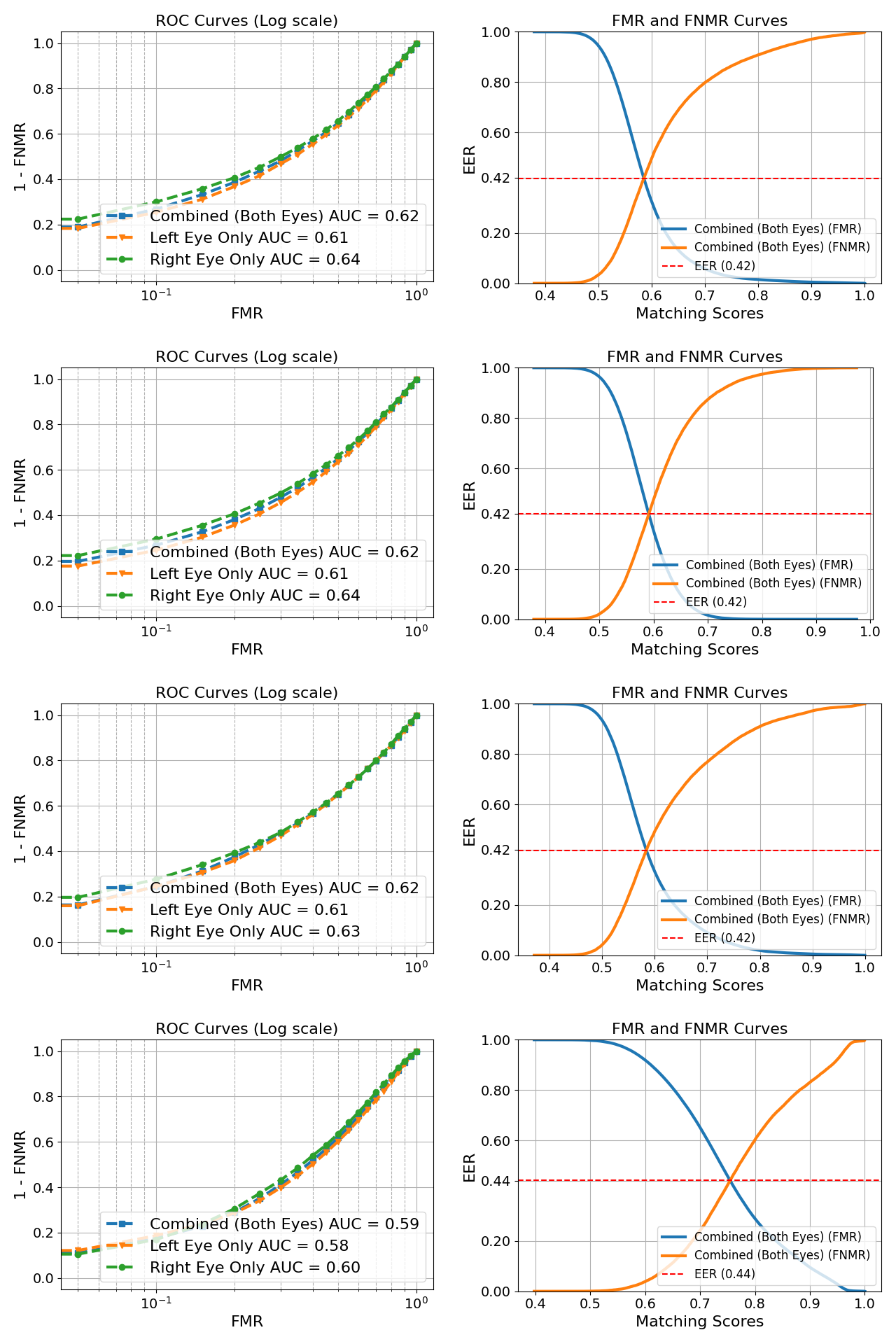
Fig 2: Iris Recognition Performance: Operational curves for unimodal iris verifi-
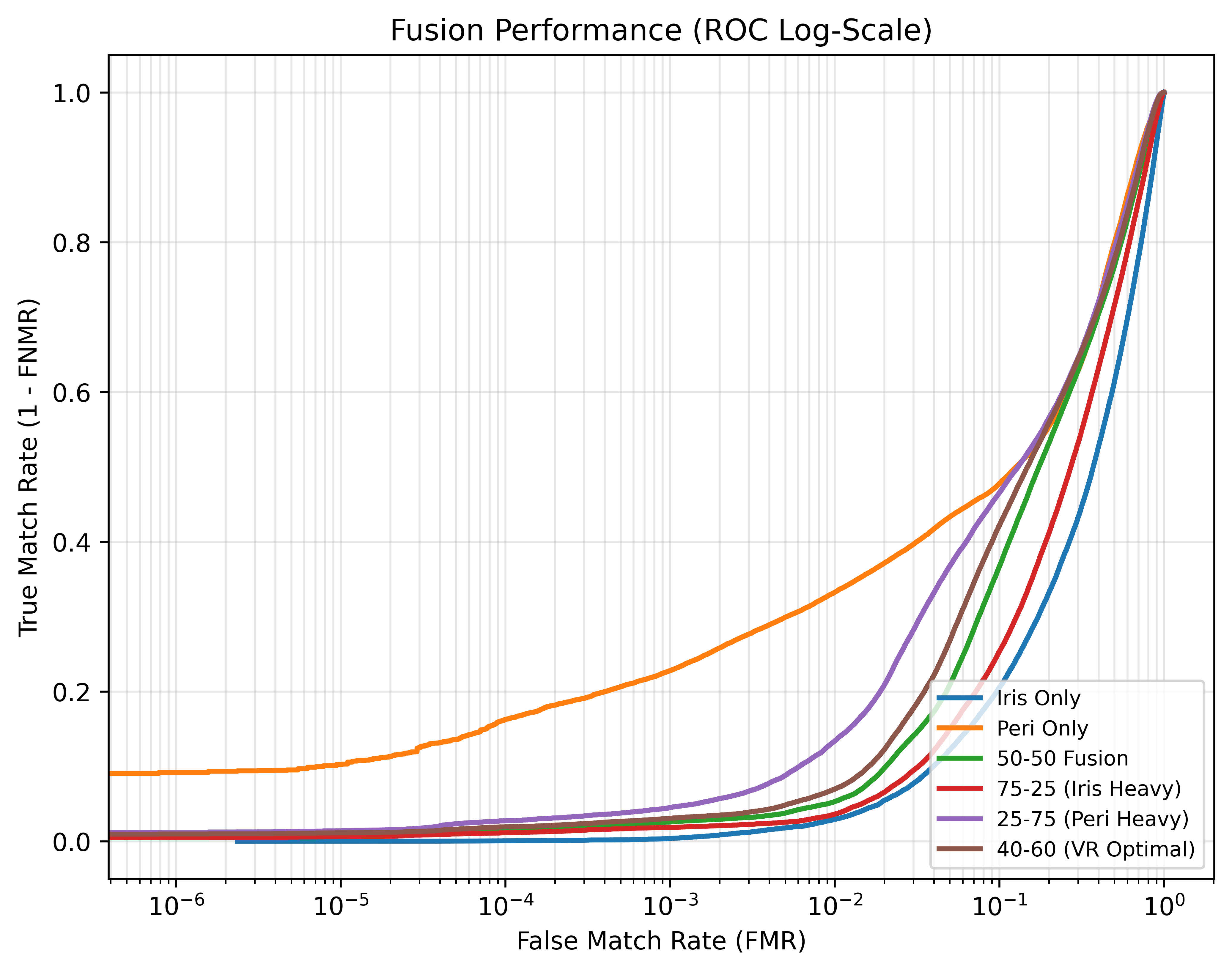
Fig 3: Fusion analysis: ROC curves comparing various fusion variations.
Limitations
- Image restoration models (e.g., UNIR-Net) trained on RGB data may not optimally translate to near-infrared VR images, possibly over-smoothing essential iris details.
- Off-axis correction via homography warping introduces boundary padding and interpolation artifacts that do not improve, and sometimes hinder, biometric feature extraction.
- Evaluation is limited to a single public VR dataset (VRBiom) with only 25 subjects, restricting generalizability across devices and populations.
- Presentation attack or spoofing scenarios are excluded from the experiments, leaving active adversary robustness unaddressed.
- The ISO/IEC 29794-6 metric evaluation depends heavily on segmentation quality and framework implementation, introducing variability and making direct comparisons challenging.
- No end-to-end trainable fusion or restoration framework is presented; current methods rely on sequential fixed pipelines.
Open questions / follow-ons
- How can the ISO/IEC 29794-6 iris quality assessment standards be extended or revised to reliably accommodate VR-specific acquisition artifacts such as off-axis gaze and strong specular reflections?
- Could domain-adapted or VR-specific generative restoration models be trained on near-infrared ocular data to better preserve fine iris textures while mitigating hardware noise?
- What are the performance implications and security risks of incorporating active presentation attack detection in multimodal VR ocular authentication systems?
- Can an end-to-end trainable pipeline integrating image restoration and biometric verification outperform the current sequential processing approach?
Why it matters for bot defense
For bot-defense and CAPTCHA practitioners focusing on VR and extended reality platforms, this work highlights the nuanced challenges of ocular biometric verification due to unconstrained and atypical image acquisition conditions. Traditional iris quality metrics and recognition models may not generalize well in the VR context, potentially leading to elevated false rejection or acceptance rates if blindly applied. The demonstrated effectiveness of periocular cues, which are more resilient to off-axis angles and reflections common in VR, suggests that multimodal biometric fusion is a promising direction for improving continuous authentication in head-mounted devices. Moreover, the image pre-processing techniques (especially specular reflection removal) can serve as valuable tools to improve recognition reliability without requiring changes to sensor hardware. Bot-defense systems integrated into VR environments should consider weighting periocular features more heavily and caution against conventional iris metric thresholds when validating authentication frames. Finally, ongoing research into VR-specific biometric quality standards and image restoration adapted to near-infrared data will be essential for robust, spoof-resistant systems.
Cite
@article{arxiv2607_20790,
  title={ Ocular Verification for Virtual Reality },
  author={ Husanpreet Singh and Robert Tran and Ayushree Kharel and Sudipta Banerjee },
  journal={arXiv preprint arXiv:2607.20790},
  year={ 2026 },
  url={https://arxiv.org/abs/2607.20790}
}