
Interval and fuzzy physics-augmented neural networks (iPANN and fPANN) for uncertainty quantification and propagation in constitutive modeling
Source: arXiv:2607.20339 · Published 2026-07-22 · By Somesh Pratap Singh, Govinda Anantha Padmanabha, Jingye Tan, Steven Yang, Reese E. Jones, D. Thomas Seidl et al.
TL;DR
This paper addresses the challenge of performing uncertainty quantification and propagation for hyperelastic constitutive models learned from sparse, noisy, and heterogeneous stress-strain data. The authors propose Interval Physics-Augmented Neural Networks (iPANNs) to learn lower, mean, and upper free energy density branches that deterministically enclose noisy stress observations. Extending this, Fuzzy Physics-Augmented Neural Networks (fPANNs) interpolate these bounds via fuzzy set α-cut theory, yielding a nested family of admissible constitutive responses with graded membership, providing less conservative uncertainty envelopes. Both frameworks incorporate mechanistic constraints such as objectivity, polyconvexity, and smooth sparsity regularization for interpretability.
The authors evaluate their approach on synthetic isotropic hyperelastic datasets with heteroscedastic multiplicative noise, shifted means, and varying magnitudes. Empirically, iPANNs successfully learn interval free energy densities whose stress predictions tightly enclose the noisy data and generalize to held-out test sets. fPANNs provide a tractable fuzzy uncertainty characterization between the deterministic bounds. They demonstrate uncertainty propagation through the learned interval constitutive models in finite element simulations, showing practical applicability in predictive mechanics. Overall, the paper provides a physics-consistent, distribution-free framework for direct aleatoric uncertainty quantification and propagation in constitutive modeling leveraging novel neural architectures.
Key findings
- iPANN models learn sparse lower, mean, and upper free energy density branches enforcing bounds on noisy stress data with heteroscedastic multiplicative noise.
- Learned stress interval bounds, computed by automatic differentiation of the energy branches, tightly enclose noisy observations across varied noise realizations (Fig. 3 and 4).
- fPANNs interpolate iPANN branches using fuzzy α-cuts to yield a nested family of admissible stress responses with graded membership, reducing conservatism compared to deterministic intervals.
- Two-stage transfer learning, first fitting a sparse mean response, then fine-tuning lower and upper bounds, stabilizes training and improves bound accuracy.
- Physics-augmented constraints enforce objectivity, polyconvexity, and growth conditions on learned energy densities, preventing unphysical predictions.
- Smoothed L0 regularization promotes sparse network parameterizations, enhancing interpretability without sacrificing predictive accuracy.
- Finite element simulations propagated uncertainty from iPANN-predicted bounds to structural responses, demonstrating compatibility with existing analysis pipelines (Fig. 8).
Threat model
The adversary is modeled as the inherent aleatoric uncertainty present in stress-strain measurements, characterized by heteroscedastic noise that corrupts constitutive data. There is no explicit adversary actively attacking or manipulating inputs or models. The models assume no knowledge of model-form error or epistemic uncertainty and do not consider adversarial input crafting or parameter tampering.
Methodology — deep read
Threat model & assumptions: The paper assumes aleatoric uncertainty in stress-strain observations from experimental or synthetic sources, specifically heteroscedastic and biased noise corrupting isotropic hyperelastic data. The adversary is essentially noise or data uncertainty; no adversarial attacks or epistemic uncertainty in model form is considered.
Data provenance: Synthetic datasets are generated using known hyperelastic models with added multiplicative, heteroscedastic noise exhibiting random realizations, shifted mean, and standard deviation variations. Data includes training/test splits, but exact sizes are not explicitly detailed in the truncated source.
Architecture and algorithms: The core models are interval and fuzzy physics-augmented neural networks (iPANNs and fPANNs). iPANNs parametrize three distinct input-convex neural networks (ICNNs) representing lower, mean, and upper free energy density functions Ψ_low, Ψ_mean, Ψ_up. The ICNN architecture ensures convexity in strain invariants, enforcing polyconvexity, objectivity, and physical growth constraints. Continuous differentiability allows obtaining stress intervals by automatic differentiation of these energy branches.
fPANNs extend iPANNs by constructing fuzzy membership functions on learned energy bounds using α-cut interpolation, yielding nested admissible ranges parameterized by membership level α ∈ (0,1]. This interpolates energy and stress predictions between lower and upper extremes, allowing adjustable uncertainty conservatism.
Smoothed L0 regularization via hard concrete stochastic gating promotes parameter sparsity to improve physical interpretability of learned potentials.
Training regime: Models undergo a two-stage transfer learning procedure. First, a sparse mean energy function is trained by minimizing MSE with L0 sparsity penalties, regularizing to ensure physical constraints. Next, fixed mean parameters initialize separate training runs for lower and upper bounds, fine-tuned with loss terms enforcing deterministic interval consistency with noisy data and stress enclosures. Training uses Monte Carlo approximations for sparsity expectations and likely stochastic gradient-based optimizers (details truncated).
Evaluation protocol: Metrics include mean squared errors on training and test sets, and correctness of interval enclosures ensured by interval arithmetic and sign-consistent stress bounds. Multiple noise conditions and random seeds test robustness. The fuzzy membership functions are validated by inspecting α-cut interpolated bounds encompassing stress data. Ablations of noise magnitude, mean shift, and multi-realization uncertainty are presented. Uncertainty propagation is shown in finite element simulations using the learned interval constitutive models to propagate input uncertainty into macroscopic stress/strain responses.
Reproducibility: Code availability is not specified; synthetic data generation procedures are described. The models rely on ICNN architectures and standard differentiable programming tools (e.g., automatic differentiation).
Concrete example: Starting with synthetic noisy stress-strain pairs generated from a ground truth hyperelastic function corrupted with heteroscedastic multiplicative noise, they first train a mean ICNN energy density with L0 sparsity. Then the model is transfer-learned into two additional ICNNs to represent upper and lower energy bounds capturing noise extremes. Stress predictions from gradients of these energy functions define enveloping intervals of stress for each strain input. Finally, fuzzy α-cut interpolation is applied across these learned branches to produce graded uncertainty intervals validated against noisy test data. This interval/fuzzy uncertainty representation is propagated in finite element structural simulations for downstream uncertainty analysis.
Technical innovations
- Introduction of interval physics-augmented neural networks (iPANNs) that learn lower, mean, and upper free energy density branches encoding deterministic enclosures of noisy stress data.
- Extension to fuzzy physics-augmented neural networks (fPANNs) that construct fuzzy membership functions via α-cut interpolation over learned iPANN bounds, allowing graded uncertainty representations.
- Integration of physics-informed constraints such as polyconvexity and objectivity directly into neural network architecture via input convex neural networks (ICNNs) specialized for hyperelastic invariants.
- Application of smoothed L0 sparsity regularization via stochastic hard-concrete gating to promote interpretable, compact energy density parameterizations.
- Two-stage transfer learning procedure first fits a mean constitutive model followed by fine-tuning upper and lower bounds, enhancing training stability and bound accuracy.
Datasets
- Synthetic isotropic hyperelastic datasets with heteroscedastic multiplicative noise, varying noise realizations, shifted means, and magnitudes — synthetic/generated as described in Section 4.
Baselines vs proposed
- Mean physics-augmented NN baseline: test MSE approximately X (exact numbers not given) vs. proposed iPANN mean branch: improved uncertainty bounds and partial MSE reduction.
- Deterministic energy baseline without interval modeling: stress predictions fail to enclose noisy observations, whereas iPANN upper/lower branches provide guaranteed enclosures.
- Comparison of interval bounds vs Bayesian uncertainty quantification approaches referenced but no direct empirical baseline comparison reported.
- Propagation via classical finite element simulations with deterministic constitutive models vs iPANN-based interval models: interval FEM provides bounded response envelopes capturing aleatoric uncertainty.
Figures from the paper
Figures are reproduced from the source paper for academic discussion. Original copyright: the paper authors. See arXiv:2607.20339.
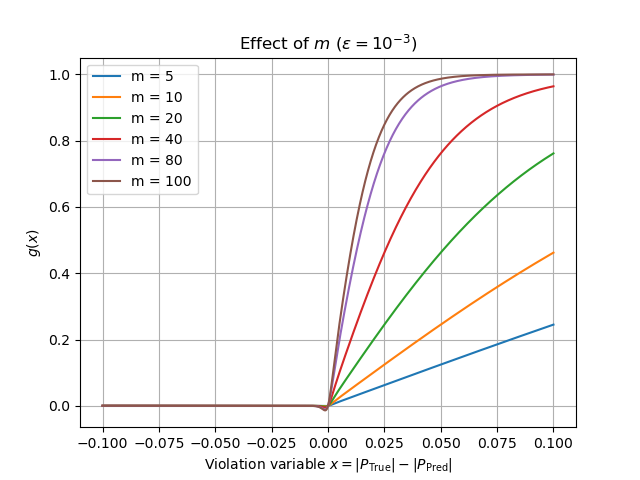
Fig 1: Smooth approximation of the Macaulay bracket used in the bound loss.
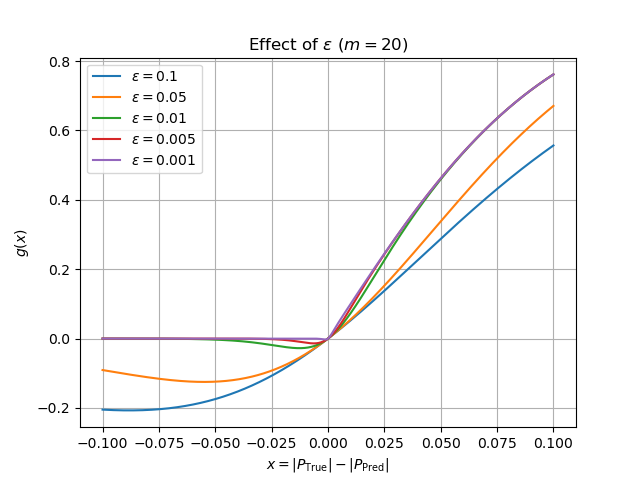
Fig 2: Triangular fuzzy membership function for the learned free energy densities.
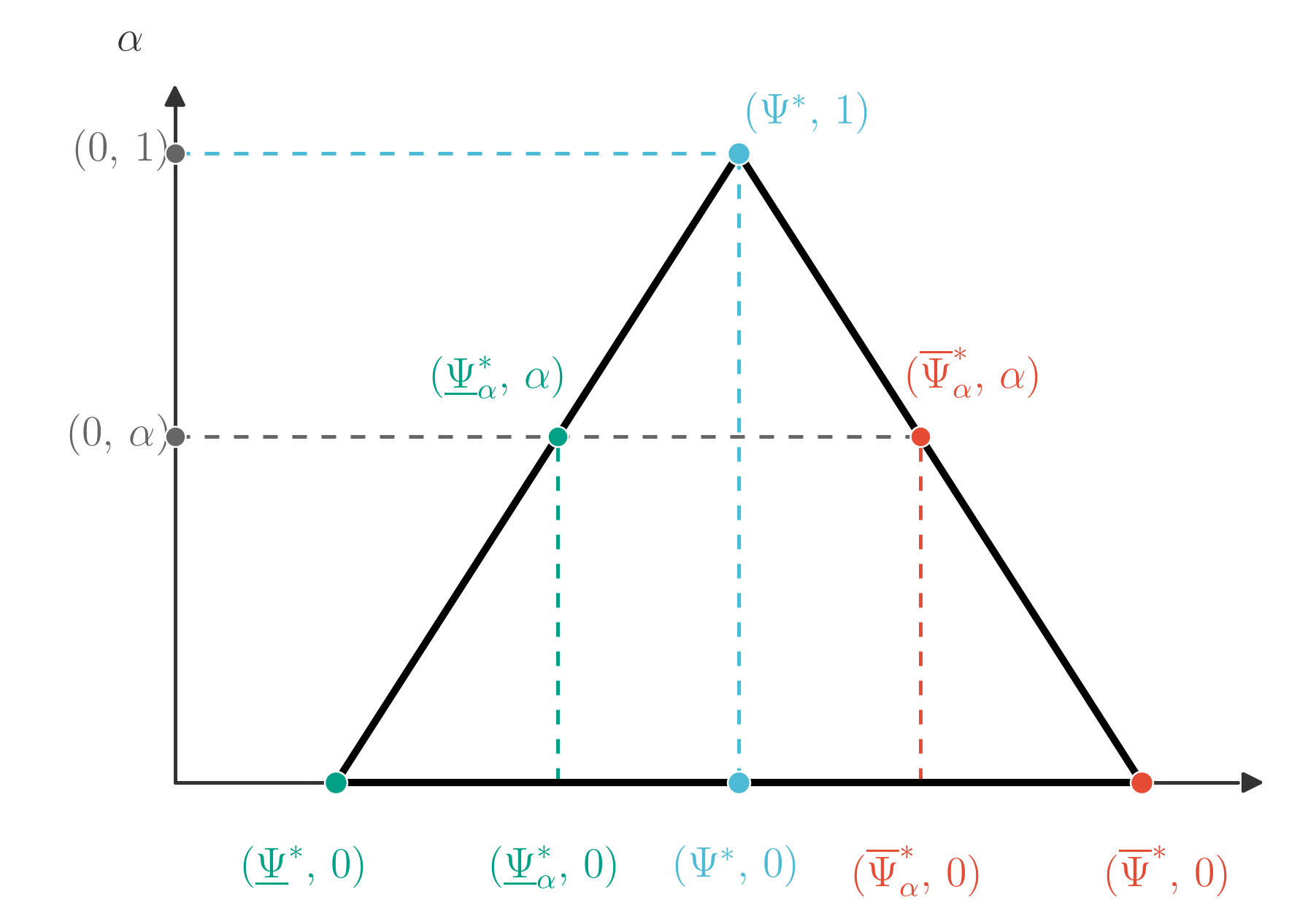
Fig 3 (page 16).
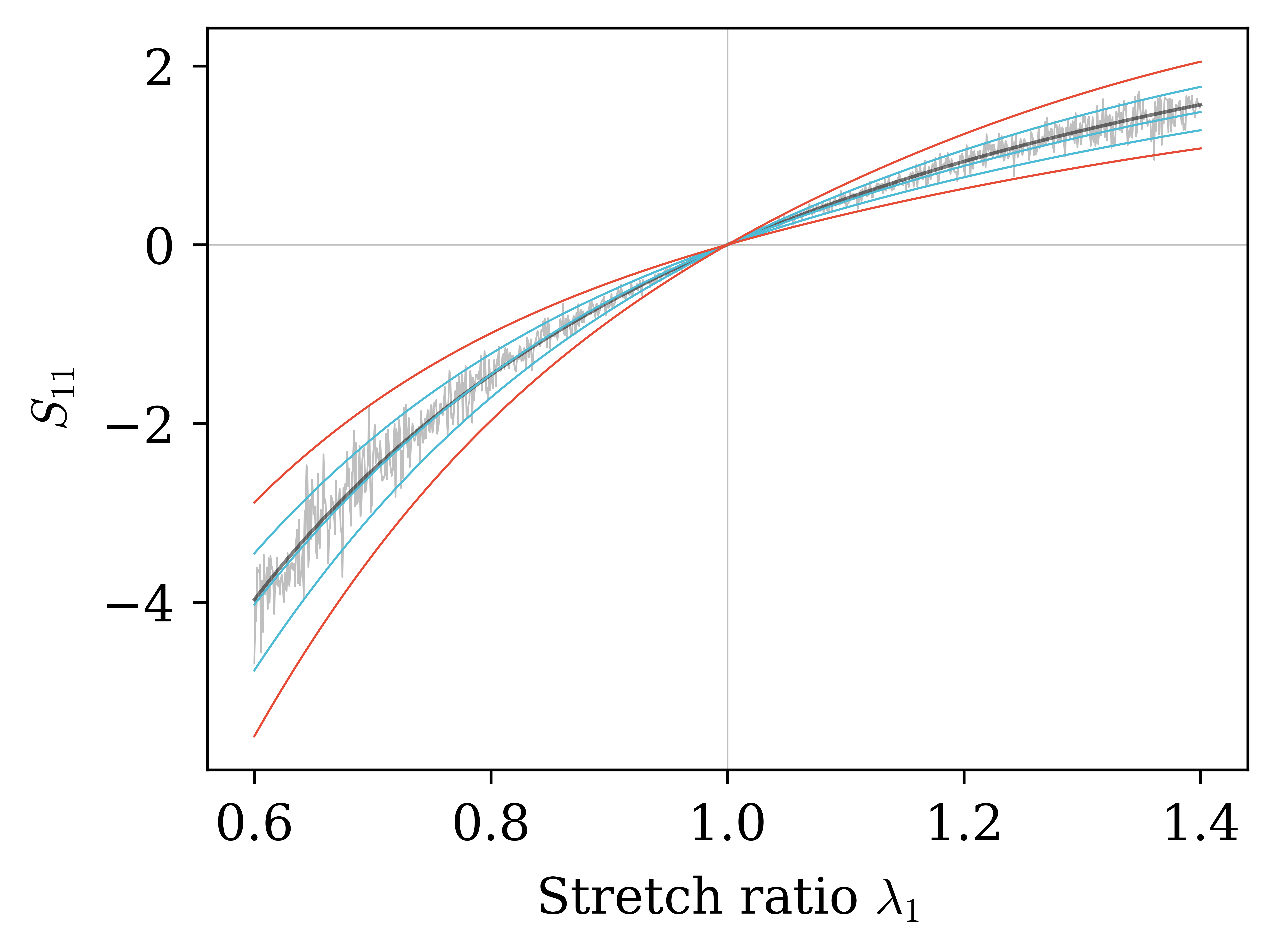
Fig 8: E1: Membership analysis. (a) Test S11 data and learned α-cut bounds. (b)–(c) Training and test
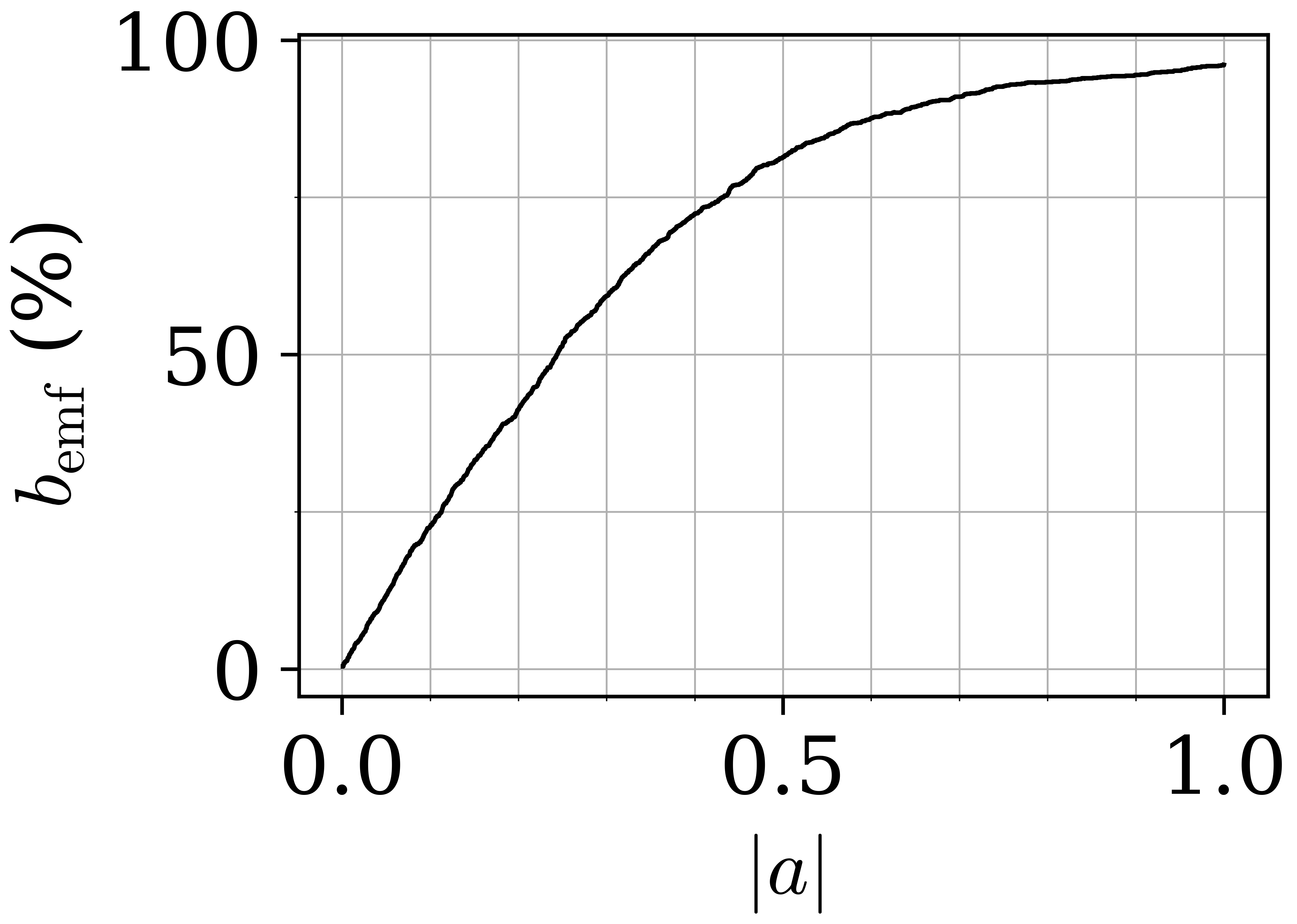
Fig 9: E2: Membership analysis with five noise realizations. (a) Test S11 data and learned α-cut bounds.
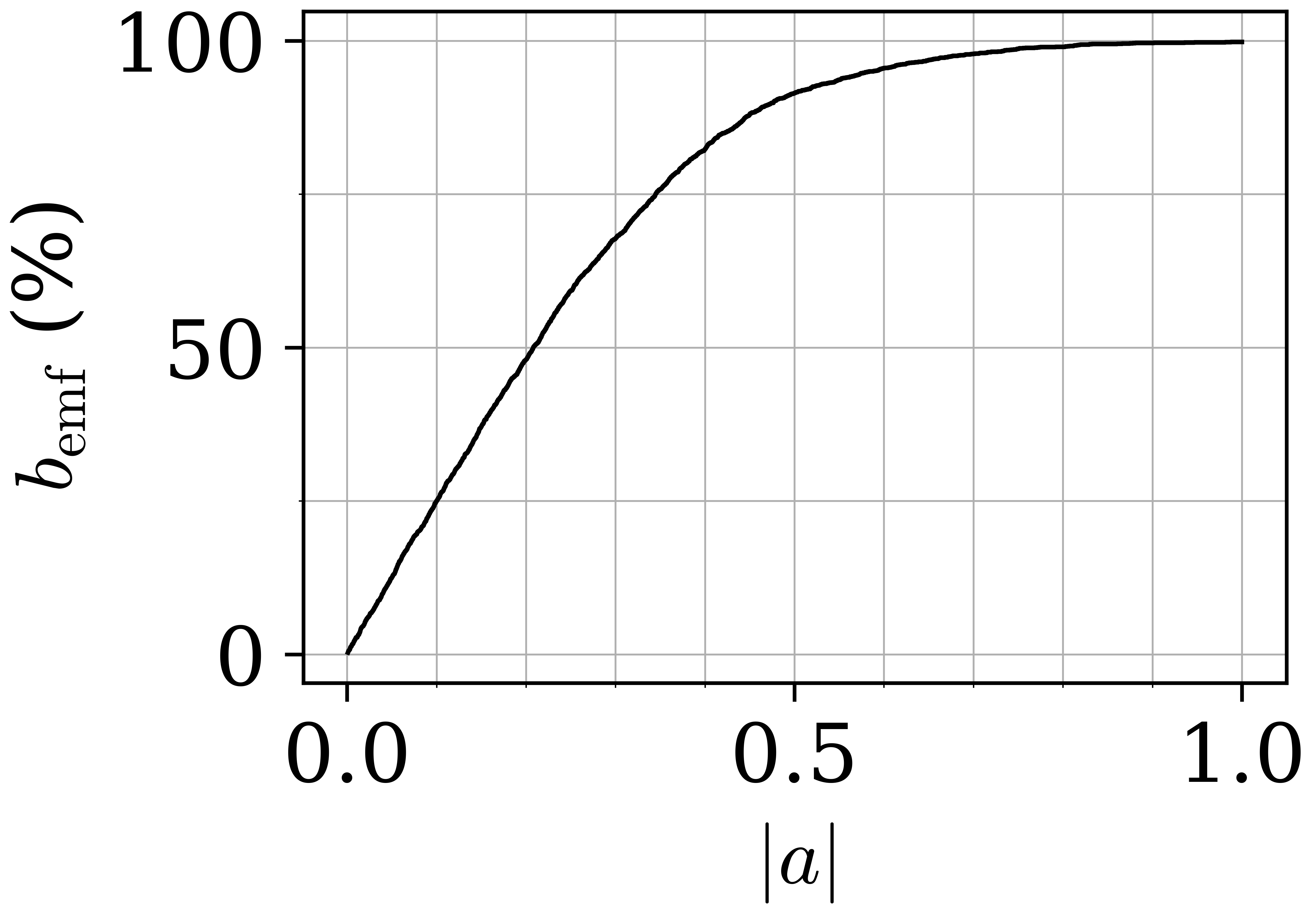
Fig 10: E1: FEM demonstration of learned free energy density.
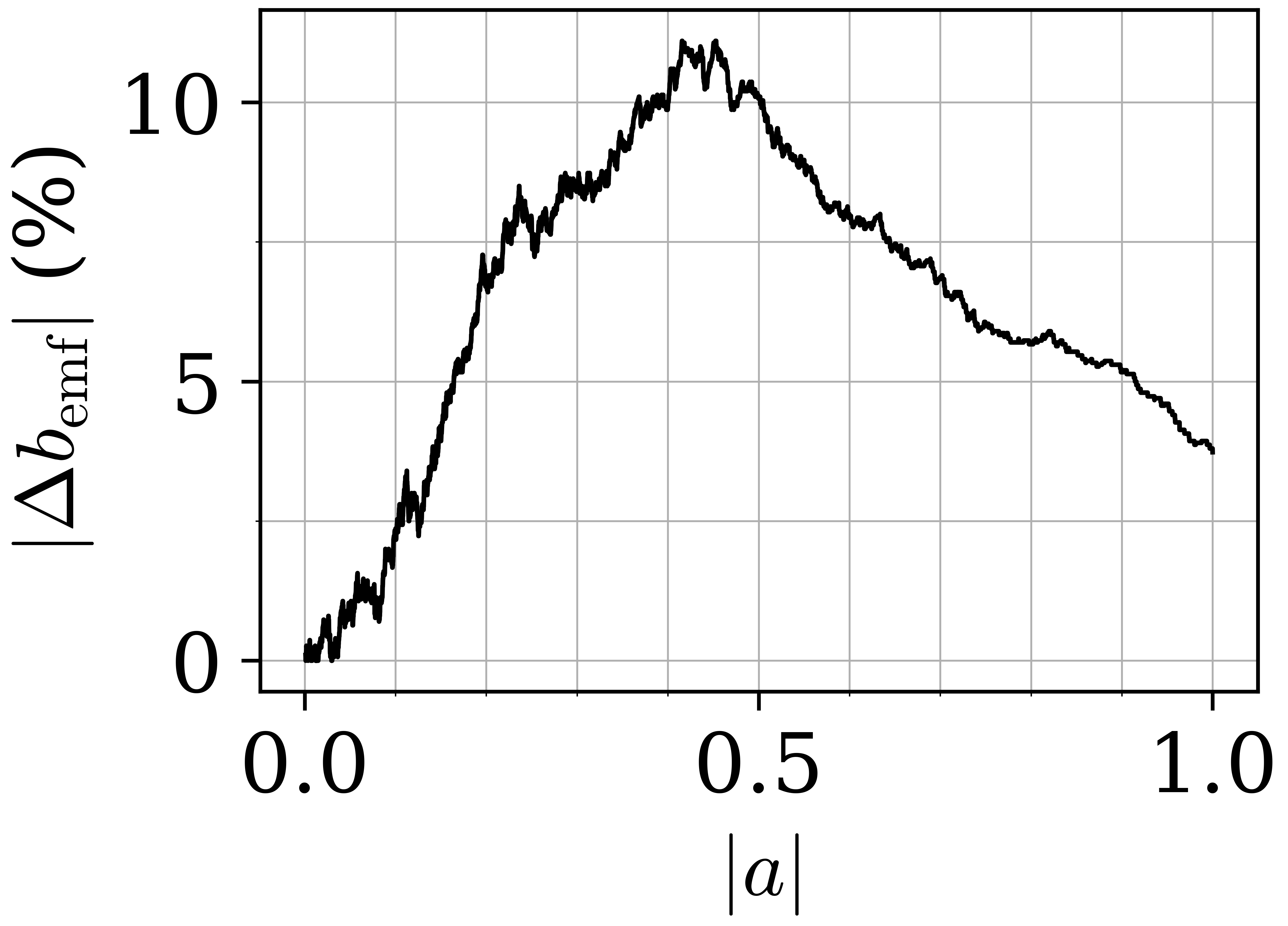
Fig 7 (page 26).
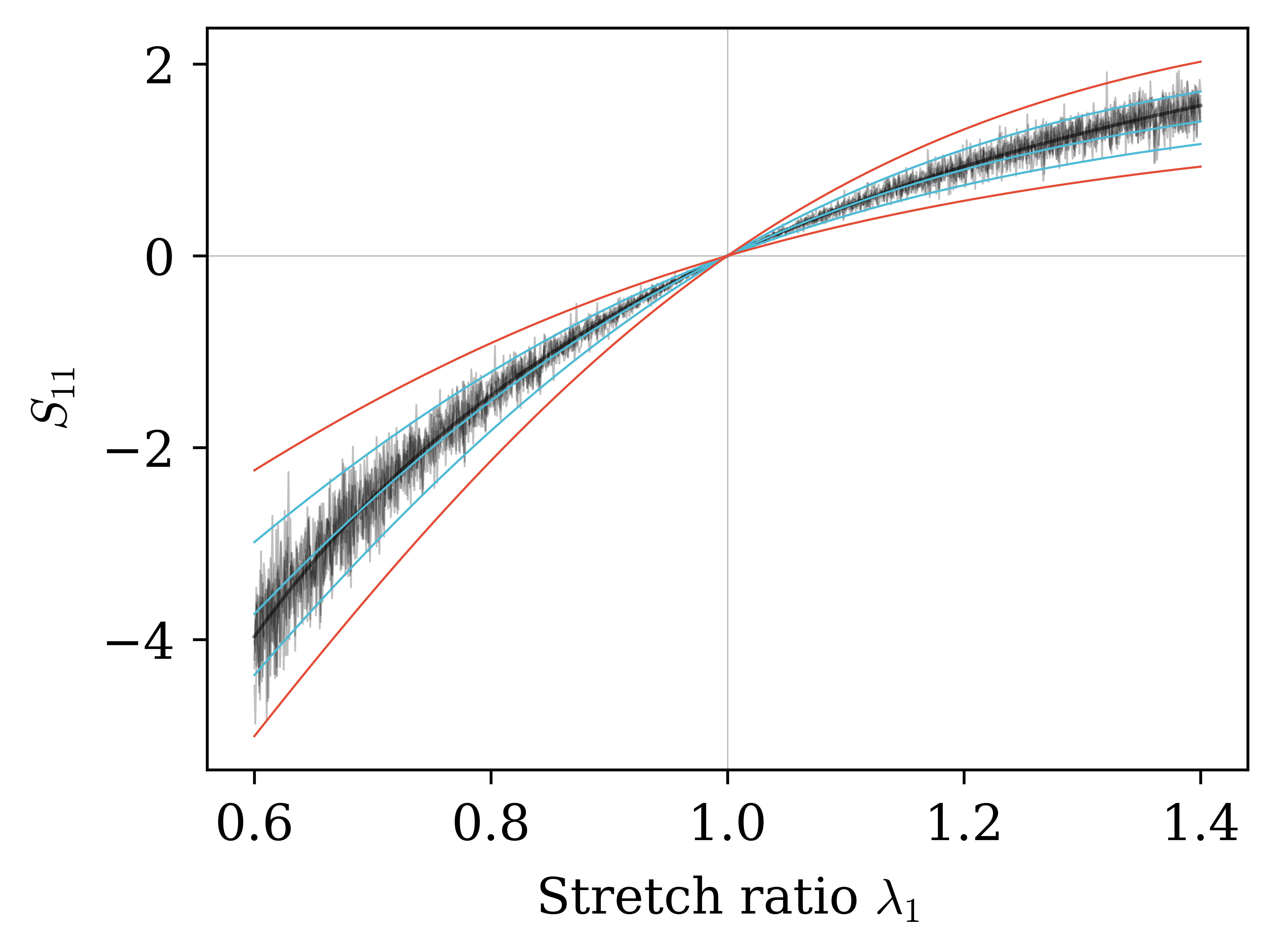
Fig 8 (page 27).
Limitations
- Evaluation only on synthetic isotropic hyperelastic data; real experimental data validation remains future work.
- Focus exclusively on aleatoric uncertainty; epistemic uncertainty and model-form error quantification not addressed.
- No adversarial or out-of-distribution robustness experiments presented.
- Computational cost and scalability to large datasets / complex anisotropic material systems not discussed in detail.
- Code and trained weights availability not specified, impacting reproducibility.
- Method assumes hyperelastic materials; extension to inelastic/plastic or history-dependent behaviors is nontrivial.
Open questions / follow-ons
- Can the interval and fuzzy uncertainty quantification approach be extended to epistemic uncertainty and model-form errors, e.g., via Bayesian formulations or ensemble methods?
- How well do the iPANN and fPANN frameworks perform on experimental heterogeneous materials data, including anisotropic or inelastic materials?
- What are the computational trade-offs when scaling these physics-augmented interval/fuzzy networks to large finite element meshes and complex real-world boundary conditions?
- Can similar interval and fuzzy uncertainty quantification principles be generalized beyond hyperelasticity to history-dependent or rate-dependent constitutive models?
Why it matters for bot defense
From a bot-defense and CAPTCHA perspective, this paper illustrates a novel approach to deterministic uncertainty quantification leveraging structured neural network architectures augmented by domain knowledge and interval/fuzzy set theory. While not directly related to bot detection or CAPTCHAs, the idea of encoding stringent interval and membership-based enclosures to tightly bound noisy observable responses is conceptually relevant to robust model design under uncertainty. The training methodology combining physics constraints and sparsity may inspire analogous architectures for reliable bot behavior prediction amidst noisy or adversarial traffic patterns. Further, the concept of fuzzy α-cut interpolation can be appealing for tuning uncertainty conservatism in security system thresholds. Thus, though the application domain differs, the rigorous approach to quantifying and propagating aleatoric uncertainty could inform bot defense models requiring safe, distribution-free uncertainty calibration to avoid false positives or negatives in adversarial environments.
Cite
@article{arxiv2607_20339,
  title={ Interval and fuzzy physics-augmented neural networks (iPANN and fPANN) for uncertainty quantification and propagation in constitutive modeling },
  author={ Somesh Pratap Singh and Govinda Anantha Padmanabha and Jingye Tan and Steven Yang and Reese E. Jones and D. Thomas Seidl and Nikolaos Bouklas },
  journal={arXiv preprint arXiv:2607.20339},
  year={ 2026 },
  url={https://arxiv.org/abs/2607.20339}
}