
Closing the Lab-to-Store Gap: A Data-Efficient Post-Training and Experience-Driven Learning VLA Framework for Retail Humanoids
Source: arXiv:2607.20345 · Published 2026-07-22 · By Roger Sala Sisó, Tiago Silvério, Jakob Sand, Tran Nguyen Le
TL;DR
This paper addresses the persistent challenge of bridging the gap between high benchmark performance of Vision-Language-Action (VLA) humanoid robot policies and their reliable real-world deployment, focusing on a supermarket chip-restocking task. The authors introduce DEED, a systems-level framework combining (1) a data-efficient post-training pipeline featuring control-frequency alignment, refined data curation, task-relevant visual highlighting, and reduced dependency on VLA outputs; (2) an experience-driven refinement stage adapted from RECAP, incorporating a text-based advantage prefix and a vision-language value function to enable learning from autonomous rollouts with human corrective interventions; and (3) a latent-space analysis tool to quantify in- and out-of-distribution (OOD) states encountered during deployment. DEED is evaluated on a Unitree G1-Edu humanoid using the GR00T N1.6 foundation model.
The results demonstrate that careful system engineering and targeted post-training transform an otherwise nonfunctional naive fine-tuned policy (0% success) into a competent agent with 32% success, further improved to 42% success after one iteration of experience-driven refinement on a single GPU. However, a second refinement iteration leads to reduced success (22%) due to distributional drift and reduced dataset coverage by teleoperation data. The latent-space OOD analysis tool confirms this drift, highlighting the importance of managing data distribution balance during continual refinement. Overall, the work confirms that closing the lab-to-store gap is largely a systems integration and data design problem rather than requiring novel model architectures.
Key findings
- Naive supervised fine-tuning of GR00T-N1.6 without engineering modifications yielded 0% success rate on chip-restocking.
- Data-efficient post-training pipeline (DE policy) increased success to 32% (16/50 episodes) with a mean execution time of 24.30 seconds per bag and a max of 4 consecutive bags without reset.
- A single RECAP-style experience-driven refinement iteration improved success rate to 42% (21/50 episodes) and reduced mean execution time to 22.37 seconds, producing more reliable, direct trajectories.
- A second RECAP iteration degraded performance to 22% success (11/50) despite slight time improvements, attributed to distributional drift and dominance of self-generated rollouts in training data.
- Experience-driven refinement policies shift away from teleoperation distribution but remain covered by combined dataset, leading to potential feedback loops narrowing state-action coverage.
- Value function training on vision-language inputs only, freezing the Eagle-3 encoder and training a lightweight MLP, took ~1.5 hours on a single RTX 5090 GPU.
- Butterworth filtering of inference-time actions reduced jerky movement and improved smoothness without sacrificing policy generalization.
- Latent-space analysis using a Gaussian Mixture Model on encoded states effectively distinguishes in-, soft-, and hard-OOD states reflecting behavioral reliability.
Threat model
The adversary is the deployment environment introducing natural execution errors, distribution shifts, and unanticipated state variations, challenging the fixed, offline-trained VLA policy. The adversary cannot directly manipulate or corrupt the robot or model but causes robustness challenges through variability and drift. The model cannot query online corrections except through human-in-the-loop interventions during the experience-driven stage.
Methodology — deep read
Threat Model & Assumptions: The adversary is implicitly the environment and real-world deployment challenges: execution errors, environmental and viewpoint variability, and distribution shifts from lab to store conditions. The paper does not explicitly focus on malicious attackers but addresses robustness against natural variability and failure accumulation due to mismatch in demonstration and deployment distributions.
Data: Data consists of 81 teleoperation demonstrations totaling approximately 51.5 minutes collected on a real supermarket restocking replica task with a Unitree G1-Edu humanoid’s left arm performing pick, rotate, and place subtasks. Each continuous episode includes multiple picks without segmentation. Action space is reduced to 20 dimensions (7 joints per arm, binary hand open/close, waist and base velocity commands). Visual input uses three RGB streams (one head-mounted + two wrist-mounted cameras) at 30 FPS; control and recording frequencies are aligned at 25 Hz. Additional 116 autonomous rollouts (41 successes, 75 failures) were collected during experience-driven refinement for an extra 56.9 minutes.
Architecture / Algorithm: The backbone policy is GR00T N1.6, a decoupled VLA model separating a vision-language backbone from a flow-matching action decoder. The DEED pipeline applies post-training to the GR00T checkpoint, involving frequency alignment, curated demonstration data with detailed rules for state balance, recovery behaviors, and avoidance of no-op states, and IA-VLA visual highlighting providing segmentation masks for task-relevant regions to augment input. Hand control is simplified to a binary open/close signal. Action smoothing is implemented with a Butterworth filter on predicted action sequences.
Experience-driven refinement adapts RECAP: a value function Vϕ(ot, ℓ) predicts expected returns from visual observations and language instructions (only vision-language, no proprioceptive state), training a lightweight MLP atop frozen Eagle-3 embeddings. Advantages are computed via a multi-step lookahead estimator over discretized return bins. Advantage-conditioned policies are trained by prepending text tokens (“Advantage=True/False”) to instructions, mixing conditioned and unconditioned samples with dropout during dataset generation. Human corrective interventions are always labeled positive.
Latent OOD detection fits a Gaussian Mixture Model (GMM) to GR00T’s latent state encoder post-finetuning embeddings to represent multi-modal training state manifold. Mahalanobis distance to nearest GMM mode yields an OOD score. PCA projects embeddings for visualization. Thresholds for in-distribution, soft- and hard-OOD are derived empirically from training data.
Training Regime: Supervised fine-tuning uses curated teleoperation data on a single RTX 5090 GPU. Value function training uses AdamW, batch size 16, learning rate 1e-4, 5000 steps (~1.5 hours). RECAP refinements reinitialize policy from base checkpoint each iteration to mitigate catastrophic drift. Teleoperation frequency is 50Hz; camera frequency 30Hz; recording and control frequencies 25Hz.
Evaluation Protocol: Evaluation on a chip-restocking task with 50 episodes per condition starting from similar poses but slight spatial variation. Metrics: episodic task success rate (grasp and place single chip without failure), mean execution time for successful episodes, maximum consecutive successful placements without manual reset. 95% Wilson confidence intervals reported. Qualitative analysis complements quantitative metrics. Analysis of policy latent state distribution over dataset embeddings conducted to understand distributional shifts during refinement.
Reproducibility: All training done from publicly available GR00T-N1.6-G1-PnPAppleToPlate checkpoint. No mention of public release of datasets or code, though model weights used are public. Value function training code described in detail.
Explicit example: Starting with a naive SFT policy finetuned on uncurated data at native action dimensionality and visual inputs achieves 0% success. Applying the DEED Data-Efficient post-training recipe—curating 81 demonstrations under strict curation rules including balanced state coverage, visual highlighting via IA-VLA, control-frequency alignment, adding wrist cameras, reducing action space to 20 dims, binary hand control, and action smoothing—results in 32% success, first autonomous fully closed-loop execution. Then, experience-driven refinement collects 116 autonomous rollout episodes interleaved with human corrections. A value function conditioned only on vision-language input is trained to estimate returns and advantages, computed multi-step and thresholded, with corrective interventions labeled positive. These advantages are used as prefix conditioning for policy retraining, biasing behavior toward positive outcomes and successful task completion. After one iteration, success increases to 42% with notably more direct and reliable behavior. A second iteration causes performance degradation due to distributional drift away from teleoperation data. The latent-space OOD tool reveals shifted distributions during refinement, consistent with observed effects.
Technical innovations
- A data-efficient post-training pipeline emphasizing frequency alignment, curated demonstration data with strict rules, task-relevant visual highlighting using IA-VLA, and reduced reliance on fully end-to-end learned VLA policies.
- Adaptation of RECAP experience-driven refinement to decoupled VLA architecture via a text-based advantage prefix combined with a vision-language-only value function, avoiding architectural changes.
- Latent-space in/out-of-distribution detection exploiting a GMM fitted to the VLA state encoder embeddings, enabling behavioral reliability estimation and fine-grained attribution of OOD deviations at deployment.
- Application of a Butterworth filter on predicted action sequences at inference to smooth transitions between action chunks, balancing generalization and execution stability.
Datasets
- Teleoperation demonstrations — 81 episodes (~51.5 minutes) — collected on supermarket chip-restocking task with Unitree G1-Edu.
- Experience-driven autonomous rollouts — 116 episodes (~56.9 minutes; 41 successes, 75 failures) — collected during RECAP refinement.
Baselines vs proposed
- Naive SFT baseline (GR00T-N1.6, uncurated data, 32-dim action space, head-camera only): success rate = 0% vs DE post-trained policy: 32%
- DE post-trained policy: mean execution time = 24.30s vs RECAP iteration 1: 22.37s
- DE post-trained policy: max consecutive bags = 4 vs RECAP iteration 1 and 2: 1
- RECAP iteration 1 success = 42% vs RECAP iteration 2 success = 22%
Figures from the paper
Figures are reproduced from the source paper for academic discussion. Original copyright: the paper authors. See arXiv:2607.20345.
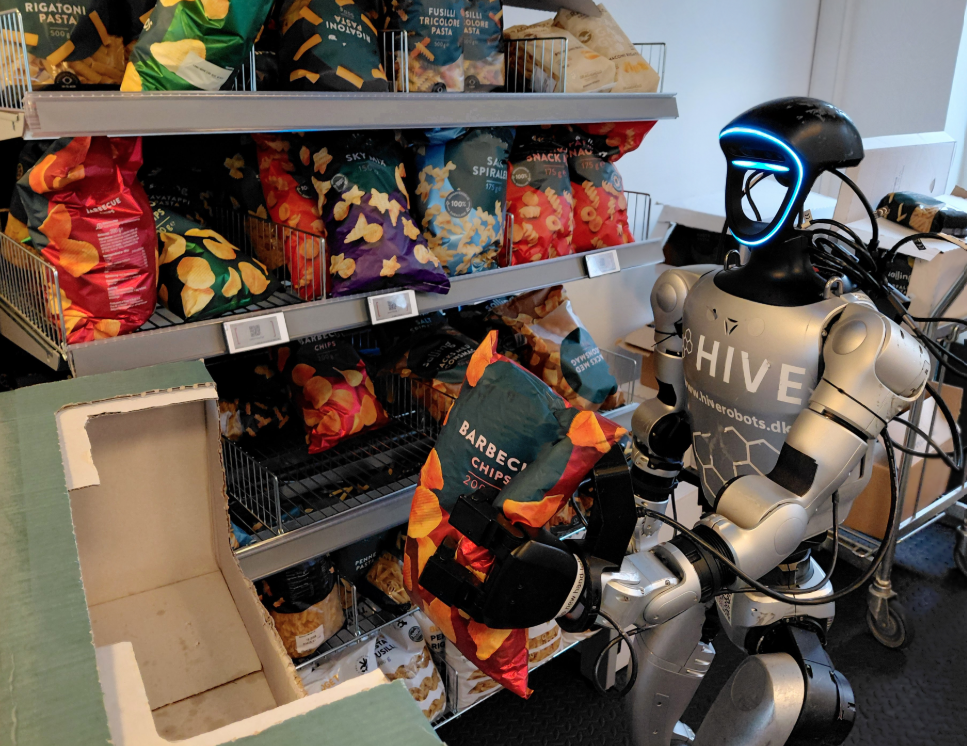
Fig 1: Hardware setup used for data collection and the exper-
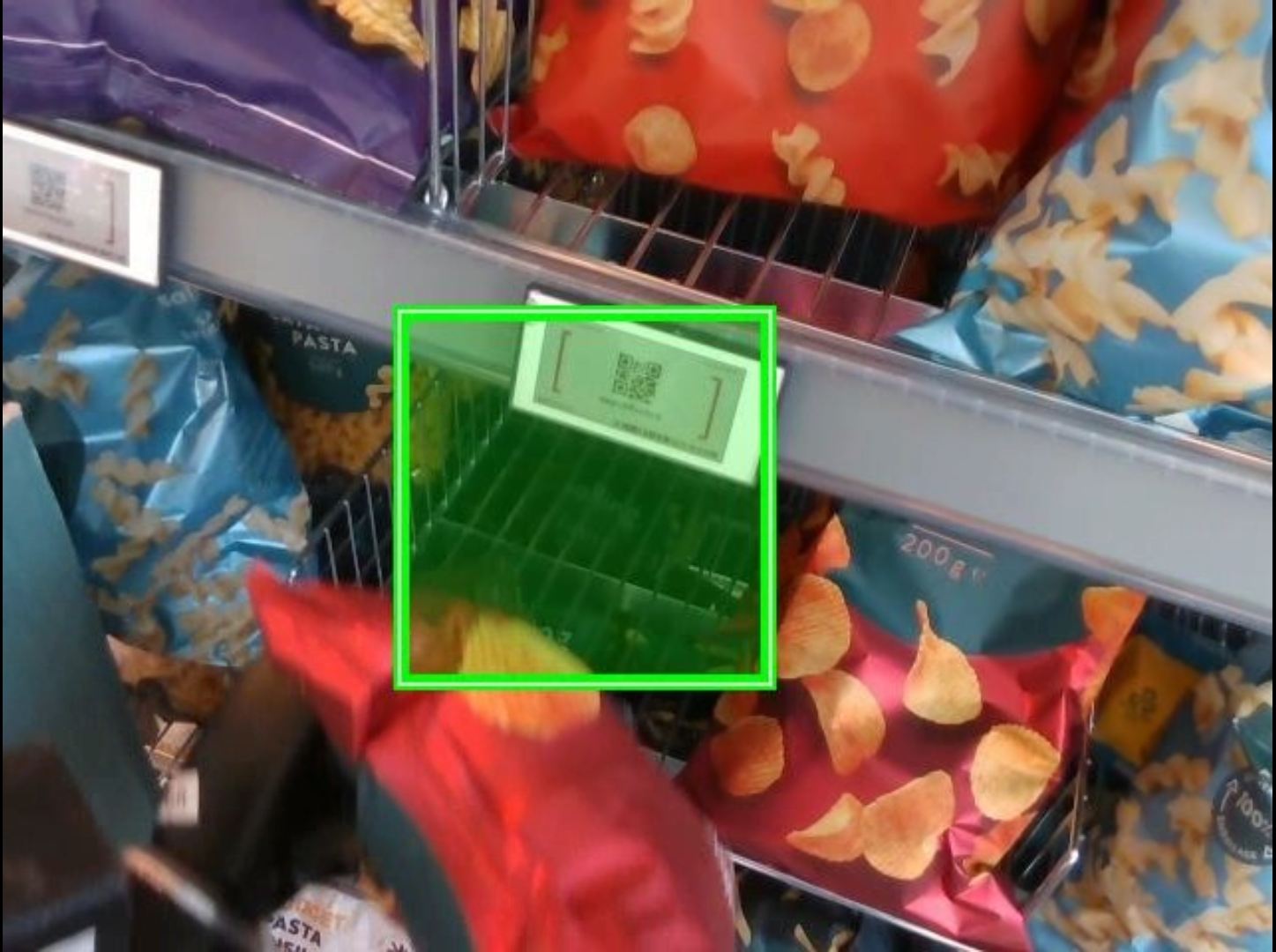
Fig 2: Head camera image processed with IA-VLA during

Fig 3: Overview of the Experience-Driven Policy Refine-
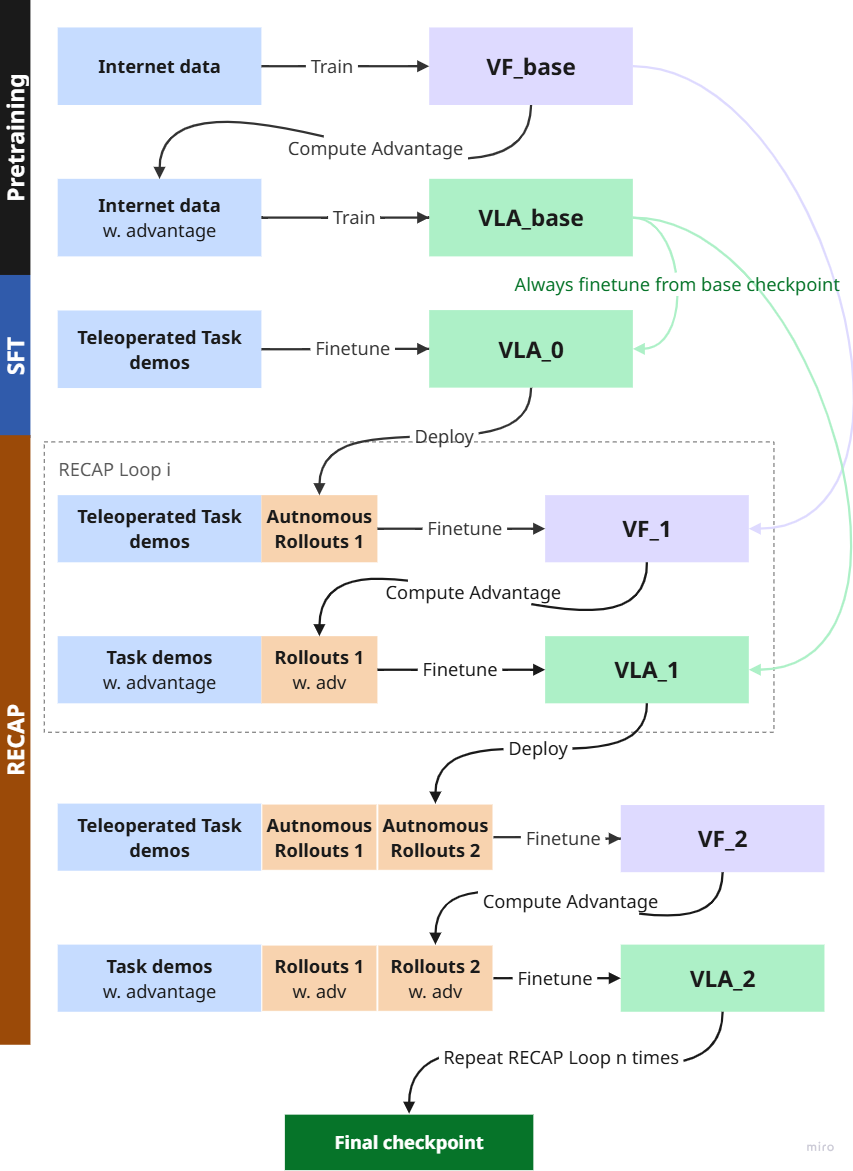
Fig 4: Overview of the state distribution analysis framework.
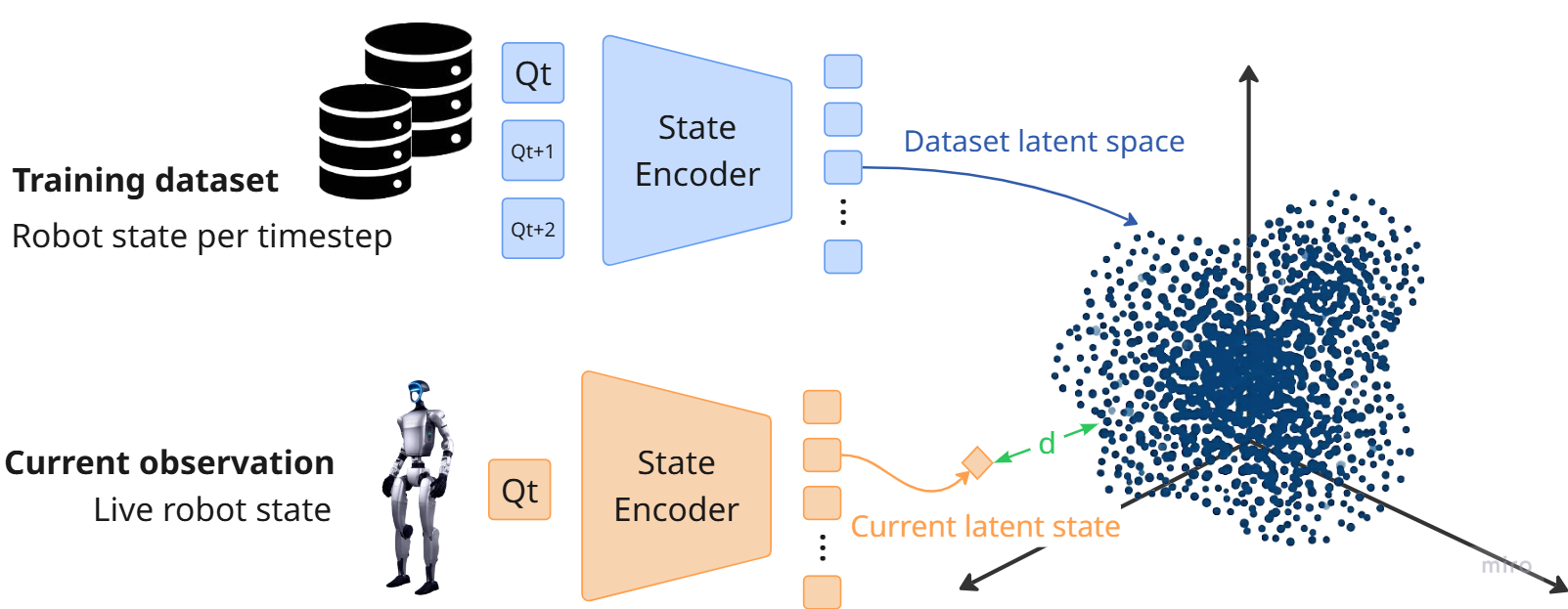
Fig 5: Deployment-oriented training setup for the restocking
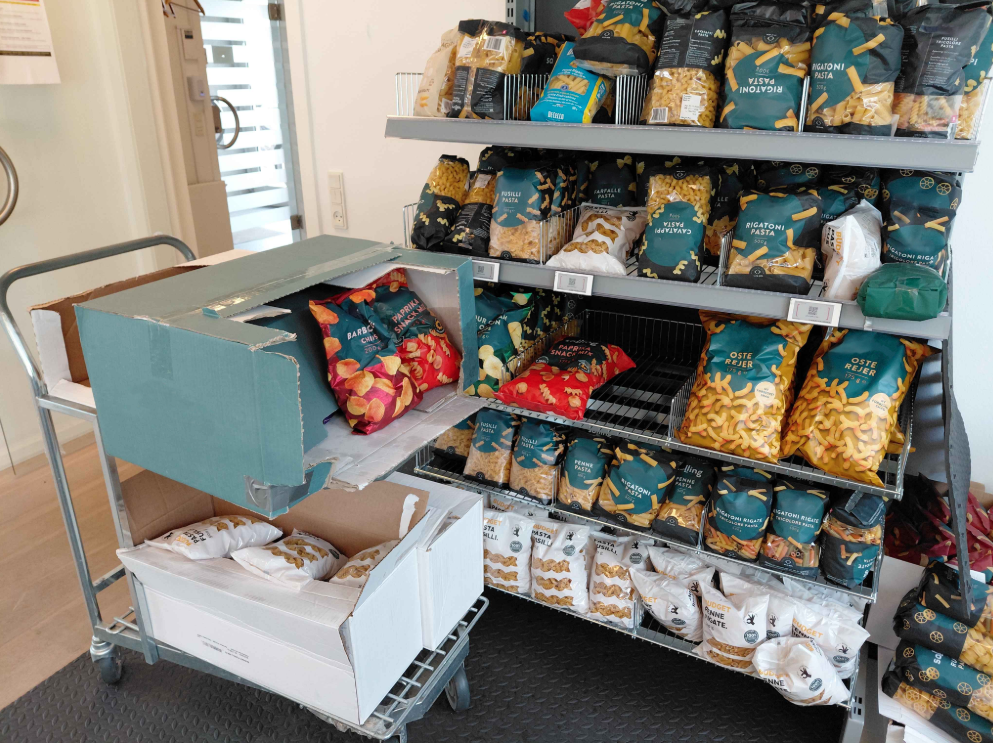
Fig 6: Representative frames from an evaluation episode of the chips restocking task. The robot grasps a bag of chips,
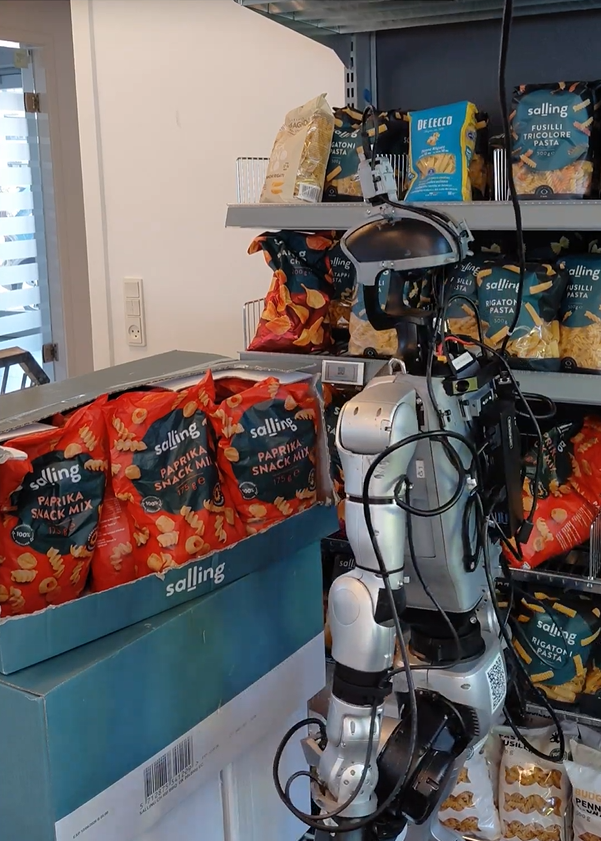
Fig 7 (page 7).
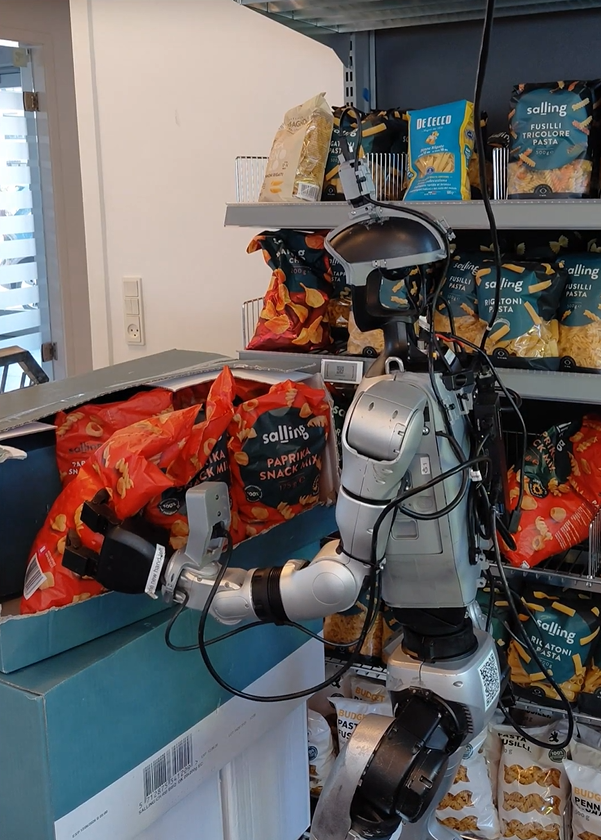
Fig 8 (page 7).
Limitations
- Limited teleoperation data diversity: demonstrations involve a single chip type with no object variation, limiting generalization potential.
- Experience-driven refinement benefits are not cumulative; repeated iterations lead to performance degradation due to distributional drift.
- Value function design excludes robot state conditioning to maintain VLA-agnosticism, which may limit precise advantage estimation in complex embodiments.
- Evaluation sample size (50 episodes per condition) provides limited statistical power; confidence intervals for success rates overlap between some conditions.
- No explicit adversarial robustness or malicious bot scenarios considered; focus is on natural environment variability and closed-loop control failures.
- The latent-space OOD method depends on quality of state encoder and GMM fitting; sensitivity to hyperparameters or unseen failure modes not fully explored.
Open questions / follow-ons
- How can advantage-conditioned refinement be stabilized to prevent distributional drift and degradation over multiple iterations?
- Can the value function incorporate proprioceptive state or multimodal inputs without sacrificing modularity to improve advantage estimation accuracy?
- How would DEED scale to more diverse objects, multi-task scenarios, or different humanoid embodiments with greater variability?
- Would end-to-end fine-tuning of the full VLA policy versus decoupled approaches improve post-training and refinement outcomes?
Why it matters for bot defense
For bot-defense and CAPTCHA practitioners, this work highlights the critical importance of thorough data curation, aligned control frequency, and domain-specific visual grounding in deploying robust AI policies in the real world. Similar principles apply when defending against adversarial or automated agents interacting with complex web or app UIs: ensuring training data quality, capturing task-relevant features distinctly (akin to task-relevant visual highlighting), and monitoring for distributional shifts in deployment are vital for sustained reliability.
The experience-driven refinement approach parallels continual learning strategies but warns against unregulated iterative retraining on self-generated data due to feedback loops narrowing action distributions—an important caution in adaptive bot-detection. The latent-space OOD detection methodology offers a practical tool for runtime monitoring of behavioral reliability that could inspire anomaly scoring of user interaction feature embeddings for CAPTCHA robustness maintenance.
Cite
@article{arxiv2607_20345,
  title={ Closing the Lab-to-Store Gap: A Data-Efficient Post-Training and Experience-Driven Learning VLA Framework for Retail Humanoids },
  author={ Roger Sala Sisó and Tiago Silvério and Jakob Sand and Tran Nguyen Le },
  journal={arXiv preprint arXiv:2607.20345},
  year={ 2026 },
  url={https://arxiv.org/abs/2607.20345}
}