
Integration of hBN Single-Photon Emitters into a Hybrid Optomechanical Membrane-in-the-Middle Fiber-Cavity
Source: arXiv:2607.19314 · Published 2026-07-21 · By Patrick Maier, Alexander Kubanek
TL;DR
This work addresses the challenge of integrating single-photon emitters (SPEs) in hexagonal boron nitride (hBN) into hybrid optomechanical membrane-in-the-middle (MiM) fiber-cavity systems. hBN is an attractive material due to its excellent optical and mechanical properties alongside hosting optically active spin defects. The main novelty lies in a hybrid approach: mechanically manipulating commercially available hBN flakes hosting SPEs to reduce scattering losses and deterministically positioning them onto high-stress silicon nitride (Si3N4) membranes inside a fiber-based Fabry–Pérot cavity. The authors achieve strong cavity coupling of SPE emission with spectral enhancement up to 100-fold at room temperature, and simultaneously observe the optomechanical membrane modes above 1 MHz. They present a scalable integration toolset for hBN flakes, demonstrate cavity linewidth narrowing and enhanced spectral density of SPE emission coupled to the microcavity mode, and successfully combine the single photon emitters with high-Q mechanical resonators in a hybrid platform.
Experimental results show spectral narrowing of SPE emissions by ~160× inside the cavity, lifetime measurements confirm maintained optical lifetimes, and finesse characterization reveals scattering losses from flakes are reduced below measurable limits with careful topography control. Mechanical quality factors remain mostly unchanged after flake integration. The frequency-pulling parameter of the cavity-membrane system is characterized (~8.3 GHz/nm), enabling future prospects for optomechanical single-photon coupling rates in the hundreds of Hz to kHz range with few-layer hBN membranes. The work provides foundational experimental progress towards cavity-spin-optomechanics with hBN SPEs, opening possibilities for hybrid photon-phonon-spin quantum systems at room temperature.
Key findings
- Cavity-induced spectral density enhancement of SPE emission in hBN flakes reaches 100 ± 40 times at room temperature (Fig. 3c).
- Linewidth narrowing factor up to ~160× measured with tunable laser probing the coupled emitter-cavity system (Fig. 3b).
- Pulsed lifetime of cavity-coupled SPE emission remains around 4.9 ± 0.2 ns, comparable to free-space lifetime (Fig. 3e).
- Second-order autocorrelation measurements yield g2(0) = 0.3 for the coupled system, confirming preserved single-photon emission statistics (Fig. 3d).
- Finesse measurements show that optical losses caused by integrated hBN flakes at zero-phonon line (ZPL) wavelengths are below measurement error, indicating minimal scattering loss impact (Fig. 3g,3h).
- Mechanical vibrational modes of the Si3N4 membrane above 1 MHz are observed after hBN flake placement, with quality factors limited by air pressure and frame contact but unchanged by hBN integration (Fig. 5a,b).
- Frequency pulling parameter Gmax of the membrane-in-the-middle cavity is measured as approximately 8.3 GHz/nm at cavity length ~21 µm (Fig. 4e).
- Effective mass meff estimated in the femtogram range for a lateral flake dimension of ~10 µm and mechanical frequency ~1 MHz, suggesting strong optomechanical coupling potential.
Methodology — deep read
The authors start from commercially available hBN flake emulsions which naturally host optically active single-photon emitters but present challenges due to uncontrolled flake topography and random SPE location. The sample preparation involves spin-coating or drop-casting hBN flakes onto fused silica substrates, followed by vacuum annealing to improve optical properties. SPE-containing flakes are located via confocal microscopy and isolated using atomic force microscopy (AFM) or nanoscale manipulation tools to separate clusters into single flakes with thickness below 27 nm.
Selected flakes are deterministically transferred onto optical cavity mirrors or highly strained silicon nitride membranes for hybrid integration. The optical cavity is a fiber-based Fabry–Pérot cavity (FPFC) with microscopic curved mirrors (radius of curvature < 57 µm) fabricated using focused ion beam milling and CO2 laser polishing to yield Gaussian spatial mode profiles. The cavity lengths are tunable down to ~5.5 µm for direct SPE coupling and up to ~21 µm in membrane-in-the-middle geometry. Piezo-driven positioning stages enable alignment of the membrane and flake within the cavity mode.
Spectral properties are characterized by measuring emission spectra, second-order autocorrelation (g2) using Hanbury Brown and Twiss setups to verify single-photon emission, and fluorescence lifetime with pulsed laser excitation. The coupled cavity-emitter linewidth is probed using a tunable dye laser with a second laser locking the cavity length. Finesse measurements of the cavity resonance assess scattering and absorption losses introduced by the flake integration. Mechanical motion of the Si3N4 membrane is detected by locking the cavity with Pound-Drever-Hall technique and measuring transmitted signal fluctuations with an avalanche photodiode. Power spectral density analysis extracts membrane vibrational modes.
This approach leverages the position-dependent optical coupling of the SPE dipole to the cavity mode and the displacement-dependent optomechanical coupling of the membrane in a membrane-in-the-middle configuration. The authors carefully measure the frequency pulling parameter G and demonstrate simultaneous observation of cavity-coupled SPE fluorescence and mechanical resonances.
The data acquisition includes room temperature measurements. Key parameters like cavity mode volume (~24 µm3), natural SPE linewidth (~60 MHz), mechanical frequency (~MHz), optical cavity decay rates, and quality factors are carefully controlled. The entire hybrid system is evaluated for optical and mechanical quality factors to ensure minimal degradation upon integration. Experimental sequences involve stepwise cavity length tuning, spectrally resolved detection, and manipulation of flake positioning inside the cavity. The data supporting the results are available upon request but no public code or dataset is released.
Overall, the methodology combines nanofabrication, nanomanipulation, microcavity optics, and optomechanics characterization techniques to achieve a hybrid platform coupling hBN SPEs to mechanical resonators embedded in an optical cavity.
Technical innovations
- Development of a manipulation and transfer toolset to isolate single hBN flakes hosting SPEs with reduced scattering topography for fiber-cavity integration.
- Demonstration of deterministic positioning of hBN flakes hosting SPEs onto high-stress Si3N4 membranes in a membrane-in-the-middle configuration inside a fiber Fabry–Pérot cavity.
- Realization of strong cavity funneling at room temperature resulting in spectral density enhancement of SPE emission by up to 100× despite thermally broadened linewidths.
- Simultaneous observation and measurement of mechanical membrane vibrational modes and cavity-coupled single photon emission in a hybrid optomechanical platform.
Datasets
- Commercially available hBN emulsions from 2D Semiconductors — unknown exact size, source: commercial vendor
Baselines vs proposed
- Free-space SPE emission spectral density δsp: baseline = 1×, coupled emitter-cavity spectral density δCav = 100 ± 40× enhancement
- Free-space lifetime τ0 ≈ 4.9 ns vs coupled cavity lifetime τ0 = 4.9 ± 0.2 ns (no significant change)
- Empty cavity finesse F empty cavity = up to ~4000 vs coupled system finesse reduced insignificantly within measurement error
Figures from the paper
Figures are reproduced from the source paper for academic discussion. Original copyright: the paper authors. See arXiv:2607.19314.
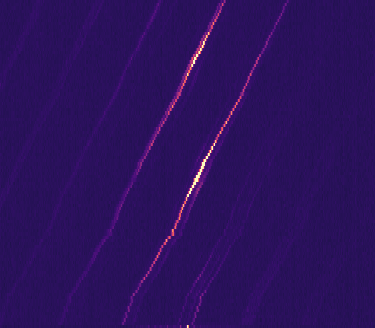
Fig 3: FPFC coupled SPE in a transferred and manipulated hBN flake. a) Normalized coupled emitter-cavity spectrum (orange) of a SPE

Fig 4: Hybrid optomechanical system based on an open FPFC resonator with an optomechanical membrane and flakes of hBN. a) Schematic
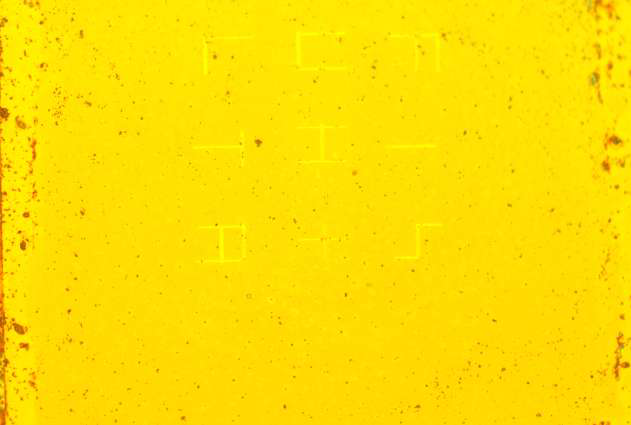
Fig 5: Observation of mechanical modes and cavity coupled fluoroescence of a SPE in hBn in a MiM-FPFC. a) Power spectral density
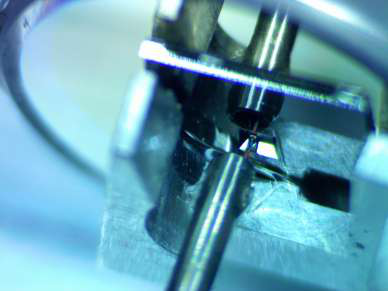
Fig 4 (page 6).
Limitations
- Experimental data obtained only at room temperature; narrower linewidth and Purcell enhancement may improve at cryogenic temperatures.
- Deterministic creation of SPEs in exfoliated hBN membranes is still challenging; this work uses commercial hBN flakes with random SPE placement.
- Mechanical strain transfer effectiveness across hBN–Si3N4 interface remains an open question and may limit strain-mediated coupling strength.
- Cavity length in membrane-in-the-middle configuration is limited to ~21 µm to avoid fiber–membrane contact, restricting minimal mode volume.
- Signal-to-noise ratio for cavity-coupled emission on membrane configuration is reduced compared to direct free-space coupling due to cavity geometry constraints.
- Potential effects of magnetic coupling to spin states and long-term stability of hybrid system not experimentally addressed here.
Open questions / follow-ons
- How efficiently does mechanical strain transfer from the Si3N4 membrane to the hBN flakes at the bonding interface and how does this affect spin-phonon or photon-phonon coupling?
- Can SPEs in hBN be deterministically created within thin membranes to enable large-area, uniform hybrid optomechanical devices rather than manipulating flakes?
- How would operating at cryogenic temperatures improve spectral linewidths, cavity Purcell factors, and spin coherence in this hybrid system?
- What is the feasibility and protocols for extending this platform for coherent spin-mechanical interactions or quantum information transduction?
Why it matters for bot defense
While not directly related to bot defense or CAPTCHA systems, this work advances hybrid quantum optomechanics with single photon emitters in layered materials—an area potentially relevant for ultra-secure quantum communication or quantum random number generation. The demonstrated ability to integrate high-quality SPEs into microcavities while preserving single photon purity and mechanical resonances can inspire new sources of quantum light or quantum optomechanical sensors. For CAPTCHA or bot defense engineers, the techniques for optomechanical coupling and nanoscale manipulation could inform future hardware-based entropy sources or tamper detection methods leveraging photon-phonon-spin interactions. The emphasis on deterministic integration and scalable system engineering also underlines the importance of precise nanoscale assembly—concepts valuable when designing robust and high-fidelity quantum devices with security applications. However, direct application would require further development of integrated quantum photonic devices tailored for security contexts.
Cite
@article{arxiv2607_19314,
  title={ Integration of hBN Single-Photon Emitters into a Hybrid Optomechanical Membrane-in-the-Middle Fiber-Cavity },
  author={ Patrick Maier and Alexander Kubanek },
  journal={arXiv preprint arXiv:2607.19314},
  year={ 2026 },
  url={https://arxiv.org/abs/2607.19314}
}