
Dark matter searches with a 13 meV threshold superconducting sensor array
Source: arXiv:2607.19319 · Published 2026-07-21 · By Christopher Albert, Lanqing Yuan, Jacob Harris, Ritoban Basu Thakur, Andrew Bear, Karl K. Berggren et al.
TL;DR
This paper addresses the challenge of detecting low-mass dark matter (DM) particles that deposit energy at the meV scale, a regime difficult to probe due to the lack of mature single-quantum detectors in the terahertz (THz) frequency band. The authors report results from QUALIPHIDE-FIR, a cryogenic dark matter experiment using a 41-pixel array of aluminum Microwave Kinetic Inductance Detectors (MKIDs) with an unprecedented 13 meV energy threshold. These MKIDs serve dual roles: detecting conversion photons from hidden photon DM via a gold-plated spherical mirror concentrator, and detecting phonons from particle-like light DM scattering off nuclei and electrons in the thin-film superconducting inductors. Their background model leverages on-focus pixels sensitive to DM signals and off-focus pixels for data-driven background estimation, enabling discovery potential rather than only exclusion limits.
After a blind 22-hour data collection and analysis, the experiment observed no statistically significant excess events. However, it set the strongest terrestrial limits on the kinetic mixing parameter χ for hidden photon dark matter in the mass range 13–90 meV/c^2, reaching 1.5×10^−12 at 50 meV/c^2. Additionally, it sets among the first experimental bounds on DM scattering cross sections off nuclei (down to 5 MeV/c^2 mass) and electrons (down to 20 keV/c^2 mass), pushing substantially below previous thresholds. The low 13 meV threshold is also used to probe the low-energy excess (LEE) background affecting cryogenic sensors, potentially informing its origins. The study projects that scaling up the system and integrating a magnetic field could enable sensitive terahertz-scale QCD axion DM searches.
Key findings
- A 41-pixel aluminum MKID array achieved a 13 meV energy threshold, the lowest to date for broadband DM direct detection.
- Blind analysis of 22 hours of data showed no significant excess; local discovery significance peaked at 1.33σ at 82 meV.
- Strongest terrestrial limit on hidden photon kinetic mixing χ over 13-90 meV/c^2 mass range, with χ < 1.5×10^−12 at 50 meV/c^2 (Fig. 4 left).
- Set new bounds on DM-nucleon and DM-electron scattering cross sections down to 5 MeV/c^2 (nuclear) and 20 keV/c^2 (electronic) masses (Fig. 5).
- Background model constructed from off-focus pixels enables data-driven discrimination; on-focus pixels collect signal at dish focus.
- Total detection efficiency for hidden photon signals ranges from 1% to 23% over energies considered, with dominant uncertainty δη = 18±2%.
- Intrinsic detector energy resolution calibrated as 8.5±1.0 meV at 50 meV photons and 5.8±1.2 meV at 22 meV photons (Fig. 2 middle).
- Observed low-energy excess extends down below 41 meV (single phonon energy in Al), about an order of magnitude below previous LEE measurements.
Threat model
The adversary is hypothetical dark matter particles: hidden photons coupling weakly to electromagnetism via kinetic mixing, or particle-like light DM scattering with electrons or nuclei. The adversary's signals are extremely weak and rare events depositing meV-scale energies in the detector. The adversary cannot produce easily distinguishable or coincident background signals, nor modify experimental conditions or backgrounds. Backgrounds arise from environmental photons, substrate phonons, and radiogenic particles, modeled using off-focus pixels.
Methodology — deep read
Threat model and assumptions: The experiment targets hidden photon DM modeled as vector bosons kinetically mixing with electromagnetism characterized by parameter χ, assuming the hidden photons constitute the entire local DM density ρDM = 0.45 GeV/cm3. Particle-like light DM scattering off electrons and nuclei inside the MKID Al inductors is also considered, with heavy and light mediator models. Incoming DM is assumed to have velocity distributions per Standard Halo Model with Earth velocity 240 km/s.
Data: The dataset consists of 22 hours of continuous MKID readout at 125 mK in a dilution refrigerator, with 41 MKIDs arranged hexagonally. Of these, four are on-focus pixels positioned at the geometrical focus of a gold-plated spherical mirror (dish) to collect DM-converted photons, while 37 off-focus pixels monitor background. The Al inductors (40 nm thick) serve as both photon absorbers and phonon targets. Data were sampled simultaneously at 38 kHz.
Architecture and algorithm: The MKIDs are superconducting microwave resonators whose kinetic inductance shifts when Cooper pairs are broken by photon or phonon interactions, causing measurable resonance frequency shifts. The system is calibrated with monoenergetic photon sources (25 µm/50 meV and 55 µm energies) for energy response. On- and off-focus pixels create separate data streams for background subtraction. Energy is reconstructed by optimal filtering of fractional frequency shifts relative to well-characterized pulse templates. Hits are identified via a hit-finder algorithm with threshold at 4× noise standard deviation. Multi-hit coincidences within 0.2 ms window are flagged as substrate events (background).
Training and calibration: A blinded analysis strategy was adopted. The energy resolution was modeled as a quadrature sum of readout noise (~2.8 meV above 7 meV) and intrinsic detector resolution found via MCMC fits to calibration data. Detector efficiencies (including geometry, microlens coupling, Al absorption, substrate transmission, and analysis cuts) were rigorously quantified; overall detection efficiency varied from 1% to 23% depending on energy. A salting-based simulation validated reconstruction and selection efficiency (median ~65% at 13 meV threshold).
Evaluation: The dark matter signals—monochromatic photons from hidden-photon conversion and phonon events from nuclear/electronic scattering—are expected as non-coincident single-channel hits, spatially focused or isotropic per model. Background model constructed from off-focus channels was incorporated as a data-driven likelihood component with nuisance parameters for low- and high-energy background rates, resolution, and efficiency. An extended unbinned likelihood was formed over reconstructed energies to test both signal-plus-background and background-only hypotheses. Limits and sensitivities were computed via profile likelihood ratio with Feldman-Cousins construction and power-constrained limits to avoid spurious exclusion. Search sensitivity and background uncertainties dominated the limits.
Controls: The experiment analyzed data while blinded on-focus pixels with known background model from off-focus pixels. The data showed no significant excess, consistent within statistical uncertainties. Calibration points anchored energy scale and resolution. Coincidence cuts removed substrate phonon backgrounds. All steps used open-source tools (straxion, CITKID).
Reproducibility: Analysis framework and calibration procedures are described; however, code and data release status is not explicitly stated. Detailed instrument design and readout parameters are given for replication.
Example end-to-end: A hidden photon of mass 50 meV converts to a monochromatic photon at the dish surface, focused onto on-focus pixels. The photon deposits energy in the Al inductor, breaking Cooper pairs and shifting MKID resonance frequency. The fractional frequency time series is convolved with a matched filter, producing a pulse crossing 4σ threshold. The pulse energy is reconstructed by optimal filtering using known templates calibrated at 50 meV. This hit appears only in the on-focus pixels without coincidence in off-focus pixels, matching the expected signal distribution. The processed dataset is then tested against the data-driven background likelihood, yielding upper limits on kinetic mixing χ. The absence of excess leads to χ < 1.5×10^−12 at 50 meV.
Technical innovations
- Application of aluminum MKID arrays optimized for single photon counting with an unprecedented low energy threshold of 13 meV for dark matter detection.
- Data-driven background modeling exploiting on-focus vs. off-focus pixel spatial arrangement to enable discovery potential rather than just exclusion.
- Dual-use MKID inductors as both photon absorbers for hidden photon conversion and sensor targets for phonon excitations from nuclear/electronic scattering.
- Integration of detailed calibration using monoenergetic photons at two wavelengths to constrain intrinsic energy resolution and validate reconstruction efficiency.
Datasets
- QUALIPHIDE-FIR dataset — 22 hours of 41 MKID pixel data — proprietary experimental data
Baselines vs proposed
- Previous terrestrial hidden photon experiments: kinetic mixing χ limit at 50 meV ~> 3×10^−11 vs QUALIPHIDE-FIR: 1.5×10^−12
- QROCODILE nuclear scattering threshold: 0.11 eV vs QUALIPHIDE-FIR: 13 meV threshold (~8.5× lower energy)
- Migdal-effect based limits on DM-electron scattering vs QUALIPHIDE-FIR limits extending to lower DM masses (down to 20 keV/c^2 electrons and 5 MeV/c^2 nuclei)
Figures from the paper
Figures are reproduced from the source paper for academic discussion. Original copyright: the paper authors. See arXiv:2607.19319.

Fig 1: QUALIPHIDE-FIR schematic and operational details. a: Rendering of array and
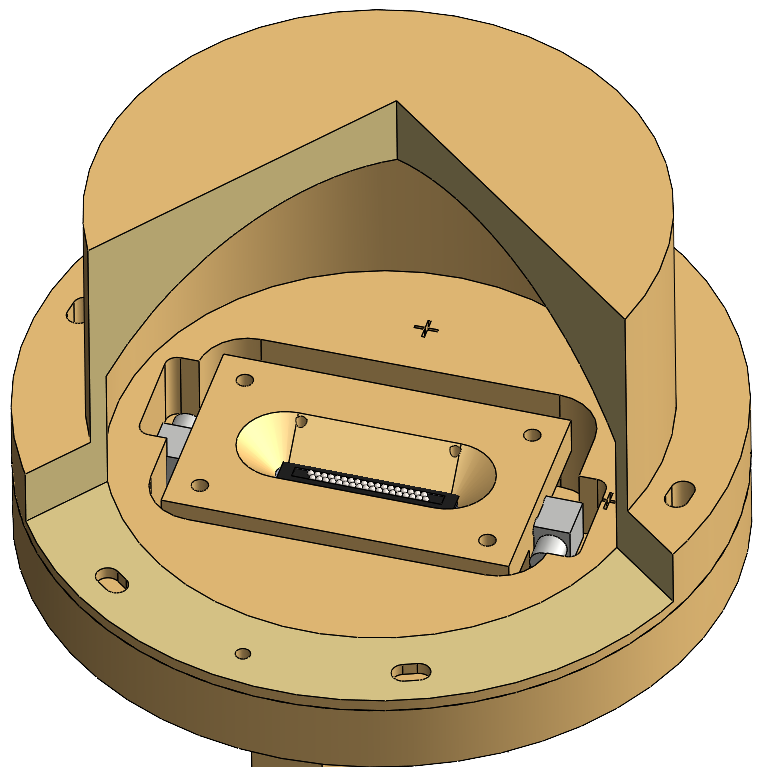
Fig 2 (page 3).
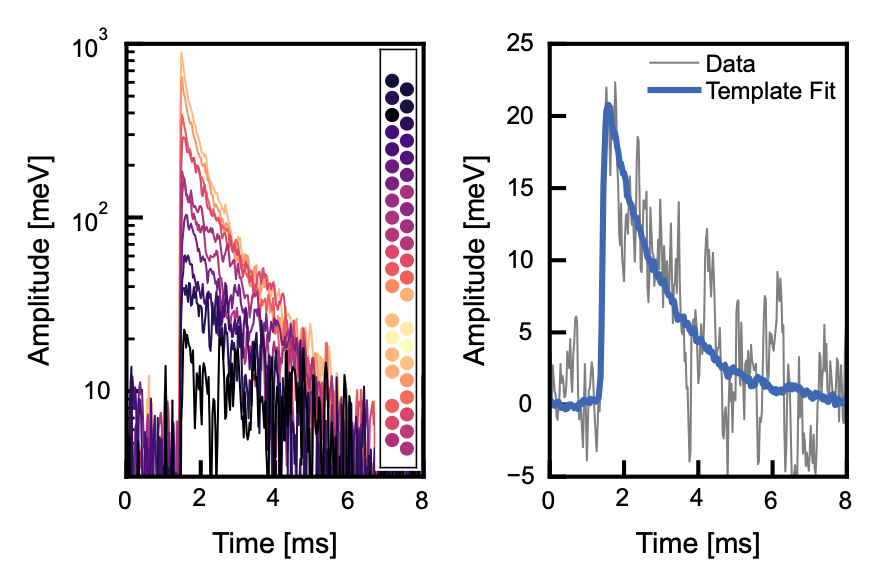
Fig 3 (page 3).
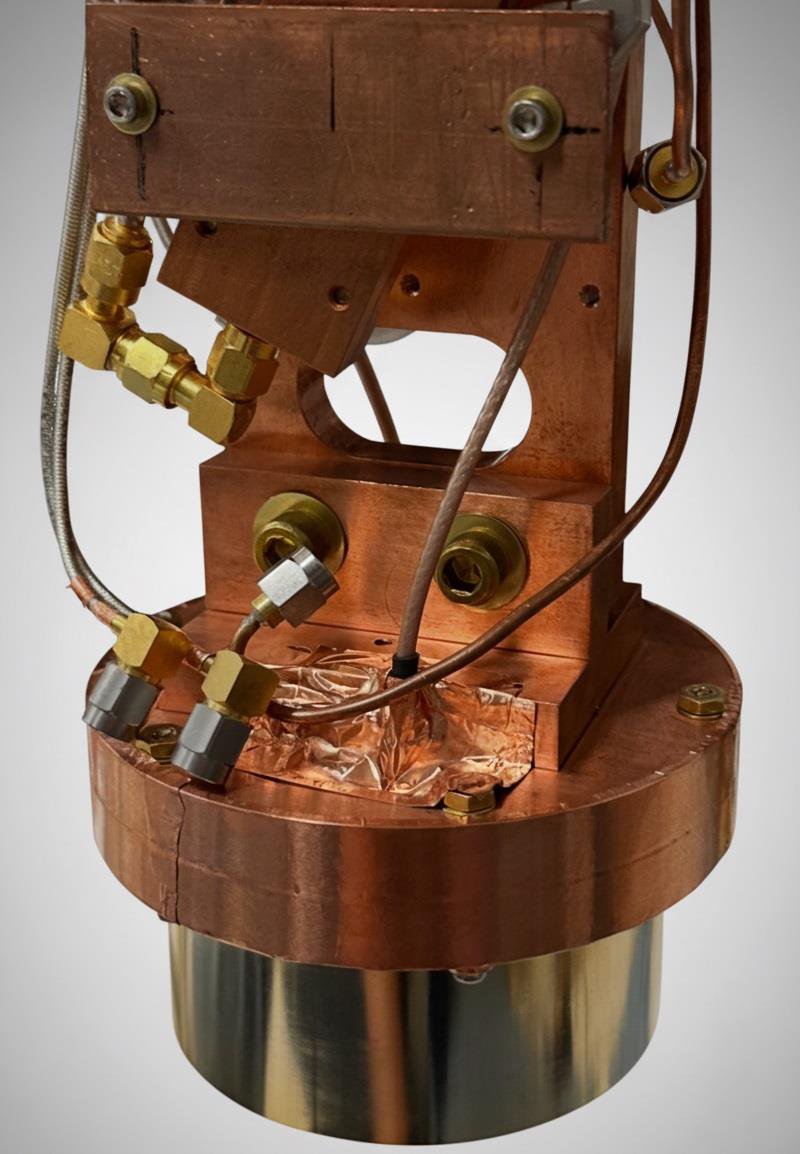
Fig 4 (page 27).
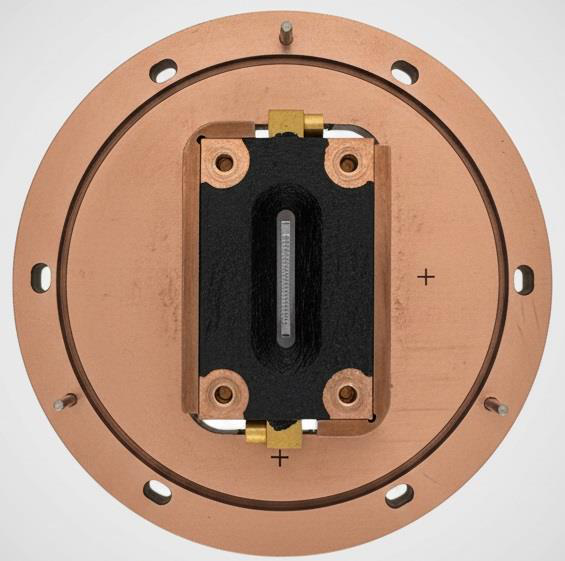
Fig 5 (page 27).
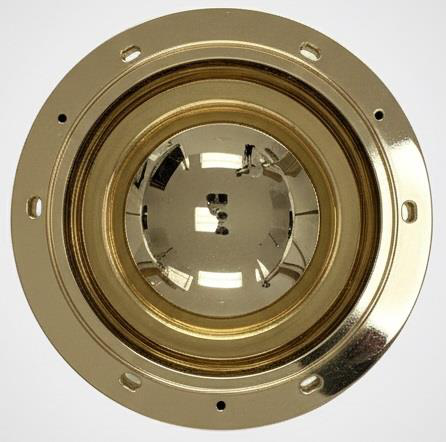
Fig 6 (page 27).
Limitations
- Only 22 hours of data with small total exposure (1.33 ng·day), limiting ultimate sensitivity and statistics.
- Background composition below 40 meV shows fluctuations beyond Poisson, indicating incomplete understanding of low-energy excess.
- Energy resolution calibration limited to two photon energies (25 and 55 µm), with no calibration above 70 meV or below 13 meV; resolution model extrapolated in gaps.
- Background and detection efficiency loss mechanisms in coupling (ηo) are not individually characterized, contributing dominant systematics.
- The MKID array sensitivity to phonons in substrate vs inductor is assumed but not demonstrated for all background types.
- No adversarial or off-nominal conditions tested; no distribution shift or repeated run analyses reported.
Open questions / follow-ons
- What are the dominant physical mechanisms generating the low-energy excess (LEE) at energies below 41 meV in Al MKIDs?
- Can improvements in background mitigation and shielding reduce signal-like background rates by factors of 10^3 or more to realize projected DM sensitivities?
- How would scaling up detector arrays to larger areas combined with strong magnetic fields enable discovery or exclusion of QCD axion DM in the THz band?
- What are the effects of varying MKID material properties, geometry, and substrate choice on energy resolution and threshold limits?
Why it matters for bot defense
While this paper is not directly about CAPTCHA or bot defense, it advances the frontier of ultra-low-threshold single-quantum detectors operating at energies far below typical sensor noise floors. For bot-defense practitioners interested in sensor technologies or anti-spoofing methods relying on rare-event quantum sensors or photon-counting techniques, MKIDs with such low energy resolution could inspire novel hardware-based liveness detection or anomaly detection mechanisms. The approach of using spatially distributed sensing pixels with data-driven background subtraction parallels multi-sensor correlation paradigms in advanced bot detection systems. The detailed characterization of low-energy excess backgrounds may also inform security practices regarding subtle sensor noise or adversarial signal mimics in low-signal environments.
Cite
@article{arxiv2607_19319,
  title={ Dark matter searches with a 13 meV threshold superconducting sensor array },
  author={ Christopher Albert and Lanqing Yuan and Jacob Harris and Ritoban Basu Thakur and Andrew Bear and Karl K. Berggren and Christopher Cappiello and Christopher Curwen and Peter Day and Byeong H. Eom and Arjun Ghosh and William Ho and Nikita Klimovich and Henry G. LeDuc and Karthik Ramanathan and Alejandro Simon },
  journal={arXiv preprint arXiv:2607.19319},
  year={ 2026 },
  url={https://arxiv.org/abs/2607.19319}
}