
AI-Powered Browsers Are Broadly Accurate News Summarizers That Reduce Political Bias and Negative Affect
Source: arXiv:2607.18931 · Published 2026-07-21 · By Yan Xia, Dominik Batorski, Erin Wertz, Michalis Mamakos, Lucen Li, Magdalena Wojcieszak
TL;DR
This study performs the first large-scale, systematic audit of AI-powered news summarization tools integrated into mainstream web browsers, focusing on their factual accuracy, political bias, negative affect, and journalistic quality transformations. The authors analyzed 41,331 AI-generated summaries of 13,777 news articles from 15 U.S. news outlets spanning the political spectrum, produced by Google Chrome (Gemini), Microsoft Edge (Copilot), and Perplexity Comet. They find that browser-based AI summarizers are broadly accurate, preserving about 83% of facts from source articles, with inaccuracies mainly due to linguistic imprecision rather than fabricated content.
Beyond accuracy, these AI tools consistently reduce ideological bias, partisan stances, negativity, anger, and fear expressed in news articles while increasing clarity, reducing personal tone, and eliminating clickbait language. These effects hold across all three browsers, outlet leanings, and a diverse set of 19 political topics, though Edge shows a stronger attenuation of pro-Republican bias. However, AI summarization tends to flatten engagement, making news less vivid or attention-grabbing. The research highlights AI-powered browsers as editorial intermediaries reshaping news consumption, with implications for democratic discourse and AI governance.
Key findings
- AI-generated news summaries achieve an average factual accuracy of 82.8%, with Edge leading at 88.3% and Chrome lowest at 76.6% supported sentences (Fig. 2A).
- Only 2.5% of sentences in summaries contradict their source, and 14.7% are unverifiable; most inaccuracies stem from imprecise wording or supplementary context (Appendix B.1).
- AI summarizers reduce ideological bias in 30.8% of biased articles and produce neutral summaries for 94.7% of neutral articles (Fig. 1B).
- Political stance attenuation is asymmetric: 41.2% of pro-Republican articles have reduced positivity vs. 22.6% of anti-Republican ones (Fig. 3A).
- AI tools reduce negativity in 34.8%, anger in 56.1%, and fear in 21.2% of articles expressing these affects, introducing negative affect at far lower rates (Fig. 4A).
- AI summaries increase clarity in 80.3% of low-clarity articles, reduce personal tone in 72.7% of articles with it, and reduce clickbait in 86.6% of articles exhibiting sensationalism (Fig. 1D).
- Engagement decreases overall, with 78% of highly engaging articles summarized into less engaging text, flattening storytelling style.
- Patterns of accuracy, bias reduction, and journalistic quality improvements hold consistently across browsers, outlet ideologies, and 19 political topics.
Threat model
The adversary is implicit in the sense of algorithmic biases or factual inaccuracies embedded in proprietary AI summarization tools that could distort news content before users read it. These black-box summarizers may introduce subtle ideological bias or misinformation. The auditor assumes the adversary cannot fully manipulate or deceive users with fabricated content but may influence political attitudes via biased attenuation or distortion of news articles. There is no direct adversarial attacker injecting malicious data, but rather systemic biases within AI summarization pipelines.
Methodology — deep read
Threat model & assumptions: The study treats AI-powered summarizers in browsers as editorial intermediaries but does not explicitly define adversarial threat models. Assumptions include these summarizers being black-box proprietary systems influencing millions of users’ news consumption by rewriting article content. The adversary could be algorithmic biases or inaccuracies that inadvertently shape political attitudes or misinformation.
Data: The dataset includes 13,777 articles sampled from 15 U.S. news outlets representing left-leaning, centrist, and right-leaning ideologies (1,000 articles per outlet initially). After collection, 41,331 AI-generated summaries from three browsers (Google Chrome/Gemini, Microsoft Edge/Copilot, Perplexity Comet) were obtained for these articles. Articles span 19 politically salient topics, from U.S. elections to international conflicts. The data was preprocessed using LLM-based sentence decomposition, factual verification prompts, and classifier models for bias and affect annotation.
Architecture / algorithm: The browser AI summarizers are proprietary LLM-based models (Gemini, Copilot) and AI-native Perplexity Comet. For evaluation, the authors used LLMs (GPT-based) to decompose summaries into sentences and assess each sentence's factual support against the source article. Transformer-based classifiers and LLM prompting were used to label ideological bias (five-point scale), partisan stances (positive/neutral/negative toward parties), negativity, anger, fear, clarity, personal tone, clickbait, and engagement.
Training regime: Not applicable for the proprietary browser systems. The authors trained their classifiers and developed prompts for LLM annotations. Details such as epochs or hyperparameters of these classifiers are provided in Appendix A.2. Human validation was performed over a subset to confirm annotation quality.
Evaluation protocol: Accuracy was measured as the proportion of factually supported sentences per summary. Political bias and affect changes were analyzed as transition matrices comparing sources vs. summaries, with statistical significance tests (Wilcoxon signed-rank, McNemar tests with Holm correction). Analyses were stratified by browser, outlet ideology, and topic. Qualitative analyses investigated error types and asymmetries.
Reproducibility: The paper references Appendix A and B for prompts, annotation details, and qualitative analyses. The proprietary nature of browser summarizers precludes direct replication of summary generation. Classifier training code and prompts may be provided but no public dataset or frozen model weights are mentioned.
Concrete example: For a given political news article from a right-leaning outlet on the US election, the browser AI generates a summary which is decomposed into sentences by the evaluation LLM. Each sentence is checked for factual support against the source article. Bias and affect metrics for the article and its summary are compared, revealing, for instance, less ideological bias and negativity in the summary. The summary is also assessed for clarity, personal tone, etc., showing improved journalistic quality but lowered engagement.
Technical innovations
- Large-scale ecological audit methodology leveraging real browser AI summarizers (Gemini, Copilot, Comet) to evaluate summary accuracy and content shifts at scale.
- Use of LLM-based decomposition and factual verification of summary sentences against source articles to provide fine-grained accuracy assessments.
- Comprehensive multidimensional content analysis combining political bias (ideological and partisan stance), negative affect (negativity, anger, fear), and journalistic quality metrics for both articles and summaries.
- Cross-browser and cross-ideology comparative analysis revealing asymmetric bias attenuation patterns and robustness across 19 political topics.
Datasets
- U.S. News Articles Dataset — 13,777 articles — sampled from 15 U.S. news outlets (5 left-leaning, 5 centrist, 5 right-leaning), collected circa 2026
Baselines vs proposed
- Google Chrome (Gemini): Average accuracy = 76.6% supported sentences vs Microsoft Edge (Copilot): 88.3% vs Perplexity Comet: 83.4%
- Political bias reduction rate (ideological bias) in Edge right-leaning articles: 53% reduction vs Chrome: 28% vs Comet: 19%
- Negativity reduction in Chrome: 37% vs Edge: 36% vs Comet: 31% for negative articles
- Anger reduction in Edge: 73% vs Chrome: 53% vs Comet: 42%
- Clarity improvement on low-clarity articles: Comet: 83% vs Chrome: 81% vs Edge: 76%
Figures from the paper
Figures are reproduced from the source paper for academic discussion. Original copyright: the paper authors. See arXiv:2607.18931.
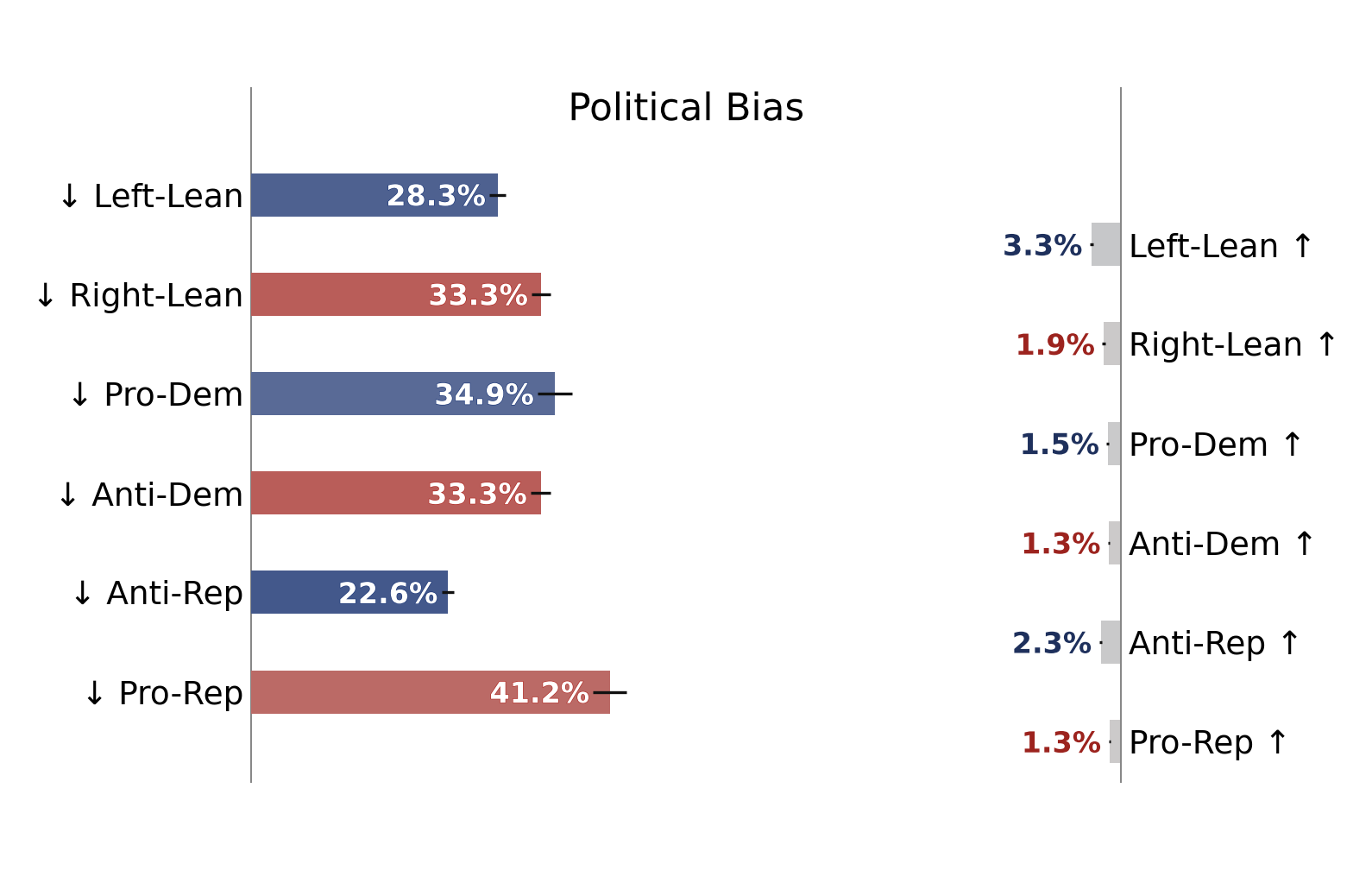
Fig 1: Performance of AI-generated news summaries in terms of (A) factual accuracy, (B) change in political bias (ideological bias, and
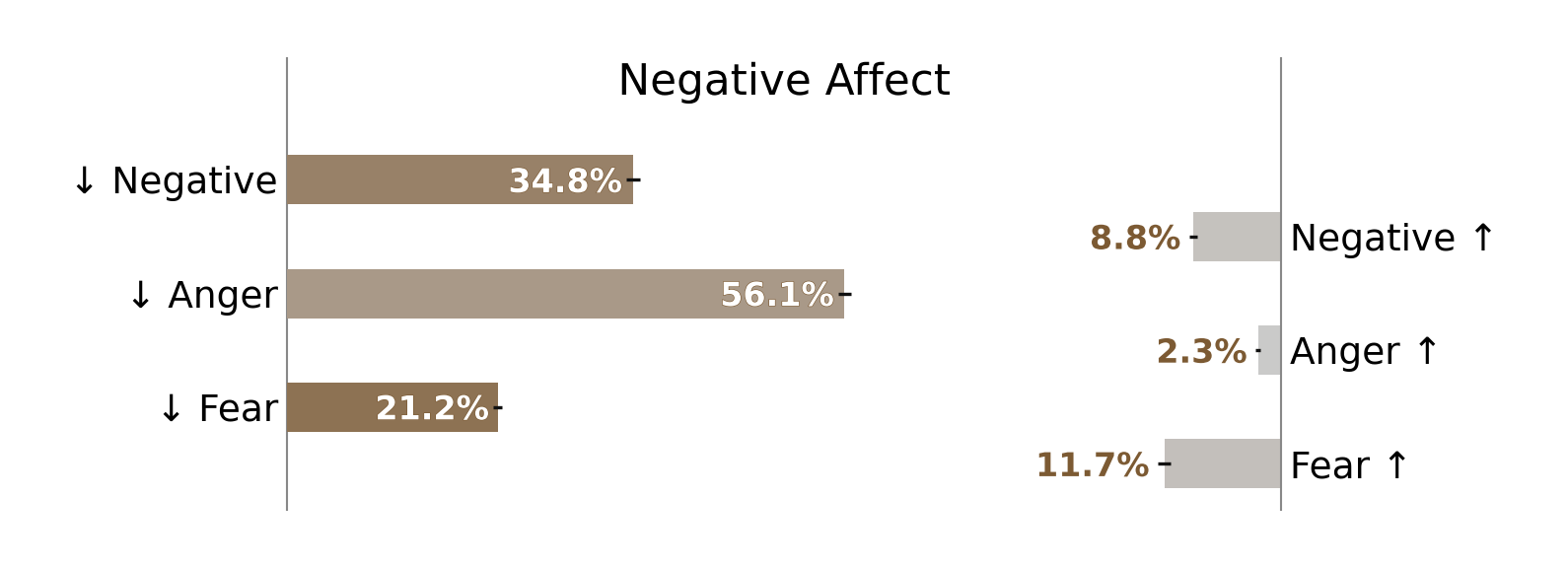
Fig 2: Average summary accuracy by (A) browser, (B) outlet leaning, and (C) topic. Error bars indicate 95% confidence intervals.
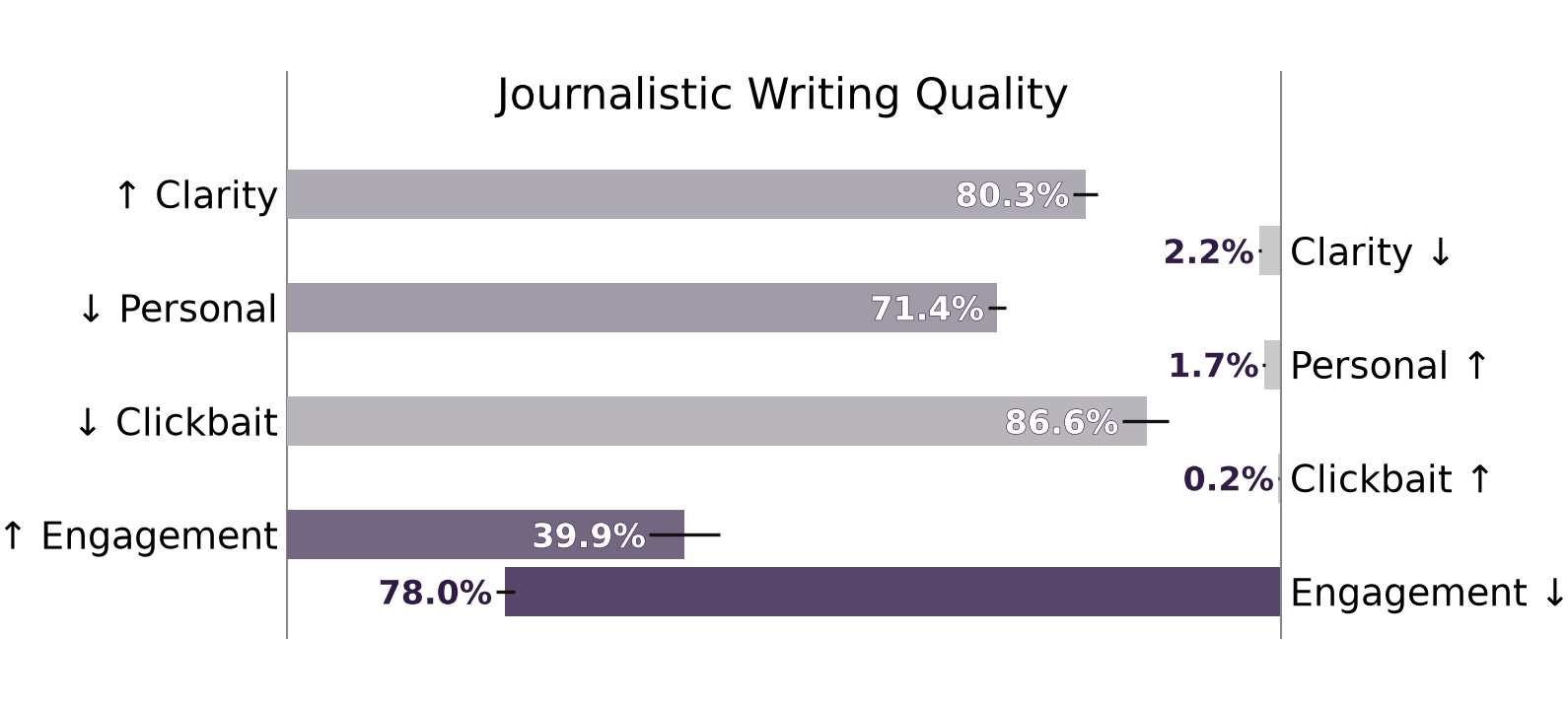
Fig 3: Change in political bias (ideological bias, stance toward Democrats, and stance toward Republicans) introduced by AI news

Fig 4 (page 3).
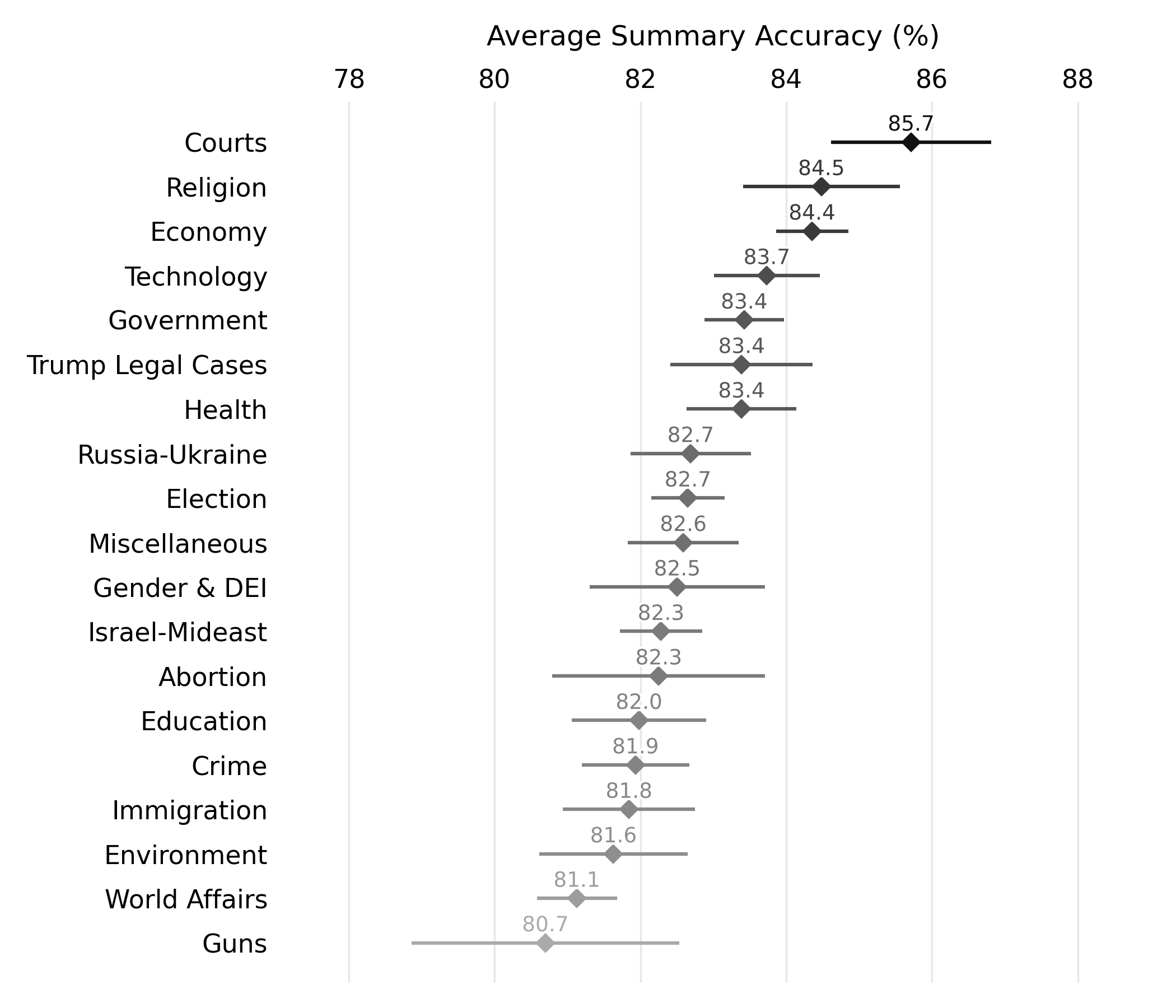
Fig 4: Change in negative affect (negativity, anger, and fear) introduced by AI news summarizers, by (A) browser and (B) outlet leaning.
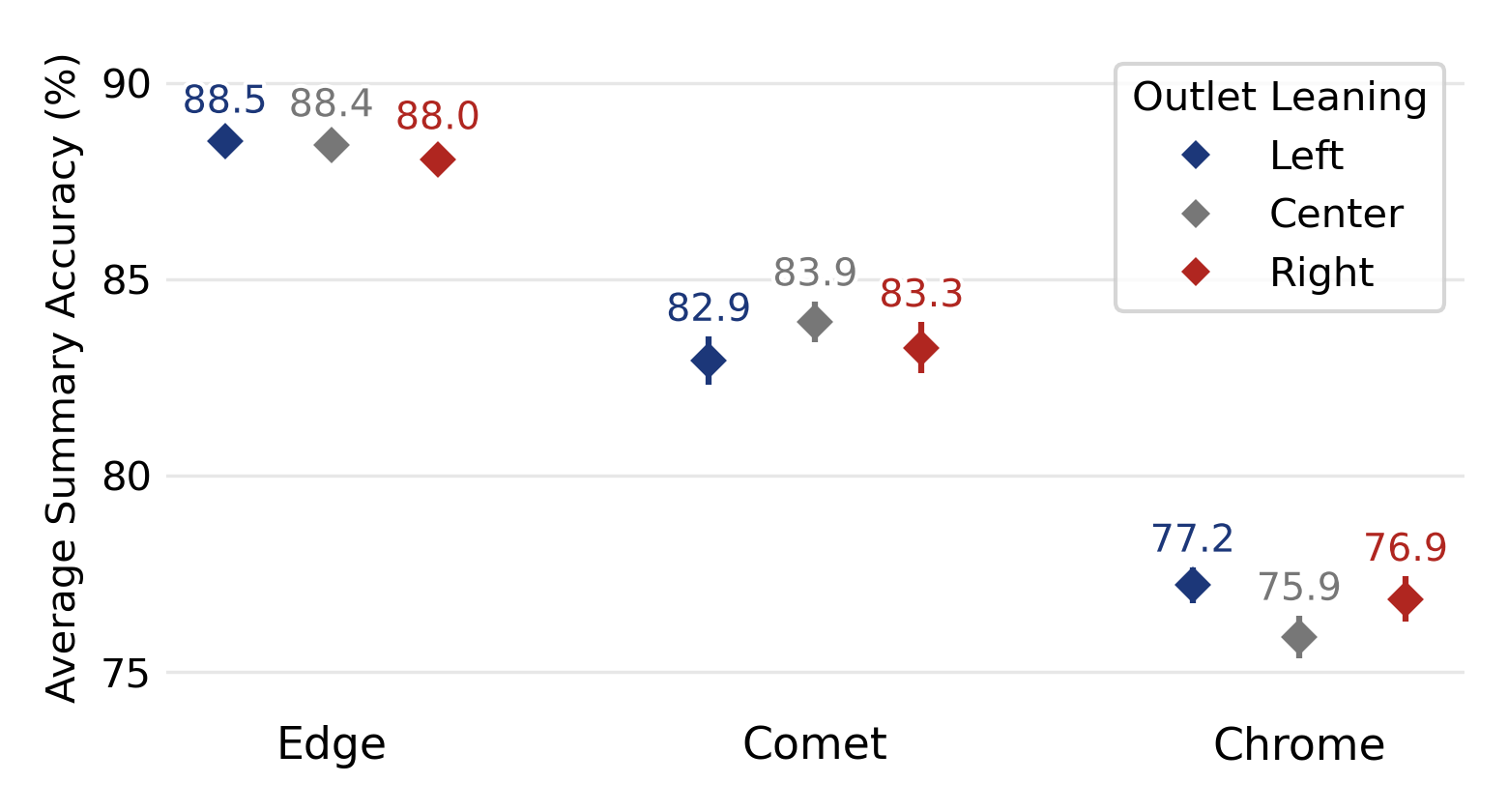
Fig 6 (page 4).
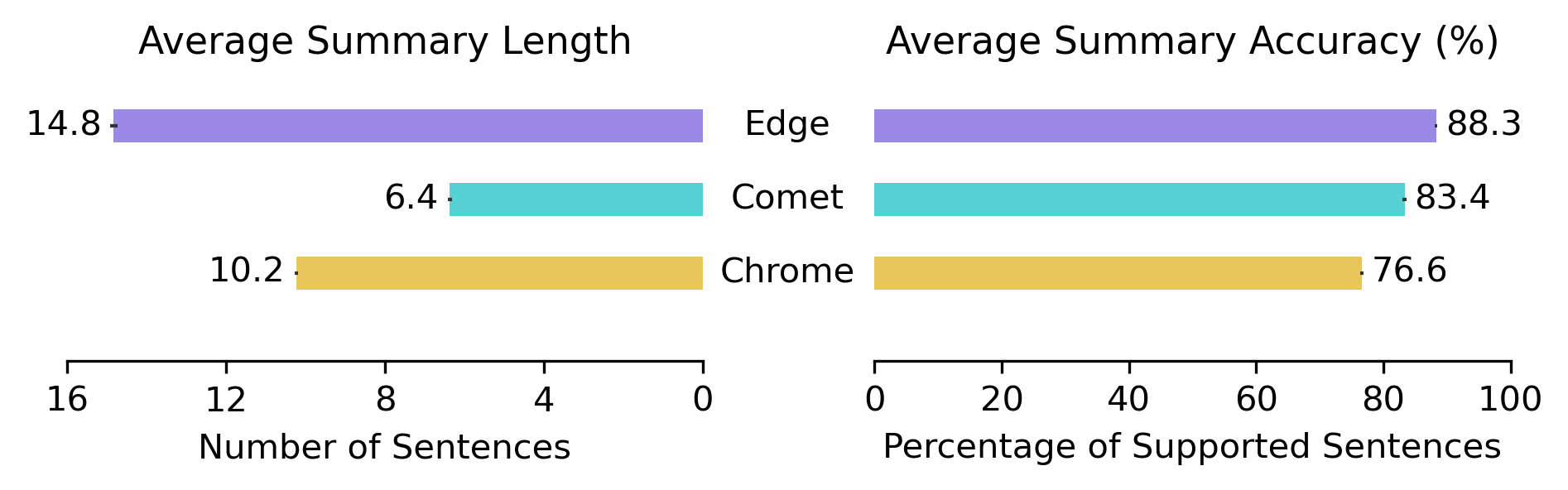
Fig 7 (page 4).
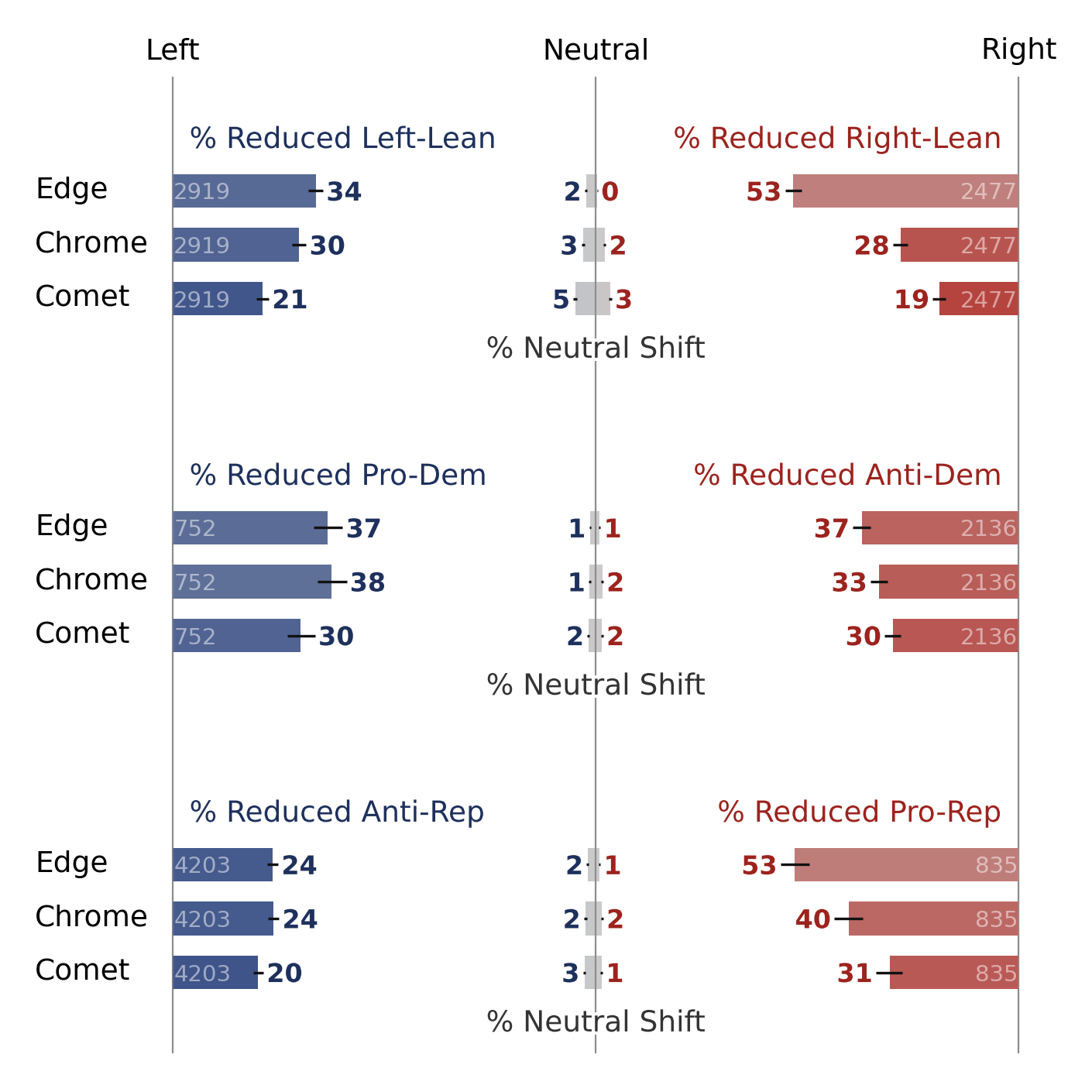
Fig 8 (page 5).
Limitations
- Proprietary, black-box nature of browser AI summarizers limits insight into model architectures and prompt engineering used.
- The audit focuses on English language news and U.S. political context only, limiting generalizability to other languages and media systems.
- Evaluation measures transformations in content features but does not assess downstream audience effects on political attitudes or polarization.
- Accuracy evaluation relies on LLM-based sentence-level fact checking, which may have limitations and uncertainties in annotation validity.
- The dataset covers a specific time window; rapid evolution of models could change performance and biases over time, necessitating longitudinal audits.
- Flattening of engagement by AI summaries may reduce readability and emotional impact, potentially affecting user experience negatively.
Open questions / follow-ons
- What are the long-term effects of AI-generated news summaries on users' political attitudes, polarization, trust in media, and news engagement?
- How do AI summarizers perform across different languages, countries, and media systems beyond U.S. English-language news?
- What are the internal mechanisms (model architecture, prompting, safety policies) driving consistent attenuation of bias and affect in these summarizers?
- How can AI summarization tools balance reducing bias and negativity with preserving nuanced journalistic intent and engagement?
Why it matters for bot defense
Bot-defense and CAPTCHA practitioners can see AI-powered browsers as influential editorial intermediaries shaping the content users receive, which may affect misinformation and manipulation risks in online ecosystems. Understanding the accuracy and bias characteristics of these AI summarizers helps assess how such tools mediate information quality before user interaction — an understudied front that complements traditional bot-detection approaches focused on interaction or traffic patterns. Furthermore, the finding that these summarizers tend to reduce political bias and negative affect may mitigate some social engineering attack vectors that exploit partisan emotions, but the uneven attenuation patterns also indicate areas where adversarial exploitation remains possible. Practitioners designing content security and trust frameworks should consider how AI rewriting layers influence user perceptions and downstream behavioral risks.
Cite
@article{arxiv2607_18931,
  title={ AI-Powered Browsers Are Broadly Accurate News Summarizers That Reduce Political Bias and Negative Affect },
  author={ Yan Xia and Dominik Batorski and Erin Wertz and Michalis Mamakos and Lucen Li and Magdalena Wojcieszak },
  journal={arXiv preprint arXiv:2607.18931},
  year={ 2026 },
  url={https://arxiv.org/abs/2607.18931}
}