
Compositional Semantic Communication for Physical AI: Category Theory Meets Game Theory
Source: arXiv:2607.18115 · Published 2026-07-20 · By Christo Kurisummoottil Thomas, Walid Saad, Emilio Calvanese Strinati
TL;DR
This paper addresses the core challenge in physical AI systems of enabling multiple heterogeneous sensing devices to efficiently coordinate and perform remote inference through semantic communication that is compositional and scalable. Transmitting raw sensor data induces high bandwidth use, latency, and redundancy, while existing deep learning joint source-channel coding methods often lack adaptability, generalization, and scalability when sources and tasks vary. To overcome this, the authors propose a novel compositional semantic communication (CSC) framework which models semantic representations (SRs) of different devices as compositional objects that can be formally and consistently aligned and composed at a base station or edge server. Using advanced category-theoretic constructs such as lenses, Karoubi envelopes, and Grothendieck topologies, the work rigorously defines a new measure of compositional semantic information capturing causality and task relevance beyond mutual information. The multi-device coordination problem of encoding and composition is modeled as a Stackelberg game where devices commit to encoding strategies and the base station optimally composes the received semantic messages. An ADMM-based decentralized algorithm computes equilibrium signaling strategies with proven existence and Pareto efficiency under mild conditions. Simulations demonstrate that the approach reduces communication overhead by up to 17% and end-to-end latency by 53% compared to cooperation and uniform selection baselines, while maintaining 85% inference accuracy across large multi-sensor autonomous driving scenarios. This rigorous theoretical grounding combined with practical algorithms enables scalable, generalizable semantic communication for heterogeneous physical AI systems.
Key findings
- Proposed CSC framework achieves up to 17% bandwidth reduction compared to cooperative multi-agent, distributed gradient descent, and uniform-selection CSC baselines.
- End-to-end latency reduced by 53% versus baseline methods in multi-sensor inference tasks.
- Maintains 85% inference accuracy across diverse autonomous driving scenarios with multiple sensors and large semantic concept sets.
- Stackelberg equilibrium for encoding and composition strategies exists under mild regularity conditions (Theorem 2).
- Equilibrium is Pareto optimal when compositional information yields increasing collective benefit (Theorem 4).
- Compositional semantic information measure based on Karoubi envelopes and category theory captures causal, hierarchical semantic contributions beyond mutual information.
- Grothendieck topology ensures the semantic consistency of composed heterogeneous semantic representations at the base station.
- ADMM-based decentralized algorithm provably converges to equilibrium signaling strategies enabling scalable multi-device coordination.
Threat model
n/a - The paper does not explicitly target adversarial threats or malicious attacks but focuses on multi-device semantic alignment and coordination for physical AI systems under normal operational conditions. Assumes devices collaboratively encode semantic information to optimize joint task inference at a remote center without considering active disruption or deception.
Methodology — deep read
Threat model and assumptions: The adversary model is implicit as the paper focuses on efficient multi-device semantic coordination rather than explicit security threats. The challenge is handling heterogeneous physical AI devices with diverse sensors and AI models transmitting semantic representations that must be aligned and composed at a remote base station (BS) for inference. Assumptions include devices extracting semantic concepts locally (semantic extraction assumed solved) and communicating over wireless channels that may introduce noise.
Data provenance and preprocessing: The data comprises sensor observations from multiple heterogeneous AI devices (e.g., cameras, LIDAR, audio, motion sensors), each producing high-dimensional raw data (X_k in R^{d x N}). Each device extracts semantic concepts C_k relevant to a given downstream inference task, then encodes these into device-specific semantic representation spaces E_k. No explicit dataset sizes are specified, but experiments reflect large-scale autonomous driving scenarios with many concepts.
Architecture and algorithms: The core abstraction is semantic concept representations modeled with category theory constructs. Encoding and decoding maps form lenses (get and put operations) ensuring semantic consistency with compositional structure. Concepts compose hierarchically via Karoubi envelopes pairing semantic concepts with correlator functions η defining composition rules. Grothendieck topologies formalize semantic consistency across heterogeneous device semantic spaces and the BS inference target. Multi-device coordination is cast as a Stackelberg game where leader devices choose encoding strategies and the BS follower composes SRs optimally.
Training regime and optimization: The semantic encoding strategies and composition maps are optimized via an alternating direction method of multipliers (ADMM) algorithm that allows decentralized computation of equilibrium signaling strategies with limited message passing. The equilibrium existence and convergence are proved under regularity conditions. Training epochs, batch sizes, or hardware are not specified explicitly.
Evaluation protocol: Metrics include bandwidth usage, end-to-end latency, and inference accuracy on remote tasks across multiple sensor modalities and concept sets. Baselines include cooperative multi-agent approaches, distributed gradient descent, and uniform semantic concept selection. Experiments include both held-out test distributions and novel sensor concept combinations to evaluate generalization.
Reproducibility: Some theoretical constructs rely on approximated probabilities from learned energy functions (details in [34], not fully specified here). The paper does not explicitly state code release or frozen models, nor does it use closed datasets. The categorical formalism and game-theoretic algorithm formulations are well documented allowing for independent replication given sufficient domain expertise.
Example end-to-end: A device k with camera observes an image x_ref encoding semantic concepts {person, sitting} using the get operation of its lens. To alter semantics (e.g., change color attribute), put operation generates new data x_new with updated concepts (e.g., {color: blue, person, sitting}). Multiple heterogeneous device concepts (e.g., from camera, lidar, audio) are mapped via Grothendieck morphisms into a consistent semantic space at BS, composed hierarchically via correlators η forming a unified semantic representation for inference y = f(c_composed). Encoding strategies are optimized via the Stackelberg game and ADMM, ensuring semantic alignment and decentralized computation.
Technical innovations
- Novel information-theoretic compositional semantic information measure using category theory constructs (Karoubi envelopes and correlators) that quantifies causal and hierarchical semantic contributions beyond mutual information.
- Use of Grothendieck topologies and presheaves to formalize semantic consistency and compositional closure across heterogeneous device semantic representation spaces.
- Formulation of multi-device semantic encoding and composition coordination as a Stackelberg game with formally proven equilibrium existence and Pareto optimality under synergy conditions.
- ADMM-based decentralized algorithm for computing equilibrium encoding strategies enabling scalable coordination via limited message passing.
Baselines vs proposed
- Cooperative multi-agent CSC baseline: end-to-end latency reduced by 53% versus proposed CSC approach.
- Distributed gradient descent CSC baseline: bandwidth usage reduced by up to 17% with proposed CSC.
- Uniform-selection CSC baseline: inference accuracy maintained at 85% by proposed CSC while improving communication and latency.
Figures from the paper
Figures are reproduced from the source paper for academic discussion. Original copyright: the paper authors. See arXiv:2607.18115.

Fig 1: Overview of the proposed CSC system, with applications across physical AI and networking.
Fig 2: Hierarchical semantics via Fibrational semantic language.

Fig 3 (page 4).
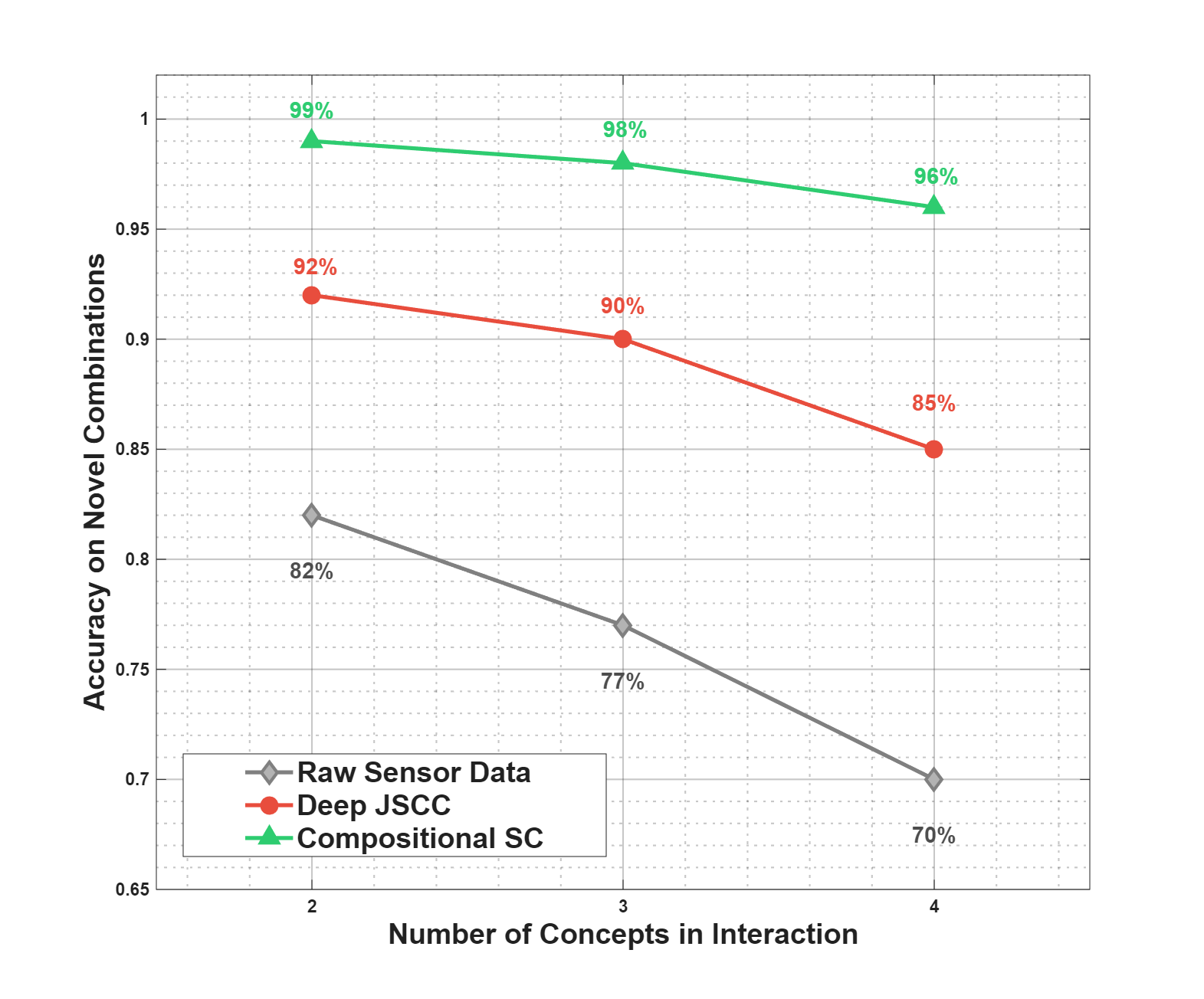
Fig 3: (a) Classification accuracy for training and test distribution. (b) Proposed game-theoretic CSC Convergence vs training epoch. (c) Accuracy on novel combinations as a
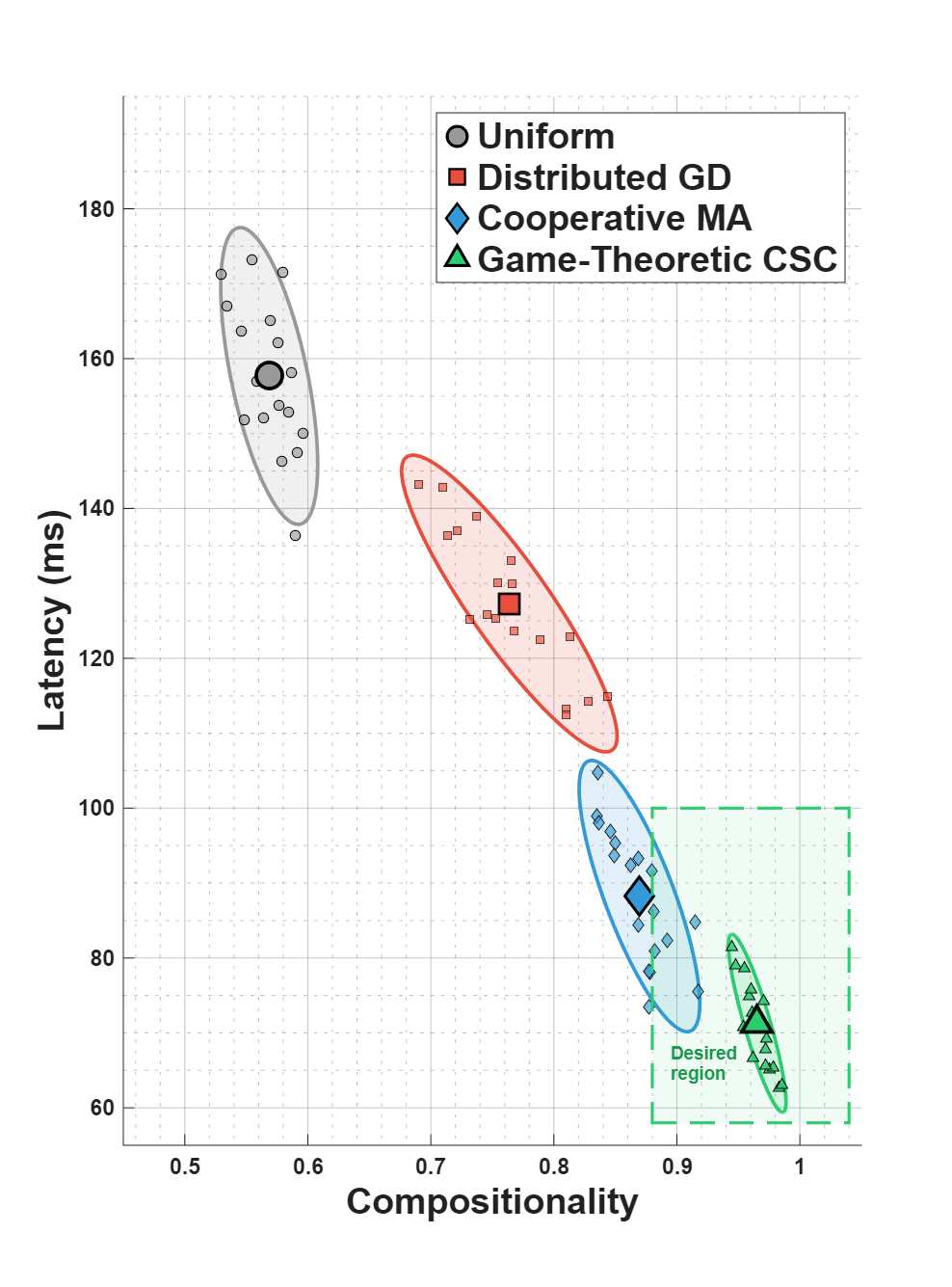
Fig 6: (a) Bandwidth savings as the number of concepts. (b) Convergence of
Limitations
- Semantic concept extraction at the device side is assumed solved and not addressed.
- Theoretical and algorithmic frameworks may be complex to implement for large-scale heterogeneous sensor fleets in practice.
- No explicit adversarial or security threat evaluation against malicious semantic data injection or spoofing.
- Evaluation limited to autonomous driving scenarios; generalization to other physical AI domains requires further study.
- Approximation of probabilistic components uses learned energy functions whose details and training are not fully described.
- No indication of real-world deployment or tests under non-ideal wireless channel conditions with packet loss or interference.
Open questions / follow-ons
- How to extend the framework to explicitly handle semantic security threats such as spoofing or adversarial semantic manipulations?
- Methods for dynamically constructing or learning the semantic consistency morphisms (Grothendieck topology morphisms) from data in heterogeneous and evolving device fleets.
- Scalability and complexity trade-offs when applying the compositional semantic framework to very large-scale networks with hundreds or thousands of devices.
- Empirical evaluations in physically deployed heterogeneous sensor networks under real wireless channel impairments.
Why it matters for bot defense
This work is highly relevant for bot-defense and CAPTCHA-like systems where multiple distributed sensory and reasoning agents must efficiently communicate task-relevant semantic information under bandwidth and latency constraints. By leveraging compositional semantic communication grounded in category theory, systems can more robustly align heterogeneous inputs—such as behavioral signals or sensor-derived features—and compose them meaningfully for integrated inference. The Stackelberg game formulation and ADMM equilibrium algorithms provide scalable decentralized coordination protocols that adapt to environment and device dynamics without re-training. Thus, bot-defense engineers can consider adopting such compositional semantic frameworks to improve real-time threat detection and collaborative inference from diverse signals, minimizing redundant or extraneous data transmission while preserving interpretability and alignment. However, practical deployment requires careful integration with existing security mechanisms and evaluation against adversarial semantic input manipulation.
Cite
@article{arxiv2607_18115,
  title={ Compositional Semantic Communication for Physical AI: Category Theory Meets Game Theory },
  author={ Christo Kurisummoottil Thomas and Walid Saad and Emilio Calvanese Strinati },
  journal={arXiv preprint arXiv:2607.18115},
  year={ 2026 },
  url={https://arxiv.org/abs/2607.18115}
}