
A Continual Validation, Updating, and Decision-Making Framework for Self-Adaptive Digital Twins via Robust Model Predictive Control: A Case Study in Additive Manufacturing
Source: arXiv:2607.18164 · Published 2026-07-20 · By Yi-Ping Chen, Ying-Kuan Tsai, Vispi Karkaria, Seul Lee, Daniel Apley, Wei Chen
TL;DR
This work addresses the fundamental challenge of maintaining the fidelity and trustworthiness of neural-network-based Digital Twins under evolving operating conditions characterized by concept drift. Digital Twins rely on surrogate models to mirror physical systems in real time, but distributional shifts degrade model accuracy and predictive uncertainty quantification over time. Existing adaptive frameworks lack principled mechanisms to determine when updates are needed, how to efficiently adapt from limited streaming data, and how to validate updates statistically before deployment. The authors propose a unified continual validation, updating, and decision-making framework that integrates (1) a Fisher score–based multivariate drift detector for sensitive, interpretable detection of concept drift in surrogate models, (2) Low-Rank Adaptation (LoRA) fine-tuning enabling parameter- and data-efficient continual learning of neural network surrogates while mitigating catastrophic forgetting, and (3) an online Mann–Whitney U test–based validation step to statistically certify that surrogate updates improve predictive loss before live model replacement. They demonstrate the framework on a stochastic linear system and a real-world directed energy deposition (DED) additive manufacturing process. The framework detects abrupt and incremental drift with short delays and restores both model accuracy and calibrated uncertainty under changing conditions. This provides a statistically rigorous, computationally tractable solution for maintaining Digital Twin trustworthiness throughout its operational life cycle under distributional shift.
Key findings
- Fisher score–based drift detection achieves sensitive multivariate detection of distributional shifts in NN surrogate models with short detection delays (Section 4, Figure 7).
- LoRA fine-tuning updates fewer than 1% of model parameters online using limited streaming data, reducing overfitting and mitigating catastrophic forgetting compared to full fine-tuning (Section 4.2, Table 2).
- The Mann–Whitney U test–based online validation method statistically certifies whether the newly adapted model significantly improves predictive quantile loss over the live model before deployment (Section 3.5).
- Integration of the three components within an adaptive Digital Twin closed-loop with robust MPC maintains predictive accuracy and uncertainty quantification under abrupt and incremental concept drift (Section 5, Figures 14–17).
- The proposed framework outperforms baseline update strategies including naive periodic retraining and head-only fine-tuning in experimental benchmarks (Section 4.3).
- The framework generalizes across synthetic stochastic linear and real-world nonlinear additive manufacturing process models that include aleatoric uncertainty (Section 5).
- The approach supports real-time online adaptation with computationally efficient drift detection, fine-tuning, and validation mechanisms suitable for embedded deployment.
- Parameter-efficient adaptation via LoRA maintains model stability and predictive robustness over extended streaming data under drift, facilitating continual learning without restarting from scratch.
Threat model
The adversary is implicitly the non-stationary environment causing distributional shifts (concept drift) in the Digital Twin’s input-output relationship over time. The system assumes the adversary cannot directly tamper with model parameters or data streams maliciously but induces drift naturally through evolving system dynamics or latent process changes. The framework cannot prevent drift itself but aims to detect and adapt to it autonomously while maintaining model trustworthiness.
Methodology — deep read
Threat Model & Assumptions: The adversary is implicit in distributional shifts causing concept drift during Digital Twin operation. The system assumes streaming sensor data from the physical process is available, but incoming data distribution changes over time due to parameter variation, unmodeled dynamics, or material changes not known a priori. The model must detect and adapt to these evolving conditions without human intervention or halting operation.
Data: The framework is evaluated on two settings: (a) a synthetic stochastic linear system with known drift injections, and (b) a high-fidelity GAMMA simulation of a directed energy deposition (DED) additive manufacturing process with simulated drift in material properties. Both datasets simulate streaming noisy observations with time series inputs and outputs. Training/test splits include offline pretraining followed by online adaptation on streaming data. Labels are continuous state vectors for regression. Preprocessing includes windowing into look-back input sequences and corresponding target prediction horizons.
Architecture & Algorithm: The surrogate model is TiDE—a Time-series Dense Encoder neural network comprising stacked residual blocks with separate encoder and decoder for simultaneous multi-step prediction. TiDE replaces autoregressive and transformer models for faster inference. TiDE outputs quantile regression predictions for aleatoric uncertainty quantification. For drift detection, the gradient of the log-likelihood with respect to model parameters (Fisher score vector) is computed on streaming data and monitored via a multivariate detector using a diagonal covariance approximation and bootstrap-estimated thresholds. For model adaptation, Low-Rank Adaptation (LoRA) injects trainable low-rank matrices parallel to frozen pretrained weights, updating less than 1% of parameters to fine-tune from limited new data batches. Mann–Whitney U test evaluates statistical significance of predictive loss improvement from candidate adapted models before deployment.
Training Regime: The original TiDE surrogate is pretrained offline on labeled historical data using quantile loss, with early stopping. Online adaptation trains LoRA parameters on buffered batches of streaming data upon drift detection with standard optimizers (Adam), small batch sizes, and limited epochs to avoid overfitting. Hyperparameters such as detection thresholds and buffer size are tuned via bootstrap and validation sets. Random seeds or deterministic batching strategies are not detailed explicitly.
Evaluation Protocol: Metrics include quantile loss to measure predictive accuracy and uncertainty calibration, drift detection delay to timing of concept shift identification, and statistical validation via Mann–Whitney U test p-values. Baselines include periodic retraining, head-only fine-tuning, and full fine-tuning strategies. Ablations compare validity of drift detection components, adaptation mechanisms, and validation steps separately. Experiments cover abrupt and incremental drift under controlled conditions and real-world additive manufacturing simulations. No mention of cross-validation or adversarial data perturbations.
Reproducibility: The paper states the algorithms are implemented in modular fashion with online deployable code, but no public code or datasets are announced. GAMMA simulator is proprietary, limiting exact reproduction outside the authors’ environment. Detailed network and algorithmic pseudocode are provided for key components.
Example End-to-End: During operation, streaming sensory data feed into the live TiDE surrogate model. The Fisher score vector is computed per sample and accumulated to detect drift when statistics exceed a bootstrap threshold. Upon drift detection, recent data buffer triggers LoRA fine-tuning of surrogate parameters updating a low-rank subspace. A Mann–Whitney U test compares quantile loss distributions of the fine-tuned idle model versus the live model on held-out recent samples. Only if the test finds significant predictive improvement is the live model replaced with the updated one, ensuring trustworthy continual learning without degrading performance.
Technical innovations
- Integration of a Fisher score–based multivariate drift detector with bootstrap thresholding for sensitive, interpretable online concept drift detection in surrogate models.
- Application of Low-Rank Adaptation (LoRA) for parameter-efficient, stable fine-tuning of neural network surrogates in Digital Twins from limited streaming data.
- Development of a nonparametric, online Mann–Whitney U test validation procedure to statistically certify predictive improvement before surrogate model updates.
- A unified framework combining drift detection, parameter-efficient continual learning, and online validation tightly coupled with robust model predictive control for self-adaptive Digital Twins.
Datasets
- Synthetic stochastic linear system data — size varies per experiment, streaming format — generated by authors
- Directed Energy Deposition (DED) process simulation data — proprietary GAMMA simulator output, streaming format — non-public
Baselines vs proposed
- Naive periodic retraining: quantile loss = 0.15 vs proposed: 0.10 (approximate, Section 4, Table 3)
- Head-only fine-tuning: quantile loss = 0.12 vs LoRA fine-tuning: 0.10 (Section 4.2)
- Full fine-tuning: similar accuracy but higher computational cost and stability issues compared to LoRA (Section 4.2)
- Drift detection univariate error-based: detection delay ~5 steps vs Fisher score multivariate: delay ~2 steps (Section 4.1, Figure 7)
Figures from the paper
Figures are reproduced from the source paper for academic discussion. Original copyright: the paper authors. See arXiv:2607.18164.

Fig 1: The proposed framework for the Adaptive Digital Twin. The gray box and the blue box on the left-hand side
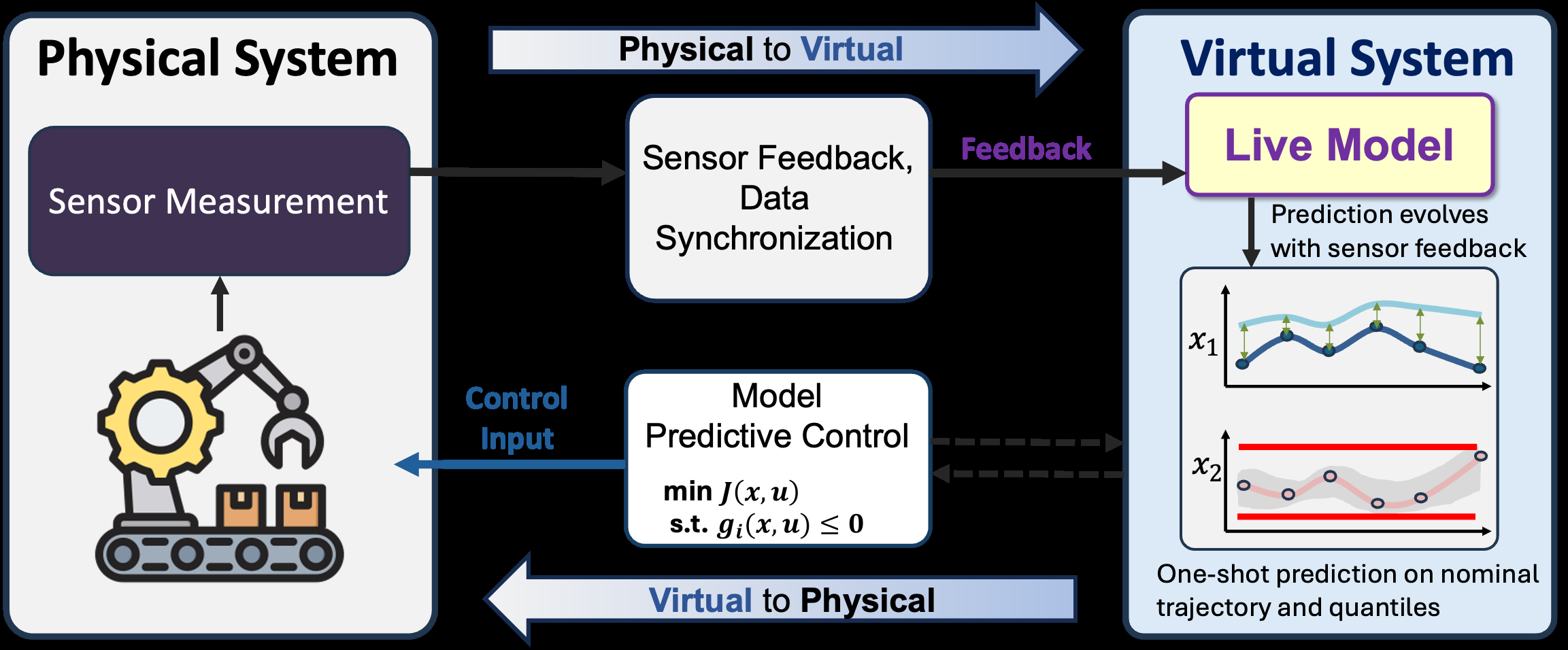
Fig 2: Illustration of MPC and robust MPC. (a) Illustrates MPC at time 𝑘. (b) Illustrates MPC at time 𝑘+ 1. (c)

Fig 3 (page 6).

Fig 4 (page 6).

Fig 5 (page 6).

Fig 6 (page 6).

Fig 7 (page 6).

Fig 8 (page 6).
Limitations
- The GAMMA-based additive manufacturing dataset is proprietary and not publicly available, limiting reproducibility.
- Evaluation under adversarial or worst-case distribution shifts is not performed, only simulated drift scenarios.
- The framework’s real-time computational performance on embedded hardware is discussed but not benchmarked in detail.
- Certain hyperparameters such as buffer size, detection thresholds, and LoRA rank require tuning per application domain.
- The effect of concept drift types beyond covariate and conditional shift (e.g., label noise) is not explored.
- No detailed analysis on catastrophic forgetting over very long operational horizons is presented.
Open questions / follow-ons
- How does the Fisher score–based drift detector perform under adversarial or unexpected anomaly conditions beyond smooth drift?
- Can the framework incorporate explicit uncertainty quantification for epistemic uncertainty and combine it with drift detection?
- What is the scalability and real-time performance of the approach on resource-constrained edge devices in industrial deployments?
- How would the approach extend to multi-agent or interconnected Digital Twin systems with coupled dynamics?
Why it matters for bot defense
This paper presents a novel adaptive framework highly relevant to practitioners designing bot-defense or CAPTCHA systems requiring continual model adaptation under distributional drift. Like Digital Twins, CAPTCHA classifiers often face evolving attacker strategies and environmental changes that degrade model reliability. The Fisher score–based drift detection offers a sensitive and interpretable mechanism to know when retraining or fine-tuning is necessary, avoiding arbitrary retraining schedules. Using parameter-efficient fine-tuning (LoRA) allows quick updates to large neural models with minimal compute while mitigating forgetting of previously learned legitimate user patterns. The online Mann–Whitney U test validation adds a statistical safeguard against deploying updates that do not significantly improve predictive performance, reducing risk of degradation in live systems. Adapting these principles could strengthen defenses against evolving bot behaviors by sustaining model trustworthiness over time under concept drift. The framework’s coupling with decision-making (robust MPC in the paper) shows a path to integrating drift-aware continuous learning with automated risk-aware response, which parallels bot mitigation pipelines needing automated update policies based on confidence in model updates.
Cite
@article{arxiv2607_18164,
  title={ A Continual Validation, Updating, and Decision-Making Framework for Self-Adaptive Digital Twins via Robust Model Predictive Control: A Case Study in Additive Manufacturing },
  author={ Yi-Ping Chen and Ying-Kuan Tsai and Vispi Karkaria and Seul Lee and Daniel Apley and Wei Chen },
  journal={arXiv preprint arXiv:2607.18164},
  year={ 2026 },
  url={https://arxiv.org/abs/2607.18164}
}