
A Dynamical Phase-Field Model for the Optical Properties of Ferroelectrics
Source: arXiv:2607.16180 · Published 2026-07-17 · By Aiden Ross, Anya Frazer, Venkatraman Gopalan, Long-Qing Chen
TL;DR
This paper addresses the challenge of modeling the complex interplay between ferroelectric domain structures and optical properties, which is critical for designing controllable photonic devices based on ferroelectrics. The authors develop a dynamical phase-field model that explicitly couples ferroelectric lattice polarization with an electronic polarization field responsible for optical responses. This new formulation enables direct simulation of spatially resolved, temperature- and wavelength-dependent optical properties at experimentally relevant mesoscale lengths, fully capturing domain evolution and optical interactions. Applying the model to BaTiO3 thin films, they reproduce experimentally observed electro-optic coefficients and their temperature dependence across phase transitions. Notably, they reveal significant enhancement of local electro-optic responses near domain walls—up to 4000 pm/V, several times larger than bulk values—and demonstrate the critical influence of domain wall motion, phase coexistence, and electric field orientation on the electro-optic effect. This work bridges the gap between microscopic quantum theories and macroscopic multi-domain phenomenology by resolving coupled lattice, electronic, elastic, and electromagnetic fields, providing a new computational paradigm for ferroelectric photonic material design.
Key findings
- The local electro-optic coefficient near BaTiO3 domain walls exceeds 4000 pm/V, compared to the bulk single crystal value of 1300 pm/V.
- The film-averaged electro-optic coefficient reaches around 230 pm/V but transiently increases to ~1000 pm/V during domain switching.
- Electro-optic response depends strongly on applied electric field orientation, with max transient values of 1000 pm/V (0°), 2000 pm/V (22.5°), and 6000 pm/V (45°) relative to [100] direction.
- Simulated temperature-dependent electro-optic coefficients quantitatively match experimental data from BaTiO3/Si films (e.g., 1080 pm/V simulation vs 988 pm/V experiment at 295K).
- Phase coexistence and monoclinic bridging phases near the orthorhombic-rhombohedral transition enhance electro-optic coefficients up to 1500 pm/V, ~2.5× higher than tetragonal phase center.
- Refractive index varies discontinuously across domain walls according to local polarization orientation, consistent with BaTiO3’s negative uniaxial optical anisotropy.
- Transient enhanced electro-optic responses during switching arise from domain wall motion and polarization reorientation, not captured by averaging single-domain tensors.
Methodology — deep read
Threat Model & Assumptions: The model assumes ferroelectric thin films such as BaTiO3 integrated on silicon substrates, where the optical response is dominated by the electronic polarization dynamics at optical frequencies. The lattice polarization evolves on slower timescales and influences electronic polarization through energetic coupling. The study focuses on mesoscale domain evolution and optical properties under external electric fields and temperature variations, neglecting free-carrier effects and assuming equilibrium mechanical and electrostatic responses during lattice polarization relaxation.
Data: The simulations use material parameters for BaTiO3 thin films with small residual strains (e.g., 0.15% tensile strain matching BaTiO3/Si). The model captures domain variants a1, a2, and c, as well as monoclinic phases near phase transitions. System sizes and spatial resolution details are not explicitly given, but the entire microstructure evolution and local optical properties are computed spatially and temporally.
Architecture / Algorithm: Extending classical phase-field methods, the authors introduce two polarization fields: lattice polarization (slow ionic displacement) and electronic polarization (responsible for optical response). The total free energy functional includes intrinsic lattice energy, electronic polarization energy, coupling terms, gradient energies, elastic energy, and electrostatic energy. Evolution equations (partial differential equations) govern lattice and electronic polarization, elastic displacement, and electromagnetic fields (Maxwell’s equations). Because electronic polarization equilibrates faster, a relaxational approximation is used, decoupling lattice dynamics from instantaneous electronic polarization response. Optical dielectric susceptibility and electro-optic coefficients are calculated from the local curvature of the electronic polarization free energy landscape, linked to lattice polarization and strain.
Training & Simulation Regime: The model is numerically solved using time evolution of coupled PDEs until steady states or hysteresis loops under cyclic electric fields are reached. Specific numerical solvers, discretization, and hardware are not detailed. Simulations scan electric field orientations, magnitudes (up to ~20 kV/cm), and temperatures (1K to 400K) to probe domain evolution, refractive indices, and electro-optic coefficients.
Evaluation Protocol: Validation against experimental electro-optic coefficient measurements from literature (e.g., Eltes et al. and PsiQuantum) is performed, comparing temperature dependence, magnitude, and angular behavior. Hysteresis loops of polarization, refractive index, and electro-optic coefficients are compared for physical plausibility. Sensitivity to electric field orientation and temperature is analyzed. No explicit cross-validation or statistical tests are reported.
Reproducibility: Code and data availability are not mentioned. Parameters and methodological details are provided in sufficient depth to allow replication by experts with phase-field modeling background. Some material parameters and technical approximations (e.g., neglecting gradient energy of electronic polarization) are noted.
Example End-to-End: To simulate the electro-optic hysteresis under an applied electric field along [100], the evolving lattice polarization distribution is computed via Eq. 9, coupled with stress and electrostatic equilibrium (Eqs. 10-11). At each timestep, the local electronic polarization energy landscape is obtained from the lattice polarization and stress fields. Using perturbation theory (Eqs. 12-15), the local refractive index and electro-optic coefficient distributions are derived. Hysteresis loops are generated by cycling the field and recording spatially averaged optical properties, revealing domain-driven enhancements near switching fields.
Technical innovations
- Coupling the ferroelectric lattice polarization and electronic polarization fields within a dynamical phase-field framework to directly simulate spatially resolved optical properties in ferroelectrics.
- Introducing an electronic polarization field whose fast dynamics govern the near-infrared and visible optical response, distinct from the slower lattice polarization dynamics.
- Deriving local optical dielectric susceptibility and electro-optic coefficients from the curvature of the electronic polarization free energy landscape modulated by lattice polarization and strain.
- Applying a relaxational approximation to separate timescales, enabling computationally feasible simulation of coupled ferroelectric domain evolution and optical responses across mesoscale microstructures.
- Capturing transient, domain wall–enhanced electro-optic effects and temperature-dependent phase coexistence effects that exceed conventional single-domain bulk predictions.
Baselines vs proposed
- Bulk BaTiO3 single crystal electro-optic coefficient: 1300 pm/V vs. local near-domain-wall values exceeding 4000 pm/V (3× enhancement).
- Film-averaged electro-optic coefficient during switching transient: 1000 pm/V vs. off-switching value ~230 pm/V.
- Simulated electro-optic coefficient at 295K: 1080 pm/V vs. experimental PsiQuantum measurement: 988 pm/V.
- Transient electro-optic coefficients for different electric field orientations at coercive field: 1000 pm/V (0°), 2000 pm/V (22.5°), 6000 pm/V (45°).
Figures from the paper
Figures are reproduced from the source paper for academic discussion. Original copyright: the paper authors. See arXiv:2607.16180.

Fig 1: Characteristic frequency scales in the dynamics of
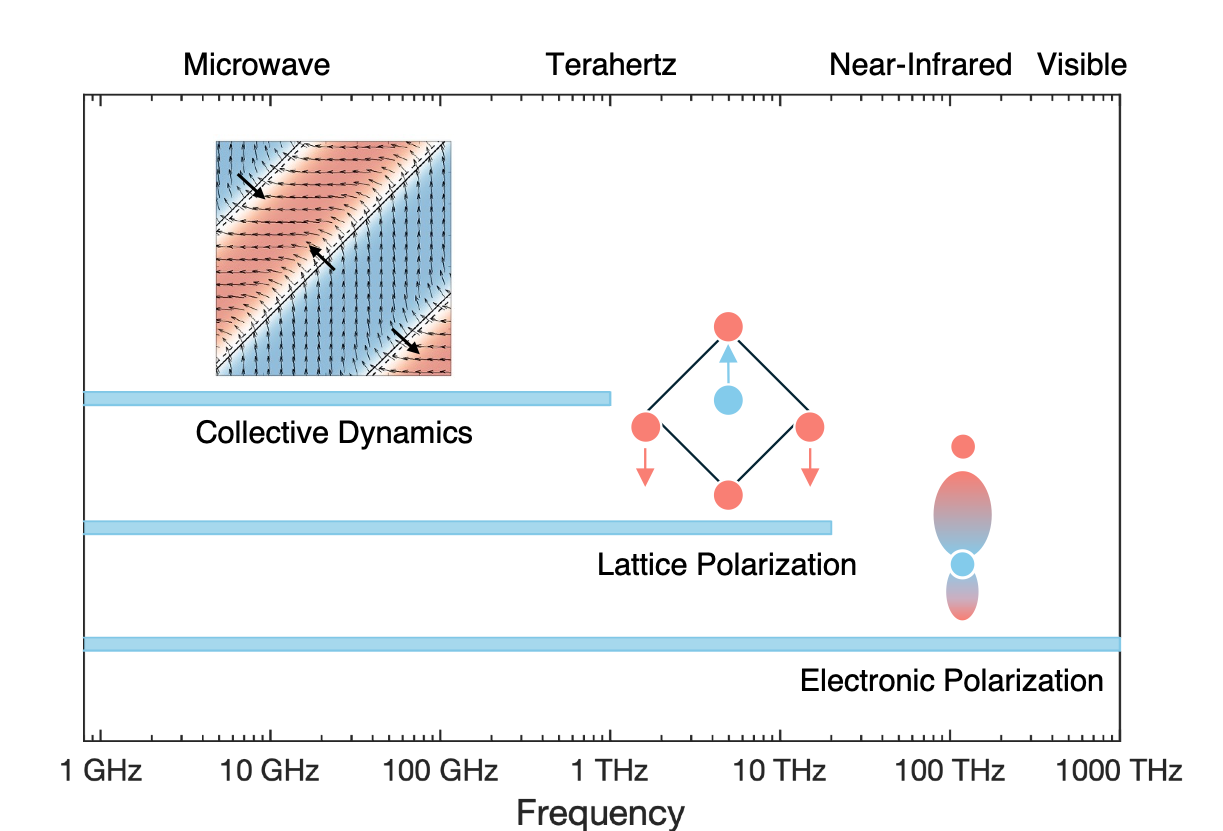
Fig 2: Diagram of the coupled dynamics within the phase-field model. The free-energy functional describes
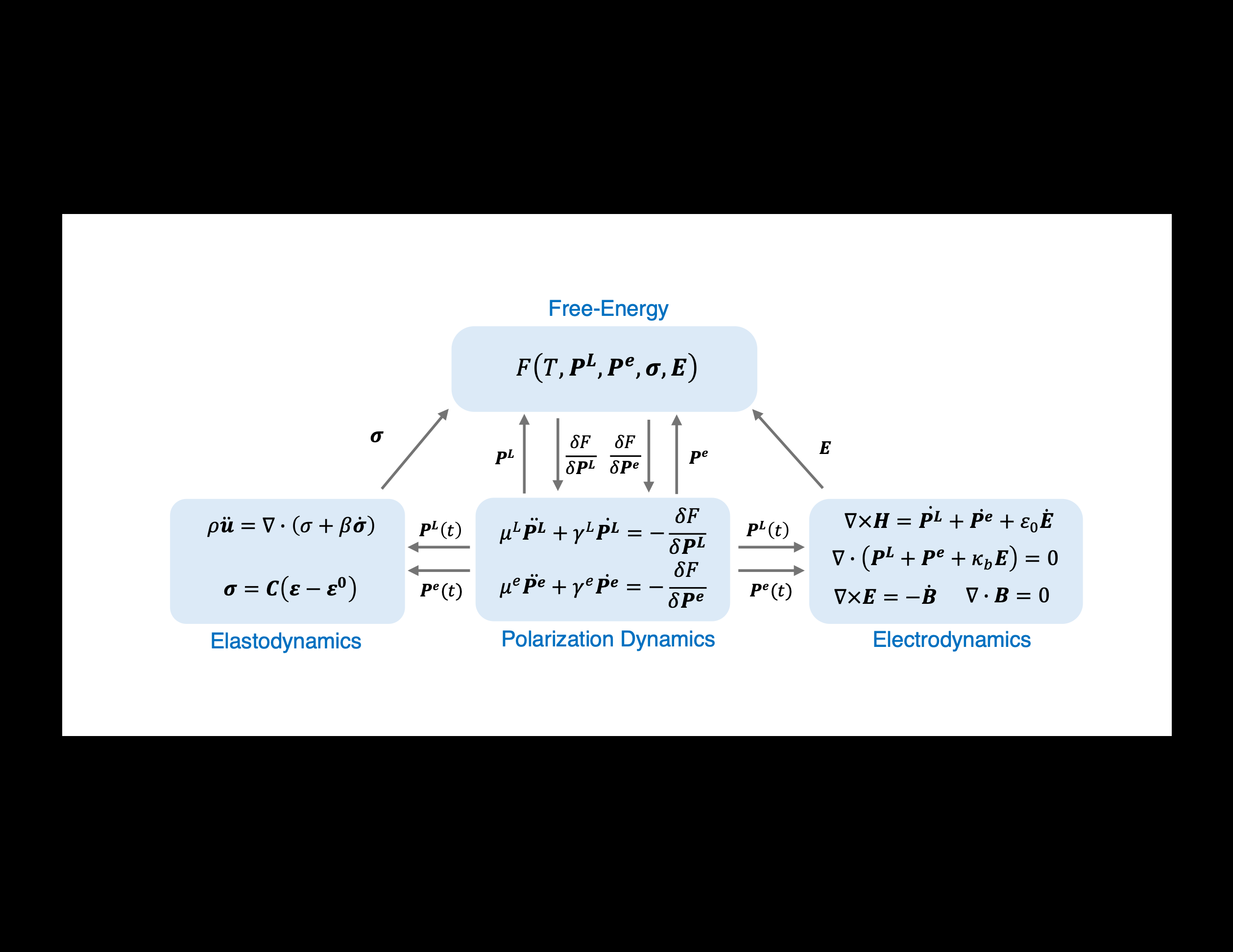
Fig 3: (a) Ferroelectric domain structure of BaTiO3 at 350K, under a 0% biaxial strain, showing variants a1, a2, and
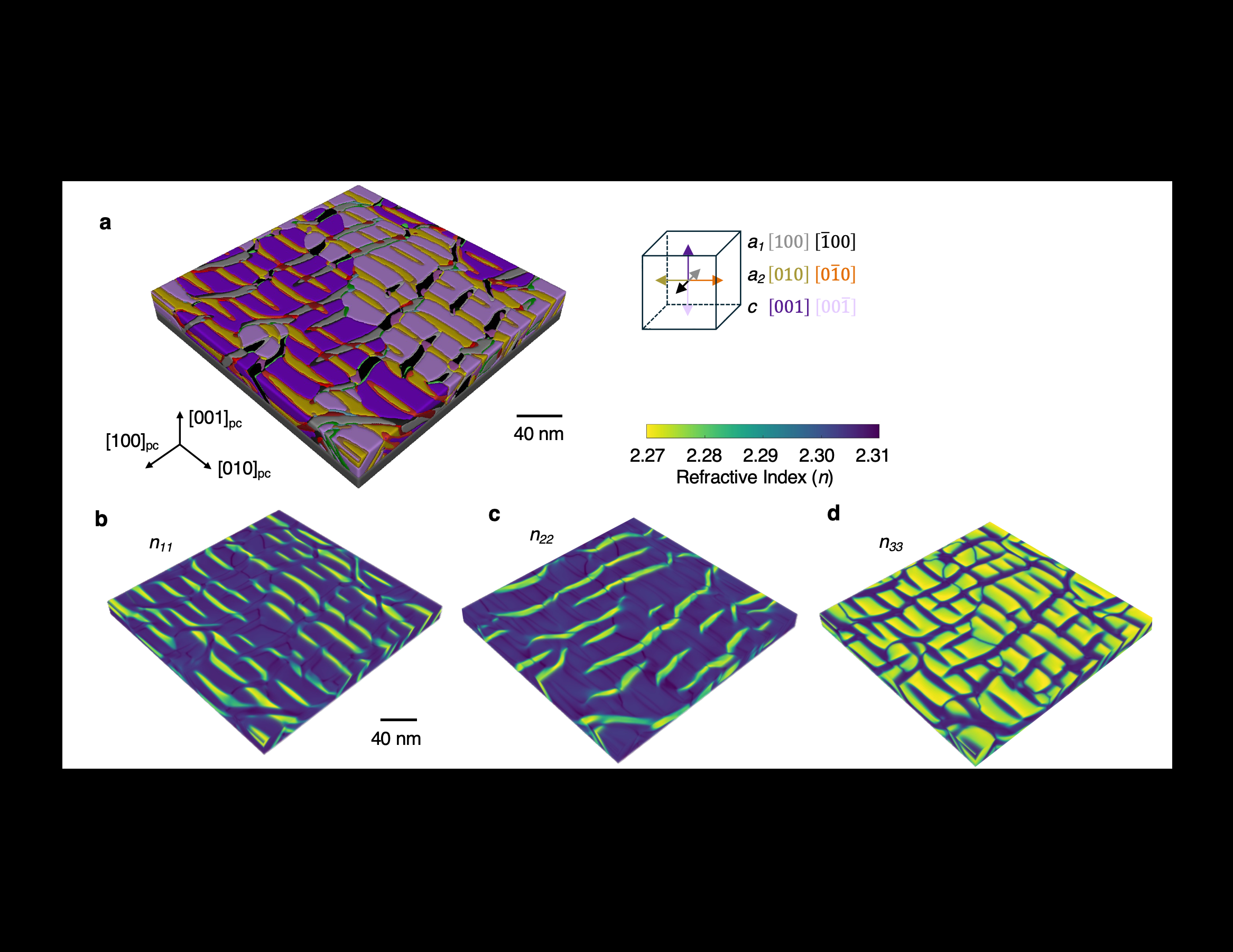
Fig 4: shows the coupled evolution of the ferroelectric polarization, refractive index, and electro-optic
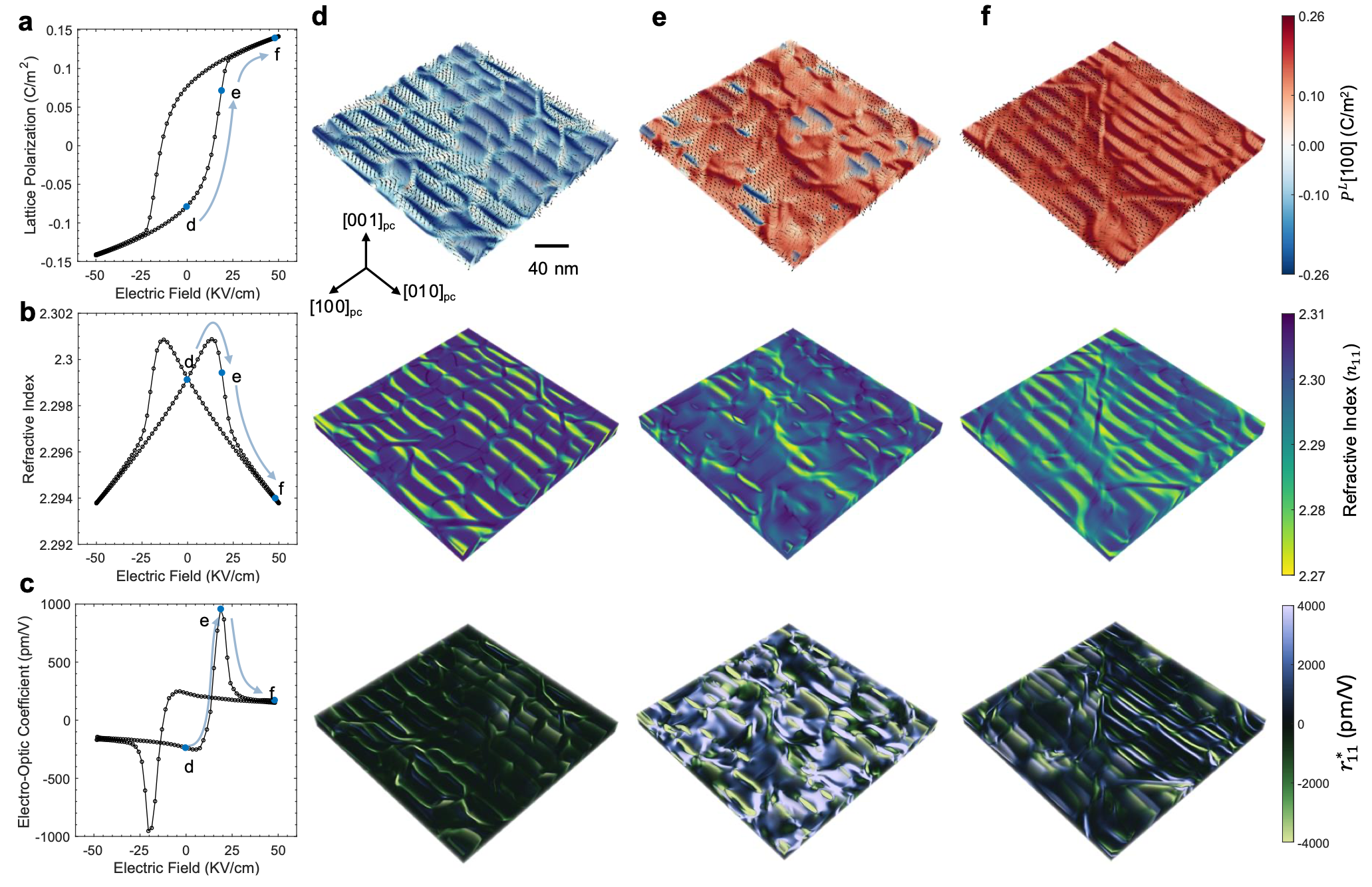
Fig 5: Electro-optic response under different electric field orientations. (a-c) Hysteresis loops of polarization,
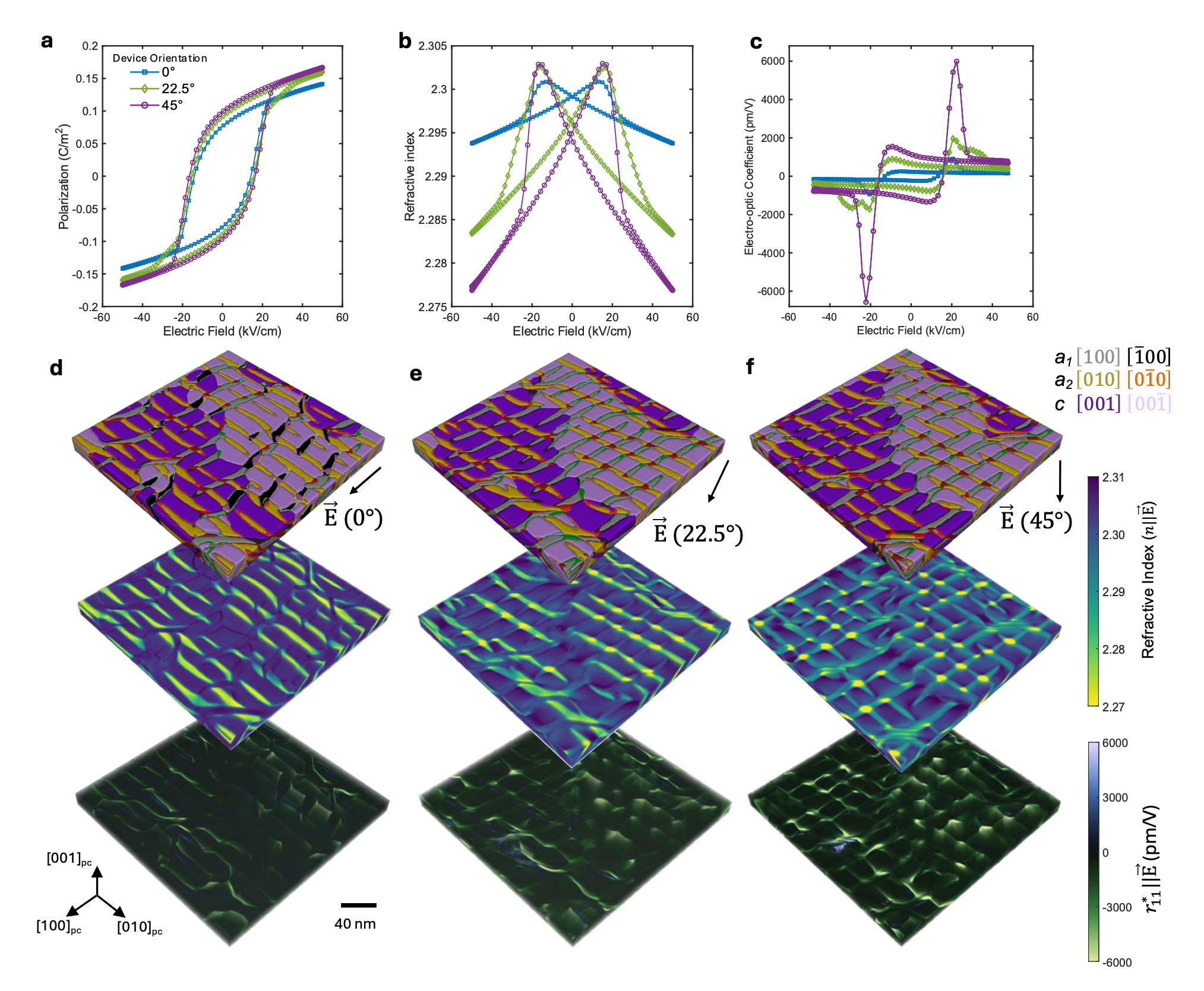
Fig 6: Temperature Dependent Electro-Optic Response (a) The phase-fractions as a function of temperature in
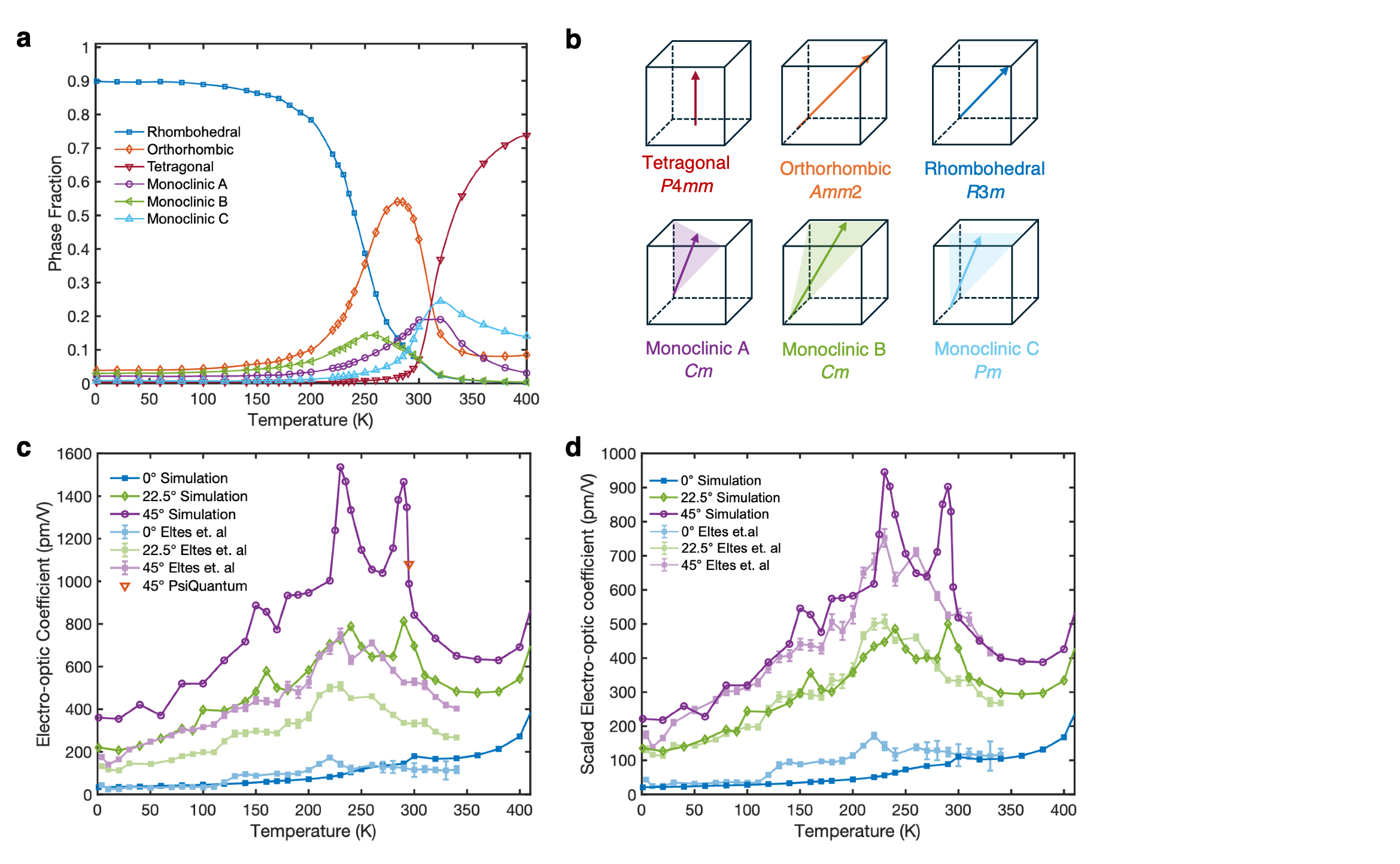
Fig 7 (page 11).
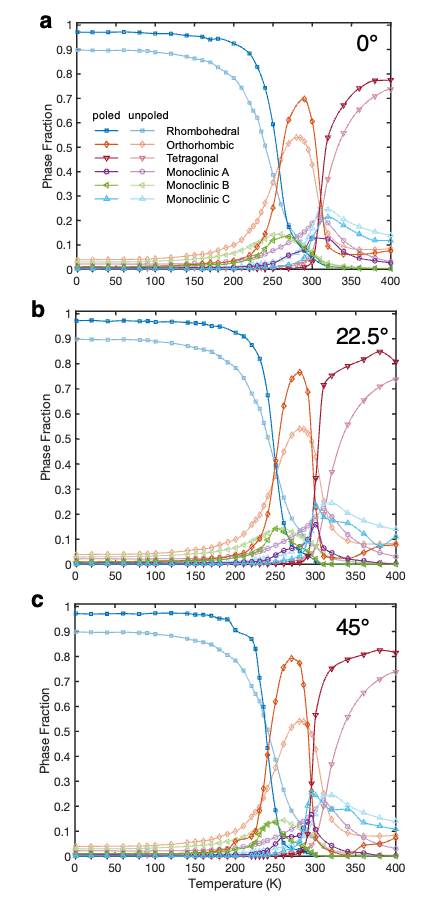
Fig 8 (page 26).
Limitations
- Model parameters tailored to BaTiO3 thin films; applicability to other ferroelectric materials requires validation.
- Neglects free-carrier contributions and assumes instantaneous equilibration of electronic polarization, limiting applicability to equilibrium and small-signal regimes.
- Computational demands and scalability details are not provided, potentially limiting application to large-scale or dynamic optical device simulations.
- Simulation validation focuses on electro-optic coefficients; other optical nonlinearities (e.g., second-harmonic generation) are not explicitly benchmarked.
- No explicit adversarial or extreme condition testing (e.g., defects, disorder, or non-ideal boundary conditions) is reported.
- Code and data are not publicly released, posing reproducibility challenges.
Open questions / follow-ons
- How can the framework be extended or tuned to model other nonlinear optical effects beyond the linear electro-optic response, such as second-harmonic generation or sum-frequency mixing?
- What strategies can stabilize the transient, domain-wall enhanced electro-optic states for practical device operation and longevity?
- How generalizable is this model to other ferroelectric materials and heterostructures with more complex domain architectures?
- Can the computational efficiency be improved to enable real-time or large-area device-scale simulations incorporating realistic disorder and defects?
Why it matters for bot defense
This research is primarily in the domain of ferroelectric materials and optical physics rather than direct bot-defense or CAPTCHA-related security methods. However, the modeling approach demonstrates how complex spatial and temporal microstructure can be coupled and resolved through sophisticated computational methods, which is conceptually relevant for designing complex, hard-to-spoof physical systems. For CAPTCHAs incorporating novel physical or optical responses as human verification factors, understanding and simulating emergent, nonlinear optical signatures at high spatial resolution could inform the engineering of challenge-response mechanisms that rely on fine-grained light-matter interactions. Nonetheless, this paper does not address threats, adversarial attacks, or bot detection algorithms directly, so practitioners should view its contributions as advanced materials modeling rather than immediate security techniques.
Cite
@article{arxiv2607_16180,
  title={ A Dynamical Phase-Field Model for the Optical Properties of Ferroelectrics },
  author={ Aiden Ross and Anya Frazer and Venkatraman Gopalan and Long-Qing Chen },
  journal={arXiv preprint arXiv:2607.16180},
  year={ 2026 },
  url={https://arxiv.org/abs/2607.16180}
}