
Understanding of Task-specific and Subject-specific Components in Surface EMG
Source: arXiv:2607.14744 · Published 2026-07-16 · By Yangyang Yuan, Jionghui Liu, Xinyu Jiang, ChihHong Chou, Chenyun Dai, Jiahao Fan
TL;DR
This paper addresses the fundamental challenge in surface electromyogram (sEMG) analysis for human-machine interfaces: poor generalization across subjects due to individual neuromuscular differences. Prior models focus mostly on either task-specific (gesture) features or subject-specific (user identity) features, but seldom disentangle the two explicitly. The authors propose a novel neural network-based disentanglement model with two encoders and a decoder that separates sEMG signals into orthogonal task-specific and subject-specific latent spaces. This approach improves both gesture recognition and user identification accuracy, particularly in challenging inter-day and cross-subject settings. Beyond accuracy gains, the disentangled representations allow physiological interpretation of muscle activation patterns consistent across subjects (task-specific) and personalized neuromuscular traits (subject-specific).
Key findings
- The proposed disentanglement model improves inter-day gesture recognition accuracy from 74.42% (original features) to 91.47% (Table 2).
- Subject-specific components enable user identification with intra-day accuracy >98%, outperforming PCA and AE baselines by over 4-7%.
- Inter-day user identification accuracy improves from 50.7% (original features) to 64.65% using the proposed method (Table 3).
- Triplet loss applied both on task- and subject-specific latent spaces promotes clear clustering of gestures and subjects (Fig 4, 5).
- Task-specific RMS heatmaps show high consistency across subjects for the same gesture, while subject-specific heatmaps capture unique neuromuscular patterns for individuals (Fig 6, 7).
- Data augmentation simulating electrode shifts (translation ±15mm, rotation ±15°) improves model robustness.
- Instance normalization in encoders reduces intensity variability across subjects, emphasizing structural features.
- The model’s loss weighting (λ1=1 for cross reconstruction, λ2=0.5 for triplet loss) was robust with <1% accuracy influence across tested values.
Threat model
The paper does not explicitly address security adversaries but implicitly assumes a benign setting where the goal is to extract disentangled features robust across users and time for improved gesture and user identification. The adversary model would be a non-malicious system scenario where inter-subject and inter-day variability cause classification errors, rather than a targeted attack.
Methodology — deep read
The study assumes an adversary-free setting focused on improving generalization of sEMG-based gesture and user identification models across subjects and days.
Data were collected from 20 subjects (8 female, 12 male, aged 22-34) performing 11 one-degree-of-freedom hand/wrist gestures using high-density 16x8 electrode arrays on forearm flexor and extensor muscles. Each subject performed 6 repetitions per gesture on two separate days spaced 3 to 25 days apart, totaling 1320 trials. Data were preprocessed with 10-500 Hz bandpass and notch filters, segmented into 1-second samples, and features including RMS were extracted for each of the 256 channels concatenated.
The core model is an autoencoder-like neural network with two parallel encoders (Ep for task-specific and Es for subject-specific components) and a shared decoder D. Each encoder uses 2D convolutional layers with instance normalization to extract latent representations from the input RMS maps. The decoder reconstructs the original input from the concatenated latent vectors.
The training objective combines three losses: reconstruction loss to preserve input fidelity; triplet loss applied separately on task and subject latent spaces to encourage clustering of same-class samples and separation of different classes; and cross-reconstruction loss by cross-pairing representations from different samples with swapped attributes for disentanglement regularization.
Training used Adam optimizer with initial learning rate 0.002 decayed periodically, batch size 2000, and dropout of 0.8 in decoder layers. Data augmentation with random translation (-15 to 15mm) and rotation (-15° to 15°) simulated realistic electrode shifts.
Model evaluation was performed via intra-day (k-fold CV) and inter-day validations using accuracy, F1, precision, and recall metrics for both gesture and identity recognition. The task-specific encoder output was classified by a k-Nearest Neighbor (KNN) for gesture recognition; the subject-specific output was classified by KNN for user identification. Baselines included original RMS features, PCA, and standard autoencoder embeddings.
Latent space quality was assessed via silhouette scores and t-SNE visualization for intra-day and inter-day splits. Physiological interpretability was analyzed by visualizing RMS heatmaps reconstructed solely from one latent component to reveal consistent muscle activation patterns across subjects or gestures.
Statistical tests (Friedman and chi-square) confirmed significance of observed improvements. The authors released code for reproducibility but dataset usage is based on their prior public release.
Technical innovations
- Two-encoder and one-decoder architecture explicitly disentangling task-specific and subject-specific components from sEMG signals.
- Joint reconstruction and cross-reconstruction losses combined with triplet losses on both latent spaces for supervised disentanglement without requiring adversarial training.
- Use of instance normalization to mitigate inter-subject intensity variation while preserving spatial muscle activation patterns.
- Incorporation of realistic data augmentation simulating electrode array shifts to improve robustness to practical acquisition variability.
Datasets
- Open-source sEMG dataset from authors' prior work — 20 subjects × 11 gestures × 6 repetitions × 2 days = 1320 trials total — public via DOI https://doi.org/10.13026/ym7v-bh53
Baselines vs proposed
- Original features: Inter-day gesture recognition accuracy = 74.42% vs proposed: 91.47%
- PCA: Inter-day gesture recognition accuracy = 74.88% vs proposed: 91.47%
- Autoencoder (AE): Inter-day gesture recognition accuracy = 77.98% vs proposed: 91.47%
- Original features: Inter-day user identification accuracy = 50.7% vs proposed: 64.65%
- PCA: Inter-day user identification accuracy = 50.47% vs proposed: 64.65%
- Autoencoder (AE): Inter-day user identification accuracy = 52.79% vs proposed: 64.65%
Figures from the paper
Figures are reproduced from the source paper for academic discussion. Original copyright: the paper authors. See arXiv:2607.14744.
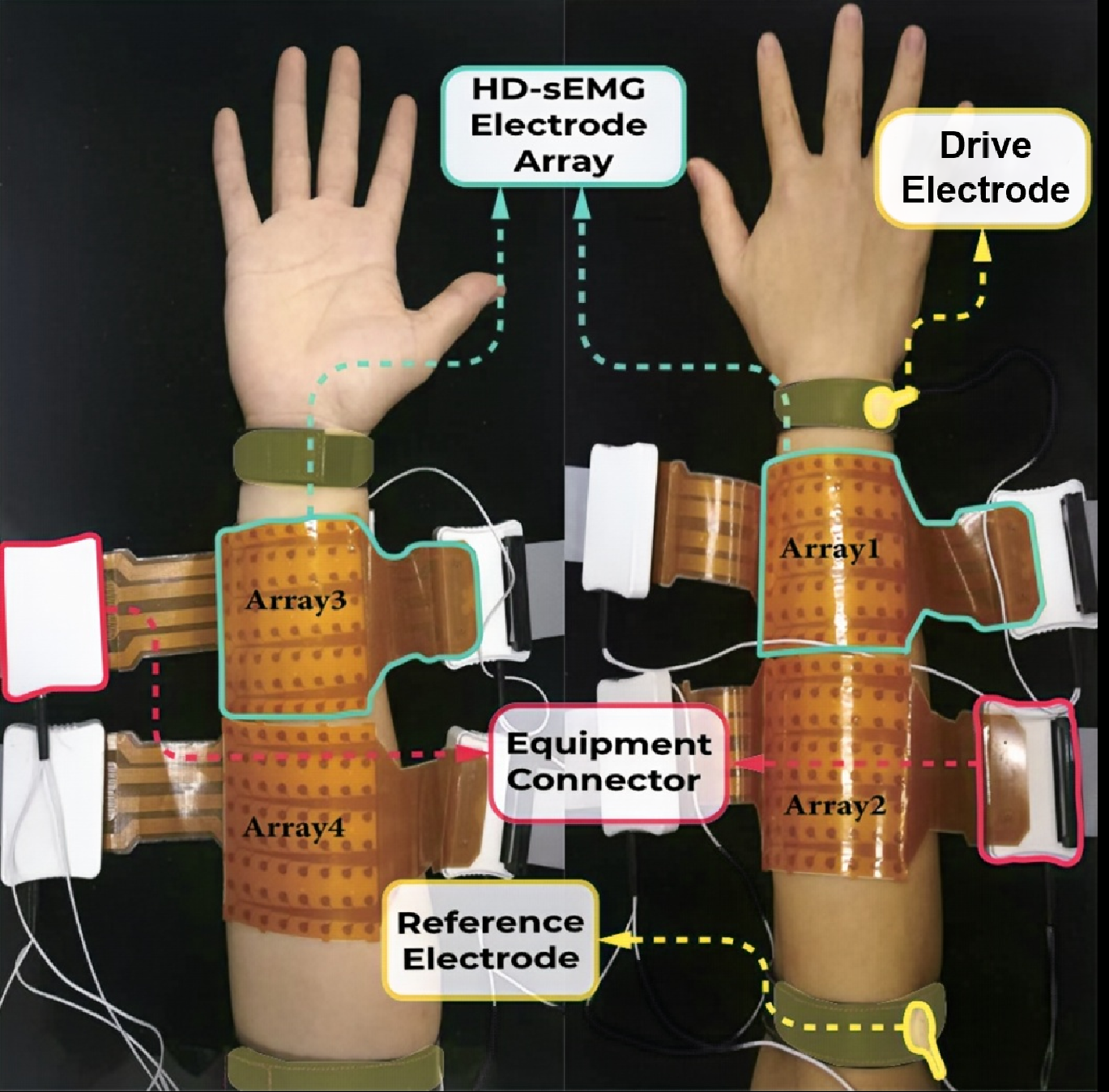
Fig 1: Electrode setup in the experiment.
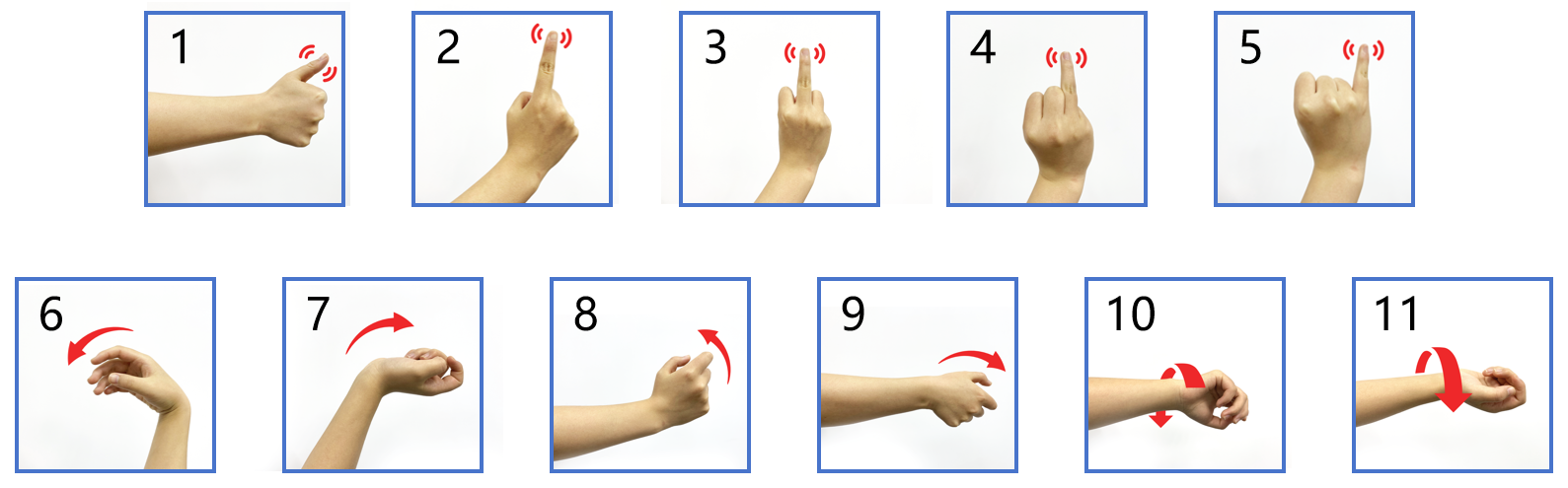
Fig 2: Gestures involved in the validation.
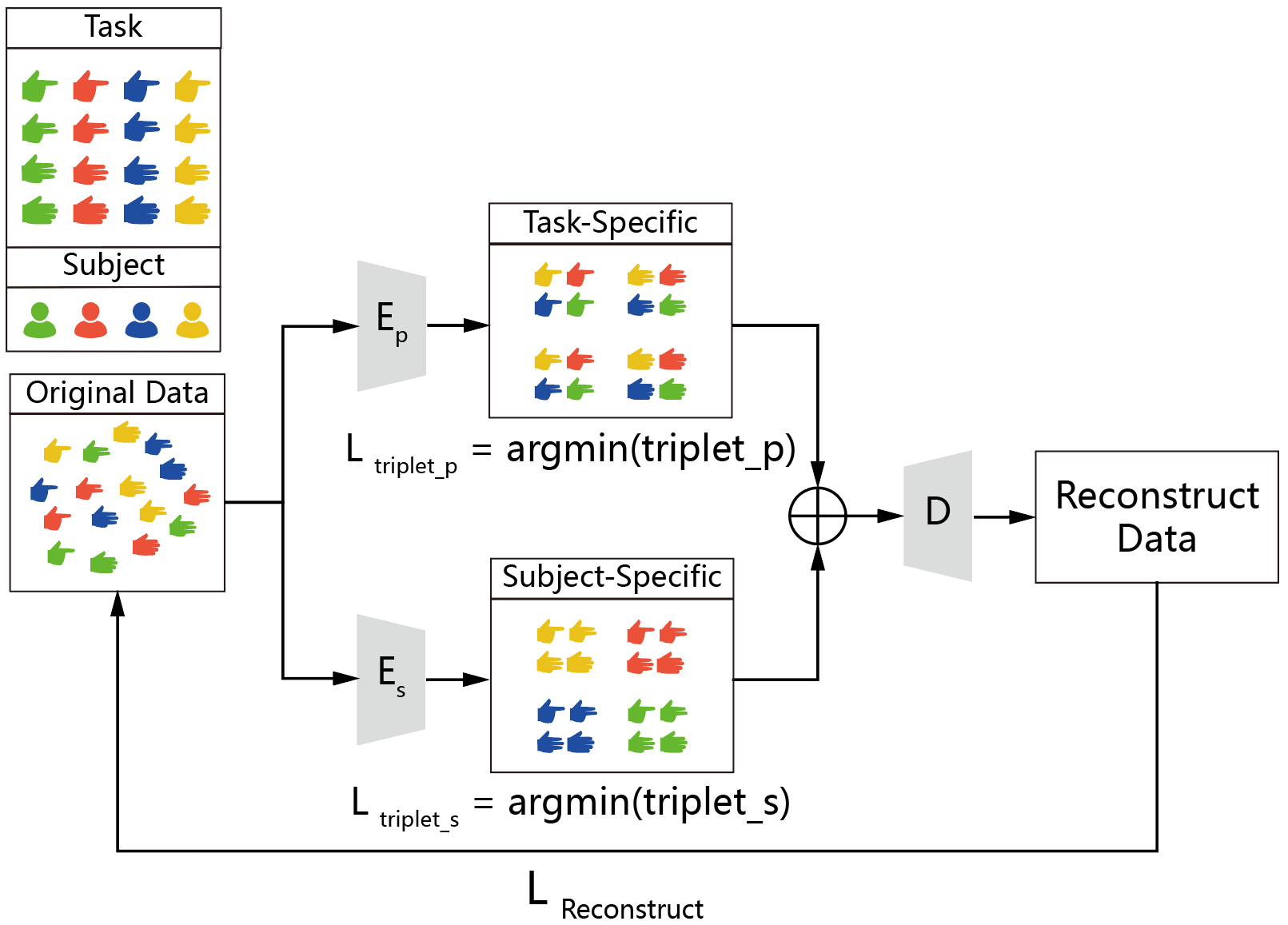
Fig 3: The framework of the mode, composed of two encoders and one decoder. Ep and Es denote the task-specific encoder and the subject-
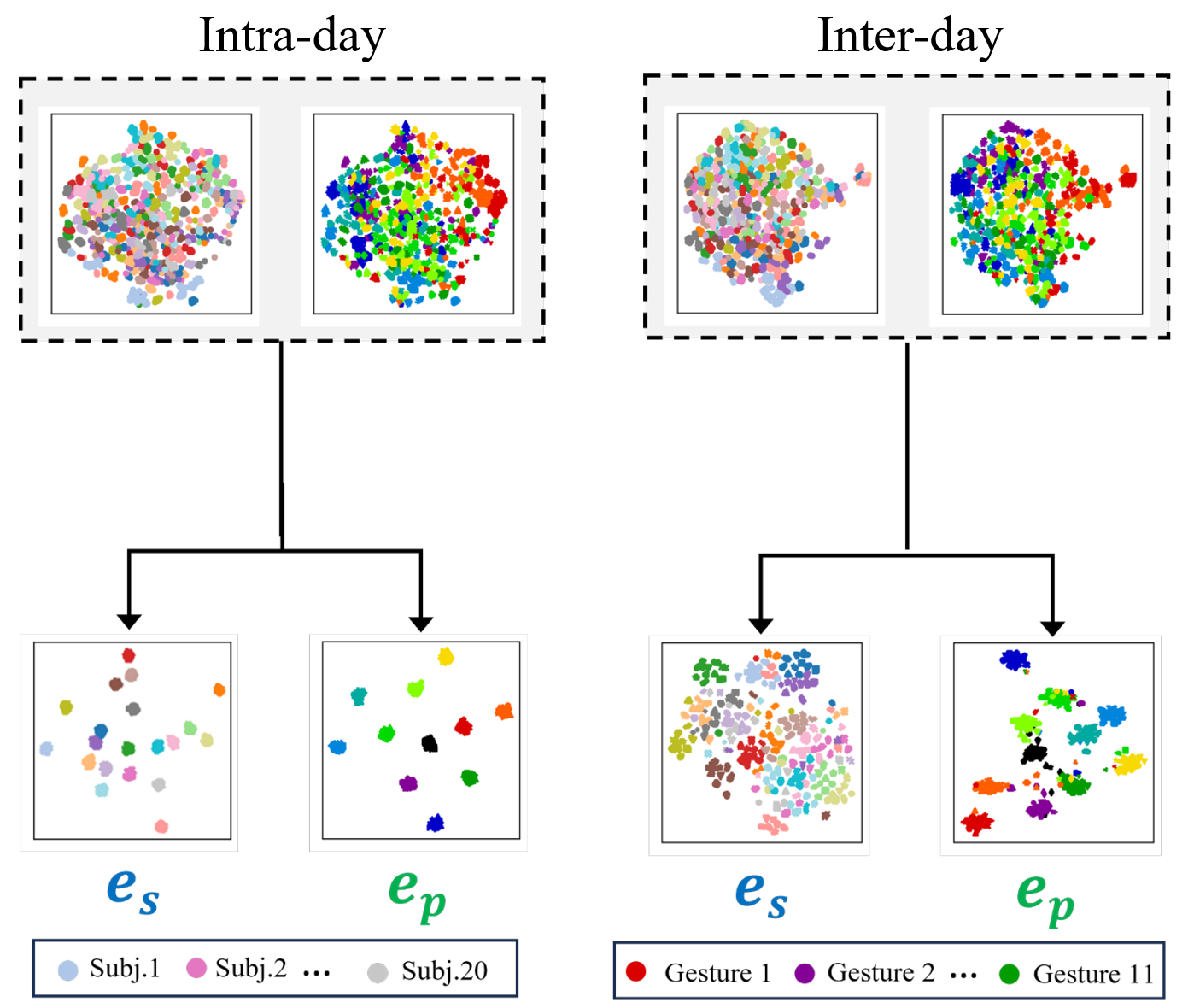
Fig 4: The visualization of original features (top row, with two figures representing features labeled by identities and gestures, respectively) and
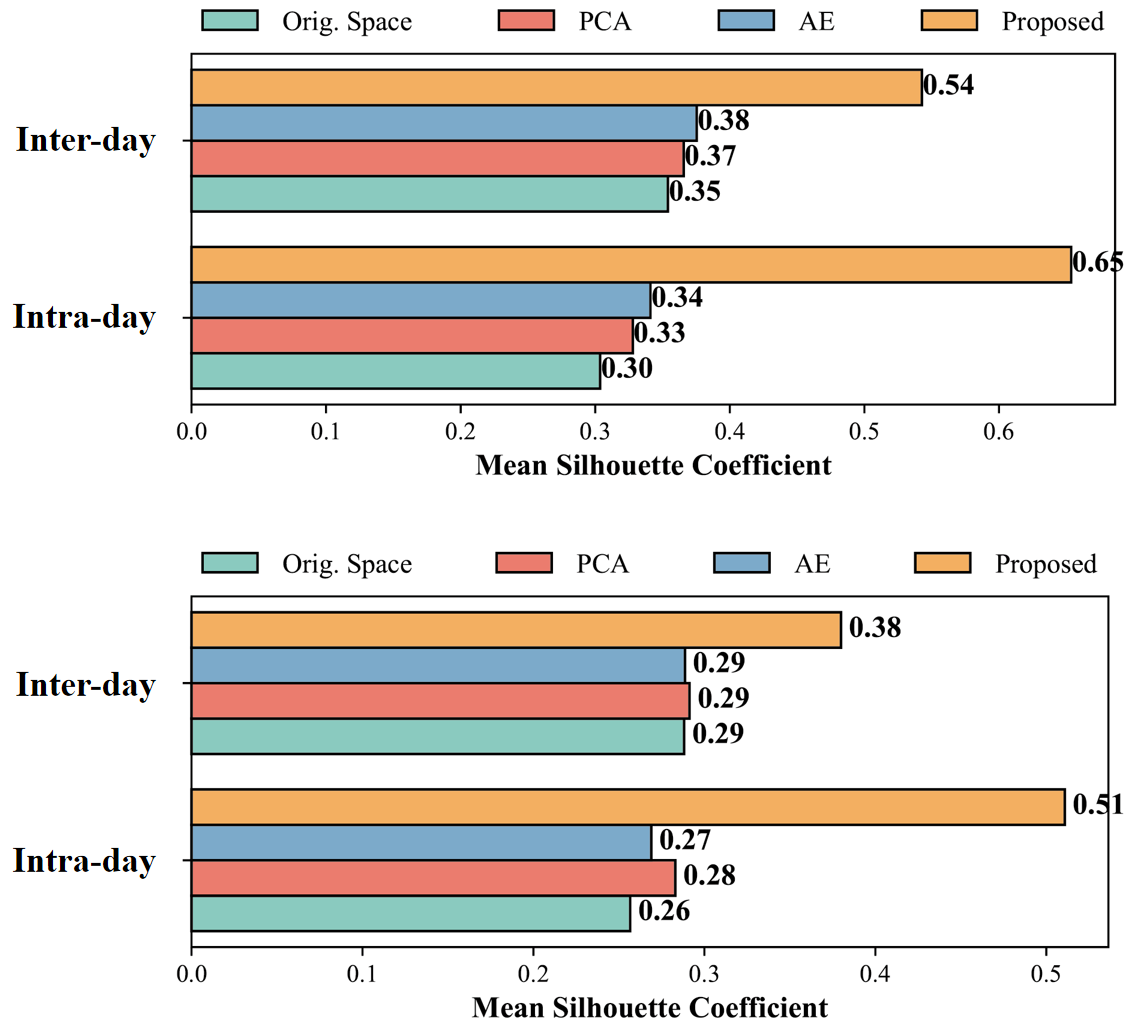
Fig 5: The SIL scores of the task- and subject-specific latent representations in intra-day and inter-day validation.
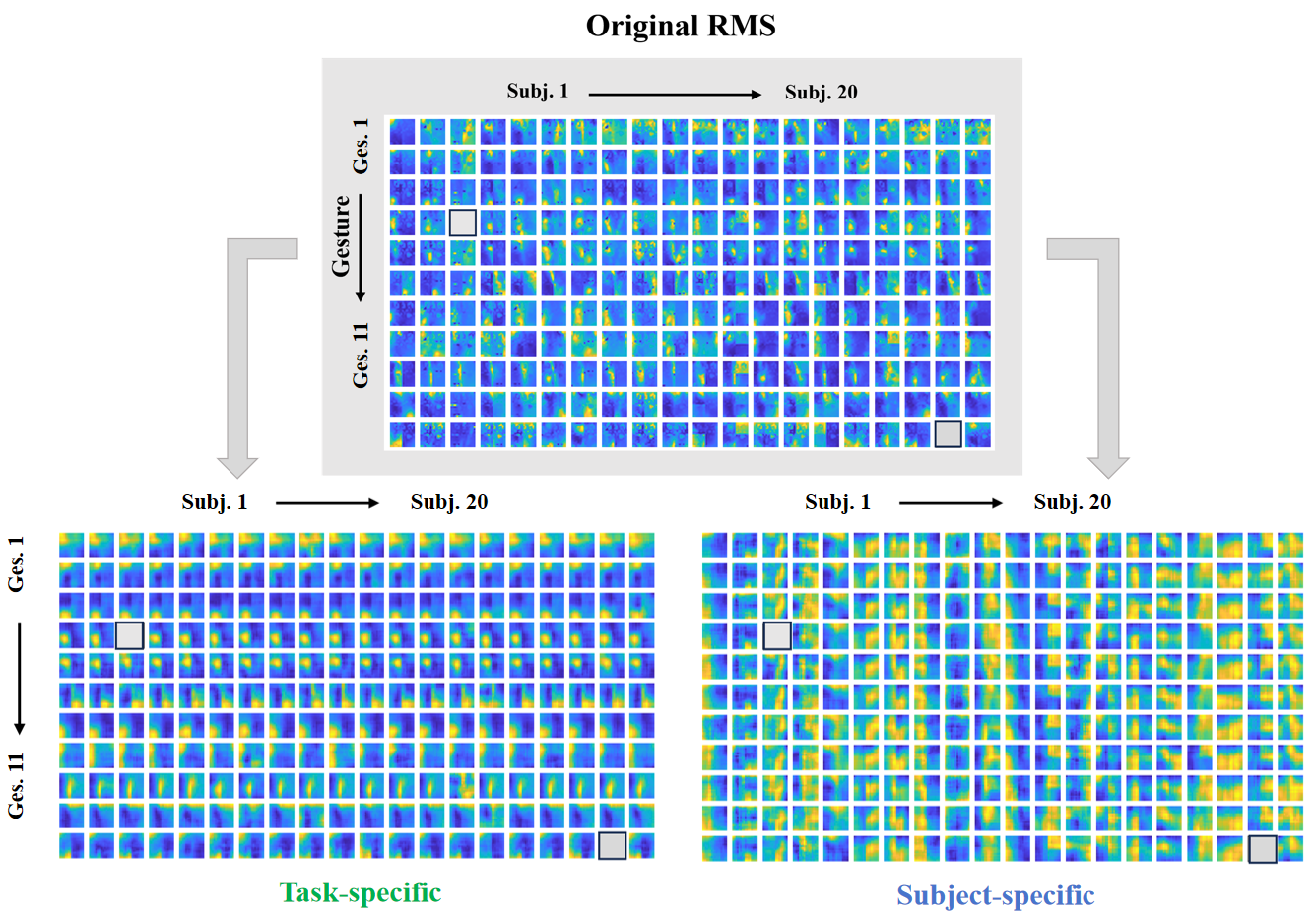
Fig 6: The visualization of the original RMS (top) and the RMS reconstructed by the proposed approach (bottom left denotes the task-specific
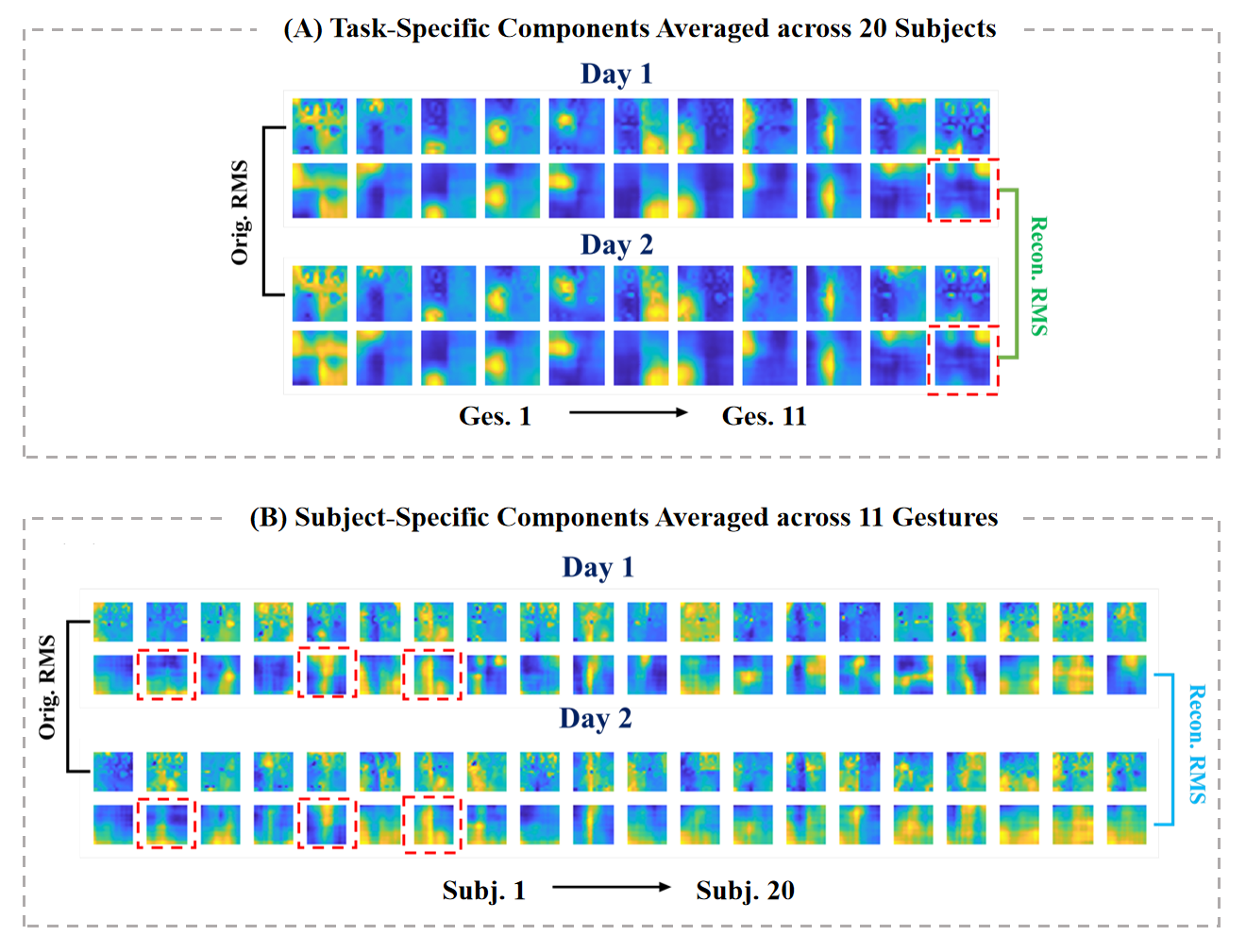
Fig 7: The averaged ’task’ RMS and ’identity’ RMS. Ges. and Subj. denote Gesture and Subject respectively. (A) the overlap of RMS maps for
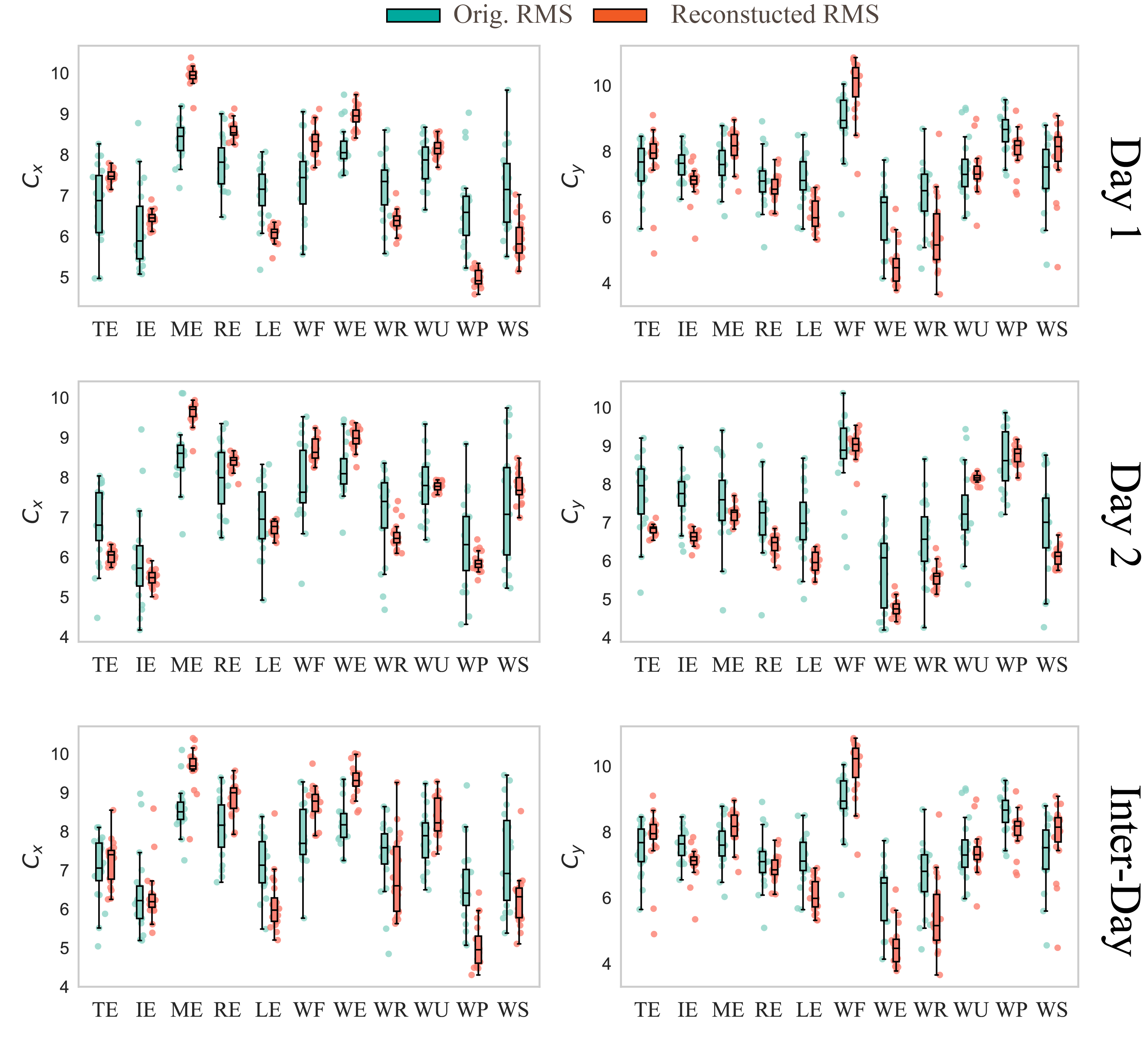
Fig 8: The comparison between the centroid distribution of each gesture across all subjects, as depicted by the original RMS and the RMS
Limitations
- Inter-day user identification accuracy remains low (~65%), indicating limited long-term stability of subject-specific features.
- Data collected only from 20 subjects limits generalization to larger, more diverse populations.
- Focus on single-DoF gestures limits direct applicability to more complex multi-DoF hand movements.
- Evaluation lacked adversarial robustness tests against potential spoofing or mimicry attacks.
- Physiological interpretations rely on RMS features while excluding frequency-domain or motor unit level analyses.
- Only k-NN classifiers applied downstream; impact on more complex classifiers or end-to-end training unexamined.
Open questions / follow-ons
- How can the disentanglement framework be extended to multi-DoF or continuous hand/wrist movements for more natural dexterous control?
- Can adversarial training or domain adversarial approaches enhance robustness of disentangled features against intentional deception or sensor noise?
- How stable are subject-specific components over longer time spans (months, years), and can temporal modeling improve persistence?
- Could motor unit decomposition or higher-resolution features further improve physiological interpretability and classification performance?
Why it matters for bot defense
For bot-defense and CAPTCHA practitioners relying on biosignal-based user authentication or gesture input, this paper provides a principled approach to disentangle user identity traits from task-related signal variability in sEMG. This disentanglement enhances robustness against intra-subject variability and day-to-day changes, which are common challenges in physiological biometrics. The demonstrated improvement in cross-day user identification accuracy suggests potential for more reliable continuous authentication schemes using sEMG. Additionally, the interpretability of the task-specific features may facilitate design of gesture-based CAPTCHA challenges that are consistent across users yet challenging for bots to mimic reliably. However, the substantial drop in identification accuracy across days highlights limitations that practitioners must address, potentially by combining sEMG with other modalities or leveraging adaptive calibration.
Cite
@article{arxiv2607_14744,
  title={ Understanding of Task-specific and Subject-specific Components in Surface EMG },
  author={ Yangyang Yuan and Jionghui Liu and Xinyu Jiang and ChihHong Chou and Chenyun Dai and Jiahao Fan },
  journal={arXiv preprint arXiv:2607.14744},
  year={ 2026 },
  url={https://arxiv.org/abs/2607.14744}
}