
The Mysterious Case of Iron in XMPs: Anomalous High log(Fe/O) Observed in Extremely Metal-Poor Galaxies HSCJ1631+4426 and SDSSJ0811+4730
Source: arXiv:2607.14758 · Published 2026-07-16 · By Aaron Myszka, Themiya Nanayakkara, Karl Glazebrook, Sarah M. Sweet, Brent Groves, Nikole M. Nielsen et al.
TL;DR
This study addresses the puzzlingly high iron-to-oxygen (Fe/O) abundance ratios observed in two local extremely metal-poor galaxies (XMPs), HSCJ1631+4426 and SDSSJ0811+4730. Using integral field spectroscopy from the Keck Cosmic Web Imager (KCWI), the authors provide spatially resolved, high signal-to-noise measurements of nebular emission lines to derive precise gas-phase oxygen abundances (12 + log(O/H) ~ 7.08 and 6.93) and Fe/O ratios (log(Fe/O) ~ -1.57 and -1.28) respectively. These Fe/O ratios approach or exceed solar values despite oxygen abundances of only ~2% solar, a combination unexplained by standard chemical evolution models that incorporate enrichment from core-collapse supernovae (CCSNe) or delayed Type Ia supernovae, especially considering the young ages (~few Myr to tens of Myr) of these galaxies.
By comparing the observations to chemical evolution models, the authors argue that rare, highly energetic stellar explosions—specifically bright hypernovae (BrHNe) and/or pair-instability supernovae (PISNe)—likely contribute the anomalously elevated iron enrichment on the short timescales observed. The robust detection of the [Fe III] 4658 emission line and careful treatment of abundance uncertainties confirms the iron enhancement is real and spatially dominated by the galaxies’ primary star-forming regions. These XMPs therefore serve as nearby analogs to early Universe galaxies, offering unique empirical constraints on the nucleosynthetic pathways shaping primordial chemical enrichment.
Key findings
- Oxygen abundances measured: 12+log(O/H) = 7.079 ± 0.010 for HSCJ1631+4426 and 6.926 ± 0.004 for SDSSJ0811+4730, corresponding to ~2% solar metallicity.
- Elevated iron-to-oxygen ratios measured: log(Fe/O) = -1.57 ± 0.17 (HSCJ1631+4426) and -1.28 ± 0.07 (SDSSJ0811+4730), approaching or exceeding the solar ratio of -1.23.
- Fe/O values inconsistent with enrichment solely from core-collapse supernovae or delayed Type Ia supernovae, given the galaxies’ young ages (~few Myr to 50 Myr).
- Improvements in [Fe III] 4658 detection significance from previous ~2.4σ to 3.1σ (HSCJ1631+4426) and 6.8σ (SDSSJ0811+4730) using KCWI IFU spectra.
- Choice of ionisation correction factors (ICF) contributes ~0.2-0.3 dex systematic uncertainty in Fe/O, and [Fe III] atomic data choice adds ~0.1 dex uncertainty.
- No significant correlation found between ionisation parameter proxy [OIII]/[OII] and log(Fe/O), indicating hardness of radiation field does not drive Fe/O elevation.
- Chemical evolution models including 20% bright hypernovae and/or pair-instability supernovae are needed to match observed Fe/O at the young ages, as shown in Fe/O vs. age tracks.
- Stellar masses (~10^6.3 M⊙) and IMF upper mass cutoff consistent with formation of sufficiently massive stars (>140 M⊙) to produce PISNe and BrHNe, enabling multiple such events per burst.
Methodology — deep read
Threat model & assumptions: The study assumes these local XMP galaxies are young systems (<50 Myr) with negligible contributions from delayed iron enrichment mechanisms like Type Ia supernovae. The enrichment pathways explored focus on ion populations observable through nebular emission lines, assuming that iron primarily comes from prompt supernovae (CCSNe, hypernovae, pair-instability supernovae).
Data: Observations were taken with the Keck Cosmic Web Imager (KCWI) using the small slicer IFU at spectral resolution covering 3545–5529 Å. Exposure times totaled 4 hours for HSCJ1631+4426 and 3 hours for SDSSJ0811+4730 under ~0.85-0.9" seeing. The data cube has 0.15" spaxels and ∼8" field of view fully covering each galaxy. After standard pipeline and custom in-house reductions, cubes were flux calibrated, sky-subtracted, continuum-subtracted (using pyplatefit), and spatially combined with rotated exposures to optimize sampling.
Architecture/algorithm: Emission line fitting per spaxel and integrated regions used LMFIT-based approach, with RMS-based uncertainty estimation due to known issues. Line fluxes of nebular lines including [O III], [O II], Hβ, and key iron lines [Fe III] 4658 were measured. Oxygen and iron ionic abundances were derived using PyNeb with a two-zone temperature model (separate electron temperatures for O+ and O++ zones). Electron temperatures and densities were iteratively solved using established line ratios: O III/4363 and [O II] 3726/3729.
Total oxygen abundances combined O+ and O++ ions; total iron abundance used ionisation correction factors (ICFs) adapted from Izotov et al. (2006). Systematic uncertainties from alternative ICF models (Rodríguez & Rubin 2005) and different [Fe III] atomic datasets were evaluated.
Training regime: Not applicable as this is observational data analysis.
Evaluation protocol: Monte Carlo simulations (1000 iterations) propagated emission line flux uncertainties into elemental abundance uncertainties. Detection significance and contamination effects of [Fe III] 4658 were carefully assessed. The results were compared against literature measurements and chemical evolution model tracks (from Isobe et al., Suzuki & Maeda, Kobayashi et al.) in Fe/O vs. O/H and Fe/O vs. age space.
Reproducibility: Code used includes public PyNeb, LMFIT, pyplatefit, and astrodendro packages. The data reduction pipeline version is publicly referenced (KCWI DRP v1.2.2), while in-house software for illumination correction and flux calibration is described but not directly released. Unique KCWI data cubes and associated spectra are not explicitly stated as released; some prior related datasets used for comparison are public.
Example End-to-End: For HSCJ1631+4426, the IFU data cube was spatially segmented into primary galaxy boundary (using astrodendro on Hβ and [O III] flux maps). Extracted integrated spectrum had continuum subtracted, emission lines were fit to measure flux ratios. Electron temperatures and densities were iteratively derived from [O III] and [O II] line ratios. Ionic abundances for oxygen ions were calculated directly via PyNeb. Iron ionic abundance was computed from measured [Fe III] 4658 with application of ICF to estimate total Fe abundance. Final abundances yielded oxygen abundance 12 + log(O/H) = 7.079 ± 0.010 and log(Fe/O) = -1.57 ± 0.17 (statistical error), with systematic uncertainties from ICF choice and atomic data considered separately.
Technical innovations
- Application of high spatial resolution KCWI integral field spectroscopy to obtain more precise iron abundances in local extremely metal-poor galaxies compared to past slit spectroscopy.
- Integration of multi-exposure rotated IFU observations to reconstruct square spaxels and improve spatial sampling and signal-to-noise for weak emission lines like [Fe III] 4658.
- Use of Monte Carlo propagation with physically motivated ionisation correction factors and exploration of atomic data uncertainties to robustly characterize systematic effects on nebular Fe/O abundance ratios.
- Interpretation of anomalously elevated Fe/O ratios in XMPs through incorporation of rare, highly energetic supernova channels—particularly bright hypernovae and pair-instability supernovae—in chemical evolution models.
Datasets
- KCWI IFU observations of HSCJ1631+4426 — ~4 hours total integration — Keck II telescope, 0.15'' spaxels, covering 3545–5529 Å
- KCWI IFU observations of SDSSJ0811+4730 — ~3 hours total integration — Keck II telescope, 0.15'' spaxels, covering 3545–5529 Å
Baselines vs proposed
- Previous literature single-slit spectroscopy (Izotov et al. 2018, Kojima et al. 2021) Fe/O = -1.25+0.17/-0.31 (HSCJ1631+4426) vs. KCWI IFU: -1.57 ± 0.17 (consistent but more precise)
- Previous [Fe III] 4658 marginal detections at ~2.4σ (HSCJ1631+4426) vs. KCWI IFU improved to 3.1σ (HSCJ1631+4426) and 6.8σ (SDSSJ0811+4730)
- Ionisation correction factor model Izotov et al. (2006) log(Fe/O) = -1.57 ± 0.17 vs Rodríguez & Rubin (2005) ICF lowers Fe/O by ~0.23 dex
- [Fe III] atomic data sets variation causes ±0.10 dex uncertainty in log(Fe/O) for HSCJ1631+4426
- Chemical evolution models without hypernovae/PISNe severely underestimate observed high Fe/O at young ages; models including 20% bright hypernovae/PISNe match the data (Fig. 4)
Figures from the paper
Figures are reproduced from the source paper for academic discussion. Original copyright: the paper authors. See arXiv:2607.14758.
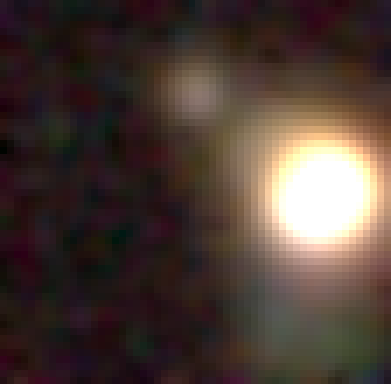
Fig 1: Composite RGB images of (a) HSCJ1631+4426 and (b)
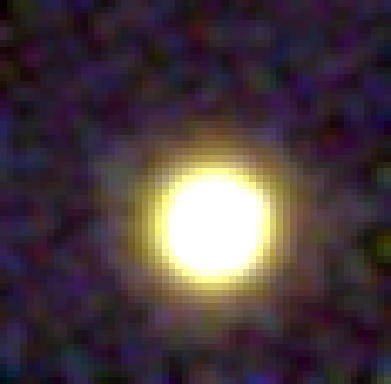
Fig 2: The rest-frame integrated spectra of a) the primary boundary of HSCJ1631+4426, b) the secondary boundary of HSCJ1631+4426, and c)
Limitations
- Iron abundance measurements hinge on a single [Fe III] 4658 emission line, limiting robustness and making results sensitive to line blending and line flux uncertainties.
- Systematic uncertainties remain large (~0.2–0.3 dex) due to ionisation correction factor model choice and atomic data sets for [Fe III], complicating precise abundance determination.
- Lack of longer wavelength observations including [Ar III] and [S II]/[S III] lines limits ability to distinguish between pair-instability supernovae and bright hypernova enrichment based on other elemental abundances.
- Observations cover only two XMP galaxies, somewhat limiting generalizability of conclusions about iron enrichment pathways in primordial systems.
- Possible subtle contributions from metal redistribution via feedback or circumgalactic accretion are not fully ruled out but considered unlikely based on current data.
- Age estimates rely on indirect stellar population diagnostics (EW(Hβ), SED fitting) that differ by factors of ~10, introducing uncertainty in enrichment timescale interpretation.
Open questions / follow-ons
- Can future observations targeting additional emission lines such as [Ar III] and [S II]/[S III] robustly differentiate whether pair-instability supernovae or bright hypernovae dominate iron enrichment in XMPs?
- How do improved atomic data and better ionisation correction factor calibrations affect the precision and reliability of nebular iron abundance measurements?
- What is the statistical occurrence rate of massive progenitors capable of producing PISNe or BrHNe in low-mass, low-metallicity starbursts, and how does stochastic sampling of the IMF impact chemical evolution?
- Can spatially resolved stellar population modeling incorporating kinematics and feedback processes clarify the interplay between supernova enrichment and gas-phase abundance patterns in XMPs?
Why it matters for bot defense
While this study is focused on astrophysical observations rather than bot defense or CAPTCHA technology, the rigor in spectral line extraction, error modeling, and handling of systematic uncertainties offers methodological insights for practitioners working on faint signal detection and interpretation in noisy datasets. The detailed approach to disambiguating subtle spectral features using integral field spectroscopy parallels challenges in discerning legitimate user signals from adversarial noise, highlighting the importance of spatially resolved measurements and robust uncertainty quantification. Additionally, the multi-model comparison and sensitivity analyses underline best practices in assessing model robustness that can inform CAPTCHA challenge-response design and evaluation. However, direct technical applications to bot-defense are minimal given the astrophysical domain and physical interpretation context.
Cite
@article{arxiv2607_14758,
  title={ The Mysterious Case of Iron in XMPs: Anomalous High log(Fe/O) Observed in Extremely Metal-Poor Galaxies HSCJ1631+4426 and SDSSJ0811+4730 },
  author={ Aaron Myszka and Themiya Nanayakkara and Karl Glazebrook and Sarah M. Sweet and Brent Groves and Nikole M. Nielsen and Jarle Brinchmann and Yuki Isobe and Chiaki Kobayashi and Haruka Kusakabe and Michael V. Maseda },
  journal={arXiv preprint arXiv:2607.14758},
  year={ 2026 },
  url={https://arxiv.org/abs/2607.14758}
}