
On the Effectiveness of Fact Checking Information from Politically Congruent and Incongruent Large Language Models
Source: arXiv:2607.15364 · Published 2026-07-16 · By Jiangen He, Benjamin D Horne, Dorit Nevo
TL;DR
This paper investigates the effectiveness of large language model (LLM) chatbots configured with explicit political leanings to fact-check political news headlines and their impact on user trust. The authors conducted two within-subject experiments (total n=705) recruiting politically diverse U.S. adults who interacted with two ideologically distinct LLM chatbots—one left-leaning, one right-leaning—to fact-check balanced sets of recent true and false political headlines. The study measures changes in trust ratings before and after fact-checking, analyzing how political congruency between user, bot, and headline influences outcomes.
Key contributions include demonstrating that LLM fact-checkers effectively reduce trust in false information and increase trust in true information across partisan divides, even when the chatbot’s ideology conflicts with the user. Political congruency plays a minor role, mainly modulating trust gains for true but politically distant headlines. A critical finding is that users also update trust based on incorrect or inconclusive LLM fact-checks, illustrating a risk of "tainted truth" at scale. The results underscore the promise of ideologically configurable LLMs for scalable misinformation correction but highlight risks from imperfect outputs in politically polarized contexts.
Key findings
- LLM fact-checkers increased trust in true headlines by +0.93 (study 1) and +1.09 (study 2) on a 5-point scale when their verdict was correct.
- LLMs decreased trust in false headlines by -0.78 (study 1) and -0.85 (study 2) when correctly identifying falsehoods, both statistically significant.
- Political congruency of chatbot and user did not significantly impact trust reduction for false headlines but modulated trust increase for true, politically distant headlines.
- Incorrect fact-checking verdicts caused trust in true headlines to decrease about -0.96 (study 1) and -1.02 (study 2), and increased trust in false headlines by +0.45 (study 1) and +0.27 (study 2).
- Unverifiable verdicts had inconsistent effects on trust for true headlines (decrease in study 1, increase in study 2) but decreased trust in false headlines on average.
- Users overwhelmingly perceived the political leaning of chatbots correctly, and perceived political distance correlated with trust updates.
- Fact-checking effectiveness held across both randomly assigned and user-selected chatbot conditions, with most users choosing ideologically congruent bots.
- LLM fact-checkers adhered highly to protocol: 99.6% responses under 300 words, 100% gave verdict label, 95.6% included citations.
Threat model
The adversary is the ambient political misinformation ecosystem acting indirectly through chatbot outputs that may be ideologically biased or factually incorrect. Users are modeled as recipients who form trust judgments based on chatbot verdicts and evidence. The study assumes no direct adversarial manipulation of the LLMs or attacks on the chatbot system, focusing instead on whether politically aligned or misaligned LLM outputs affect trust updating.
Methodology — deep read
The paper's core methodology involves carefully controlled within-subject user experiments and an ideologically configurable LLM chatbot.
Threat Model & Assumptions: The adversary is ambient misinformation and partisan bias in users. Users rely on LLM chatbot fact-checkers embedded in social media. The study assumes users form trust judgments based on chatbot outputs that vary in political leaning and correctness. No adversarial attempts to manipulate the LLMs are considered.
Data: Researchers compiled 200 recent political news headlines (half true, half false) from fact-checking sites and reputable outlets, filtering out politically neutral headlines to retain 157 with clear partisan leanings. From these, balanced sets of 33 true left, 33 true right, 33 false left, 33 false right were randomly selected. A separate pretest sample (n=356) rated political valence of each headline.
Architecture/Algorithm: The LLM chatbot used GPT-5.1 with medium reasoning effort and was integrated with Exa API real-time web search restricted to U.S.-published news after Jan 1, 2025. Political ideology was encoded via prompt templates and media source filtering based on AllSides media bias ratings. The bot followed a strict output protocol: initial true/false/unverifiable verdict, concise response (<300 words), at least three sources, inclusion of fact-checking sources where possible, and a follow-up question.
Training Regime: GPT-5.1 and search API provided consistent behavior; no training detailed in the study as they used externally developed models.
Evaluation Protocol: Two studies with within-subject designs (study 1: n=412, assigned each participant two bots and eight headlines; study 2: n=293, participants chose one bot). Trust in each headline rated on 5-point scale before and after chatbot fact-checking. Mixed-effects regression analyzed trust change ∆ as dependent variable, with chatbot verdict, perceived bot-user political distance, headline political distance, and their interaction as predictors. Additional metrics included Kolmogorov-Smirnov and Cliff’s delta effect sizes. Manipulation checks confirmed participants perceived chatbot ideology.
Reproducibility: Code and data partially available on OSF with supplemental materials. LLM weights proprietary; experiments depend on GPT-5.1 and Exa API external services. Full reproducibility limited by proprietary APIs.
Example end-to-end: A participant first rates trust in a politically right-leaning false headline as moderately trusting. They then query the left-leaning chatbot, which provides a 'False' verdict with citations from left-leaning outlets and fact-check sources. After reading the response, the participant updates their trust downwards on the 5-point scale, quantified as a negative trust ∆. This process is repeated across multiple headlines and with two chatbots possessing opposing political leanings.
Technical innovations
- Use of ideologically configured LLM chatbots that bias both content and source citations to simulate partisan-aligned fact-checkers.
- Integration of real-time web search constrained by political bias in media domain filtering to ground LLM outputs in current U.S. news.
- Systematic within-subject experiment design measuring trust change for true/false headlines under political congruency and discordance conditions.
- Detailed quantitative modeling of trust update as a function of chatbot verdict accuracy, perceived political distance, and headline partisanship.
- Demonstration that politically incongruent LLM fact-checkers still significantly influence trust in misinformation correction.
Datasets
- Political News Headlines — 132 (33 true left, 33 true right, 33 false left, 33 false right) — curated from multiple fact-checking sites and reputable news outlets, filtered for political leaning.
- Pretest Political Valence Ratings — 356 participants — Prolific-recruited U.S. representative sample.
Baselines vs proposed
- Control (no fact-check): baseline trust rating propensity per headline before chatbot interaction.
- LLM Fact-Check Correct True Verdict: trust ∆ increased by +0.93 (study 1) vs control.
- LLM Fact-Check Correct False Verdict: trust ∆ decreased by -0.78 (study 1) vs control.
- LLM Fact-Check Incorrect True Verdict: trust ∆ decreased by -0.96 (study 1) vs control.
- LLM Fact-Check Incorrect False Verdict: trust ∆ increased by +0.45 (study 1) vs control.
Figures from the paper
Figures are reproduced from the source paper for academic discussion. Original copyright: the paper authors. See arXiv:2607.15364.
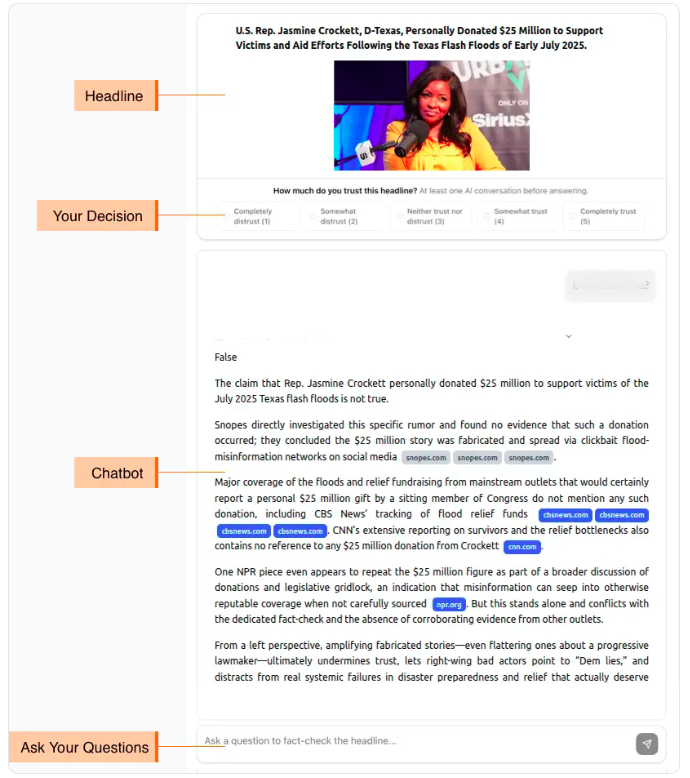
Fig 1: (a) An example of the left bot interface. (b) The experiment flows for both study 1 and study 2. Both studies used
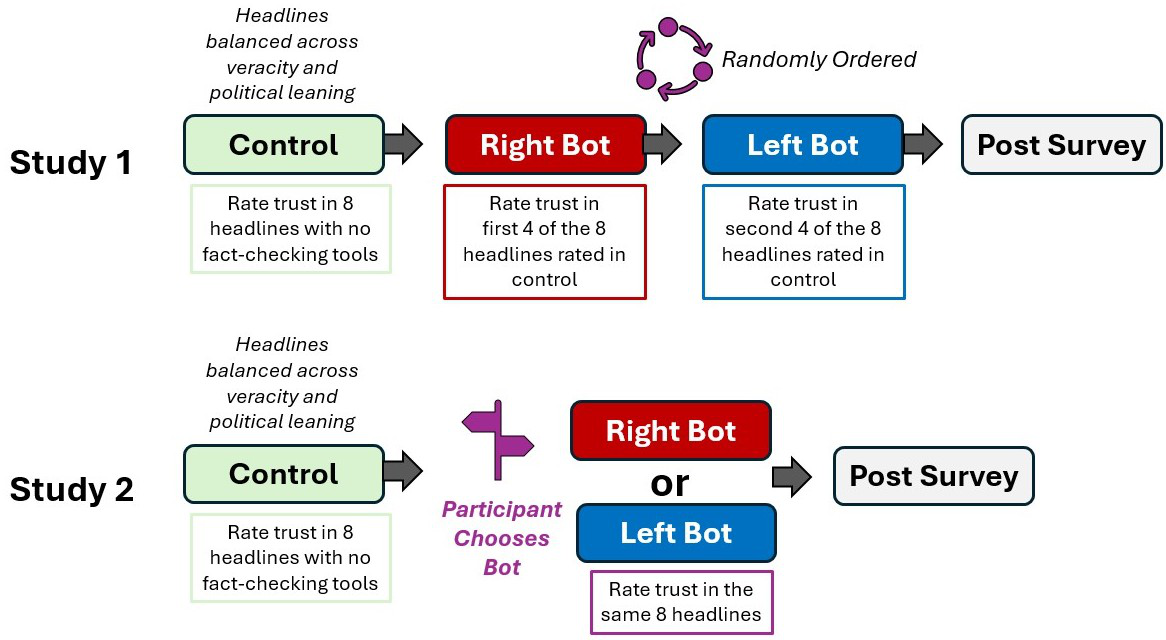
Fig 2: (a) Histograms of perceived political distance be-
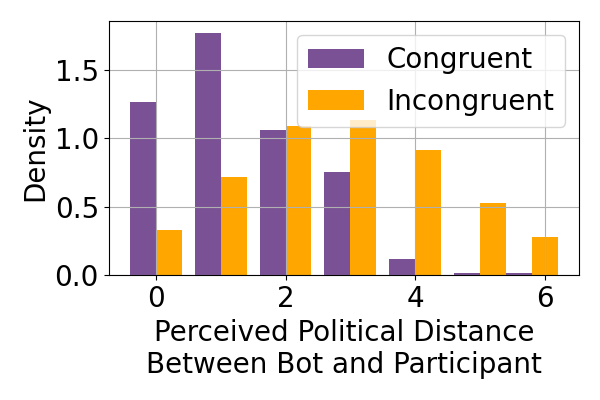
Fig 3: Distributions of trust change by LLM verdict for
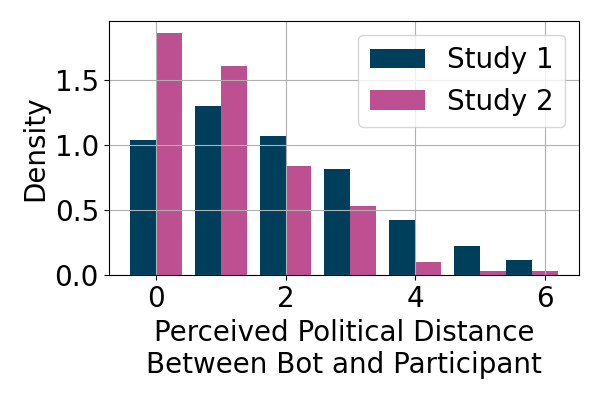
Fig 4: Coefficient plots from four mixed effects models
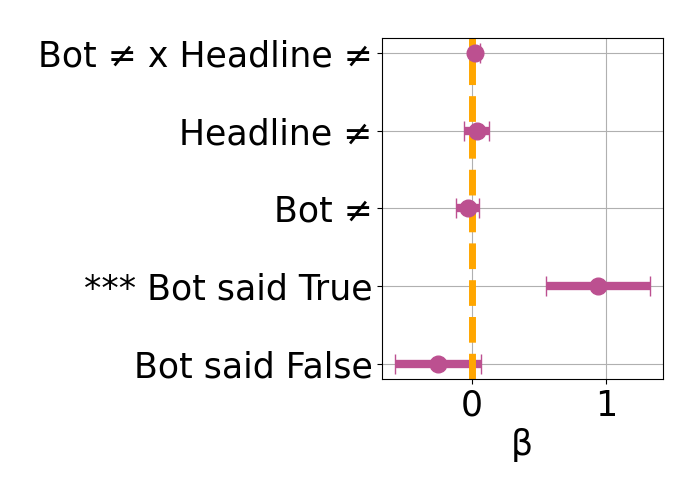
Fig 5: (Top) Interaction between perceived bot congru-
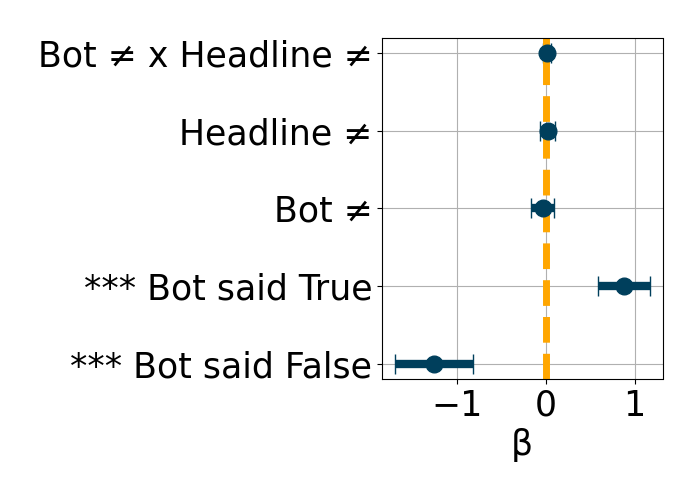
Fig 6: Distributions of trust in true headlines that came from reputable sources, true headlines that were fact-checked, and
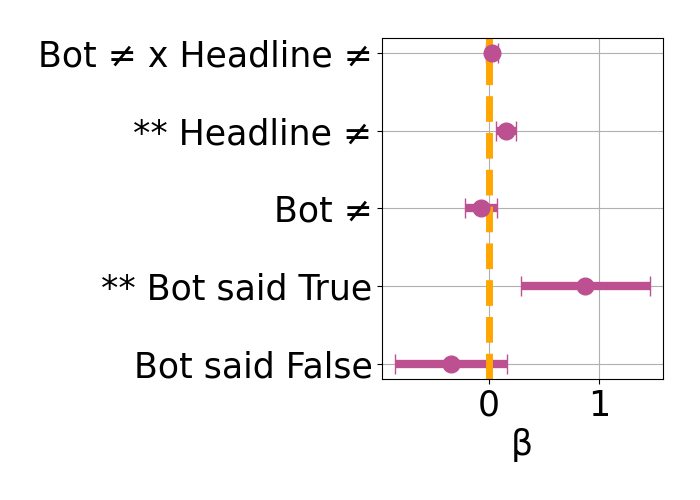
Fig 7 (page 7).
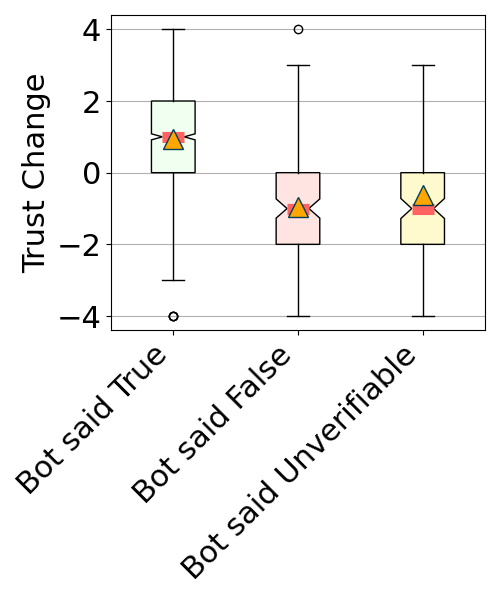
Fig 8 (page 7).
Limitations
- Dependence on GPT-5.1 and Exa API external services limits reproducibility and may introduce unknown biases.
- Fact-checking correctness depends heavily on restricted source sets and real-time search quality; errors affect trust.
- The study does not consider adversarial or manipulated chatbot outputs deliberately aiming to deceive.
- Participant population limited to U.S. adults on Prolific; generalizability to other populations or platforms uncertain.
- Only political news headlines investigated; results may not generalize to other misinformation domains.
- The influence of chatbots on long-term belief updating or behavioral sharing was not assessed.
- Potential demand characteristics could bias participants to trust or distrust chatbots based on social desirability.
Open questions / follow-ons
- How do LLM fact-checkers affect long-term belief formation, sharing behavior, and real-world misinformation spread?
- What mechanisms mitigate or amplify the impact of incorrect or unverifiable chatbot verdicts on user trust?
- Can adversarial manipulation or fine-tuning of LLMs exacerbate biases or misinformation in politically polarized environments?
- How do cultural and international differences affect chatbot political congruency perception and fact-check effectiveness?
Why it matters for bot defense
Bot-defense and CAPTCHA practitioners can draw insights from this study regarding how users process fact-checking information delivered by AI agents with perceived political biases. The finding that truth discernment improves regardless of chatbot political congruency suggests that automated conversational agents can contribute to misinformation mitigation across diverse user ideologies. However, the significant trust shifts even when the chatbot is wrong or inconclusive warn of systemic risks when relying solely on LLM outputs without human verification or fallback mechanisms.
For CAPTCHA and bot-detection systems integrating LLMs or conversational agents, understanding the nuanced role of perceived political congruency and its limited effect in reducing trust in falsehoods helps inform trust calibration interfaces. Designers should consider how chatbot framing and explanation transparency influence heuristic versus systematic processing of trust signals. Furthermore, deployment of politically configurable LLMs should be accompanied by careful quality control to avoid large-scale "tainted truth" effects, which can undermine platform credibility and detection efforts.
Cite
@article{arxiv2607_15364,
  title={ On the Effectiveness of Fact Checking Information from Politically Congruent and Incongruent Large Language Models },
  author={ Jiangen He and Benjamin D Horne and Dorit Nevo },
  journal={arXiv preprint arXiv:2607.15364},
  year={ 2026 },
  url={https://arxiv.org/abs/2607.15364}
}