
Long-range and steady-state entanglement of driven-dissipative nitrogen vacancy centers using microwaves as a drive and synthetic antiferromagnet as a dissipator
Source: arXiv:2607.15259 · Published 2026-07-16 · By Federico Garcia-Gaitan, Branislav K. Nikolic
TL;DR
This paper addresses the challenge of generating and stabilizing steady-state long-range entanglement between two nitrogen-vacancy centers (NVCs) in diamond. Such entanglement is critical for scalable quantum sensing and computing but difficult to maintain, especially over distances greater than about 10 nm where direct dipolar coupling is weak. The authors develop a fully microscopic Lindblad quantum master equation describing two NVCs driven coherently by microwaves while coupled dissipatively to a shared magnetic bath that remains in thermal equilibrium. This carefully derived model incorporates both coherent and dissipative bath-mediated interactions under realistic experimental parameters. Their analysis identifies conditions where steady-state entanglement can be generated without requiring nonequilibrium bath states, which contrasts with previous schemes reliant on driven baths. They propose a synthetic antiferromagnet (SAF) as an optimal dissipative environment, showing that cooperative decay, pump, and dephasing rates mediated by SAF magnons enable entanglement at distances up to ~100 nm. Using measured parameters, they predict steady-state concurrence around 0.28 with entanglement establishing on timescales ~0.1 s, promising for quantum information applications.
Key findings
- Microscopically derived Lindblad QME for two NVCs driven by microwaves and interacting with an equilibrium magnetic bath (Eqs. 3,4).
- Steady-state concurrence of approximately 0.28 achieved for two NVCs separated by ~100 nm, much beyond direct dipolar coupling range (~10 nm).
- Cooperative dissipative couplings (decay Γij and pump ˜Γij) mediated by magnon bath are principal mechanisms for steady-state entanglement.
- Nonlocal dephasing Γz_ij can protect entanglement by realizing a decoherence-free subspace, mitigating detrimental local dephasing.
- Bath-induced coherent interactions Jij must be minimized if complex-valued to avoid suppressing entanglement.
- Synthetic antiferromagnet (SAF) bath provides tunable magnon modes enabling long-range cooperative dissipative rates of ~100 Hz at ~100 nm spacing, with Rabi frequency ΩR=130 MHz.
- Steady-state entanglement generation timescale ~0.1 s is slower than intrinsic NVC coherence (~1 s) but experimentally feasible.
- Driving only the NVCs (not the bath) breaks detailed balance conditions that normally enforce thermal Gibbs state, allowing nonthermal steady-state entanglement.
Methodology — deep read
Threat model & assumptions: The adversary is not explicitly modeled as this is a quantum information scheme; the focus is on engineering steady-state entanglement via controlled dissipation and coherent driving. The system consists of two distant NVCs, each modeled as an effective spin-1/2 qubit with energy splitting ∆, driven by microwave radiation with Rabi frequency ΩR and frequency ω. They interact weakly with a large 2D quantum magnetic bath (2DQM) in thermal equilibrium, e.g., a synthetic antiferromagnet (SAF). The bath is assumed to have short correlation times and weak coupling to the NVCs, and the rotating wave approximation (RWA) holds due to frequency scale separations (∼MHz Rabi vs ∼100 Hz dissipative rates). The bath is not driven and remains in equilibrium, enabling a Markovian Lindblad QME description.
Data: The analysis is theoretical and analytical/numerical using experimentally realistic parameters derived from literature on NVCs and SAF materials. The spatial separation between NVCs is varied up to several hundred nanometers; other parameters like external magnetic field, exchange couplings J and J_AF, anisotropy Kz, and temperature (approximated zero) are taken from experiments and first-principles models.
Architecture/algorithm: The core is a Lindblad quantum master equation (QME) for the time evolution of the two-qubit density matrix ˆρ(t), Eq. (3). The Hamiltonian includes microwave driving terms and bath-induced coherent couplings (Jij and Jz_ij). The dissipator L[ˆρ] contains terms for cooperative decay (Γij), pump (˜Γij), and dephasing (Γz_ij), defined via non-equilibrium Green's functions (NEGF) of the bath dipolar field operators (Eqs. 5 and 6). These Green's functions incorporate the bath spectral densities and magnon modes.
The SAF magnetic bath is modeled by a Heisenberg Hamiltonian (Eq. 8) for two ferromagnetic layers coupled antiferromagnetically with parameters J, J_AF, Kz, and external field, then bosonized and linearized using Holstein-Primakoff transformation to obtain magnon modes. Bath susceptibilities entering the QME rates are computed from these linearized magnon spectra.
The microwave drive transforms the system to a rotating frame and modifies dissipative rates, breaking fluctuation-dissipation constraints and enabling nonthermal steady states.
Training regime: Not applicable (analytical/numerical physics modeling). Computational evaluations involve solving the steady-state density matrix equation (Eq. 7) and calculating concurrence to quantify entanglement under varying parameters like local/nonlocal pump-to-decay ratios, dephasing rates, coherent interactions, and NVC separation distance.
Evaluation protocol: The main metric is steady-state concurrence C[ˆρ_SS], ranging from 0 (no entanglement) to 1 (max entanglement). Parameter sweeps identify regions producing significant steady-state entanglement (Fig. 2). The effect of dephasing, complex coherent coupling, and bath choice (SAF) on entanglement range and magnitude are analyzed. The validity of approximations and timescales (bath correlation time vs Rabi frequency) are discussed to confirm Lindblad QME applicability.
Reproducibility: The paper states parameters used come from realistic experiments and the derivations provide explicit microscopic expressions for all rates in terms of bath spectral functions. Supplementary material includes detailed derivations and computational methods. No code or frozen weights are involved, datasets correspond to material parameters from literature references.
Concrete example: For two NVCs separated by d=100 nm, height h=100 nm above a SAF characterized by specific J_AF=0.9 GHz and anisotropy, driven at Rabi frequency 130 MHz, the computed dissipative rates lead to steady-state concurrence C ≈ 0.28 with entanglement buildup time ~0.1 s. This demonstrates the scheme's feasibility for long-range steady entanglement mediated by an equilibrium magnetic bath.
Technical innovations
- Microscopic derivation of a Lindblad quantum master equation for two driven NVCs coupled to a single equilibrium magnetic bath, capturing coherent and dissipative effects beyond phenomenological models.
- Exploitation of microwave driving of NVCs to tune effective dissipative rates and evade the thermal Gibbs steady state without driving the bath itself.
- Identification of synthetic antiferromagnet (SAF) as an optimal equilibrium magnetic bath supporting long-range cooperative decay and pump processes needed for steady-state entanglement at ~100 nm.
- Demonstration that nonlocal dephasing can protect entanglement by forming a decoherence-free subspace, reducing detrimental local dephasing effects.
- Explicit connection of bath-induced Lindblad rates to nonequilibrium Green’s functions and spin susceptibility tensors derived from bosonized magnon spectra of SAF.
Baselines vs proposed
- Undriven NVCs + thermal bath: steady-state convergence to unentangled thermal Gibbs state with zero concurrence.
- Driven NVCs + equilibrium SAF bath (this work): steady-state concurrence C ≈ 0.28 at 100 nm spacing and Rabi frequency 130 MHz.
- Ignoring dephasing and coherent bath-induced couplings can spuriously increase entanglement range from ∼100 nm to ≲350 nm.
Figures from the paper
Figures are reproduced from the source paper for academic discussion. Original copyright: the paper authors. See arXiv:2607.15259.

Fig 2: Steady-state entanglement of two NVCs in the setup
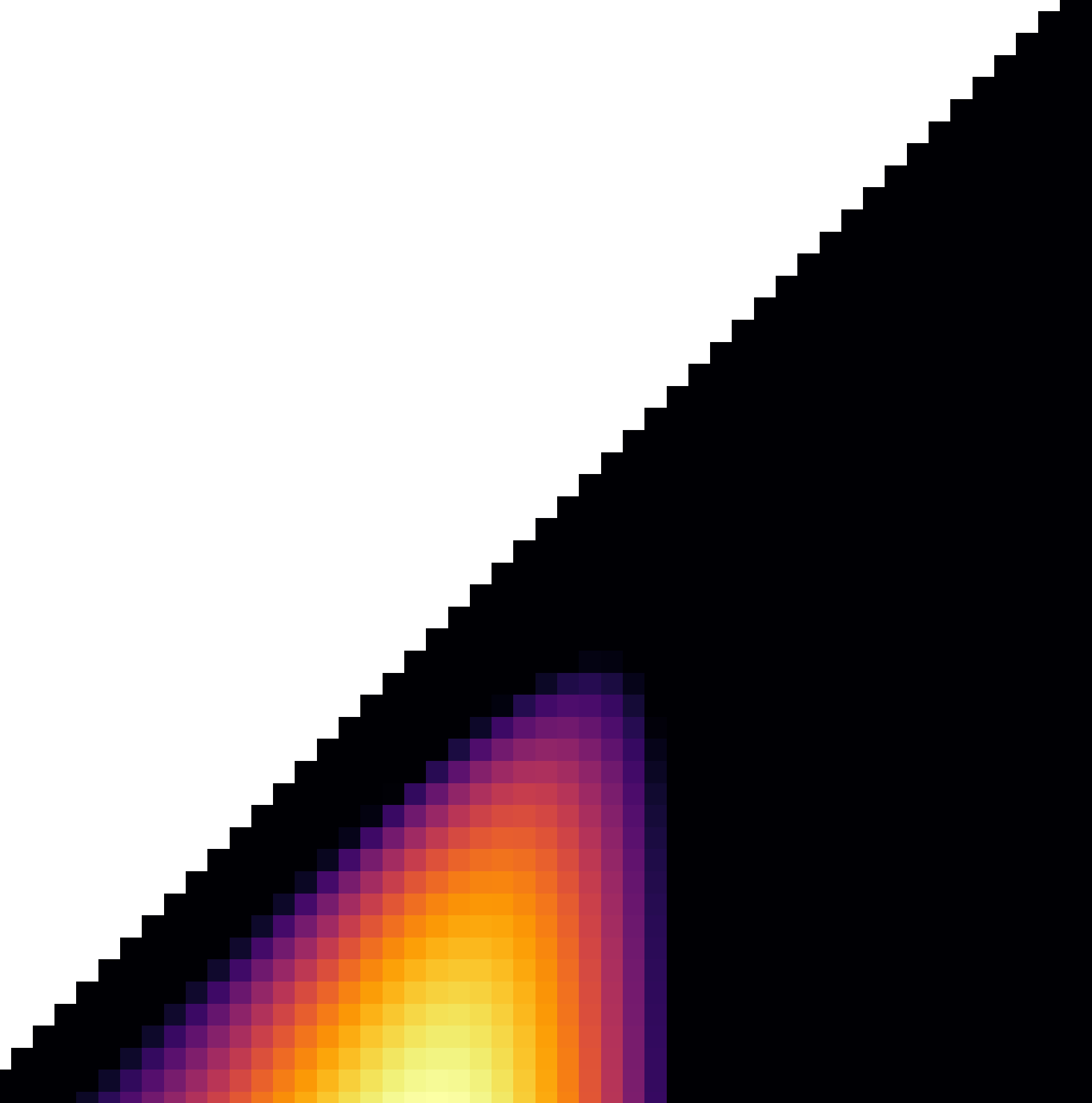
Fig 3: (a) Energy-momentum dispersion of magnons in SAF
Limitations
- Entanglement generation timescale (~0.1 s) is slow compared to typical decoherence sources and requires coherence times ~1 s for experimental feasibility.
- Model assumes weak system-bath coupling; strong coupling regimes and non-Markovian effects are not treated.
- Bath is considered to be perfectly thermal and un-driven; non-equilibrium or non-thermal baths may alter results.
- The QME derivation relies on frequency separation (RWA) and short bath correlation times; validity could break down outside these regimes.
- Effect of experimental imperfections such as inhomogeneous broadening, finite temperature, or bath disorder is not explored.
- No direct experimental demonstration yet; results are predictions based on theoretical modeling.
Open questions / follow-ons
- Can the entanglement generation speed be increased to better compete with residual decoherence sources in NVCs?
- How robust is the scheme to finite temperature effects or deviations of the bath from perfect equilibrium?
- Can similar driven-dissipative steady-state entanglement be realized using other magnetic materials beyond synthetic antiferromagnets?
- What is the impact of non-Markovian bath dynamics or stronger system-bath coupling on entanglement generation and steady states?
Why it matters for bot defense
For bot-defense or CAPTCHA application contexts considering quantum-secured hardware or quantum sensors, this paper's insights into robust steady-state entanglement formation between spatially separated solid-state qubits (NVCs) advance the feasibility of entanglement-assisted devices. Engineering dissipative environments via synthetic antiferromagnetic baths with microwave-driven qubits provides a pathway to scalable, stable entanglement without finely tuning bath nonequilibrium states. While the timescales involved (~0.1 s) are still slow relative to many classical protocols, this work informs future quantum hardware that could enhance security primitives by leveraging steady entanglement for sensing or cryptographic key generation. Practitioners interested in noise-robust, long-range entanglement engineering may find the microscopic modeling approach valuable for designing quantum-enabled device backends or quantum-resistant hardware modules. Nonetheless, direct impact on classical bot-defense mechanisms remains indirect and more foundational, focusing on eventual quantum hardware capabilities rather than immediate CAPTCHAs or bot detection.
Cite
@article{arxiv2607_15259,
  title={ Long-range and steady-state entanglement of driven-dissipative nitrogen vacancy centers using microwaves as a drive and synthetic antiferromagnet as a dissipator },
  author={ Federico Garcia-Gaitan and Branislav K. Nikolic },
  journal={arXiv preprint arXiv:2607.15259},
  year={ 2026 },
  url={https://arxiv.org/abs/2607.15259}
}