
Digital Pantheon: Simulating and Auditing Coalition Formation with LLM Agents
Source: arXiv:2607.15095 · Published 2026-07-16 · By Dylan Van Mulders, Matthias Bogaert, Dirk Van den Poel
TL;DR
This paper addresses the challenge of simulating faithful multi-party political coalition formation using large language models (LLMs). While prior LLMs optimized via Reinforcement Learning from Human Feedback (RLHF) tend toward neutrality and helpfulness, this prevents consistent partisan behavior needed to model ideological actors. The authors propose a novel multi-agent framework combining Supervised Fine-Tuning (SFT), Direct Preference Optimization (DPO), and Retrieval-Augmented Generation (RAG) to imbue LLM agents with aggressive, party-specific personas founded on official party manifestos. Agents engage in a structured hub-and-spoke negotiation mediated by a neutral formateur agent. To make the emergent compromises interpretable, the framework introduces a Multi-Layered Information Lineage Topology (MILT) system that traces every final agreement clause back to manifesto grounding and classifies it into five provenance states. A Coalition Influence Score (CIS) quantifies each party's impact, and a real-world grounding pass benchmarks simulated provisions against the historical 2019 Flemish coalition agreement. Across three independent simulations, the model consistently ranks N-VA as the dominant party followed by CD&V and Open Vld, with manifesto-based lineage strongly predictive of real-world agreement clauses, while hallucinated content does not materialize. This yields a transparent, scalable testbed for ex-ante political bargaining analysis that balances ideological fidelity, factual grounding, and process explainability.
Key findings
- Combining SFT+DPO alignment with party-specific RAG grounding yields partisan agents that sustain aggressive ideological positions across multi-turn negotiation, overcoming RLHF neutrality biases.
- Across three simulations, provenance-bearing provisions (Direct, Diluted, Synthesized) constitute 57.4% ± 1.0% of final agreement clauses, while hallucinated or pipeline artifact clauses constitute 28.9% ± 1.6%.
- N-VA leads coalition influence scoring with 40.0% ± 3.3% of attributable influence, ahead of CD&V (31.8% ± 1.8%) and Open Vld (28.2% ± 1.8%), reproducing known real-world power hierarchies but with more balanced shares than parliamentary seats.
- Real-world grounding rates show 9.9% ± 2.0% of provisions fully present in the historical agreement, 35.9% ± 0.9% partially present, and 54.2% ± 1.5% absent, indicating simulation partially captures actual coalition compromises.
- Manifesto-anchored lineage classes (Direct, Diluted, Synthesized) realize in the real-world agreement at a higher rate (G=0.32–0.37) than hallucinated classes (G=0.164), with orphan hallucinations absent in 75.4% of cases.
- Synthesized lineage clauses — cross-party compromises — realize slightly more often than direct party-retained clauses (G=0.365 vs. 0.333), demonstrating credible modeling of negotiated logrolling.
- The MILT explainability framework enables tracing each agreement clause through three negotiation layers back to party manifesto chunks, allowing clear attribution of ideological influence in the final deal.
- Three repeated simulations with independent evaluations yield stable party rankings and consistent patterns despite variation in clause volumes.
Threat model
The adversary is conceptually the tendency of unaligned or neutrally trained LLMs to deviate from coherent partisan positions through conformity, neutrality bias, or hallucination during multi-agent negotiation. Capabilities include prompting attempts to induce neutrality, hallucination, or moderate consensus that masks party identity. The framework’s defenses rely on fine-tuning (SFT+DPO), manifesto-based retrieval, and constrained interaction to prevent ideological drift and ensure truthful, persistent partisanship. The adversary cannot override RAG retrieval boundaries or directly modify the agent’s aligned parameter regions.
Methodology — deep read
The authors propose a three-stage pipeline to simulate coalition formation using LLM agents bound to party manifestos:
Data preparation involves collecting official 2019 Flemish party manifestos parsed and chunked via an Agentic–Structural Hybrid (ASH) method. This hybrid chunking uses structural heuristics and semantic coherence checks (via Gemma3 27B LLM) to segment text into meaningful units with clear provenance. Text normalization and filtering remove page headers and footers.
Preference pairs for fine-tuning are generated via structured calls to Gemma3, creating triplets (Prompt, Chosen, Rejected) where Chosen is a conversational restatement of parties' policy resolutions, and Rejected offers opposing or neutral stances. These pairs support both Supervised Fine-Tuning (SFT) and Direct Preference Optimization (DPO).
Ideological alignment follows a two-stage approach on Gemma-3 (27B) quantized to 4-bit:
- Stage 1 (SFT) trains the model to assume a 'Method Actor' persona, directly speaking for the party and defending manifesto commitments.
- Stage 2 (DPO) refines this by contrastive optimization, rewarding combative partisan responses over neutral or opposing ones, counteracting baseline model neutrality.
At inference, Retrieval-Augmented Generation (RAG) constrains agents by retrieving top-k (max 5) relevant manifesto chunks via ChromaDB embeddings, preventing out-of-line hallucinations or unconstrained concessions. Each party agent accesses only its own manifesto data.
The multi-agent negotiation arena is a hub-and-spoke architecture with the largest party agent acting as a formateur broker. Over four iterative dialogue rounds, party agents articulate red lines, seek shared objectives, and propose compromises. The formateur drafts and refines an interim and final coalition agreement.
Explainability is achieved through the Multi-Layered Information Lineage Topology (MILT), which models negotiation as a temporal graph linking final agreement clauses (L3) back through agent standpoints (L1) to manifesto chunks (L0). Using Qwen3.6 (27B) as a backward natural language inference classifier, provisions receive provenance labels across five classes: Direct Lineage, Diluted Lineage, Synthesized Lineage, Pipeline Artifact, and Orphan.
A Coalition Influence Score (CIS) aggregates clause provenance with weighted scores (+3 direct, +2 diluted, +1 synthesized) to quantify each party's influence on the final agreement.
Real-world grounding (LReal) uses the same Qwen3.6 model to assess whether simulated agreement clauses appear, partially appear, or are absent from the actual 2019 Flemish coalition agreement, validating simulation fidelity.
For example, the N-VA party agent during negotiation retrieves top manifesto chunks, asserts non-negotiable policy points, responds to other parties' proposals, and influences the formateur's interim drafting. MILT links the final agreement clause on "forced school mergers" back to an N-VA manifesto chunk passed through negotiation rounds, confirming ideological preservation.
The training involved small batch sizes (B=2 for SFT, B=1 for DPO due to large model size), a few epochs (5 for SFT, 3 for DPO), and low learning rates (5×10^–6). The simulator runs on consumer hardware with adapter hot-swapping to manage multiple party personas efficiently.
Evaluation uses three independent simulation repetitions, each evaluated twice with different NLI runs to isolate noise. Metrics include MILT provenance composition, CIS party scores, and real-world grounding rates. The framework is transparent and reproducible with full audit trails, but code and weights status is not explicitly stated.
Technical innovations
- A two-stage ideological alignment protocol (SFT + DPO) to embed aggressive, party-specific partisan personas in LLMs, overcoming RLHF-induced neutrality and helpfulness biases.
- A per-party retrieval-augmented generation (RAG) pipeline constraining agents strictly to their own party manifestos, preventing hallucinations and factual drift during negotiation.
- The Multi-Layered Information Lineage Topology (MILT), a novel explainability framework tracing every final agreement clause back through negotiation standpoints to originating manifesto chunks and categorizing provenance into five distinct states.
- A Coalition Influence Score (CIS) metric quantifying party influence on the final coalition agreement by weighting provenance classes, providing a transparent, auditable winner determination.
- A structured multi-agent negotiation arena in a hub-and-spoke communication topology with a formateur agent mediating four rounds of iterative party negotiation, simulating realistic coalition bargaining.
Datasets
- 2019 Flemish Party Manifestos — size not explicitly stated — publicly sourced official electoral manifestos
- 2019 Flemish Coalition Government Agreement — approximate size not stated — public historical document used for real-world grounding evaluation
Baselines vs proposed
- Non-fine-tuned base formateur agent favors moderate parties despite Banzhaf indices, whereas party-tuned formateur preserves power leverage per party size (qualitative comparison).
- Simulation-derived coalition influence shares: N-VA 40.0% ± 3.3%, CD&V 31.8% ± 1.8%, Open Vld 28.2% ± 1.8%. Historical seat shares: N-VA 50.0%, CD&V 27.1%, Open Vld 22.9%.
- Manifesto-anchored MILT classes realize at grounding scores G=0.32–0.37 compared to hallucinated classes at G=0.164, showing improved predictive validity over unbounded negotiation.
- Synthesized lineage clauses realize better (G=0.365) than direct lineage clauses (G=0.333), indicating multi-party compromise modeling beats unilateral party sticking points.
Figures from the paper
Figures are reproduced from the source paper for academic discussion. Original copyright: the paper authors. See arXiv:2607.15095.
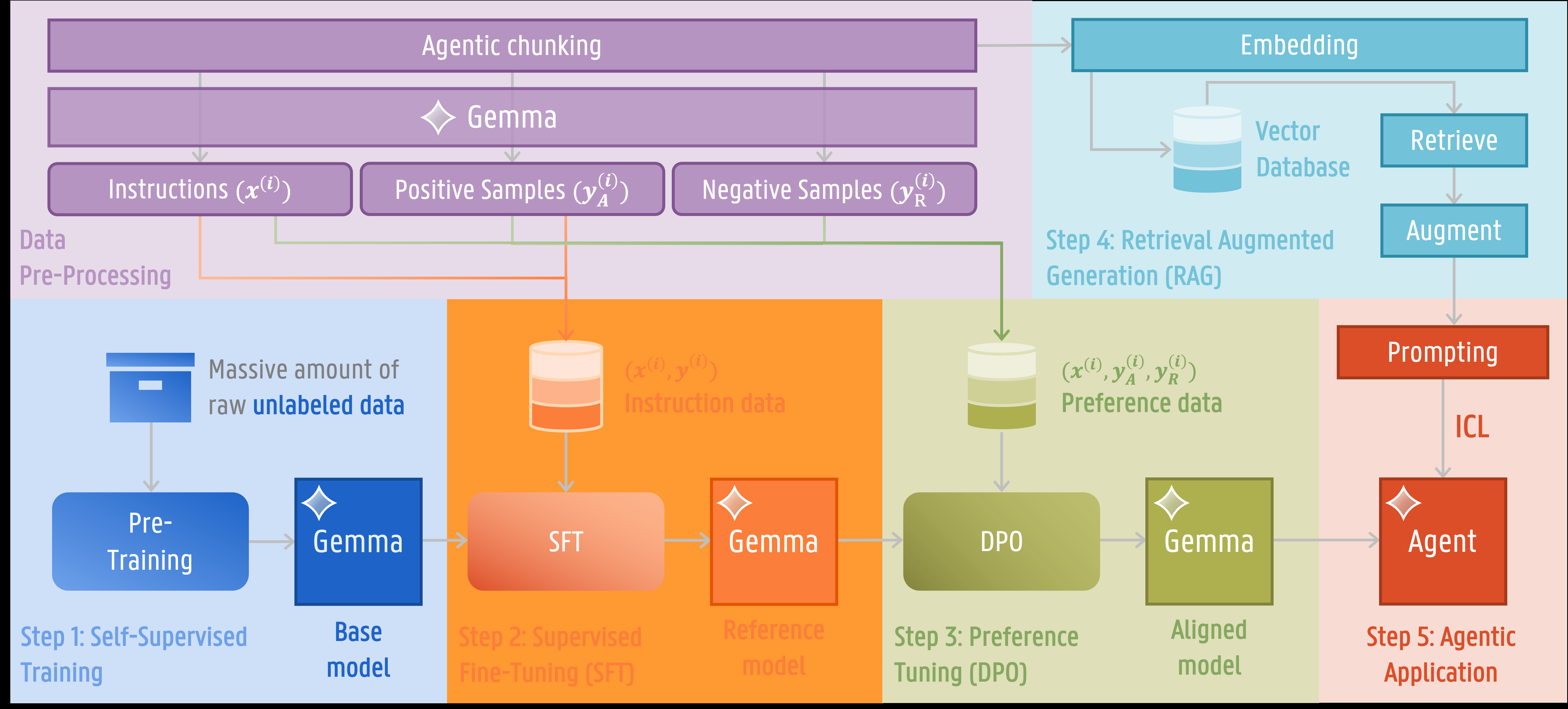
Fig 1: Overview of the individual party alignment model process.

Fig 2: Overview of the hybrid chunking strategy.

Fig 3 (page 4).

Fig 4 (page 4).
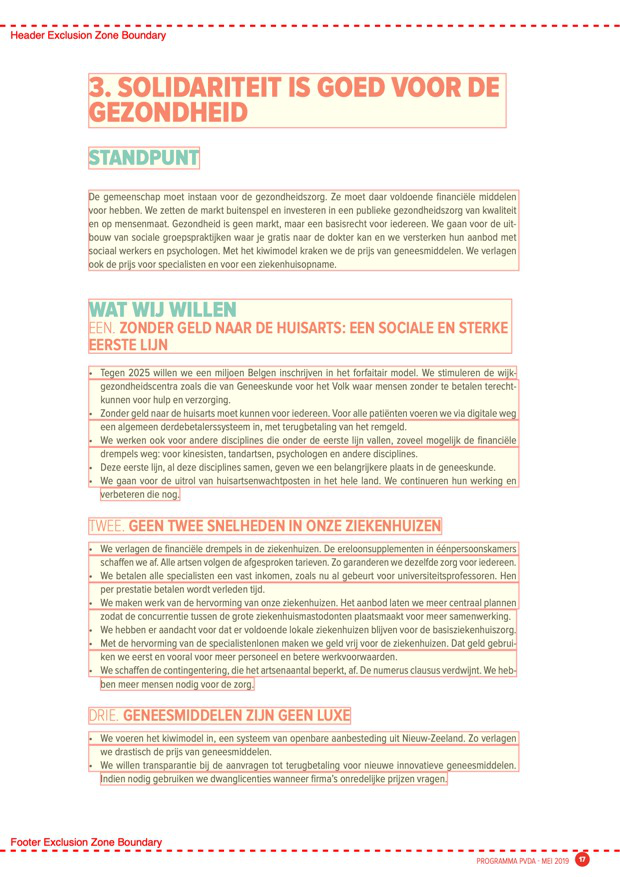
Fig 5 (page 4).
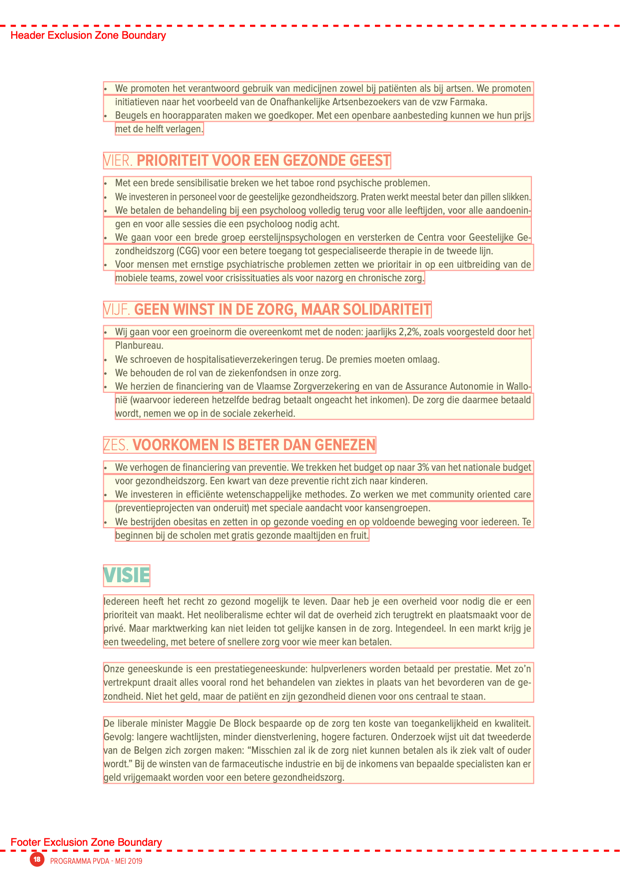
Fig 6 (page 4).

Fig 7 (page 4).

Fig 8 (page 4).
Limitations
- The simulation only covers one real-world coalition scenario (2019 Flemish election), limiting generalizability to other political contexts or multi-party systems.
- Evaluation of realism relies on automated NLI classification against historical agreements, which may introduce evaluator noise and partial interpretability challenges.
- Negotiation horizon limited to four rounds as a heuristic rather than a convergence criterion; longer or adaptive horizons may yield richer insights.
- Manifesto chunking relies on a hybrid heuristic/LLM method; errors or granularity choices here could affect grounding quality and provenance tracing robustness.
- Base LLM and adapter weights are not publicly released, which may hinder reproducibility or external validation by other researchers.
- Hallucination rates remain substantial (~22% orphan hallucinations), indicating imperfect control despite RAG constraints and ideological alignment.
Open questions / follow-ons
- How robust is the ideological alignment and negotiation stability across different multi-party systems with more complex or fragmented party landscapes?
- Can adaptive or dynamic negotiation protocols improve convergence and richer coalition exploration beyond the fixed four-round horizon?
- To what extent do hallucinations in intermediate negotiation dialogue affect long-term coalition outcomes and agent interactions in larger-scale simulations?
- How can human-in-the-loop validation or expert adjudication enhance real-world grounding and the fidelity of simulated compromises?
Why it matters for bot defense
For bot-defense or CAPTCHA practitioners, this paper illustrates an advanced method to simulate complex negotiation behaviors with ideologically aligned multi-agent LLM systems that maintain consistent stakeholder positions through fine-tuning and retrieval grounding. While not directly related to CAPTCHA breaking or defense, the technical insights into combining SFT+DPO with RAG to avoid model neutrality and hallucination may inspire new directions in creating or detecting sophisticated persona-driven bots. The MILT explainability framework and provenance tracing provide a blueprint for auditing multi-agent dialogue systems to disentangle authentic information from model artifacts or hallucinations, useful for attribution and transparency in adversarial or cooperative agent settings. Overall, the paper exemplifies rigorous methods for steering and interpreting interactive LLM agents in contexts where ideological consistency and grounded factuality are paramount, which could inform future bot behavior modeling or trust frameworks.
Cite
@article{arxiv2607_15095,
  title={ Digital Pantheon: Simulating and Auditing Coalition Formation with LLM Agents },
  author={ Dylan Van Mulders and Matthias Bogaert and Dirk Van den Poel },
  journal={arXiv preprint arXiv:2607.15095},
  year={ 2026 },
  url={https://arxiv.org/abs/2607.15095}
}