
Coulomb blockade in microscopic material defects as a source of decoherence and noise in solid-state quantum circuits
Source: arXiv:2607.15252 · Published 2026-07-16 · By R. Banerjee, L. P. Lindoy, M. Hegedus, A. Hutcheson, T. Hawkins, E. Daghigh-Ahmadi et al.
TL;DR
This paper addresses a fundamental and persistent problem that limits coherence in solid-state quantum devices, particularly superconducting circuits: the microscopic origins of materials-related decoherence and noise remain poorly understood, hindering effective mitigation. Using a scanning gate microscopy (SGM) technique at millikelvin temperatures on live superconducting resonators, the authors identify a previously unrecognized decoherence source arising from Coulomb blockade and microwave-driven charge tunneling in microscopic metallic grains or islands embedded in thin-film materials. These grains, common in fabrication processes, behave as electron boxes whose stochastic charge states couple dissipatively to the device's microwave field, generating losses and noise akin in impact to the well-studied two-level system (TLS) defects but arising from a distinct mechanism. The authors develop a detailed Anderson–Holstein impurity model and use it to quantitatively reproduce experiments measuring resonator loss and frequency shifts as a function of tip voltage and position. The observations challenge the prevailing belief that TLS dominate intrinsic decoherence, revealing that Sisyphus defects from metallic grains are widespread and significant. Eliminating these metallic grains during device fabrication emerges as a clear pathway toward improving device coherence and noise performance in microwave quantum circuits.
Key findings
- Sisyphus defects from Coulomb blockade in metallic grains cause microwave power-independent dissipation and noise in superconducting resonators, distinct from TLS mechanisms (e.g. Fig 2b,c).
- Measured resonator loss rates κ increase periodically with tip voltage, with peak loss values up to ~5 kHz limiting coherence to millisecond timescales (Fig 2d,f).
- Multiple defects per small scanned area are common—Fourier analysis reveals at least 4 distinct Sisyphus defects within ~tens of microns (Fig 4).
- Simulations fitting experimental data extract tunnel resistances Rt in the range of 15 kΩ to 600 kΩ and junction capacitances Cj in the 0.1–0.35 fF range consistent with 10–30 nm grain sizes.
- Observed loss mechanism does not saturate or diminish at high microwave power or low temperatures below 1 K, indicating temperature- and power-independent nature.
- The deduced defect grain sizes are consistent with Nb thin-film polycrystallinity and surface oxides from ex-situ X-ray reflectometry, SEM, and AFM analyses.
- Theoretical modeling shows dissipation is maximized when defect tunneling rate Γ matches the resonator frequency ω0, with dissipation and frequency shift scaling differently with Rt and Cj (Fig 3).
- Conventional loss attribution methods would misassign this microwave power-independent dissipation to other sources like quasiparticles or radiative losses.
Threat model
The threat is intrinsic materials-based decoherence arising from microscopic metallic grains acting as electron boxes that tunnel charge stochastically under device microwave fields, causing dissipation and noise. The adversary does not actively manipulate the device but represents uncontrollable defects that cannot be mitigated by increasing power or cooling. They are localized, passive, and intrinsic to device fabrication processes.
Methodology — deep read
Threat Model & Assumptions: The adversary corresponds to uncontrolled microscopic defects (metallic grains) in device materials causing decoherence. The study assumes these grains are tunnel-coupled to metallic reservoirs forming electron boxes subject to Coulomb blockade and driven by device microwaves. The adversary is passive but intrinsic, not actively manipulated.
Data Collection: Experiments used scanning gate microscopy (SGM) at temperatures ~15-350 mK on live superconducting hanger resonators fabricated from NbN on sapphire and Nb on Si wafers. The SGM tip voltage (Vtip) and position were varied to locally tune defect electrostatic potentials. Microwave transmission (S21) near resonance was recorded continuously. Multiple devices and defects were characterized.
Architecture / Model: A hybrid experimental-theoretical framework was employed. Physical modeling uses an Anderson–Holstein-type Hamiltonian capturing a metallic island (grain) with discrete charge states tunnel-coupled to an electron reservoir and capacitively coupled to resonator and SGM tip. The orthodox theory of single electron tunneling with mean-field approximations yields coupled ODEs describing island populations and resonator dynamics.
Training / Analysis Regime: Not applicable as this is an experimental physics study, but data were acquired by sweeping tip voltages and scanning tip position repeatedly over minutes to observe fluctuations and periodic responses.
Evaluation Protocol: Resonator loss rate κ and frequency shift δf were extracted by fitting microwave S21(f) to standard resonance models. Data slices of S21 as a function of tip position and voltage visualize defect signatures as concentric rings. Fourier analysis separated multiple defects. Comparison of experimental loss and frequency shift to model simulation curves demonstrated quantitative fits. Power and temperature dependence were studied to exclude TLS or quasiparticle mechanisms.
Reproducibility: Devices were fabricated in two cleanrooms with different materials and processing. Detailed experimental parameters and theoretical formulas are provided; however, code and full datasets are not explicitly released. Supplementary Information contains extended data and simulation details.
End-to-End Example: For one Nb on Si resonator, the SGM tip was positioned 10 μm above the device, swept in voltage causing periodic modulations of S21 revealing multiple equidistant peaks corresponding to discrete charge transitions of the grain. The extracted κ and δf vs Vtip data (Fig 2f) was fit using parameters Rt=15 kΩ, Cj=0.35 fF producing excellent agreement with the observed dissipation and dispersive frequency shifts under Coulomb blockade theory. Fourier spectra identified four distinct defects within the scanned area validating defect abundance. Corroborating ex-situ SEM and XRR characterized grain sizes consistent with model parameters.
Technical innovations
- Identification via scanning gate microscopy of Coulomb blockade and microwave-driven charge tunneling in microscopic metallic grains as a new decoherence source in superconducting circuits, distinct from TLS defects.
- Development and application of an Anderson–Holstein-type impurity model coupled to microwave resonator dynamics to quantitatively describe dissipation and frequency shifts from these electron-box-like defects.
- Demonstration that these Coulomb-blockade-induced defects cause microwave power- and temperature-independent loss, challenging the prevailing TLS-limited coherence paradigm.
- Use of Fourier decomposition of scanning gate spectroscopy data to spatially resolve and count multiple microscopic Sisyphus defects in active devices.
Datasets
- NbN on sapphire resonators — several devices studied — in-house fabricated
- Nb on Si resonators — several devices studied — in-house fabricated
Baselines vs proposed
- Two-level system (TLS) defects: Loss saturates at high microwave power and shows frequency shifts; Sisyphus defects: Loss and dissipation remain power independent and no avoided crossing present (Fig 2b,c)
- Non-equilibrium quasiparticles and magnetic vortices attributed losses: Typically temperature or power dependent; Sisyphus defects show no such dependence.
- Simulated resonator loss rate κ peak values (~5 kHz) consistent with observed limiting coherence to millisecond timescales.
Figures from the paper
Figures are reproduced from the source paper for academic discussion. Original copyright: the paper authors. See arXiv:2607.15252.

Fig 1: Coulomb blockade in tunnel-coupled microscopic islands causes dissipation in superconducting quantum

Fig 2: Quantifying dissipation and frequency shifts. (a) Measured heterodyne response from the resonator when keeping
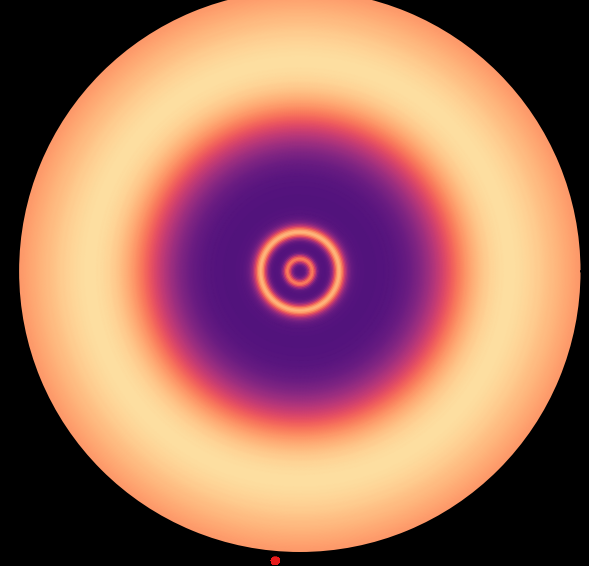
Fig 3: Decoherence parameter space. Theoretical nu-
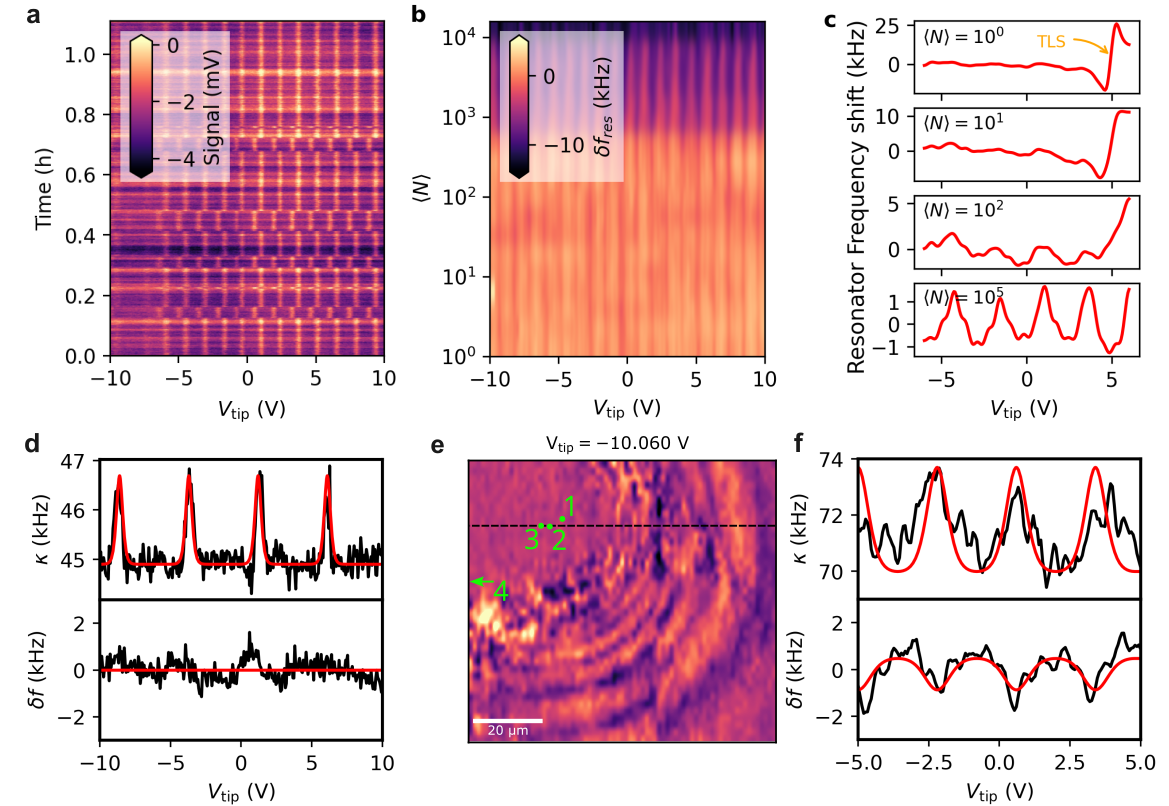
Fig 4: Abundance of defects.
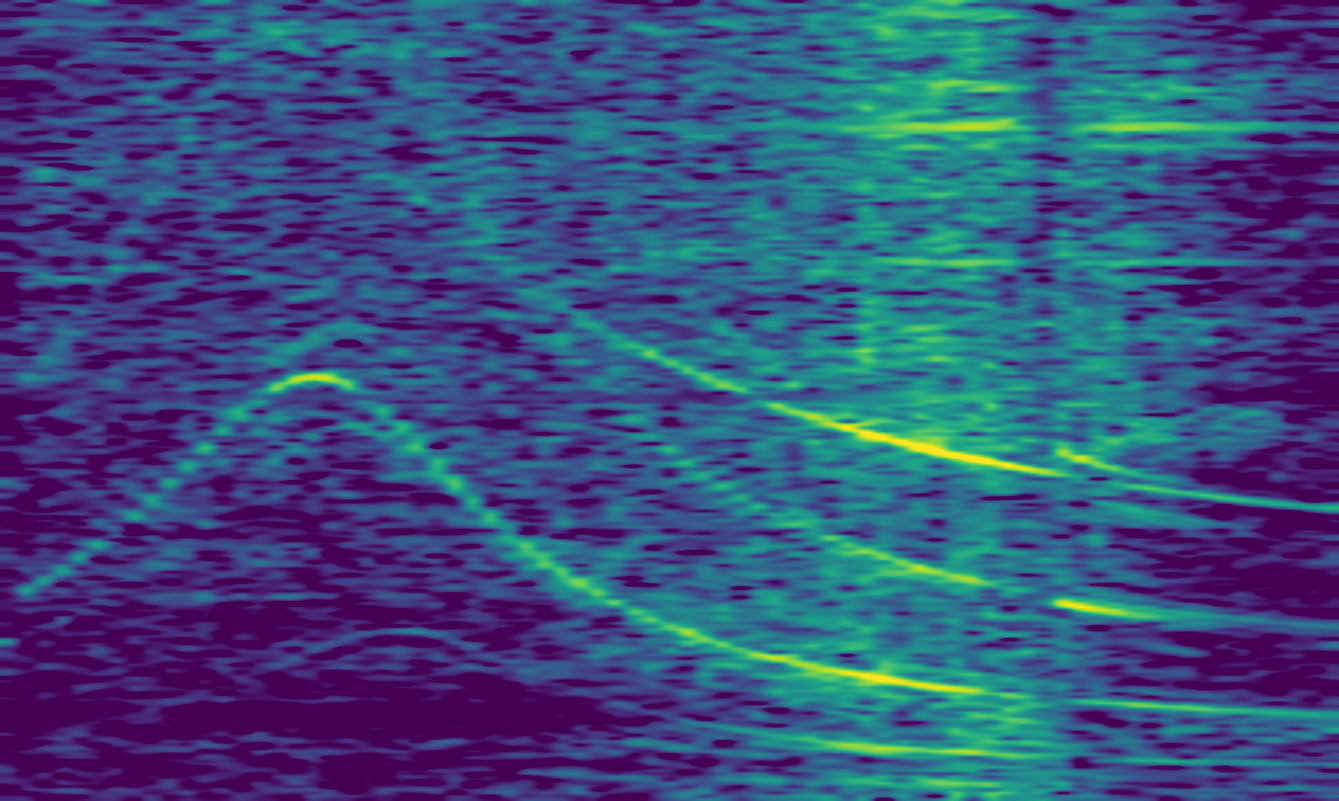
Fig 5 (page 5).
Limitations
- Spatial resolution limited to ~1 μm due to SGM tip hysteresis, preventing precise localization of defects at nanoscale.
- Only defects strongly coupled to the resonator and within instrumental detection limits are observed; weaker or more distant defects likely remain undetected.
- Assumption of orthodox single-electron tunneling theory breaks down for very strongly coupled junctions (Rt ≲ h/e²) where phase fluctuations emerge.
- Experiments mostly limited to a few device types (NbN on sapphire, Nb on Si); generality to all superconductors or other quantum devices requires confirmation.
- No direct adversarial or active attack scenarios tested; focus is on intrinsic, passive microscopic defects.
- Lack of publicly released raw data or simulation code impacts full reproducibility.
Open questions / follow-ons
- How prevalent are Sisyphus defects across different quantum device platforms and fabrication methods beyond Nb-based resonators?
- Can targeted fabrication techniques reliably eliminate or passivate metallic grains to improve coherence in large-scale quantum processors?
- What is the impact of these defects on multi-qubit systems and entanglement fidelity?
- Could dynamic charge noise mitigation or biasing methods be developed to suppress temporal fluctuations from these Coulomb blockade grains?
Why it matters for bot defense
For bot-defense or CAPTCHA-related engineers concerned with bot impersonation or detection at the hardware and firmware level, this paper is indirectly relevant as it advances understanding of solid-state noise sources in superconducting quantum circuits, which are increasingly used for quantum-secure cryptographic primitives or trusted hardware modules. The identification of a widespread, previously unrecognized decoherence mechanism demands refined materials engineering to build more reliable, stable quantum devices. While CAPTCHA systems themselves rarely run on such specialized quantum hardware yet, improving quantum circuit coherence and reducing noise contributes to future-proofing secure hardware used for cryptography or anti-fraud modules. This work highlights the importance of linking microscopic material defects to observable noise signatures via advanced microscopy and modeling, a principle translatable to hardware integrity verification or tamper-detection in complex systems. Practitioners should be cautious to not misattribute microwave power-independent noise sources to conventional mechanisms and should consider materials-level sources in device diagnostics and reliability assessments.
Cite
@article{arxiv2607_15252,
  title={ Coulomb blockade in microscopic material defects as a source of decoherence and noise in solid-state quantum circuits },
  author={ R. Banerjee and L. P. Lindoy and M. Hegedus and A. Hutcheson and T. Hawkins and E. Daghigh-Ahmadi and S. Samaddar and T. Barker and J. P. Goff and A. Ya. Tzalenchuk and I. Rungger and S. E. de Graaf },
  journal={arXiv preprint arXiv:2607.15252},
  year={ 2026 },
  url={https://arxiv.org/abs/2607.15252}
}