
Beyond the Leaderboard: Design Lessons for Trustworthy Multimodal VQA
Source: arXiv:2607.15241 · Published 2026-07-16 · By Sushant Gautam, Vajira Thambawita, Michael A. Riegler, Pål Halvorsen, Steven A. Hicks
TL;DR
This paper analyzes the design trade-offs and trustworthiness of multimodal Visual Question Answering (VQA) systems for gastrointestinal (GI) endoscopy using the MediaEval Medico 2025 challenge and Kvasir-VQA-x1 dataset as a case study. While parameter-efficient fine-tuning (PEFT) of pretrained vision-language models yields strong leaderboard performance on answer generation tasks, these lexical improvements do not reliably translate into faithful, complete, and clinically grounded reasoning. Instead, methods that enforce structured reasoning and explicit multimodal grounding demonstrate more robust and interpretable decision support across heterogeneous clinical question types. The authors conduct a detailed cross-team retrospective analysis of nine system approaches covering adaptation, explanation generation, robustness, and evaluation protocols. They highlight gaps in semantic and robustness evaluation beyond standard lexical metrics and outline a set of practical recommendations for trustworthy multimodal healthcare AI. These emphasize multimodal data fusion, evidence-linked explainability, leakage-aware data splits, and lightweight robustness and calibration checks to ensure clinical reliability and trust. The results call for multimodal healthcare AI progress to be measured not just by answer accuracy but also by faithful grounded explanations and resilient evaluation methodologies.
Key findings
- Parameter-efficient fine-tuning (LoRA/QLoRA) of large pretrained multimodal backbones (e.g., Florence-2, PaliGemma, BLIP-2) dominates high-ranking submissions, achieving BLEU scores around 0.47 on private Kvasir-VQA-x1 subsets.
- Answer-level lexical gains (e.g., BLEU 0.47 vs 0.42) do not consistently correlate with improvements in faithfulness and clinical relevance of explanations; significant gaps remain (e.g., Team Nepal faithfulness 0.74 vs CVG-IBA 0.52; Table II(b)).
- Complexity level 2 (two-hop compositional questions) is systematically harder than levels 1 and 3 on metrics such as BLEU and ROUGE-L; many systems show non-monotonic performance across complexity levels.
- Classes involving fine spatial or color discrimination (landmark_color mean class score 0.494, abnormality_location 0.5) are consistently weaker than presence or counting classes (polyp_count 0.935, instrument_count 0.915).
- Cross-split robustness varies by method: BLEU drift between test and private sets ranges from +0.022 to -0.048, indicating some systems degrade notably under distribution shift despite similar training regimes.
- Faithfulness and completeness metrics for explanations vary more across question types and teams than clarity, suggesting fluent output alone is insufficient for trustworthy clinical reasoning.
- Self-probing and explicit grounding strategies correlate with more balanced gains in explanation faithfulness and clinical relevance compared to prompt-only refinement or answer-centric training.
- Reported practical gains include reduction of full fine-tuning to lightweight LoRA/QLoRA with 4-bit quantization, enabling training on modest hardware (e.g., NVIDIA T4) without large compute resources.
Threat model
The adversary is the inherent clinical domain complexity with multimodal noise, ambiguous endoscopic visuals, instrument occlusion, and compositional clinical questioning. No explicit malicious attacker is considered; the focus is on untrusted model predictions and explanations under domain and distribution shifts. The model is assumed to operate on de-identified images and clinical questions but must resist overfitting, leakage, and produce faithful, interpretable reasoning to avoid clinical harm.
Methodology — deep read
Threat Model & Assumptions: The adversary is primarily the complexity and ambiguity inherent in real-world clinical GI endoscopy question-answering tasks, including natural language complexity, visual noise, occlusion, and instrumentation artifacts. No explicit adversarial attacker is modeled; rather the focus is on model reliability under domain shift, question complexity, and explanation faithfulness. The setting assumes de-identified medical imaging data with associated clinical QA pairs.
Data: The study uses the Kvasir-VQA-x1 dataset (6,500 GI endoscopy images paired with 159,549 question-answer pairs) stratified by question complexity (levels 1 to 3) and question types (yes/no, count, color, location, polyp type, instrument presence, etc.). An additional private dataset derived from ImageCLEFmed MEDVQA 2025 challenge (500 images, 5,368 QA pairs) serves as a robustness and generalization test.
Architecture/Algorithm: Participating teams predominantly use large pretrained vision-language backbones such as Florence-2, PaliGemma, BLIP-2, InstructBLIP, and Qwen2-VL. Adaptation uses parameter-efficient fine-tuning methods like LoRA or QLoRA, which update low-rank adapter matrices while freezing the base model. Explanation modules vary from self-probing pipelines that generate auxiliary clinical sub-questions for explanation synthesis, to multi-task trained models jointly outputting answers and textual/visual explanations with grounding supervision (e.g., CLIPSeg for segmentation). Some teams add artifact-aware preprocessing (specular inpainting) and curriculum learning.
Training Regime: Training typically uses lightweight hardware such as NVIDIA T4 GPUs, with 4-bit quantization for memory efficiency. Epochs, batch sizes, and seed strategies vary by team and are partially reported. LoRA fine-tuning enables efficient training compared to full model tuning.
Evaluation Protocol: Evaluation is on two subtasks: (a) answer generation (Subtask 1) using lexical metrics (BLEU, ROUGE, METEOR, BERTScore) and semantic adjudication with Qwen3-30B-A3B rubric LLM (binary labels on clinical correctness per question class), and (b) explanation quality (Subtask 2) scored on correctness, faithfulness, clinical relevance, clarity, and completeness by the same rubric LLM. Both public leaderboard (subset) and final leaderboard (full test and private sets) are analyzed, using stratified performance aggregation across question classes and complexity. Cross-split robustness (test vs private) and leakage risks (image overlap) are examined.
Reproducibility: While the study relies on post-hoc analysis of nine team working-note papers and official organizer evaluation outputs, no single unified codebase or frozen weights for all models are provided. The Kvasir-VQA-x1 dataset is publicly available, but some private test sets are restricted. The rubric-based semantic adjudication depends on Qwen3-30B-A3B, which is not clinician-validated at scale, introducing judge-model dependence.
Concrete Example (Team Nepal Self-Probing Pipeline): A pretrained PaliGemma-3B backbone is fine-tuned via QLoRA on Kvasir-VQA-x1 with auxiliary sub-questions probing clinical attributes before final answer synthesis by an LLM. This multi-step inference adds overhead but improves explainability dimensions (faithfulness 0.74, clarity 0.9). Training uses commodity GPUs with quantization. Evaluation shows balanced high scores on correctness and clinical relevance, outperforming other teams with less structured explanation.
Technical innovations
- Comprehensive cross-team taxonomy and retrospective analysis of nine multimodal VQA healthcare systems combining PEFT adaptation with structured explanation strategies.
- Demonstration that answer-level lexical metrics improvements do not reliably reflect explanation faithfulness or clinical reasoning completeness, motivating multi-dimensional rubric-based evaluation.
- Use of LLM-based rubric adjudication (Qwen3-30B-A3B) for large-scale scoring of explanation faithfulness, clinical relevance, and completeness aligned with medical decision support needs.
- Identification of the utility of self-probing and multi-task grounded learning pipelines to improve trustworthy explanations without large compute overhead.
- Recommendation of leakage-explicit data governance and image-level disjoint partitioning to mitigate data contamination risks in multimodal medical VQA benchmarks.
Datasets
- Kvasir-VQA-x1 — 6,500 images, 159,549 QA pairs — public GI endoscopy visual question answering dataset
- ImageCLEFmed MEDVQA private set — 500 images, 5,368 QA pairs — private dataset used for robustness evaluation
Baselines vs proposed
- MM-SSNCE: BLEU = 0.47 vs Team Nepal: BLEU = 0.47 on private set (Task 1)
- Team Nepal: Faithfulness = 0.74 vs CVG-IBA: Faithfulness = 0.52 (Task 2)
- Team Nepal: Clinical Relevance = 0.76 vs CVG-IBA: 0.57 (Task 2)
- CVG-IBA: BLEU drift (Test to Private) = -0.048 vs EndoVision: -0.005 (Task 1)
- SSN-InnovateX: Clarity = 0.63 vs Team Nepal: 0.90 (Task 2 explanation clarity)
Figures from the paper
Figures are reproduced from the source paper for academic discussion. Original copyright: the paper authors. See arXiv:2607.15241.
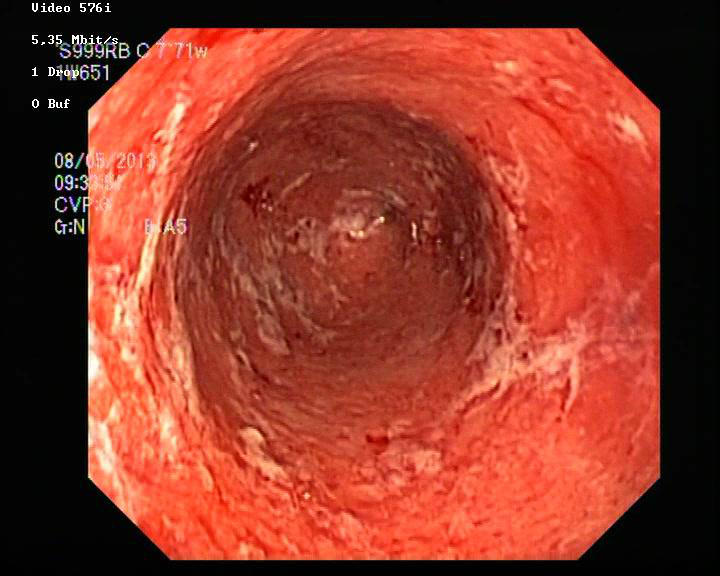
Fig 1: shows a qualitative task-flow example that combines
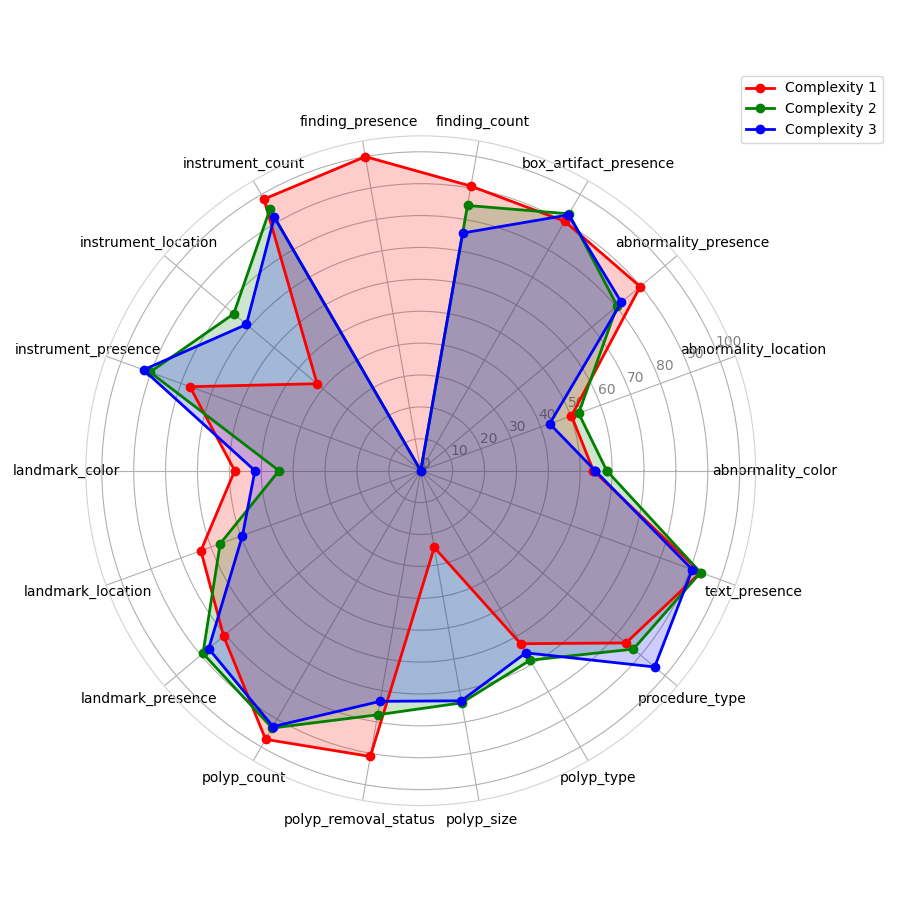
Fig 2: Diagnostics plots for Subtask 1 and Subtask 2 (from Team Nepal).
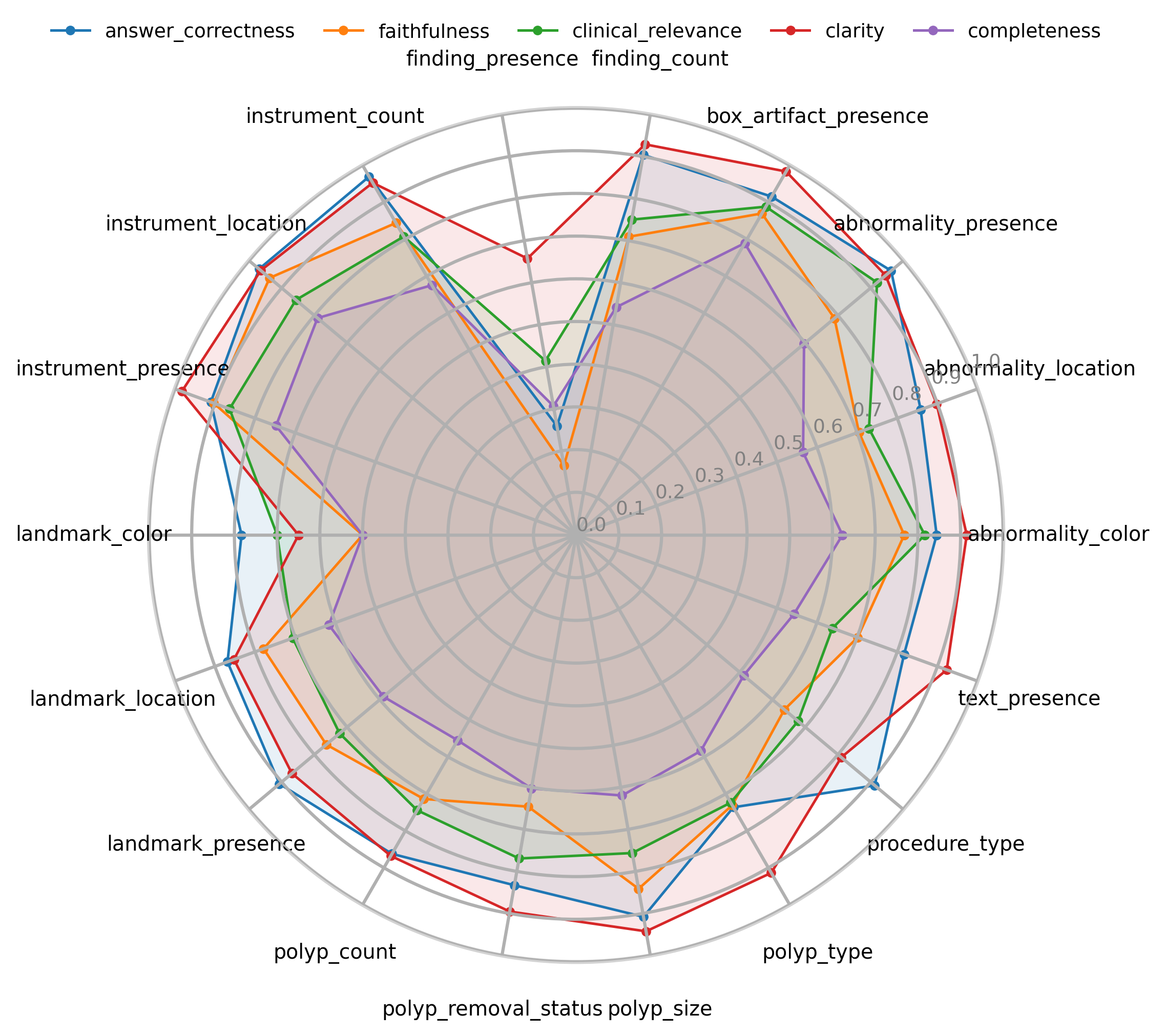
Fig 3 (page 5).
Limitations
- No controlled ablation or zero-shot baseline comparison due to retrospective post-hoc nature.
- Semantic adjudication relies on LLM judge (Qwen3-30B-A3B) without large-scale clinician validation, risking alignment and prompt biases.
- Potential data leakage due to image-level overlap in official QA train/test splits, though partially mitigated by private test sets.
- Lack of standardized robustness perturbation stress-tests limits rigor of distribution shift evaluation.
- Incomplete and non-uniform reporting of latency, throughput, or calibration metadata across teams restricts practical deployment assessment.
- Explanations still primarily evaluated correlationally rather than via causal inference or ablation studies.
Open questions / follow-ons
- How to develop standardized, lightweight robustness and calibration probes that can be integrated into clinical multimodal AI pipelines?
- What are effective methods to quantitatively separate plausibility from faithfulness in clinical explanation generation beyond LLM adjudication?
- How can multimodal medical VQA benchmarks incorporate multimodal grounding via segmentation and attention to improve explanation completeness and clinical trust?
- What strategies best mitigate data leakage and bias in medical VQA datasets given the image-level overlap risks identified?
Why it matters for bot defense
This paper’s insights are directly relevant to bot-defense and CAPTCHA practitioners concerned with trustworthy multimodal AI, where interpretability and robustness under inputs shifts are critical. The study highlights that improving raw answer accuracy metrics alone is insufficient—trustworthy systems require structured, grounded explanations and calibrated confidence measures to avoid misleading outputs. Practically, leveraging parameter-efficient fine-tuning methods under hardware constraints is viable, but must be paired with evaluation beyond lexical correctness, including semantic adjudication and robustness testing. The leakage-explicit protocols advocated here remind CAPTCHA system designers to guard against data contamination in training and testing splits, ensuring valid generalization claims. Finally, the emphasis on modular explanation design and multi-stage inference pipelines may inspire analogous defenses combining multimodal signals for bot detection decisions with interpretable, auditable rationales.
Cite
@article{arxiv2607_15241,
  title={ Beyond the Leaderboard: Design Lessons for Trustworthy Multimodal VQA },
  author={ Sushant Gautam and Vajira Thambawita and Michael A. Riegler and Pål Halvorsen and Steven A. Hicks },
  journal={arXiv preprint arXiv:2607.15241},
  year={ 2026 },
  url={https://arxiv.org/abs/2607.15241}
}