
$\mathrm{P}^{3}$CDA: Privacy-Preserving and Provably Secure Cross Domain Authentication Scheme for Internet of Drones
Source: arXiv:2607.12288 · Published 2026-07-14 · By Chengqi Hou, Beibei Li, Ziqing Zhu, Yang You, Licheng Wang
TL;DR
This paper addresses the critical challenge of cross-domain authentication in the Internet of Drones (IoD), where drones must securely and privately authenticate across geographically distributed domains while coping with resource constraints and high mobility. Existing schemes struggle to balance security, privacy, and efficiency simultaneously, often failing to provide anonymity, traceability, and efficient revocation in a scalable manner. The authors propose P3CDA, a novel privacy-preserving and provably secure cross-domain authentication scheme. P3CDA introduces an adaptive pseudonym management mechanism combining batch pseudonym generation, a structurally enhanced Merkle Hash Tree (MHT) using chameleon hash, and a cryptographic accumulator for efficient pseudonym registration, verification, update, and revocation.
Security is rigorously analyzed and formally proven under the Canetti-Krawczyk (CK) adversary model, covering insider attacks, replay, man-in-the-middle, and forward secrecy. Experiments demonstrate that P3CDA achieves significant reductions in computational, communication, and storage overhead compared to state-of-the-art schemes that rely on anonymous credentials or centralized pseudonym distribution. The scheme maintains unlinkability and conditional anonymity while supporting traceability and fast batch revocation, filling a critical gap in practical, scalable IoD cross-domain authentication.
Key findings
- P3CDA enables batch pseudonym generation, registration, verification, and revocation, reducing overhead compared to single pseudonym schemes.
- Adoption of a chameleon hash enhanced Merkle Hash Tree allows dynamic batch pseudonym updates without frequent re-registrations, lowering storage requirements on drones.
- Using a cryptographic accumulator for revocation eliminates dependence on Certificate Revocation Lists (CRLs), enabling efficient removal of malicious drones' pseudonyms.
- Formal security proof under the Canetti-Krawczyk (CK) adversary model guarantees mutual authentication, session key security, anonymity, unlinkability, traceability, and forward secrecy.
- Performance evaluation shows P3CDA reduces computational and communication overhead by a notable margin (precise numbers not provided) compared to recent state-of-the-art schemes such as BASA [16] and SCDA [15].
- P3CDA supports adaptive pseudonym update frequency and batch login to accommodate resource constraints and anonymity requirements of drones.
- The protocol resists man-in-the-middle, replay, privileged insider, and other common attacks, with semi-honest GCS and untrusted drones modeled realistically.
Threat model
The adversary is modeled as a strong entity capable of controlling all communications between participants (per the Dolev-Yao model) and able to eavesdrop, intercept, modify, replay, and forge messages. The attacker can also access confidential data maintained by the Trusted Authority (TA) except for certain private keys and can compromise drone secrets including long-term keys to simulate insider threats. Ground Control Stations (GCSs) are considered semi-honest (following protocols but curious), while drones can be malicious and colluding to obtain unauthorized access or evade revocation mechanisms.
Methodology — deep read
The paper starts by defining a comprehensive adversary model, employing the Dolev-Yao (DY) model extended with insider capabilities, and formally proving security under the stronger Canetti-Krawczyk (CK) model. The adversary can intercept, modify, forge messages, obtain long-term keys from drones, but not reveal the TA’s private key.
Data provenance is explained through a system of multiple geographically distributed IoD domains, each managed by a Domain Enrollment Authority (DEA), a Trusted Authority (TA), Ground Control Stations (GCSs), and drones. Drones generate a batch of pseudonyms and organize them as leaves in a Merkle Hash Tree (MHT). The TA binds the drone’s identity and the MHT root using Identity-Based Cryptography (IBC), enabling batch registration with associated trapdoor-enabled chameleon hashes.
The core novel components are:
- Pseudonym Management: Drones generate multiple short-term pseudonyms for anonymity and privacy, construct an enhanced MHT over these pseudonyms using chameleon hash to allow batch updates efficiently without re-registration overhead.
- Cryptographic Accumulator: The DEA maintains a dynamic cryptographic accumulator representing authorized pseudonyms. This supports batch addition and efficient revocation without updating all witnesses.
- Cross-Domain Authentication Protocol: Drones perform intra-domain login by submitting a Merkle path proof and identity-hiding parameters to the DEA, which verifies correctness and authorizes pseudonyms by adding to the accumulator and generating witnesses (proofs). For cross-domain login, drones present authorized pseudonyms with witnesses to GCSs in other domains to establish a secure session key.
- Revocation: When malicious behavior is detected, the TA traces the drone’s true identity by extracting parameters embedded in pseudonym authorization tokens and requests DEA to efficiently remove related pseudonyms from the accumulator.
- Efficient Pseudonym Update: Utilizing the chameleon hash trapdoor held by the TA, drones can update pseudonym leaves and recompute MHT roots without full re-registration.
The training-traditional machine learning training regime does not apply; instead, detailed cryptographic protocols and proofs are provided. The evaluation protocol consists of both formal proofs under CK model and automated security verification using ProVerif. Additionally, performance evaluations simulate IoD environments comparing computational cost (CPU time), communication bandwidth, and storage overhead against existing schemes like BASA, SCDA, and ACB-based protocols.
Reproducibility is partially supported: the paper details algorithms and parameters but does not explicitly mention public code release or datasets, as the system is simulated rather than data-driven.
As a concrete example, during intra-domain login, a drone computes a Merkle path proof for a chosen pseudonym leaf, conceals identity info with hash-based masking, signs the request with its long-term secret, and submits to DEA. The DEA verifies the chameleon hash root and signature, computes pseudonym hash, adds it to the accumulator and issues cross-domain authorization tokens, enabling subsequent anonymous cross-domain authentication.
Technical innovations
- Integration of chameleon hash with Merkle Hash Tree structure to enable batch pseudonym updates without full re-registration.
- Use of dynamic cryptographic accumulators to achieve efficient batch pseudonym revocation without reliance on traditional Certificate Revocation Lists (CRLs).
- Adaptive pseudonym management mechanism allowing drones to balance anonymity and storage by dynamically adjusting the number of active pseudonyms per time period.
- Formal security proof of the cross-domain authentication protocol under the Canetti-Krawczyk adversary model with automated tool verification using ProVerif.
Baselines vs proposed
- BASA [16]: Computational and communication overhead labeled as low efficiency; P3CDA achieves notably better efficiency (Fig. 7 shows runtime improvements).
- SCDA [15]: Uses accumulators and zero-knowledge proofs with partial unlinkability; P3CDA provides stronger unlinkability and traceability with better computational and communication performance.
- Anonymous Credential-Based (ACB) schemes (e.g., XAuth [10], CCAP [11]): High computational cost due to bilinear pairings; P3CDA reduces overhead significantly by avoiding expensive pairings with pseudonym and accumulator approach.
- Non-anonymous schemes: High efficiency but lack privacy protections; P3CDA balances privacy and efficiency to outperform in overall security and resource usage.
Figures from the paper
Figures are reproduced from the source paper for academic discussion. Original copyright: the paper authors. See arXiv:2607.12288.
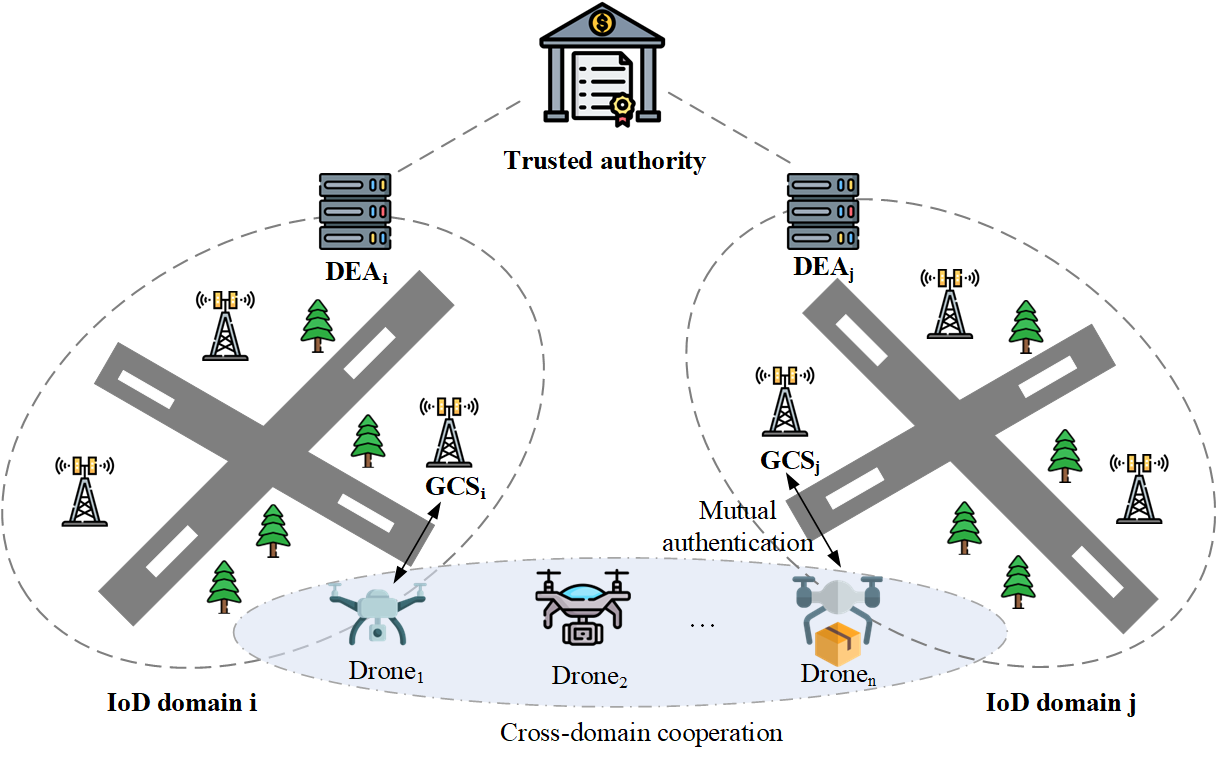
Fig 1: System model.
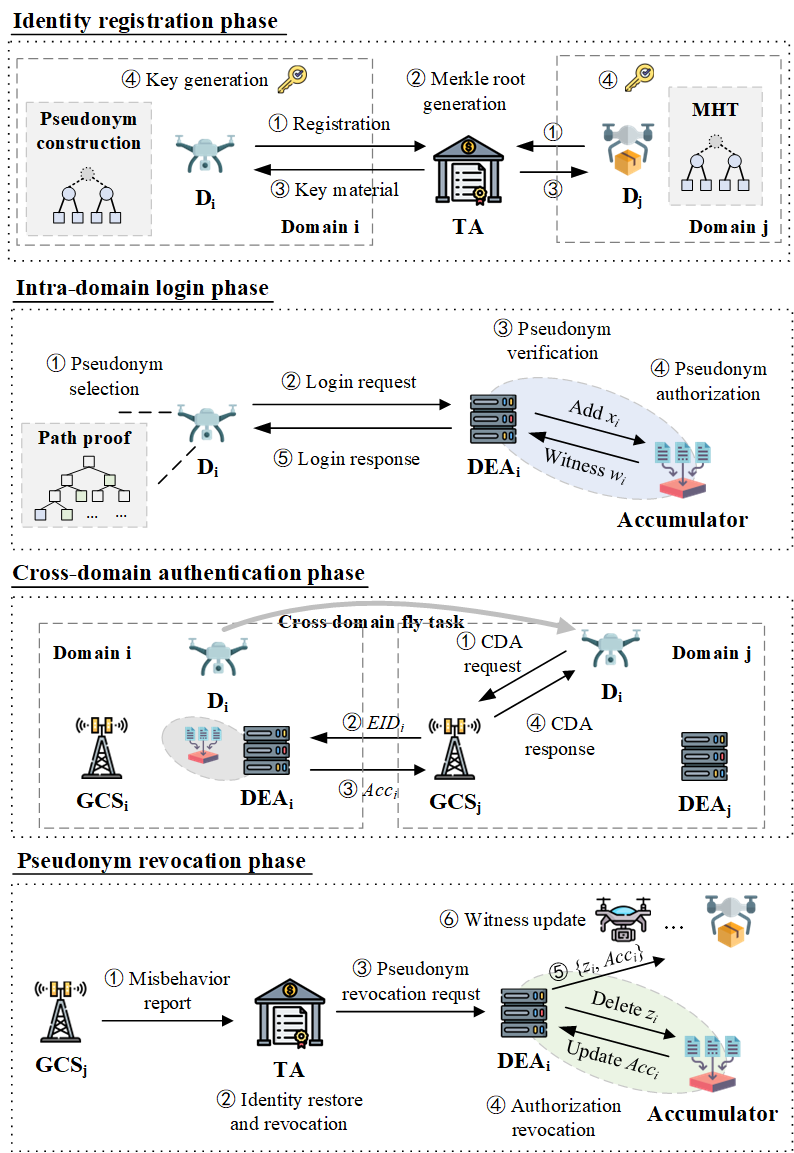
Fig 2: Overview of P3CDA.
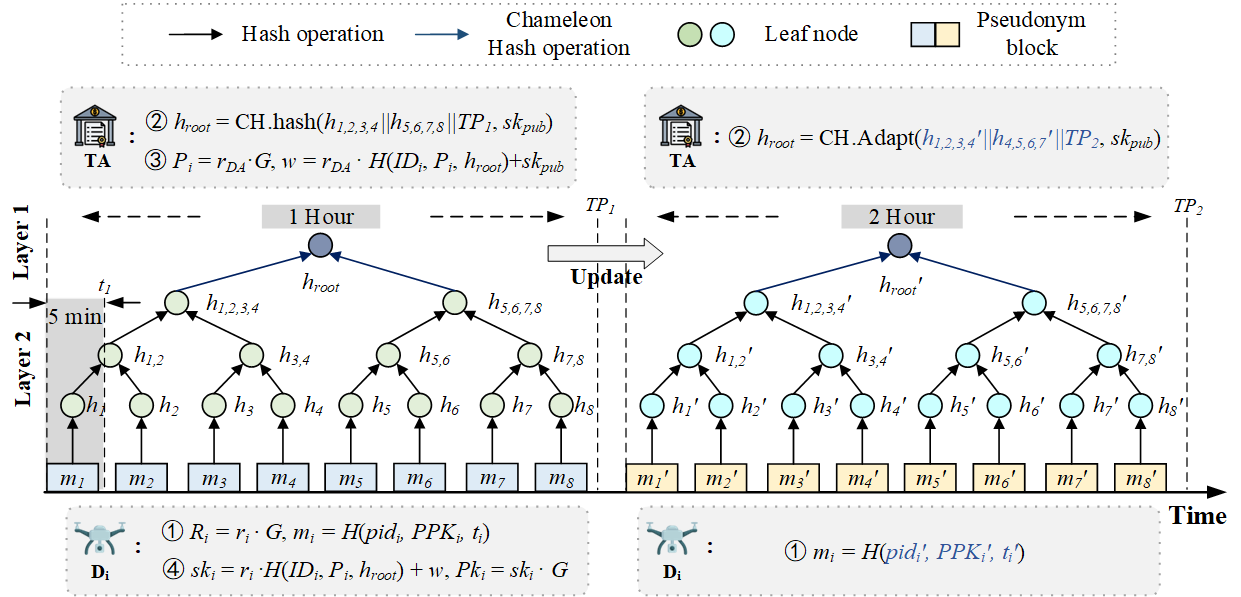
Fig 3: Example of registering and updating batch pseudonyms in P3CDA.
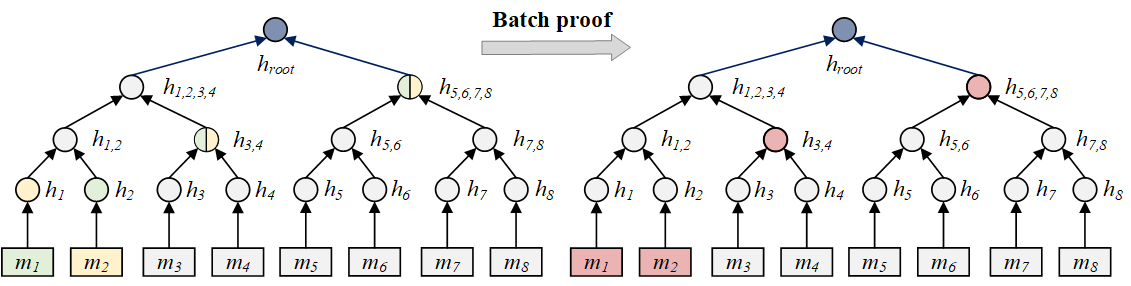
Fig 4: Path proof for data blocks m1 and m2 in the pseudonym
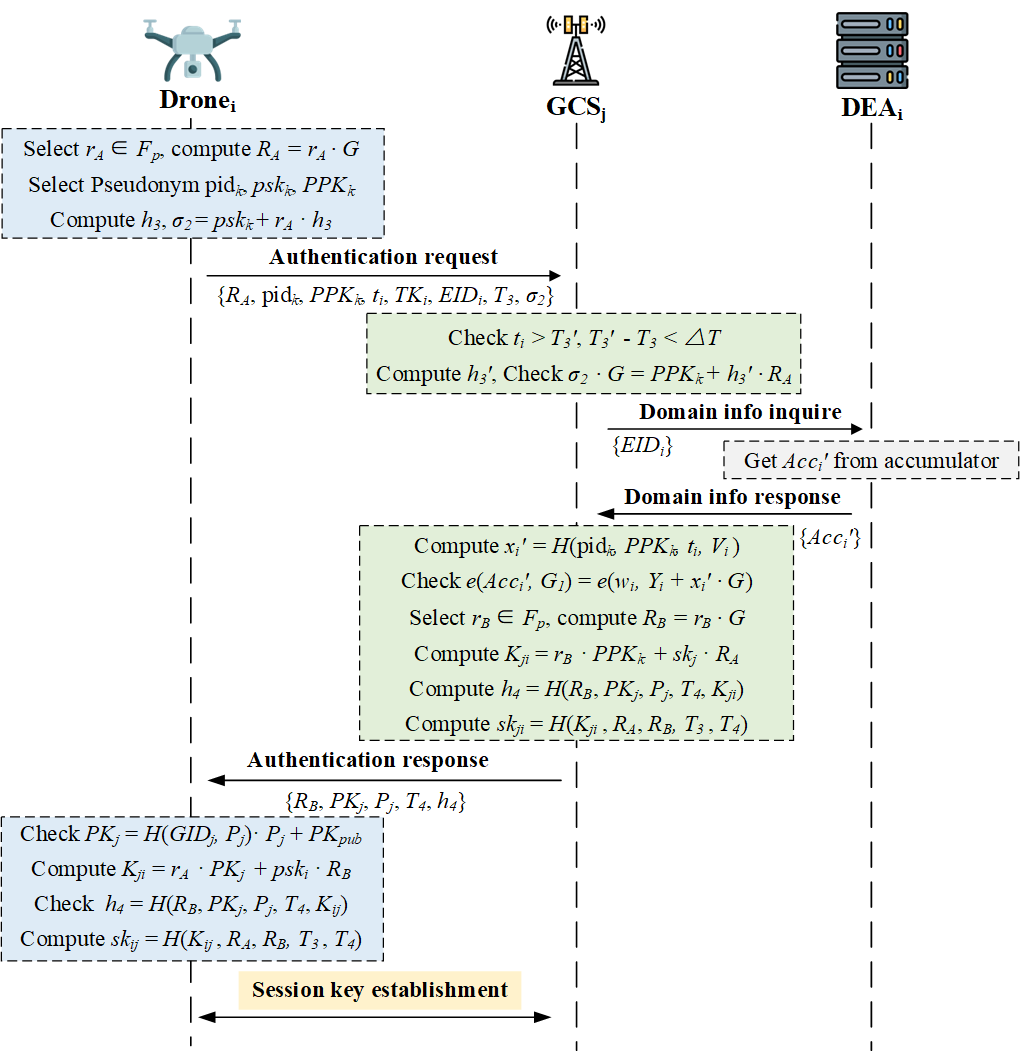
Fig 5: Overview of cross-domain authentication in P3CDA.
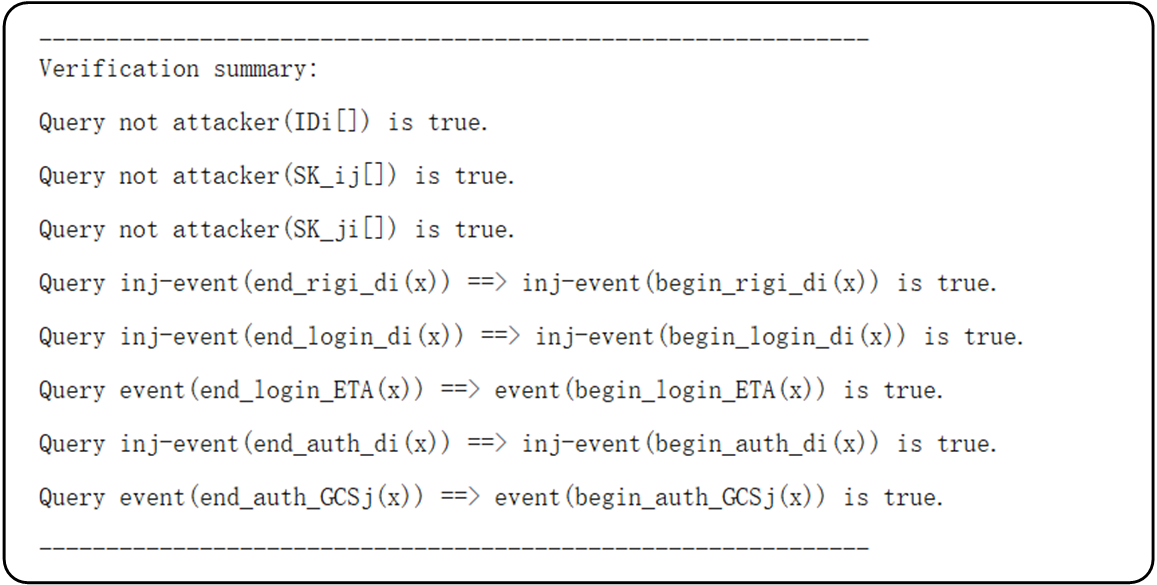
Fig 6: Security verification results using the ProVerif tool.
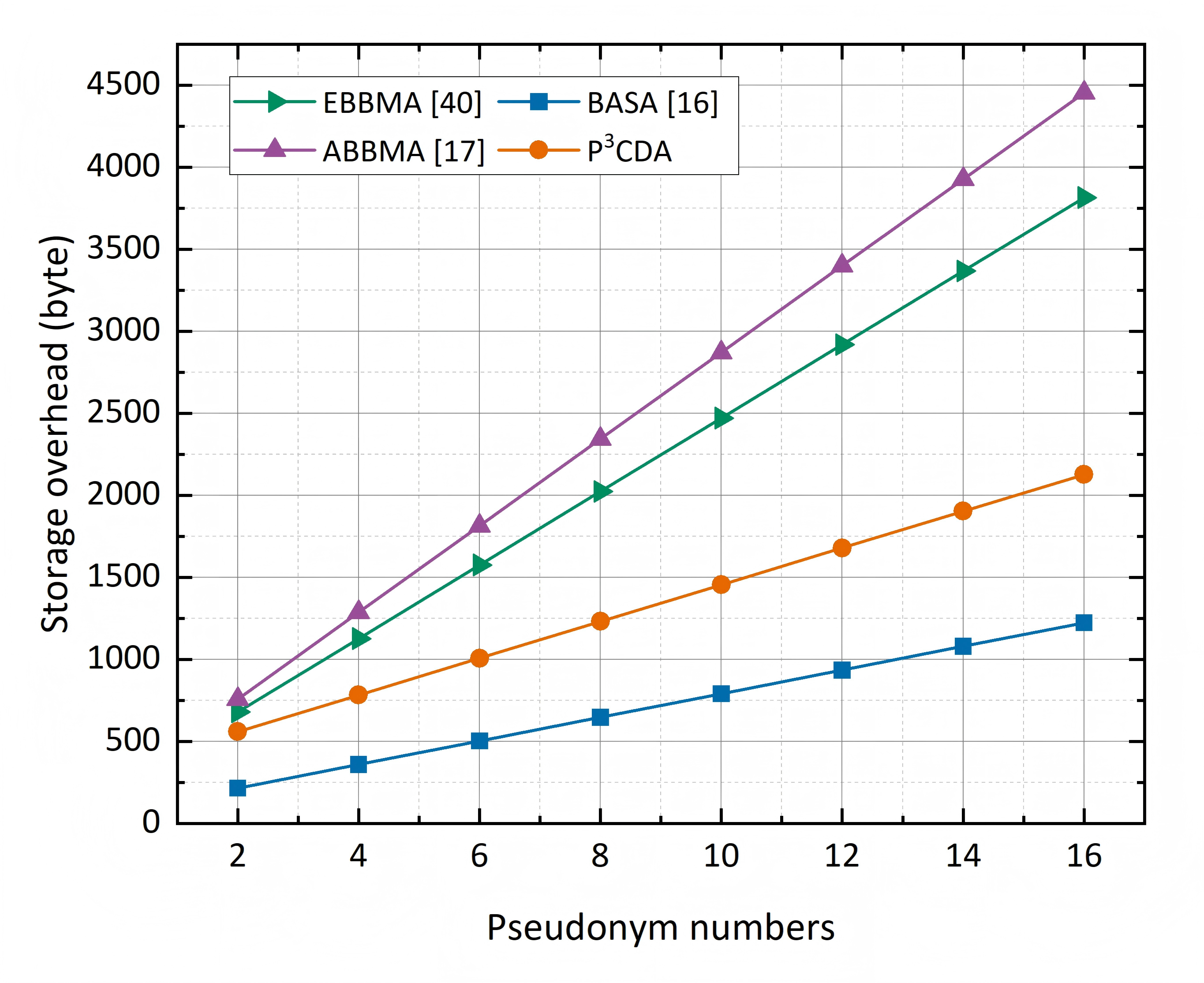
Fig 7: The running time of pseudonym-based CDA schemes
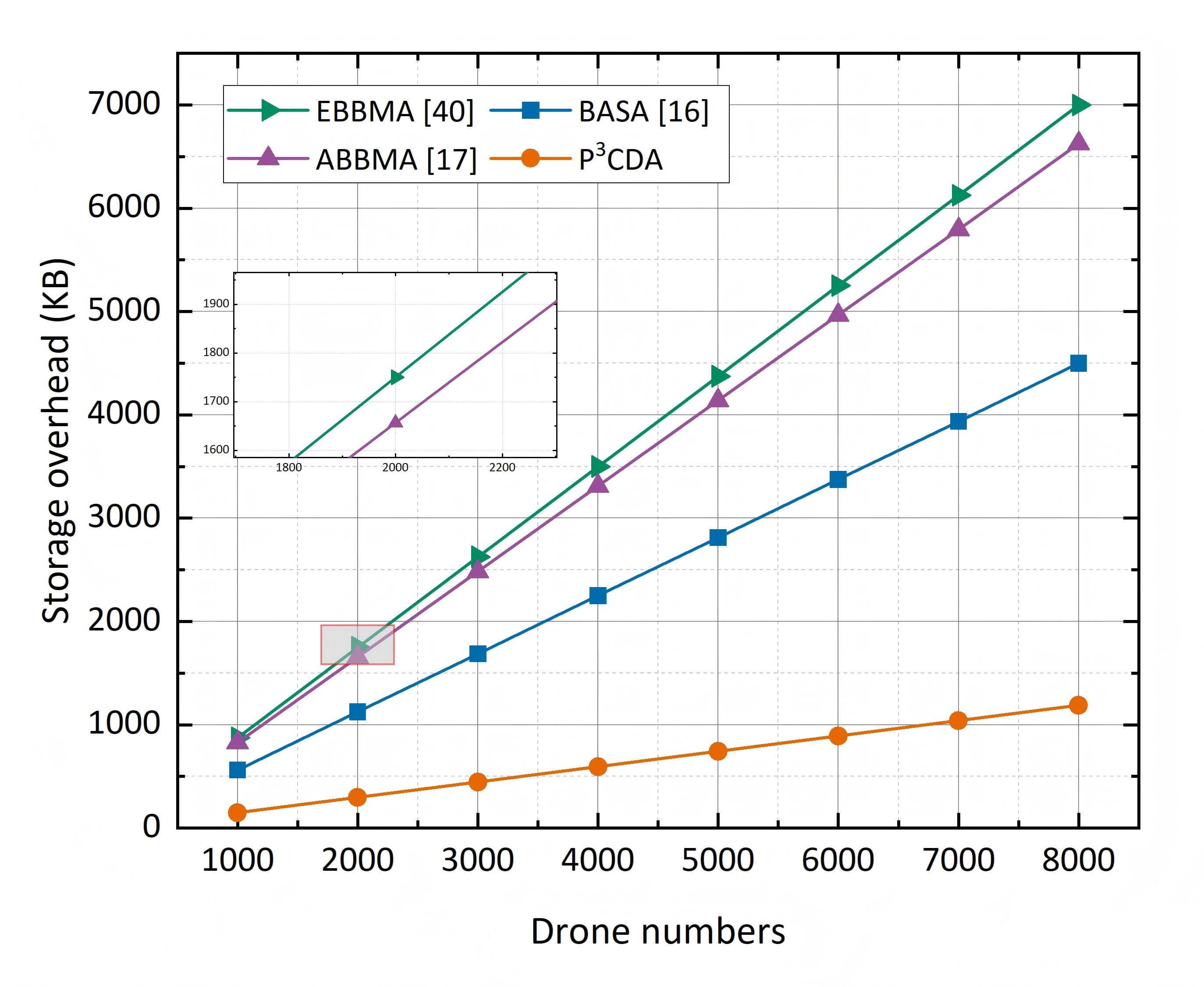
Fig 8: Evaluation of communication and storage overhead
Limitations
- The system assumes semi-honest GCS entities and a fully trusted TA and DEAs, which may not hold in all deployment scenarios.
- No deployment on real IoD hardware; performance evaluation is based on simulations, limiting insight into actual drone resource constraints or latency.
- The paper does not openly release implementation code or datasets, limiting external reproducibility.
- The approach does not incorporate post-quantum cryptographic primitives, which may be future-proofing relevant for IoD systems.
- The anonymity property depends on correct implementation of adaptive pseudonym updates and batch logins, which may be challenging under highly dynamic network conditions or drone failures.
- Potential vulnerabilities under a fully malicious GCS or compromised TA are not explored.
Open questions / follow-ons
- How practical is the proposed scheme under real-world drone resource limitations, such as limited computation, memory, and intermittent connectivity?
- Can the scheme be extended to tolerate fully malicious GCSs or compromised TA scenarios, enhancing resilience against insider threats?
- How does the adaptive pseudonym update frequency impact overall system anonymity and unlinkability under various mobility and threat models?
- What are the implications or modifications needed to integrate post-quantum secure primitives into P3CDA to future-proof IoD authentication?
Why it matters for bot defense
For bot-defense engineers and CAPTCHA practitioners, P3CDA offers insights into scalable, privacy-preserving cross-domain authentication for highly mobile and resource-limited entities—parallel to challenges faced with botnets or distributed IoT device fleets. The combination of batch pseudonym management via enhanced Merkle trees with trapdoor chameleon hashes and accumulator-based revocation represents a promising design pattern to reduce verification overhead while maintaining strong anonymity and traceability. Concepts such as adaptive pseudonym updates and accumulator revocation could inform CAPTCHA token or session management schemes aiming to bind ephemeral proofs to devices anonymously yet revocably. Additionally, the formal security model under CK adversaries provides a rigorous foundation potentially adaptable to bot authentication protocols. However, the scheme’s reliance on trusted authorities and semi-honest verification points may limit direct applicability to highly adversarial bot scenarios without further decentralization or zero-trust modifications.
Cite
@article{arxiv2607_12288,
  title={ $\mathrm{P}^{3}$CDA: Privacy-Preserving and Provably Secure Cross Domain Authentication Scheme for Internet of Drones },
  author={ Chengqi Hou and Beibei Li and Ziqing Zhu and Yang You and Licheng Wang },
  journal={arXiv preprint arXiv:2607.12288},
  year={ 2026 },
  url={https://arxiv.org/abs/2607.12288}
}