
IceCAPA: patterning particles and microorganisms at a freezing front
Source: arXiv:2607.12574 · Published 2026-07-14 · By Isabelle M. Feller, Jakob Paulsen, Muriel Scherer, Robert W. Style, Lucio Isa
TL;DR
This paper addresses the challenge of precisely patterning micro- and nano-scale particles and biological cells on diverse substrates, which is important for applications like plasmonic surfaces, LEDs, biosensors, and single-cell studies. Existing methods, such as capillarity-assisted particle assembly (CAPA), are limited by substrate wettability constraints and desiccation issues that hamper biological sample viability. The authors present IceCAPA, a novel patterning technique that harnesses directional freezing to push particles or bacterial cells into patterned substrate traps at a moving ice-water interface. This approach avoids drying by maintaining hydration, works across a broad range of substrate types and wettabilities (including hydrogels and highly wetting substrates), and preserves bacterial viability post-patterning. They experimentally demonstrate near-perfect particle placements with yields above 80-90%, tunable via freezing speed, temperature gradient, and trap size. Additionally, IceCAPA enables patterning of live Escherichia coli cells on soft GelMA hydrogels with 98% survival, a significant advantage over CAPA. The work also presents a physical model linking the temperature gradient to the ice-water meniscus shape and particle pushing angle, explaining parameter-dependent success of patterning. By bridging capillarity theory and freezing phenomena, the paper provides both a versatile patterning platform and fundamental insights into particle interactions at freezing fronts.
Key findings
- Particle assembly yield in IceCAPA exceeds 80-90% for traps deeper than the particle radius (d > Rp), demonstrating high-fidelity patterning (Fig 2).
- Successful patterning requires freezing speeds below a critical velocity Vc (e.g., <60 µm/min); silica particles (1.5 µm radius) are engulfed by ice above 280 µm/min, polystyrene at >100 µm/min.
- Temperature gradient G strongly impacts yield; lower G (e.g., 5 K/mm) produces gentler ice-water menisci that push particles into traps more effectively than high G (12 K/mm), where many traps remain unfilled.
- Yield is independent of substrate wettability, demonstrated by successful patterning on hydrophilic (θr=44°), hydrophobic (θr=105°), and fully wetting hydrogel substrates (θr=0°) (Fig 4).
- Escherichia coli cells (1x2 µm rods) patterned with IceCAPA into 2x2x2 µm3 GelMA hydrogel traps achieve 91% deposition yield and 98% post-patterning viability, surpassing CAPA methods with ~0-45% cell survival (Fig 5).
- The ice-water meniscus shape and particle pushing angle θi depend on the ratio Rp/L (particle radius to thermocapillary length scale), which scales inversely with √G, providing a predictive design rule (Fig 3).
- Particles are pushed orthogonally by the ice front; curved menisci at lower G push particles downward into traps, while flatter menisci at high G push tangentially, dislodging particles.
- IceCAPA allows sequential deposition of different particle types by replacing solutions and refreezing, enabling complex multi-material patterns.
Threat model
n/a (the paper is focused on physical patterning techniques and freezing dynamics, not adversarial threat scenarios or security).
Methodology — deep read
Threat Model & Assumptions: The process assumes an ideal environment where particles or cells are suspended in an aqueous medium and subjected to controlled directional freezing; the key challenge is to prevent particle engulfment by ice and ensure selective trapping. No active adversary is considered beyond physical parameters. The key assumptions include complete wetting of water on ice and minimal sticking between particles and substrates.
Data: Materials used include silica and polystyrene microspheres (1.4 - 1.5 µm radius) and E. coli bacterial cells (~1x2 µm), suspended in ultrapure water or PBS buffers. Substrates include PEGylated silicone, fluorosilane-functionalized silicone, and hydrogels (PEGDA and GelMA) with varied polymer fractions and moduli. Pattern traps were microfabricated with sizes tuned to particle dimensions (~2.2 Rp width, depths from <Rp to >Rp). Depositions were repeated at least three times per condition to assess variability.
Architecture / Algorithm: IceCAPA involves controlled directional freezing of the particle/cell suspension injected into a thin sample cell fabricated by sandwiching the patterned substrate glass slide and a top glass slide separated by spacers (360-600 µm). The freezing front propagates due to imposing a fixed temperature gradient (G) across the sample via thermal blocks held above and below 0°C. The sample is mechanically translated at speed V to move the ice front at a steady velocity. The ice-water meniscus forms a curved interface pushing particles laterally and vertically, depositing them selectively into traps on the substrate.
Training Regime (Experimental protocol): Parameter sweep experiments explored freezing speeds (V) from 10 to 60 µm/min, temperature gradients (G) from 1 to 12 K/mm, and trap depths (d) from less than to greater than the particle radius. Depositions were imaged live via optical microscopy to track particles near the freezing front and after freezing. For bacteria, patterning was conducted at V = 30 µm/min, G = 1.5 K/mm. Post-freezing, ice was melted, and growth media added, then viability and growth monitored under time-lapse microscopy.
Evaluation Protocol: Yield (Y) was the primary metric, defined as the percentage of traps correctly filled with one or more particles/cells without deposition outside traps. Yield was quantified via microscopy images analyzed over multiple repetitions per condition. Cell viability post-patterning was assessed via observed growth and survival rates over 15 hours. Parameter dependencies (V, G, d) were explored systematically with error bars shown. No explicit statistical tests were reported.
Reproducibility: The fabrication procedure for patterned substrates is described in detail (two-photon polymerization printing followed by PDMS replication or hydrogel molding). Particle and bacterial suspension preparations are specified. Apparatus for temperature gradient control is quantitatively described. Supporting Information includes movies. Code or datasets are not mentioned as released, but materials and methods are described enough to replicate in a well-equipped lab.
Concrete example: For 1.4 µm radius polystyrene particles on PEGylated silicone traps 3.2 µm wide and 1.5 µm deep, with G = 5 K/mm and V = 50 µm/min, yield was ~90%. Under these conditions, the ice-water meniscus curve generated a pushing incidence angle θi that directed particles downward into traps with minimal escape. Increasing G to 12 K/mm resulted in planar fronts pushing particles tangentially and reducing yield dramatically.
The methodology rests on coupling physical ice front control with microfabricated trap geometries to exploit ice pushing forces orthogonal to the interface, overcoming prior wettability and drying constraints inherent to CAPA.
Technical innovations
- Introduction of directional freezing (IceCAPA) as a robust particle and microorganism patterning technique that replaces capillary-driven assembly with ice-front pushing, enabling wettability-independent patterning.
- Identification and exploitation of the thermocapillary length scale L, scaling as 1/√G, governing ice-water meniscus shape and particle pushing angle, providing a predictive framework for tuning freezing parameters.
- Demonstration that IceCAPA preserves bacterial viability (~98%) post-patterning by avoiding drying, a key limitation of air-exposure CAPA methods.
- Development of substrate fabrication integrating microfabricated traps with hydrogels and soft materials, enabling patterning on fully wetting, soft substrates resistant to standard CAPA approaches.
Datasets
- Polystyrene microspheres — ~0.1 mg/mL suspensions — prepared in house
- Silica microspheres — ~0.1 mg/mL suspensions — prepared in house
- Escherichia coli MG1655 bacterial suspensions — diluted in PBS following overnight culture — prepared in house
- Patterned substrates — microfabricated trap arrays on PDMS, PEGDA, GelMA — fabricated in house
Baselines vs proposed
- Conventional CAPA on hydrophobic substrates: patterning yield near 100% but limited to moderate wettability (30°<θr<60°); IceCAPA: ~85-90% yield across full wettability range 0° ≤ θr ≤ 105°
- Conventional CAPA bacterial patterning: ~0-45% post-deposition cell viability due to desiccation; IceCAPA: 98 ±1% bacterial viability after deposition and incubation (Fig 5)
- Encapsulation velocity thresholds: Polystyrene particles engulfed at V >100 µm/min; silica particles at V >280 µm/min; all IceCAPA experiments kept V <60 µm/min for successful trapping
- Yield dependence on trap depth: Y >80% when trap depth d > particle radius Rp; sharp yield drop for d < Rp (Fig 2)
Figures from the paper
Figures are reproduced from the source paper for academic discussion. Original copyright: the paper authors. See arXiv:2607.12574.
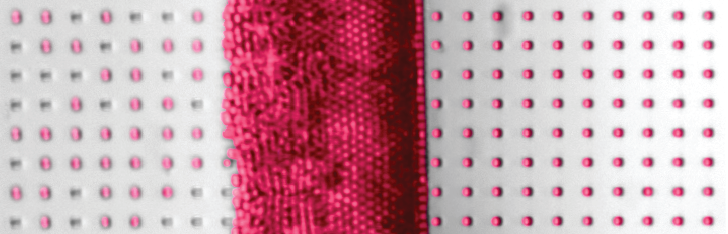
Fig 1: The working principle of IceCAPA. a) Schematic of
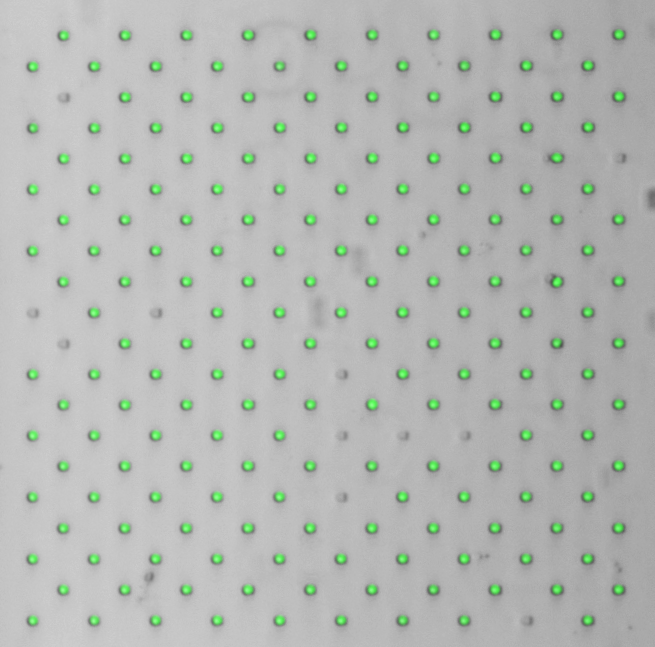
Fig 2: IceCAPA success depends on temperature gradient and trap size. The plot shows yield (% of correctly placed particles)
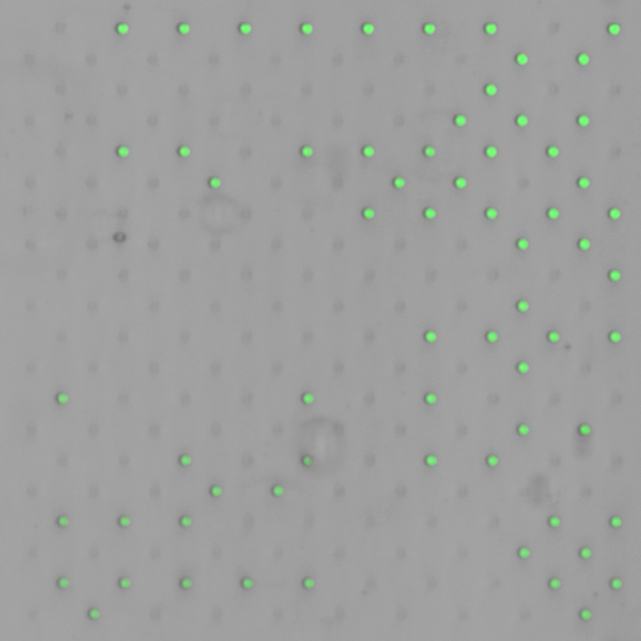
Fig 3: Contour plot showing how incidence angle, θi, de-

Fig 4: IceCAPA deposition of silica particles with Rp =
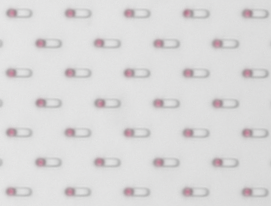
Fig 5: Time-lapse images of E. coli MG1655 cells deposited
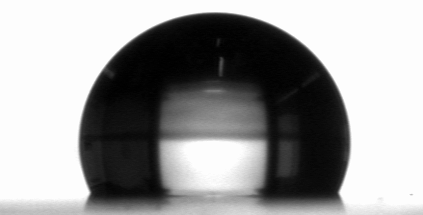
Fig 6 (page 4).
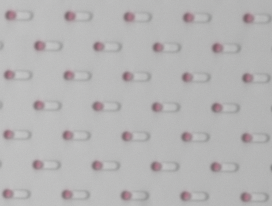
Fig 7 (page 4).
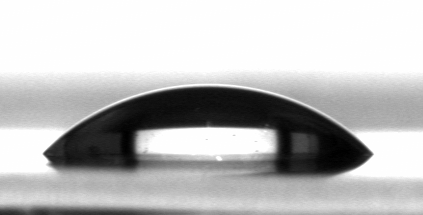
Fig 8 (page 4).
Limitations
- The technique requires low freezing speeds (<60 µm/min) to avoid particle engulfment, limiting throughput for large-area patterning.
- Patterning success strongly depends on careful tuning of temperature gradient and trap geometry, requiring precise thermal control apparatus.
- The approach assumes particles/cells do not adhere strongly to each other or the substrate; sticky or aggregating systems were not explored in this work.
- Complexity of patterning multi-layer or higher-dimensional (3D) structures beyond sequential 2D depositions with ice fronts remains to be demonstrated.
- The analogy between freezing front particle interactions and capillarity is limited to isotropic ice interfaces; effects like ice faceting or morphological instabilities under different conditions are not addressed.
- No adversarial or contamination challenges were tested, relevant for biological or industrial applications requiring sterility and process robustness.
Open questions / follow-ons
- How do ice front morphological instabilities and anisotropic crystal faceting affect particle pushing and pattern fidelity under varied freezing conditions?
- Can IceCAPA be extended to larger particles, more complex biomaterials, or multi-component suspensions with sticky or interactive particles?
- What are the limits of throughput and pattern size scalability for IceCAPA in industrial or biological sample preparation contexts?
- How robust is IceCAPA to varying environmental conditions, contamination, and substrate mechanical properties beyond PEGDA/GelMA?
Why it matters for bot defense
IceCAPA offers a fundamentally new physical mechanism for precise micropatterning across diverse substrate types, avoiding limitations of capillarity-based approaches such as substrate wettability constraints and desiccation damage. For bot-defense systems relying on surface patterning of micro/nanoscale features or biological coatings (e.g., physical unclonable functions or biosensors), IceCAPA potentially enables higher fidelity, broader materials compatibility, and integration with living cells. Understanding and controlling particle interactions with moving solidification fronts also deepens knowledge of interface-driven assembly forces, which may inspire novel bot-defense manufacturing platforms or authentication tag fabrication beyond traditional wetting-based methods. However, practical deployment would require addressing throughput constraints and integrating with industrial-scale patterning pipelines.
Cite
@article{arxiv2607_12574,
  title={ IceCAPA: patterning particles and microorganisms at a freezing front },
  author={ Isabelle M. Feller and Jakob Paulsen and Muriel Scherer and Robert W. Style and Lucio Isa },
  journal={arXiv preprint arXiv:2607.12574},
  year={ 2026 },
  url={https://arxiv.org/abs/2607.12574}
}