
Same Stories, Different Journeys: From Social Comparison to Sensemaking in AI-Mediated Peer Career Exploration
Source: arXiv:2607.11039 · Published 2026-07-13 · By Pengping Tan, Baoquan Zhao, Zhenhui Peng
TL;DR
This paper addresses the paradox young job seekers face when using social media for career exploration: authentic peer-generated content offers valuable guidance and emotional grounding but passive consumption leads to harmful upward social comparison and cognitive overload. Prior approaches either structured user-generated content while preserving passive browsing or used AI-powered career tools ignoring authentic peer narratives. The authors introduce JobMate, an AI system that converts real social media career posts into persona-grounded conversational agents to shift interaction from passive feed scrolling to active dialogue. A user study (N=24) across three academic disciplines compares JobMate against native browsing, showing that while both conditions reduce career decision-making difficulties comparably, JobMate achieves this at significantly lower cognitive effort. The AI-mediated chat also redirects social comparison from upward-threatening to lateral-constructive, encouraging self-reframing and better sensemaking. However, users still value having real peer posts visible as authenticity anchors for emotional trust. The paper contributes empirical evidence that interaction modality—not just content—shapes the tension between value and harm in peer experience consumption.
Key findings
- Both JobMate and native RedNote browsing significantly reduced career decision-making difficulties (CDDQ total pre-post: JobMate ΔM=0.36, p=0.005; RedNote ΔM=0.48, p=0.001) with no significant difference between groups (p=0.432).
- JobMate condition showed significantly lower cognitive effort than RedNote browsing (NASA-TLX Effort mean 3.92 vs 5.08, p=0.012).
- JobMate users experienced marginally lower frustration levels than RedNote users (NASA-TLX Frustration mean 2.5 vs 3.75, p=0.075).
- JobMate redirected social comparison from upward ("I'm not as good") to lateral comparison, promoting constructive self-reframing.
- Users reported similar levels of perceived informational (p=0.852) and emotional support (p=0.888) across both conditions.
- Two distinct JobMate exploration strategies emerged: deep divers engaging 28–37 conversational turns with 1–2 personas, and broad explorers sampling 5–9 personas with 3–5 turns each.
- Manual validation of the data pipeline achieved 99% classification accuracy on post validity and 94% accuracy on extraction of structured persona fields from real posts.
- Foregrounding challenge tags rather than achievements on persona cards encouraged lateral social comparison and reduced threatening upward comparison.
Methodology — deep read
The study begins with a formative mixed-methods investigation involving 64 survey responses and 8 semi-structured interviews with university students experienced in social media career exploration to identify pain points, tensions, and needs. Based on these findings, the JobMate system was developed to transform authentic social media posts about career experiences into persona-grounded conversational AI agents.
JobMate's data pipeline collects 660 raw posts scraped from the Chinese career platform RedNote across three disciplines (Computer Science, Psychology, Chinese Literature). After cleaning, deduplication, and filtering for length, 414 valid posts remain. Using GPT-3.5-turbo, posts are classified into categories including personal experience, interview tips, and industry insights, filtering out advertisements and non-informative content to 364 posts. From personal experience posts, four structured fields are extracted: background info, job-seeking outcome, challenge tags (focused on difficulties), and experience summary, with manual validation of 50 extractions showing 94% accuracy.
Posts with complete narratives form a core persona pool of 118 personas. The system uses dual-track retrieval-augmented generation (RAG) for dialogue context: (1) retrieval of top-2 related personal stories with similar backgrounds and challenges to provide emotional resonance, and (2) top-3 practical resources (interview tips, industry insights) for actionable information. Text-embedding-3-small and cosine similarity power retrieval.
The conversational framework is grounded in Self-Determination Theory, aiming to satisfy needs for relatedness (empathetic self-disclosure), competence (cognitive reframing to reinterpret challenges as strengths), and autonomy (offering options, avoiding imperative language). The persona agents act as real senior peers from whom users receive contextualized conversation. Responses are limited to ~150 characters, colloquial, with no AI self-reference.
A between-subjects user study (N=24) recruits university students from the three disciplines, each randomly assigned to JobMate or native RedNote browsing with equal sample sizes (n=4 per group per discipline). Participants complete a 30-minute career exploration task remotely involving navigating career peer content to understand experiences, reduce decision difficulties, and plan next steps.
Pre/post surveys measure career decision-making difficulties (CDDQ), cognitive load (NASA-TLX), perceived informational and emotional support, and Self-Determination Scale for autonomy, competence, and relatedness. Semi-structured interviews and interaction logs from JobMate augment understanding of cognitive and emotional processes. Statistical analysis includes t-tests for group comparisons and thematic coding for qualitative data.
One example session involved a user exploring persona cards filtered by background and challenge tags, opening dialogs to actively engage with persona-grounded agents. The system displayed the original post as transparency anchor while conversational AI provided tailored questions and retrieved relevant peer stories and resources, enabling lateral social comparison and emotional support.
The pipeline, system architecture, and study are thoroughly implemented with GPT-5.2 for dialogue, GPT-3.5-turbo for classification and extraction, and modern web frontend frameworks. The full workflow transforms noisy, passive feed consumption into interactive, authentic, and psychologically supportive exploration.
Technical innovations
- A novel data pipeline that transforms real social media peer career posts into structured persona cards emphasizing challenges rather than accomplishments to promote healthier lateral social comparison.
- Integration of dual-track retrieval-augmented generation combining homogeneous peer story retrieval for emotional resonance with heterogeneous knowledge base retrieval for actionable career resources during dialogue.
- Conversational AI agents designed and prompted according to Self-Determination Theory to balance informational and emotional support by satisfying relatedness, competence, and autonomy needs.
- A shift from passive social media browsing of authentic content to active, persona-grounded conversational exploration that preserves content authenticity while reducing cognitive load and harmful upward social comparison.
Datasets
- RedNote scraped posts — 660 raw posts across Computer Science, Psychology, Chinese Literature — proprietary social media source
- Filtered and processed dataset — 414 cleaned posts, 364 classified valid posts, 118 persona profiles created
Baselines vs proposed
- Native RedNote browsing: Career Decision-Making Difficulties score reduction ΔM=0.48 vs JobMate ΔM=0.36 (p=0.432, no significant difference)
- NASA-TLX Effort: RedNote mean 5.08 vs JobMate mean 3.92 (p=0.012, JobMate significantly lower effort)
- NASA-TLX Frustration: RedNote 3.75 vs JobMate 2.50 (p=0.075, marginal difference favoring JobMate)
- Perceived informational support: RedNote 5.58 vs JobMate 5.67 (p=0.852, no significant difference)
- Perceived emotional support: RedNote 5.25 vs JobMate 5.33 (p=0.888, no significant difference)
Figures from the paper
Figures are reproduced from the source paper for academic discussion. Original copyright: the paper authors. See arXiv:2607.11039.
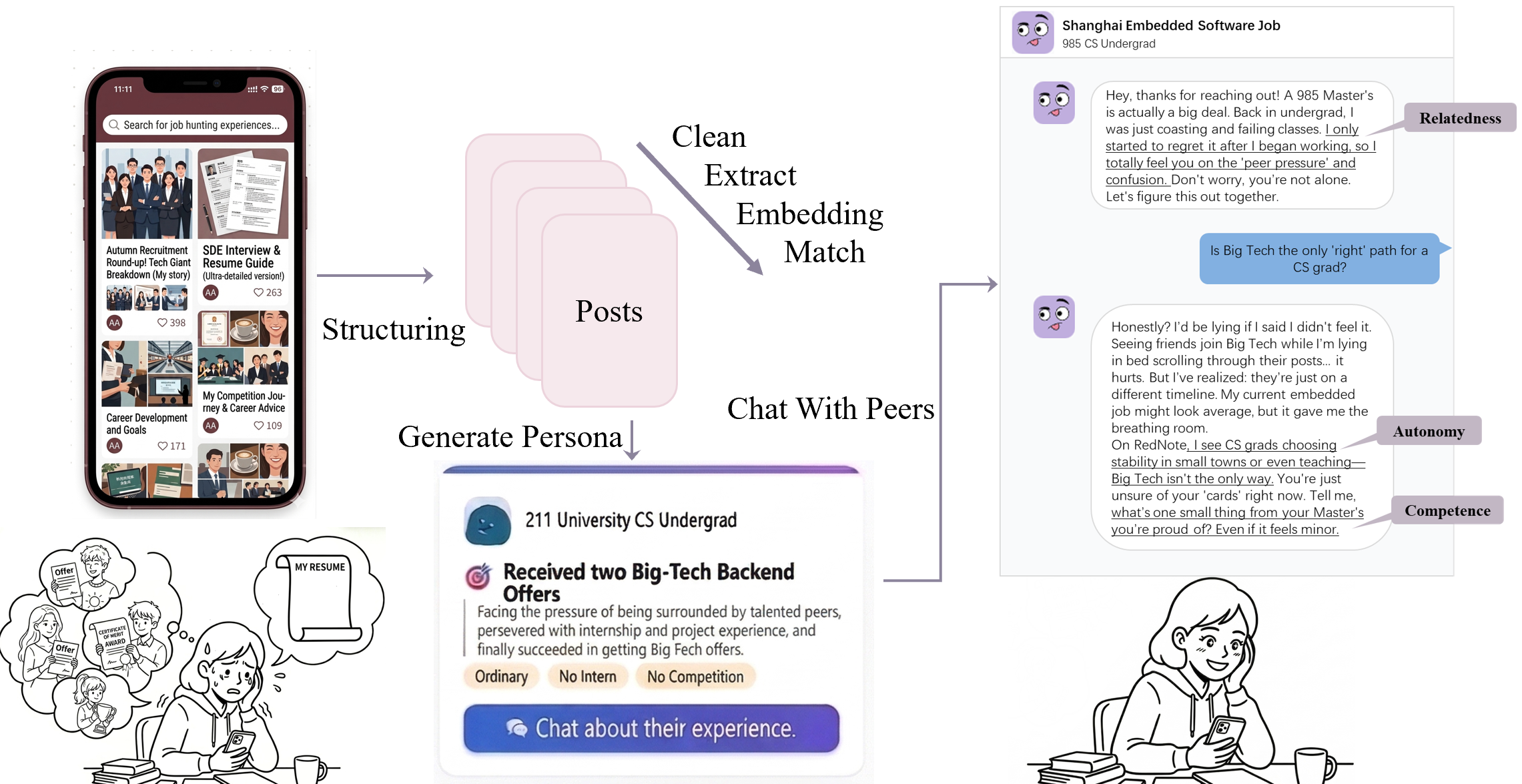
Fig 1: End-to-end experience: native RedNote-style career feeds give way to structured persona fields (background, outcome,
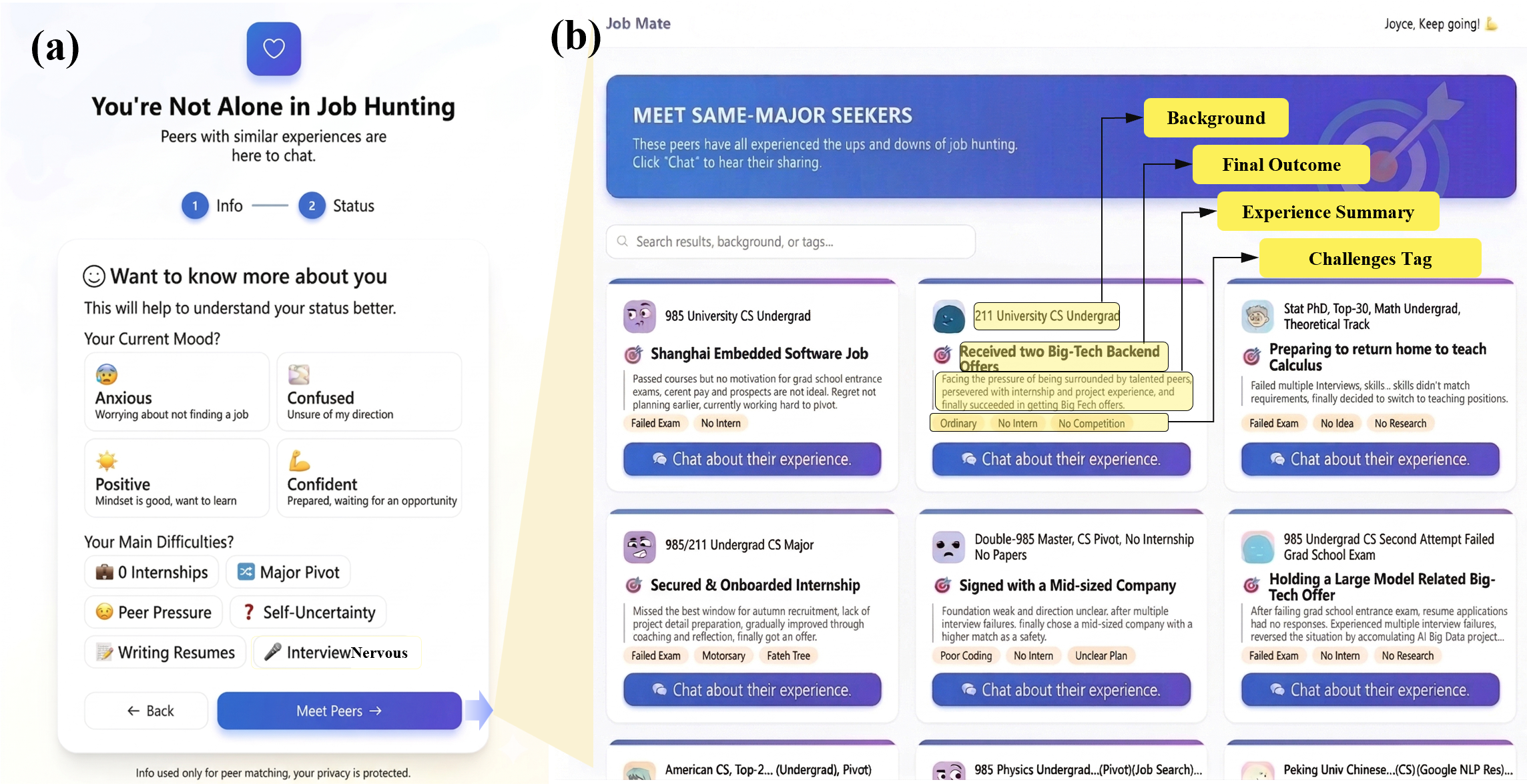
Fig 2: JobMate interface. (a) Two-phase onboarding collecting demographic attributes (school, major, degree) and psycholog-
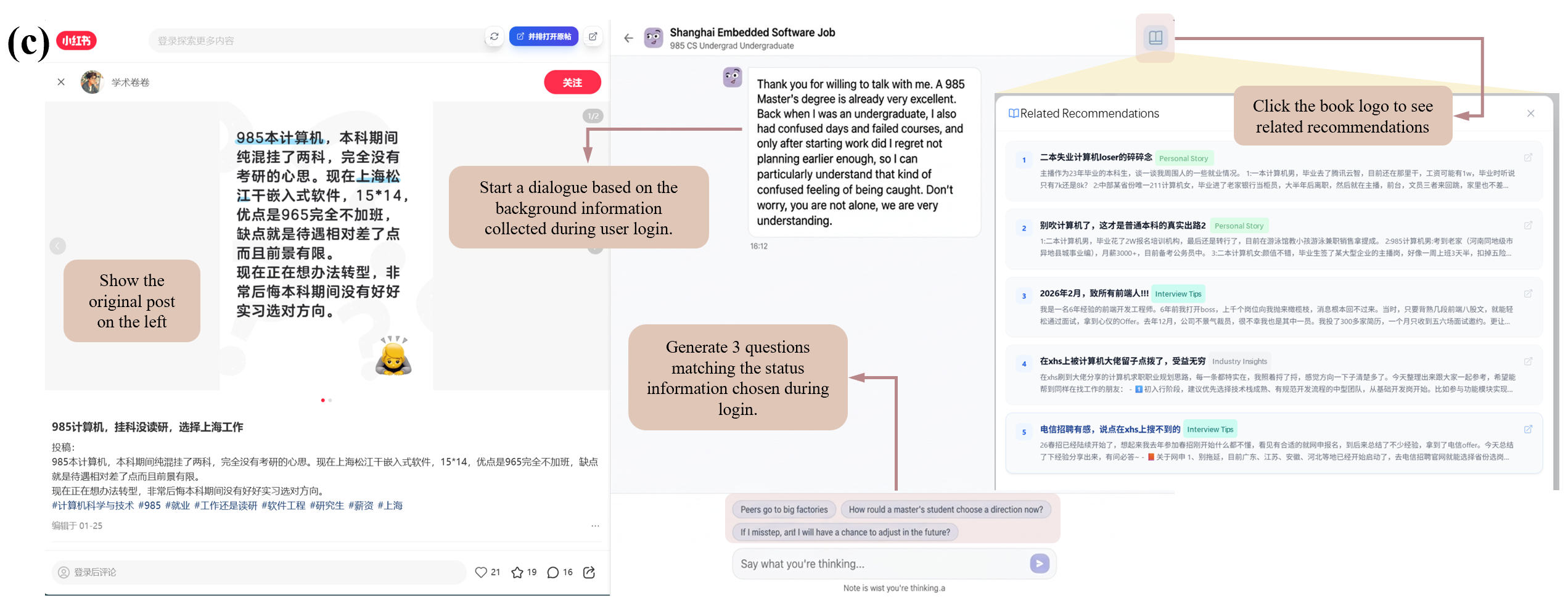
Fig 3: Split-view detail interface. Left: original RedNote post as an authenticity anchor. Right: persona-grounded chat with
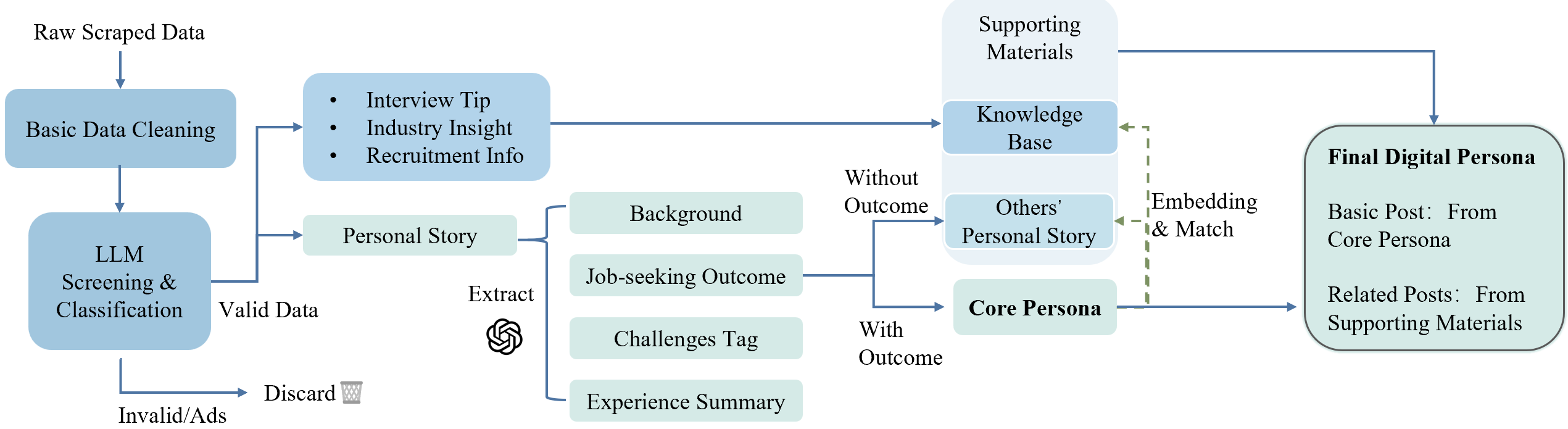
Fig 4: Data pipeline overview. Raw posts are cleaned and LLM-classified; valid content splits into a knowledge base (interview
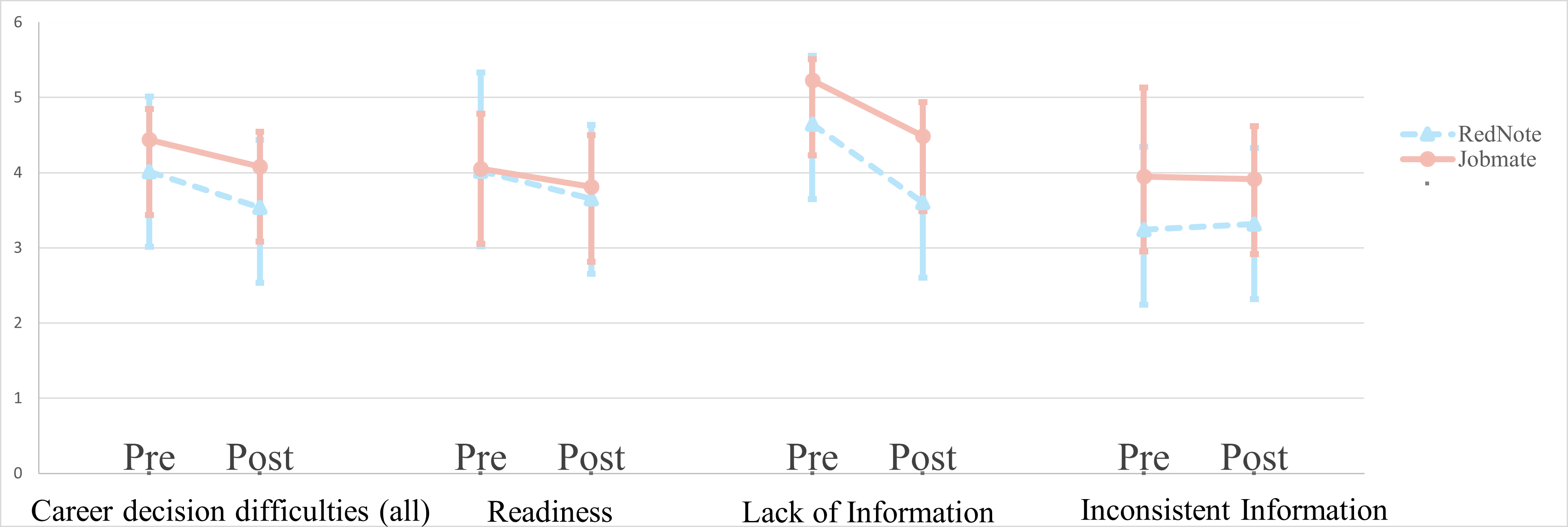
Fig 5: Pre–post CDDQ subscales for JobMate vs. RedNote
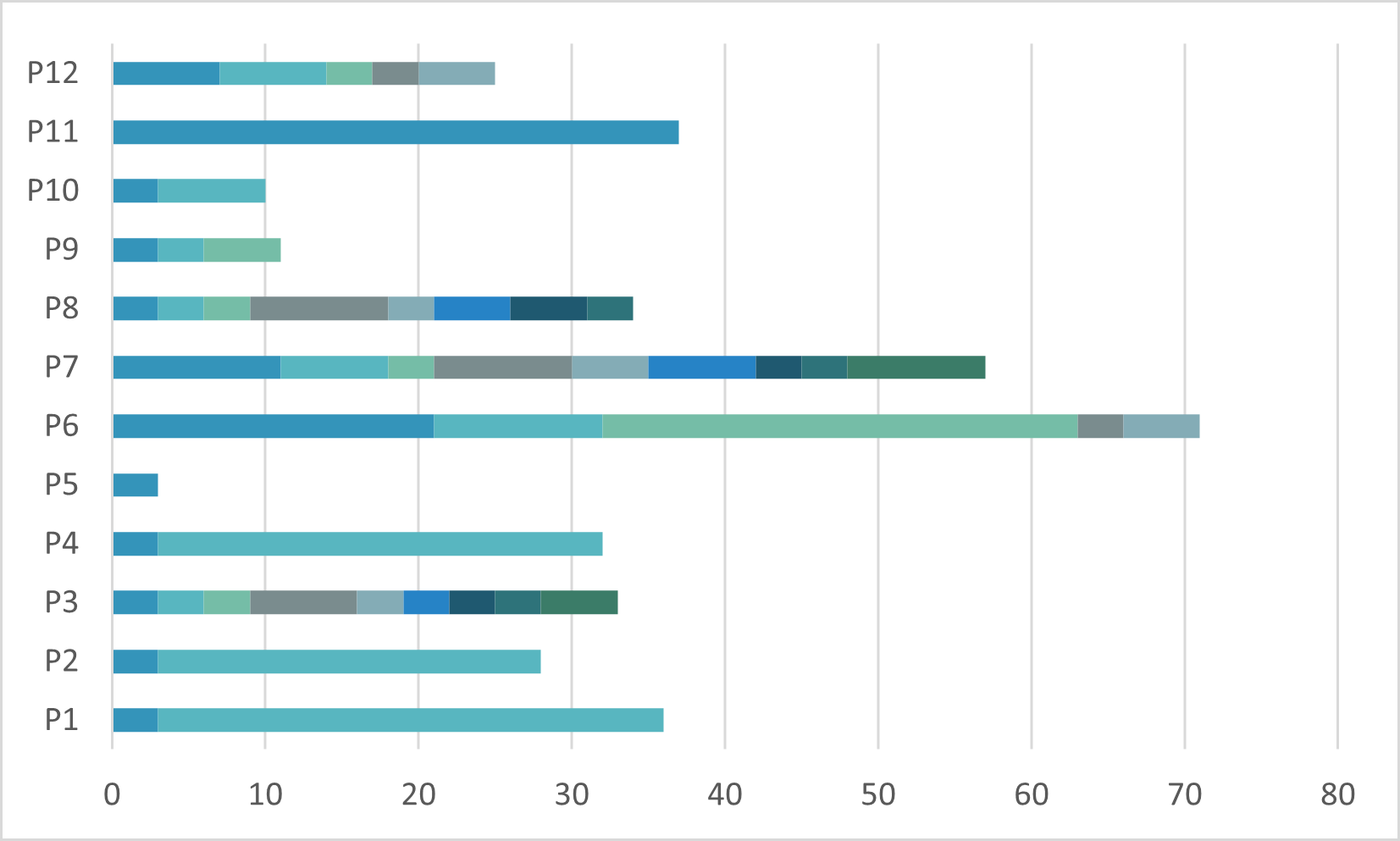
Fig 6: Conversation turns in JobMate, stacked by persona:
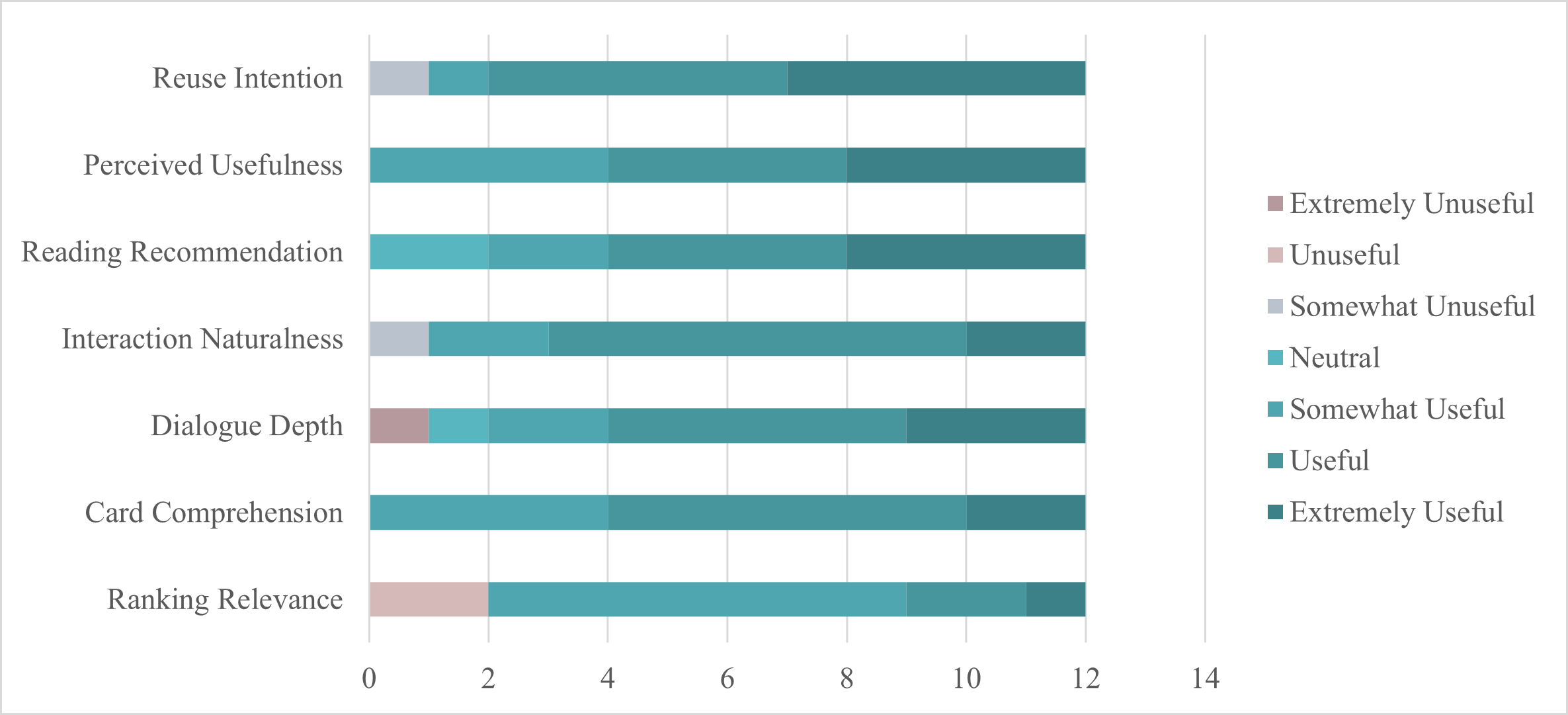
Fig 7: JobMate-only ratings for the seven interface and
Limitations
- Small sample size (N=24) limits statistical power and generalizability, especially discipline subgroup analyses (n=4 per cell).
- Short-term laboratory exploration sessions may not capture long-term effects of system use on career decision-making or mental health.
- The study does not evaluate adversarial or intentionally manipulative content in social media posts.
- User populations limited to university students and three academic disciplines from a single cultural context may not generalize worldwide.
- Heavy reliance on LLMs (GPT-3.5/5.2) exposes vulnerability to model biases and hallucinations not deeply audited here.
- Effectiveness in real-world deployment scenarios with diverse, noisy data and asynchronous user engagement remains untested.
Open questions / follow-ons
- How does JobMate perform in longitudinal studies measuring career outcomes and mental health impacts over months of use?
- Can the approach generalize to other high-comparison domains such as academic achievement or fitness social media?
- How robust is JobMate against manipulated or fraudulent peer content aiming to deceive or promote harmful social comparisons?
- What adaptations are needed to support culturally diverse user populations with different social comparison norms?
Why it matters for bot defense
Although not directly related to CAPTCHA or bot-defense, this paper provides valuable insights on how AI-driven conversational agents grounded in real user-generated content can mediate social comparison dynamics and cognitive load during online content consumption. Bot-defense engineers could apply these principles to design interaction modalities that minimize harmful user cognitive/emotional impacts when exposing users to peer-generated or AI-augmented content. The design of persona-grounded dialogues balancing authenticity with safe engagement may also inspire methods to counter malicious bot attempts at social engineering or manipulation via more controlled, transparent conversational systems.
Cite
@article{arxiv2607_11039,
  title={ Same Stories, Different Journeys: From Social Comparison to Sensemaking in AI-Mediated Peer Career Exploration },
  author={ Pengping Tan and Baoquan Zhao and Zhenhui Peng },
  journal={arXiv preprint arXiv:2607.11039},
  year={ 2026 },
  url={https://arxiv.org/abs/2607.11039}
}