
Robust bipedal locomotion on flowable slopes via foot-driven terrain manipulation
Source: arXiv:2607.11855 · Published 2026-07-13 · By Deniz Kerimoglu, Junnosuke Kamohara, Jiyeon Maeng, Ziwon Yoon, Seth Hutchinson, Ye Zhao et al.
TL;DR
This paper addresses the challenge of achieving robust bipedal locomotion on flowable, granular slopes—a setting where traditional rigid-terrain contact models and body-centric control strategies fail due to complex substrate yielding and fluidization. The authors introduce a limb-centric approach focused on regulating foot-terrain interactions through specialized cleated foot morphology rather than solely relying on body controls. Using a small-scale robophysical biped (BLUEY) with interchangeable cleat spacings and depths, they systematically characterize how cleat parameters influence locomotion on slopes up to 30°. They find that neither sparse nor dense cleat configurations yield good performance; instead, an intermediate "effective" cleat spacing distributes forces optimally to maintain substrate stresses near the yield threshold, minimizing fluidization and enabling stable ascent.
Guided by this insight, the authors design an adaptive foot with motor-driven retractable cleats to accommodate both rigid and granular terrain, demonstrating successful transitions between surfaces. The principles scale effectively to a larger, untethered 15 kg dynamic biped (HECTOR), which also exhibits improved locomotion on 15° granular slopes when equipped with effectively spaced cleats. The work reframes bipedal locomotion on deformable slopes by emphasizing terradynamics shaping via limb morphology, providing a mechanistic foundation and design framework that goes beyond conventional body-centric robot control.
Key findings
- Without cleats, BLUEY achieves only 6 cm displacement (~6% of commanded 100 cm) on a 20° granular slope, slipping extensively.
- Sparse cleats (12 cm spacing) cause locomotion failure due to excessive substrate yielding and trailing-edge pitching, despite increased friction.
- Dense cleats (1 cm spacing) reduce slip compared to no cleats but cause partial insertion failure on level ground and reduced performance due to increased insertion forces.
- Effective cleat spacing (4 cm) enables up to 82 cm displacement (82% of commanded) on 20° slopes and enables walking on slopes up to 30°, distributing substrate stress near the yield threshold.
- Particle Image Velocimetry (PIV) shows effective cleats recruit a uniform, solid-like granular response beneath the foot, while sparse/dense cleats cause localized fluidization and failure.
- Dual-plate intrusion tests reveal peak normal resistive forces 40% lower for effective (5 cm spacing) versus dense (1 cm) spacings, reducing insertion resistance and terrain fluidization.
- Adaptive retractable cleats using motor current sensing enable bluey to transition successfully from rigid to granular surfaces, improving pitch stability and forward progress.
- HECTOR, a 15 kg autonomous biped, shows best locomotion performance on 15° slopes with effectively spaced cleats, validating scaling of terradynamic principles.
Threat model
The adversary comprises the natural physical environment of flowable granular slopes, which behave unpredictably due to substrate yielding, solid-fluid transitions, and complex coupling of terrain and robot dynamics. The challenge is intrinsic instability caused by substrate deformation, fluidization, and local terrain failure under foot loading, potentially overpowering robot actuation and sensing. The study assumes no external malicious attacker but focuses on mitigating failure modes caused by terrain-induced disturbances which the robot cannot control directly except via foot-terrain interaction design.
Methodology — deep read
The study begins by defining the threat model as the adversarial challenge of maintaining stable bipedal locomotion on granular slopes where terrain yields and fluidizes under foot contact forces, destabilizing the robot.
Data originates from systematic experiments with a small-scale robophysical biped called BLUEY (1.4 kg). BLUEY was tested on a granular testbed using poppy seeds as the granular media, prepared in a loosely packed state (volume fraction ~58%). The robot performs a quasi-static, planar, sagittal-plane walking gait on inclines of 0°, 10°, 20°, and 30°. Cleated foot configurations were varied by adjusting cleat spacing (1 cm, 4 cm, 12 cm) and cleat depth (1-3 cm). Sensors included an IMU on the torso for pitch angle, a range sensor for displacement, and a motor current sensor when testing retractable cleats.
Architecture and algorithms focus on robotic foot design rather than control algorithms; locomotion is controlled with a fixed open-loop gait designed to minimize pitch instability during stepping. The key novel component is the cleated foot morphology, with cleats modeled physically as rectangular plates protruding perpendicularly. Cleat spacing and depth regulate terrain yielding by controlling granular contact stresses. For larger scale validation, the autonomous, untethered biped HECTOR (15 kg, 2x taller than BLUEY) was tested with planarized feet with varied cleat spacing but fixed depth (4 cm), controlled by a model predictive controller (MPC) based on single rigid body dynamics.
Training regimes are not applicable—experiments are physical, real-world trials. Multiple trials (typically 3) were conducted for each configuration to capture variability. Parameters like stride length, CoM height, and step period were kept constant or adjusted slightly with slope angle.
Evaluation includes percent slip relative to commanded displacement, pitch angle measured by IMU, and qualitative failure mode assessment. Particle Image Velocimetry (PIV) visualizes granular particle flow during stance phases to reveal substrate fluidization versus solidification under different cleat configurations. Dual-plate resistive force experiments provide quantitative force measurements of normal and tangential forces under plate spacings representing cleat spacing to understand terrain insertion mechanics.
For the adaptive foot, motor current feedback during stance was used as a proxy to detect terrain penetrability and automatically extend or retract cleats. The effectiveness of this approach was experimentally validated by gradually transitioning between rigid and granular terrain.
Reproducibility is supported by the extensive use of physical experiments with detailed parameter variations. Some experimental system details and code have been made openly available at the linked repository. However, high-fidelity simulations or open standardized datasets are not provided.
Technical innovations
- Demonstration that cleat spacing critically governs terrain yielding dynamics on granular slopes, with an optimal intermediate spacing minimizing substrate fluidization.
- Integration of motor current sensing with mechanized adjustable cleat depth to enable adaptive foot-terrain interactions that accommodate transitions between rigid and flowable surfaces.
- Use of particle image velocimetry (PIV) to directly visualize and quantify granular flow patterns beneath cleated robotic feet during locomotion, linking terrain response to robot performance.
- Scaling of terradynamics-informed cleat design principles from small-scale planar robophysical model (BLUEY) to a larger, 3D untethered biped (HECTOR) exhibiting similar performance trends.
Datasets
- BLUEY robophysical biped locomotion trials — ~100 trials over varying cleat spacing (1cm,4cm,12cm), depth (1-3cm), and slope angle (0°,10°,20°,30°) — experimental data from lab testbed with granular poppy seed media
- Dual-plate intrusion and drag force measurements — multiple repeated trials at 1 cm and 5 cm plate spacings on level and 20° slopes — experimental force sensor data on granular substrate
Baselines vs proposed
- No cleats: forward displacement on 20° slope = 6 cm (6% of commanded) vs Effective cleats (4 cm spacing): 82 cm (82%)
- Sparse cleats (12 cm spacing): locomotion failure on 20° slope vs Effective cleats: stable walking with ~16% slip
- Dense cleats (1 cm spacing): 67 cm displacement vs Effective cleats: 82 cm displacement on 20° slope
- HECTOR no cleats: failure after few steps on 15° slope vs Effective cleats: stable walking with reduced velocity fluctuations
- Dual plate resistive force: peak normal insertion force for 5 cm spacing ~40% less than 1 cm spacing on level and 20° slopes, suggesting reduced insertion resistance
Figures from the paper
Figures are reproduced from the source paper for academic discussion. Original copyright: the paper authors. See arXiv:2607.11855.
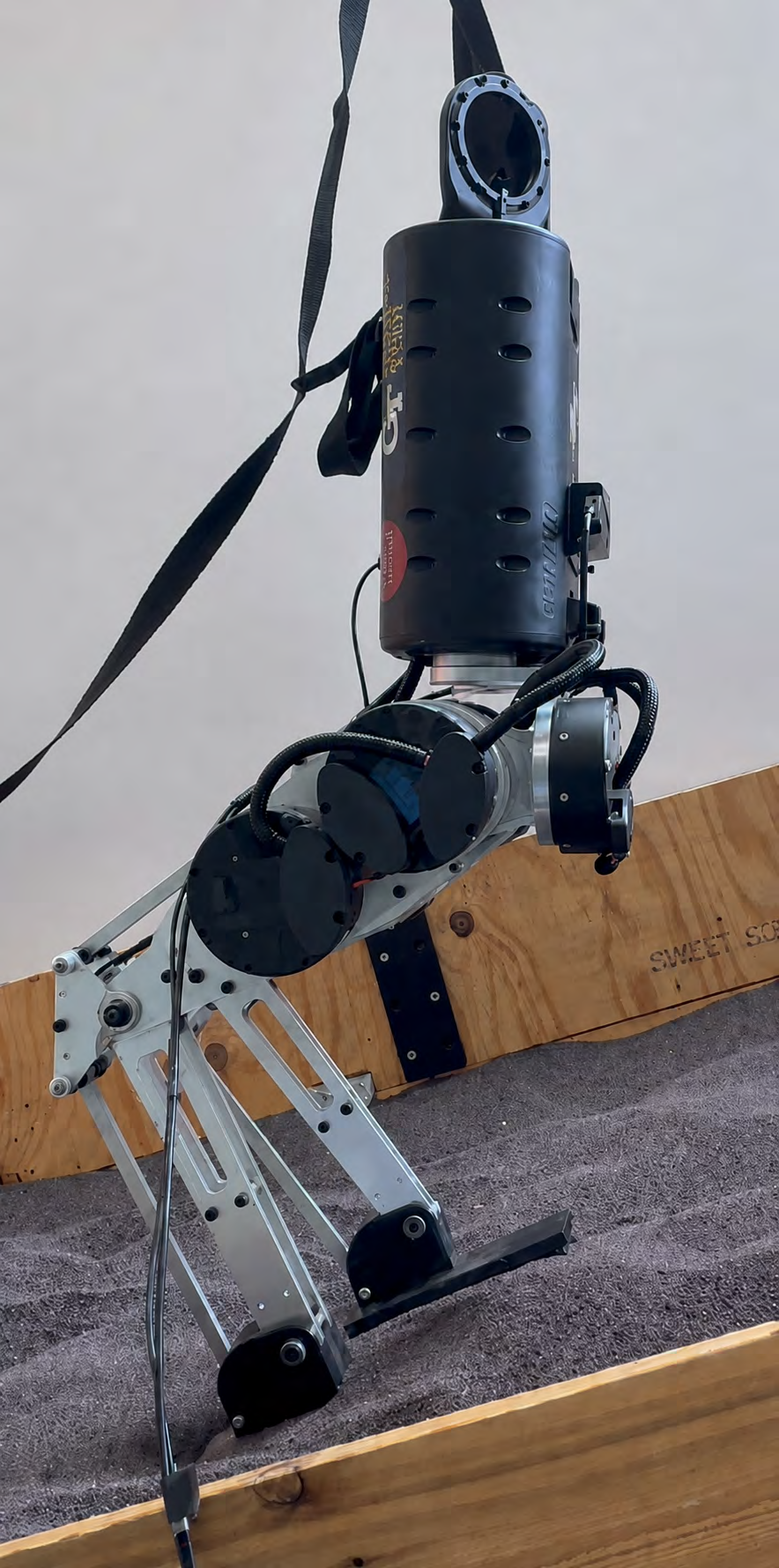
Fig 1: Overview of cleat-foot morphology with bipedal robots on granular slopes. A)
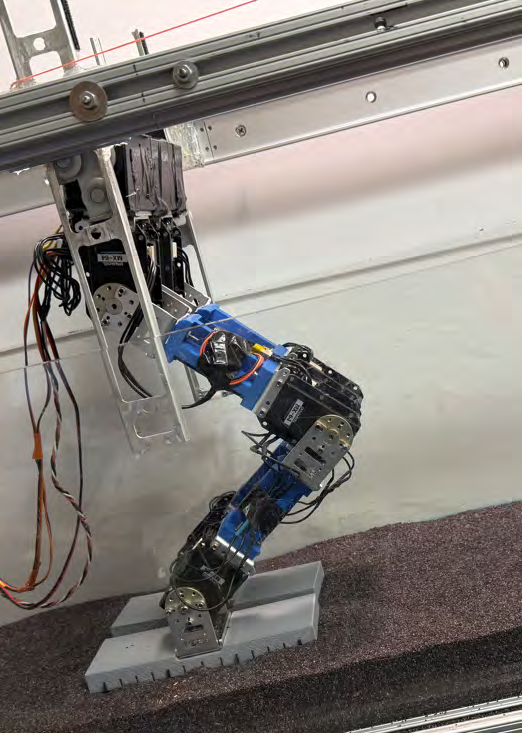
Fig 2: BLUEY walking up a granular slope of 20◦slope with different cleated foot
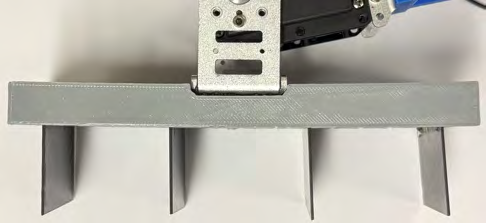
Fig 3 (page 4).
Fig 3: Heatmap of BLUEY’s slipping under varying cleat depth, spacing, and terrain
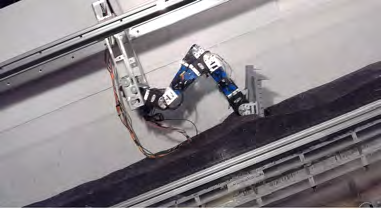
Fig 5 (page 6).
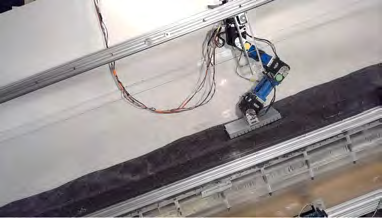
Fig 6 (page 6).
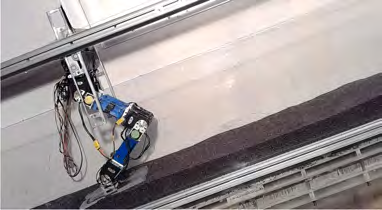
Fig 7 (page 6).

Fig 4: Particle Image Velocimetry (PIV) images illustrating granular media - cleated
Limitations
- Cleat geometries studied only rectangular plates with limited maximum depth (3 cm for BLUEY, 4 cm for HECTOR), restricting generality to other shapes or deeper cleats.
- Cleat spacing varied only along one axis and cleats inserted normal to surface; effects of angled insertion or 2D spacing patterns remain unexplored.
- Experimental platforms constrained in some ways: BLUEY is planarized with quasi-static gait, limiting dynamics, and HECTOR tests cover only up to 15° slopes.
- The study does not include rigorous adversarial perturbations or long-term durability tests, so robustness under real-world unpredictable conditions is untested.
- No closed-loop control adaptation beyond simple motor-current based cleat actuation was employed; integrating terradynamics insights into real-time gait or force control remains future work.
Open questions / follow-ons
- How do different cleat geometries (shapes, multiple orientations) affect terrain fluidization and locomotion beyond rectangular plates?
- Can dynamic, real-time control of cleat deployment combined with closed-loop gait adjustments further improve robustness on irregular or changing granular surfaces?
- What are the scaling laws that relate robot mass, foot size, cleat parameters, and terrain properties to locomotion success across a wider range of real-world terrains?
- How can terradynamics-informed foot designs integrate with advanced perception and tactile sensing to enable predictive adaptation to terrain variability?
Why it matters for bot defense
From a bot-defense and CAPTCHA perspective, the key insight from this paper is the value of a limb-centric control paradigm that directly manipulates the environment to improve interaction outcomes, rather than treating terrain as an external disturbance. In bot-defense systems, analogous thinking could mean designing interaction mechanisms that proactively shape or manipulate user inputs or environment signals to reduce adversarial impacts or spoofing. The study also highlights the importance of sensing and adaptively changing actuators or interaction modes to match environmental states, a principle that can apply to adaptive bot challenge-response designs.
Furthermore, the detailed terradynamics modeling combined with experimental validation provides a framework for understanding complex coupled system-environment interactions, which can inform approaches to modeling and mitigating automated adversarial behaviors coupling with platform weaknesses. While the paper is focused on physical locomotion, its methodological rigor in characterizing interaction parameters and failures can inspire rigorous analysis of interactive system vulnerabilities and corresponding mechanistic defenses.
Cite
@article{arxiv2607_11855,
  title={ Robust bipedal locomotion on flowable slopes via foot-driven terrain manipulation },
  author={ Deniz Kerimoglu and Junnosuke Kamohara and Jiyeon Maeng and Ziwon Yoon and Seth Hutchinson and Ye Zhao and Daniel I. Goldman },
  journal={arXiv preprint arXiv:2607.11855},
  year={ 2026 },
  url={https://arxiv.org/abs/2607.11855}
}