
Detection of sUAS in Urban Environments using Multi-Antenna Micro-Doppler Radar
Source: arXiv:2607.11868 · Published 2026-07-13 · By Chamindu Liyanage, Chirantha Kurukulasuriya, Chathuni Wijegunawardana, Wikum Kumara, Chamira U. S. Edussooriya, Arjuna Madanayake
TL;DR
This paper tackles the challenging problem of detecting small unmanned aerial systems (sUAS) in dense urban and indoor environments, where line-of-sight (LOS) radar sensing is often obstructed, and signals are subject to multipath fading and clutter. To address this, the authors design a multi-antenna continuous-wave (CW) MIMO radar operating at 2.47 GHz that leverages micro-Doppler signatures produced by rotating drone propellers. These radar returns exhibit cyclostationary properties, and spectral correlation densities (SCDs) derived from these micro-Doppler features serve as input to a deep learning model for detection.
The detection system uses a 1-transmit, 4-receive antenna array with a compact microstrip patch antenna design, combined with an EfficientNet-B0 convolutional neural network that handles multi-channel SCD tensor inputs. Experiments were conducted in both LOS and non-line-of-sight (NLOS) indoor/outdoor urban environments, using five different drone types with varying propeller materials. The approach achieves an overall detection accuracy of 86.11%, notably outperforming a single-channel baseline by over 10%, and demonstrates robustness to severe multipath and signal occlusion. The model achieves 87% recall and 81% precision on sUAS detection, highlighting practical viability for near real-time deployment in cluttered environments without direct LOS.
Key findings
- Overall detection accuracy of 86.11% across a dataset of five drone types under both LOS and NLOS conditions.
- Recall of 87%, precision of 81%, and F1-score of 84% for sUAS detection on the test set.
- Carbon-fiber propeller drones (Drones 4 and 5) achieve higher detection rates (>95%), while plastic propeller drones see reduced rates down to 60% (Drone 3).
- Four-channel MIMO input model outperforms single-channel baseline by >10% accuracy (86.11% vs 73.77%), confirming spatial diversity importance in cluttered environments.
- SCD patterns preserve cyclostationary micro-Doppler signatures in NLOS conditions despite reduced magnitude due to multipath.
- Detection latency suitable for near real-time use: 2-second observation windows with inference taking only a few milliseconds.
- Data augmentation using random sampling and Gaussian noise improved model robustness on limited data.
- Weighted binary cross-entropy loss mitigated class imbalance (positive class weight α=0.282).
Threat model
The adversary is a small drone flying at low altitude in dense urban or indoor environments, presenting a low radar cross-section and often operating in non-line-of-sight propagation conditions. The drone controller or operator attempts covert operation by leveraging urban clutter and multipath to evade detection. The detection system assumes the adversary cannot eliminate the intrinsic rotor blade micro-Doppler signatures, which are cyclostationary, and focuses on detecting these persistent signal features even in dense multipath and occlusion scenarios. The adversary cannot jam or fully block the radar frequency band.
Methodology — deep read
Threat model and assumptions: The adversary is an sUAS operating at low altitude in cluttered urban or indoor environments, causing severe multipath and blocking direct LOS radar detection. The system assumes no direct path but exploits cyclostationary micro-Doppler signals induced by propeller rotation, which persist after multipath propagation. Adversaries cannot fully suppress rotor blade signals or evade radar returns.
Data: The dataset comprises 5 drone types with plastic or carbon-fiber propellers. Data collected via a hardware prototype CW MIMO Doppler radar with 1 transmit and 4 receive antennas operating at 2.47 GHz. Measurements include both LOS and NLOS conditions; NLOS introduced using metal cabinets, doors, or walls. Each recording captures 10 seconds of complex baseband signals sampled at 1 kHz across 4 channels, segmented into six overlapping overlapping 2048-sample patches per recording. Preprocessing includes normalization and Butterworth lowpass filtering at 180 Hz to reduce high-frequency noise.
Architecture/algorithm: The input to the model is an SCD tensor generated using FFT Accumulation Method (FAM) with shape (4, 512, 512) representing spectral correlation densities for the four receive antennas. The model architecture comprises initial depthwise and pointwise convolutions for channel subsampling, followed by an EfficientNet-B0 backbone pretrained on ImageNet, fine-tuned for sUAS detection. Binary cross-entropy loss weighted to balance class imbalance (weight α=0.282) is used.
Training regime: Conducted in two stages over 140 epochs. Stage one freezes EfficientNet weights and trains custom conv layers for 70 epochs with learning rate 5e-4 and weight decay 1e-5. Stage two unfroze all layers and trained for 70 epochs with reduced learning rate 1e-5 and higher weight decay 5e-4 to mitigate overfitting. Data augmentations include random sampling and additive Gaussian noise with variable power (0.1-0.6).
Evaluation protocol: Accuracy, recall, precision, and F1-score metrics are evaluated on held-out test sets including both LOS and NLOS conditions. Ablation studies compare multi-channel input against single-channel model (with adjusted initial layers). Experiments conducted across multiple indoor/outdoor urban environments to capture variability. No mention of cross-validation or adversarial robustness testing.
Reproducibility: The paper describes hardware implementation details including PCB photos and antenna array design, but does not mention public release of code or datasets. Training details and architecture design are detailed enough to enable independent replication given access to similar radar hardware. Dataset is not publicly available.
Technical innovations
- Use of multi-antenna CW Doppler radar operating at 2.47 GHz leveraging cyclostationary micro-Doppler rotor blade signatures for NLOS sUAS detection.
- Generation of spectral correlation density (SCD) tensors via FFT accumulation method from multi-channel radar returns to capture intrinsic cyclostationary features robust to multipath.
- EfficientNet-B0 based CNN architecture adapted to multi-channel SCD input featuring initial depthwise and pointwise convolutions to reduce dimensionality while preserving spatial diversity.
- Two-stage training strategy with weighted binary cross-entropy loss to address class imbalance and overfitting in limited dataset conditions.
- Demonstration that spatial diversity from multiple receive antennas significantly enhances robustness against urban clutter and occlusion compared to single-channel sensing.
Datasets
- Custom sUAS dataset — approximately 5 drone types — collected via proprietary 2.47 GHz CW MIMO radar system in indoor and outdoor urban environments under LOS and NLOS conditions, not publicly available.
Baselines vs proposed
- Single-channel input model: accuracy = 73.77% vs proposed 4-channel input model: accuracy = 86.11%
Figures from the paper
Figures are reproduced from the source paper for academic discussion. Original copyright: the paper authors. See arXiv:2607.11868.
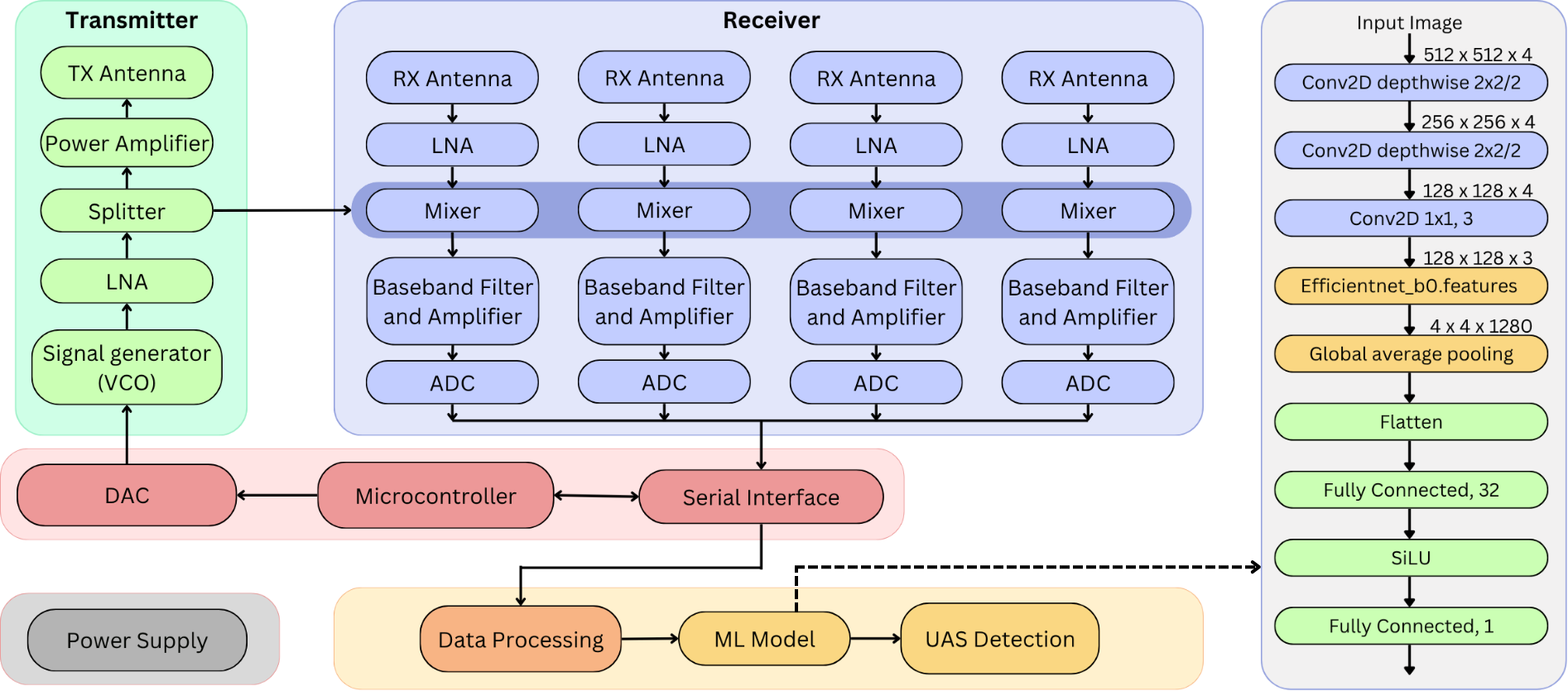
Fig 1: Transceiver Block Diagram of the proposed multi channel RF sensing system and the deep learning model. The
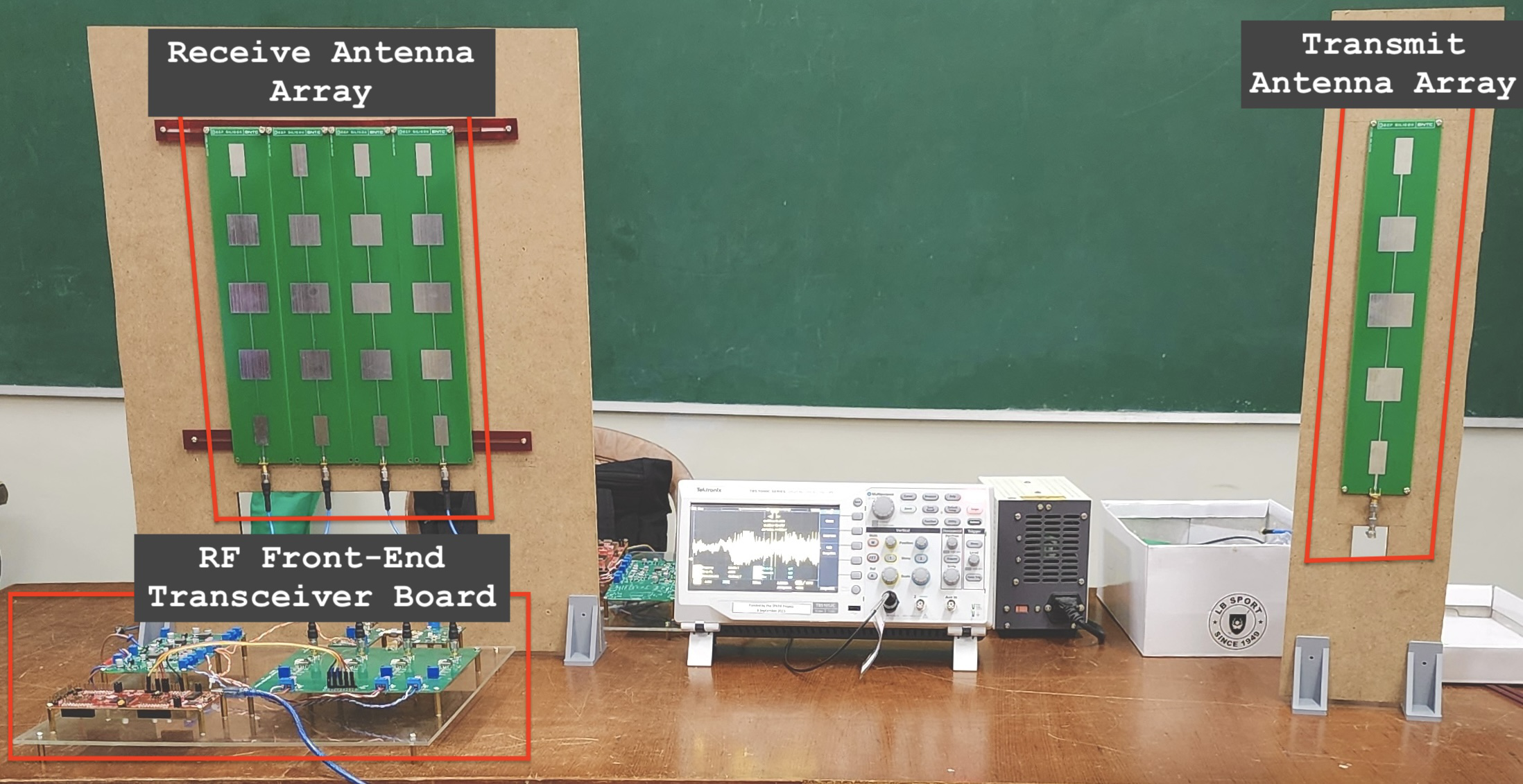
Fig 2: Photograph of the developed Doppler radar system
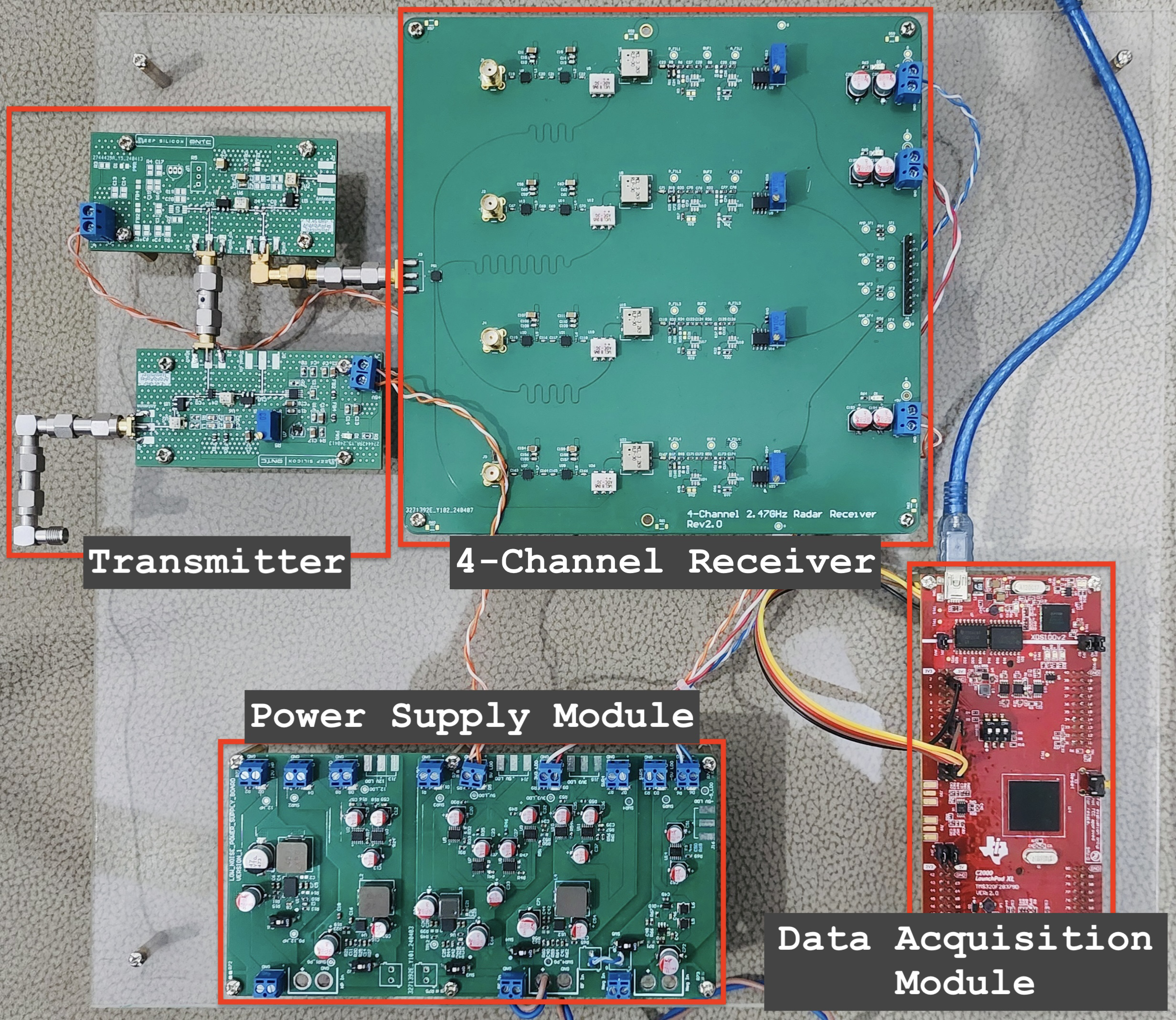
Fig 3: Implemented Doppler radar transceiver: transmitter (top
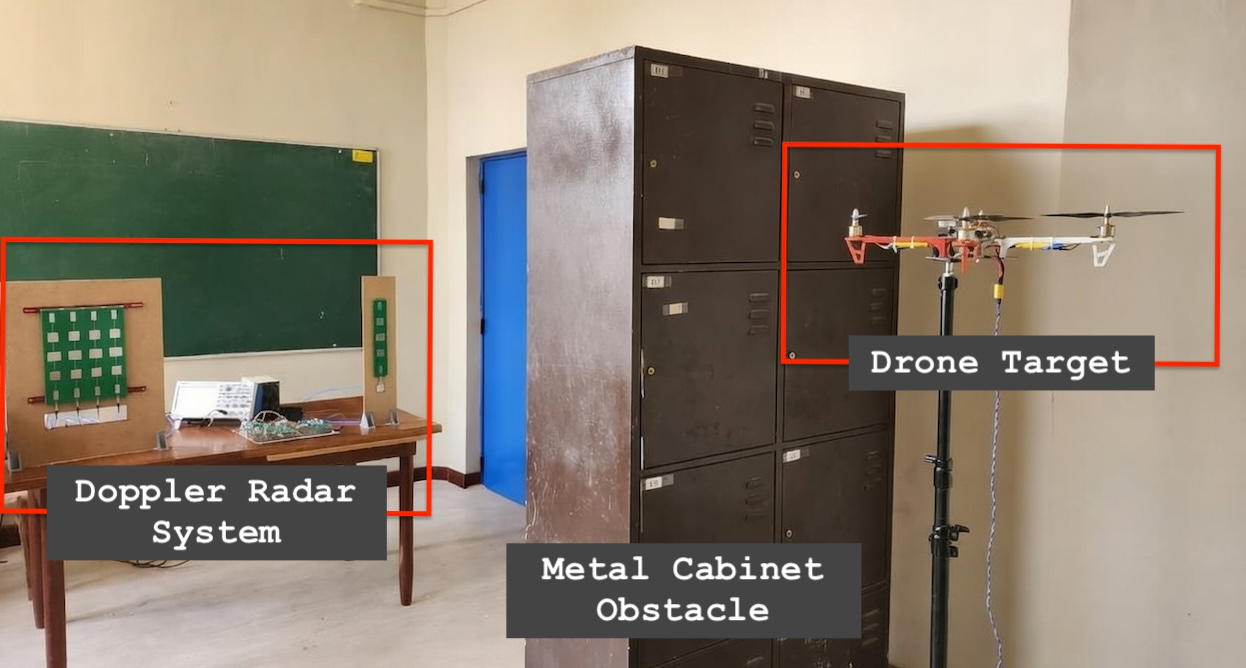
Fig 4: Indoor NLOS measurement setup illustrating the

Fig 5: Small unmanned aerial systems (sUAS) used to construct the dataset, including platforms with plastic propellers (Drones
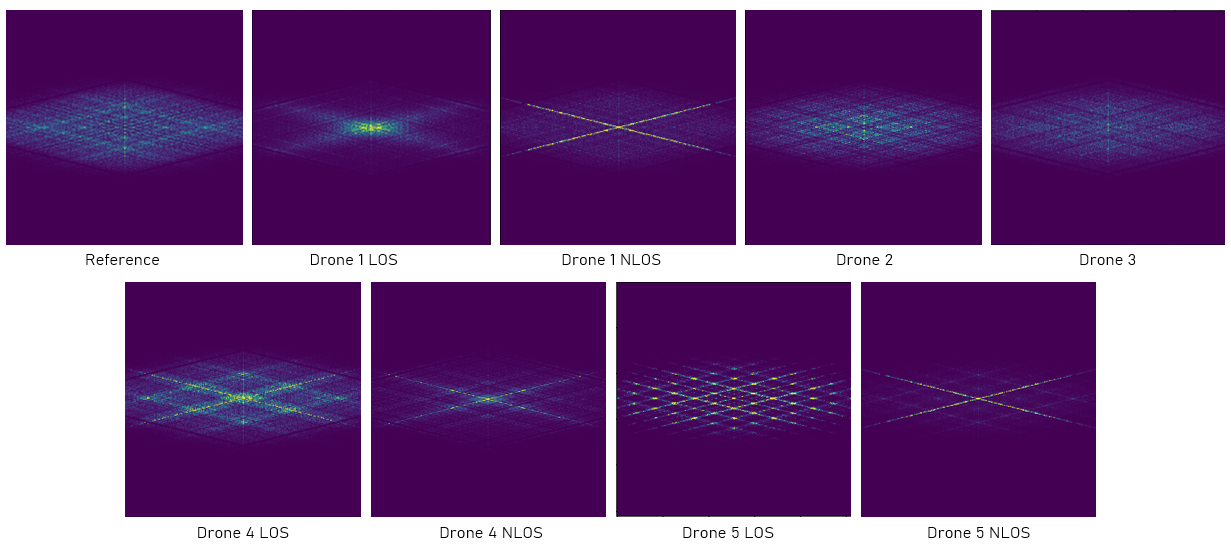
Fig 6: SCD 𝑆𝑥( 𝑓, 𝛼) representations of different sUAS under LOS and NLOS conditions, with spectral frequency 𝑓on the
Limitations
- Dataset limited to only five sUAS types with specific propeller materials, limiting generalizability to other drones or flight conditions.
- Data collected with stationary drones varying only propeller rotation; does not assess detection during translational drone maneuvers or varying flight speeds.
- No adversarial testing to evaluate robustness against sophisticated evasion tactics or electromagnetic interference.
- No public release of dataset or code limiting reproducibility and independent validation.
- Evaluation performed in relatively controlled indoor/outdoor urban setups rather than fully operational real-world scenarios with dynamic clutter and multiple simultaneous targets.
- Model selection favors CNN over transformers due to dataset size constraints; potential gains from larger datasets and advanced architectures remain unexplored.
Open questions / follow-ons
- How does the detection system perform on moving drones with translational and variable speed flight, beyond stationary rotor-only rotation?
- Can larger datasets and transformer-based models further improve robustness and accuracy for NLOS drone detection?
- What is the impact of simultaneous multiple sUAS targets or drone swarms on detection performance?
- How resilient is the system to active adversarial countermeasures such as radar jamming or stealth propeller designs?
Why it matters for bot defense
For bot-defense and CAPTCHA practitioners, this work illustrates the utility of leveraging cyclostationary signal properties and spectral correlation features extracted from multi-antenna radar returns to detect low-profile aerial threats in complex, multipath-rich environments. The principle that periodic micro-motion signatures can persist even under heavy signal occlusion may inspire analogies for defending against stealthy or evasive bot behaviors in network traffic or user interaction timing signals. Moreover, the demonstrated advantage of multi-channel spatial diversity versus single-channel sensing emphasizes the value of diverse-feature fusion to improve detection robustness. From a CAPTCHA perspective, the approach highlights how exploiting intrinsic periodicities and multi-view features can enhance reliability against adversarial evasion, a concept that could translate into multi-modal bot detection signals and ensemble classifiers. However, the specific radar hardware and spectral domain signal processing here are domain-specific and do not directly map to typical online CAPTCHA implementations.
Cite
@article{arxiv2607_11868,
  title={ Detection of sUAS in Urban Environments using Multi-Antenna Micro-Doppler Radar },
  author={ Chamindu Liyanage and Chirantha Kurukulasuriya and Chathuni Wijegunawardana and Wikum Kumara and Chamira U. S. Edussooriya and Arjuna Madanayake },
  journal={arXiv preprint arXiv:2607.11868},
  year={ 2026 },
  url={https://arxiv.org/abs/2607.11868}
}