
VAPOLA -- A multi-year, multi-band polarization survey of AGN and Sgr A* at mm wavelengths with ALMA I. Survey Overview and Science-Ready Archival Products
Source: arXiv:2607.08657 · Published 2026-07-09 · By Alejandro Mus, Ciriaco Goddi, Douglas Carlos, Vincenzo Galluzzi, Ezequiel Albentosa-Ruiz, Ivan Martí-Vidal et al.
TL;DR
This work addresses the complexity and high expertise required to process and analyze ALMA interferometric data acquired in ALMA Phasing System (APS) mode during global VLBI campaigns targeting active galactic nuclei (AGN) and Sgr A*. While ALMA provides unmatched sensitivity and resolution at millimeter wavelengths, the specialized calibration and imaging steps for APS data have traditionally posed barriers to wider scientific exploitation. The authors present VAPOLA, the first automated, publicly accessible, multi-epoch, multi-band repository of fully calibrated, science-ready ALMA data products tailored for VLBI AGN and Galactic Center science.
VAPOLA leverages a carefully designed automated pipeline that starts from QA2-calibrated ALMA VLBI-mode visibilities and produces fully calibrated interferometric visibilities, full-Stokes images across spectral windows and combined bands, polarimetric and spectral index maps, as well as tabulated polarization parameters derived from visibility-domain modeling. Key improvements over prior processing include refined polarization calibration steps, flagging of absorption lines unique to Sgr A*, and advanced automated flagging algorithms including machine learning. The resulting resource enables non-expert users to directly perform advanced polarimetric science without needing to reprocess raw ALMA data themselves. The repository is hosted openly and regularly updated. It already covers over 60 VLBI projects and three ALMA frequency bands, facilitating a broad range of investigations including magnetic fields in jets and accretion flows, dusty tori structure, and interstellar absorption toward the Galactic Center.
Key findings
- The VAPOLA pipeline automates the generation of science-ready products from QA2-calibrated ALMA APS-mode data, minimizing user intervention.
- Absolute flux scale uncertainty in APS VLBI data is estimated at ~5% for Band 3 and ~10% for Bands 6 and 7, consistent with ALMA standards.
- An innovative polarization calibration routine corrects residual cross-hand delays and XY phase offsets separately for VLBI and non-VLBI scans, improving over earlier QA2 methods.
- Automated flagging incorporates both thresholding and Isolation Forest machine learning methods to identify and remove complex visibility outliers, limiting additional flagged data to under 5%.
- Tabulated Stokes parameter fits per spectral window using UVMULTIFIT visibility-domain modeling achieve systematic uncertainty floors of 0.03% (linear polarization) and 0.6% (circular polarization) relative to Stokes I.
- Full-Stokes images are produced per spectral window, combined sidebands, and all four windows using CASA’s multi-term multi-frequency synthesis imaging, enabling spectral index and polarization map products.
- Sgr A* absorption lines (e.g., HCN, HCO+, CS, CN) are flagged at the channel level prior to continuum and polarization imaging to prevent contamination, a step unique to Galactic Center data.
- Pipeline and calibration improvements from archival reprocessing and updated QA2 scripts yield results differing by >1sigma on rotation measures and depolarization ratios compared to older reductions.
Methodology — deep read
The core methodology involves a two-step automated data processing pipeline applied to ALMA APS-mode VLBI observations of AGN and Sgr A* spanning Bands 3, 6, and 7 from 2017 to 2025.
Threat Model & Assumptions: The adversary scenario is not explicitly modeled since this is an astrophysical data processing paper. The assumption is that users want reliably calibrated and science-ready ALMA polarization data from VLBI campaigns, without the need for manual intervention or deep expertise in ALMA APS procedures.
Data: The input data are QA2-level calibrated Measurement Sets encompassing all sources observed within each VLBI track/session. The archive covers 2 projects in Band 1, 20 in Band 3, 40 in Band 6, and 5 in Band 7. Each track contains multiple target sources and continuous integrations (~15 hours per track). Raw visibilities come from the ALMA Baseline Correlator operating in phased-array (APS) mode.
Architecture/Algorithm: Starting from QA2 calibrated data, the pipeline performs additional flagging of bad data not removed by QA2. Flagging employs both a simple amplitude/phase threshold (CUTOFF method) and a machine learning Isolation Forest algorithm that models the distribution of complex visibilities to detect outliers. The pipeline then applies visibility-domain model fitting via UVMULTIFIT to fit point-source delta functions for each spectral window independently, extracting full-Stokes parameters per source. Following this, the tclean CASA algorithm generates full-Stokes images for each spectral window and combined bands, using multi-frequency synthesis with nterms=2 for the full-band images. A dynamic mask for CLEAN is applied based on residual emission thresholds, automatically adapting cleaning regions.
Key innovations include polarimetric calibration refinements addressing cross-hand XY delay corrections, bandpass phase slope corrections for APS scans, and XY phase offset corrections due to antenna reference changes during observations. Additionally, absorption lines toward Sgr A* are flagged channel-wise before imaging.
Training Regime: Not applicable as this is data processing, not model training.
Evaluation Protocol: The accuracy of flux calibration is validated against external ACA monitoring programs, confirming 5-10% uncertainties consistent with ALMA standards. The flagging algorithms are conservative to avoid excessive data loss (<5% data flagged). Polarimetric fits include statistical plus systematic error models. Comparisons across pipeline versions demonstrate internal consistency with previously published calibrations, noting some differences >1sigma in derived polarization parameters.
Reproducibility: The VAPOLA data products and pipeline outputs are publicly hosted at the Italian Centre for Astronomical Archives (IA2), alongside detailed metadata summaries. The pipeline relies on CASA (v6.6) and the external UVMULTIFIT package. Calibration scripts conform to ALMA QA2 Cycle 8 standards with documented enhancements. While raw baseband VLBI data are out of scope, calibrated ALMA Measurement Sets and science-ready products are openly accessible, enabling others to reproduce and extend analyses.
End-to-End Example: For a given track, QA2-calibrated visibilities are downloaded and ingested by the VAPOLA pipeline. Residual bad data are flagged using Isolation Forest. Then for each compact source, UVMULTIFIT fits a delta-function visibility model per spectral window to extract Stokes I,Q,U,V parameters. CASA tclean produces full-Stokes images for each spectral window and combined sidebands. Dynamic masks based on 7 sigma thresholds refine CLEAN regions applied per Stokes parameter. Polarization maps and spectral index images are generated. For Sgr A*, absorption lines are masked before imaging, and time-domain light curves are produced. The final products are organized hierarchically in the VAPOLA archive with accompanying metadata, enabling scientific analyses without the user needing to calibrate raw ALMA data themselves.
Technical innovations
- An automated pipeline producing fully calibrated, multi-band full-Stokes ALMA VLBI data products with minimal user intervention, bridging between raw ALMA QA2 calibration and science-ready archival products.
- Refined polarization calibration methods correcting residual XY cross-hand delays and phase slopes in APS-mode data separately from non-VLBI scans for improved polarimetric fidelity.
- Incorporation of Isolation Forest machine learning for conservative automated flagging of visibility outliers in complex visibility space beyond simple amplitude or phase thresholds.
- Systematic channel-level flagging of Sgr A* absorption lines within continuum bands to preserve spectral integrity during polarimetric imaging and analysis.
Datasets
- ALMA VLBI-mode APS observations of AGN and Sgr A* — >60 projects spanning 2017-2025, covering Bands 1 (44 GHz), 3 (86 GHz), 6 (230 GHz), and 7 (345 GHz) — Public via ALMA Science Archive and VAPOLA repository
Baselines vs proposed
- ALMA QA2 calibration alone: preceding processing with manual intervention needed; VAPOLA pipeline: fully automated, science-ready products accessible without complex reprocessing
- Isolation Forest flagging: up to 5% additional flagging vs simple amplitude/phase cutoff method with no significant loss of data integrity
- Systematic uncertainty floors in polarization parameters are improved to 0.03% Stokes I for linear and 0.6% for circular polarization vs prior more approximate estimates
- Pipeline reprocessing with updated calibration scripts leads to >1 sigma differences in derived rotation measures and depolarization ratios compared to earlier calibrations in Goddi et al. (2019b, 2021)
Figures from the paper
Figures are reproduced from the source paper for academic discussion. Original copyright: the paper authors. See arXiv:2607.08657.
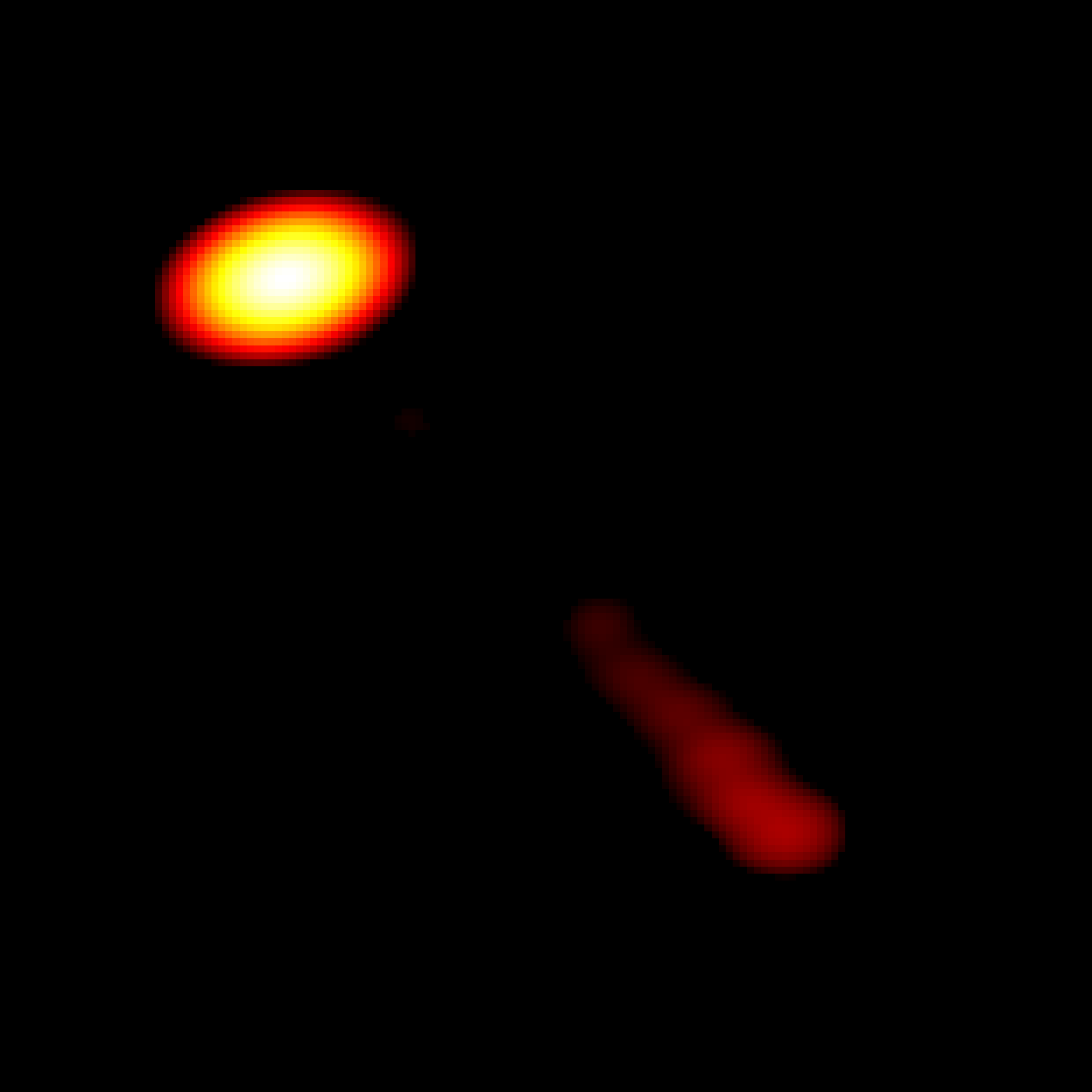
Fig 3: Images of the calibrators 3C273 (top) and 3C279 (bottom) observed in the EHT 2017 campaign. From left to

Fig 4: Absorption lines previously reported in the liter-
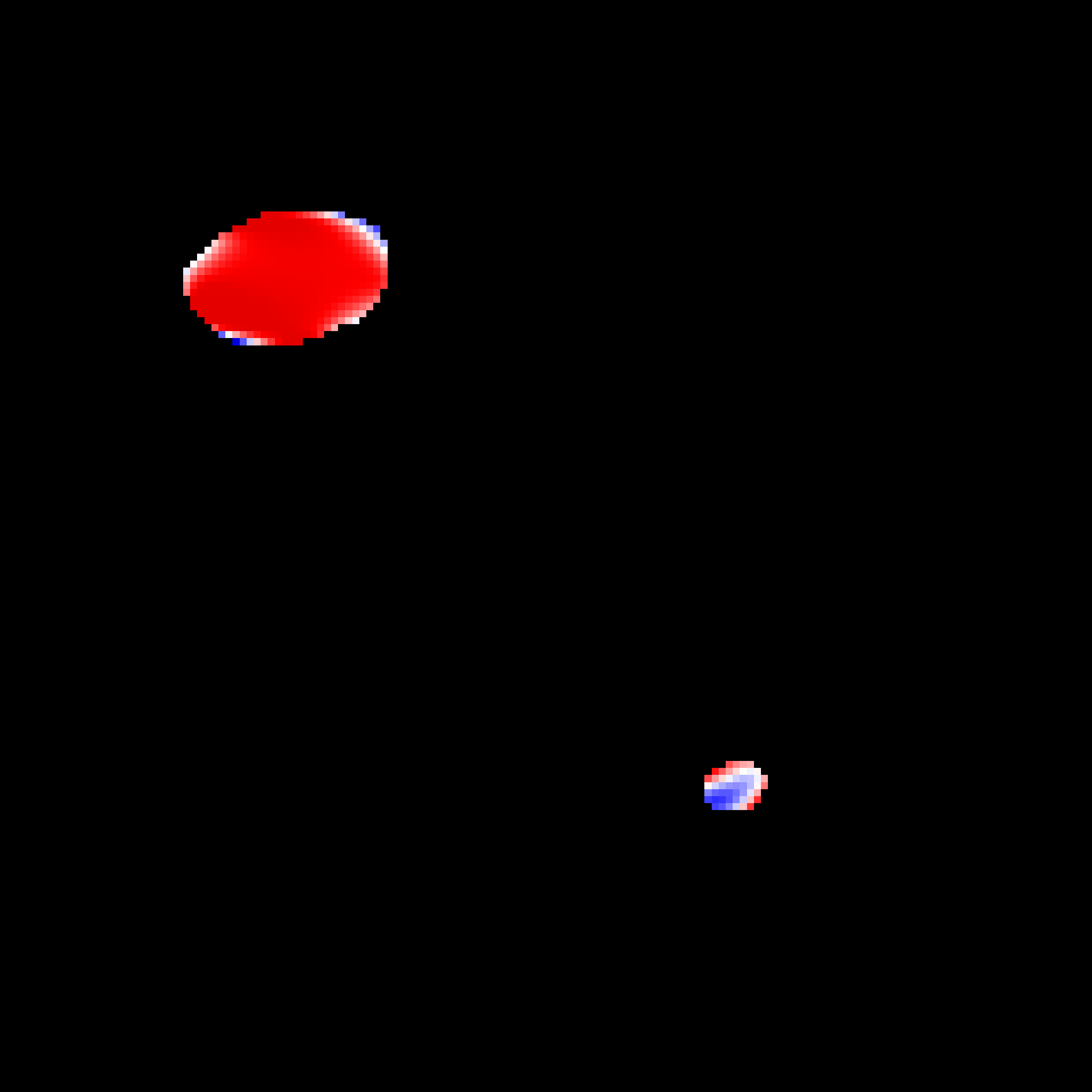
Fig 5: Absorption CN lines detected for the first time in
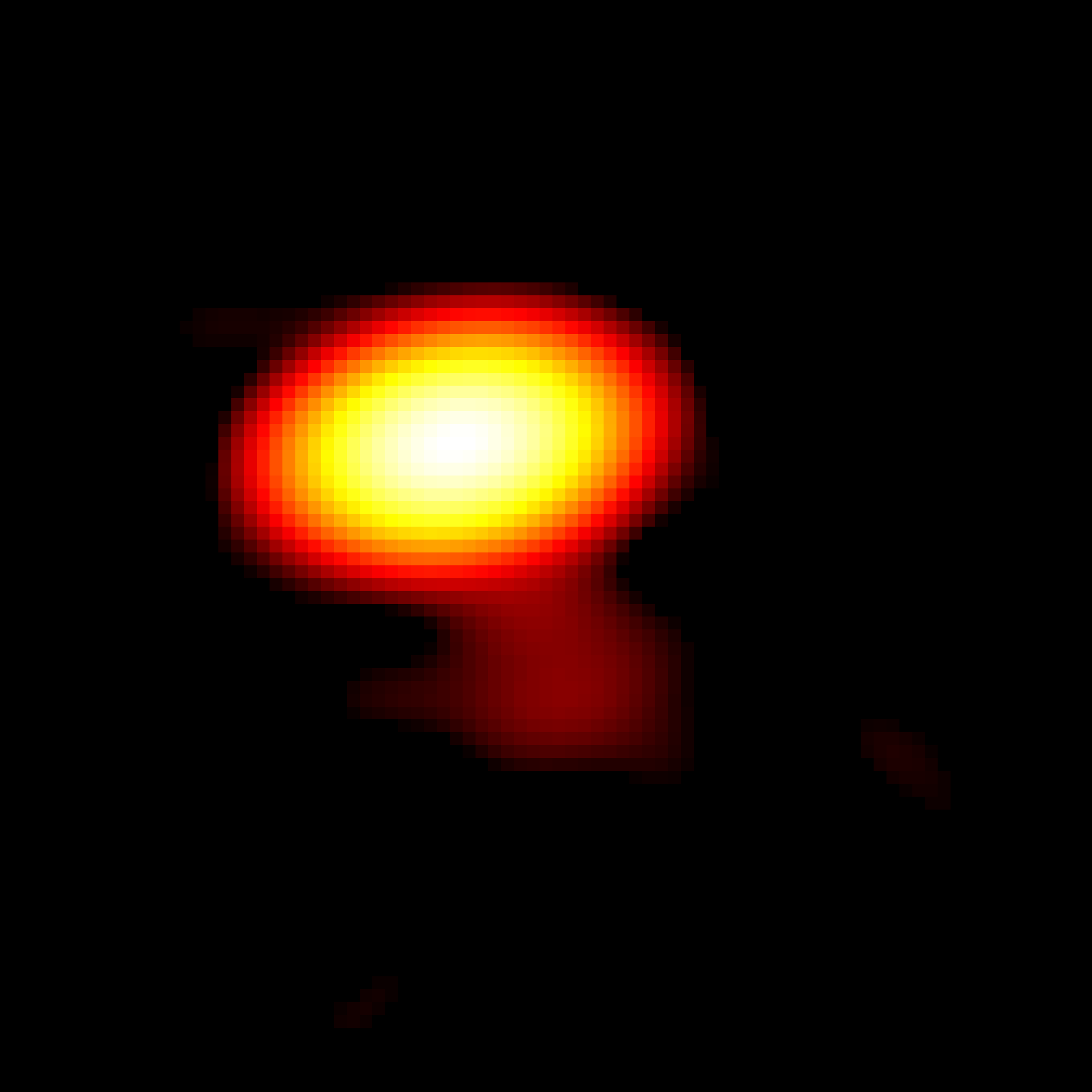
Fig 6: Absorption lines toward Sgr A∗observed on 2017
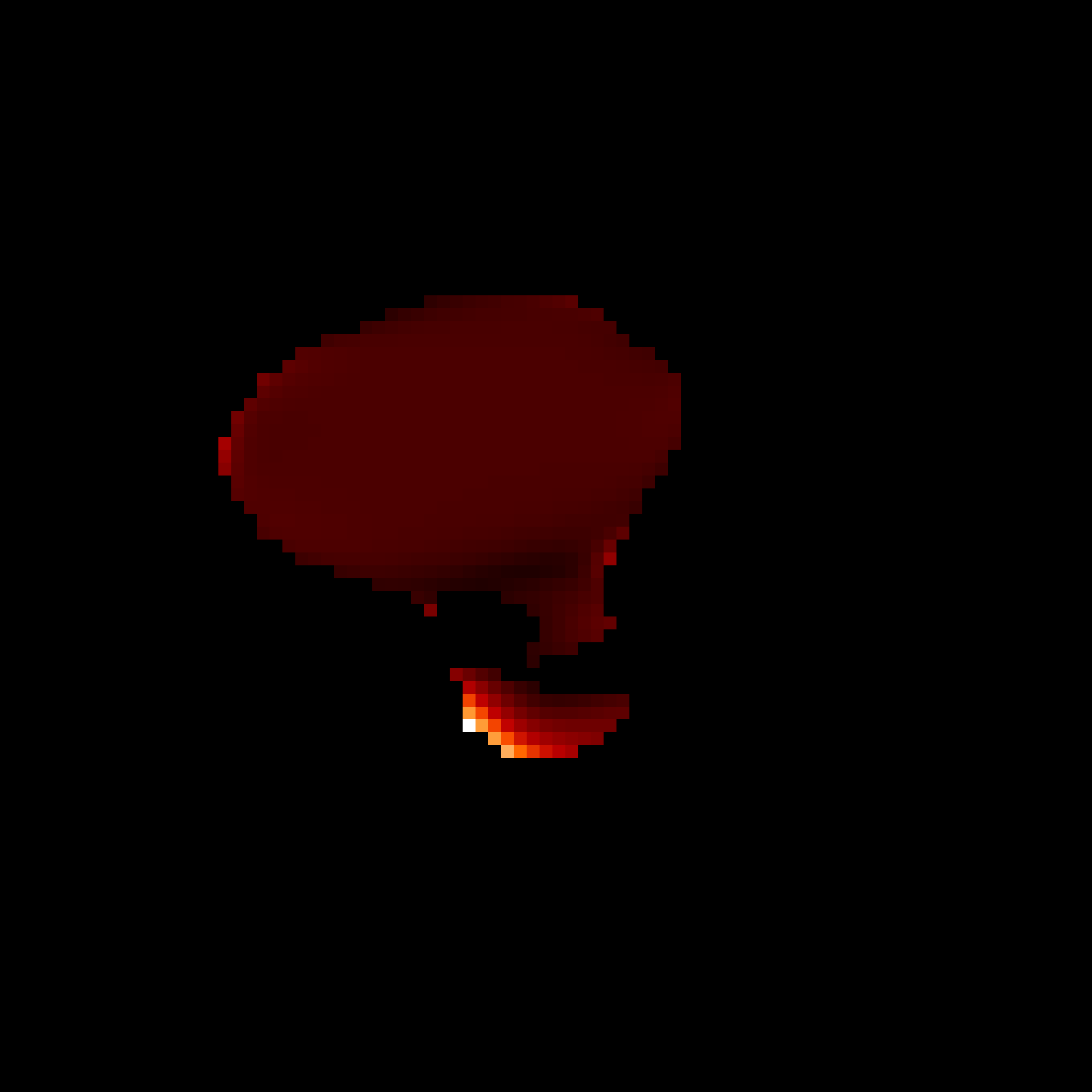
Fig 2: Logical structure of the VAPOLA archive. For each source, data products are organized hierarchically by observing

Fig 6 (page 10).
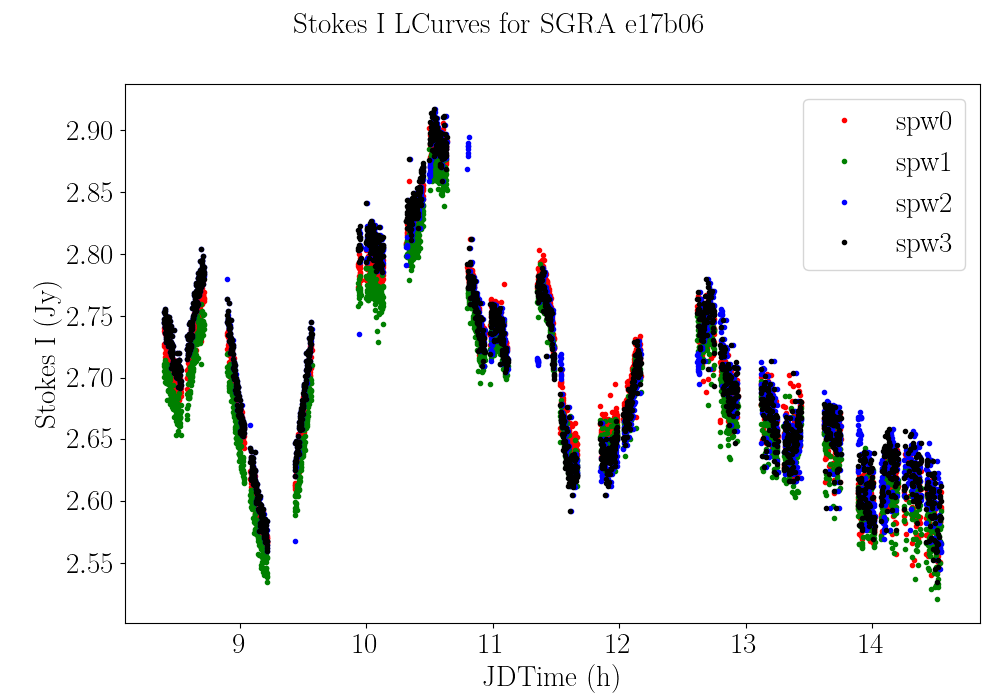
Fig 7: Left panel: Stokes I image of SgrA (compact core) and the surrounding minispiral structure (extended emission),*
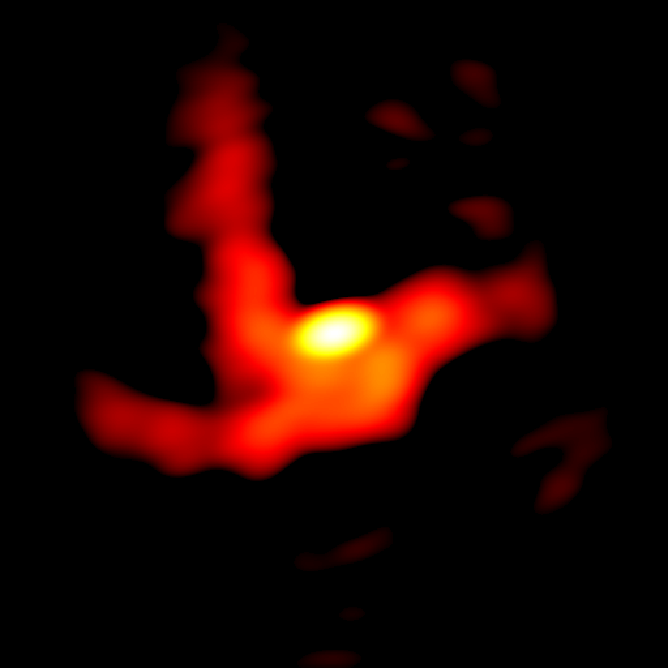
Fig 8 (page 13).
Limitations
- The pipeline assumes targets are dominated by compact core emission; extended source structure effects are assumed minimal but this may limit accuracy for complex sources like M87 or Sgr A*.
- Current calibration does not yet implement transfer of absolute flux scale from non-VLBI scans for improved opacity corrections; this feature is planned for future releases.
- Bandpass phase solutions for APS mode are derived only from polarization calibrators, not individually from each science target, potentially limiting optimal calibration under varying conditions.
- Automated flagging is conservative and currently disabled for complex, extended sources such as M87* and Sgr A* to avoid data loss.
- The dataset excludes raw VLBI baseband data and correlated VLBI visibilities, focusing solely on ALMA interferometric products, limiting direct VLBI calibration comparisons.
- No explicit adversarial robustness or contamination assessment is performed as this is an astrophysical dataset release, not a bot defense scenario.
Open questions / follow-ons
- How could the automated pipeline be extended to optimally handle sources with significant extended structure and variable morphology such as M87 and Sgr A*?
- What is the impact of using individual APS bandpass solutions for each science target versus just polarization calibrators on polarimetric calibration accuracy?
- How will adopting transfer of absolute flux scale from non-VLBI scans affect amplitude calibration stability and opacity corrections in future VAPOLA releases?
- Can advanced machine learning approaches improve flagging sensitivity further without compromising data retention in highly variable or low-SNR VLBI APS datasets?
Why it matters for bot defense
While this paper does not directly address bot defense or CAPTCHA, it provides a good example of automating complex calibration and data processing pipelines for a specialized but large dataset. The multi-stage workflow—from raw calibrated visibilities to fully imaged, fully calibrated polarization products—combined with quality flagging using machine learning points toward approaches for simplifying expert-level data tasks. For CAPTCHA operators, the concept of building user-friendly data repositories with minimal manual intervention and intelligent outlier removal may inspire better tooling to expose complex signals relevant to bot detection. Additionally, the clear structuring of meta-data and automatic updating of improved calibration echoes best practices in maintaining evolving security datasets. However, direct bot-related adversarial aspects and threat models are not covered here.
Cite
@article{arxiv2607_08657,
  title={ VAPOLA -- A multi-year, multi-band polarization survey of AGN and Sgr A* at mm wavelengths with ALMA I. Survey Overview and Science-Ready Archival Products },
  author={ Alejandro Mus and Ciriaco Goddi and Douglas Carlos and Vincenzo Galluzzi and Ezequiel Albentosa-Ruiz and Ivan Martí-Vidal and Hugo Messias and Kazi L. J. Rygl and Geoffrey B. Crew and Lynn D. Matthews and Elisabetta Liuzzo and Nicola Marchili and Raphael P. Rolim and Mariafelicia De Laurentis and Rocco Lico and Cristiano Urban },
  journal={arXiv preprint arXiv:2607.08657},
  year={ 2026 },
  url={https://arxiv.org/abs/2607.08657}
}