
SCI-Mamba: Unsupervised Learning based Low-Light Image Enhancement for Non-Cooperative Spacecraft
Source: arXiv:2607.08033 · Published 2026-07-09 · By Yiyong Sun, Weihang Shan, Shijun Wei, Diwei Zhou, Guang Zhai
TL;DR
This paper addresses the critical challenge of low-light image enhancement for visual perception in non-cooperative spacecraft on-orbit servicing missions, where images suffer from heavy noise, over-saturation, and motion blur under extreme illumination conditions. The scarcity of paired low/normal-light space imagery severely limits supervised learning approaches. To overcome this, the authors propose SCI-Mamba, an unsupervised enhancement framework combining self-calibrated illumination learning (from SCI++), a novel sequence-dominated linear-complexity VMamba architecture optimized for 1D sequences, and Retinex physical priors. This design substantially reduces computational overhead by limiting cross-dimensional 2D-to-1D transformations to a single bidirectional pair, making it suitable for resource-constrained spaceborne hardware.
In addition, they construct Space Dark-1.0, the first dedicated low-light spacecraft image dataset integrating real orbital footage, hardware-in-the-loop darkroom captures, and physically constrained synthetic images spanning complex illumination and motion states. Extensive evaluation against CNN, Transformer, and prior Mamba-based methods on this dataset demonstrates SCI-Mamba achieves superior visual authenticity, color fidelity, and inference speed—running 3.9× to 18.2× faster than leading baselines. The paper presents a principled unsupervised solution tailored for the demanding constraints and domain characteristics of space visual perception.
Key findings
- SCI-Mamba’s one-time bidirectional 2D-to-1D and 1D-to-2D conversion design improves inference frame rate by 23.05% compared to a 2D-scan baseline variant.
- On Space Dark-1.0 test set, SCI-Mamba runs 18.16× and 4.61× faster than ECMamba and WalMaFa respectively, and outpaces LLFlow, Uformer, LLFormer, and UHDformer by 3.89×, 8.67×, 9.49×, and 4.1× respectively.
- SCI-Mamba’s prior-guided illumination monitor module generates adaptive illumination maps from input brightness and gradients, enabling differentiated foreground spacecraft enhancement while suppressing noisy background amplification.
- The multi-objective loss function incorporating illumination color constancy, smoothness, RGB channel balance, structural fidelity, and differential enhancement enables robust unsupervised learning without paired images.
- The Space Dark-1.0 dataset combines real on-orbit low-light footage, darkroom hardware-in-the-loop satellite images, and physically realistic synthetic data, providing diverse illumination, motion, and pose conditions relevant to orbital scenarios.
- VSS1D module captures long-range dependencies and multi-directional spatial features for flattened 1D sequences via four directional sequential scans without repeated 2D reconstructions, preserving spatial continuity and enabling linear-time state-space modeling.
- The progressive three-stage architecture allows increasingly refined illumination estimation and Retinex-based enhancement entirely in sequence space, avoiding error propagation by always referencing the raw input.
- Retinex physical priors applied in 1D sequence space adapt standard image-domain illumination-reflectance decomposition to the efficient sequence domain pipeline.
Threat model
The threat model is implicit and practical: the adversary is the natural degradation of low-light spaceborne imagery with heavy sensor noise, motion blur, and varying illumination. The model assumes no access to paired low/normal-light spacecraft images for supervised learning and must operate efficiently on resource-limited onboard hardware. Adversarial attacks or intentional manipulation of images are not considered.
Methodology — deep read
Threat Model & Assumptions: The target adversary is not explicitly stated, but the work assumes a practical setting where image enhancement must operate on resource-limited spaceborne hardware without access to paired low/normal-light spacecraft images for supervised training. The system is designed to generalize robustly to diverse unknown illumination and pose conditions of non-cooperative spacecraft.
Data: The authors build Space Dark-1.0, a specialized low-light spacecraft dataset combining: (1) physically constrained software-synthesized low-light orbital images, (2) darkroom hardware-in-the-loop satellite model captures with realistic sensor noise and dynamics, and (3) real low-light orbital footage from space missions. This dataset simulates challenging conditions such as extreme illumination, motion blur, and attitude variations typical for non-cooperative rendezvous.
Architecture/Algorithm: SCI-Mamba integrates self-calibrated unsupervised illumination learning from SCI++ with an efficient VMamba backbone adapted to 1D sequences (VSS1D).
- Input images undergo a patch embedding reducing resolution and are flattened once into a global 1D sequence to minimize costly 2D-to-1D domain switches.
- Three progressive stages refine illumination estimation sequences (i1, i2, i3).
- Retinex-based enhancement leverages these illumination maps for reflectance recovery via element-wise illumination inversion.
- VSS1D combines selective state-space modeling with a novel Sequential Cross-Scan Generator (SCSG) and Restorer (SCSR) to produce four directional sequence scans capturing horizontal, vertical, and reverse spatial dependencies purely in 1D, facilitating global spatial context modeling with linear complexity.
- The final stage reconstructs the enhanced image from 1D sequence back to 2D, followed by a terminal convolutional layer for refinement.
Training: A five-term multi-objective loss function balances illumination color constancy, spatial smoothness (structure-aware to avoid over-smoothing edges), RGB channel balance, structural fidelity, and differential enhancement biasing foreground spacecraft over noisy background. The network is trained end-to-end without paired data using self-supervised Retinex-based objectives and physical priors. Exact training epochs, batch size, optimizer, and hardware details are not specified in the excerpt.
Evaluation: Experiments are conducted on the Space Dark-1.0 test split. SCI-Mamba is benchmarked against CNN-based (SCI++), Transformer-based (Uformer, LLFormer, UHDformer, LLFlow) and other Mamba-based methods (ECMamba, WalMaFa). Metrics include visual authenticity and color fidelity (quantitative metrics unclear from excerpt), as well as inference speed measured in frames per second on multi-resolution inputs. Ablations compare the one-time 2D-1D conversion pipeline with repeated conversion baselines.
Reproducibility: The authors release code at https://github.com/bitswh/SCI-Mamba. The Space Dark-1.0 dataset is proprietary and not stated as publicly available. Model weights appear not frozen or released.
Technical innovations
- Integration of self-calibrated unsupervised SCI++ illumination learning with VMamba’s linear-complexity sequence modeling tailored to 1D patch sequences.
- Design of a one-time bidirectional 2D-to-1D and 1D-to-2D cross-dimensional transformation pipeline eliminating redundant intermediate domain switches and optimizing inference efficiency for spacecraft image enhancement.
- Development of the VSS1D module embedding a Sequential Cross-Scan Generator (SCSG) and Restorer (SCSR) to model multi-directional spatial dependencies purely in 1D sequences with selective state-space modeling.
- Introduction of a multi-objective loss function featuring a prior-guided illumination monitor module that automatically generates target illumination maps from brightness and gradient features to guide differentiated enhancement.
Datasets
- Space Dark-1.0 — size not explicitly stated — proprietary dataset integrating real spaceflight images, hardware-in-the-loop darkroom satellite captures, and physics-constrained synthetic low-light spacecraft images
Baselines vs proposed
- ECMamba: inference speed = 1× vs SCI-Mamba: 18.16× faster
- WalMaFa: inference speed = 1× vs SCI-Mamba: 4.61× faster
- LLFlow: inference speed = 1× vs SCI-Mamba: 3.89× faster
- Uformer: inference speed = 1× vs SCI-Mamba: 8.67× faster
- LLFormer: inference speed = 1× vs SCI-Mamba: 9.49× faster
- UHDformer: inference speed = 1× vs SCI-Mamba: 4.1× faster
- SCI-Mamba one-time 2D-to-1D conversion design provides 23.05% faster inference frame rate than a 2D-scan baseline variant
Figures from the paper
Figures are reproduced from the source paper for academic discussion. Original copyright: the paper authors. See arXiv:2607.08033.
Fig 6: Illustration of the 1D Sequential Cross-scan Mechanism
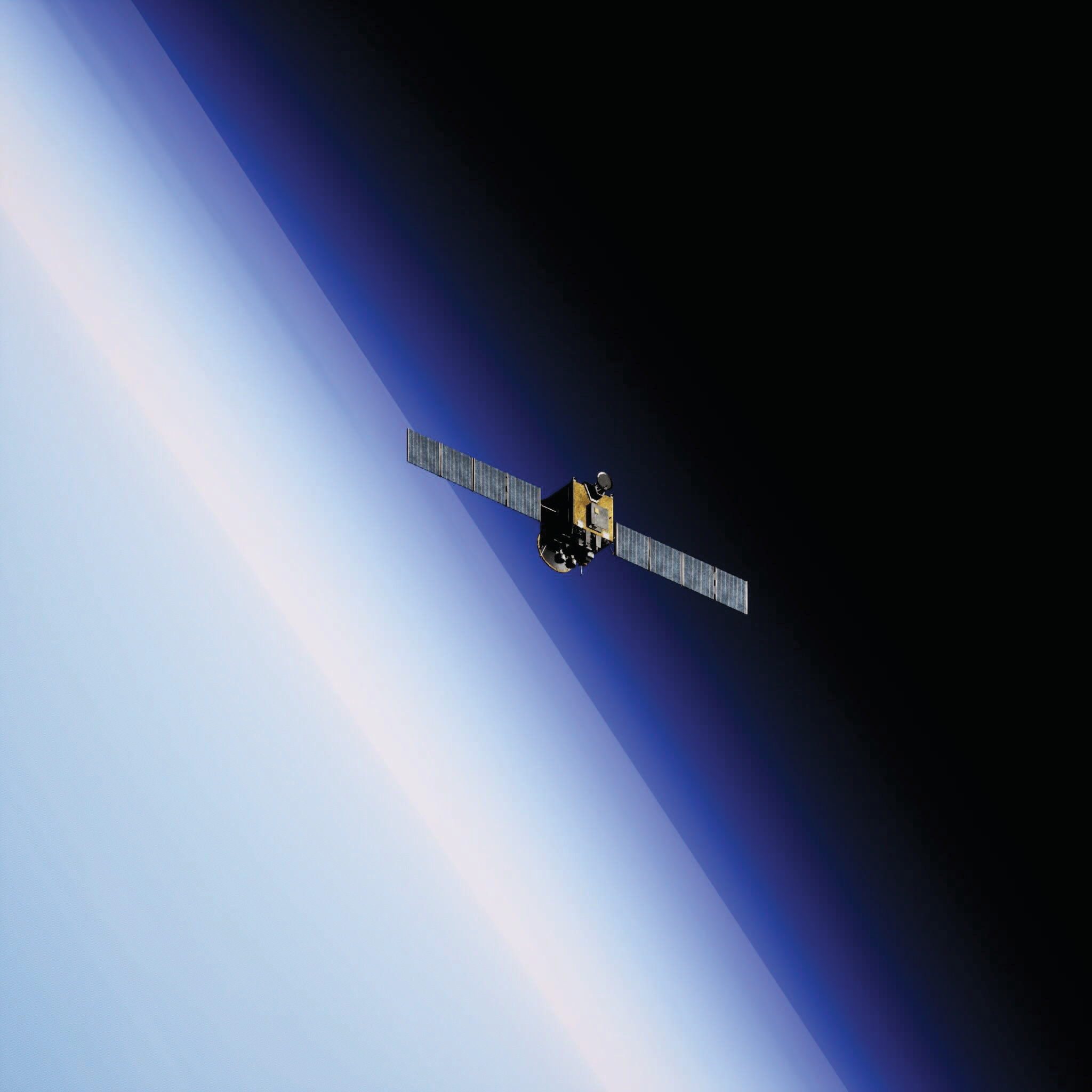
Fig 2 (page 12).
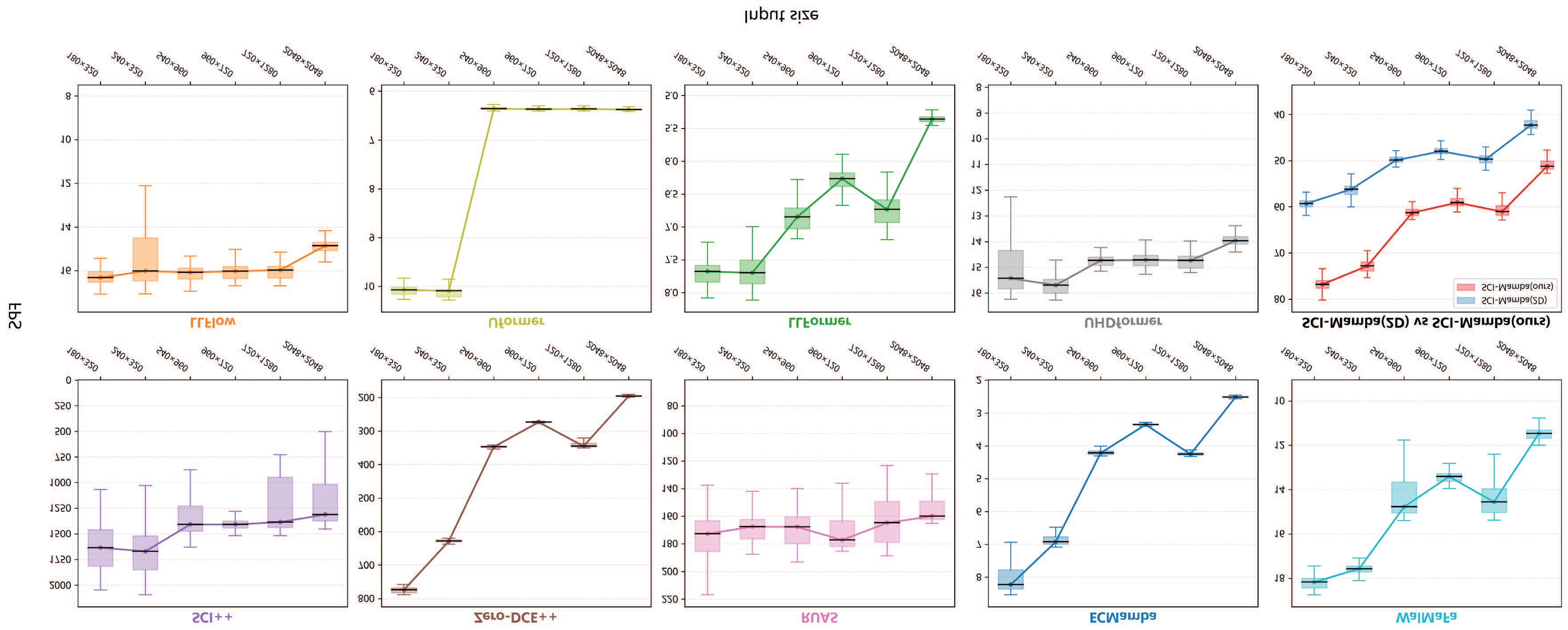
Fig 7: Inference Frame Rate Boxplot for Multi-resolution Test Pictures
Fig 8: Visual Comparison on Synthetic Virtual Orbital Picture - with Hidden Satellite
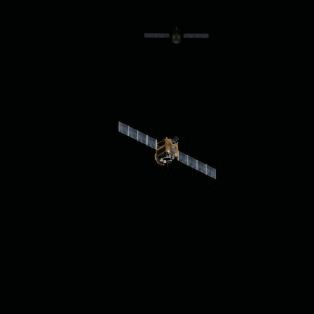
Fig 9: Visual Comparison on Synthetic Virtual Orbital Images - Lower Light Picture
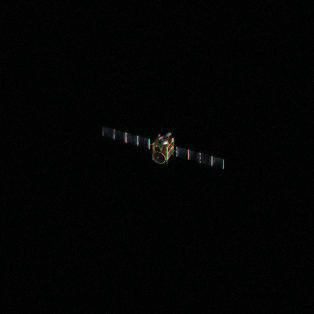
Fig 11: presents lower light hardware-captured samples with extremely
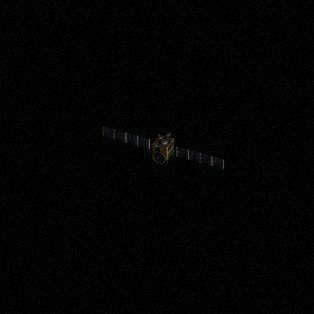
Fig 10: Visual Comparison on Darkroom Hardware-in-the-loop Satellite Picture
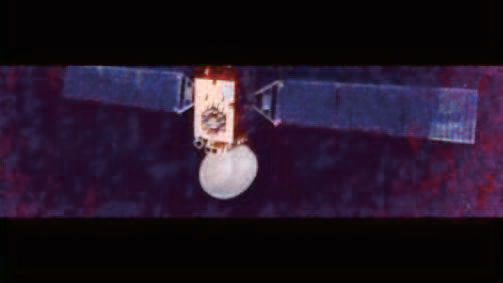
Fig 13: evaluates challenging scenes featuring small-scale orbital tar-
Limitations
- Space Dark-1.0 dataset is proprietary and its exact size and public availability are not detailed, limiting reproducibility.
- Training regime details including epochs, batch size, optimizer, hardware setup, and hyperparameter tuning strategies are not fully described.
- Quantitative evaluation metrics apart from inference speed (e.g. PSNR, SSIM) and statistical rigor are not discussed in the excerpt, leaving effectiveness somewhat qualitatively assessed.
- The model and dataset are tested under low-light spacecraft imaging conditions, but the robustness to adversarial perturbations, sensor failure modes, or unseen domain shifts is unexamined.
- The method relies on Retinex priors which can have inherent limitations under extremely non-Lambertian surface reflections or sensor nonlinearities not modeled here.
Open questions / follow-ons
- Can SCI-Mamba’s framework be extended to handle dynamic lighting changes or transient shadows caused by other spacecraft or celestial bodies during rendezvous?
- How robust is the model to domain shifts caused by different spacecraft materials, sensor aging, or radiation damage in orbit?
- Can the proposed sequence-dominated linear-complexity approach be generalized to other spaceborne vision tasks such as super-resolution or deblurring?
- How can the Space Dark-1.0 dataset be expanded or standardized to facilitate benchmarking and reproducibility in space low-light imaging?
Why it matters for bot defense
For bot-defense and CAPTCHA practitioners, SCI-Mamba offers insights into designing unsupervised enhancement models that operate efficiently under extreme domain constraints with scarce paired data, analogous to adversarial or low-quality image inputs in bot detection tasks. The proposed one-time cross-dimensional conversion pipeline and sequence-dominated modeling can inspire architectures prioritizing inference efficiency on constrained hardware, relevant for mobile or embedded security modules.
Moreover, the multi-objective loss design balancing color constancy, smoothness, and differential enhancement illustrates principled techniques for disentangling signal from complex noise patterns, which may inform image-based bot detection approaches that must generalize under adversarial or noisy capture conditions. While the application domain is spacecraft imagery, the underlying architectural and learning principles could be adapted for enhancing image quality in CAPTCHA or bot verification systems dealing with challenging image degradations.
Cite
@article{arxiv2607_08033,
  title={ SCI-Mamba: Unsupervised Learning based Low-Light Image Enhancement for Non-Cooperative Spacecraft },
  author={ Yiyong Sun and Weihang Shan and Shijun Wei and Diwei Zhou and Guang Zhai },
  journal={arXiv preprint arXiv:2607.08033},
  year={ 2026 },
  url={https://arxiv.org/abs/2607.08033}
}