
AUTOPILOT VQA: Benchmarking Vision-Language Models for Incident-Centric Dashcam Understanding
Source: arXiv:2607.08745 · Published 2026-07-09 · By Siddharth Damodharan, Radhika Gupta, Ali Alshami, Ryan Rabinowitz, Jugal Kalita
TL;DR
This paper introduces AUTOPILOT-VQA, a novel benchmark designed to evaluate vision-language models (VLMs) on their ability to understand incident-centric dashcam videos in the context of autonomous driving. Unlike prior benchmarks focusing on routine driving perception, AUTOPILOT-VQA emphasizes safety-critical scenarios including collisions, near-misses, and hazard avoidance, requiring temporally grounded, causal, and safety-aware reasoning beyond mere object detection. The dataset comprises over 600 annotated dashcam video clips with more than 6,000 visual question-answer pairs covering environmental factors, road context, involved entities, incident characterization, and fault attribution. The benchmark is released alongside a Kaggle competition that attracted broad community participation and diverse modeling approaches. Evaluation revealed that while top models achieved moderate accuracy (~0.66), significant challenges remain in reasoning about causality, fault, and incident prevention, underlining limitations of current VLMs in structured safety-critical driving understanding. This work provides a valuable public resource and evaluation platform to drive progress in multimodal reasoning for autonomous driving incident analysis.
Key findings
- AUTOPILOT-VQA consists of over 600 dashcam clips with 6,000+ annotated question-answer pairs spanning nine semantic groups including environmental, road, and incident-specific attributes.
- Dataset covers diverse incident severity: 27% collisions, 11% near-misses, 17% hazard avoidance, 27% no incident baseline, enabling balanced evaluation against class priors.
- Top Kaggle competition team scored 0.65835 average per-question accuracy; only a handful of teams exceeded 0.60 accuracy, indicating strong challenges remain.
- Wide score distribution suggests naive or partially optimized models average ~0.39-0.40 accuracy, struggling with full question set generalization.
- Performance gaps are largest for causal inference and fine-grained relational reasoning questions (e.g., fault attribution, impact location, prevention), whereas perceptual attributes (weather, time) are easier.
- Benchmark includes unknown/non-applicable class labels, requiring models to recognize question relevance and lack of evidence.
- Leaderboard clustering near the top shows diminishing returns, highlighting need for advanced modeling beyond zero-shot prompting.
- Models that incorporate task decomposition, temporal understanding, and multimodal fusion outperform simpler baselines.
Threat model
The 'adversary' is the inherent difficulty and variability in real-world autonomous driving safety-critical incidents: rare accident and near-miss scenarios that require multimodal, temporally aware, and causal reasoning from visual and linguistic inputs. The evaluation assumes models lack privileged knowledge beyond the input videos and questions and tests their capacity to generate structured, safety-relevant answers under realistic driving conditions.
Methodology — deep read
The authors first define a threat model centered on evaluating autonomous vehicle perception and reasoning, where the 'adversary' is the challenge of accurately modeling complex, safety-critical driving incidents from dashcam video data. The data comprises 600+ dashcam clips collected from real-world driving scenes capturing a wide severity spectrum from no incidents to collisions and near-misses. Clips were annotated by human labelers with respect to nine top-level semantic categories spanning environmental conditions (weather, time of day, lighting), road context (traffic density, road type, signage), incident characterization (type, involved entities, fault, impact location, preventability). This yielded over 6,000 structured question-answer pairs covering 28 sub-questions total. The annotation schema is hierarchical and designed to require multi-level reasoning beyond object detection.
The core task is a Visual Question Answering problem where for each video segment, models must predict fixed integer labels corresponding to predefined answer categories for each question. The Kaggle competition hosted this task providing a shared evaluation protocol. Accuracy per question (proportion correct across the test set) is averaged to produce a mean per-question accuracy score, with all questions equally weighted.
The submitted models to the competition utilized diverse approaches combining vision-language transformers, multimodal fusion, task-specific heads, temporal reasoning, and ensembling. Although exact architectures varied, top teams employed advanced fine-tuning on the AUTOPILOT-VQA data, leveraging pre-trained large vision-language models adapted for structured output prediction. Model inputs include video frames, sometimes with extracted scene features, plus textual question templates.
Training regimes, hyperparameters, and data splits are not fully detailed but participation forced adaptation to the diverse question types and incident scenarios. The evaluation protocol rigorously compares submitted predictions to ground truth answers over held-out test clips with attention to balanced incident severity and multiple reasoning categories. Uncertainty classes (unknown, non-applicable) further complicate classification.
An end-to-end example: given a dashcam clip showing a multi-car collision at an intersection in rain, the model must answer questions about weather (rainy), road surface (wet), incident type (collision), involved entities (vehicle A, vehicle B), fault attribution (vehicle B caused), impact location (rear end), and potential prevention measures. Success requires integrating temporal visual cues, traffic context, and incident semantics.
Code and exact model details have not yet been publicly released, though the leaderboard and dataset annotations are available via theAUTOPILOT CVPR 2026 competition website. The benchmark aims for reproducibility and comparison but detailed replication requires access to participant submissions and architectures.
Technical innovations
- Introduction of an incident-centric, temporally grounded VQA benchmark that moves beyond static perception to evaluate safety-critical incident understanding in autonomous driving.
- A structured annotation schema spanning environmental, contextual, agentic, and causal factors producing over 6,000 question-answer pairs enabling multi-dimensional multimodal reasoning.
- Integration of unknown and non-applicable answer categories in VQA to test model ability to recognize question relevance and lack of evidence.
- Competitive open Kaggle benchmarking framework encouraging diverse modeling approaches and enabling reproducible evaluation of multimodal accident-scene reasoning systems.
Datasets
- AUTOPILOT-VQA — 600+ dashcam video clips with 6,000+ question-answer pairs — released via AUTOPILOT CVPR 2026 competition
Baselines vs proposed
- Naive baseline systems: average accuracy ~0.39-0.40 vs top performing models: ~0.66 accuracy
- Top 3 competition teams: 0.65835, 0.65505, 0.65371 mean per-question accuracy
Figures from the paper
Figures are reproduced from the source paper for academic discussion. Original copyright: the paper authors. See arXiv:2607.08745.
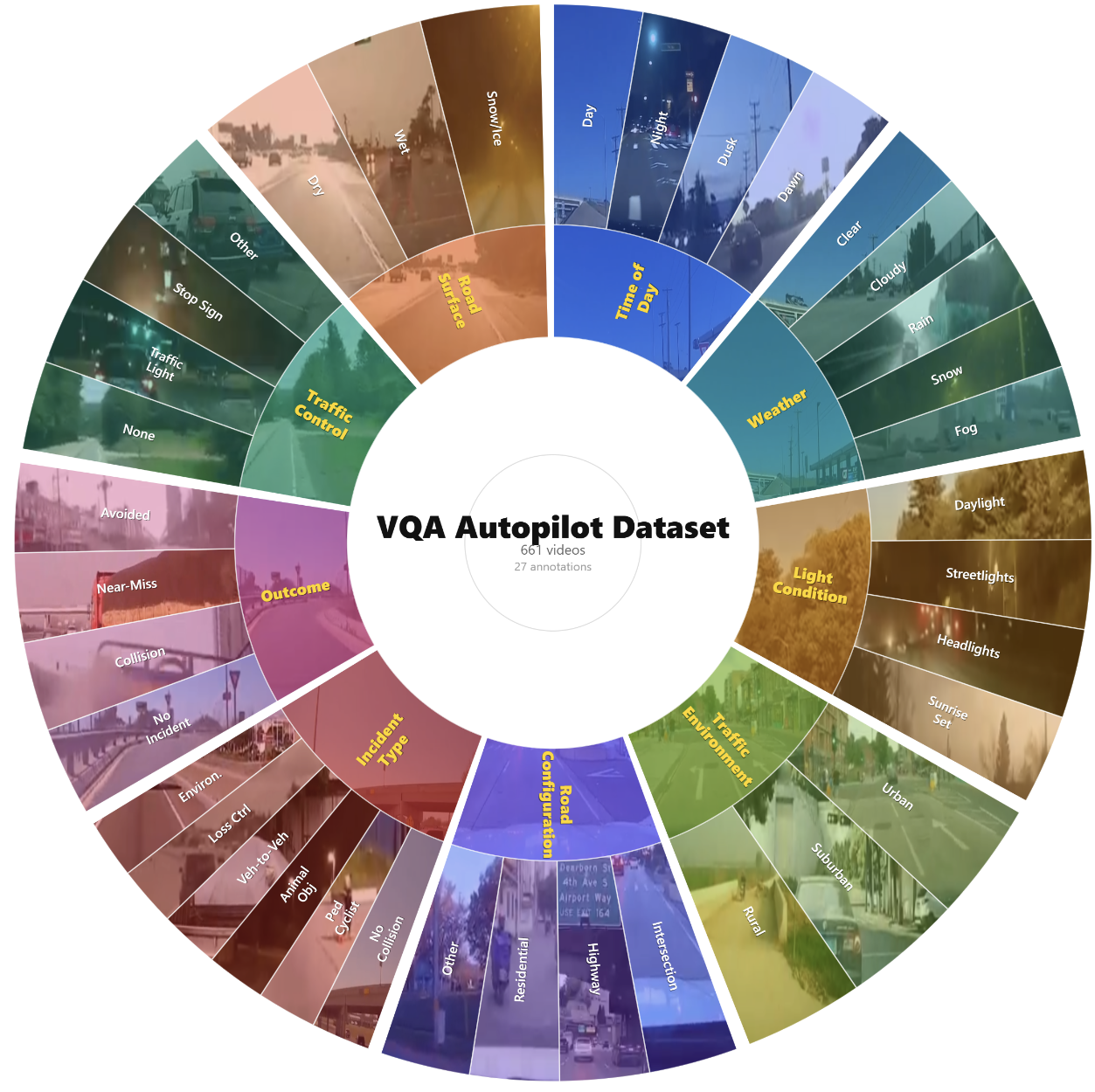
Fig 1: Overview of the VQA-Autopilot dataset annotation
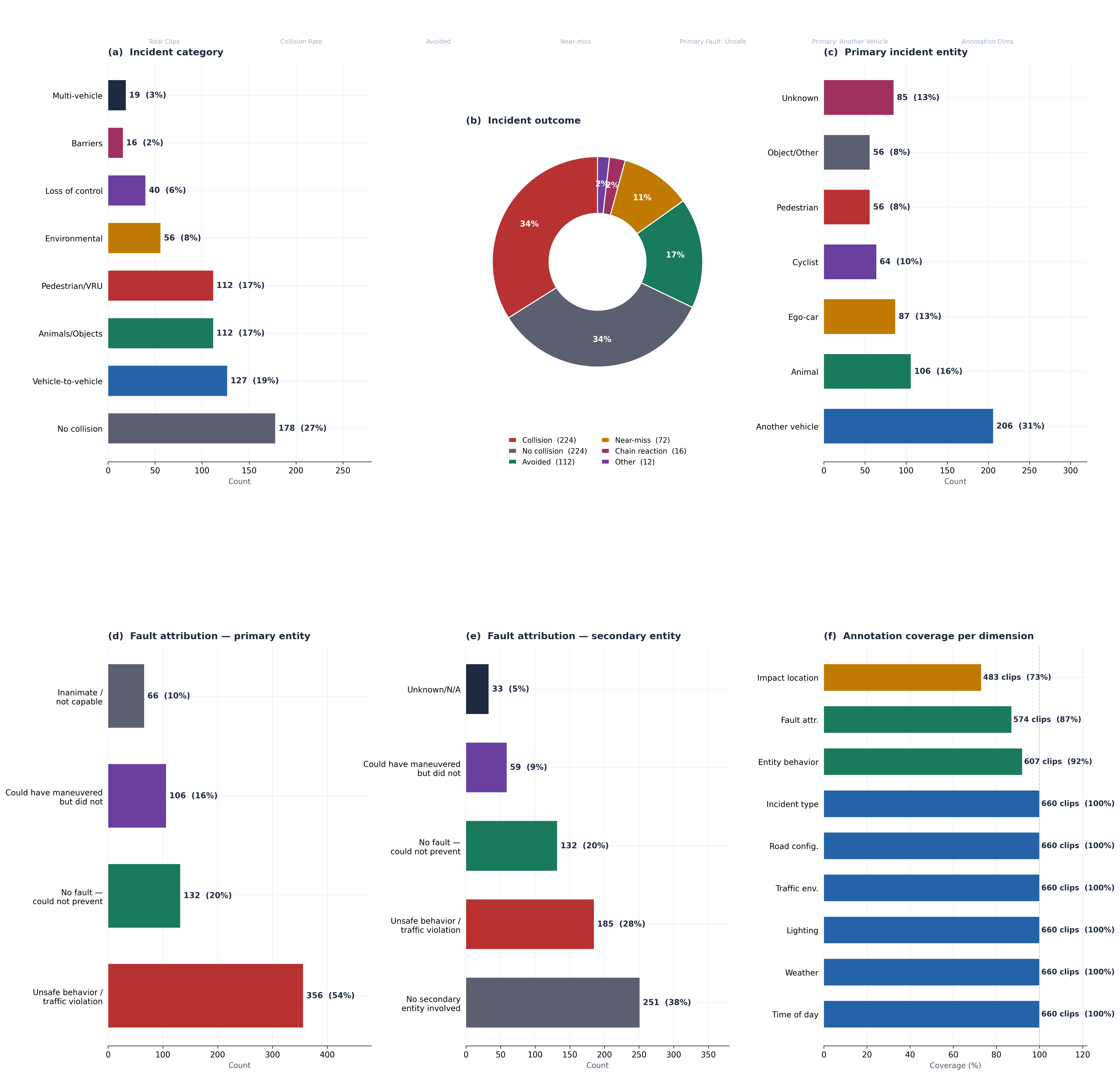
Fig 2: Environmental context statistics of the VQA-Autopilot dataset. This figure summarizes distributions across time of day, weather
Limitations
- Lack of detailed disclosure on model architectures, training hyperparameters, and code limits reproducibility outside the competition context.
- Dataset size—600 clips and 6,000 QA pairs—is relatively modest compared to large-scale autonomous driving datasets, possibly limiting generalization.
- The benchmark focuses on structured multiple-choice answers, which may simplify some aspects of natural language understanding compared to open-ended VQA.
- No explicit adversarial evaluation or robustness tests under distribution shifts or unseen incident types are reported.
- Temporal complexity and multimodal fusion challenges remain inadequately solved; models particularly struggle with causal and fault attribution reasoning.
- Unknown and non-applicable classes increase label noise potential and classification complexity.
Open questions / follow-ons
- How can vision-language models better incorporate temporal causality and agent interaction reasoning for improved incident understanding?
- What model architectures or multimodal fusion techniques most effectively handle unknown and non-applicable classes in safety-critical VQA tasks?
- Can larger-scale and more diverse incident-centric datasets further improve generalization and robustness of autonomous driving reasoning models?
- How to incorporate external knowledge sources, such as traffic rules or accident reports, into VLMs to enhance fault attribution and prevention reasoning?
Why it matters for bot defense
For bot-defense and CAPTCHA practitioners working on autonomous driving or multimodal security systems, AUTOPILOT-VQA highlights that current vision-language models, despite advances, still struggle significantly with structured reasoning in complex, safety-critical scenarios. This suggests that defenses relying on visual and language understanding should carefully assess model robustness beyond object recognition, especially for applications requiring incident causality, fault detection, or preventive reasoning. Incorporating multi-level multimodal reasoning, temporal grounding, and uncertainty recognition is crucial. The competition framework also exemplifies how open benchmarking with domain-specific structured tasks can accelerate progress while revealing limitations, a useful approach when designing CAPTCHAs or bot defenses that challenge AI systems on emergent situational reasoning rather than only perceptual tasks.
Cite
@article{arxiv2607_08745,
  title={ AUTOPILOT VQA: Benchmarking Vision-Language Models for Incident-Centric Dashcam Understanding },
  author={ Siddharth Damodharan and Radhika Gupta and Ali Alshami and Ryan Rabinowitz and Jugal Kalita },
  journal={arXiv preprint arXiv:2607.08745},
  year={ 2026 },
  url={https://arxiv.org/abs/2607.08745}
}