
Robustness to Model Uncertainties Drives More Rapid CO2 Emissions Reductions
Source: arXiv:2607.07655 · Published 2026-07-08 · By Lisa Rennels, Frank Errickson, David Smith, Bryan Parthum, Klaus Keller, David Anthoff
TL;DR
This paper addresses the challenge of designing climate mitigation policies given deep uncertainties in integrated assessment models (IAMs) that combine socioeconomic, climate, damage, and abatement modules. Traditional optimization of IAMs typically maximizes expected welfare but struggles to account for model structure uncertainty and deep ambiguity about future states. The authors instead apply a robust decision-making framework grounded in the minimax regret criterion, which focuses on minimizing the worst-case regret—defined as the difference between the outcome of a chosen mitigation policy versus the optimal policy in a realized future state of the world. They create 100 distinct IAM structures spanning structural and parametric uncertainties, optimize mitigation pathways per IAM, then evaluate policies robustly across all uncertainties. The key finding is that regret-averse decision making leads to much more rapid decarbonization and stricter near-term emission reductions than averaging IAM outputs or maximizing expected welfare. This robust policy fully decarbonizes CO2 emissions by 2050 and limits warming to a median 2.2°C by 2100, significantly lowering the risk of extreme warming scenarios compared to expected-value approaches. The asymmetric consequences of under-abating—particularly from uncertainties in climate-damage functions and socioeconomic futures—drive the aggressive mitigation recommended to minimize worst-case regret.
Key findings
- Applying the minimax regret criterion over 100 unique IAM model structures results in a robust mitigation policy achieving full decarbonization by 2050.
- The robust policy limits expected global mean temperature increase to 2.2°C above pre-industrial levels, compared to 2.6°C average for policies optimized by expected welfare.
- Approximately 80% of candidate IAM policies decarbonize after 2050, whereas the robust regret-minimizing policy is among the earliest to reach net-zero emissions.
- Policies derived from averaging IAM outputs via the principle of insufficient reason result in full decarbonization nearly 30 years later than the robust policy.
- Maximum regret from over-emitting CO2 (~500 GtC) is about 15 times higher than regret from under-emitting the same amount, showing a strong asymmetry favoring precautionary mitigation.
- Future socioeconomic trajectories (SSPs) and damage function assumptions dominate the asymmetry in regret, with persistent economic growth impacts from warming driving highest regret under weak mitigation.
- The robust policy truncates the upper tail of extreme high-temperature outcomes noticeably, reducing the likelihood of temperature above 2.6°C.
- Policies minimizing mean regret produce very similar near-term decarbonization trajectories to minimax regret policies, differing mainly after 2050.
Threat model
The threat model is deep structural uncertainty over integrated assessment model formulations and parameterizations used to inform climate policy. The adversary is unknown model misspecification and poorly understood future socioeconomic and climate damage trajectories. Policymakers cannot reliably assign probabilities to these models or scenarios, meaning traditional expected utility approaches can be misleading. The framework assumes the uncertainty governs the plausibility distribution of models and futures, but the adversary cannot manipulate data or models directly, only that model uncertainty creates decision risk.
Methodology — deep read
Threat Model & Assumptions: The adversary is model uncertainty and deep structural uncertainty across integrated assessment models (IAMs) that characterize climate, economics, abatement costs, and damages. Policymakers do not know which IAM structure best represents reality, nor the true future socioeconomic or climatic trajectory, creating deep (Knightian) uncertainty without reliable probability distributions.
Data: The authors construct 100 unique IAM model structures by varying modules sampled from published IAMs including DICE, FUND, PAGE, GIVE, and bespoke damage functions. Each IAM incorporates parametric uncertainty by Monte Carlo sampling of input parameters such as climate sensitivity and damage coefficients. Policies and outcomes are evaluated across 100 sampled future states of the world (SOWs), each reflecting a combination of structural and parametric uncertainty.
Architecture / Algorithm: For each IAM structure, an optimal policy is generated via welfare maximization—balancing abatement costs with damages under that structure—yielding 100 candidate mitigation pathways. Each candidate policy is then evaluated across all 100 SOWs by simulating economic welfare and temperature trajectories. The key novel component is ranking candidate policies by minimax regret: calculating regret as the difference in welfare between applying a policy in a SOW versus the optimal policy for that SOW, then selecting the policy minimizing the maximum regret across all SOWs.
Training Regime: Not applicable as this is an optimization and simulation study rather than machine learning. Simulations employ Monte Carlo sampling for parametric uncertainties. Details on optimization method, batch size or epochs are not specified but optimization likely uses numerical dynamic programming or similar tools for IAMs.
Evaluation Protocol: Metrics include net CO2 mitigation rate trajectories, year of full decarbonization, maximum global mean temperature anomaly by 2100, cumulative emissions, and welfare regret. Policies are compared against baseline approaches: expected utility maximization over model ensemble, policies derived from major IAMs (DICE, GIVE), and equal-weight model averaging. Regret is analyzed for asymmetry by over- vs under-emission. Slices of regret patterns by socioeconomic pathway and damage function are examined. Cross-validation or adversarial testing is not applicable.
Reproducibility: The paper references extended data tables specifying IAM modules and parameters sampled but does not explicitly note code or dataset releases. Given reliance on published IAMs and Monte Carlo sampling over defined uncertainties, the approach is transparent in principle though exact replication requires access to the IAM parameterizations and modules used.
Concrete Example Pipeline: An IAM structure is selected with particular socioeconomic, climate, abatement, and damage modules. Parametric uncertainty for climate sensitivity and damage function parameters is sampled. Optimal mitigation policy maximizing expected welfare under this IAM is computed. This policy is then evaluated across all 100 SOWs, each representing other IAM structures and parameter samples, calculating welfare outcomes and regret relative to the best policy in each SOW. Repeating for all 100 IAM structures yields 100 candidate policies whose maximum regret across all SOWs is computed. The policy minimizing this metric—the minimax regret policy—is identified as the most robust mitigation strategy and analyzed in detail for emissions trajectories and temperature outcomes.
Technical innovations
- Application of robust decision-making framework with minimax regret criterion to an ensemble of 100 structurally diverse IAMs capturing deep uncertainty in climate policy analysis.
- Systematic disaggregation of regret patterns reveals asymmetric consequences of under-abatement driven by uncertainty in socioeconomic projections and damage functions with persistent economic growth impacts.
- Construction and evaluation of mitigation policies across extensive structural and parametric variation without reliance on assigning subjective probabilities to models.
- Introduction of regret-based robustness ranking that results in more aggressive and precautionary mitigation policies than traditional expected utility maximization or model averaging.
Datasets
- Ensemble of 100 IAM model structures — constructed from combinations of published IAM modules (DICE2023, GIVE, Burke et al. damage functions, Howard and Sterner specifications) — internally derived
- 100 future states of the world (SOWs) sampled through Monte Carlo to represent parametric and structural uncertainties
Baselines vs proposed
- Expected welfare maximization over all models (equal weighting): Full decarbonization ~2077 vs proposed minimax regret policy: full decarbonization by 2050
- DICE2023 IAM approximation policy: slower and less stringent mitigation than robust minimax regret policy (exact metric not stated but visual from Fig. 2)
- GIVE IAM approximation policy: slower decarbonization compared to robust minimax regret policy
- Maximum global temperature anomaly for all policies average: 2.6°C vs robust minimax regret policy: 2.2°C
- Maximum regret from over-emitting 500 GtC ≈ 15x regret from under-emitting same amount
Figures from the paper
Figures are reproduced from the source paper for academic discussion. Original copyright: the paper authors. See arXiv:2607.07655.
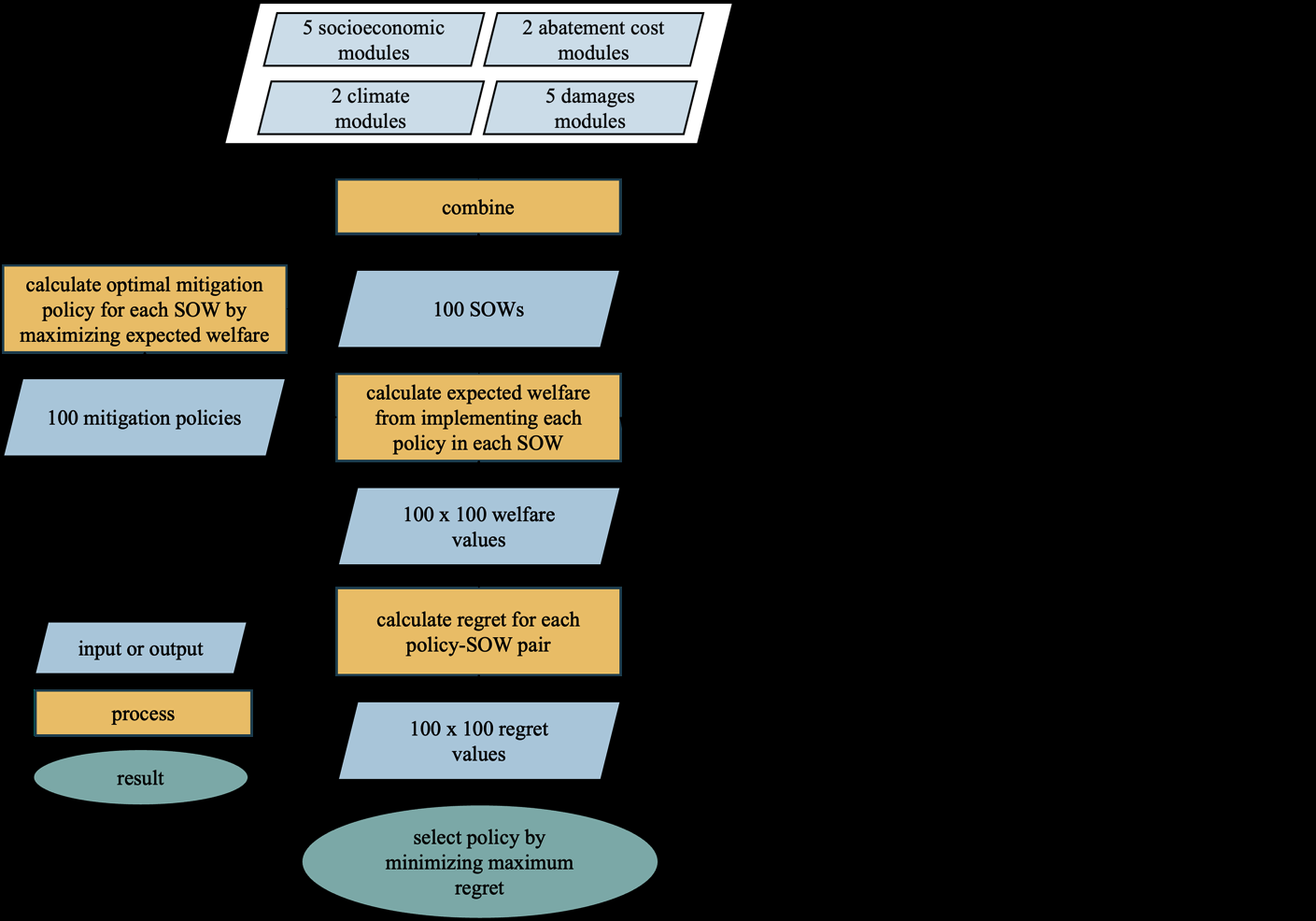
Fig 1: Methods Flowchart. The high-level inputs, outputs, and processes of the methods. Blue
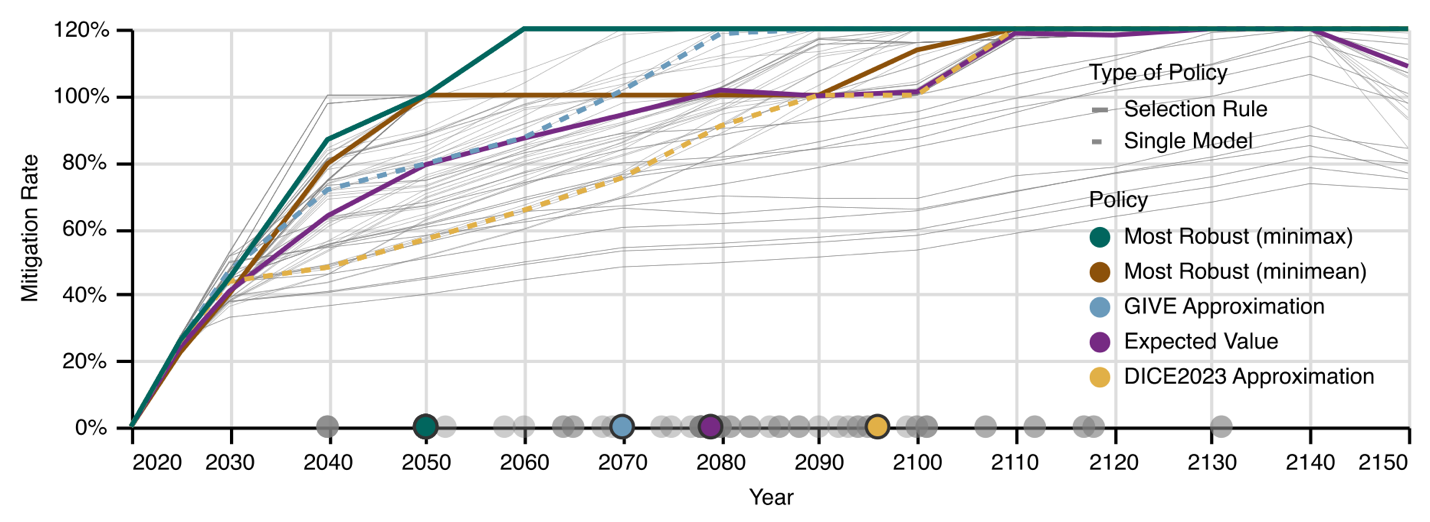
Fig 2: Optimal mitigation rate paths vary in robustness: the most robust path decarbonizes
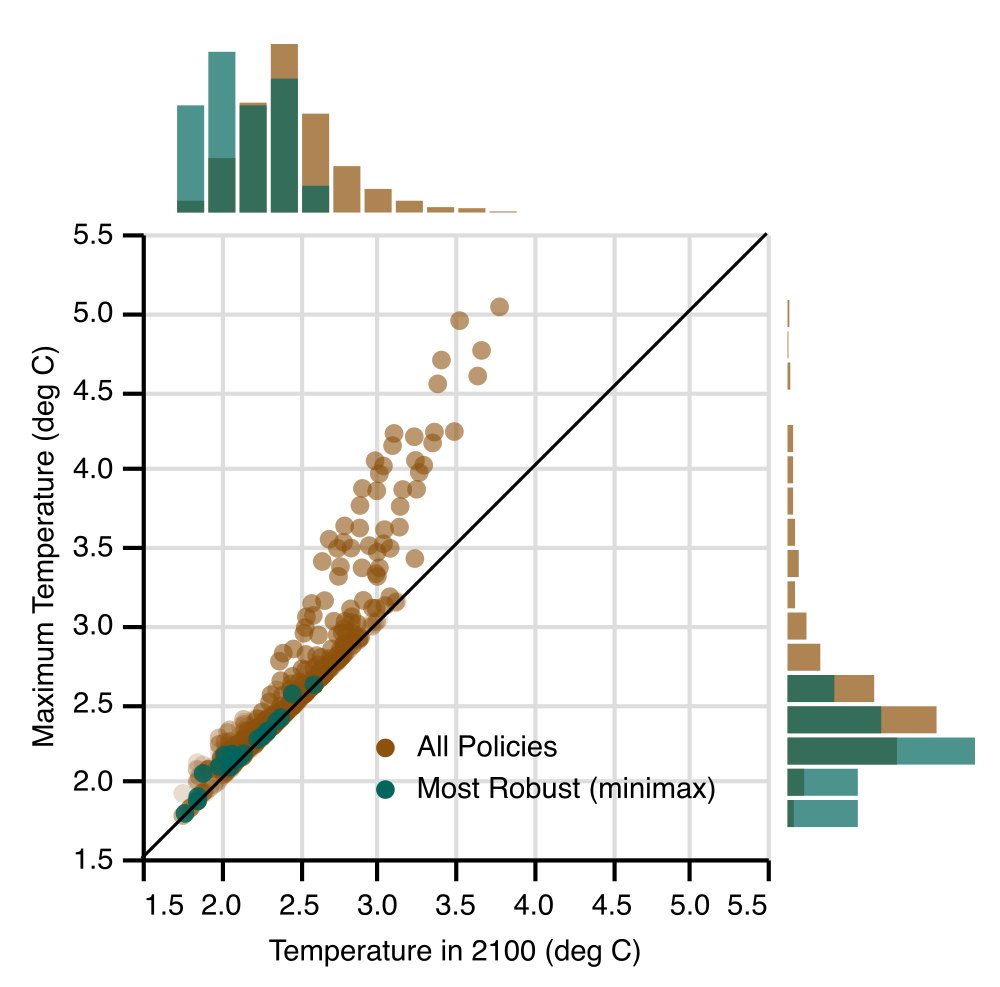
Fig 3: The robust policy limits temperature increase and avoids worst-case warming
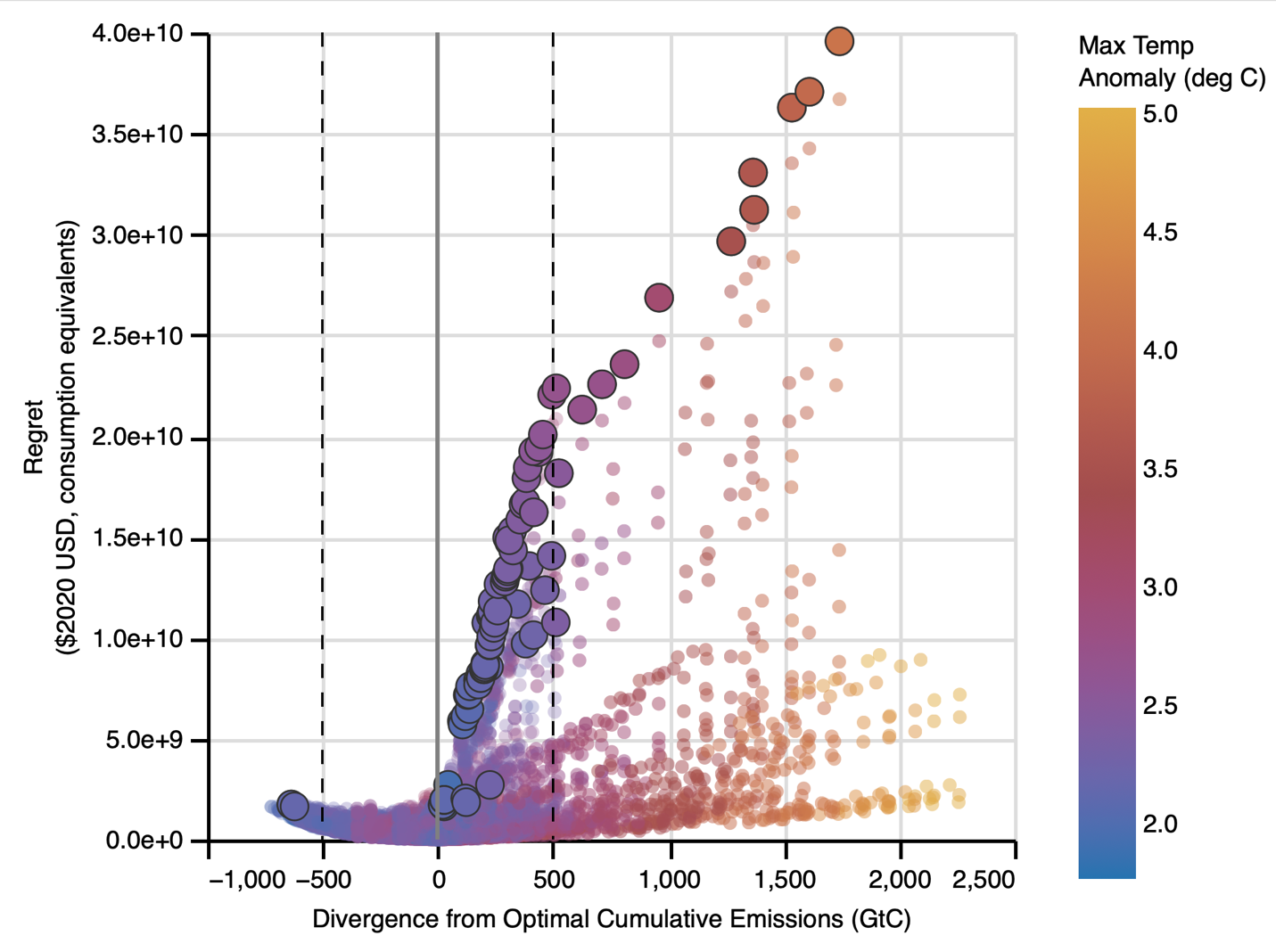
Fig 4: Asymmetric regret and the minimax criterion. Each point represents a policy-state of
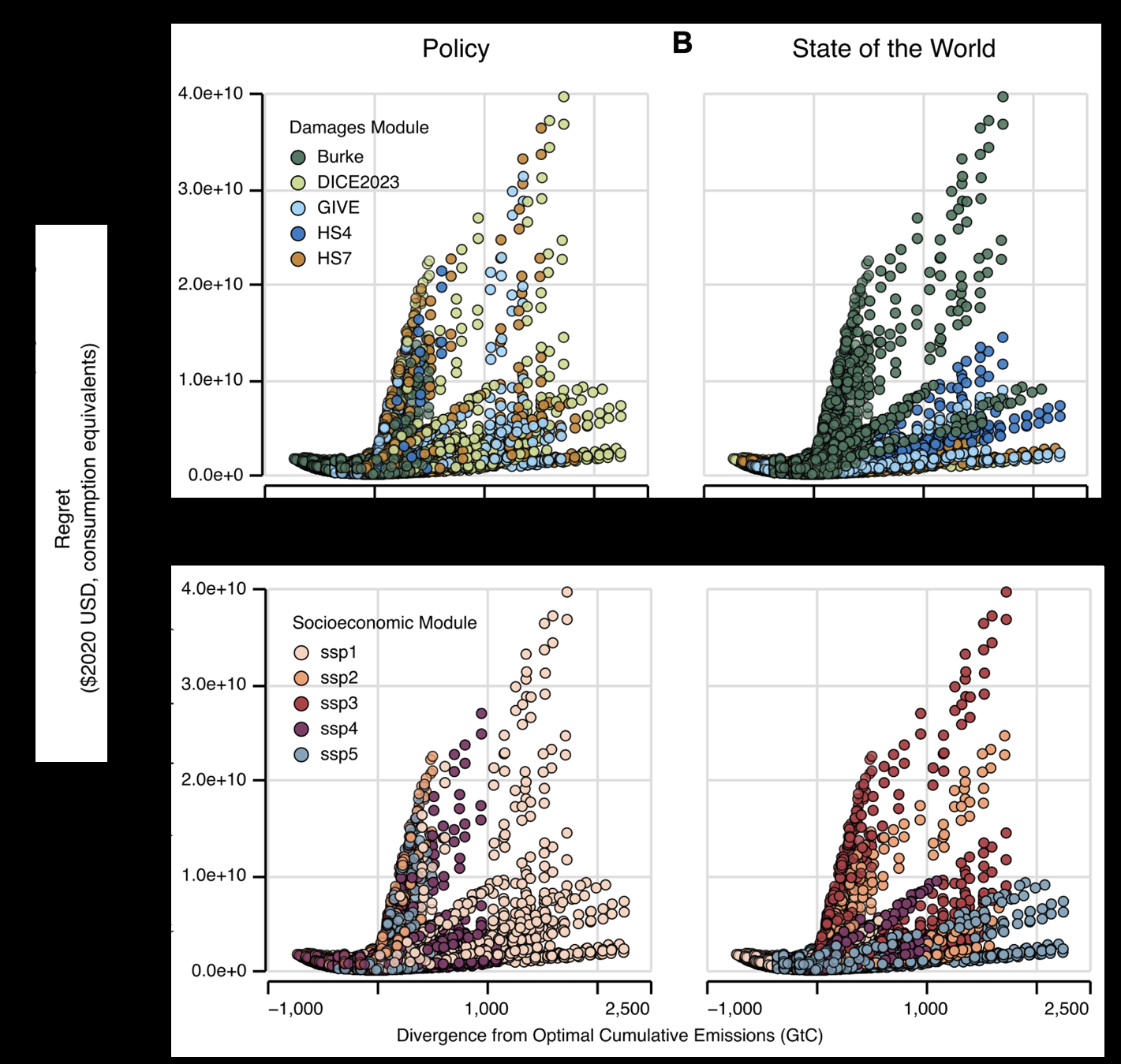
Fig 5: The socioeconomic and damages modules drive patterns of regret and asymmetry.
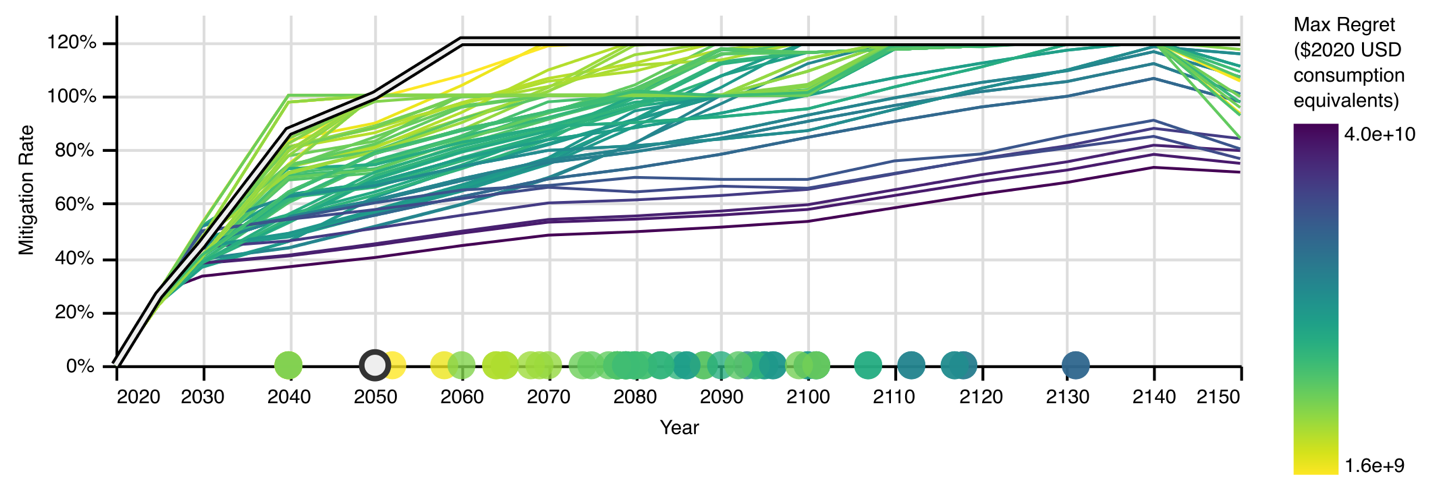
Fig 6 (page 22).
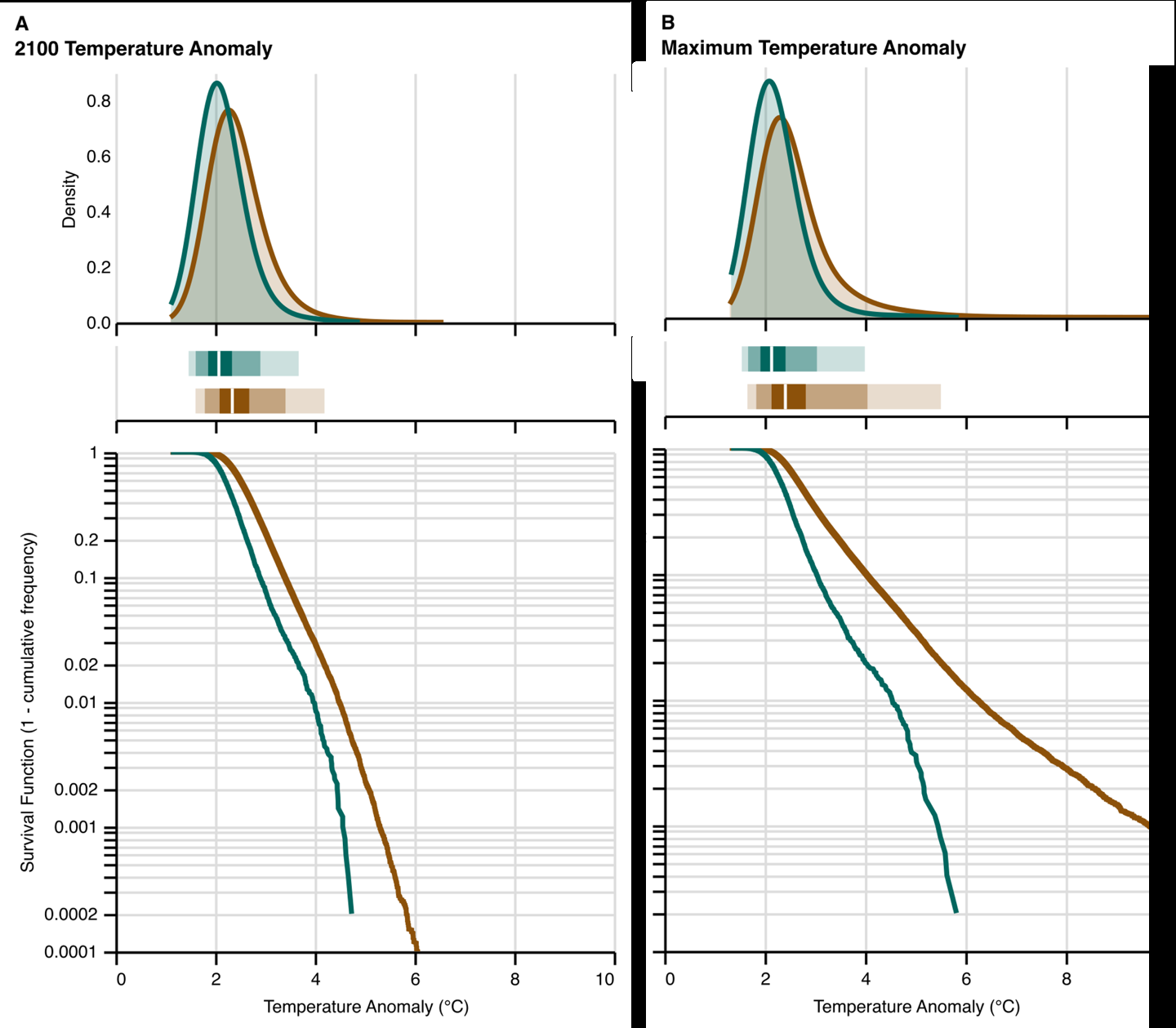
Fig 7 (page 23).
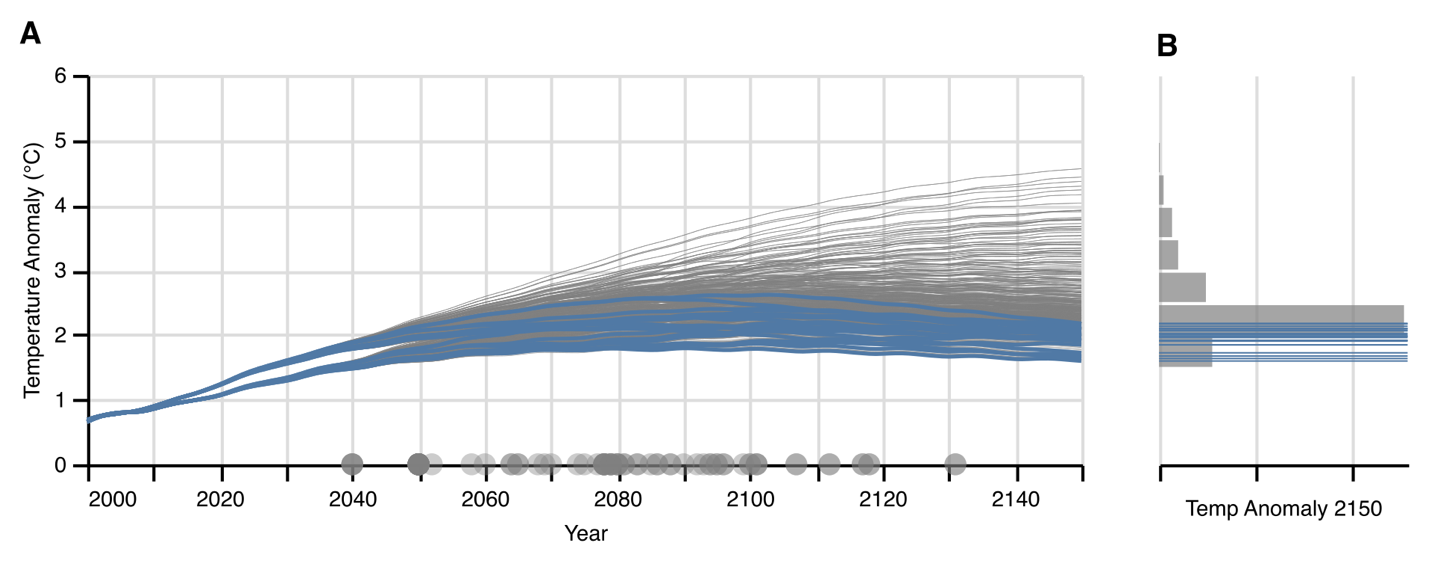
Fig 8 (page 24).
Limitations
- The analysis does not incorporate dynamic learning or sequential decision-making; policies are fixed ex ante without adjustment as uncertainty resolves.
- The abatement cost module and its uncertainty remain comparatively underexplored due to lack of widely available abatement cost functions.
- Potential climate tipping points and non-linear feedbacks are not explicitly modeled, which may affect robustness conclusions.
- Discount rates are incorporated only as a sensitivity analysis; more thorough structural uncertainty around discounting is left for future work.
- Reproducibility details including code and full IAM parameter sets are not provided, limiting direct replication.
- The simple model-based approach sacrifices some model complexity to achieve computational feasibility over many IAM structures.
Open questions / follow-ons
- How would explicit incorporation of climate tipping points and nonlinear feedbacks affect regret-based robust climate policies?
- What is the impact of fully endogenizing social, political, and technological dynamics in abatement costs on the robustness of mitigation pathways?
- How do discount rate assumptions and their deep uncertainty influence minimax regret policies and tradeoffs?
- How can learning over time and adaptive policy frameworks be integrated into regret-based robust decision-making for climate mitigation?
Why it matters for bot defense
While this paper is not directly about bot defense or CAPTCHA systems, it offers important lessons on decision making under deep model uncertainty and asymmetrical risk. Practitioners of bot defense often confront uncertainty in adversarial tactics, system behavior, and user interactions. Adopting a regret-averse robust optimization mindset, similar to the minimax regret criterion used here, could inspire more cautious and precautionary defense strategies that minimize worst-case risks of misclassification or attack success rather than simply optimizing average performance. The methodology of considering structural uncertainty across model ensembles rather than relying on a single model aligns with best practices in building resilient machine learning and security systems. Furthermore, the asymmetric consequences of under-preparation versus over-preparation highlighted in this climate context parallel security scenarios where underestimating attacker capabilities can cause disproportionately greater harm than over-investing in defenses. Overall, bot-defense researchers can look to this study for conceptual guidance on incorporating structural uncertainty and regret minimization into automated security and CAPTCHA challenge policy design.
Cite
@article{arxiv2607_07655,
  title={ Robustness to Model Uncertainties Drives More Rapid CO2 Emissions Reductions },
  author={ Lisa Rennels and Frank Errickson and David Smith and Bryan Parthum and Klaus Keller and David Anthoff },
  journal={arXiv preprint arXiv:2607.07655},
  year={ 2026 },
  url={https://arxiv.org/abs/2607.07655}
}