
Modeling Failure Dynamics in Time-Constrained Authentication Systems: Evidence of a Success Cliff in USSD Workflows
Source: arXiv:2607.07650 · Published 2026-07-08 · By Aklile Seyoum Mamo, Amanuel Kebede, Anny Christelle Irakoze, Jema Ndibwile
TL;DR
This paper addresses the practical reliability challenges of time-constrained authentication workflows in USSD-based financial services, which are critical in emerging markets with feature phone usage. While strong authentication (e.g., multi-factor methods) improves security, it also increases interaction time and complexity, risking transaction failure under strict session timeouts. The authors present a simulation-based model combining user interaction times, network round-trip delays, blocking delays from out-of-band steps like SMS OTP delivery, and error-induced retries. They formally identify a non-linear collapse in session success called the Success Cliff, beyond a critical complexity threshold where small increases cause disproportionate failure. Their controlled experiments isolate the effects of authentication complexity, network conditions, and blocking delay, demonstrating that the Success Cliff emerges primarily due to stochastic blocking delays interacting with fixed session time budgets rather than complexity or latency alone. The study quantifies trade-offs between security and usability for USSD systems and highlights operational failure risks particularly in rural or high-latency environments where multi-factor step-up authentication with SMS OTPs may be deployed.
Key findings
- Baseline low-complexity (C1) USSD workflow achieves 98.30%–99.19% session success under medium network RTT, confirming operational viability.
- Increasing authentication complexity alone degrades success gradually by 2.3–3.3 percentage points from C1 to C4, with no detected Success Cliff without blocking delay.
- High network RTT alone causes session success degradation below 98% threshold to 91.64%–92.20%, driven mainly by application timeouts; still no Success Cliff detected.
- With blocking delay (SMS OTP step), a sharp Success Cliff emerges consistently at the transition from complexity C3 to C4, causing session success to drop sharply (down to 74.9% under high RTT).
- Blocking delay introduces two simultaneous timeout failure modes: session timeout from cumulative exhaustion and user response timeout via compression of per-step time budgets.
- Session success decline with blocking delay is insensitive to error probability variations (+/- 50%) and detection thresholds, indicating structural rather than parametric cause of Success Cliff.
- Without blocking delay, a Success Cliff appears only under artificially high error rates (+50% perror), suggesting the system is near but below cliff threshold under normal conditions.
- Failure rates approaching 25% under combined high complexity, blocking delay, and degraded network conditions present significant operational risks to financial inclusion in rural/degraded network scenarios.
Threat model
The adversary is implicitly the operational environment including network conditions, user behaviors, and system design that constrain session completion. There is no hostile attacker actively manipulating the system. Instead, the threat is accidental session failure due to time constraints interacting with authentication complexity, user delays, network latency, and stochastic blocking delays. The adversary cannot extend session timers or reduce mandatory out-of-band delays.
Methodology — deep read
The authors formulate a detailed session-time model of USSD workflows as sequences of base navigation and authentication steps. Each step's duration accounts for user response time (modeled via an adapted Keystroke-Level Model decomposing cognitive, motor, and context-switching times), stochastic network round-trip time (modeled as Gamma distribution), blocking delays for out-of-band steps like SMS OTPs (modeled as uniform random variable 5-30 seconds), and retry delays when errors occur. They define authentication complexity as the relative expected response time compared to a baseline 4-digit PIN entry step.
Session termination occurs via success, session timeout (fixed 120s), user response timeout per step (30s), application timeout due to backend delays (15s), or abandonment modeled via one of three probabilistic formulations incorporating cumulative elapsed time and error count.
A novel "Success Cliff" phenomenon is formally defined to detect abrupt non-linear drops in session success rate beyond complexity thresholds, operationalized via consecutive drop and acceleration thresholds on success probabilities.
Simulation experiments run 50K trials per configuration, varying authentication complexity levels defined by realistic USSD flow scenarios, network latency regimes (low, medium, high RTT), and abandonment models. Error probabilities scale with estimated complexity per step. Sensitivity analyses assess robustness by varying error rates ±50% and scanning cliff detection parameter gamma thresholds.
Evaluation metrics include session success rate, categorized timeout types, abandonment rate, session completion time, and input error frequency. Baseline single 4-digit PIN flow performance establishes operational viability thresholds at 98% success, aligned with industry KPIs.
Experiments progressively isolate the impact of authentication complexity alone, network latency alone, and their combination under blocking delay conditions to reveal non-linear failure dynamics. Detailed failure taxonomies distinguish contribution of each timeout and abandonment mode to overall session failures.
The core example compares C3 versus C4 complexity workflows with and without SMS OTP blocking delay under medium versus high latency illustrating the emergence of the Success Cliff only when blocking delay is introduced. Reproducibility is supported by explicit parameter tables, though no code or public dataset is released as this is a simulation study anchored on literature values and prior empirical measurements for baseline timings.
Technical innovations
- Formal definition and quantification of the "Success Cliff" phenomenon identifying non-linear collapse points in time-constrained authentication session success rates.
- Simulation framework integrating stochastic user response times, network round-trip, blocking delays, and error-induced retries tailored to USSD workflows under real-world network conditions.
- Introduction of multiple probabilistic abandonment models combining time pressure and error accumulation to model pre-timeout user disengagement behavior.
- Insight that blocking delay from out-of-band steps such as SMS OTP delivery fundamentally changes failure dynamics inducing abrupt operational collapse, distinct from linear effects of complexity or latency alone.
Baselines vs proposed
- Baseline low-complexity (C1) workflow success rate: 98.30%–99.19%; Proposed model under typical conditions matches these rates.
- Without blocking delay, success rate drops gradually from 98.48%–99.17% at C1 to 95.23%–96.88% at C4; No cliff detected.
- High network latency alone drops success to 91.64%–92.20% due to application timeouts; no cliff without blocking delay.
- With blocking delay (SMS OTP), success rate at C4 drops sharply to 74.88%–75.28% under high latency indicating a distinct Success Cliff.
Figures from the paper
Figures are reproduced from the source paper for academic discussion. Original copyright: the paper authors. See arXiv:2607.07650.
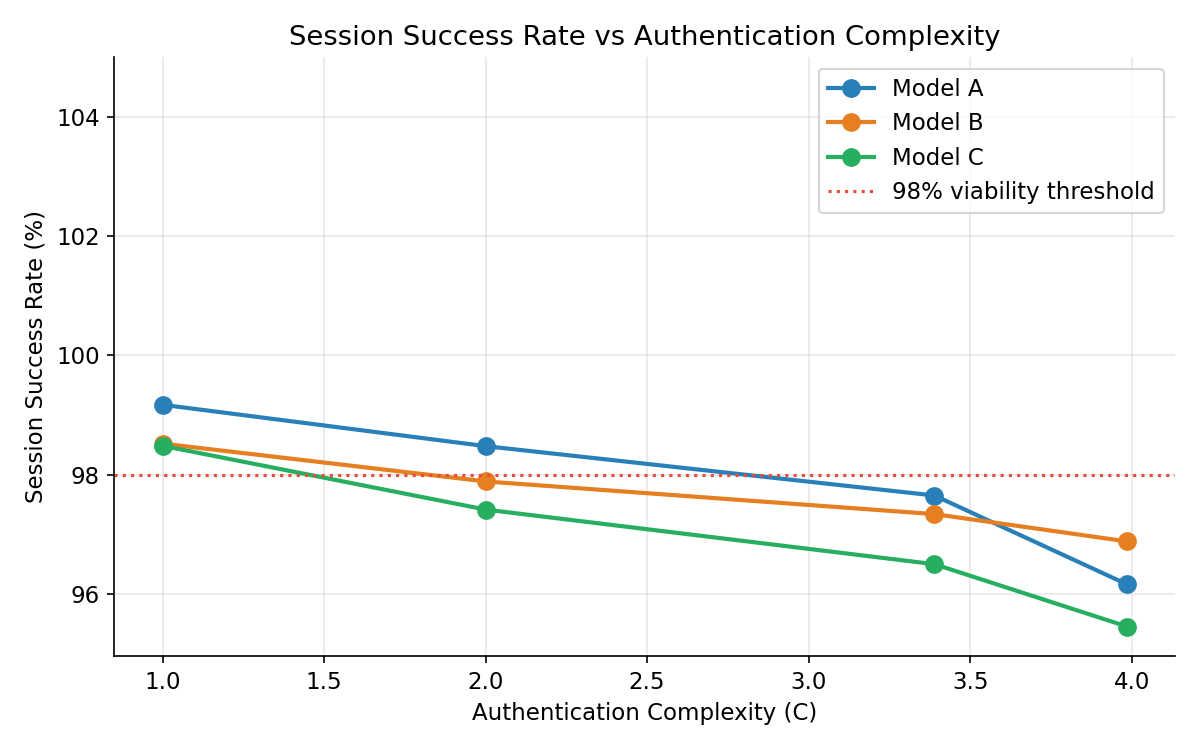
Fig 1: Authentication Complexity Vs. Success Rate without Blocking Delay
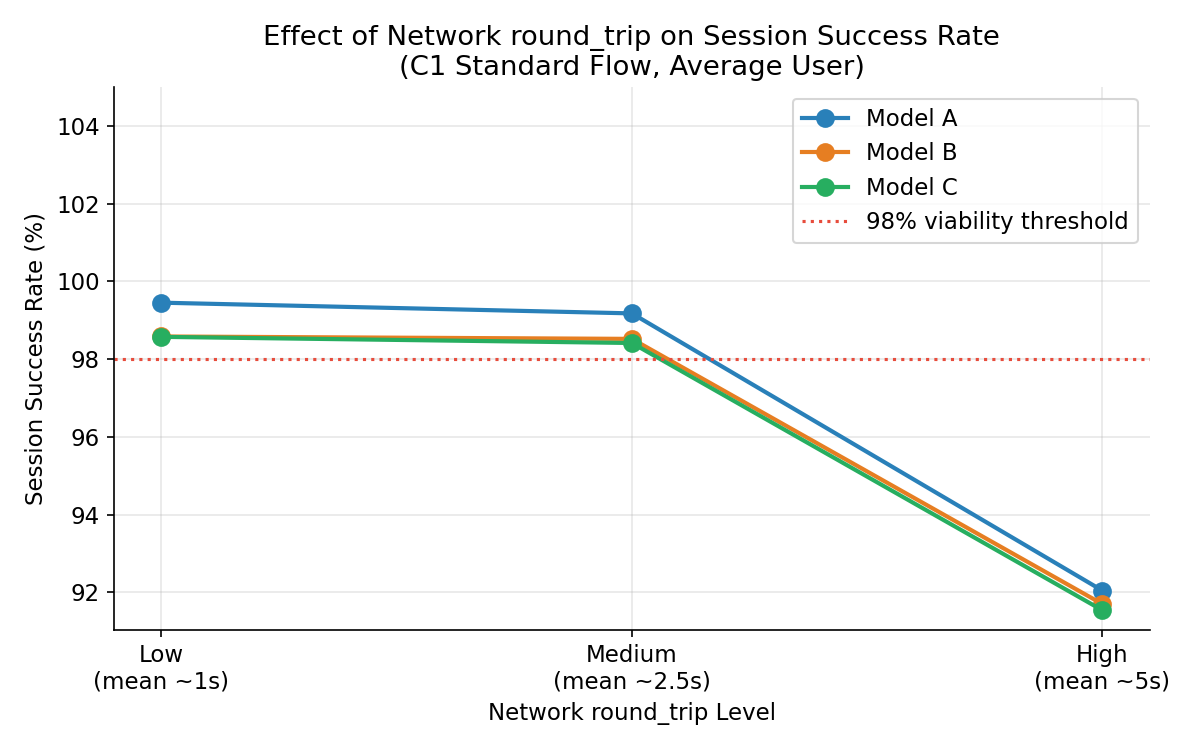
Fig 2: Network RTT vs Session Success Rate
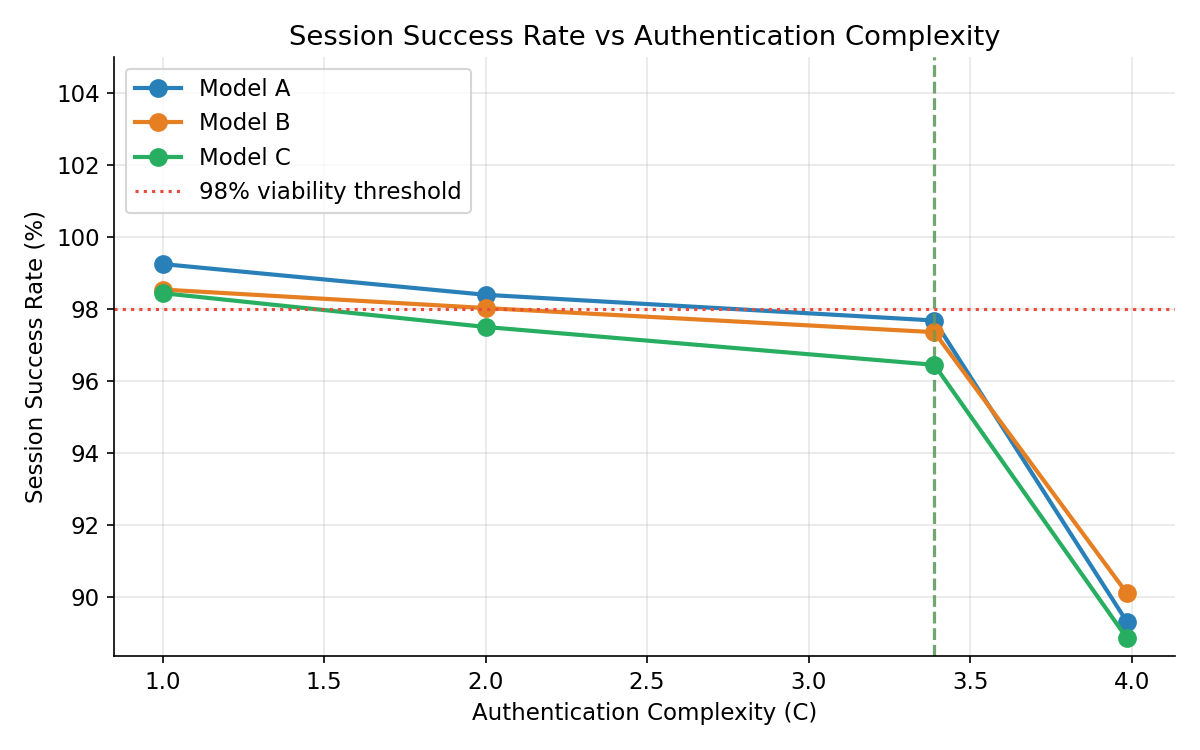
Fig 3: Authentication Complexity vs. Success Rate (With Blocking Delay)
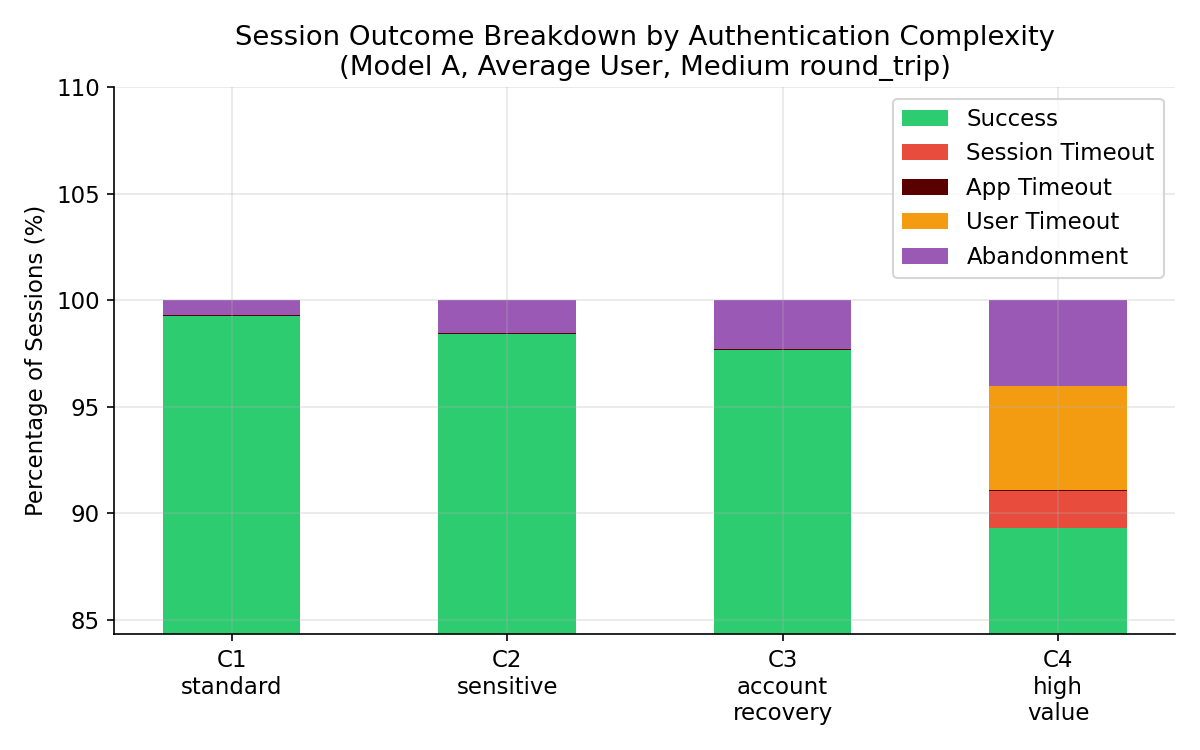
Fig 4: Failure Taxonomy with Blocking Delay
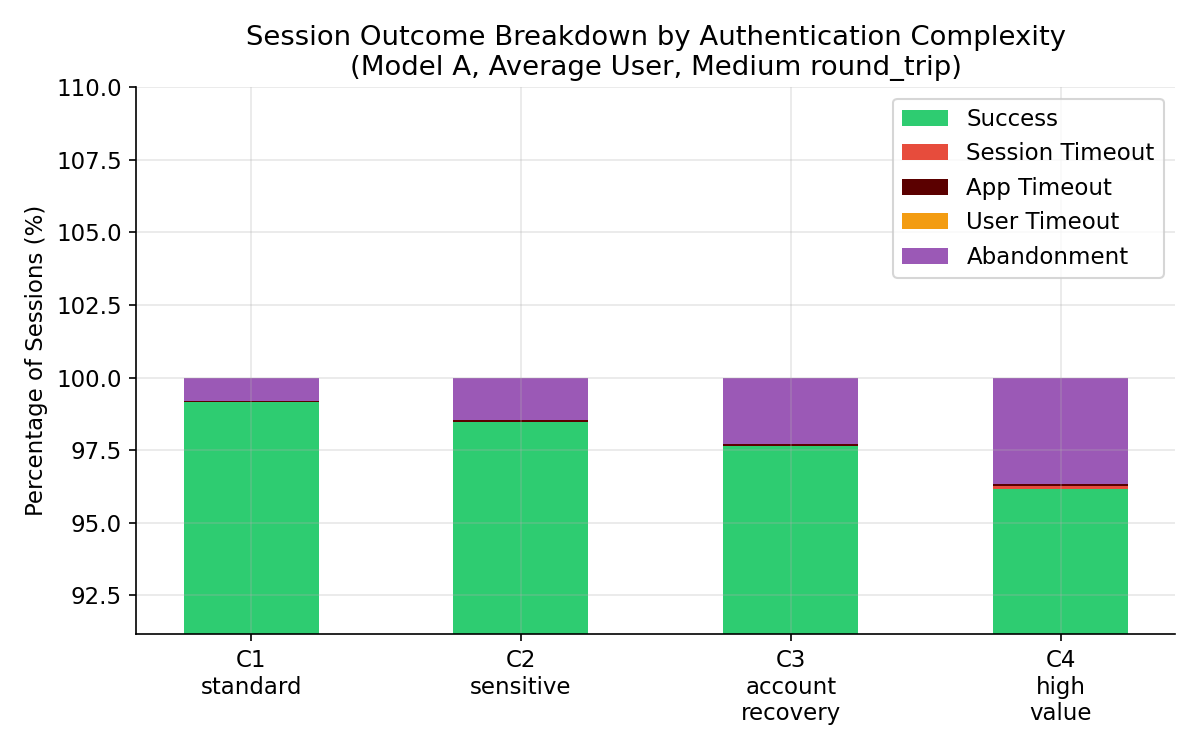
Fig 5: Failure Taxonomy without Blocking Delay
Limitations
- Use of simulation rather than empirical field measurements limits realism; user response times and error rates are KLM-based estimates scaled from prior studies.
- Model does not incorporate per-step retry limits (e.g., max 3 PIN attempts), which could increase failure rates in practice.
- Blocking delay distribution fixed uniform (5-30s) based on literature; real-world SMS delivery times may exhibit higher variability especially in rural or congested networks.
- Abandonment models are simplified probabilistic approximations and do not capture nuanced user behavioral factors.
- No publicly released code or datasets limit immediate reproducibility; parameter choices are conservative but some were chosen heuristically.
- Model assumes independence of step times enabling additive decomposition, which might omit correlated delays or burst error effects.
Open questions / follow-ons
- How do real-world empirical measurements of user response times, error rates, abandonment behavior, and SMS delivery delays in diverse deployment contexts compare to the model assumptions?
- Can the Success Cliff concept be generalized and detected in other time-constrained interactive authentication workflows beyond USSD?
- What design interventions or adaptive flow adjustments (e.g., dynamic session timers, error recovery prompts) might mitigate or shift the Success Cliff threshold?
- How do retry limits and more complex user error correction behaviors interact with failure dynamics and Success Cliff emergence?
Why it matters for bot defense
This work offers valuable insights for bot-defense and CAPTCHA practitioners designing or deploying interactive authentication flows in constrained environments. It highlights that adding out-of-band verification steps with inherent unpredictable delivery delays can trigger catastrophic usability failures beyond simple linear models. For CAPTCHAs or similar challenges integrated into multi-step workflows, this suggests carefully modeling the cumulative timing impacts and network/environmental variability before deployment. The formal Success Cliff concept provides a quantitative lens for anticipating non-linear failure risks when raising complexity or security assurance. Incorporating abandonment probability models that consider user frustration under time pressure can also inform bot-defense systems where user experience is critical. While focused on USSD mobile financial services, the findings generalize to any multi-factor authentication under session time constraints, emphasizing that security improvements may unintentionally undermine operational reliability if blocking or external delays are not accounted for. Bot-defense engineers should adopt simulation-informed design-time validation and user-centric timing budgets to avoid hidden failure cliffs induced by interaction complexity coupled with network variability.
Cite
@article{arxiv2607_07650,
  title={ Modeling Failure Dynamics in Time-Constrained Authentication Systems: Evidence of a Success Cliff in USSD Workflows },
  author={ Aklile Seyoum Mamo and Amanuel Kebede and Anny Christelle Irakoze and Jema Ndibwile },
  journal={arXiv preprint arXiv:2607.07650},
  year={ 2026 },
  url={https://arxiv.org/abs/2607.07650}
}