
Decoding magnetic texture
Source: arXiv:2607.07685 · Published 2026-07-08 · By Michael P. Path, Jeffrey McCord, Michael Vogel
TL;DR
This paper addresses the challenging inverse problem of decoding physical conditions—specifically magnetic field, temperature, and magnetic history—from high-resolution magneto-optical images of magnetic domain textures in a bismuth-substituted yttrium iron garnet (Bi:YIG) film. Magnetic domain patterns exhibit nonlinear, stochastic, and hysteretic dependencies on these external parameters, making direct interpretation difficult. The authors design a controlled magneto-optical inference experiment that obtains quantitative, pixel-resolved polarization maps of complex maze-like magnetic domain textures under varied fields and temperatures. They develop two machine learning approaches: a feature-based neural network using 20 hand-crafted, physically interpretable descriptors encoding statistical, Fourier, and morphological properties of domain patterns, and a deep convolutional neural network (CNN) that learns directly from the full spatial magneto-optical maps. Both models simultaneously infer magnetic field, temperature, and magnetic history from a single optical image, with the CNN achieving nearly twice the sensitivity due to its access to fine-scale spatial correlations. The results demonstrate that magnetic texture serves as a high-fidelity record of external conditions and magnetic memory, enabling precise multiparametric sensing from one static image. The analysis also uncovers which physical features of the domain morphology encode temperature, field, and history information. The work pushes forward data-driven decoding of complex magnetic states and offers a new paradigm for fast, multiparametric magneto-optical sensing.
Key findings
- A single high-contrast magneto-optical polarization map of Bi:YIG domains encodes enough information to simultaneously reconstruct magnetic field, temperature, and magnetic history with high precision.
- Using a 20-dimensional hand-crafted feature vector (FV) including mean magneto-optical rotation, standard deviation, Fourier domain periodicity, and domain endpoints, the model achieves field sensitivity µ0∆HFV ≈ 6.5 µT and temperature sensitivity ∆TFV ≈ 0.17 K.
- A CNN exploiting full spatial information improves sensitivity nearly twofold to µ0∆HCNN ≈ 3.8 µT and ∆TCNN ≈ 0.12 K without loss in magnetic history inference accuracy.
- Magnetic history can be inferred with near perfect accuracy by distinguishing morphological domain endpoints that differ strongly between ascending and descending hysteresis branches.
- Temperature changes reduce domain periodicity and contrast, which are quantitatively captured by features and exploited for inference.
- The CNN outperforms the FV approach especially as training data size increases beyond ~5000 images, showing better robustness and lower residual errors across parameters.
- Normalized sensitivities account for measurement cycle times (~0.25 s), yielding ∆TCNN,norm ≈ 0.06 K Hz^-1/2 and µ0∆HCNN,norm ≈ 1.9 µT Hz^-1/2.
- The study sets a >10x improvement over prior ML approaches trained on simulated or binarized domain images by using experimental quantitative polarization maps with full grayscale data.
Methodology — deep read
Threat Model & Assumptions: The adversary is not applicable as this is an experimental physics and inference problem. The assumption is that the magnetic domain morphology encodes a stochastic, nonlinear mapping from external magnetic field, temperature, and magnetic history with some hysteresis and noise. Noise sources include thermal fluctuations, stochastic nucleation, and imaging system artifacts.
Data: They collected 11,372 quantitative, pixel-resolved magneto-optical polarization maps of feature-rich maze domain patterns from a high-quality epitaxial Bi:YIG film with perpendicular magnetic anisotropy (PMA). The film thickness is ~3 µm on GGG substrate, providing low defect density and high magneto-optical Faraday rotation (βM ~7.57° at saturation, 25°C). Field range: -1 mT to +1 mT; Temperature range: 21°C to 72°C; history captured by cycling hysteresis loop ascending (+) and descending (−) branches. Pixel-level polarization rotation maps are fully quantitative due to a Stokes-polarization camera, capturing magnetization components with low artifact.
Architecture & Algorithm: Two modeling approaches are used:
- Feature Vector (FV) Model: Manually crafted 20 global descriptors per image, including mean and std deviation of magneto-optical rotation, Fourier-domain dominant domain period and variation, domain morphology metrics like number of domains and number of domain endpoints for positive and negative magnetizations. A fully connected multilayer perceptron (MLP) with 9 layers maps these features to continuous outputs of magnetic field, temperature, and magnetic history (regressed as continuous and discretized post hoc).
- CNN Model: Seven convolutional layers with increasing depth, group normalization, and max-pooling extract hierarchical spatial features. Adaptive average pooling and two fully connected layers regress to the same 3 continuous outputs. Input images are subdivided into smaller tiles (64 per map) to reduce GPU memory load. Data augmentation is done by vertical/horizontal flipping of tiles to increase dataset diversity and break three-fold symmetry.
Training regime: 90% of the dataset used for training, 10% for validation. Training used normalized inputs; magnetic history treated as a regression target but later thresholded. Training details such as optimizer, batch size, epochs, and hardware are not explicitly stated in the text. Flipping augmentation increases training sample count.
Evaluation protocol: Residuals (difference between predicted and true) reported for magnetic field and temperature across the entire parameter ranges. Systematic bias (mean residual) and root-mean-square error characterize accuracy. History state accuracy checked from discretized regression output. Comparative analysis between FV and CNN over identical test splits. Sensitivity to size of training set measured by subsampling training data (from 57 to ~5700 maps) and plotting residuals for field, temperature, and history.
Reproducibility: The dataset appears experimental and proprietary; no code or trained model weights are mentioned as released. Exact network hyperparameters and training scripts are not described in detail. The sensor (Bi:YIG MOIF) is commercially available, allowing experimental replication. Preprocessing is described (normalization, tiling, flipping) but code is not published.
End-to-end example: An image of magnetic texture at a particular temperature and field on the descending hysteresis branch is converted to a polarization map. From this, the 20 selected features are computed for the FV model, and the full image tiled and normalized fed to the CNN. Both models output predicted values for magnetic field, temperature, and history state, with residual errors on the order of a few microteslas and sub-degree temperature, illustrating decoding of the nonlinear fingerprint encoded in domain morphology.
Technical innovations
- Integration of deep CNN-based regression with quantitative magneto-optical polarization maps enables simultaneous multiparametric inference of applied magnetic field, temperature, and magnetic history from a single static magnetic domain image.
- Use of a high-quality epitaxial bismuth-substituted YIG film with perpendicular magnetic anisotropy provides high magneto-optical contrast and low defect density, maximizing encoded information in domain textures.
- Extraction and analysis of physically interpretable, hand-crafted features from image data to link inference results to magnetic physics, differentiating stochastic nucleation and hysteresis effects on domain morphology.
- Application of data augmentation and tiling strategies to adapt large high-resolution magneto-optical maps for deep CNN regression with improved sensitivity and robustness over feature-based models.
- Demonstration that magnetic domain morphology statistically encodes magnetic history (hysteresis branch) as well as field and temperature, enabling decoding of magnetic memory from spatial domain features.
Datasets
- Magneto-optical polarization maps of Bi-substituted YIG — 11,372 images — proprietary experimental dataset acquired by authors
Baselines vs proposed
- Feature vector regression (FV): field residual = 6.5 µT (0.33% full scale), temperature residual = 0.17 K (0.33% FS) vs CNN: field residual = 3.8 µT (0.19% FS), temperature residual = 0.12 K (0.24% FS)
- FV achieves plateau performance at ~4,700 training maps; CNN continues improving up to ~5,700 maps with lower residuals
- With only 57 training maps, FV achieves ~90 µT and 1 K residuals, CNN performs worse due to data demands but surpasses FV at higher data volumes
- Magnetic history inferred with near 100% accuracy by both methods—residuals well below error threshold
Figures from the paper
Figures are reproduced from the source paper for academic discussion. Original copyright: the paper authors. See arXiv:2607.07685.
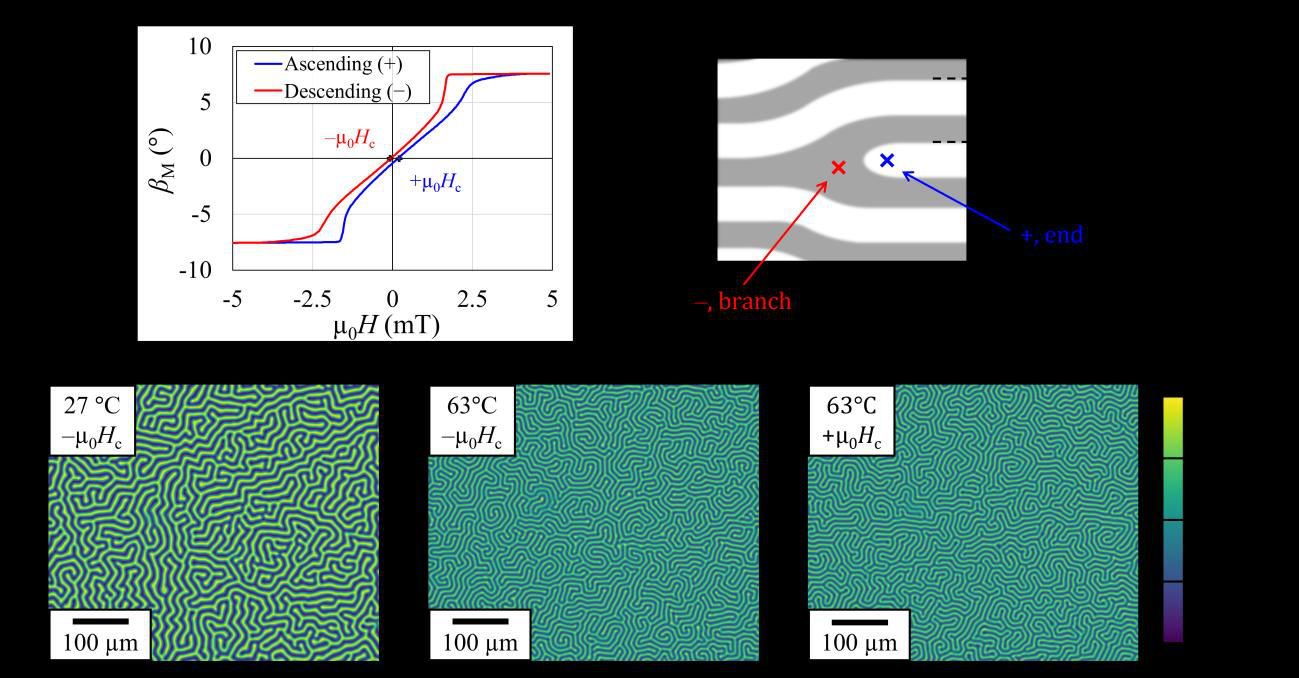
Fig 1: Magnetic hysteresis and domain pattern. (a) Magneto-optical rotation βM to applied out-
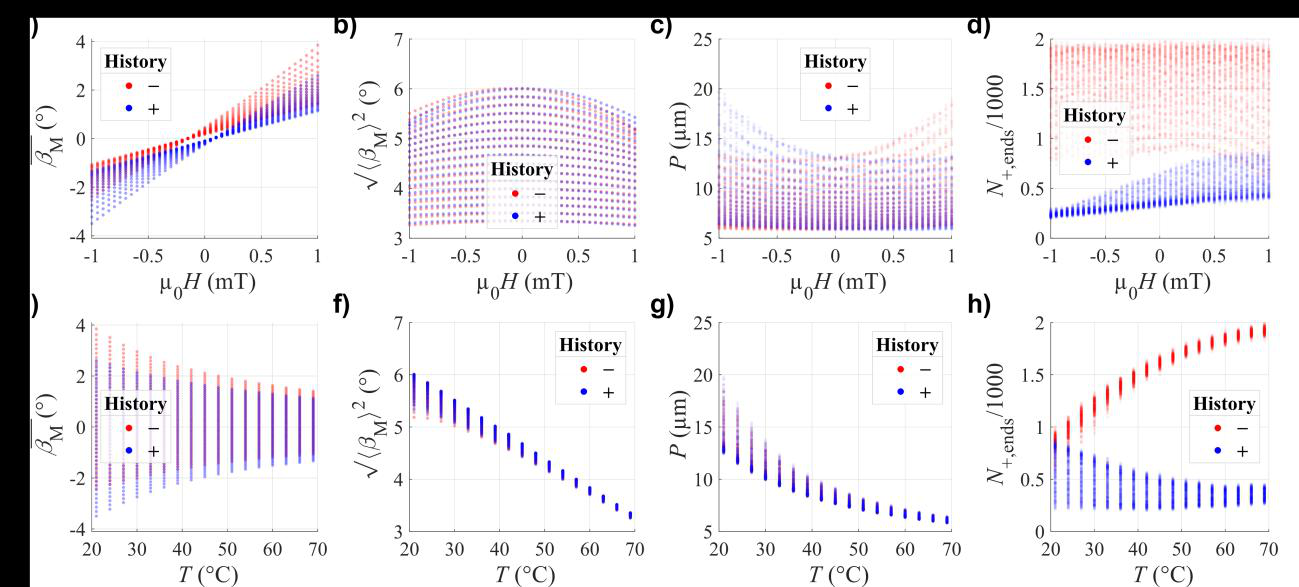
Fig 2: Selected feature vector. Exemplary extracted features from quantitative polarization maps to
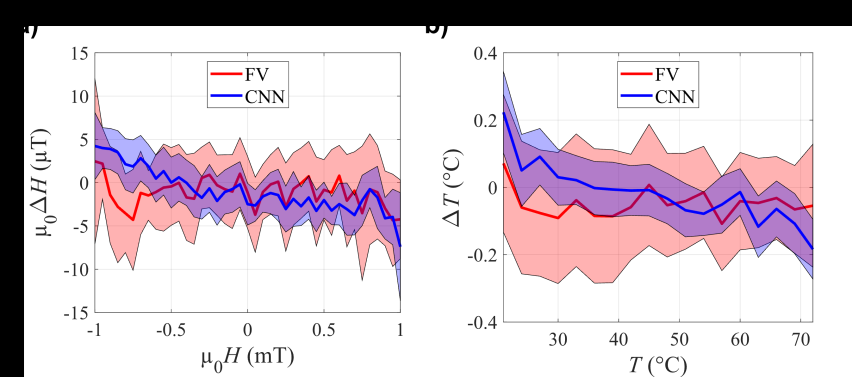
Fig 3: Inference residuals to physical parameters. (a) Residual magnetic field prediction µ0ΔH as
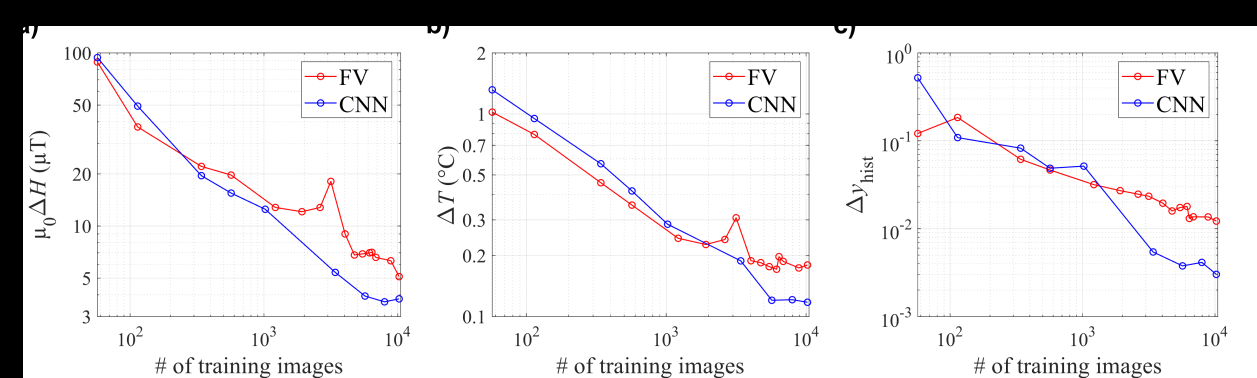
Fig 4: Inference residuals to training data. (a) Average residual magnetic field prediction Δµ0H to number
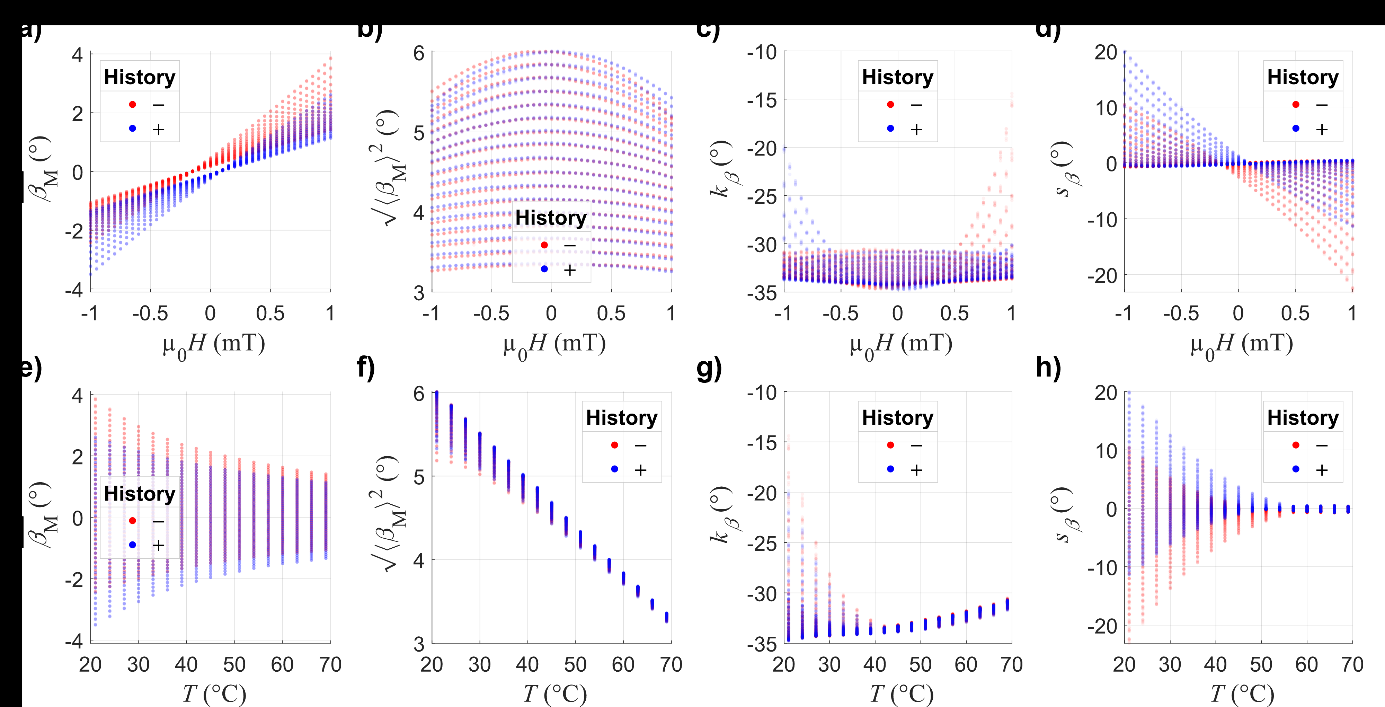
Fig 5 (page 23).
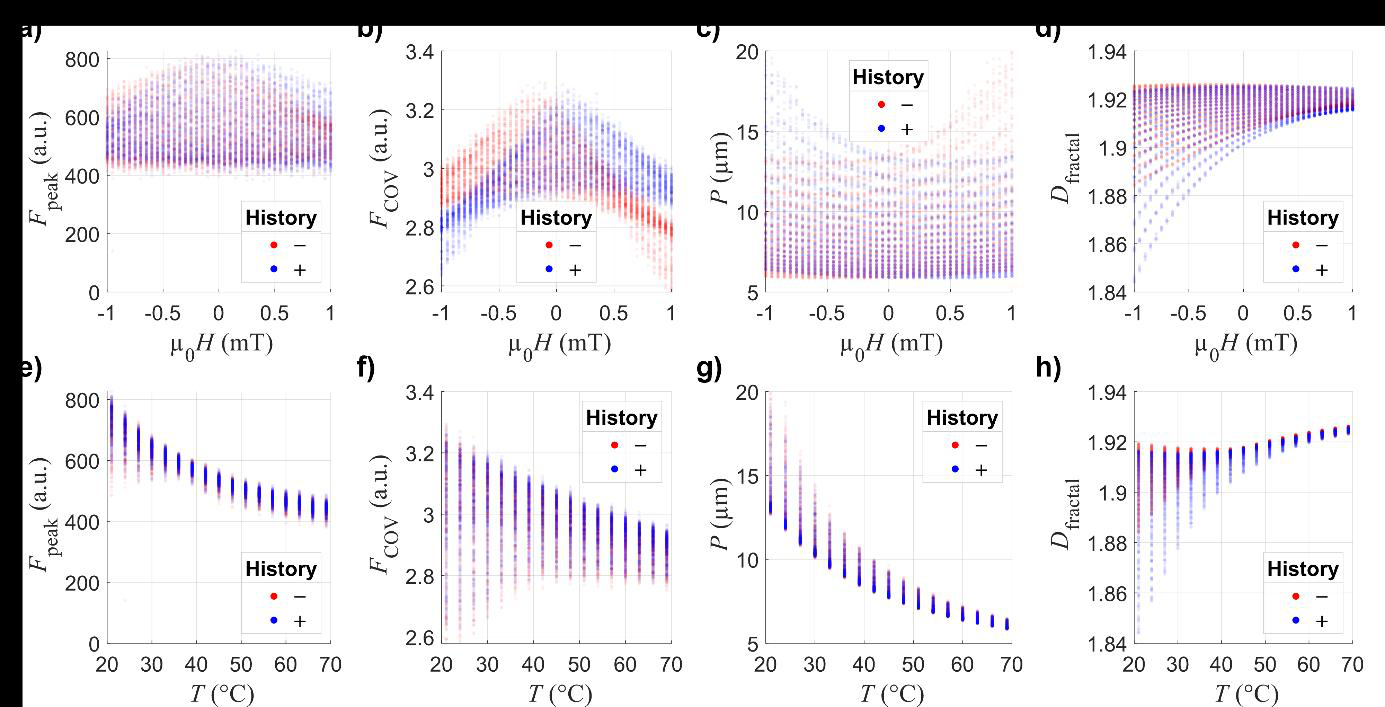
Fig 6 (page 24).
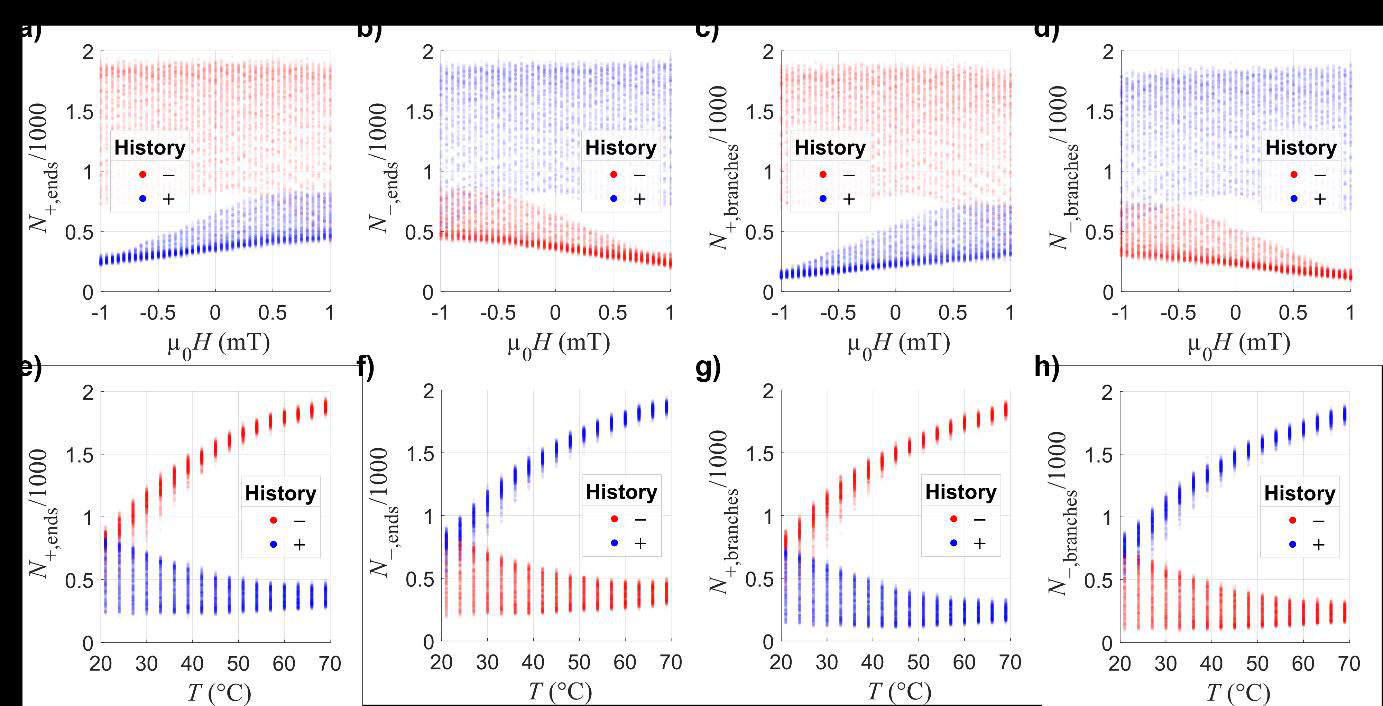
Fig 7 (page 25).
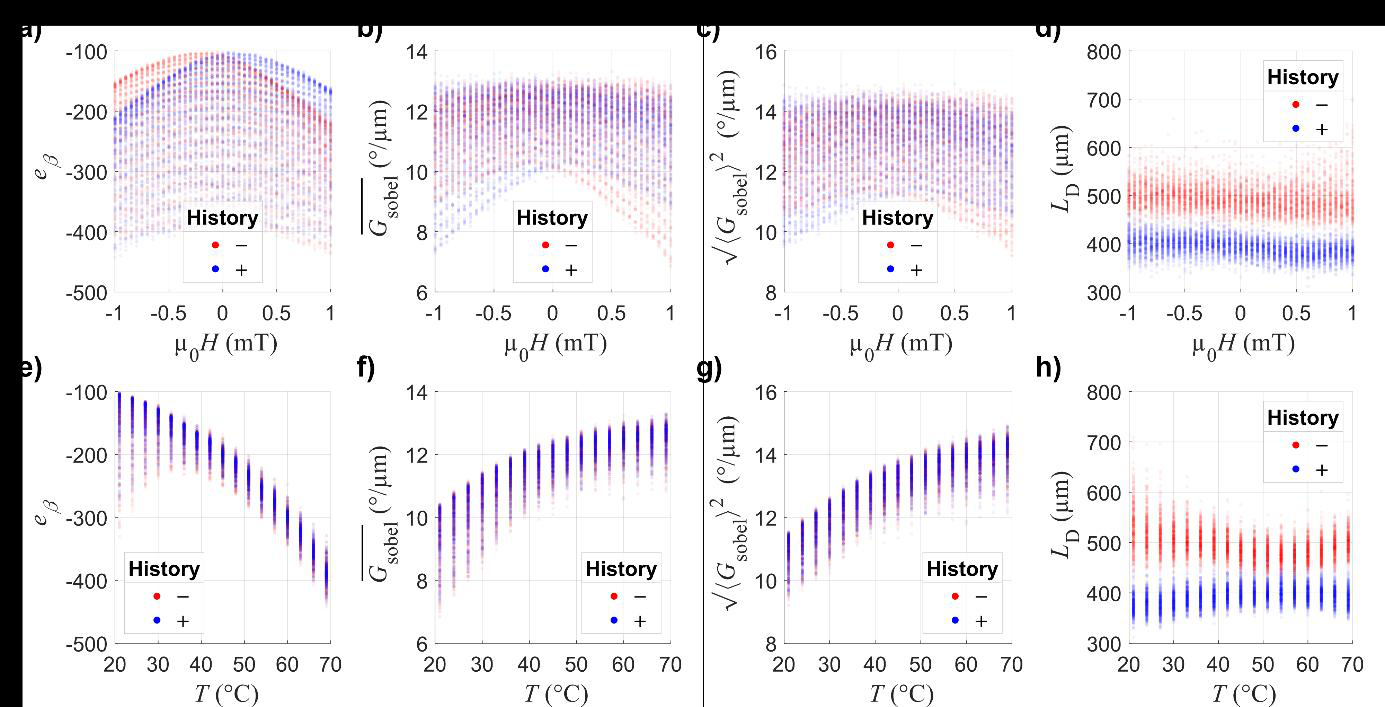
Fig 8 (page 26).
Limitations
- Training and inference evaluated only on a single high-quality epitaxial Bi:YIG film; generalization to other materials or defect structures is untested.
- The specific CNN architecture, hyperparameters, training details, and code are not fully disclosed, limiting reproducibility.
- Magnetic history inference limited to binary ascending/descending hysteresis branches; finer magnetic powder or dynamic magnetic states not explored.
- Data augmentation via flipping might not fully capture natural variabilities or dynamic magnetization processes.
- Residual systematic biases remain uncorrected, attributed to mild underfitting; uncertainty under shifted distributions (e.g., other samples or noise) unexplored.
- The inference focuses on static images, not dynamic temporal sequences, constraining applicability to time-resolved magnetization phenomena.
Open questions / follow-ons
- Can the inference models generalize to different magnetic materials, film thicknesses, or defect densities with similar or retraining approaches?
- How can the approach be extended to decode more complex or continuous magnetic histories beyond binary hysteresis branches?
- Is it possible to disentangle and quantify separate magnetic parameters (e.g., anisotropy constants, exchange strength) from the multiparametric fingerprint?
- Can temporal sequences of magnetic textures be used to improve sensitivity or capture dynamic effects and domain wall kinetics?
Why it matters for bot defense
This work exemplifies how complex nonlinear spatial patterns—in this case magnetic domain textures—can encode multifactorial external parameters, including hysteresis-dependent memory effects, which can be decoded by combining physically interpretable feature engineering with end-to-end convolutional neural networks. For bot-defense engineers and CAPTCHA practitioners, these results illustrate the power of calibrated, high-dimensional image-based inference to extract hidden multivariate signals from noisy nonlinear texture patterns. It demonstrates that physically motivated hand-crafted features can provide interpretable baselines for understanding what information is encoded and where, while deep CNNs can leverage fuller spatial correlations to improve sensitivity. The approach to partition datasets, augment spatial inputs, and fuse physics with deep learning may inform similar designs for robust bot detection and challenge-response estimation tasks where texture and pattern morphology contain subtle but reliable signals of intent or provenance. Moreover, the inclusion of history-dependent states (hysteresis branches) highlights the importance of temporal or state-dependent context when interpreting complex visual fingerprints, relevant when bot/phishing detection requires memory or behavior-aware pattern recognition. Overall, this study provides a rigorous methodology and quantitative benchmarks for decoding complex pattern-to-parameter mappings applicable in bot-defense image analysis pipelines.
Cite
@article{arxiv2607_07685,
  title={ Decoding magnetic texture },
  author={ Michael P. Path and Jeffrey McCord and Michael Vogel },
  journal={arXiv preprint arXiv:2607.07685},
  year={ 2026 },
  url={https://arxiv.org/abs/2607.07685}
}