
Rethinking Indic AI from a Lens of Cultural Heritage Preservation
Source: arXiv:2607.06544 · Published 2026-07-07 · By Aparna Madva, Sharath Srivatsa, Srinath Srinivasa, Tulika Saha
TL;DR
This paper addresses the unique challenges and opportunities presented by AI, specifically Natural Language Processing (NLP), for the Indic linguistic landscape—a complex multilingual region covering India and surrounding countries. It highlights how AI, while facilitating access and inclusion, risks cultural homogenization and exclusion of underrepresented Indic languages and worldviews. The authors provide a detailed longitudinal survey of the evolution of Indic NLP from early rule-based systems to modern neural foundation models, emphasizing the linguistic characteristics (rich morphology, complex scripts, free word order, dialectal variation) that complicate model development. They argue existing large language models (LLMs) tend to inadequately represent Indic languages due to limited data, dialectal diversity, and cultural nuances. To address these challenges, the authors propose a novel paradigm termed "Culture Sensing"—an AI approach inspired by hermeneutic reasoning to create culturally pluralistic models capable of better representing low-resource Indic languages and preserving cultural heritage. The paper synthesizes historical perspectives, current advances, and emerging research directions to guide future robust, inclusive Indic NLP development.
Key findings
- Indic languages feature complex phonetic alphabets (aksharas), free word order, agglutinative morphology, compounding, and extensive diglossia, differing significantly from dominant Indo-European languages.
- Early Indic NLP work relied heavily on rule-based approaches (e.g., Paninian grammar-based parsing, dependency parsing), which offered linguistic rigor but lacked scalability and generalization.
- Corpus-based and statistical methods improved morphological analysis and parsing but struggled with rich morphology and dialect variation present in Indic languages.
- Modern Indic foundation models exhibit performance gaps across low-resource languages and dialects, partly due to training data bias mostly from urban, formal varieties and English translations.
- Existing LLMs disproportionately represent dominant subpopulations, amplifying algorithmic biases and failing to reflect hermeneutic plurality essential for Indic cultural preservation.
- The proposed Culture Sensing framework integrates multimodal, hermeneutic-aware AI that models worldviews and cultural contexts beyond linguistic text, aiming for equitable and meaningful outputs.
- Indic NLP research has contributed lexical resources (Sanskrit and Hindi WordNets), corpora, parsers, and machine translation systems, but cultural inclusivity remains unaddressed.
- Empirical results suggest standard deep learning models underperform on dialects and colloquial varieties, highlighting the need for dialect-aware and culturally sensitive AI designs.
Threat model
The implicit adversary is not a traditional attacker but a sociotechnical risk arising from AI model design and training biases that inadvertently lead to cultural homogenization and exclusion of underrepresented languages and perspectives. The adversary is the algorithmic bias stemming from insufficient or skewed data representation that causes certain Indic languages and dialects to be marginalized or incorrectly modeled, threatening linguistic and cultural heritage preservation. The adversary cannot directly manipulate models but exploits imbalanced data distributions and feedback loops inherent in current AI ecosystems.
Methodology — deep read
The paper primarily conducts a longitudinal survey and conceptual analysis rather than proposing or training a new model. The methodology includes: 1) Defining the threat/opportunity space: The authors define AI as a double-edged sword that can enable inclusion but also threaten linguistic and cultural diversity due to data biases and model homogenization. They highlight the adversarial risk of cultural erasure through algorithmic bias and low resource representation. 2) Data and linguistic analysis: The authors analyze the structural features of Indic languages, such as the akshara phonetic system, Paninian grammatical framework (including kaaraka relations), agglutination, sandhi modifications, diglossia, and dialect diversity. 3) Historical review: They survey Indic NLP's evolution through rule-based methods (dependency parsing and machine translation systems based on handcrafted rules), corpus-based statistical approaches, and recent transformer-based foundation models. This survey discusses datasets created, annotation schemes adopted (e.g., Paninian dependency annotation), and resource generation efforts like WordNets. 4) Challenges assessment: The authors identify performance gaps due to linguistic complexity, script variability, morphological richness, and dialect variation, as well as sociolinguistic factors like diglossia and data urban bias. 5) Proposing Culture Sensing: A conceptual framework leveraging hermeneutic reasoning and multimodal knowledge representation to embed cultural perspectives in AI models, thereby overcoming homogenization caused by conventional training paradigms. 6) Use case illustration: The paper uses examples of AI applied to lesser-known knowledge systems, analyzing outputs with cultural context to demonstrate how Culture Sensing can broaden AI inclusivity. The paper does not report new experimental training regimes, quantitative baselines, or novel architectures but grounds its arguments in extensive literature review and linguistic theory. One concrete example explained is how dependency parsing using Paninian grammar focuses on vibhakti markers to capture semantic roles in free word order languages, helping improve parsing accuracy essential for downstream NLP tasks.
Technical innovations
- Introduction of "Culture Sensing" as a new AI research direction based on hermeneutic reasoning to ensure cultural plurality and preserve indigenous knowledge systems.
- Comprehensive linguistic analysis of Indic languages focusing on their phonetic akshara system, Paninian grammar, agglutination, and diglossia to inform NLP system design.
- Integration and review of Paninian dependency framework for parsing and annotation tailored to free word order and morphologically rich Indic languages.
- Critical discussion of how existing large language models suffer from cultural and linguistic homogenization, proposing recommendations to mitigate these biases.
Datasets
- Indic language corpora (various sizes, mostly public and developed over decades for multiple Indic languages)
- Sanskrit WordNet - medium scale - expanded using bilingual mappings from Princeton WordNet and Hindi WordNet (publicly referenced)
- Hindi Treebank annotated with Paninian dependency framework (subset used in several cited works, public)
Figures from the paper
Figures are reproduced from the source paper for academic discussion. Original copyright: the paper authors. See arXiv:2607.06544.
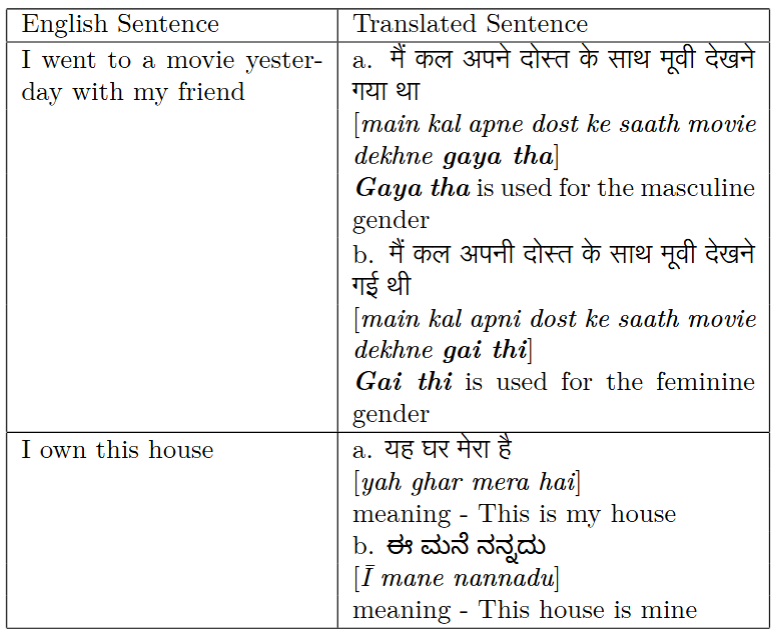
Fig 1: Translated Sentence Pairs Demonstrate the Innate Worldview of the Indic Subcontinent
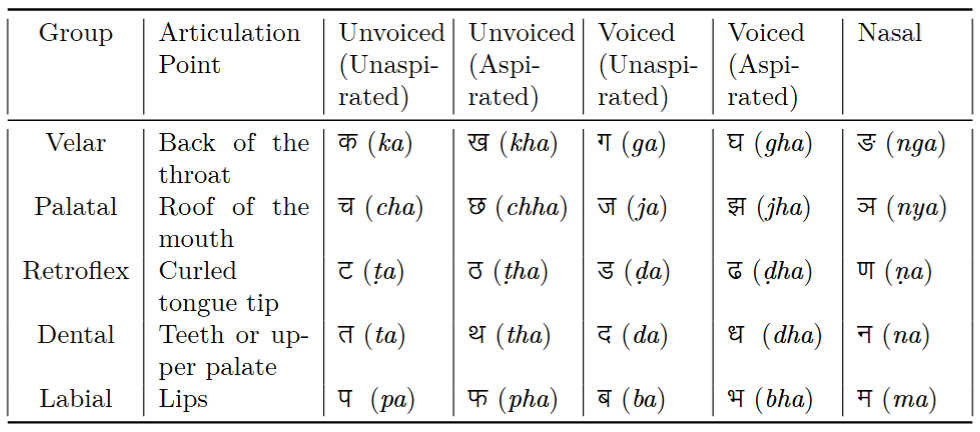
Fig 2: Characteristics of Indic Languages
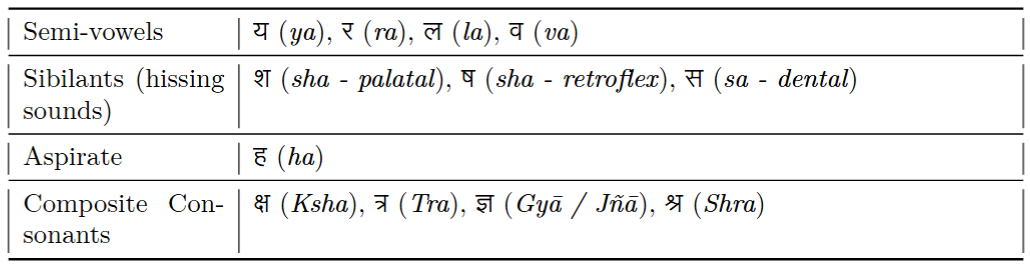
Fig 3: Consonants in Indic Languages
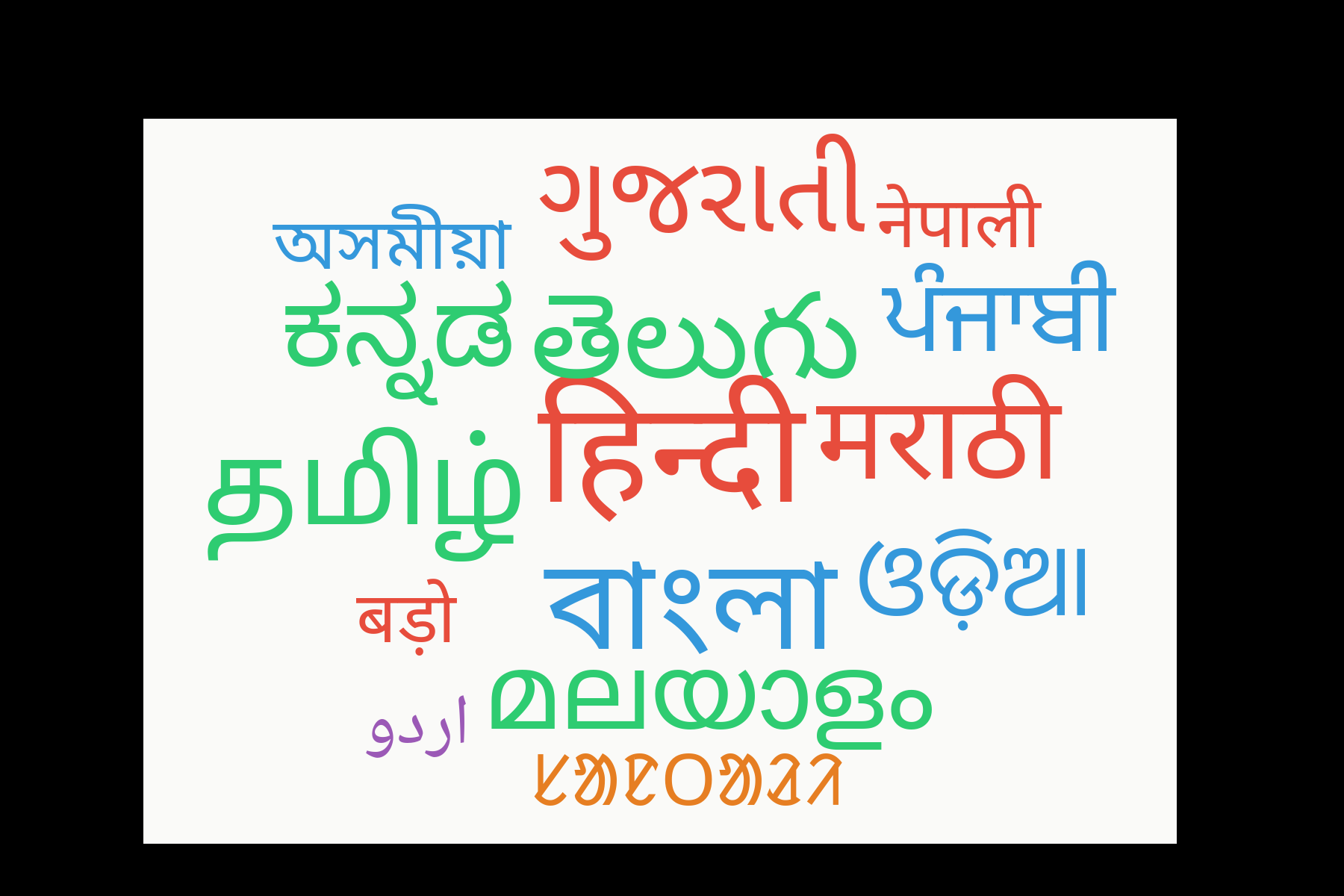
Fig 4: a single unit, as shown in Figure 5a. Consonants represent a letter, while vowels can either appear in atomic form,
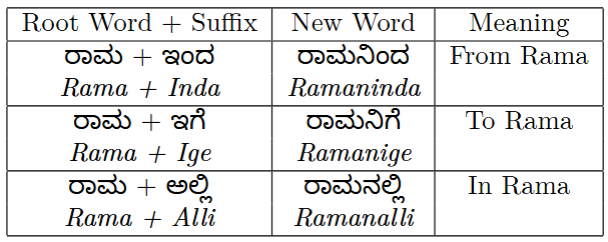
Fig 5: Inherent Features of Indic Languages
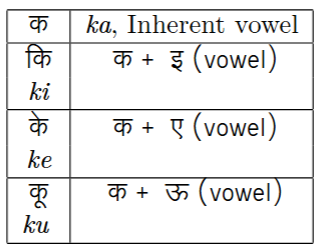
Fig 6 (page 5).
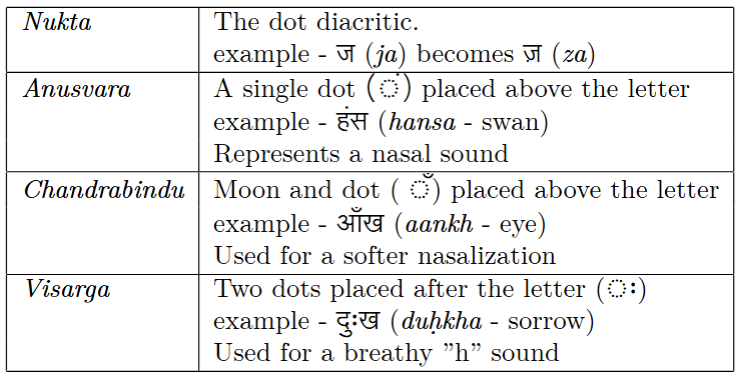
Fig 7 (page 5).
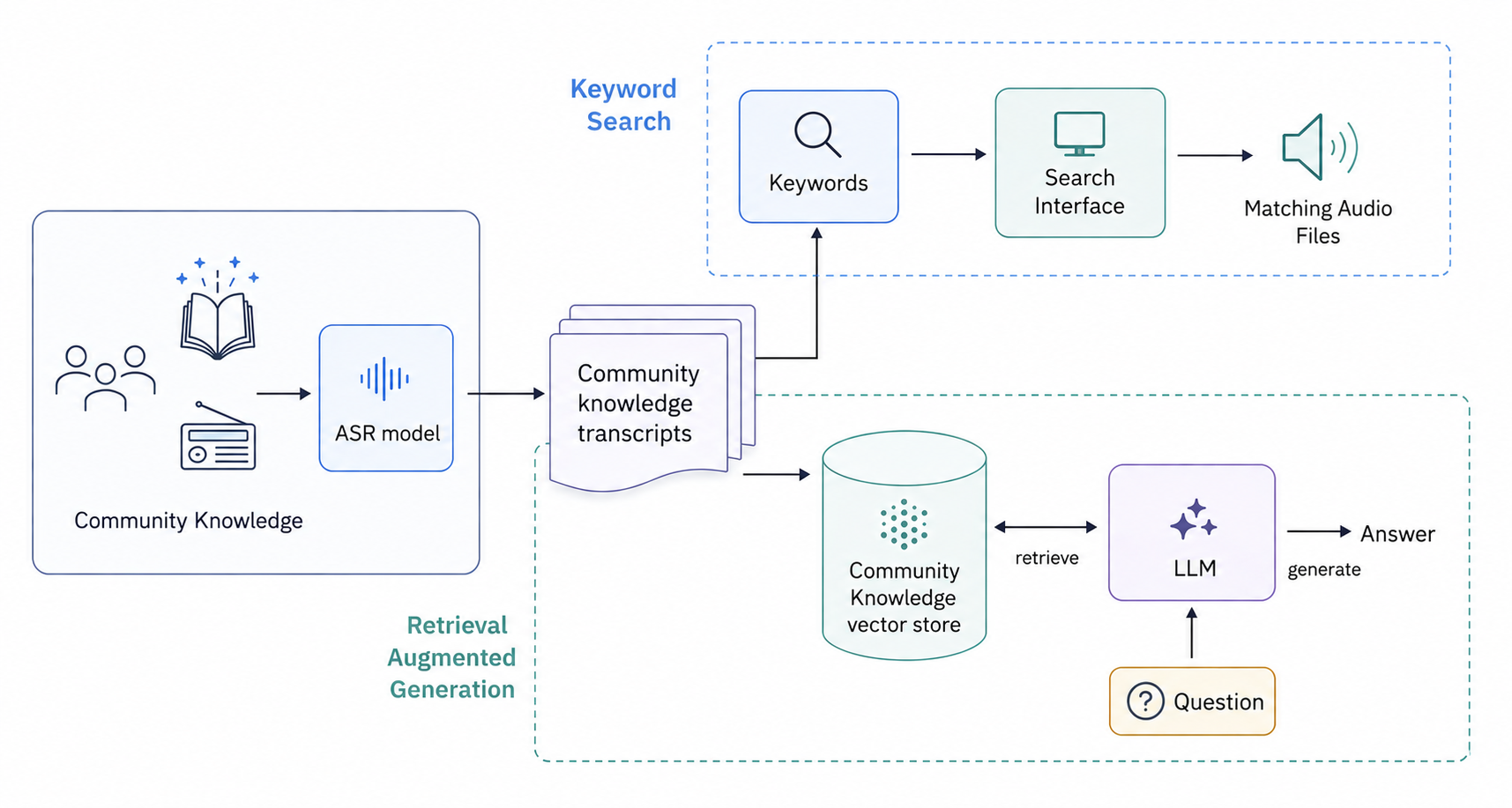
Fig 7: Reference Architecture for Culture Sensing
Limitations
- No new experimental data or quantitative benchmarks presented, limiting empirical validation of proposed Culture Sensing concept.
- Survey and conceptual nature means no direct performance metrics or quantitative comparisons with existing models.
- Addressing deep sociocultural challenges such as hermeneutic diversity requires interdisciplinary collaboration, which the paper does not operationalize concretely.
- No adversarial or robustness analysis against malicious attempts to subvert cultural representations.
- Limited discussion on scalability and integration challenges of multimodal Culture Sensing frameworks in real-world AI systems.
- Current LLM evaluation mainly conceptual; lacks concrete dialect or low-resource language performance statistics.
Open questions / follow-ons
- How to quantitatively measure and benchmark hermeneutic diversity and cultural inclusivity in language models?
- What architectures or training paradigms most effectively incorporate multimodal cultural knowledge beyond text for low-resource Indic languages?
- How to scale Culture Sensing approaches to support thousands of dialects and endangered languages practically?
- What socio-technical governance frameworks are needed to mitigate algorithmic homogenization and preserve cultural plurality in AI systems?
Why it matters for bot defense
From a bot-defense and CAPTCHA perspective, this paper underscores the acute challenges in building AI models that fairly represent diverse and low-resource languages, a critical factor if CAPTCHAs or bot-detection systems aim to localize effectively for Indic users. Language models that homogenize cultural nuances risk introducing bias and exclusion, potentially hindering accessibility and usability for large populations speaking dialects or minority Indic languages. Bot-defense engineers should note that linguistic morphology and script complexity in Indic languages can affect tokenization and behavioral analysis used in user verification systems. The Culture Sensing paradigm suggests future directions for incorporating cultural and linguistic context holistically, which could lead to CAPTCHAs adapting dynamically to preserve inclusion and resist spoofing in multilingual, multicultural user bases. However, practical operationalization and evaluation of such concepts remain open challenges.
Cite
@article{arxiv2607_06544,
  title={ Rethinking Indic AI from a Lens of Cultural Heritage Preservation },
  author={ Aparna Madva and Sharath Srivatsa and Srinath Srinivasa and Tulika Saha },
  journal={arXiv preprint arXiv:2607.06544},
  year={ 2026 },
  url={https://arxiv.org/abs/2607.06544}
}